
“Oh, to be in England, now that April’s there…”
(from “Home Thoughts, from Abroad” by Robert Browning)
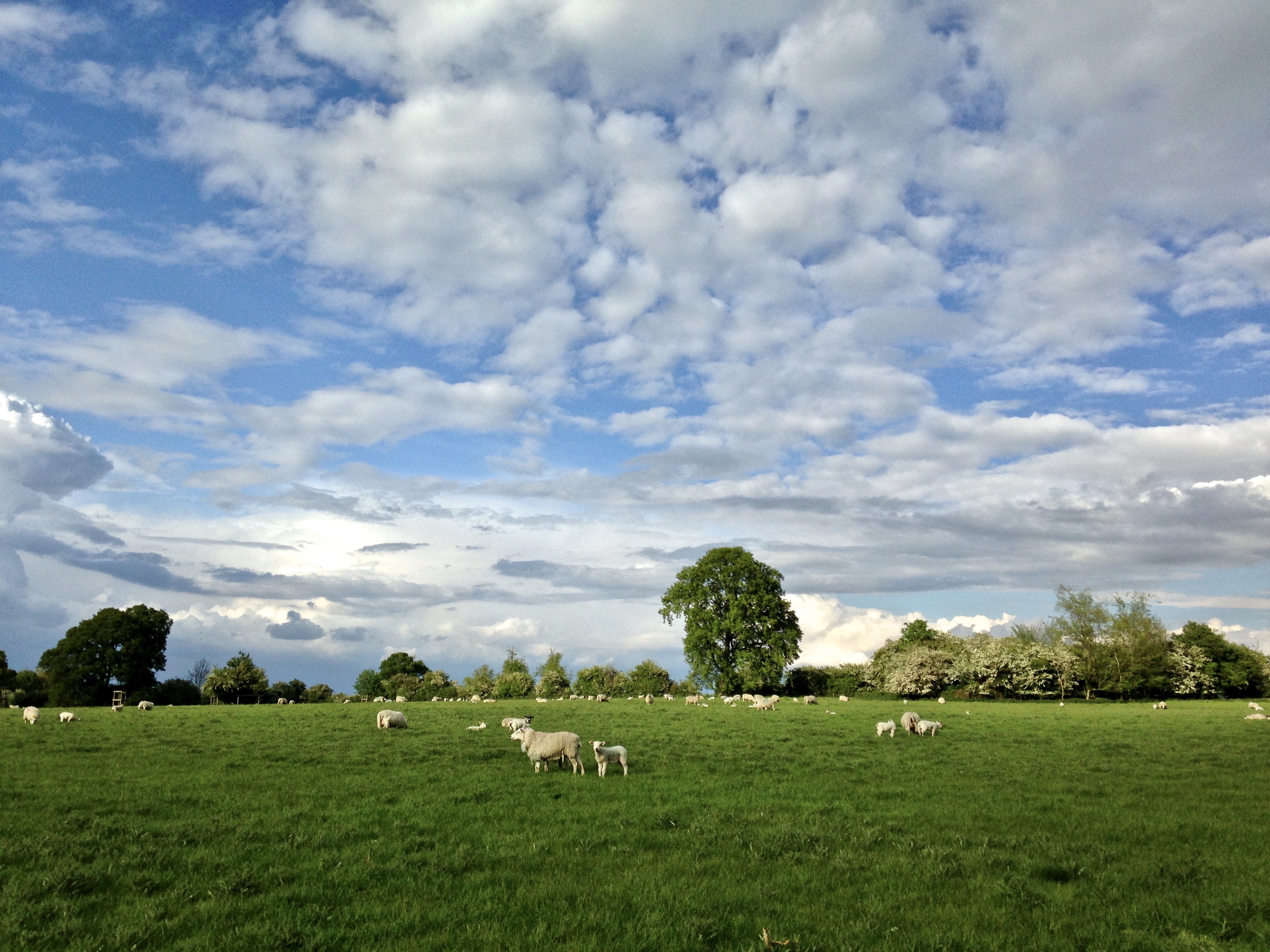
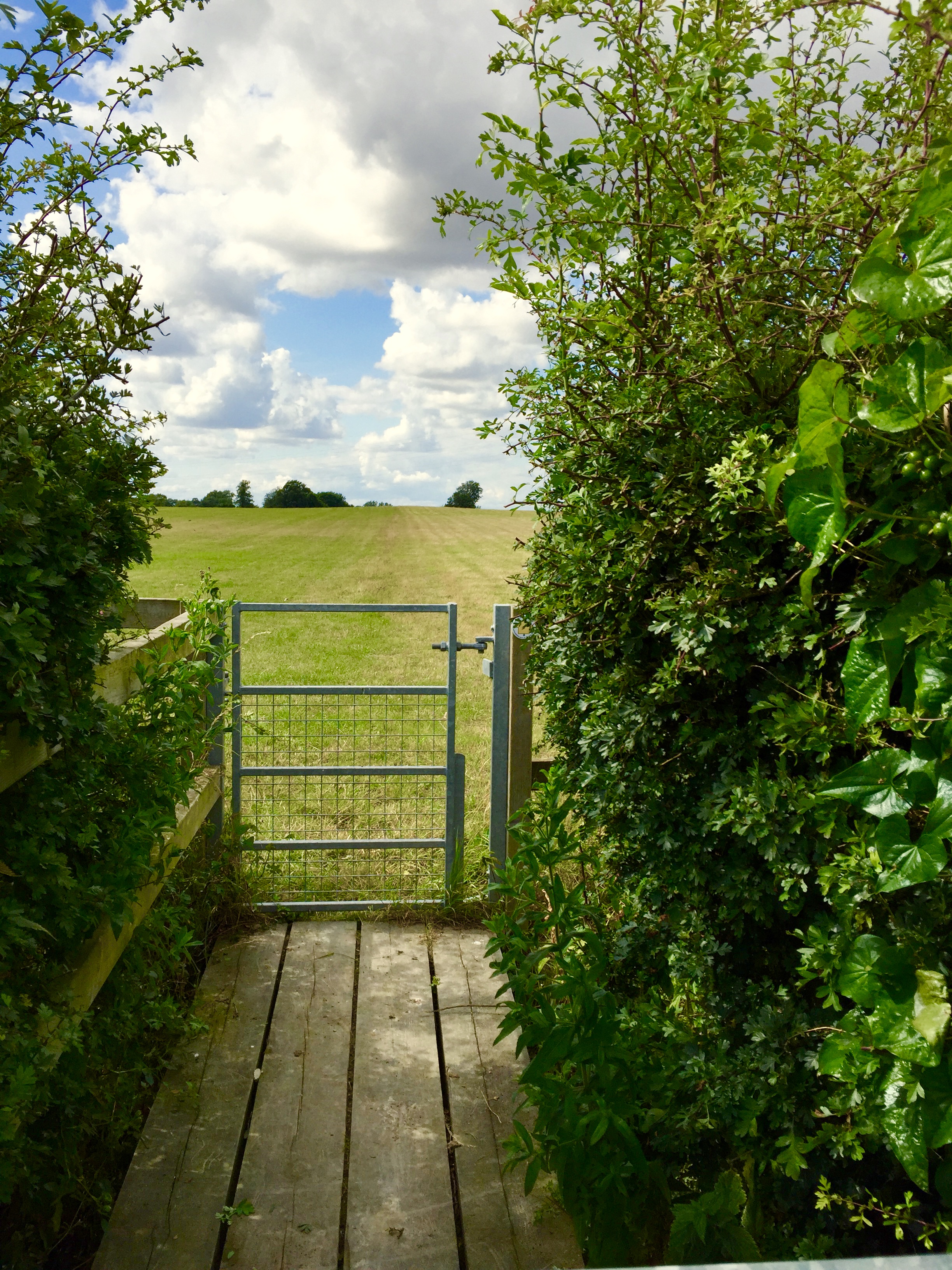
We have returned to Oxfordshire at the best possible moment, when bluebells carpet the Beech woods, lambs cavort in green fields, Hawthorne blossoms in the hedgerows and lilac scents the air. (Though to be fair, because we hold such fond memories, we are happy to return in any season.)
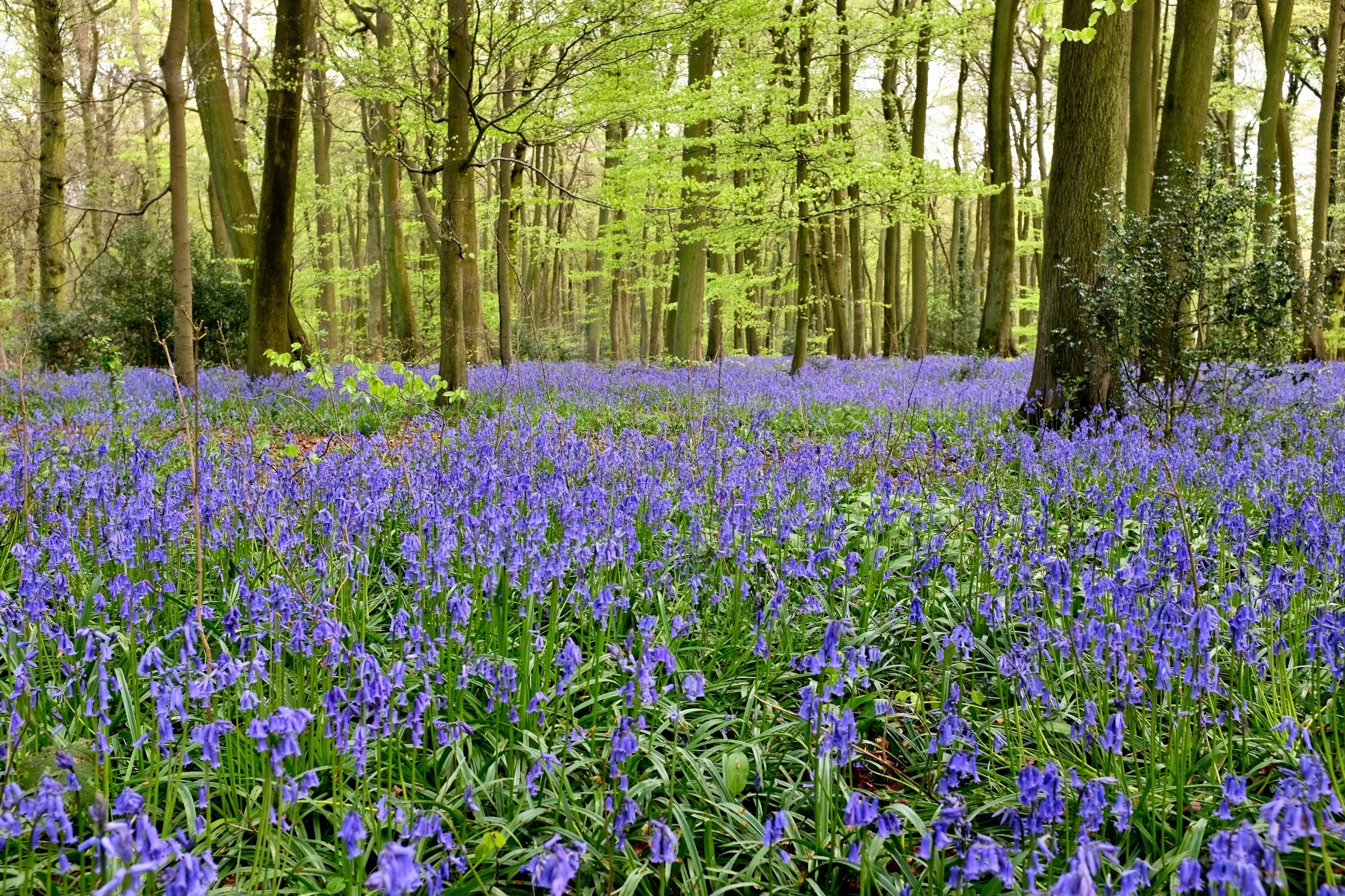
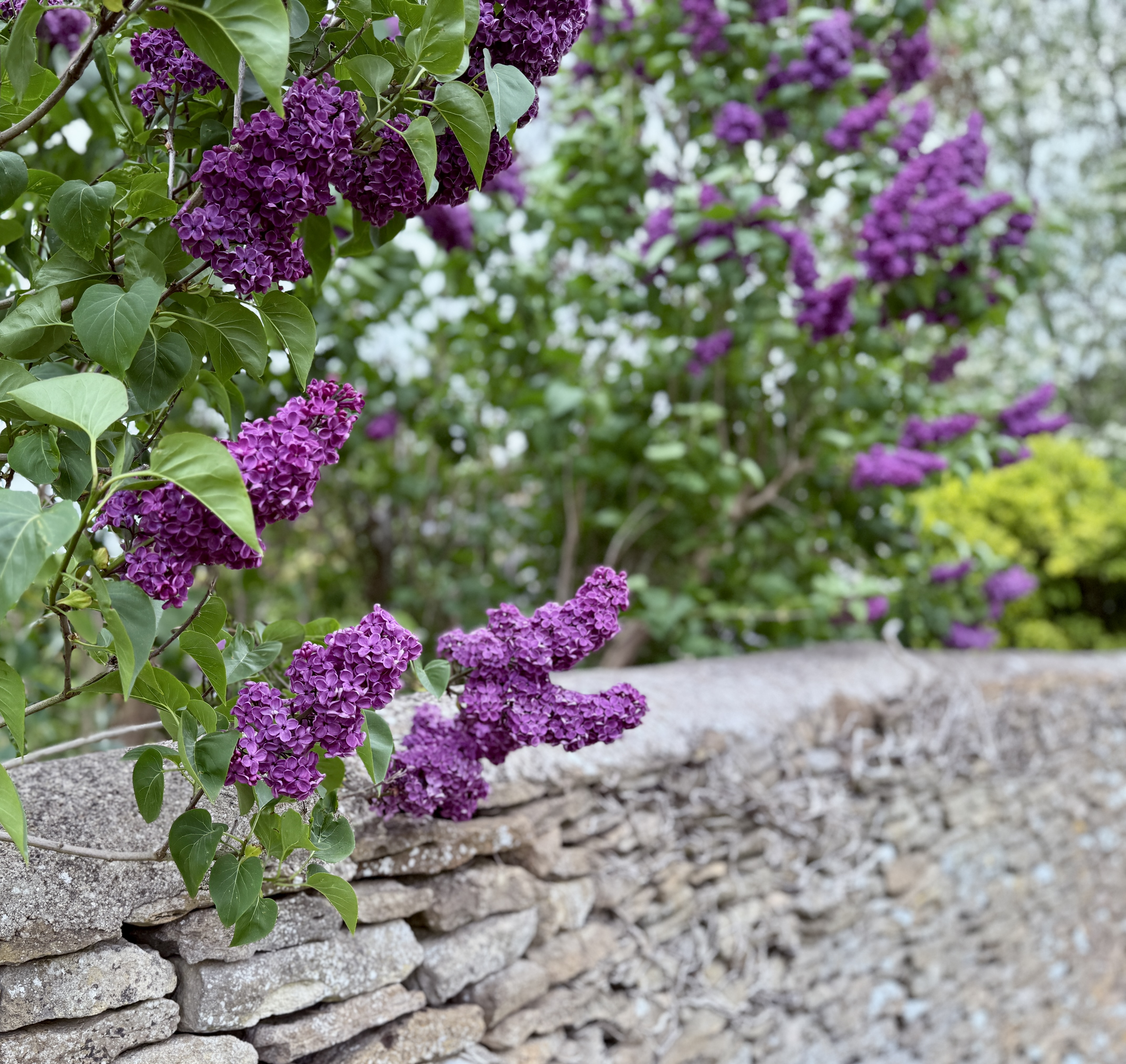
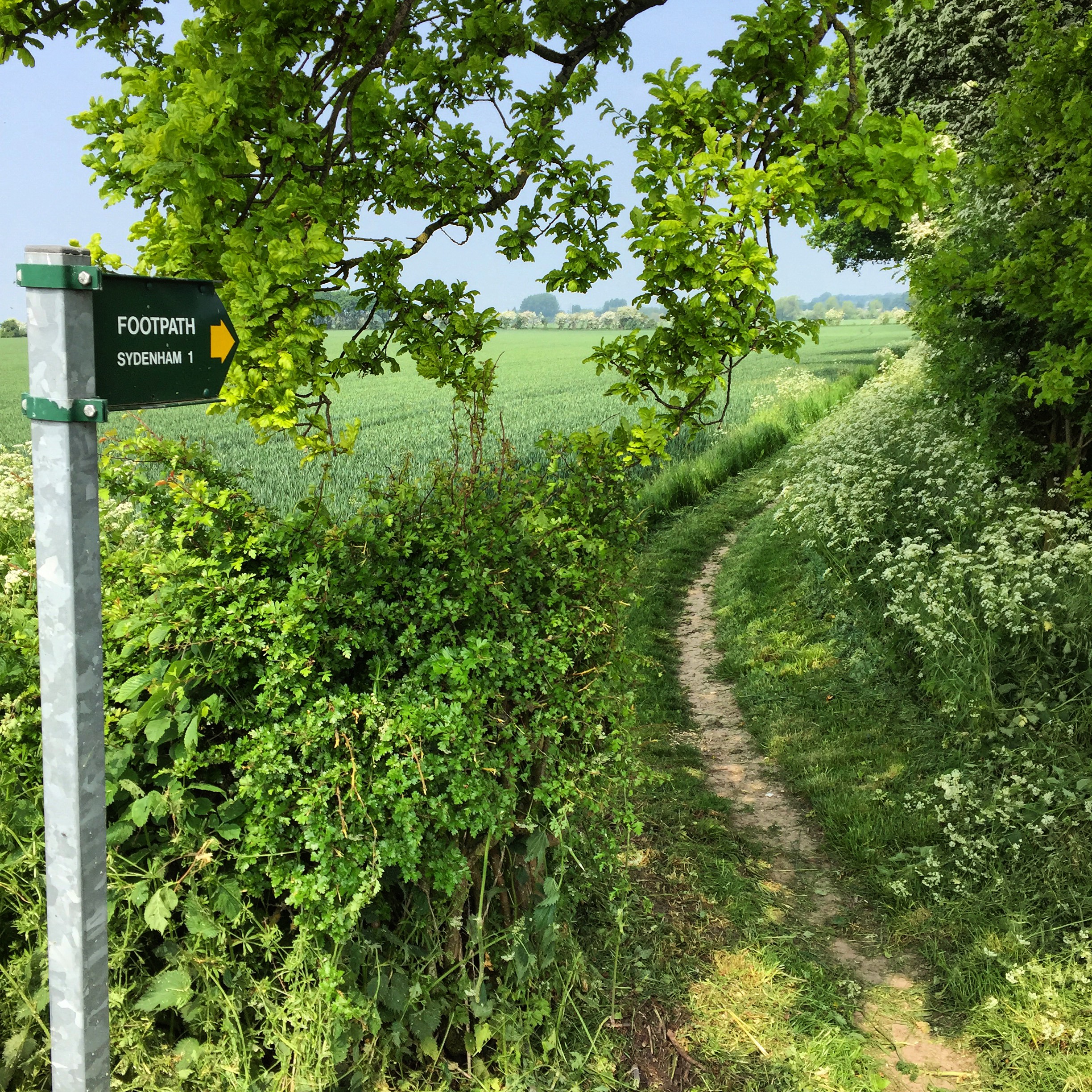
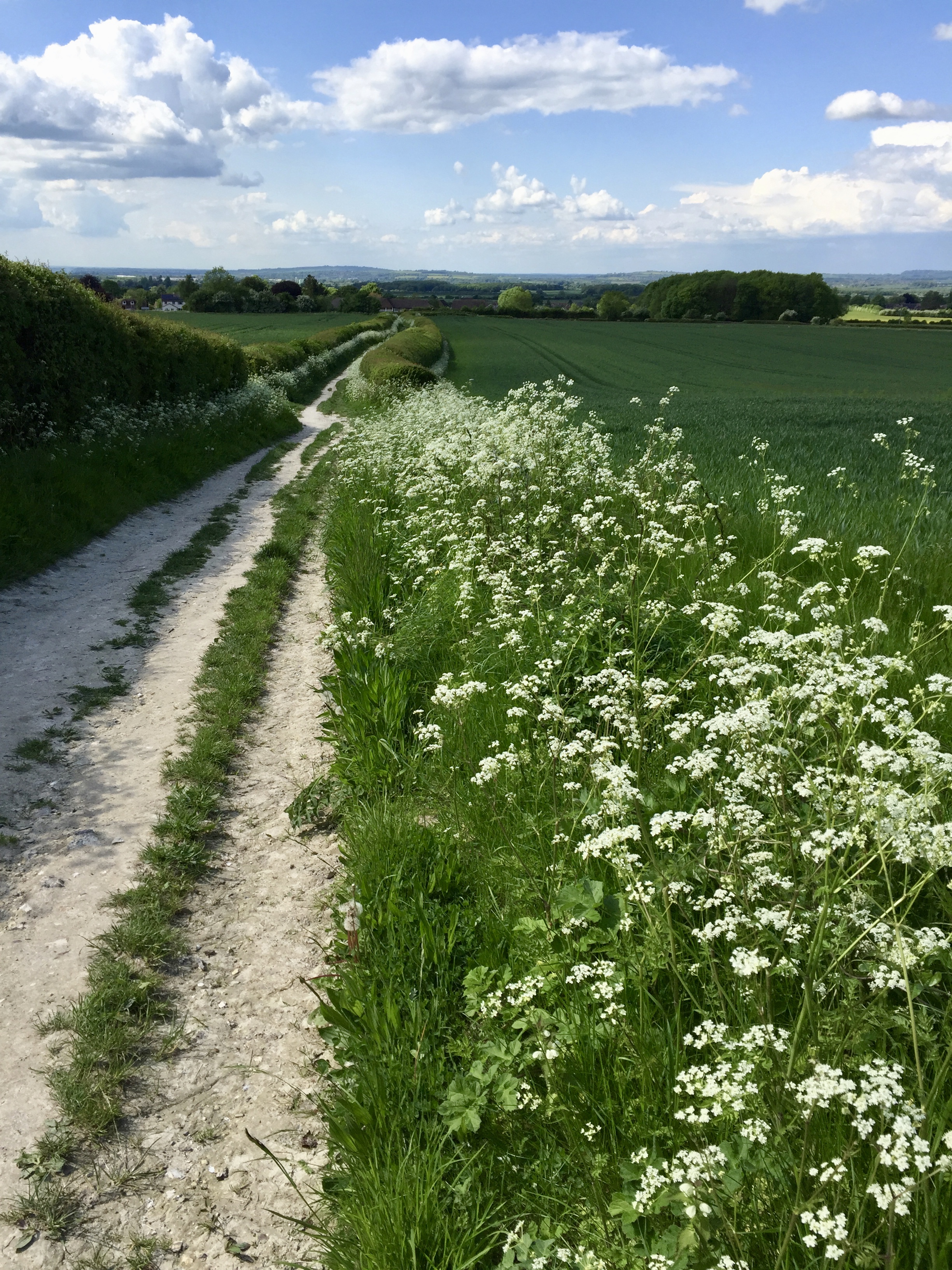

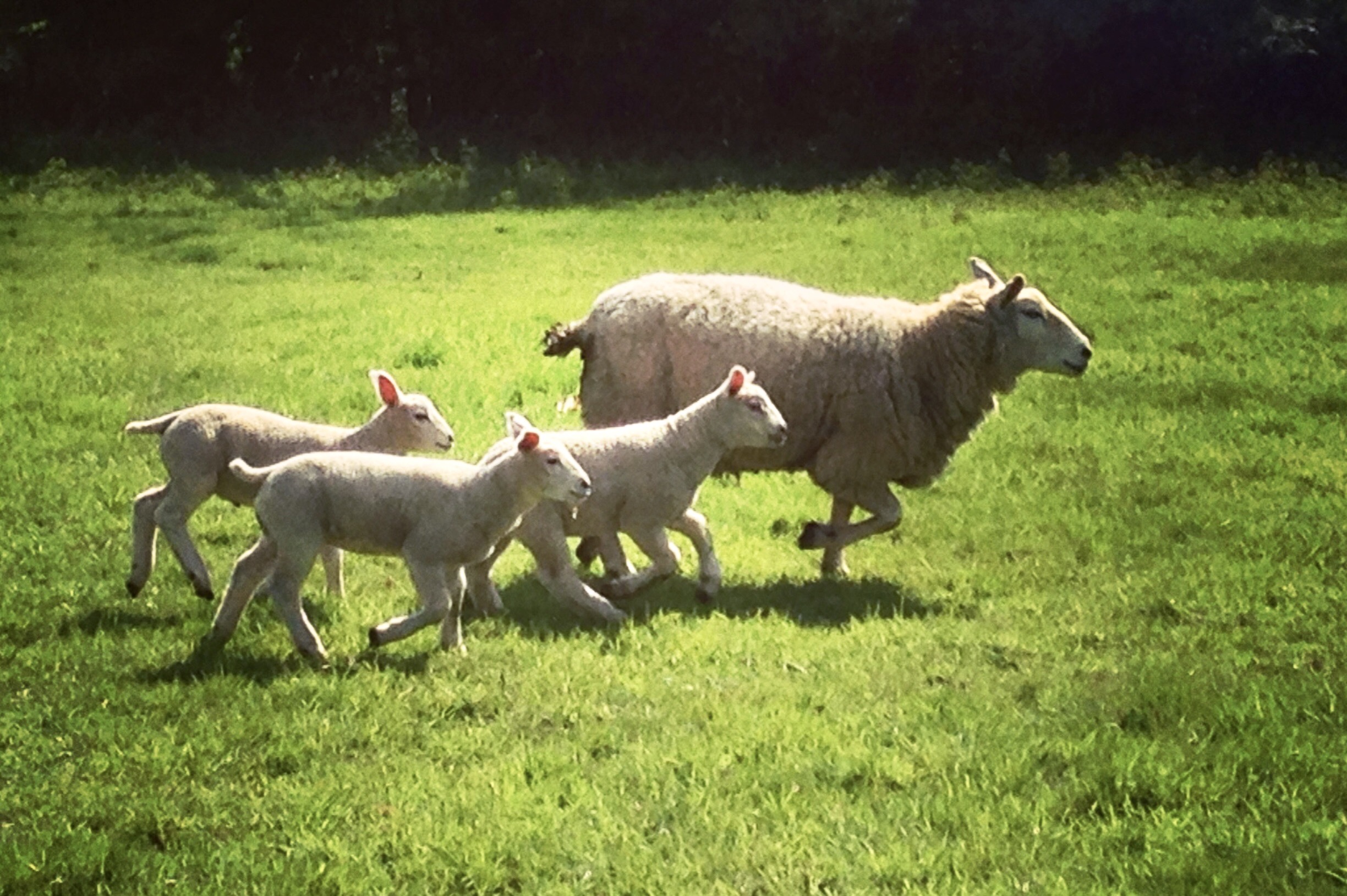
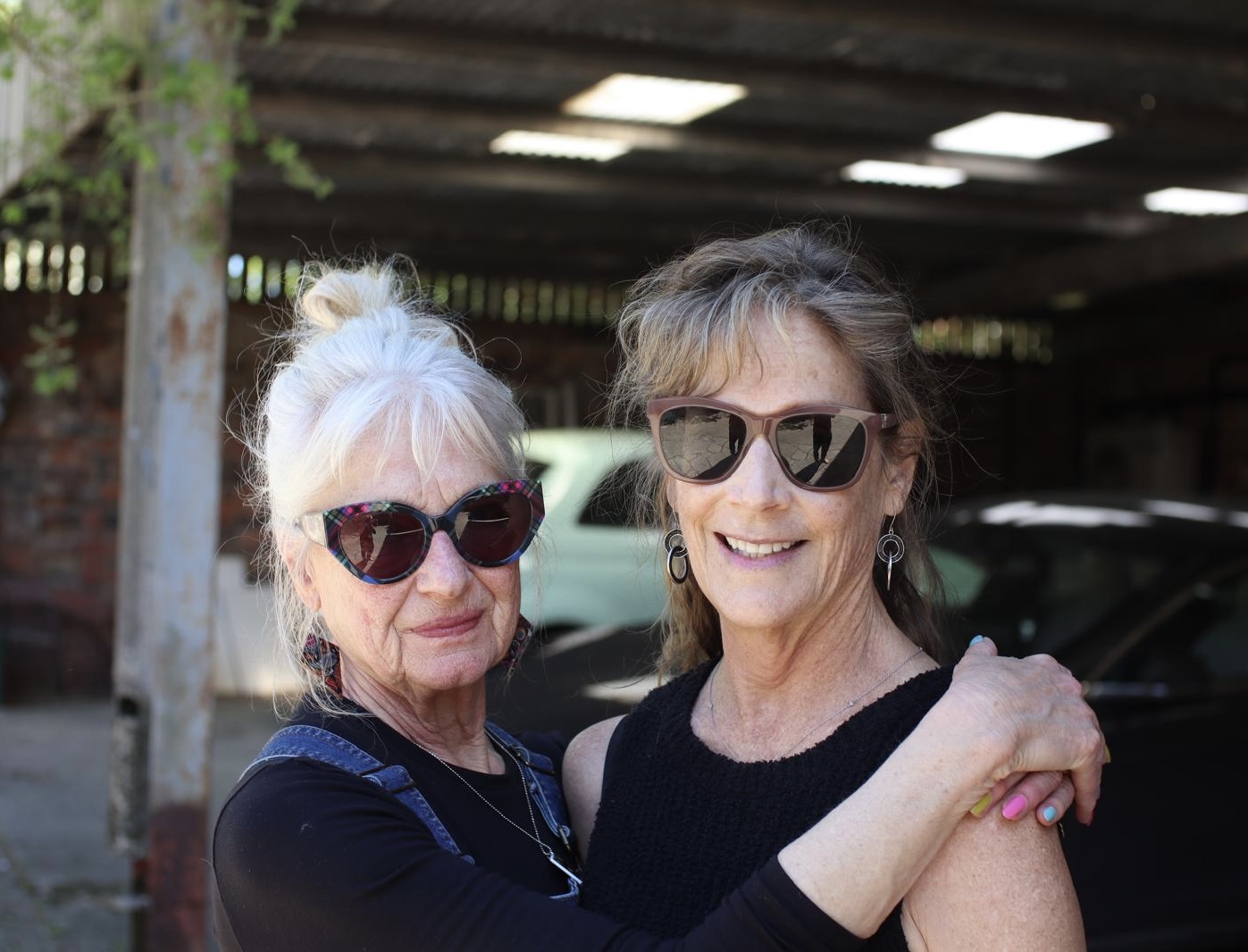
Our time in the village where we used to live is brief and treasured. We dip so easily back into our former life, it’s almost as if we never left. How can it be that we feel right at home, even though we moved back to California 9 years ago? This is the third time that we’ve returned for a visit, and each time we fear our attachment to the people and place will have faded and nobody will remember us, but the opposite proves true.
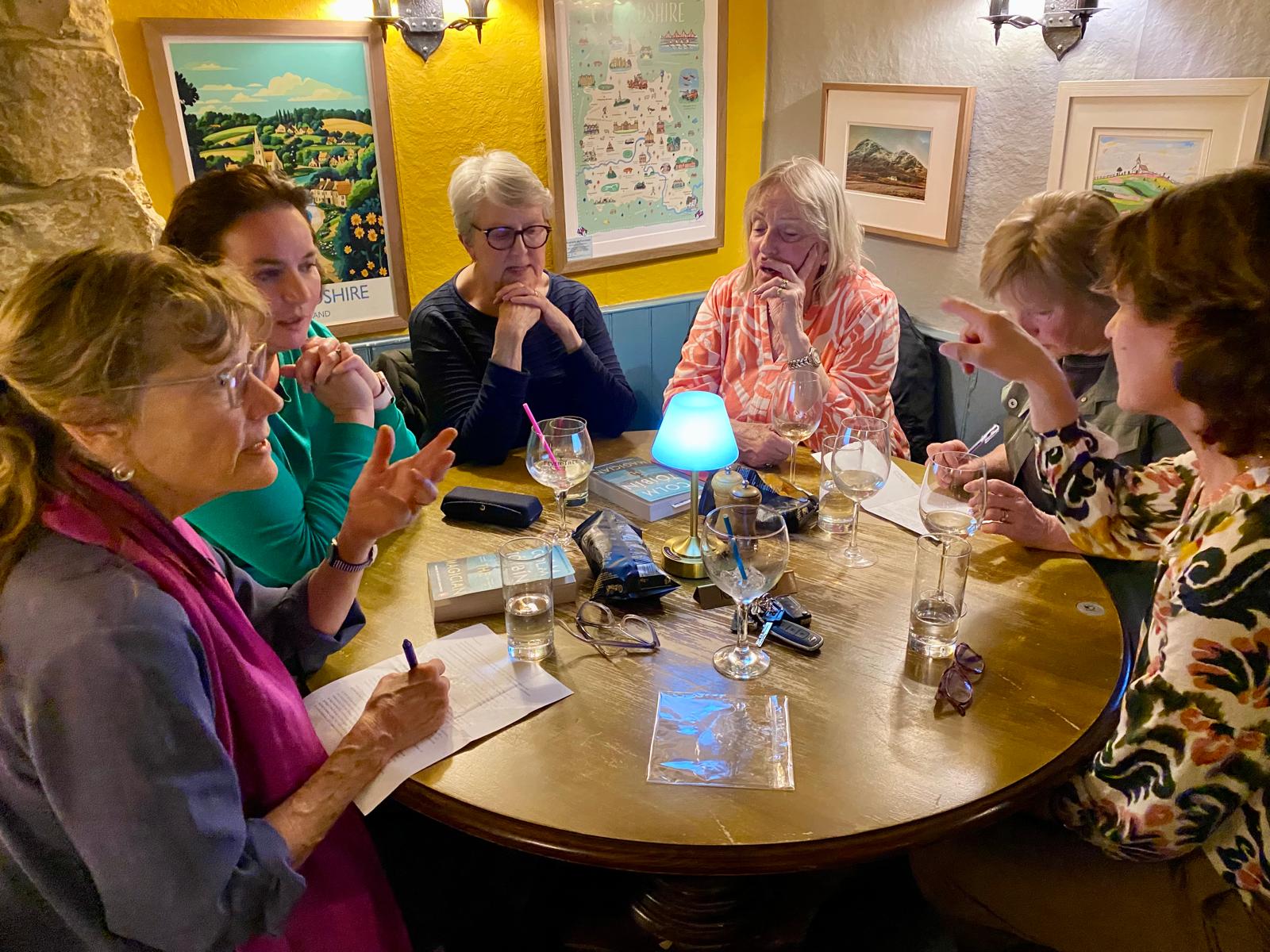
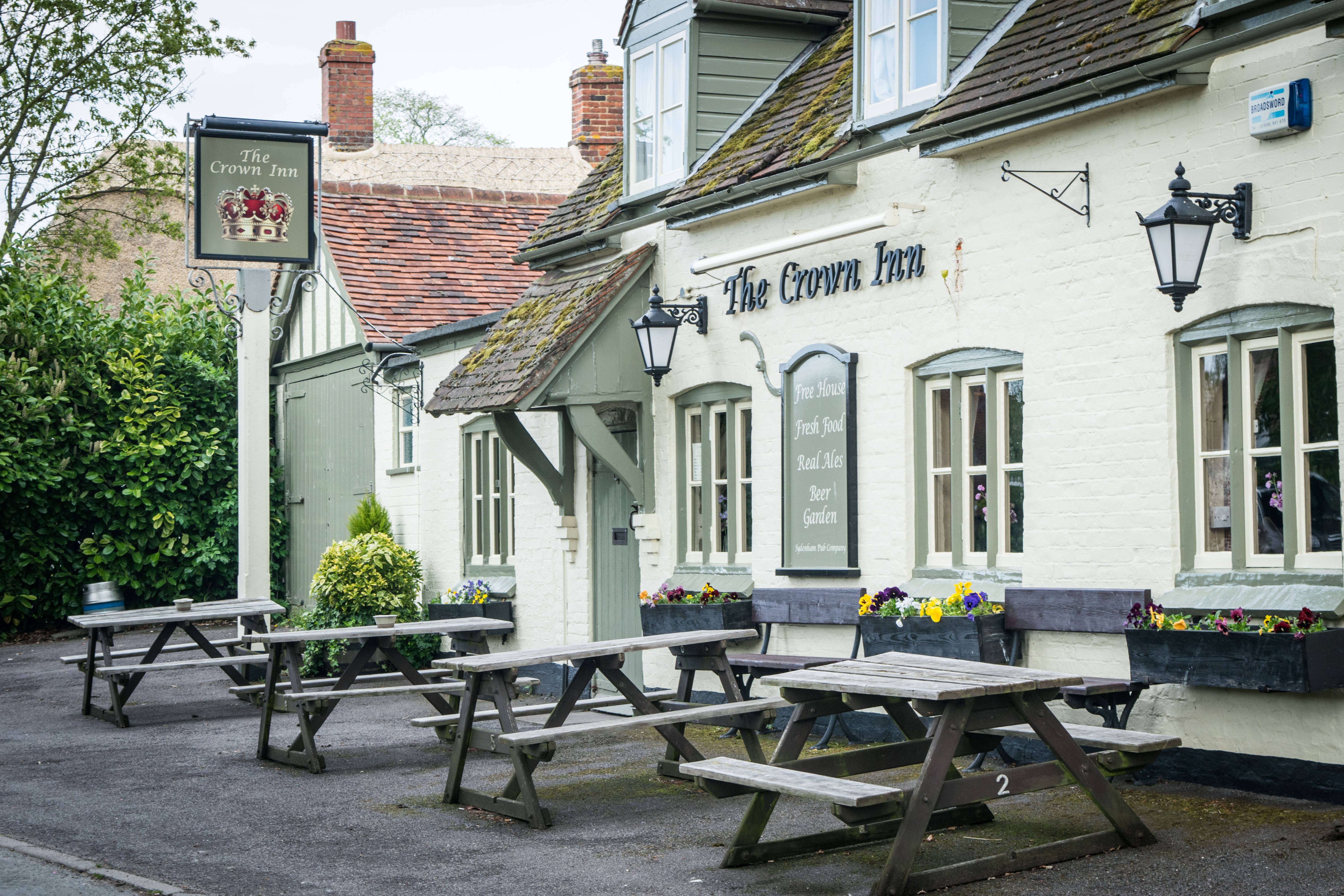
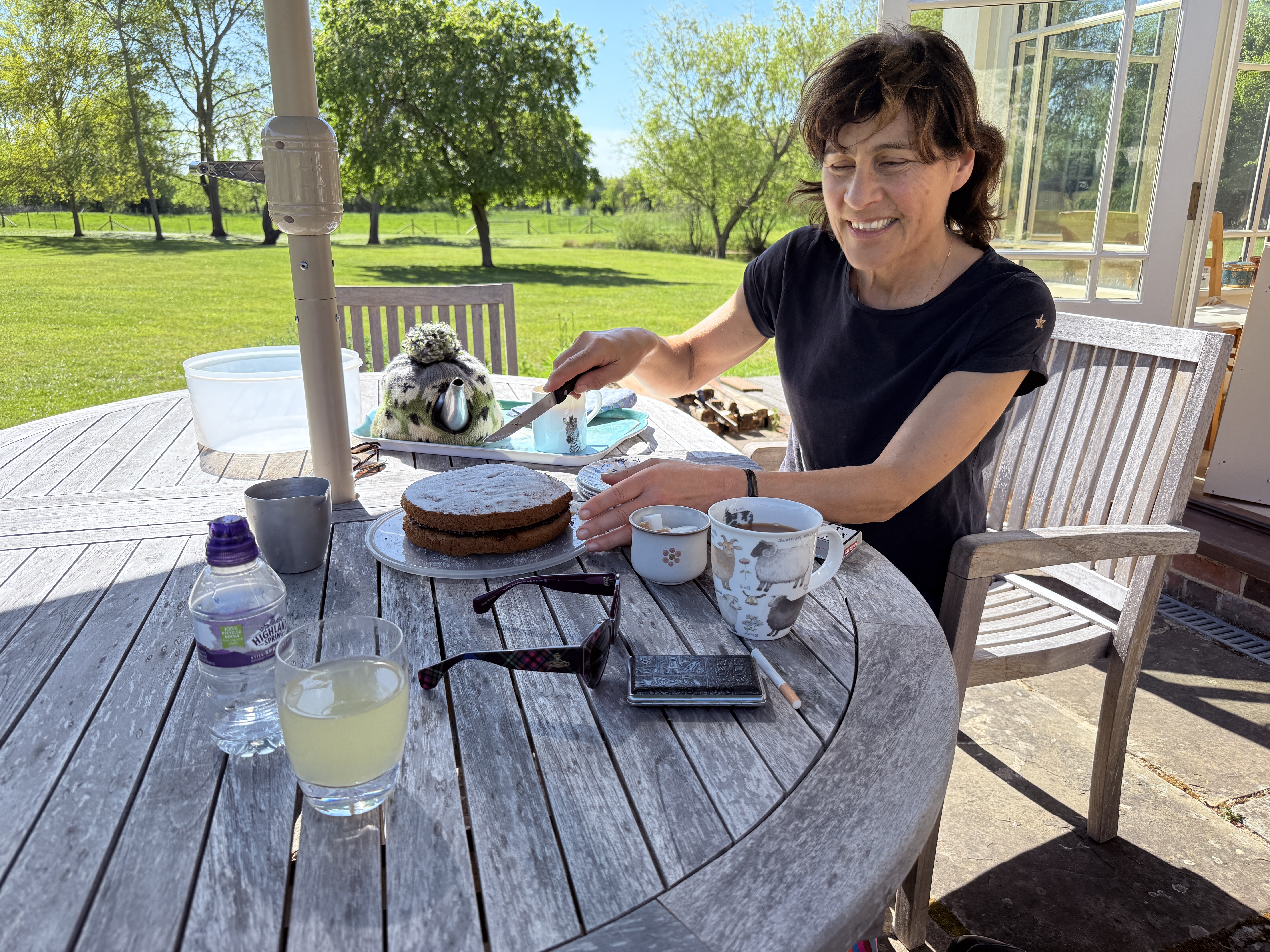
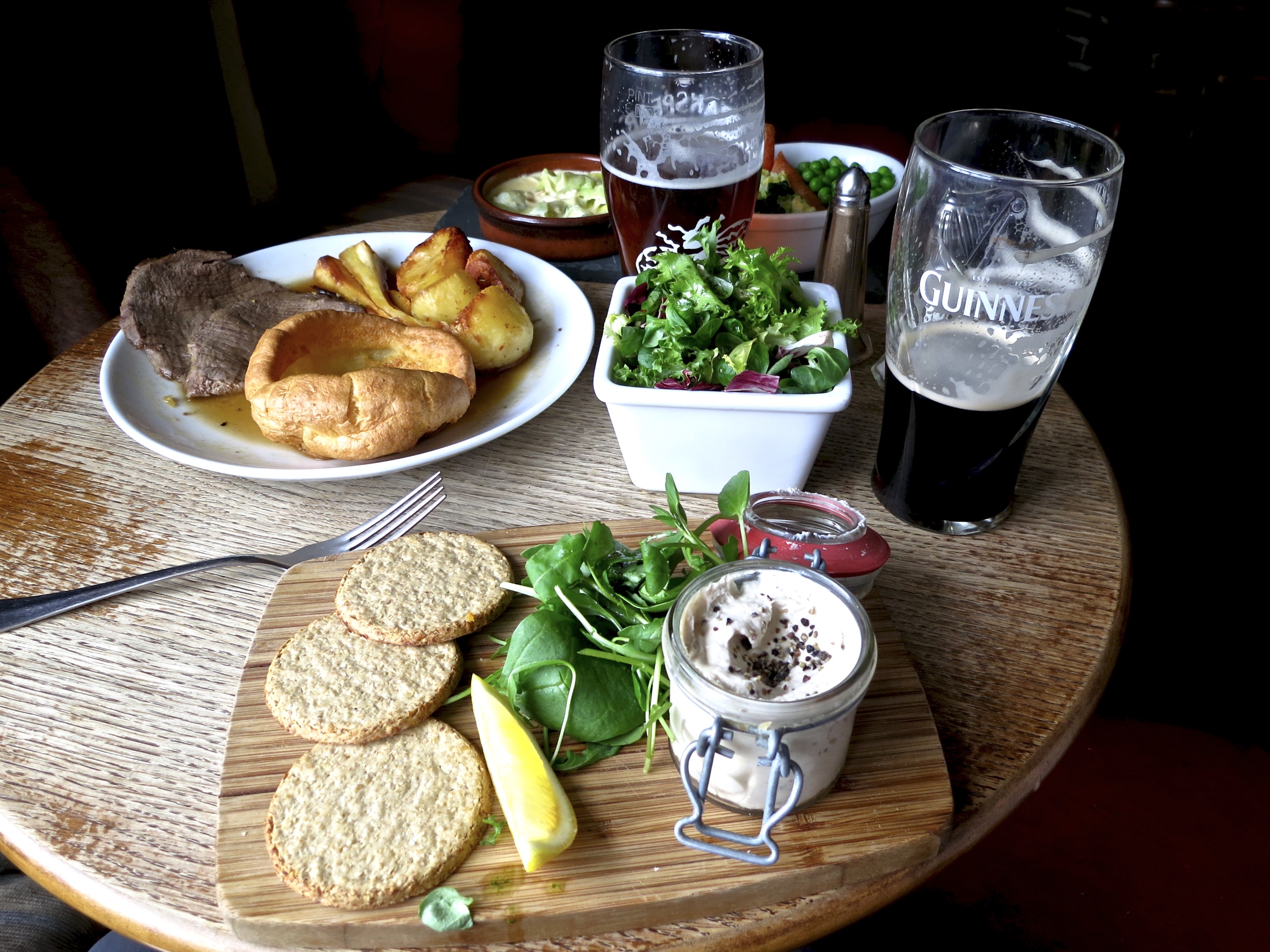
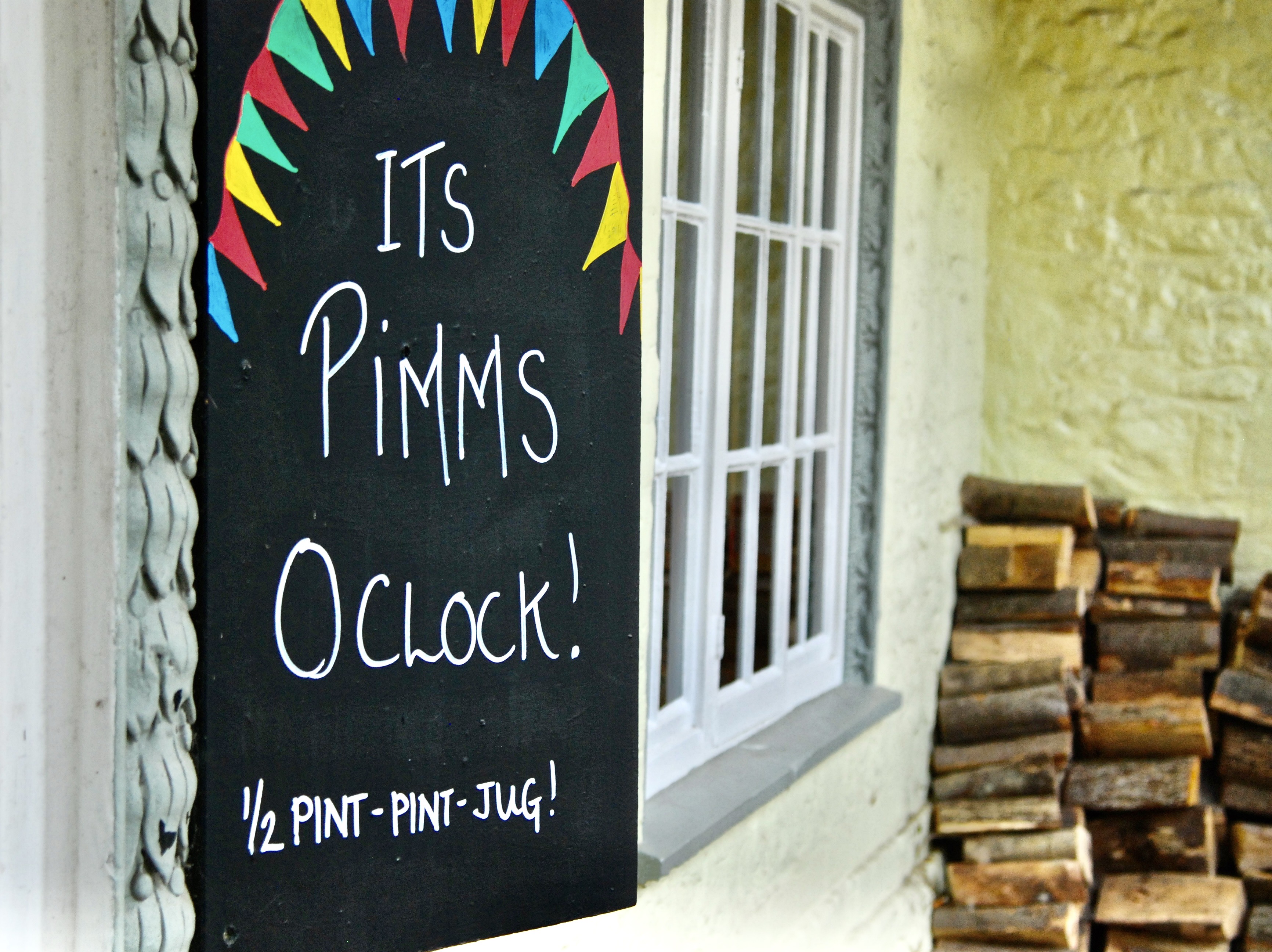
We revel in a pub dinner with friends, a stroll around the village, visits to former neighbors, a book club meeting, a walk in the bluebell woods, tea in friends’ gardens, meals at our favorite restaurants, and more. Anna even helps a neighbor herd an escaped lamb back into its pen.
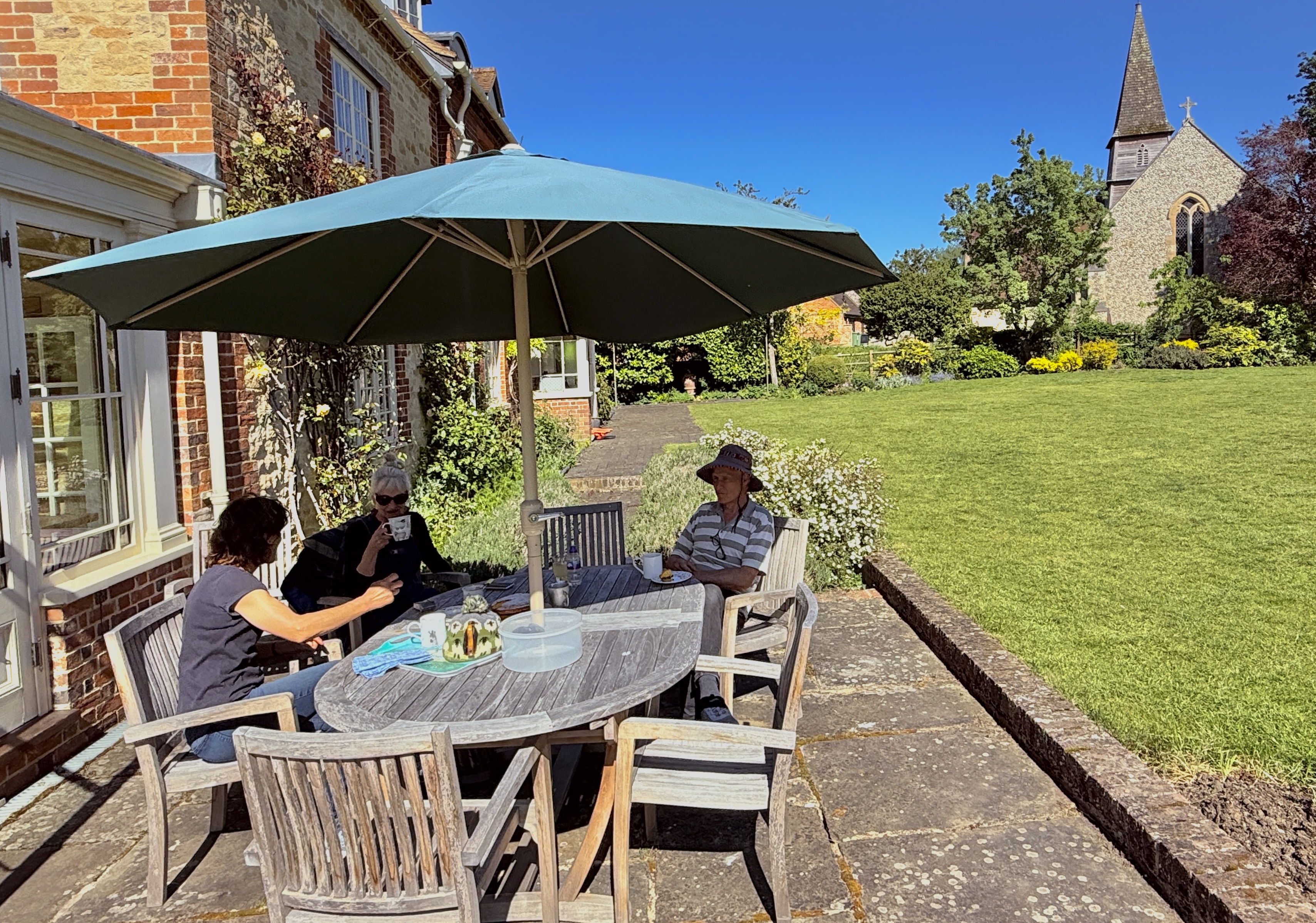
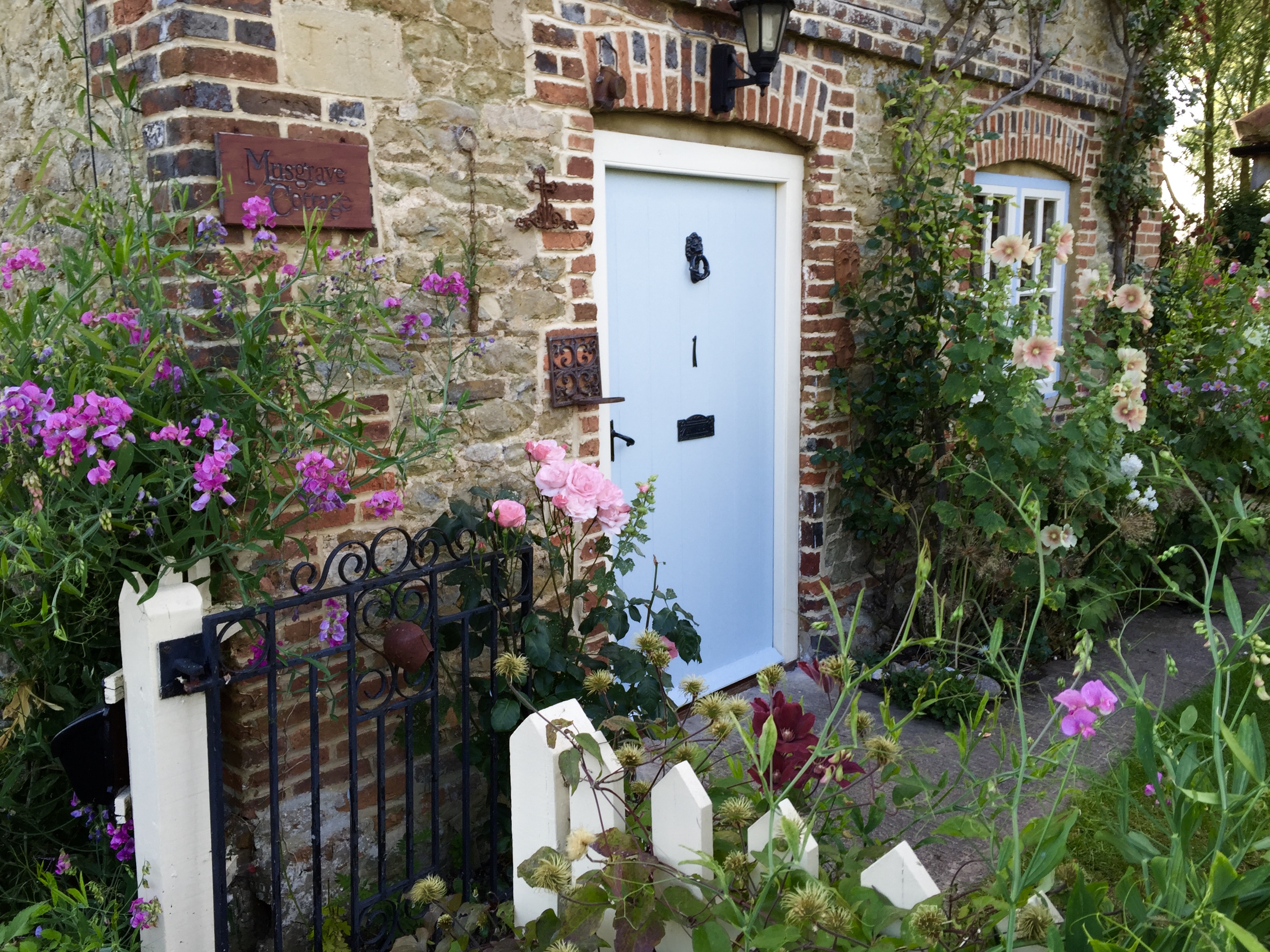
And then it’s time to continue our journey. We say farewell with a happy-sad mix of deep contentment and wistful nostalgia. We promise to return.
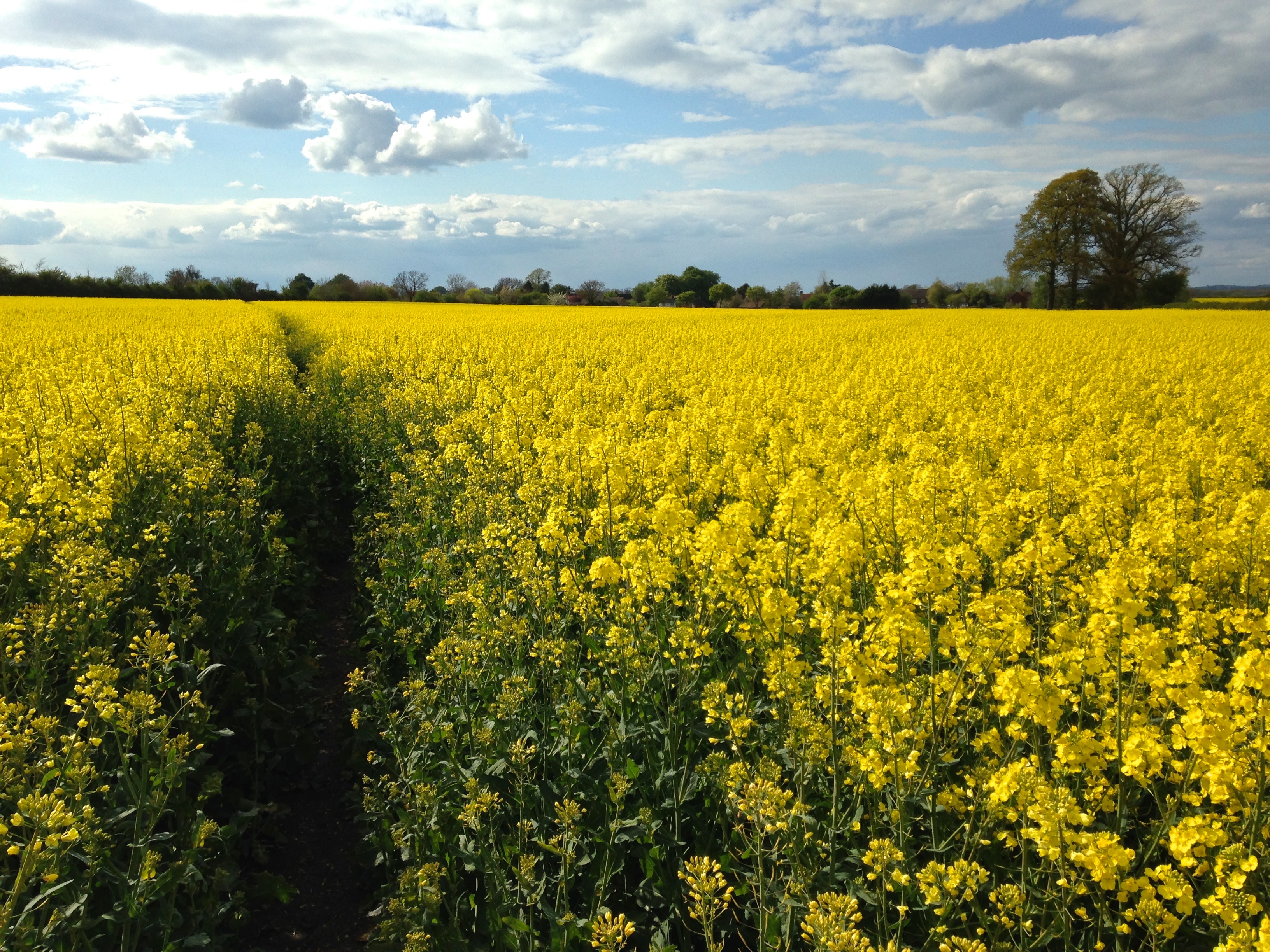
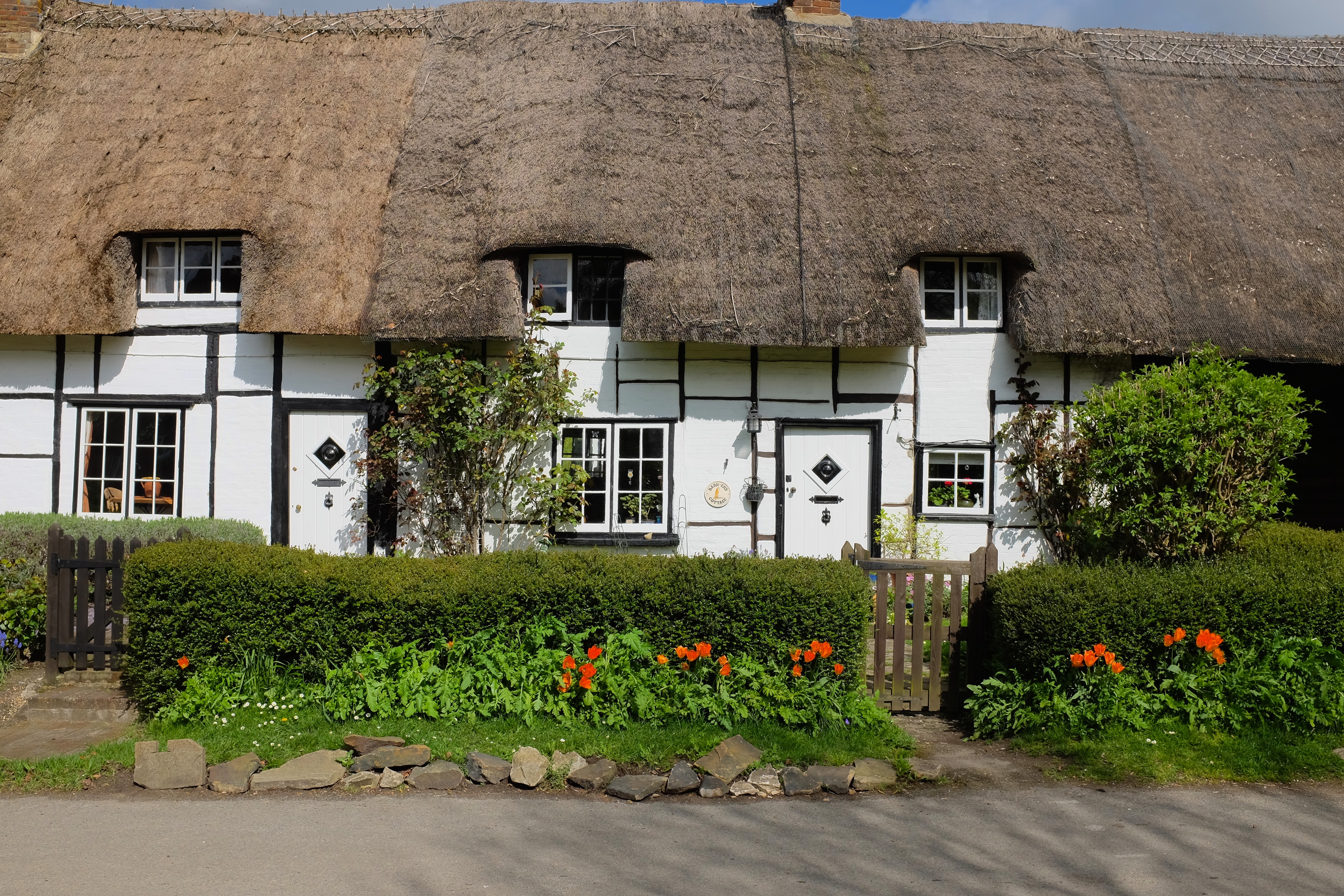
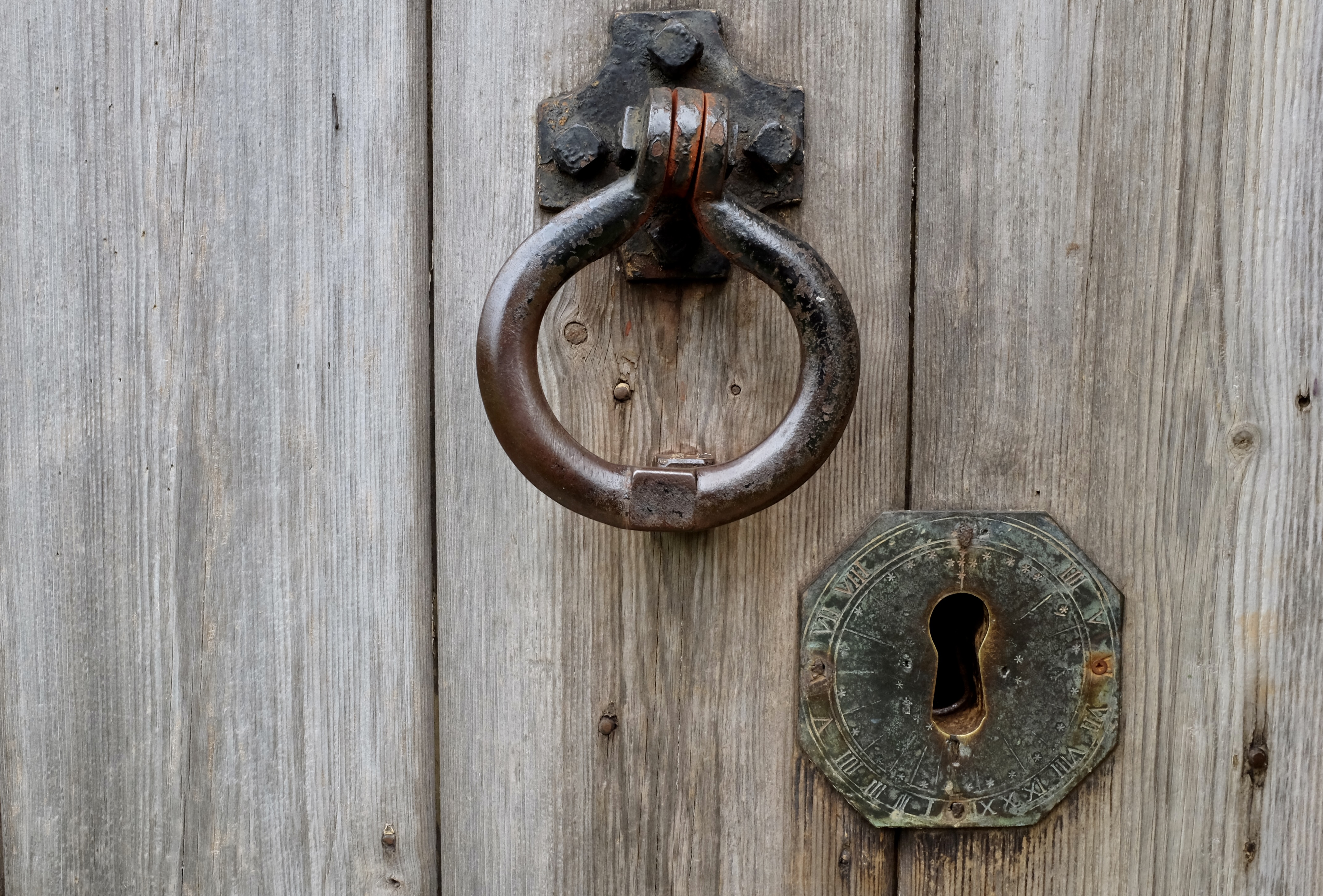
On our way south, we break up the drive with a night spent at an unremarkable AirBnb outside Bristol, then push on to Devonshire, known for its stunning National Parks, rugged coastline, decadent cream teas and hilly countryside (it is said that everything of interest in south Devon is at the top of a hill).
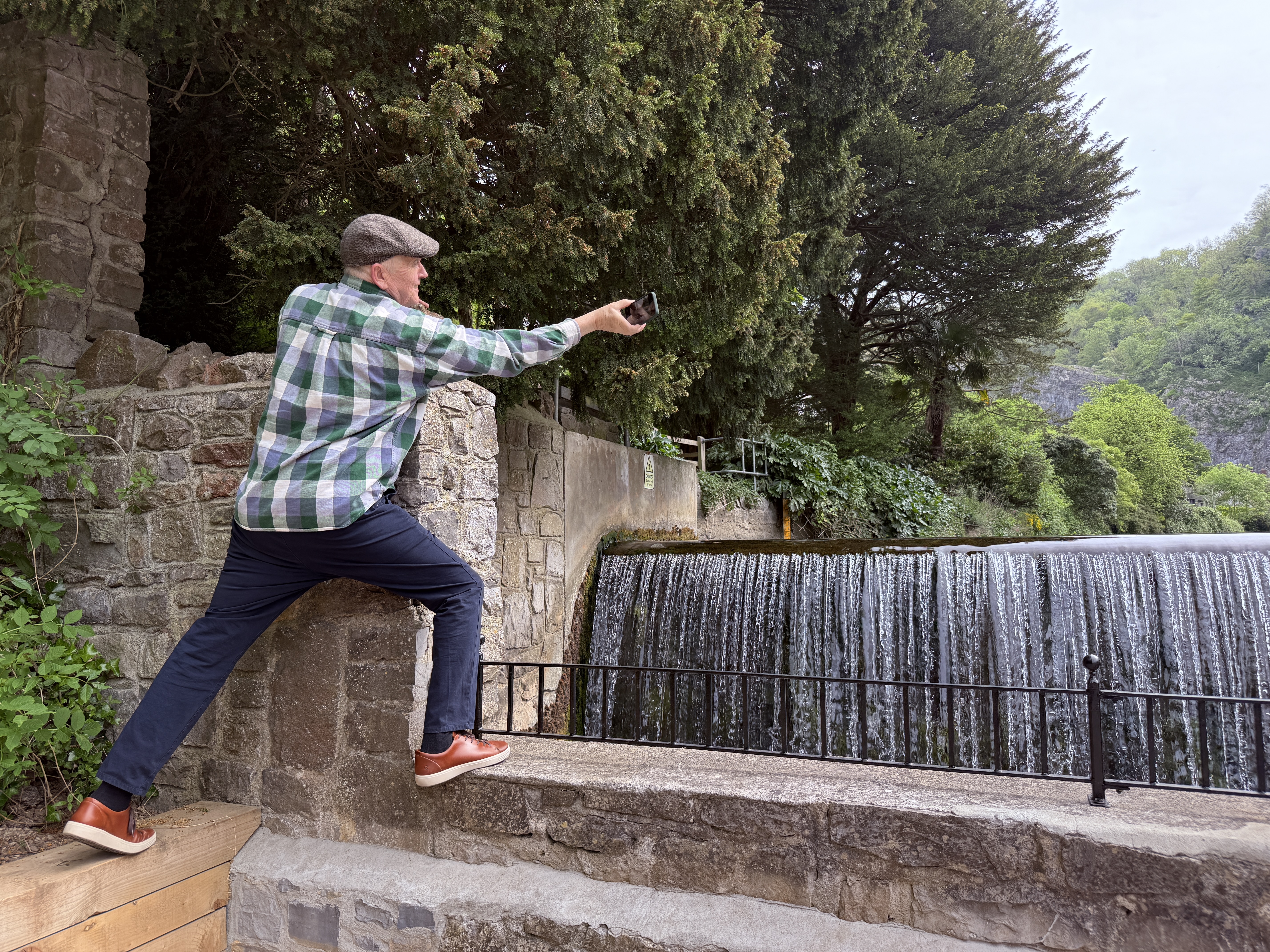
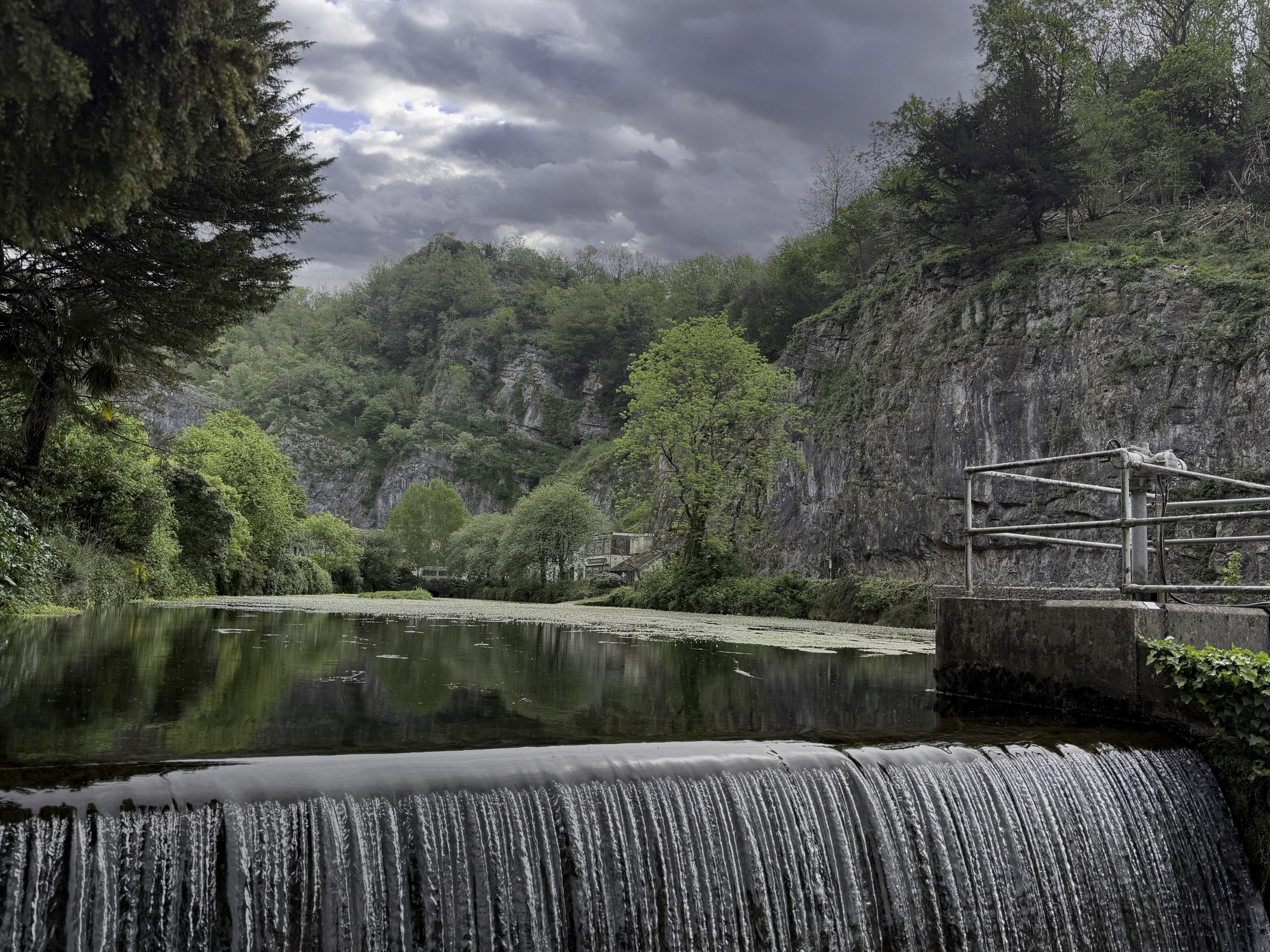
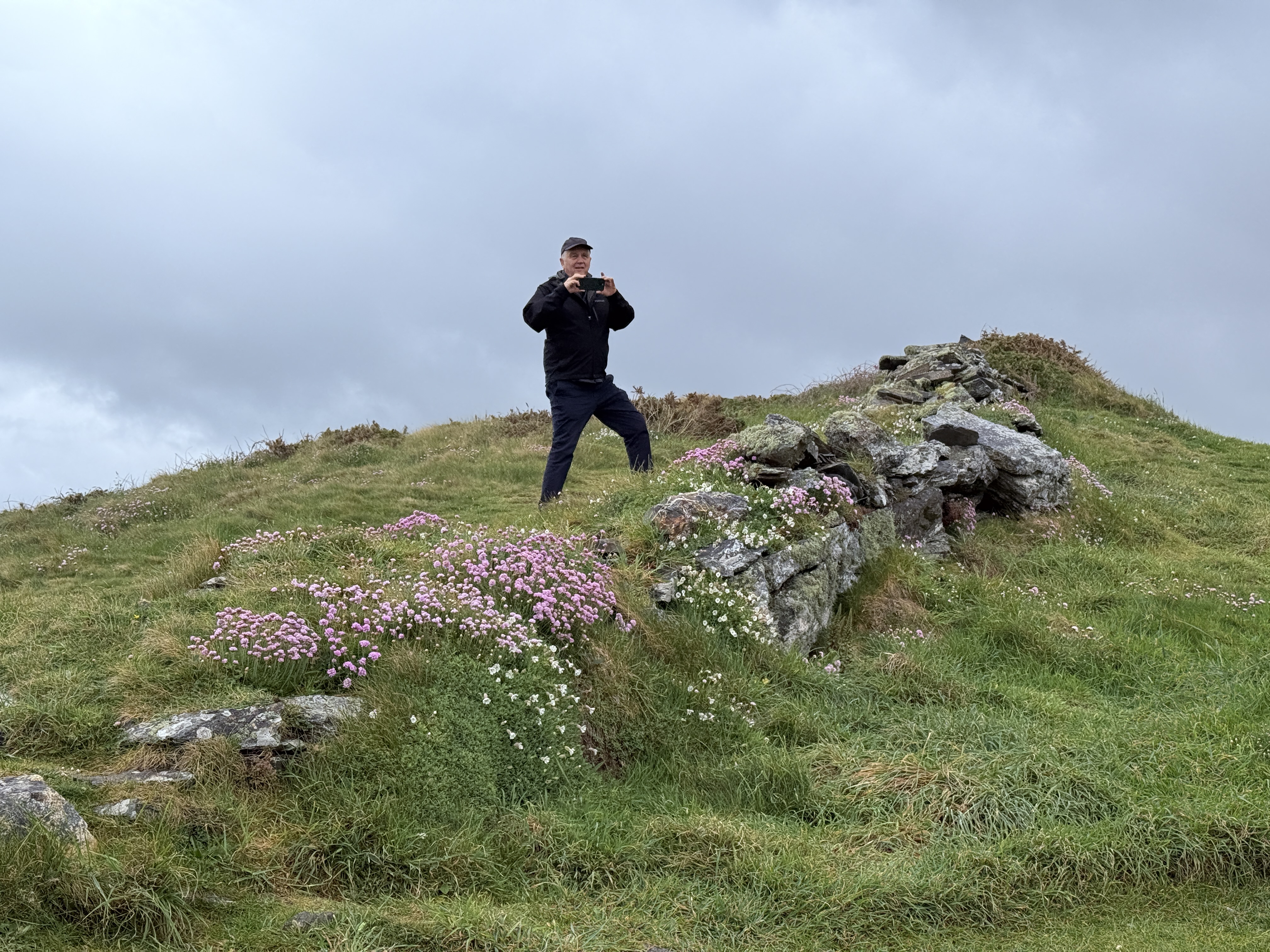
For Anna, the bittersweet nostalgia for village life in Oxfordshire lingers. For Dave, the drama of the north Devon coastline easily turns the page to the next chapter. Besides, there are places to go and things to see. Such as the village of Cheddar, birthplace of you-know-what. Yes, every shop sells the eponymous cheese, but the attraction for us is the setting, in a steep limestone gorge. In an attempt to capture the drama of the place, Dave improvises a new yoga pose: Photographer Warrior.
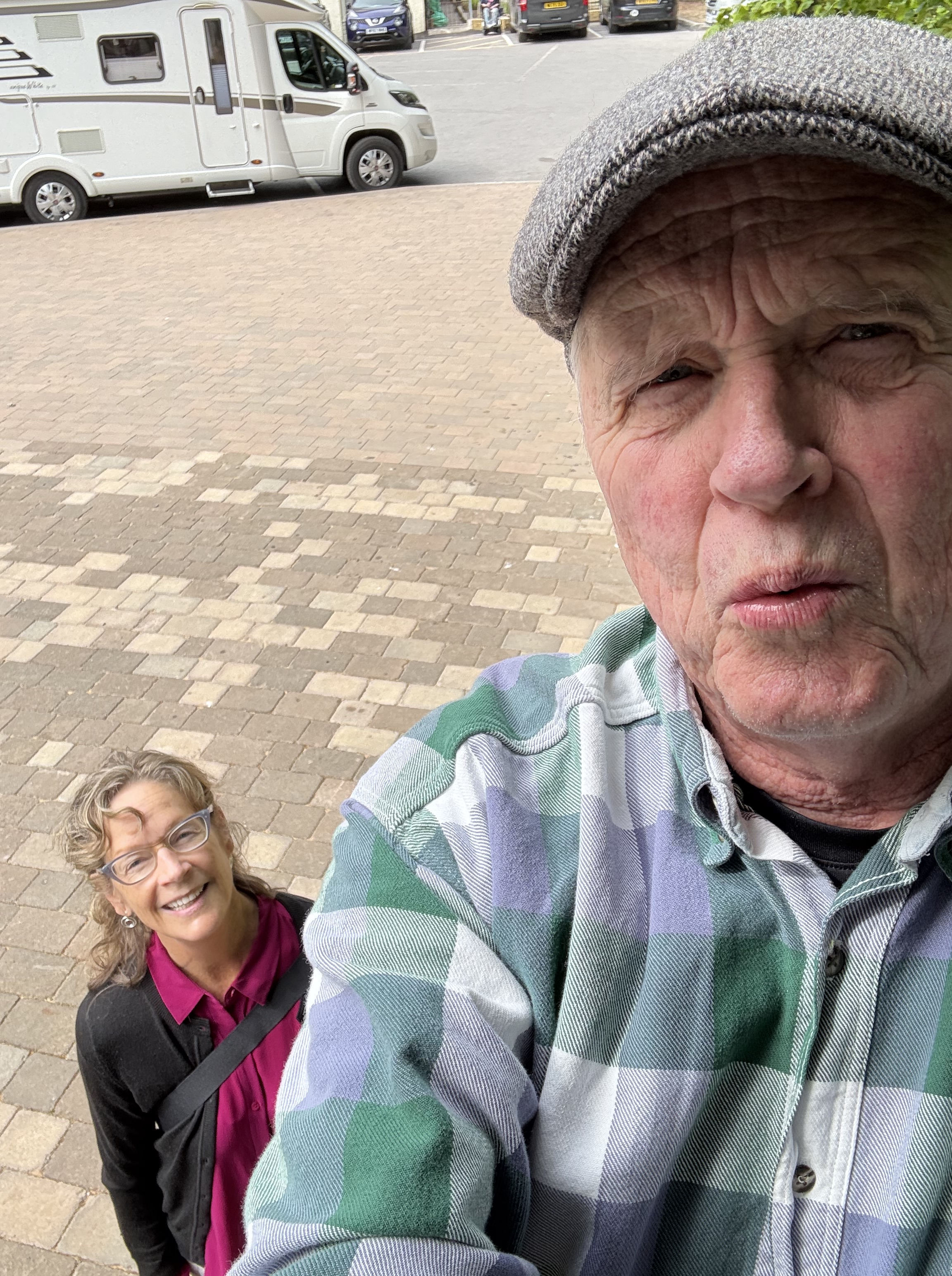
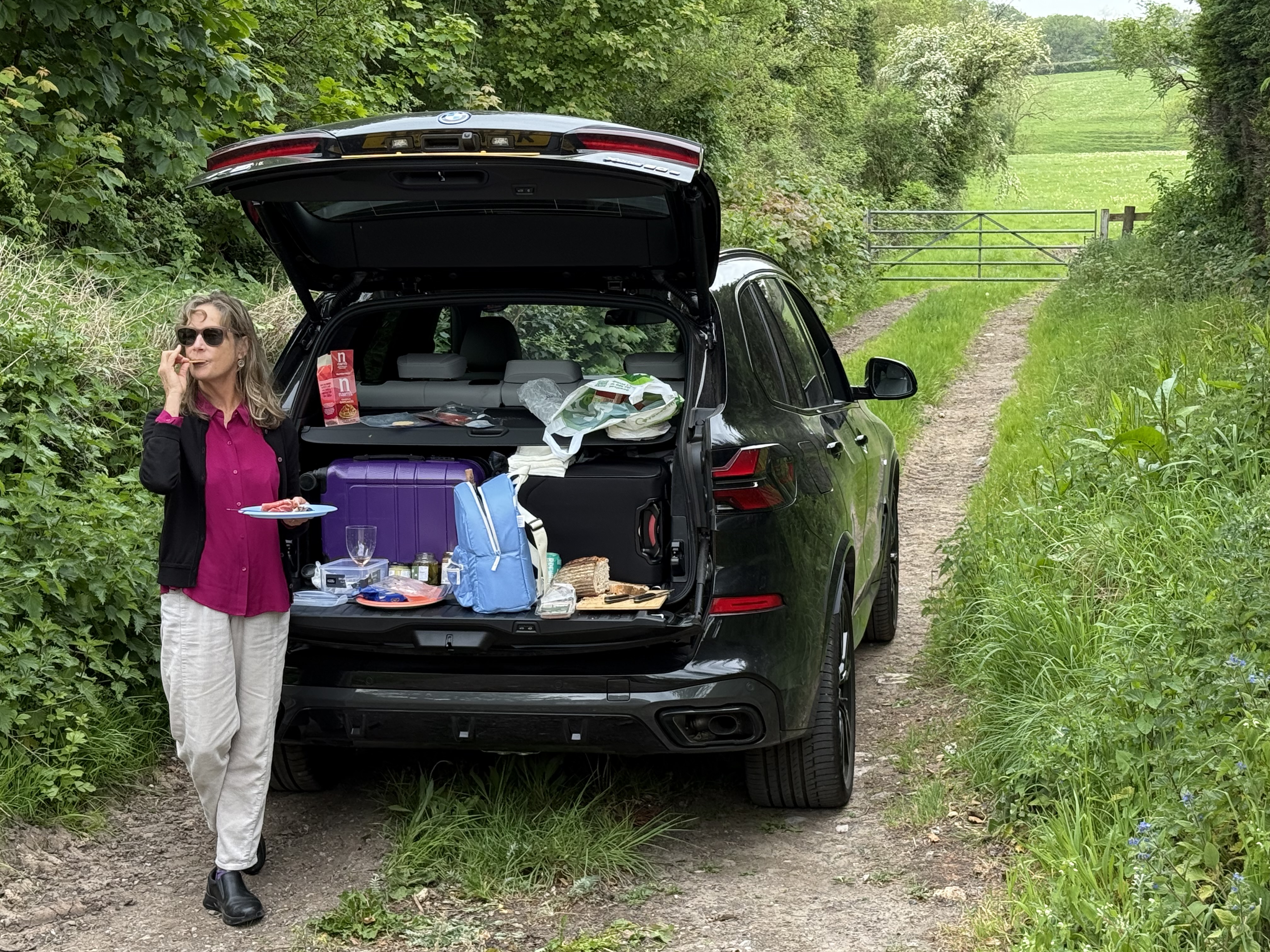
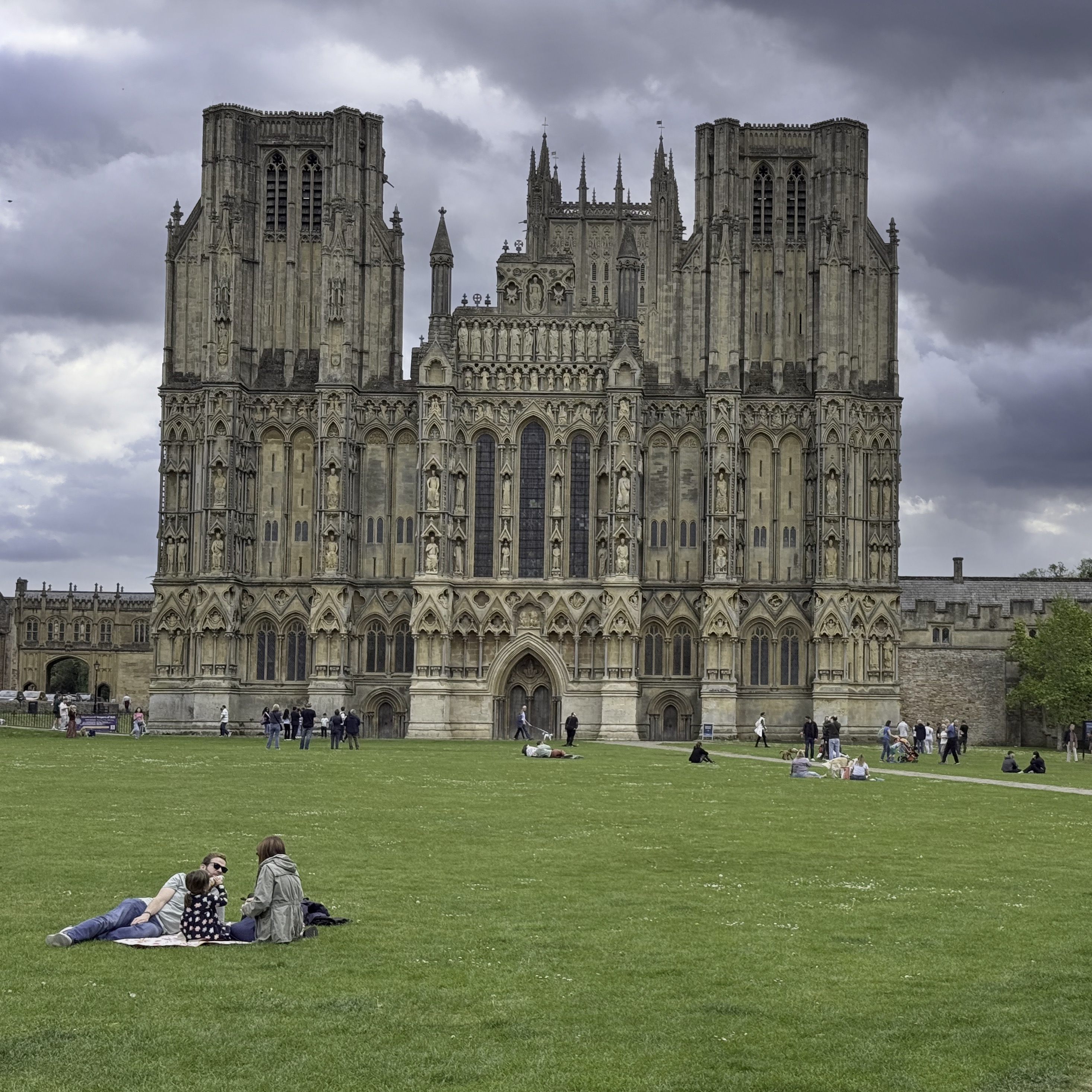
At lunchtime, we park in a secluded lane, pop the hatchback and enjoy a tailgate picnic of cheddar cheese (naturally), pâté, cornichons, baguette, prosciutto, oatcakes, and a glass of rosé. Thus fortified, we navigate to the cathedral town of Wells, where we initially mistake St. Cuthbert’s Church (impressive in itself) for the far more imposing Wells Cathedral. By the time we realize our error it is time to push on. Note to selves: Wells seems a charming, livable place, and warrants another visit the next time we are in the area.
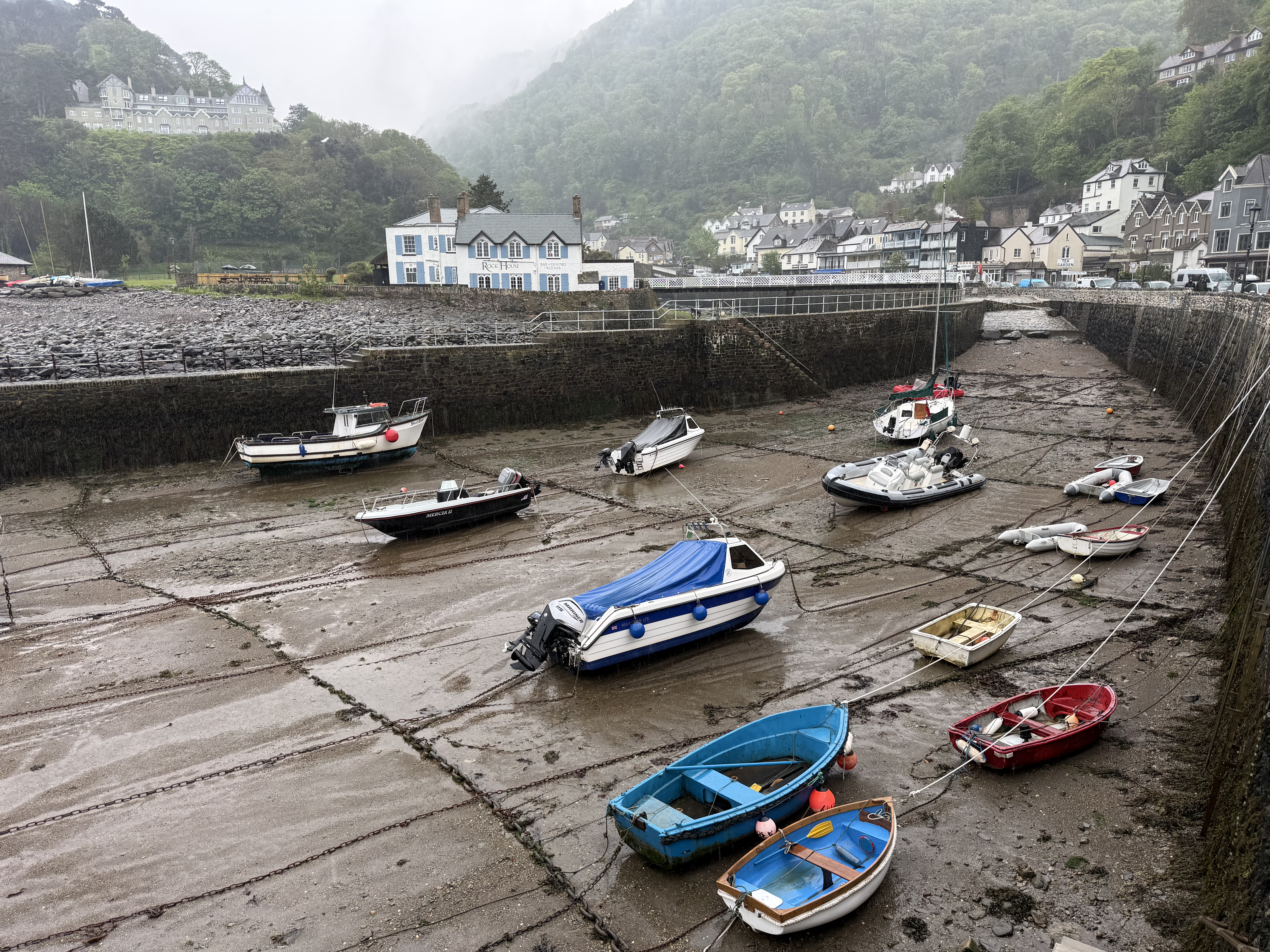
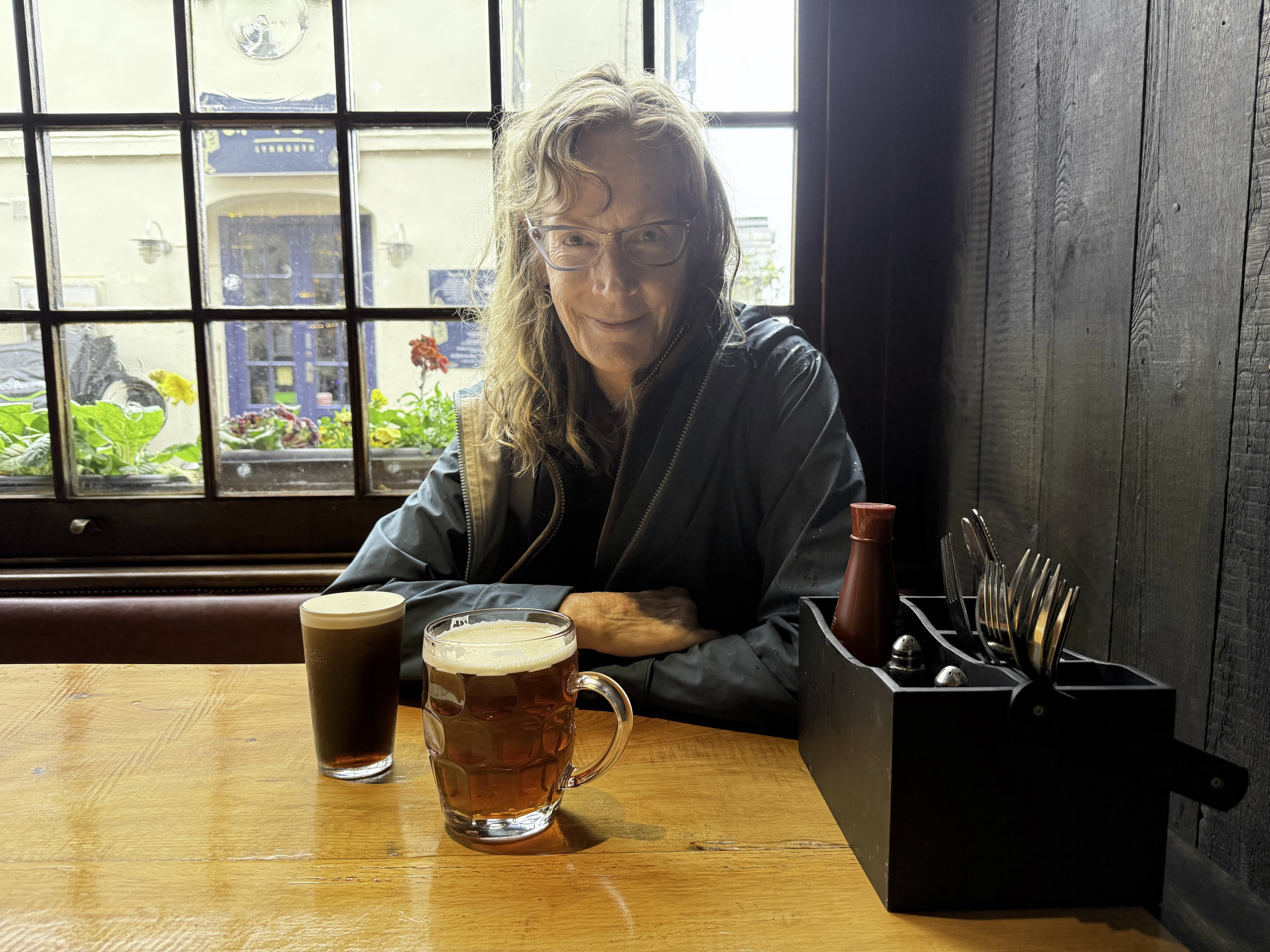
We continue south, along miles of flat seaside bluffs punctuated by occasional rollercoaster dips in and out of wooded valleys. In the late afternoon, we descend a deep river gorge blanketed by dense woodlands and arrive in the port village of Lynmouth. Known since Victorian times for its ingenious funicular railway powered only by water displacement and gravity, Lynmouth is a scenic coastal port surrounded by steep forested cliffs. Mizzling rain dampens the streets, and after a soggy stroll around the harbor, it’s clear that the wisest course of action is to duck into a pub for a pint.
Finally, after a long day of driving, we turn off the main road towards Clovelly, our destination for the next two nights. Motor vehicles are completely banned in the village, but because we have lodging reservations, we are allowed down a steep winding lane to a harborside parking area. Our hotel, The Red Lion Inn, is the only lodging and dining option accessible by automobile, and due to this monopoly on the tourist trade our expectations are low.
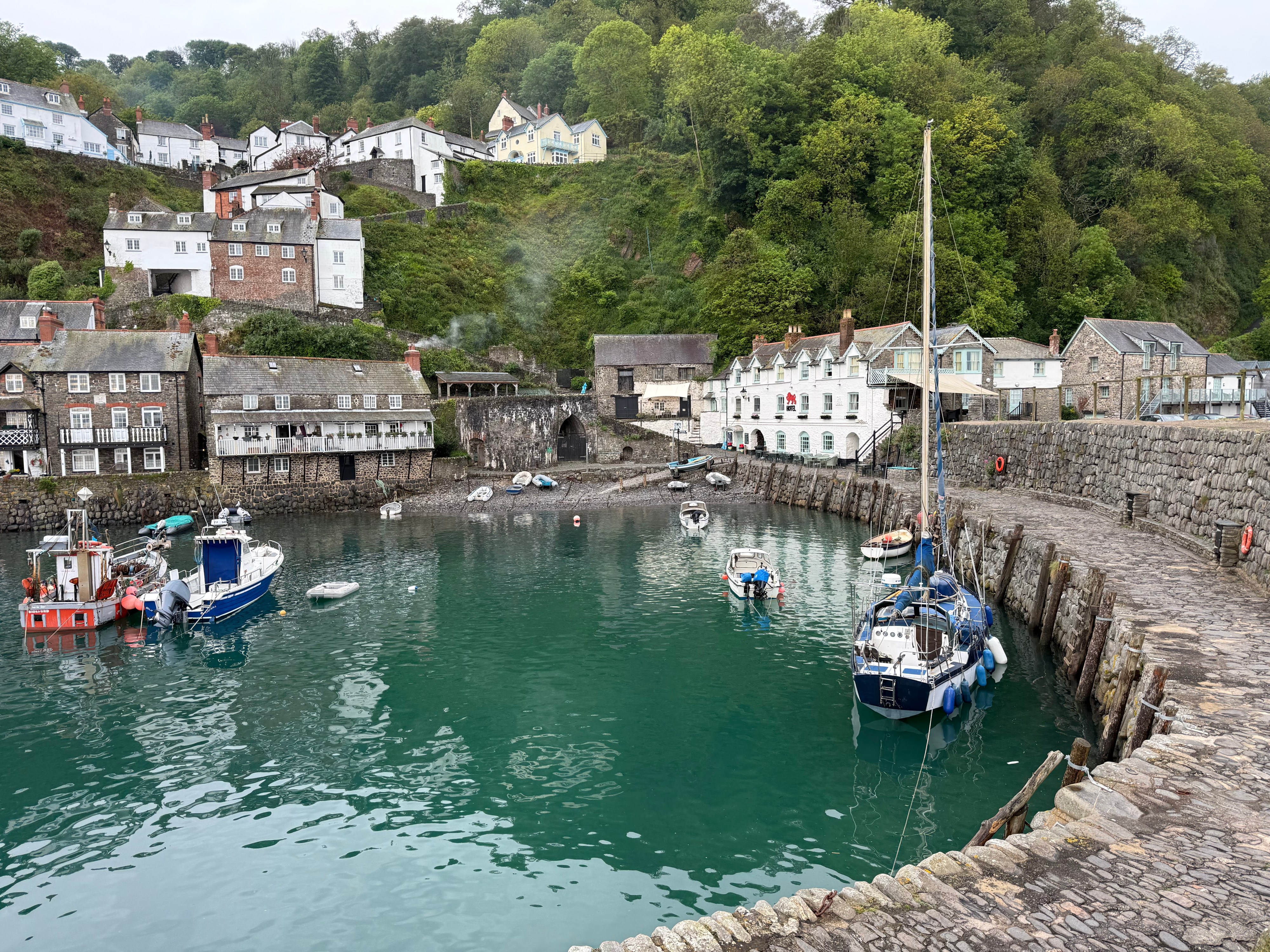
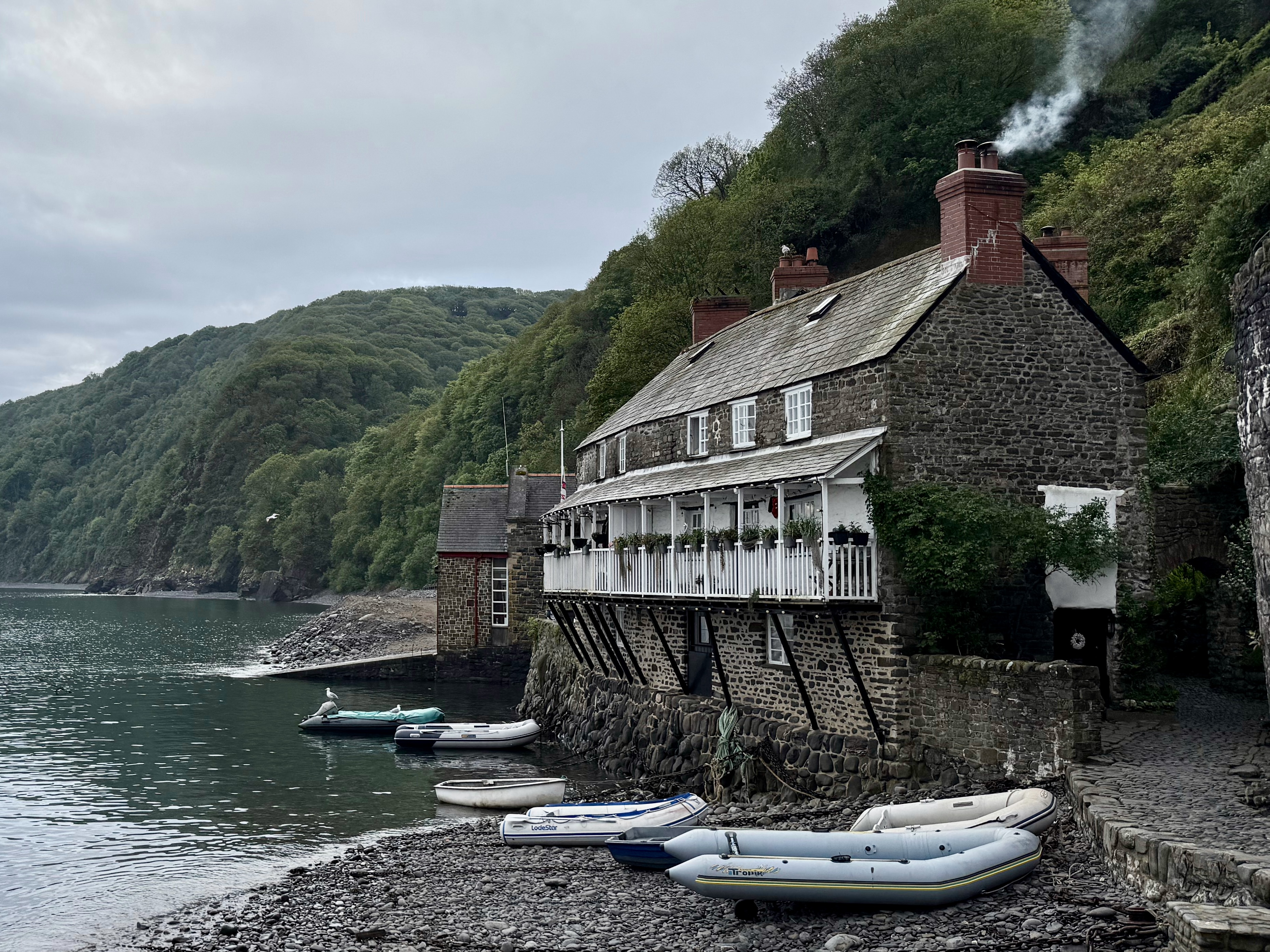
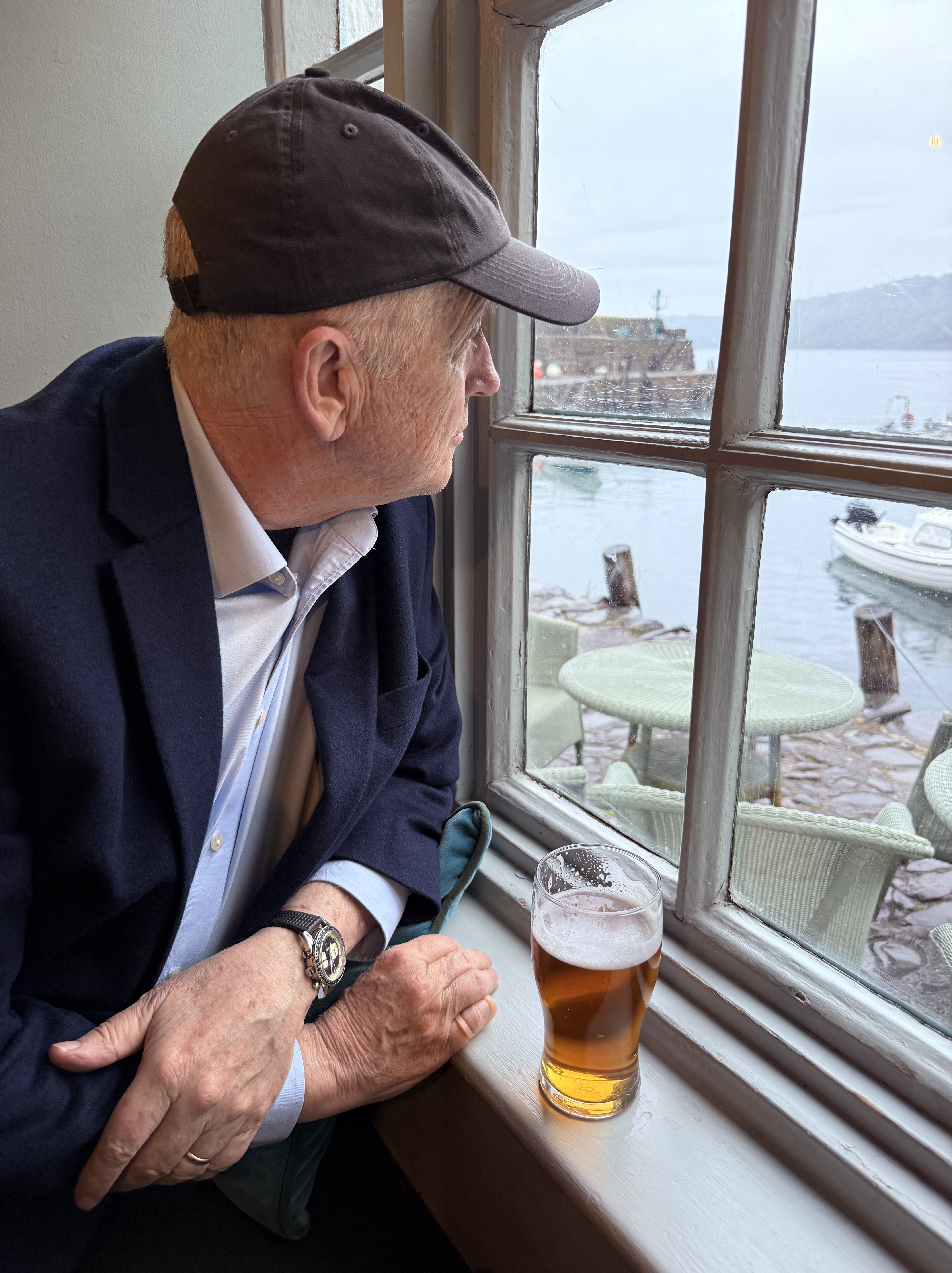
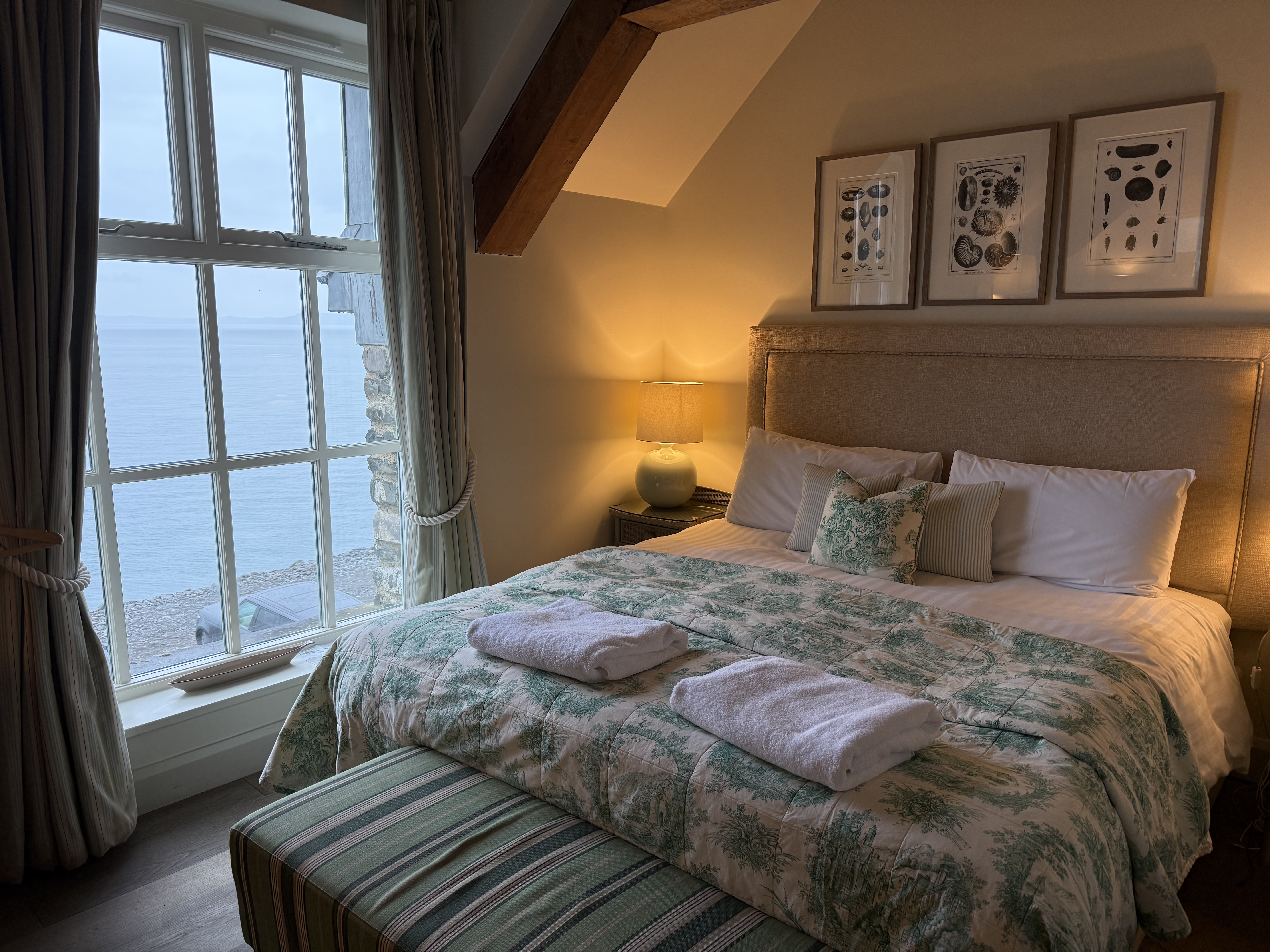
However, we are soon proved completely wrong, as the Red Lion Inn pleasantly exceeds our expectations on all counts. Our room is tastefully decorated and reasonably spacious with a sleek, updated bathroom. The two dining options—casual pub dining or more elevated fare in the restaurant—both approach gourmet standards. The cherry on top is the hotel and restaurant staff; everyone is notably friendly and helpful.
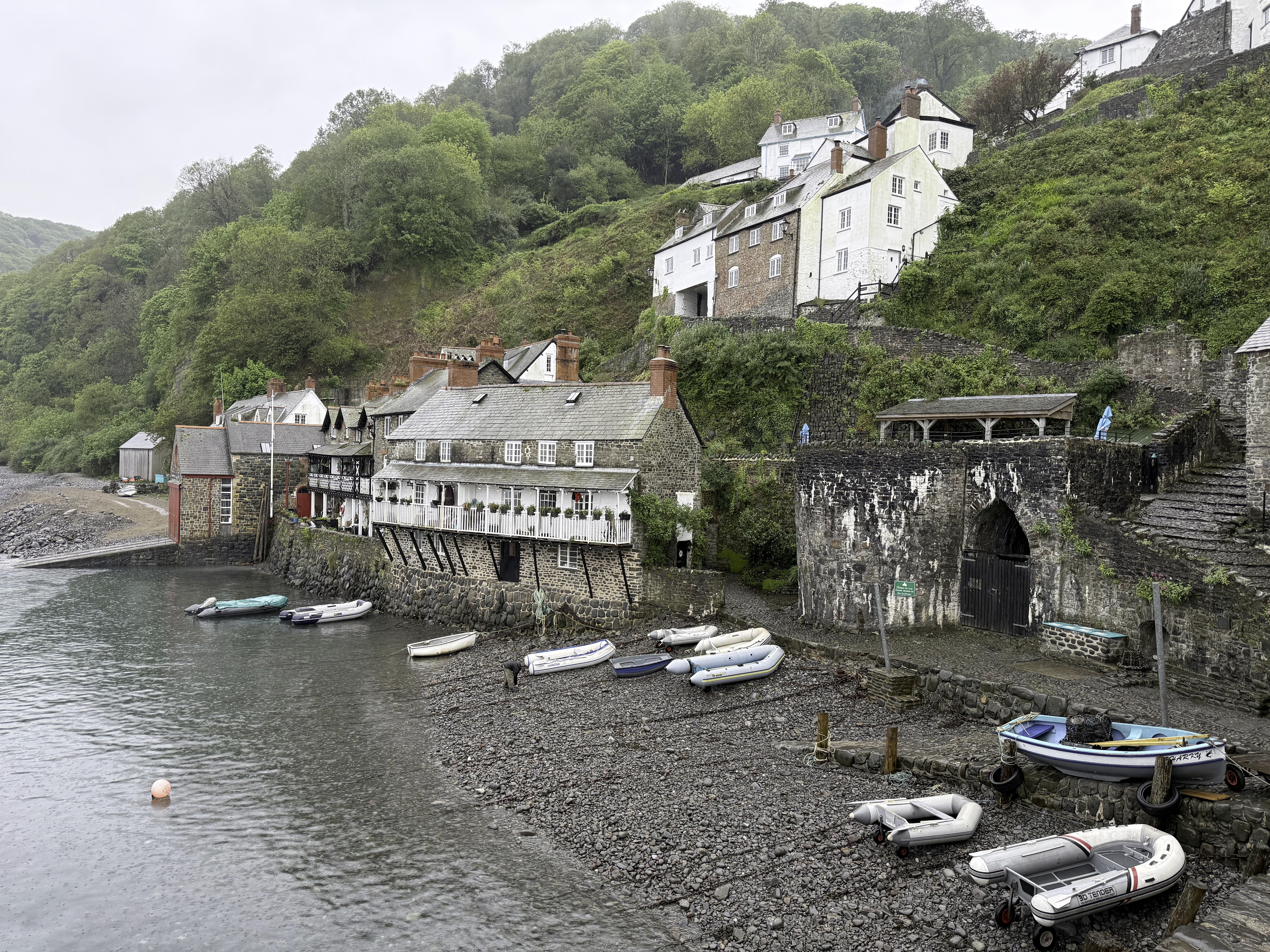
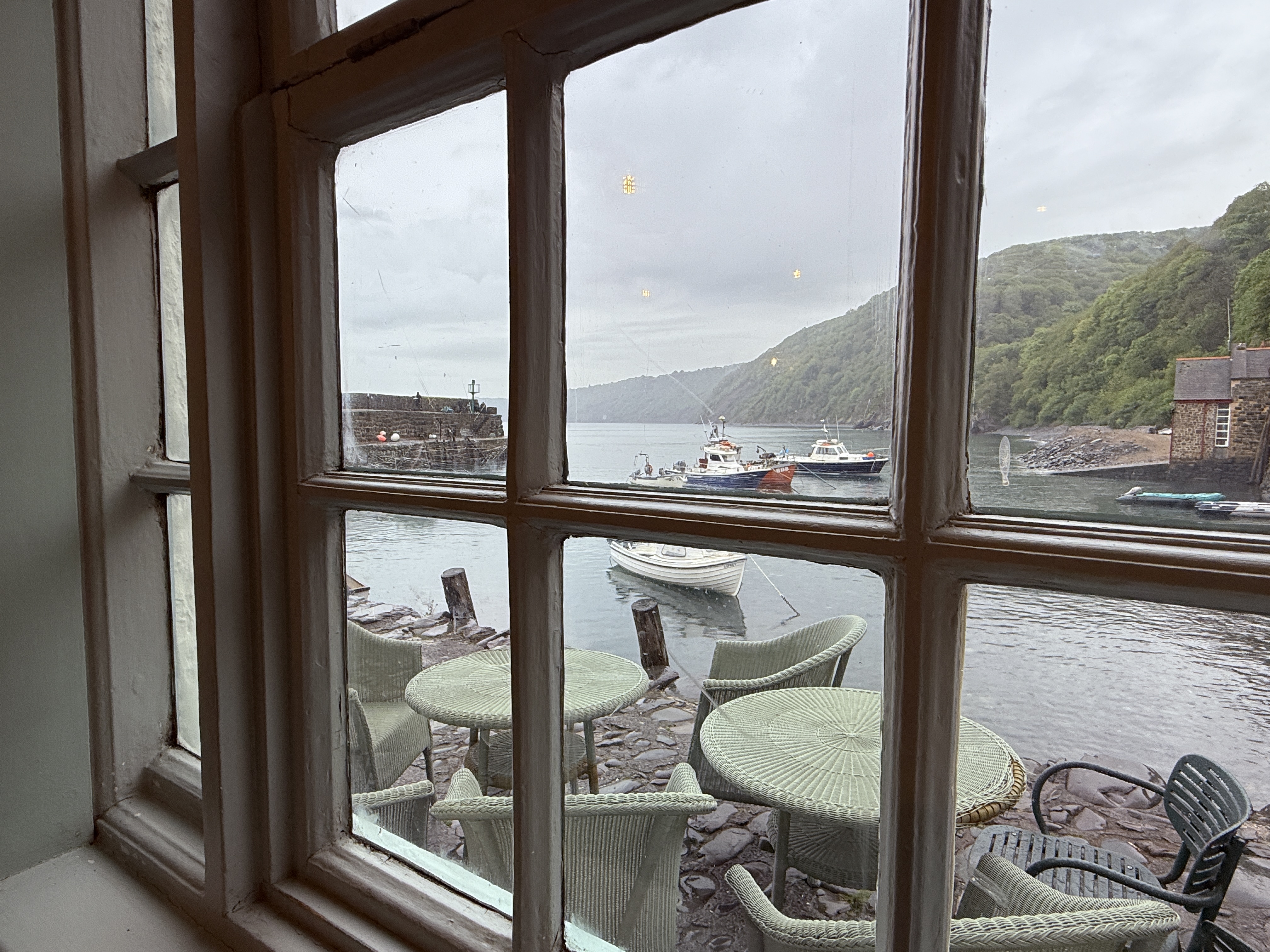
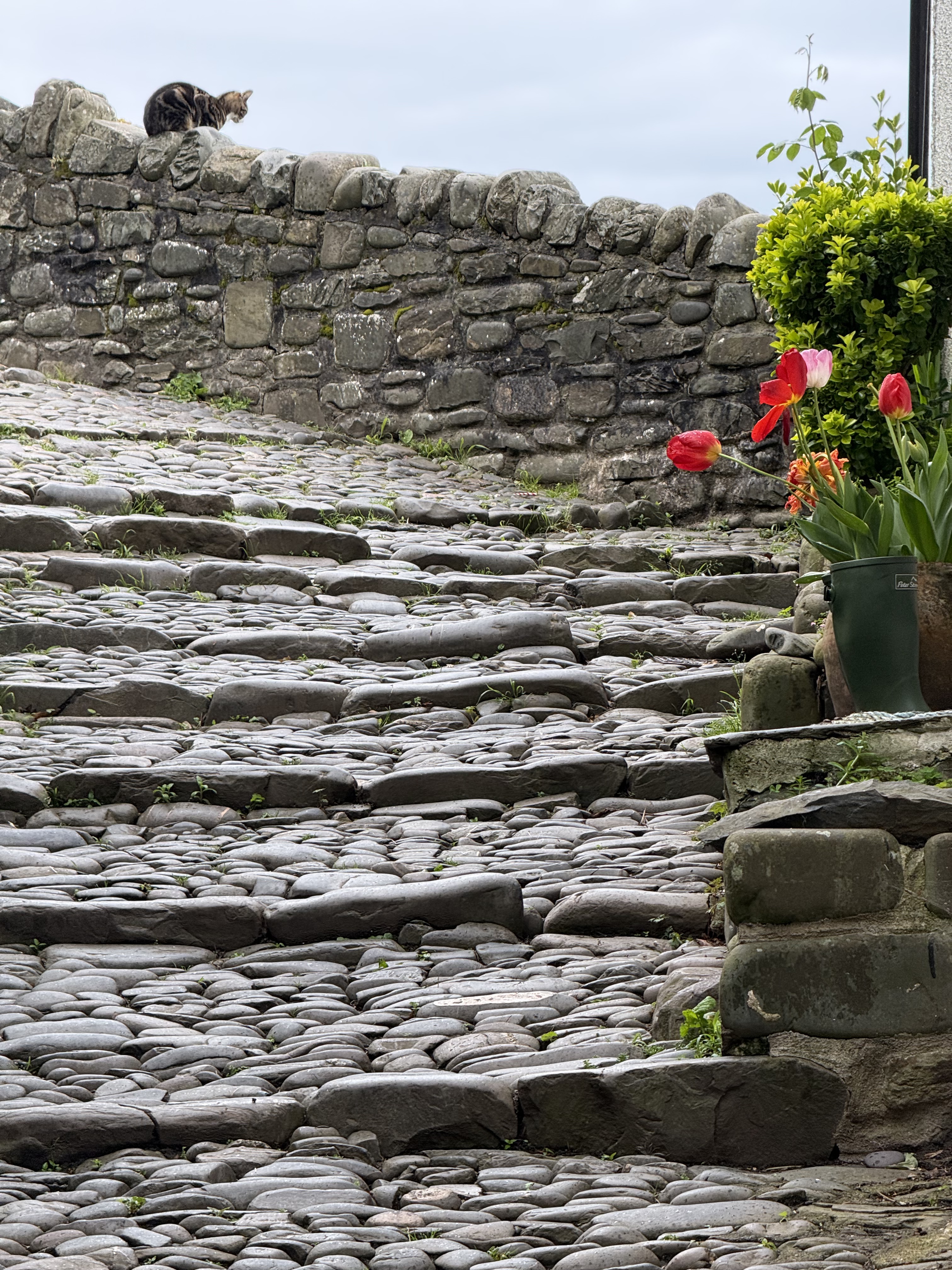
The next morning dawns gray and cool. Good hiking weather. After breakfast of scrambled eggs and smoked salmon, we trek up the steep cobbled path to the top of the village. Clovelly’s tiny harbor and village date from the 14th century, and all goods, groceries, and trash are still transported up and down the steep 400-foot incline using traditional wooden sledges pulled by men or donkeys. We explore the warren of cobbled paths bordered by white-washed cottages and try to imagine day-to-day life here in centuries past.
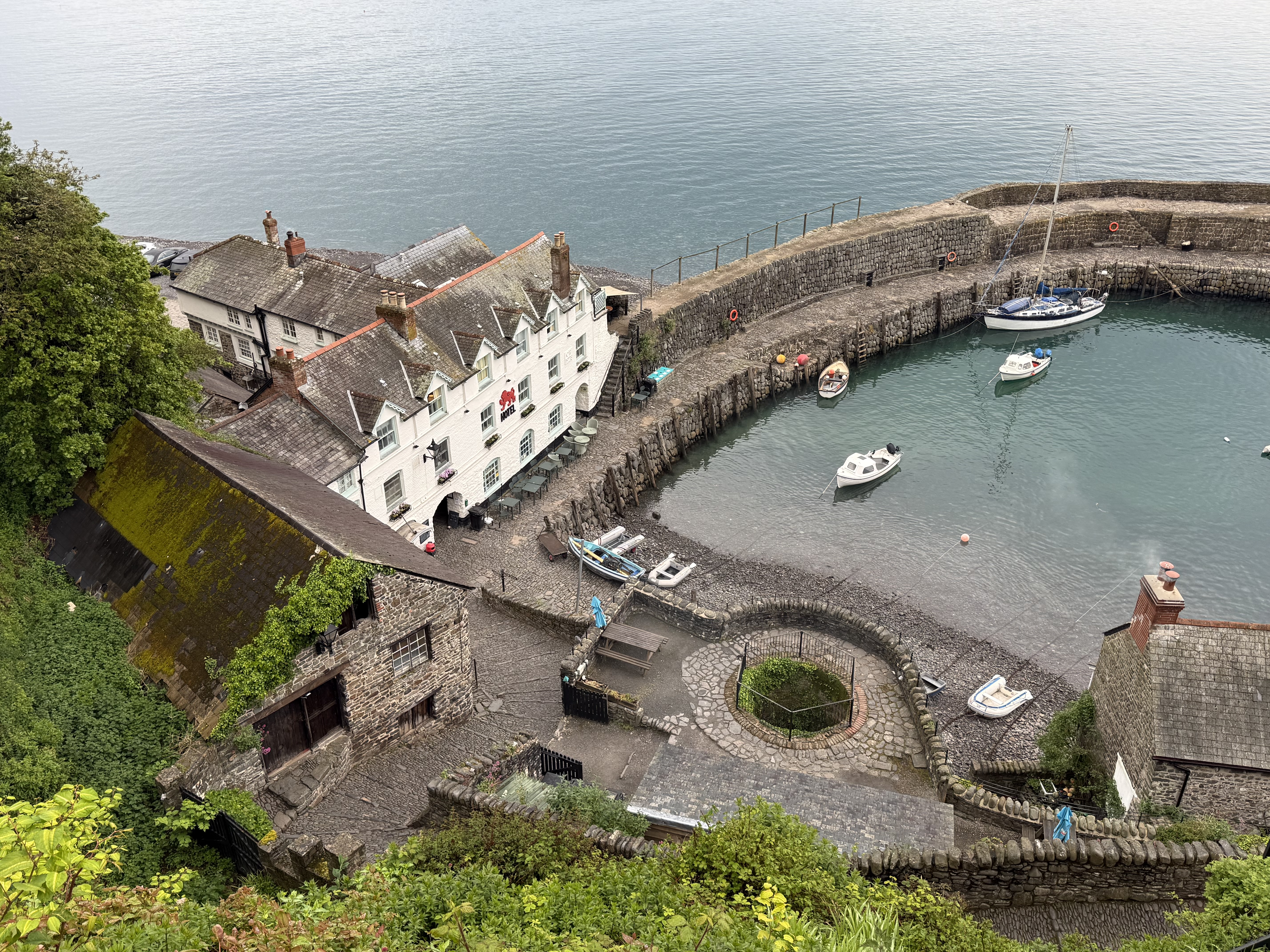
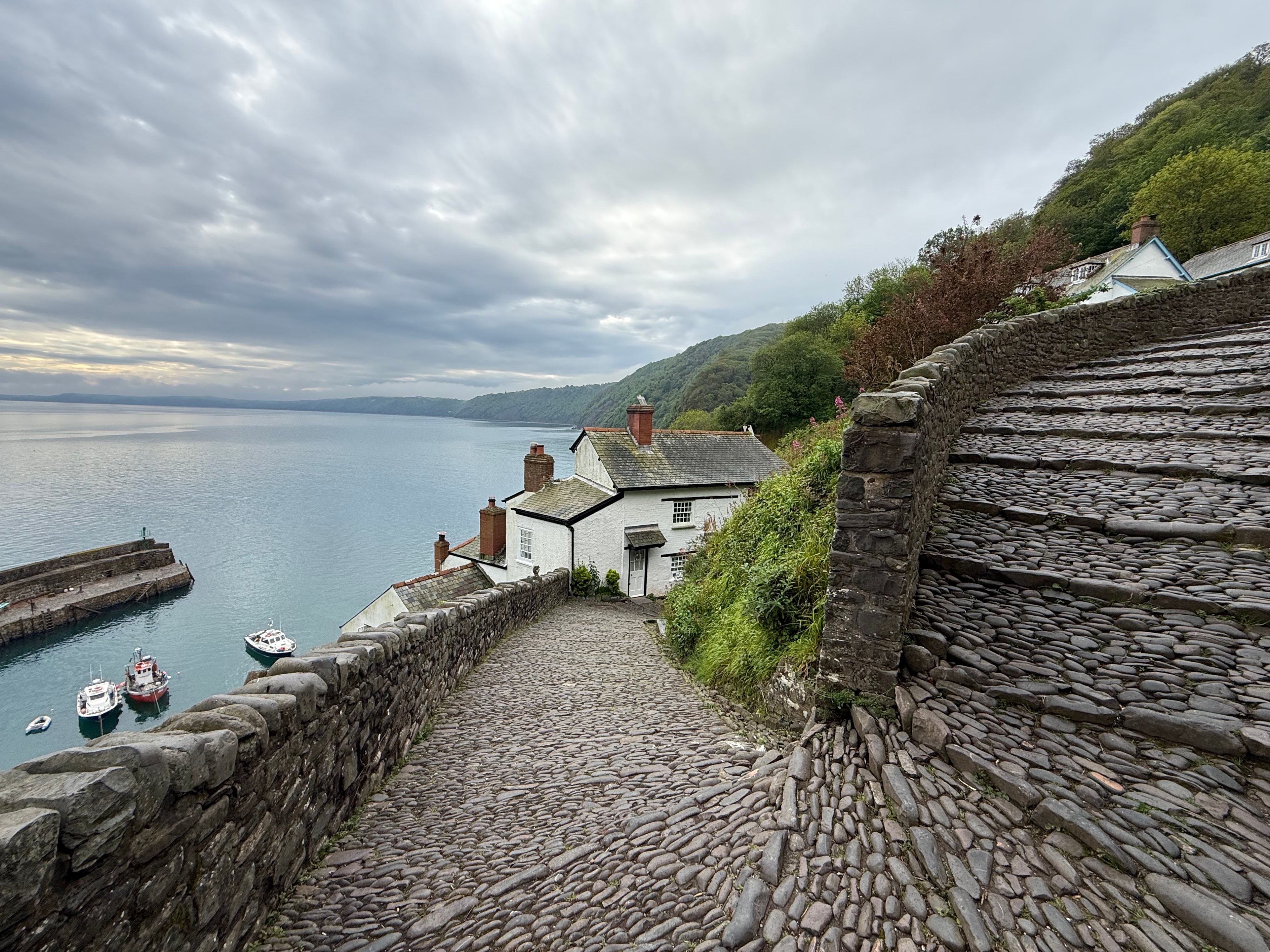
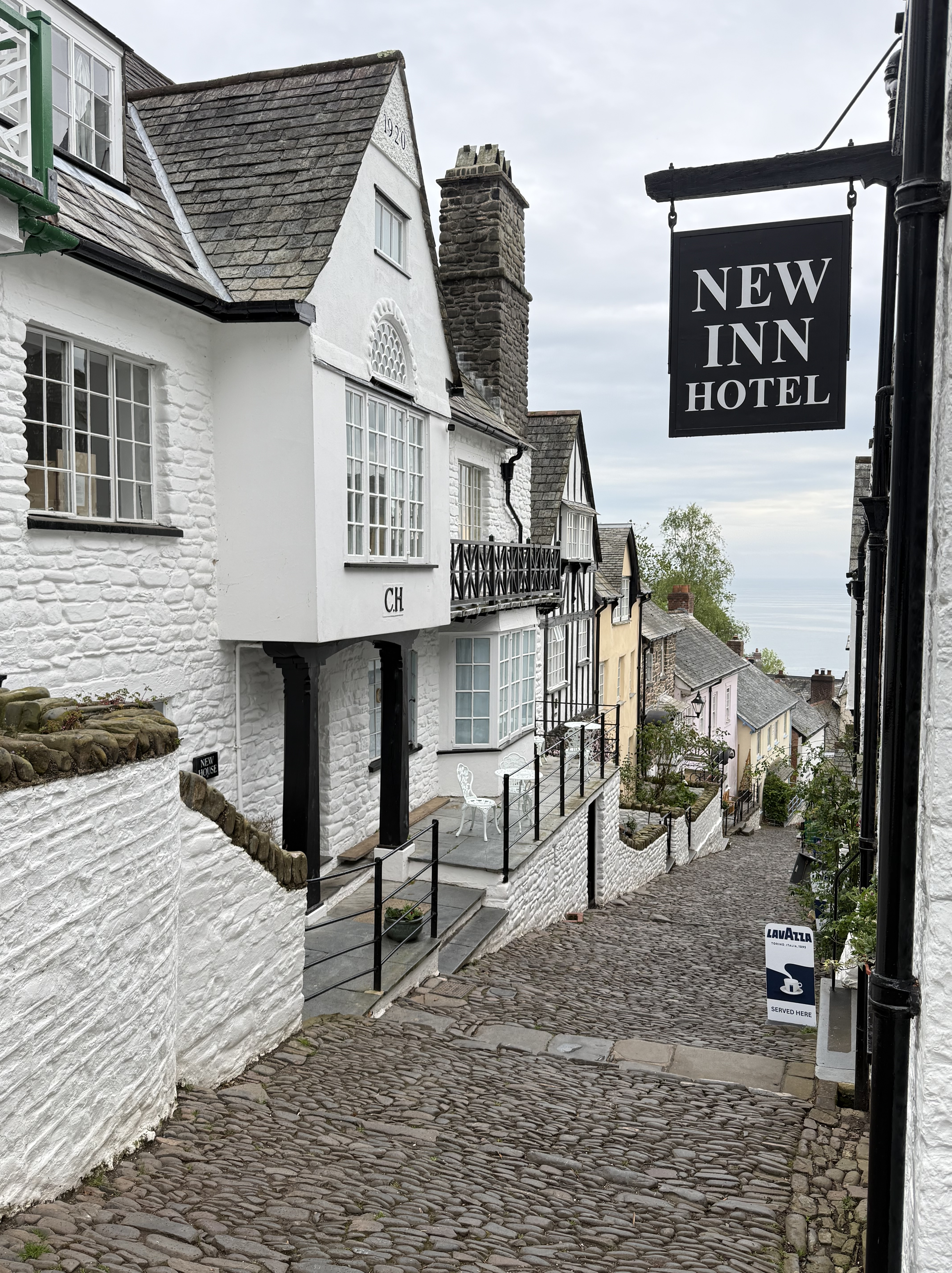
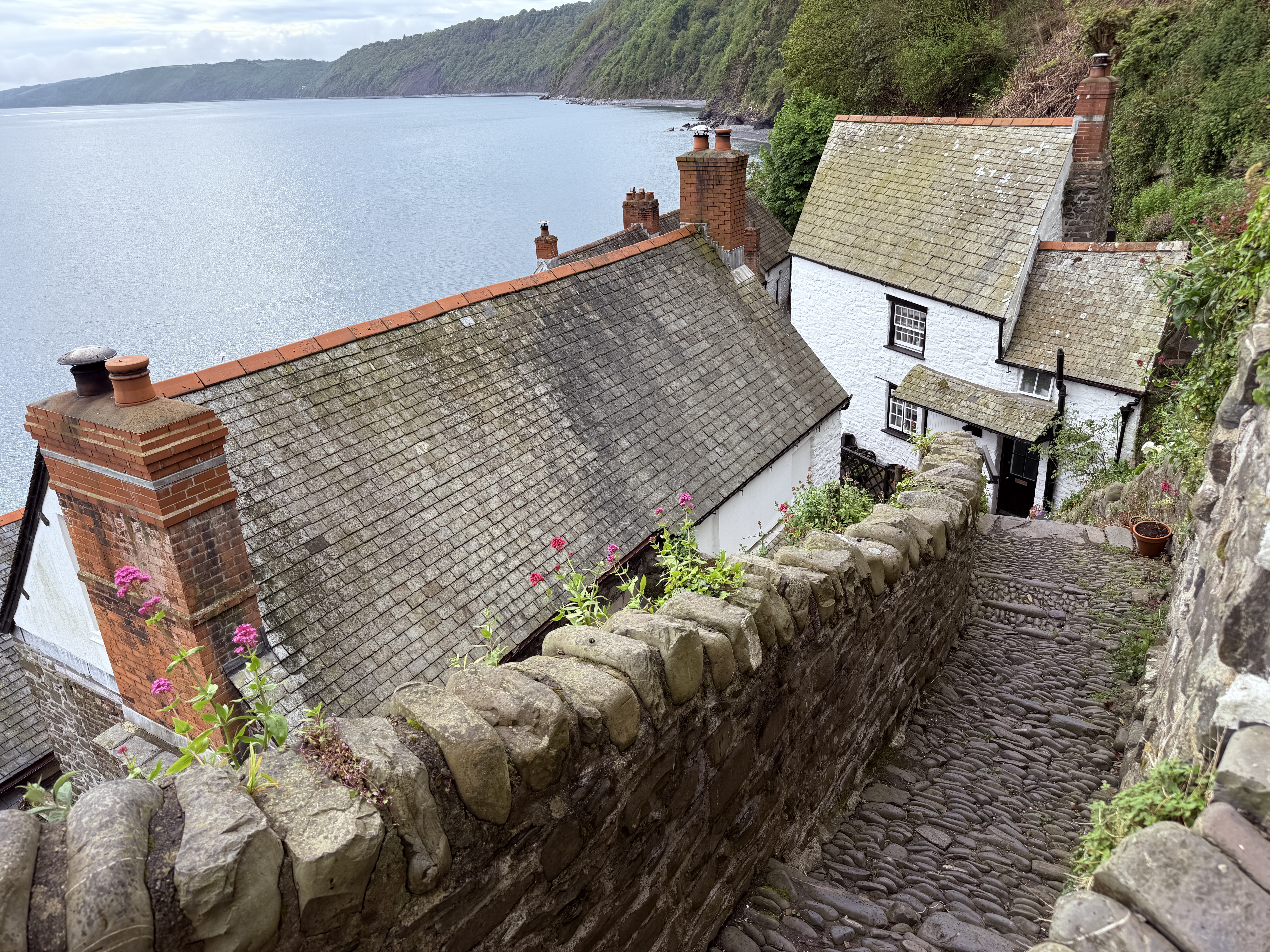
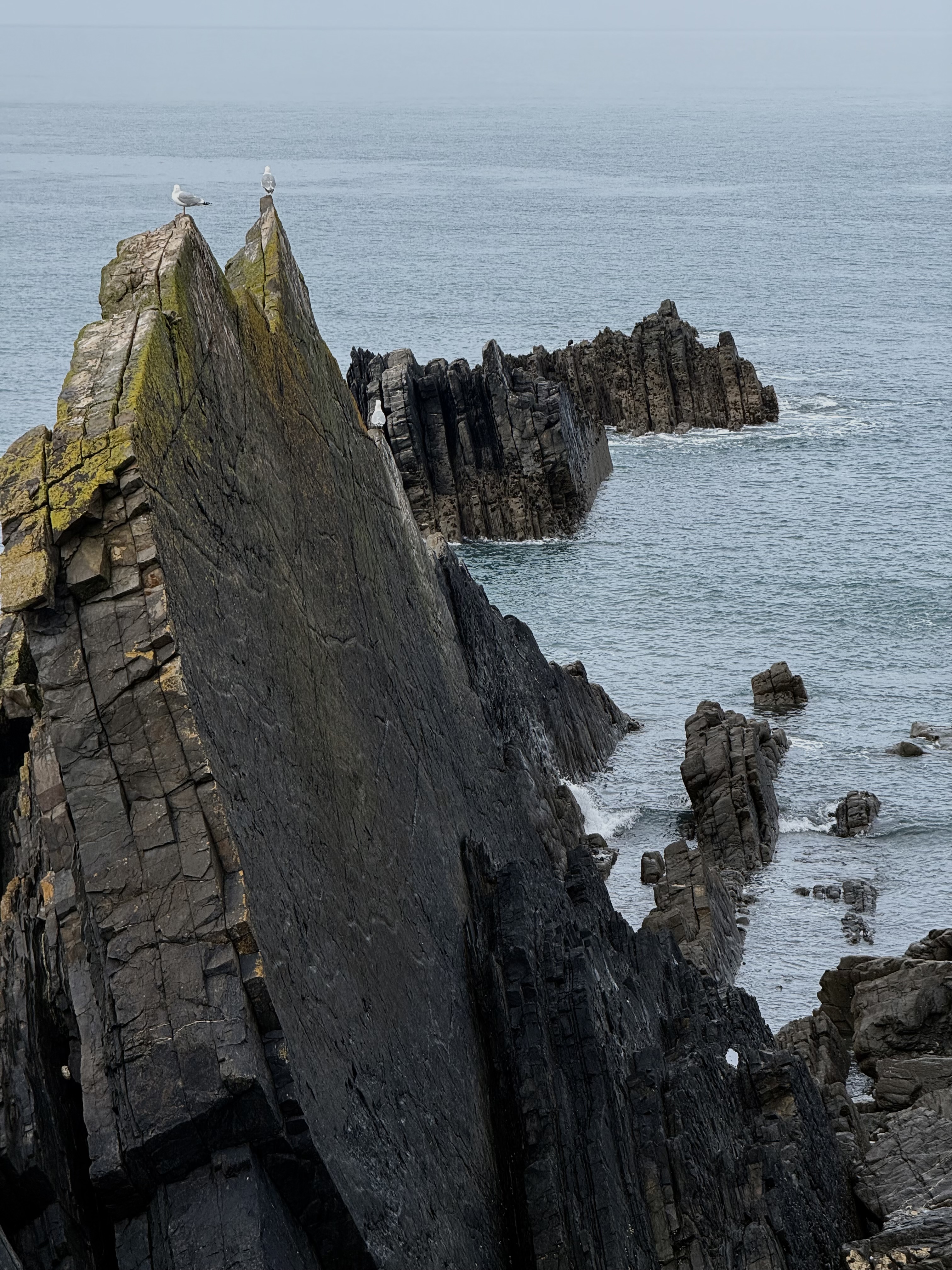
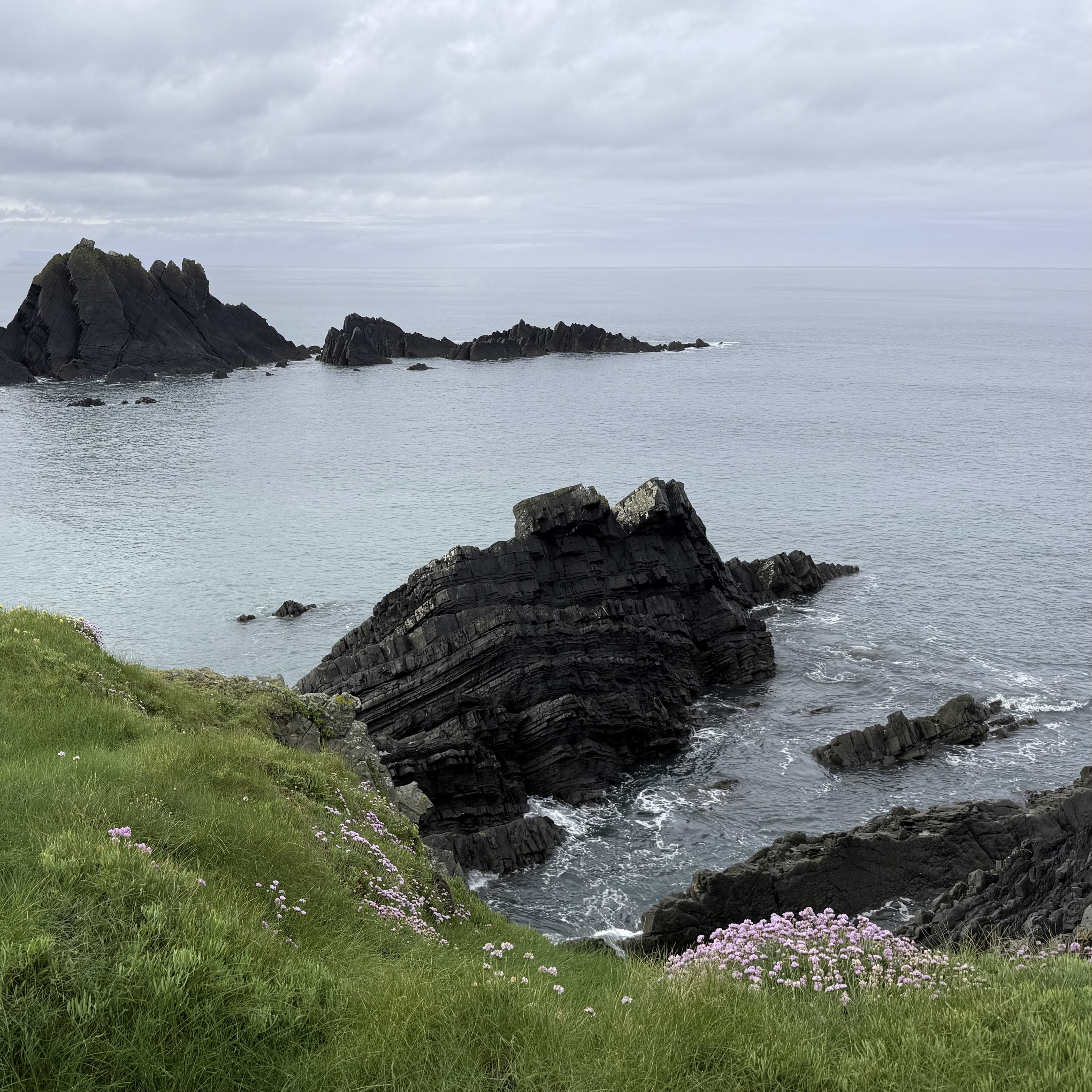
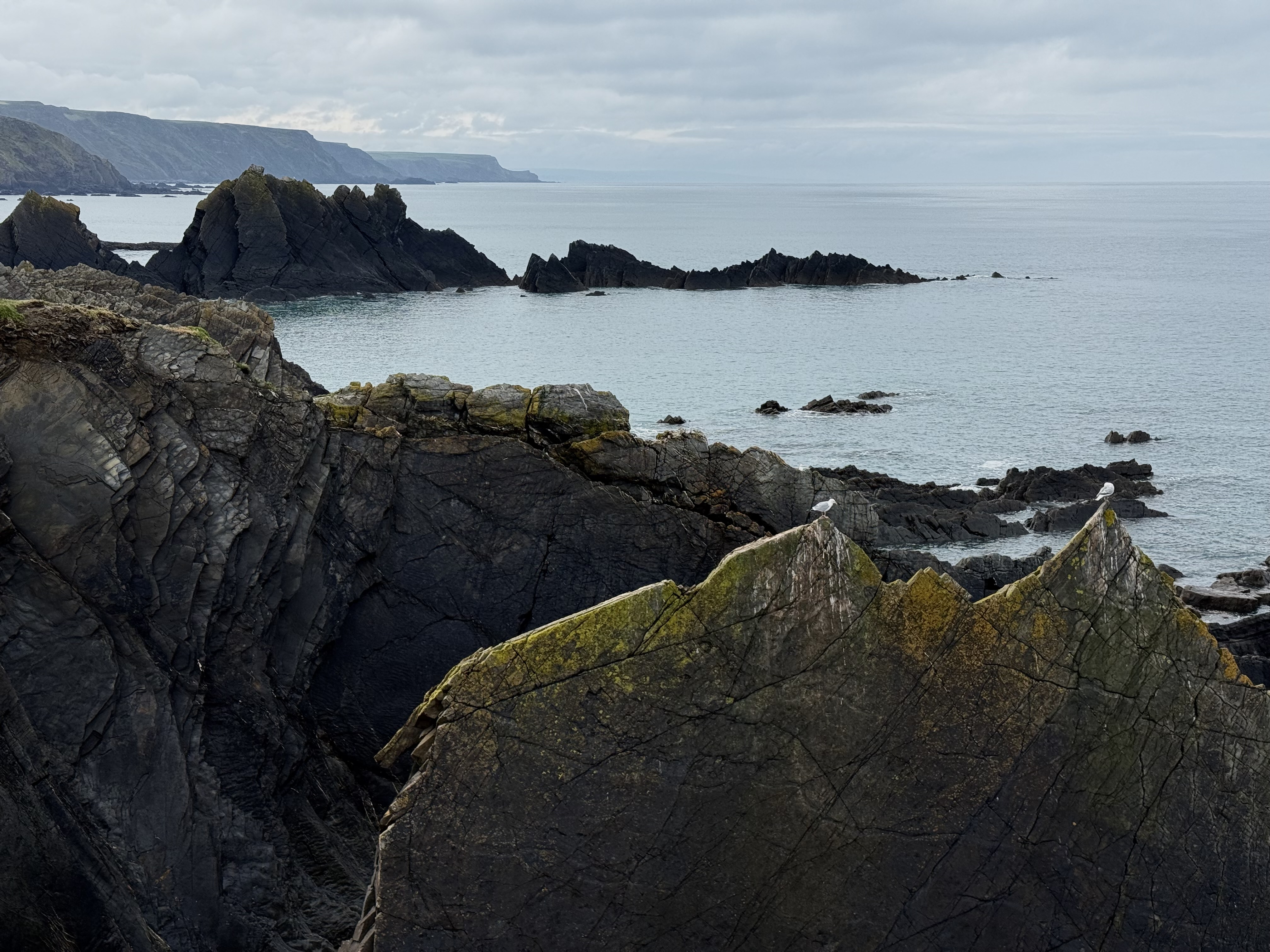
Dave has prepared an itinerary for touring the surrounding area, and our first stop is Hartland Quay, a rugged coastal inlet famous for its folded rock strata, ferocious seas, and the remnants of a 16th century trading port. Throughout history, numerous boats have wrecked off the coast here, and more recently it has been the location for television and film shoots, such as the 2020 British film of the Daphne du Maurier novel, “Rebecca.”
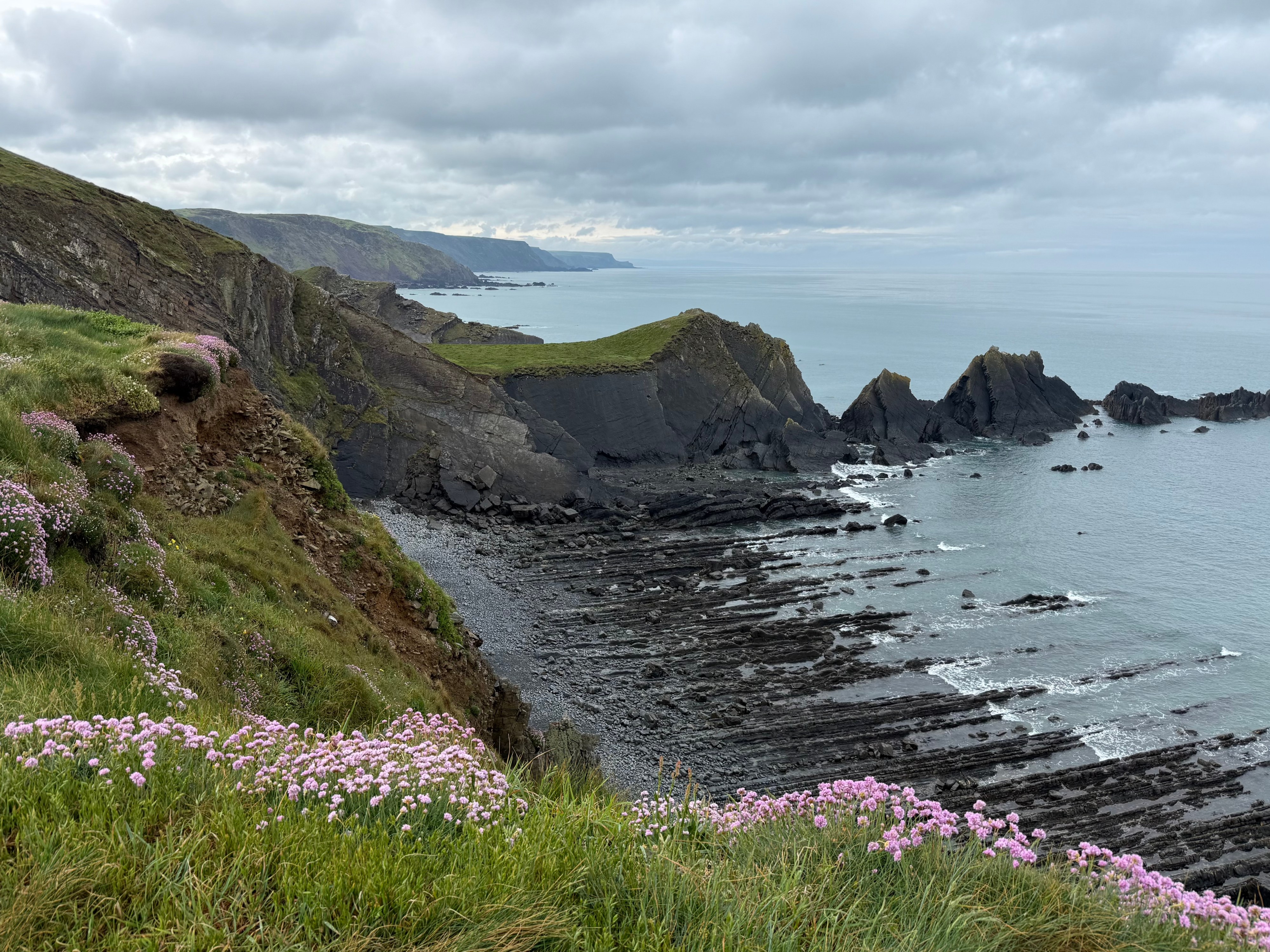
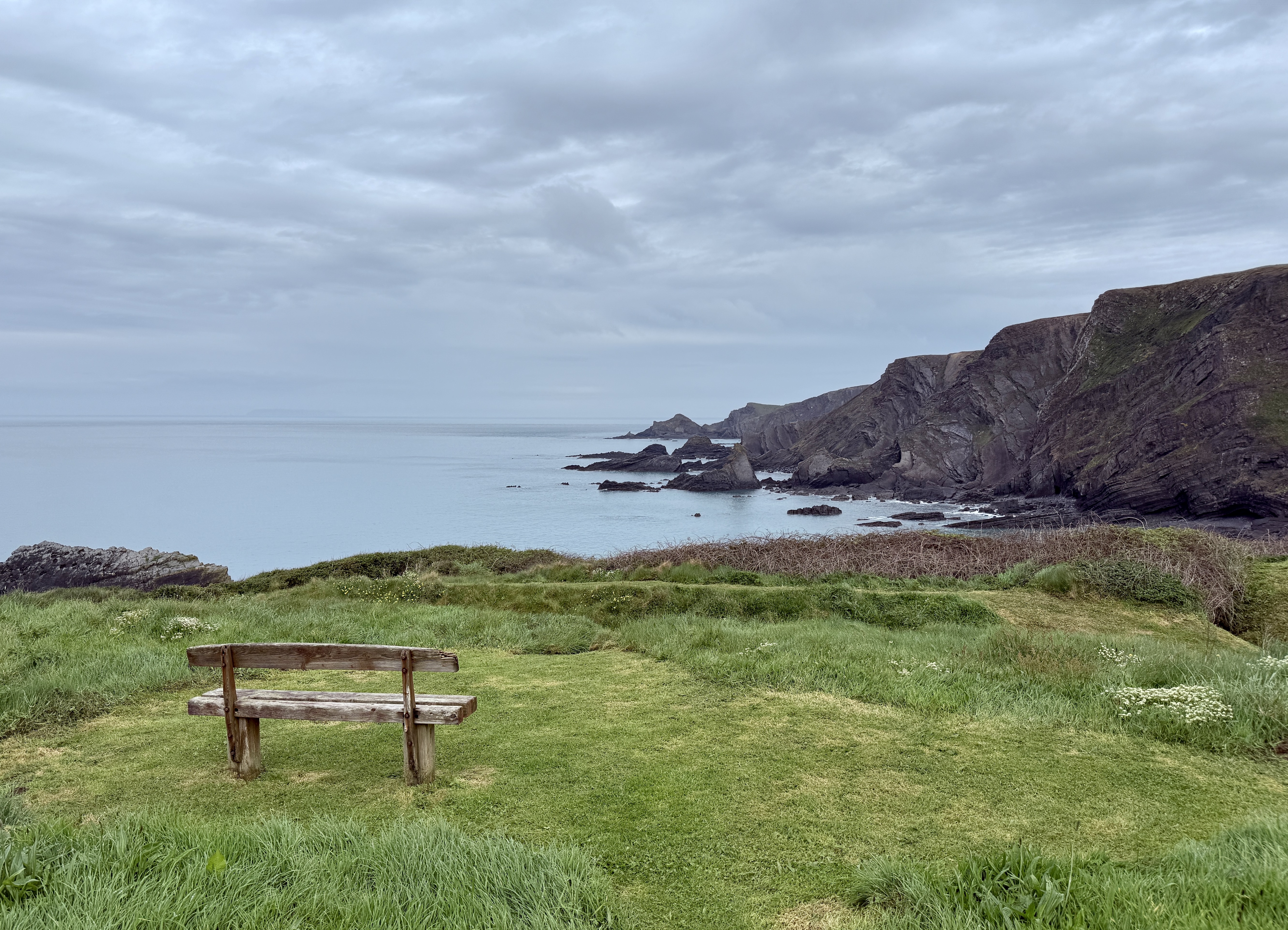
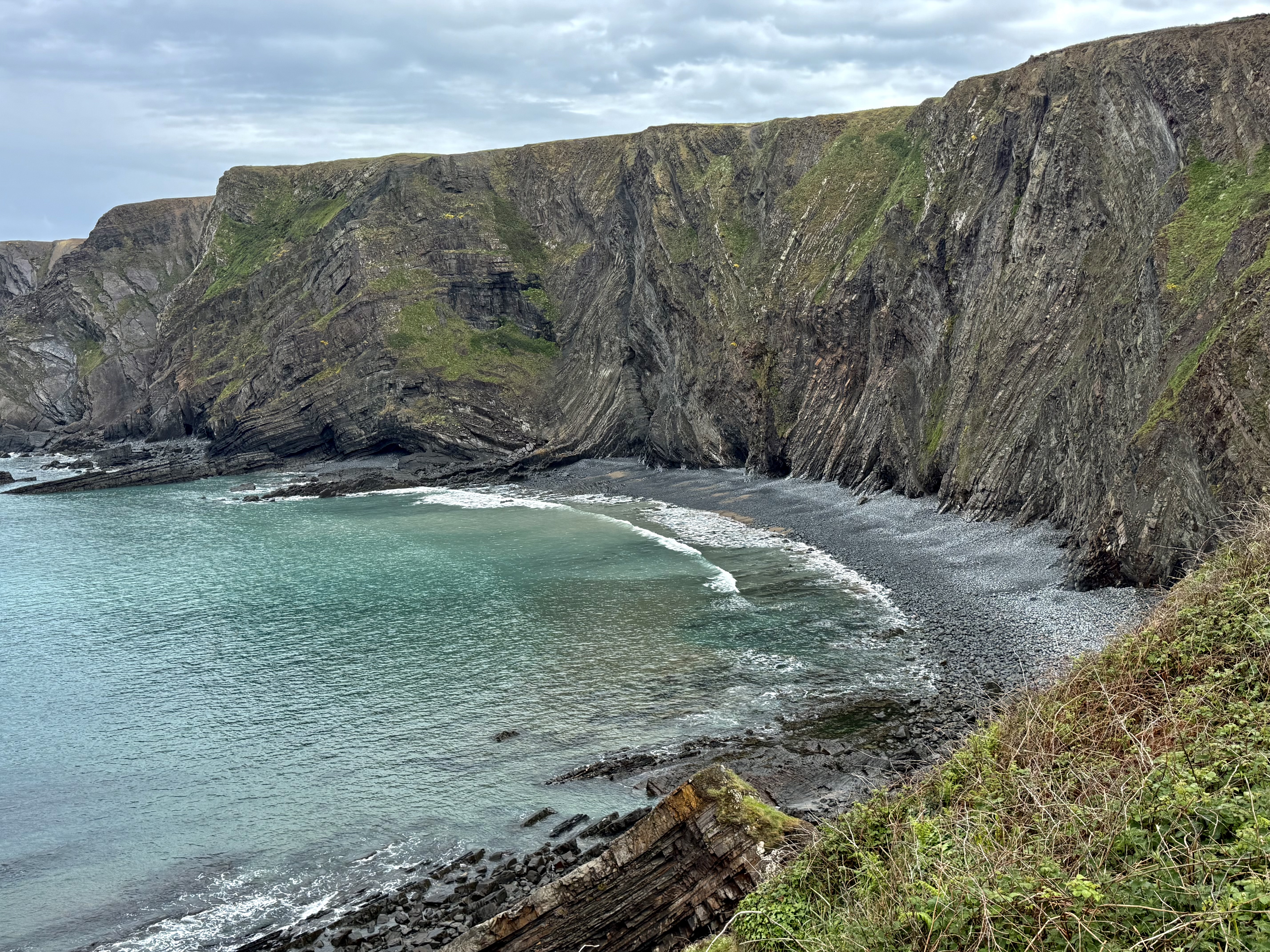
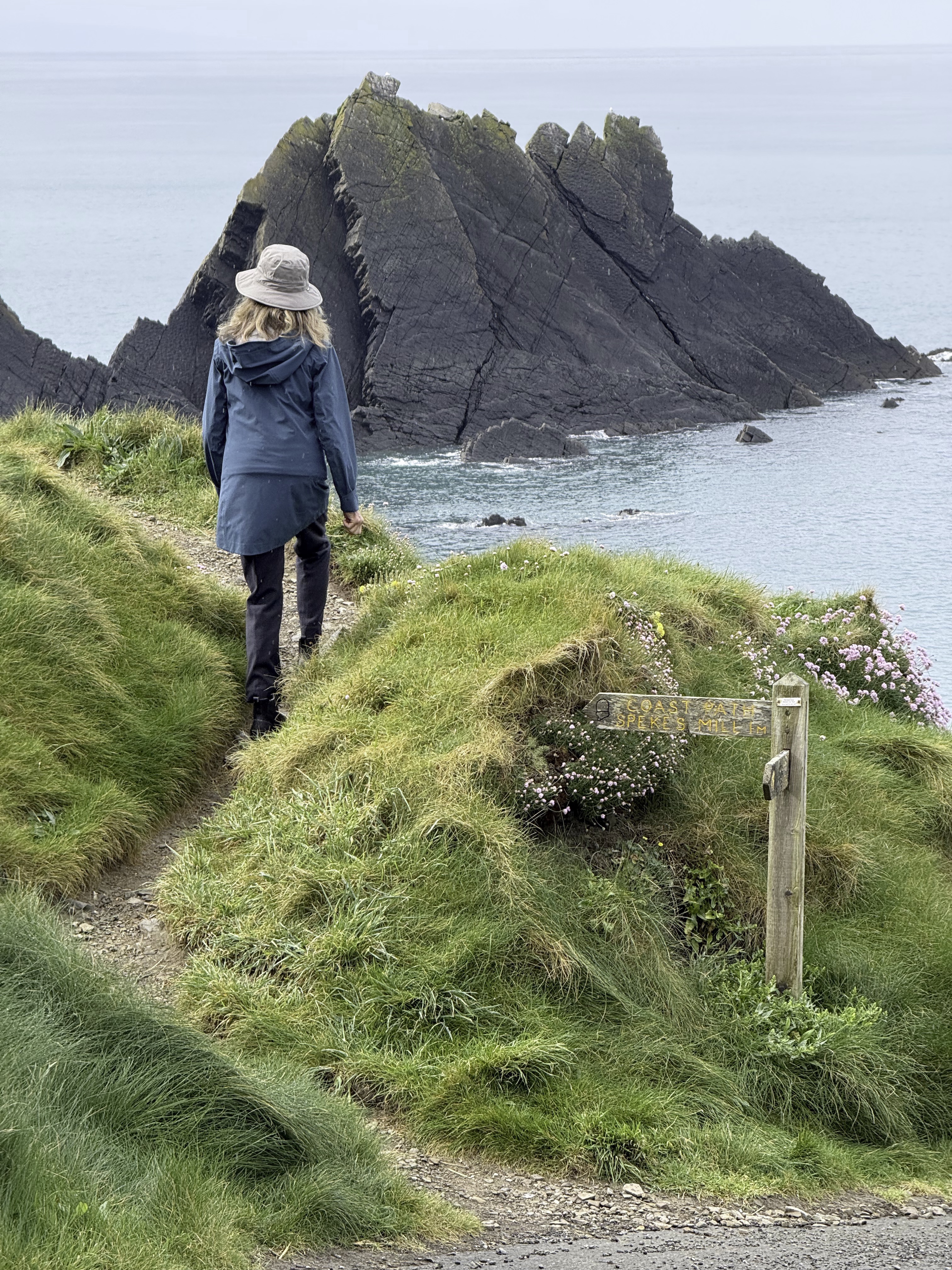
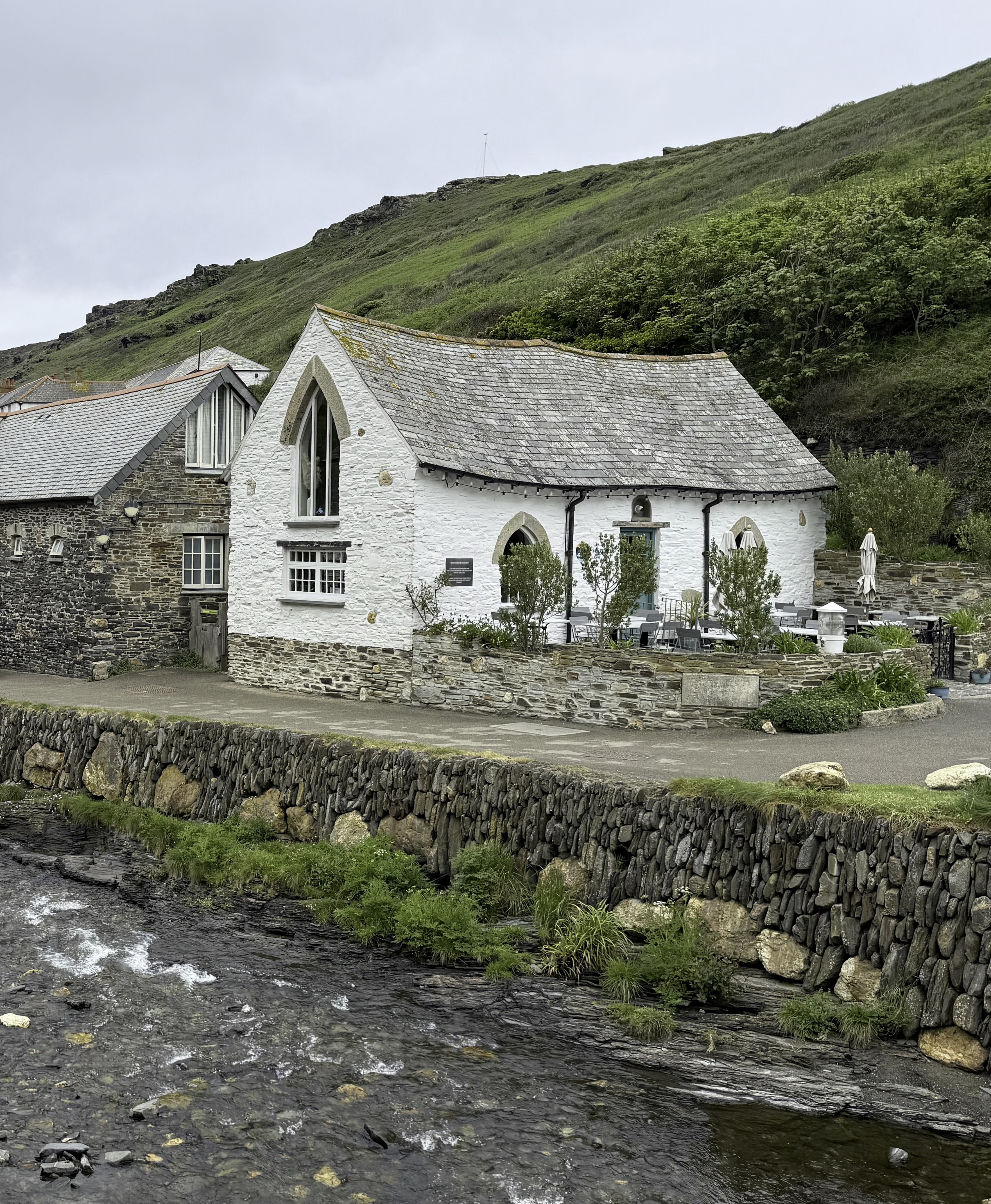
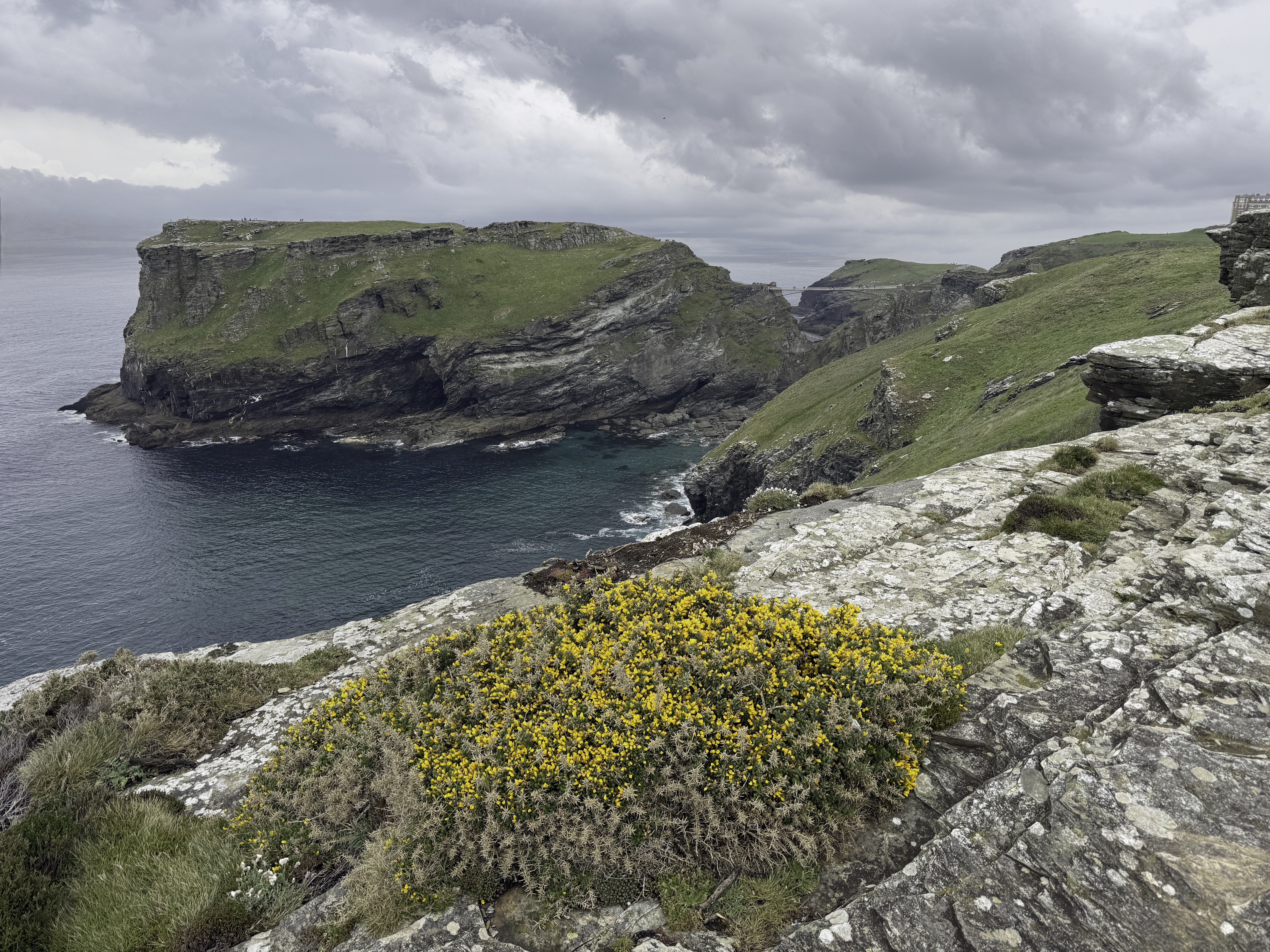
We treat ourselves to lunch in Boscastle, yet another scenic coastal port on the Devon coast, and then head further south to Tintagel castle. Situated on a rocky headland accessible only by a steep, treacherous isthmus path (or, since August 2019, a daring suspension footbridge) this is the site where, according to myth, King Arthur was magically conceived.
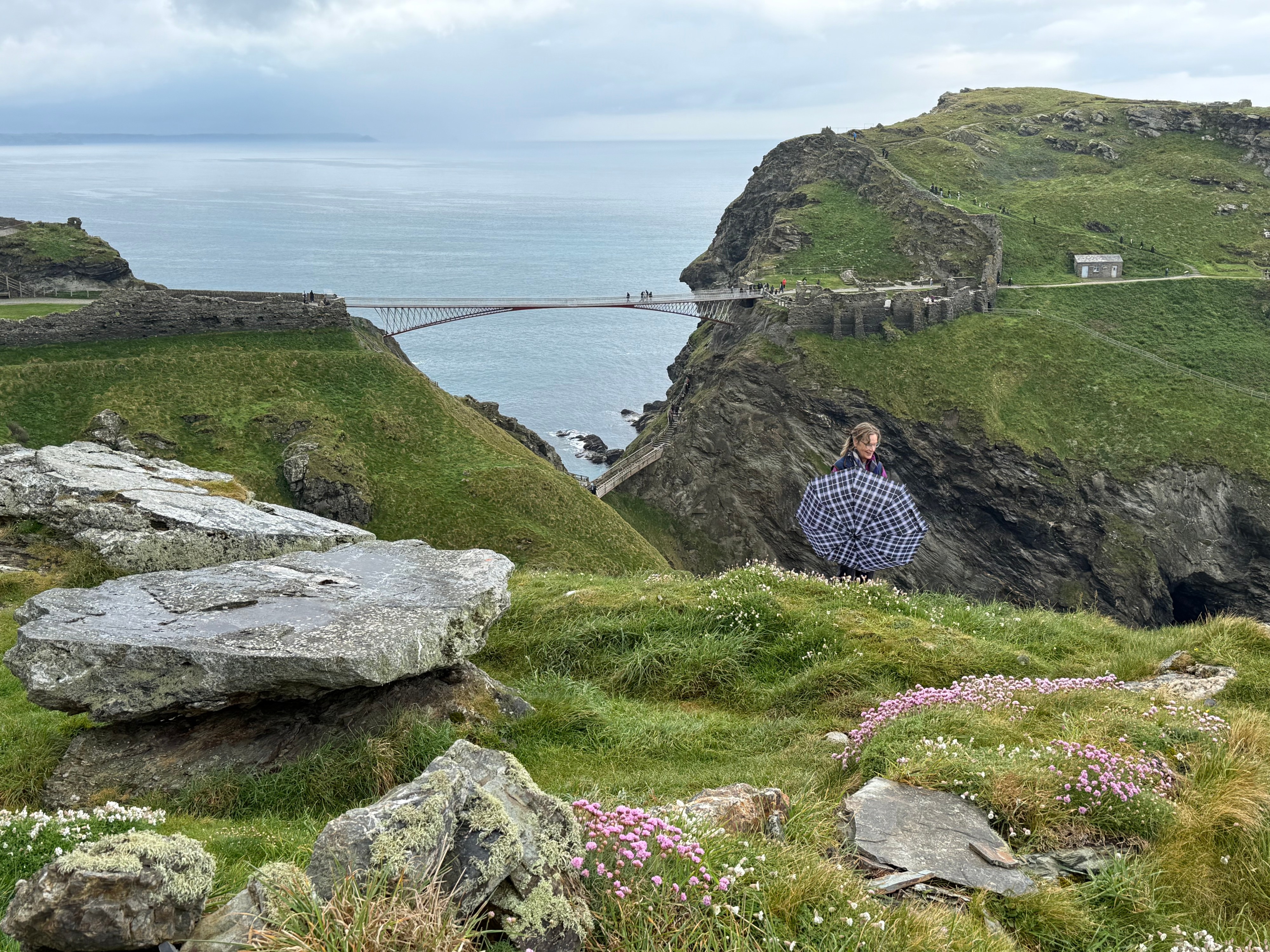
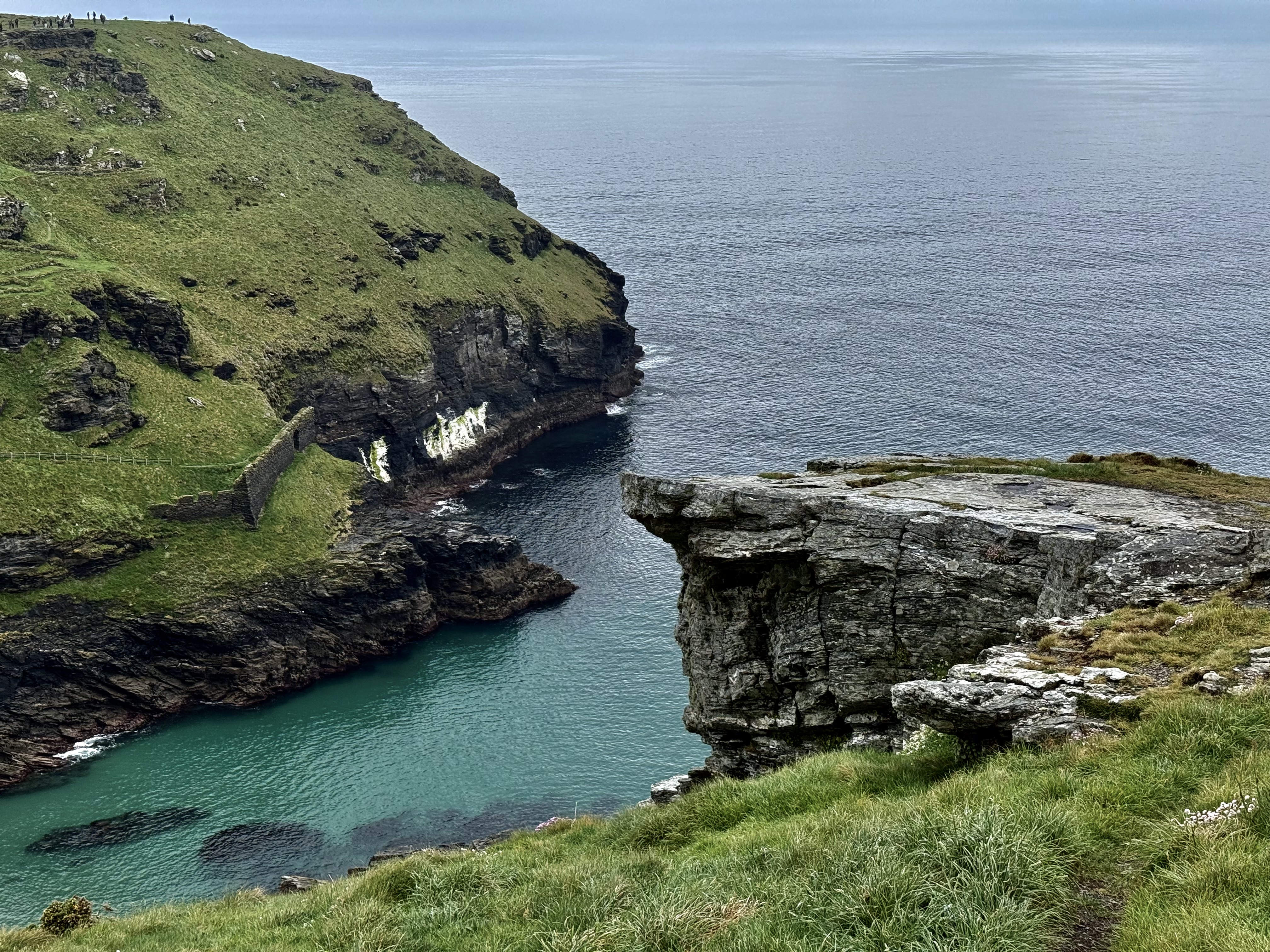
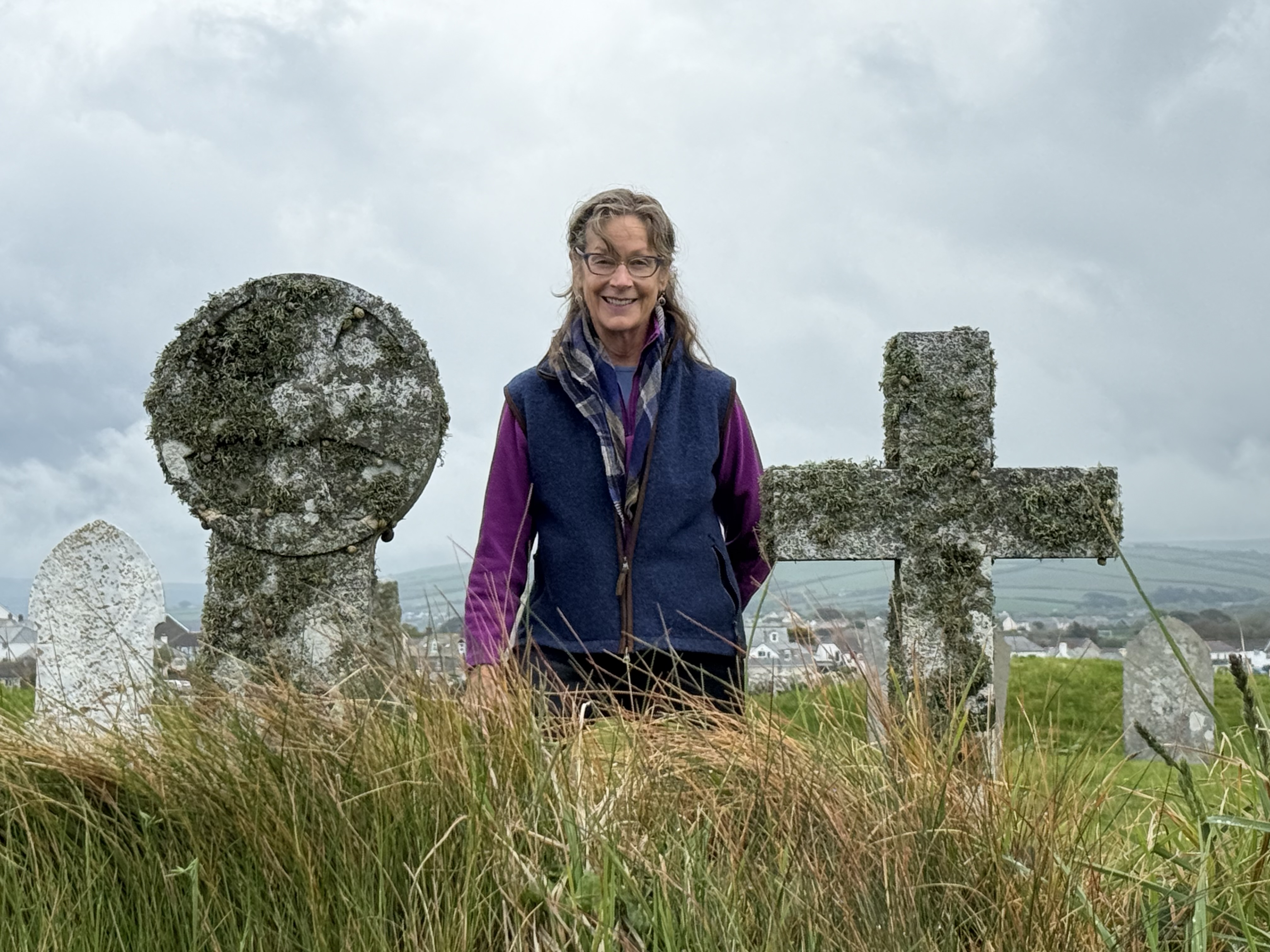
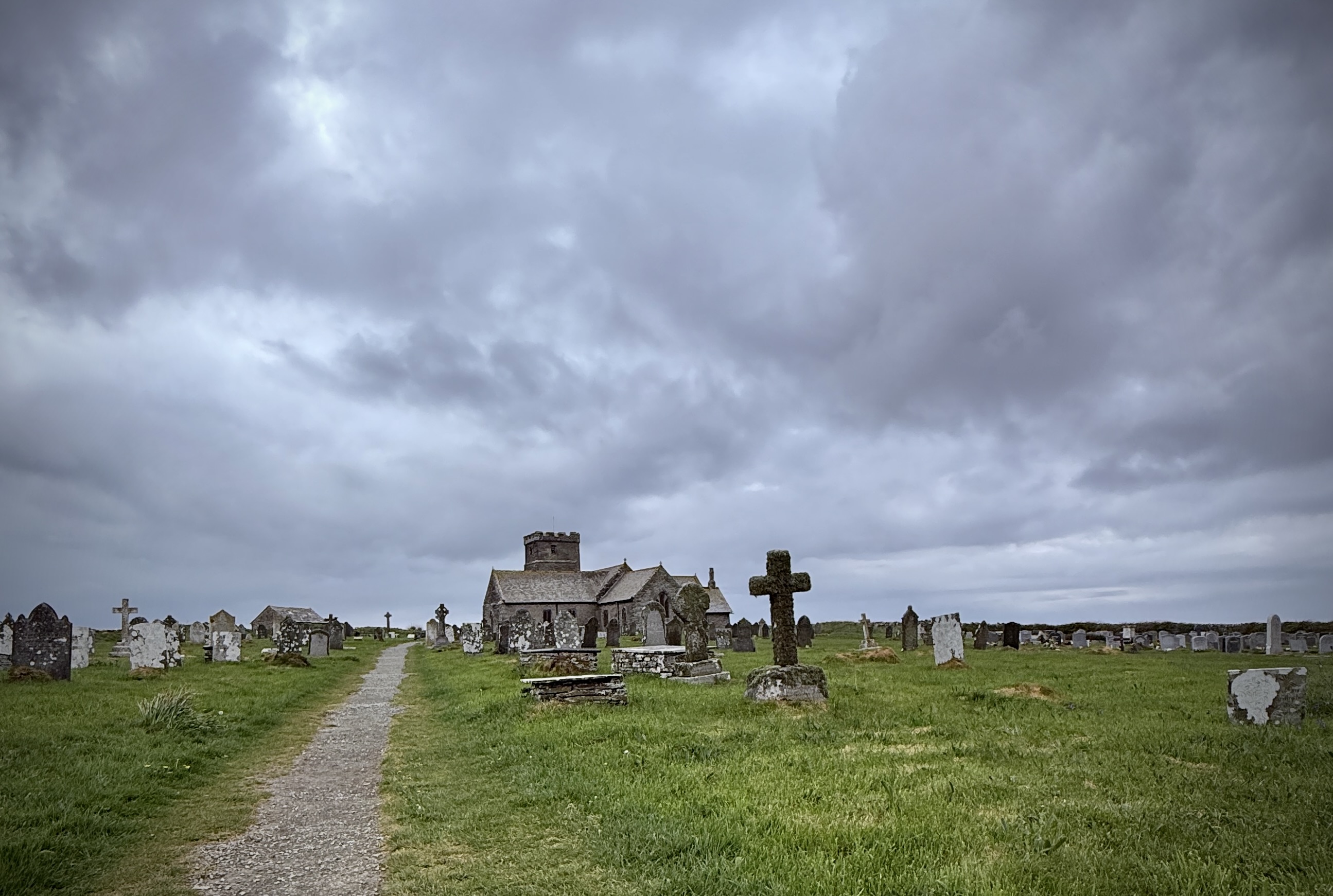
Ruined fortified stone walls are all that remains of an 11th century castle built on the craggy outpost. More interesting to us are the dramatic vistas of cliffs plunging into the sea and the ancient church and graveyard on a wind-blown bluff a bit further along the coast.
Our last stop for the day might look familiar to anyone who is a fan, or who has a passing acquaintance with the British television comedy-drama series “Doc Martin.” The show takes place in a fictional village called Portwenn, and was filmed on location in the real-life fishing village of Port Isaac. We confess to having watched all 10 seasons of the hit series, and since we are in the neighborhood, cannot resist visiting the place.
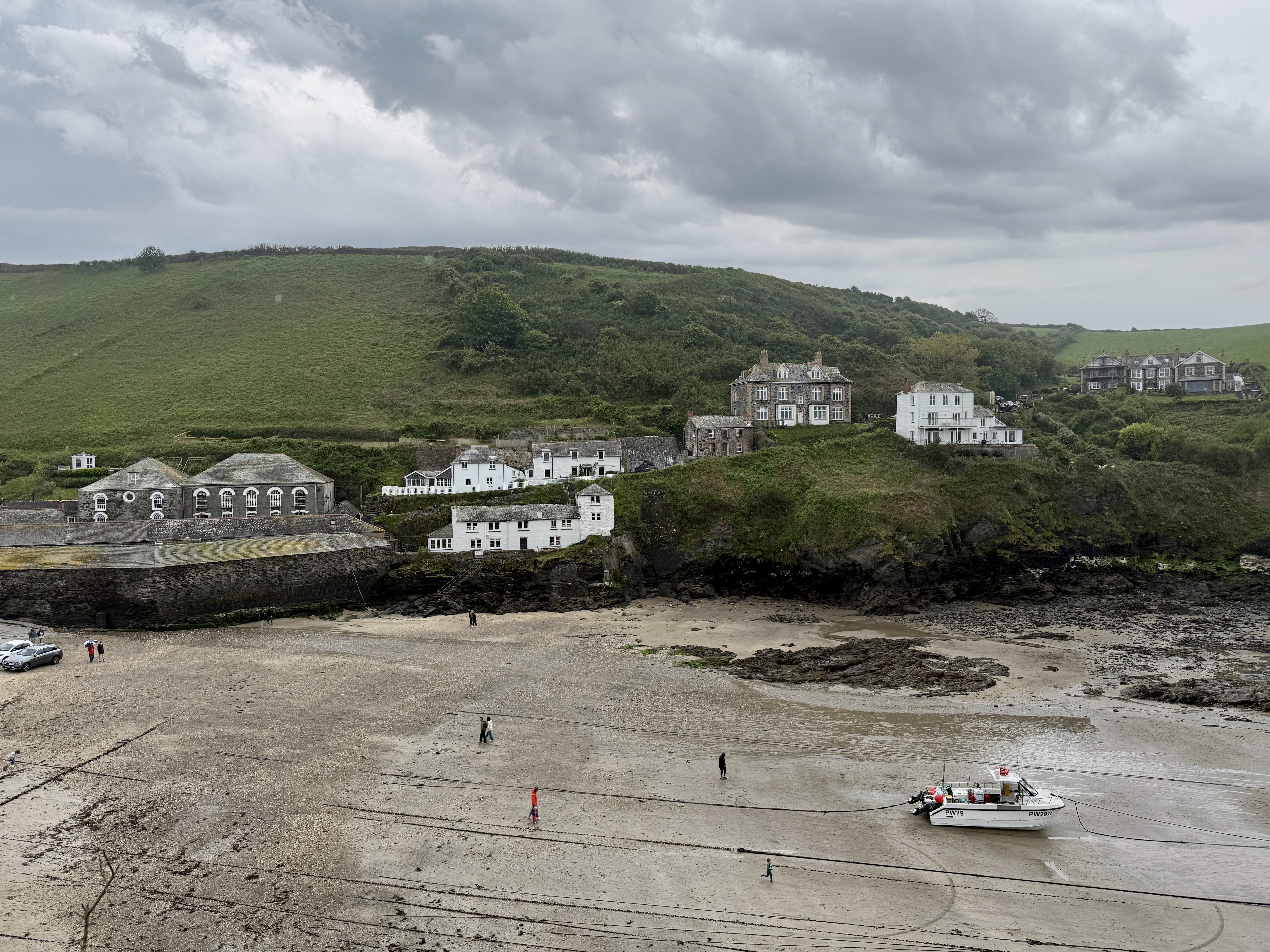
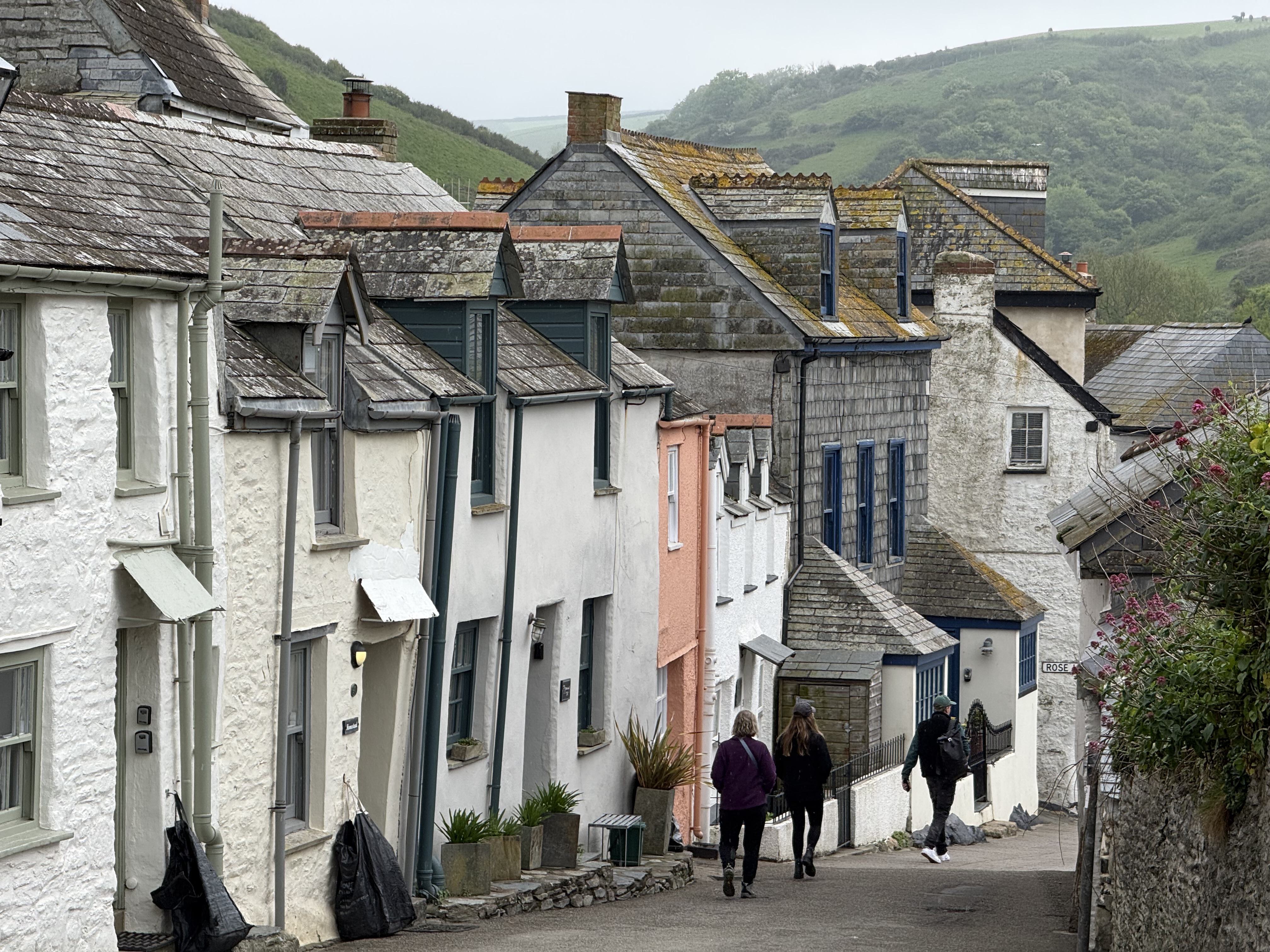
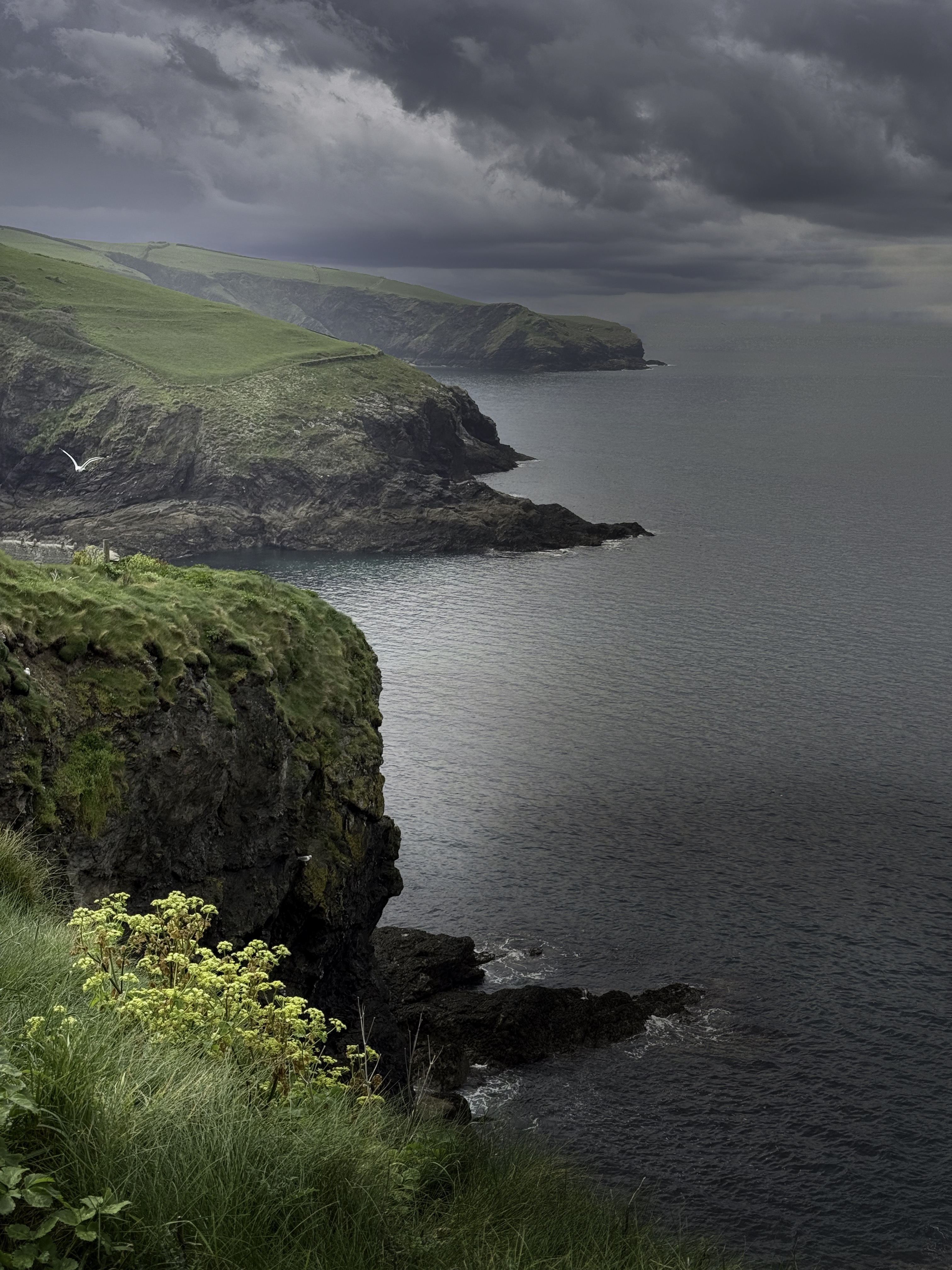
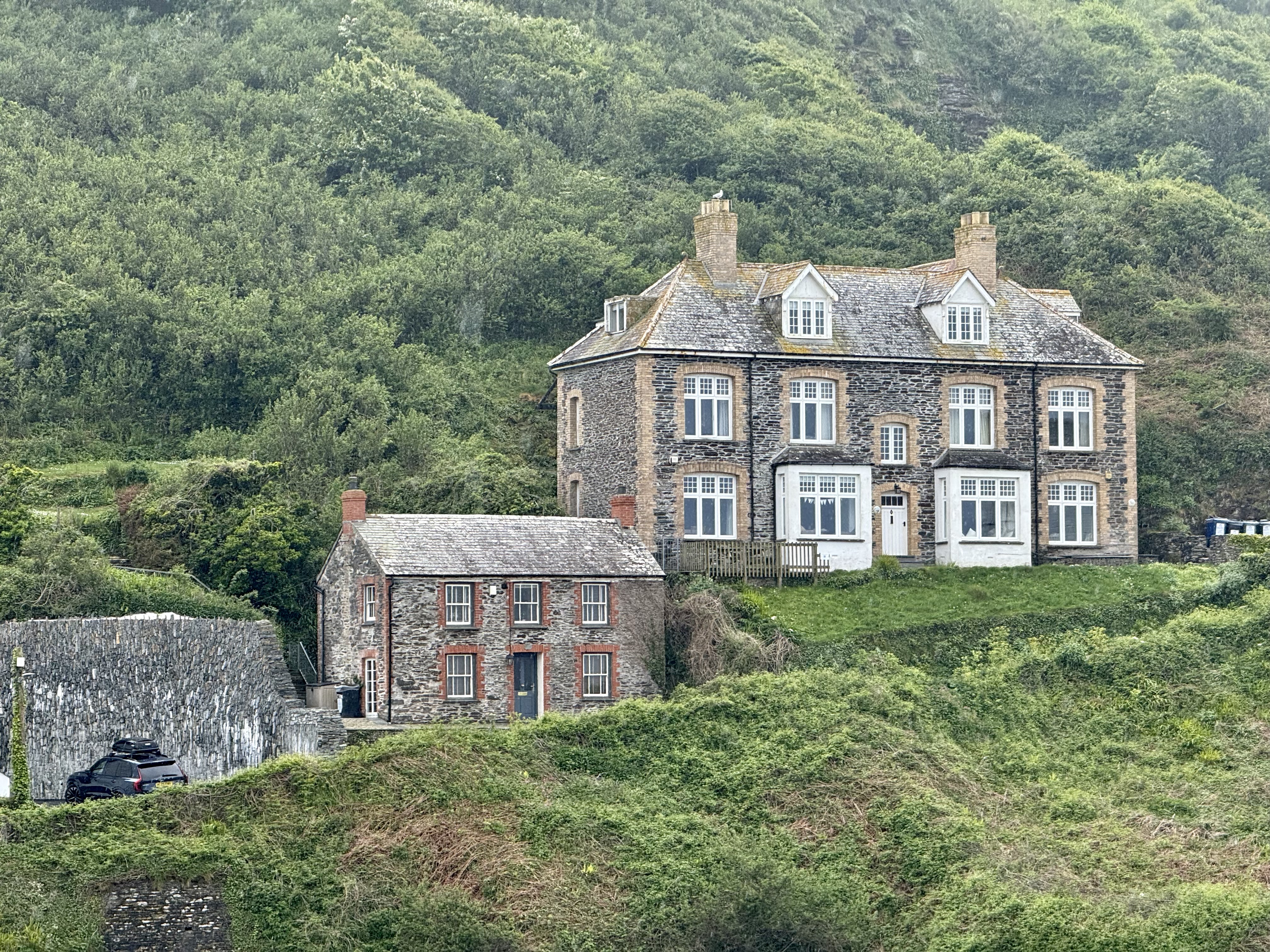
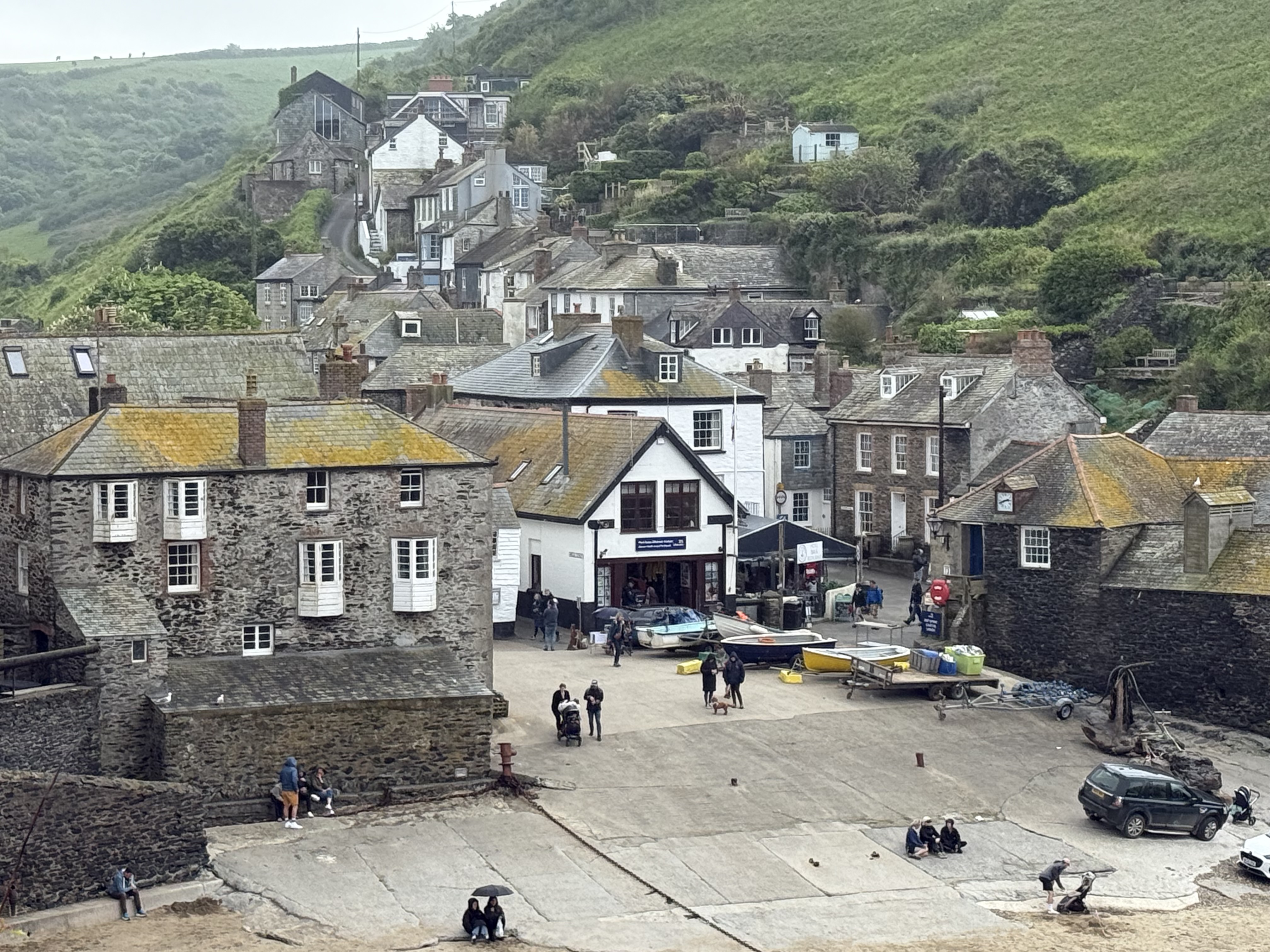
We are not alone in our pilgrimage, even though the Doc Martin series concluded in 2022. Not sure how the residents of Port Isaac feel about fans continuing to flock here, but the village seems unspoiled, and the residual tourism no doubt continues to be a shot in the arm for the local economy.
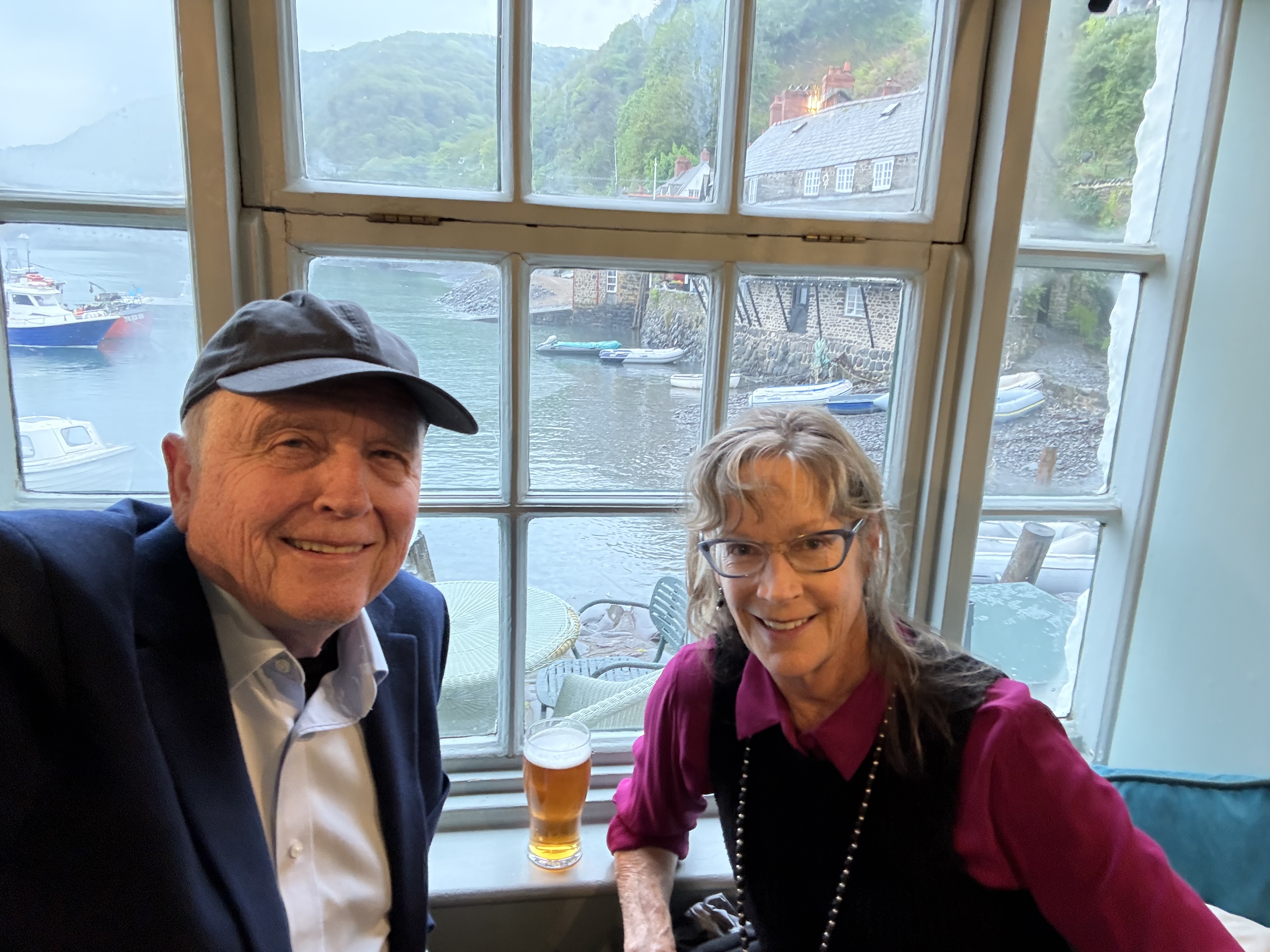
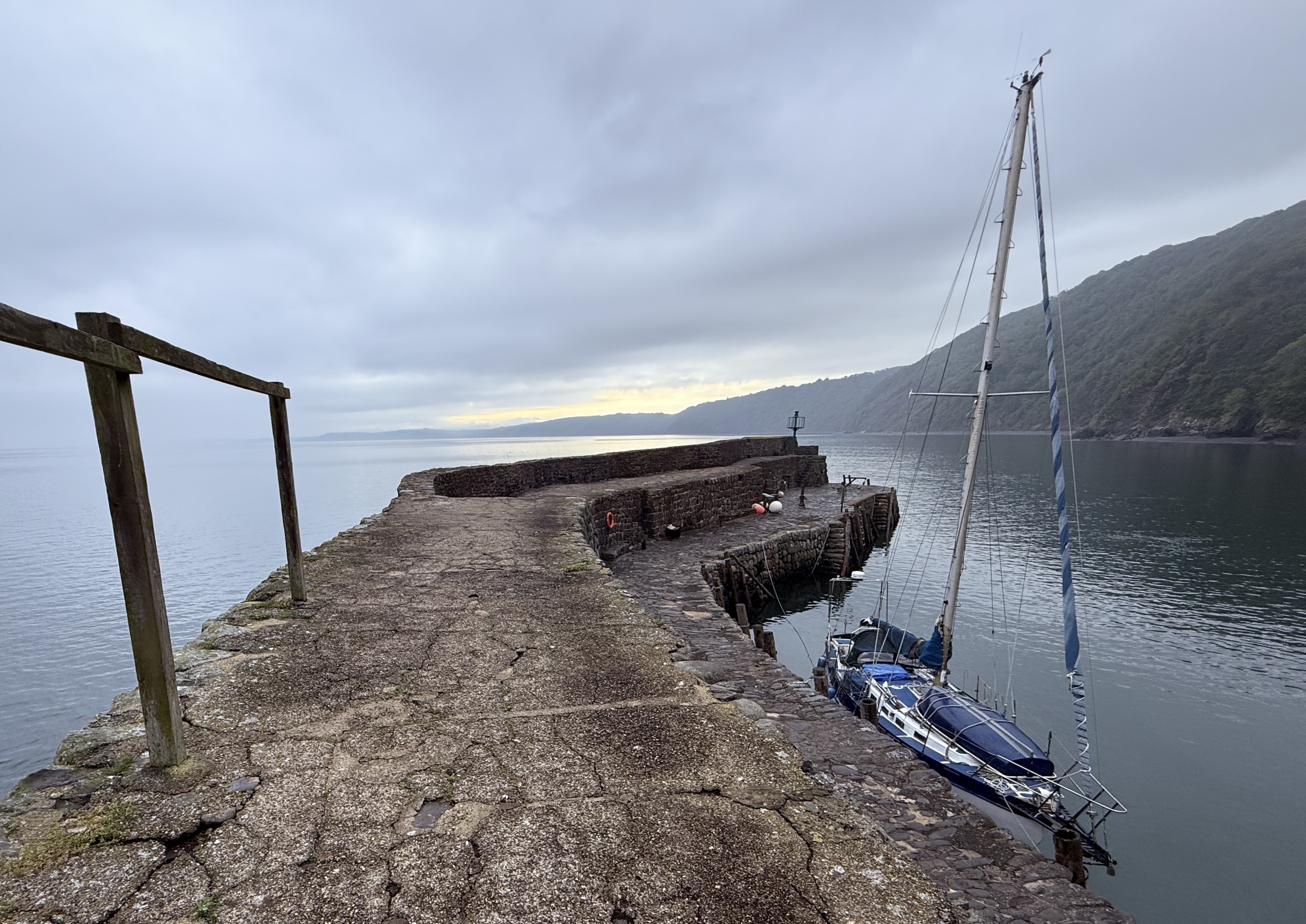
In our next blog post, after a last night in our Clovelly hotel haven, we will set off across Devon to Dorset, up to Bath and then east to Bourne End, discovering hidden gems and revisiting a few old haunts along the way.

Simply stunning! What a trip! Ive added it to my bucket list! Thank you!
Really beautiful!