
Terroir Matters
Anyone who knows Dave will probably know that his favorite white wine is French Chablis, a succulent marriage of flinty citrus and floral notes that is made with 100% Chardonnay grapes, but is miles away, geographically and stylistically, from bold, buttery Napa Valley Chardonnay.
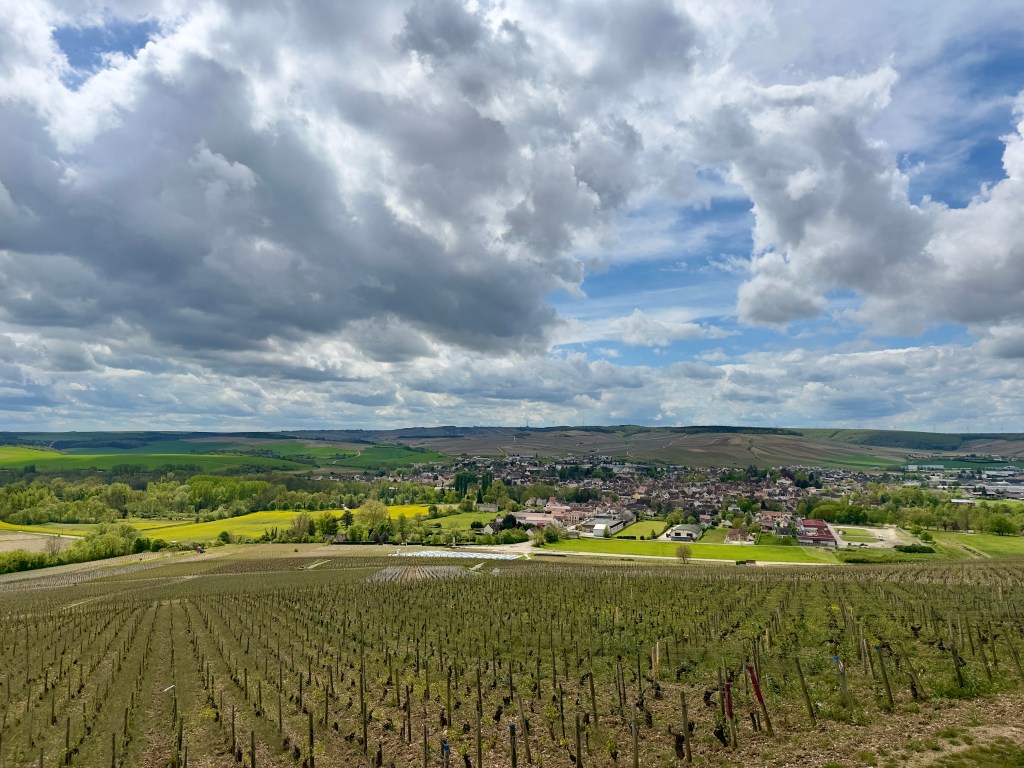
Terroir (soil, climate, topography) matters. The chalky soil, cool, wet climate and an aging process that takes place primarily in steel tanks is the alchemy that creates the uniquely refreshing yet complex Chablis wine.
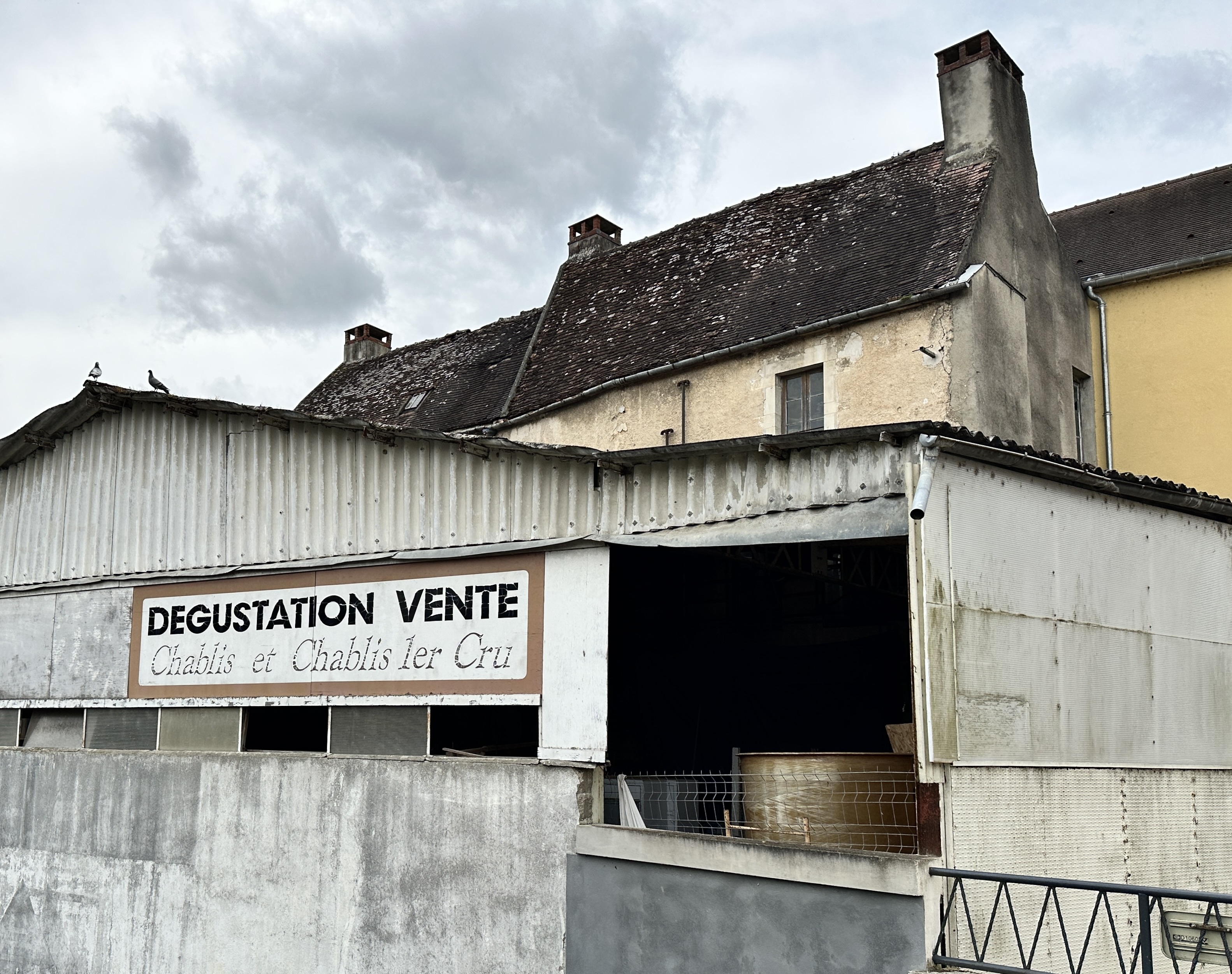
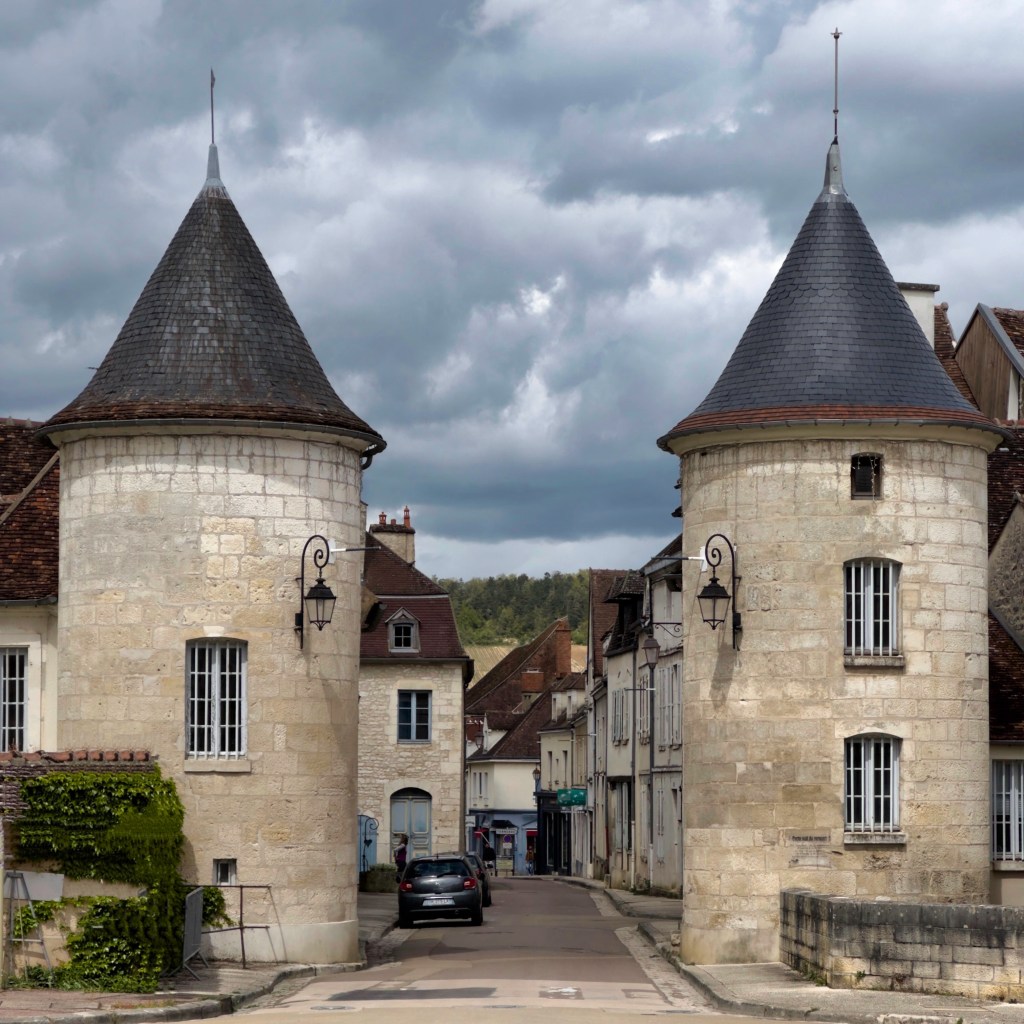
Despite Dave’s reverence for Chablis wine, he has never made the pilgrimage to the place from which it takes its name—until now. The small, unpretentious town is something of a hidden treasure, quiet streets lined with well-kept stone houses and shops, at least two world-class restaurants, a tempting selection of wine tasting rooms, and not a tee shirt or souvenir shop in sight.


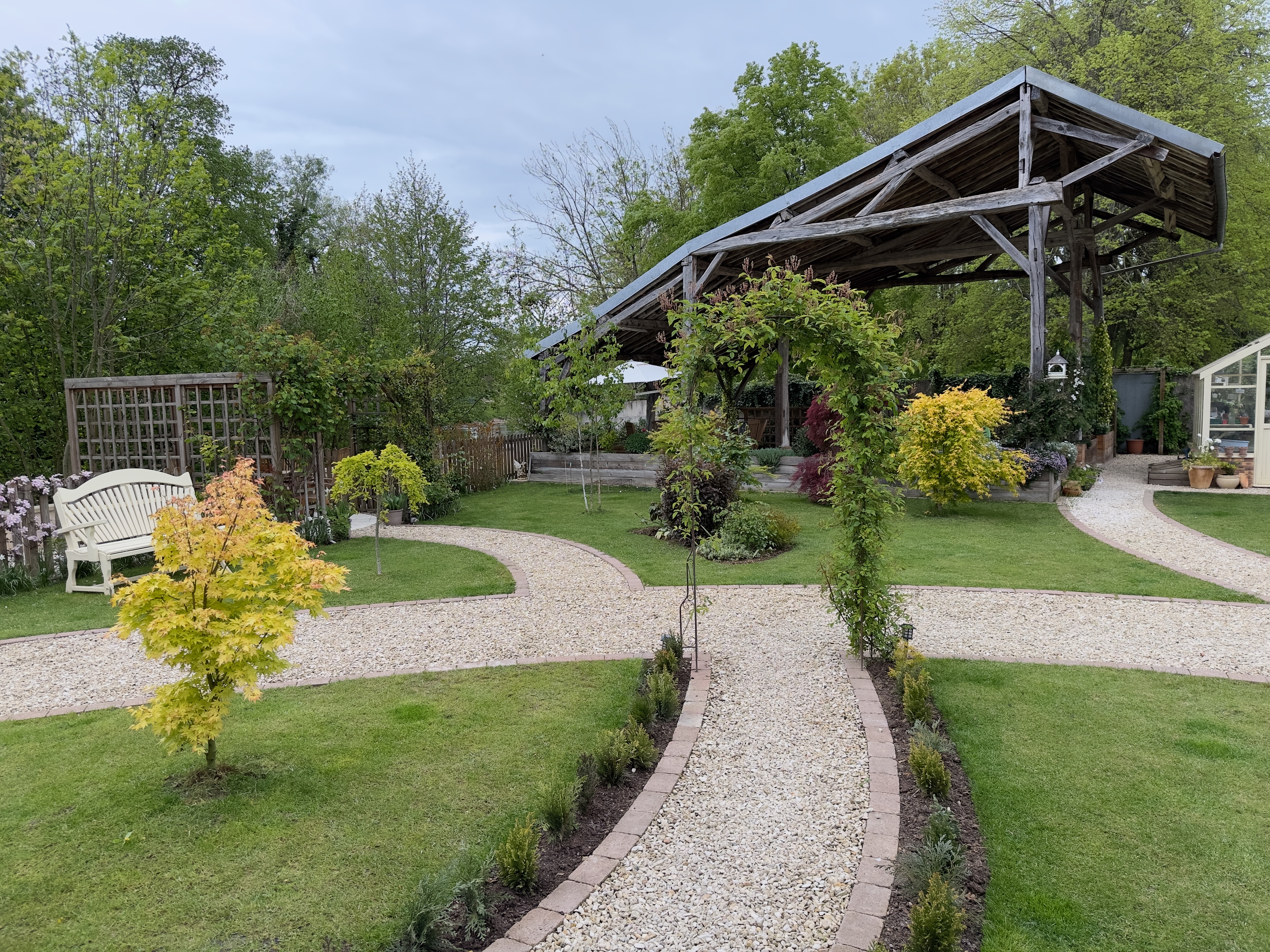
With his usual care for location, comfort and charm, Dave has booked us a cottage on the river, aptly named Riverside Lodge. Our hosts are a British couple; Julia, formerly a chef of some renown, and John, a sommelier by trade who is also an accomplished musician. The Chablis region had been their vacation destination for many years before they decided to retire and move here full time. They spent four years transforming a run-down residence, abandoned outbuildings, and wasteland of concrete and weeds into a peaceful home, a guest cottage and garden.
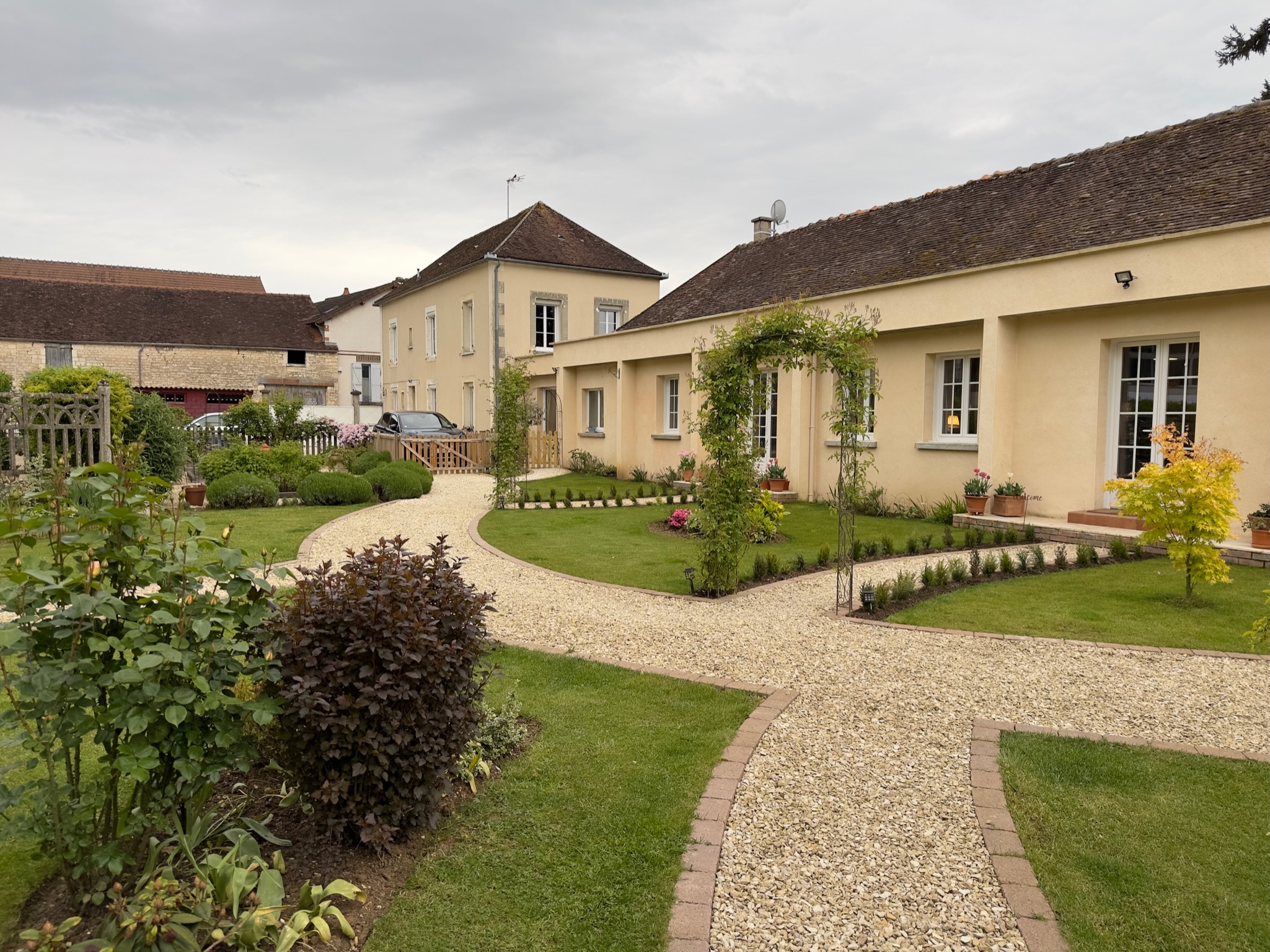
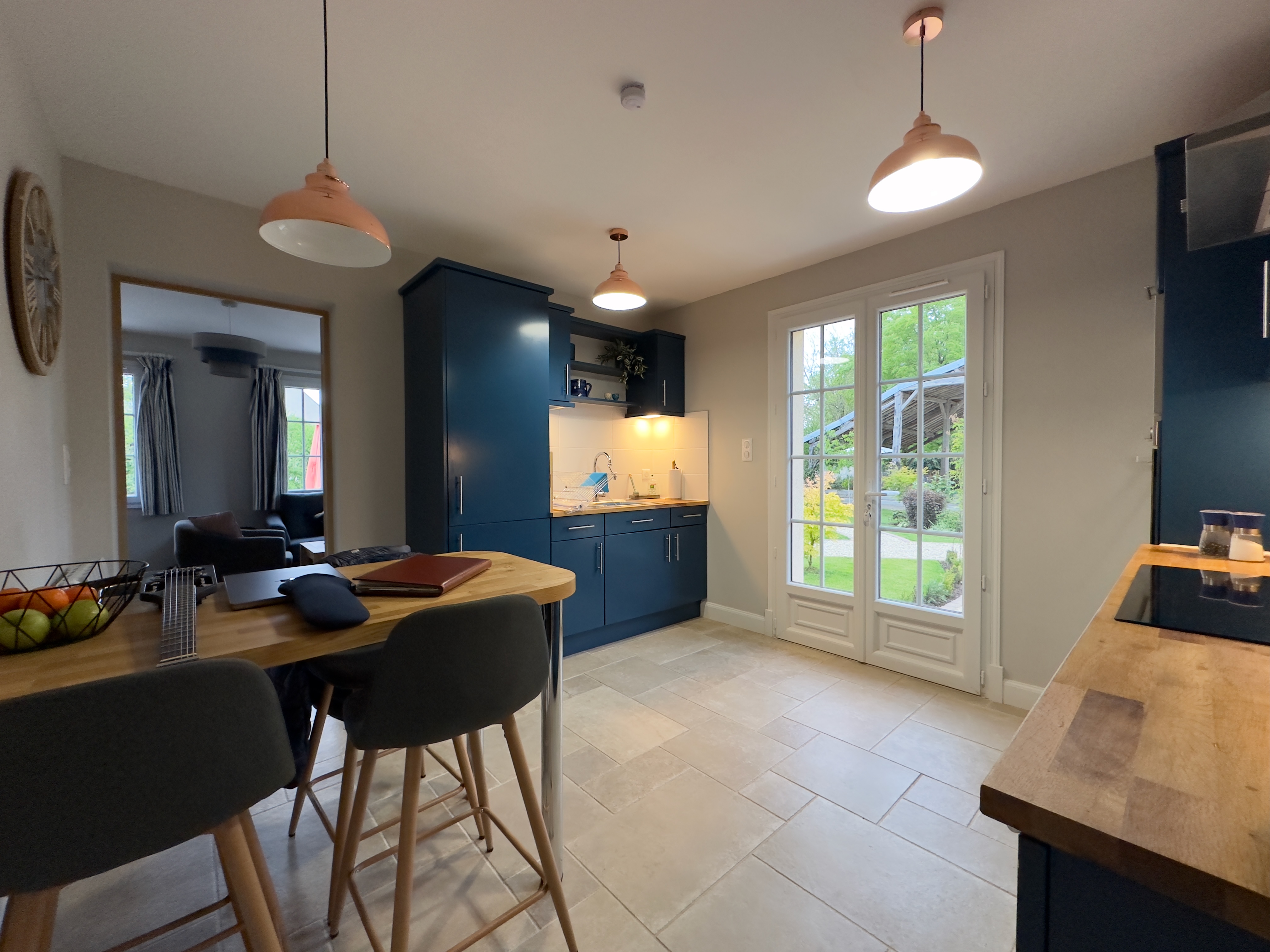
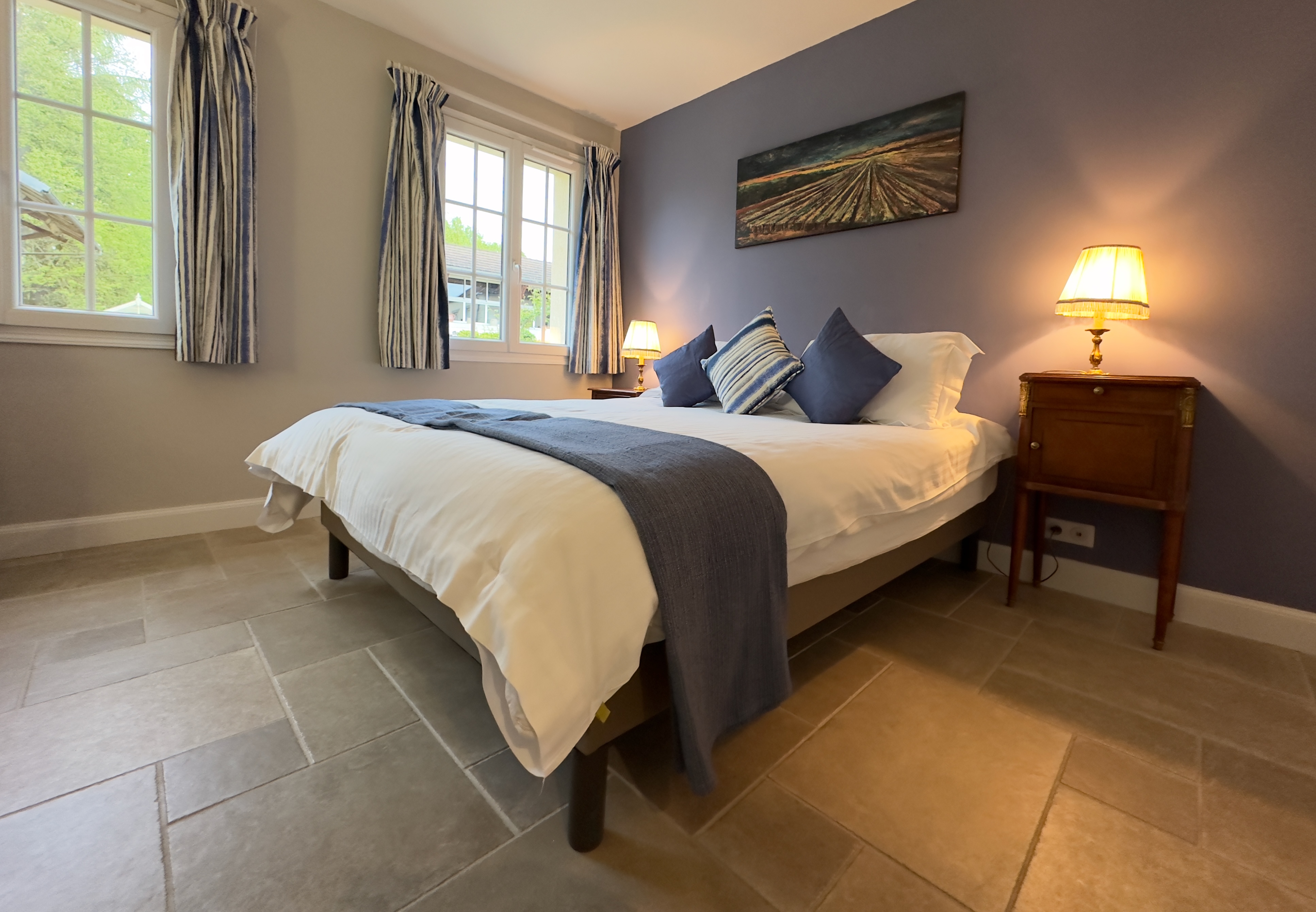
John accomplished most of the building work by himself (a book of photos in our cottage attests to his ambitious feat) while Julia oversaw the tasteful interior furnishings and decoration. She equipped the spotless kitchen with items that Anna always wishes to find at rented accommodation but usually doesn’t: tongs, sharp knives that actually slice, poultry shears, an adequate selection of pans, dishes and glassware, and useful condiments such as oil, lemon juice and spices.
After settling in, we join John and Julia for a glass of “village” Chablis (ie. not a Grand or a Premier Cru). The supposedly “ordinary” wine nevertheless epitomizes the characteristic freshness and mineral-infused flavors that we love, and that are characteristic of wines made here. We note the vintner and the vintage (2022 Raoul Gautherin & Fils) and resolve to buy a few bottles before departing Chablis. Between appreciative sips, we chat with John and Julia about their life here, about where they lived in England (not far from us), and about music, inspiring John and Dave to perform an impromptu duet on piano and guitar of Elton John’s “Your Song”.

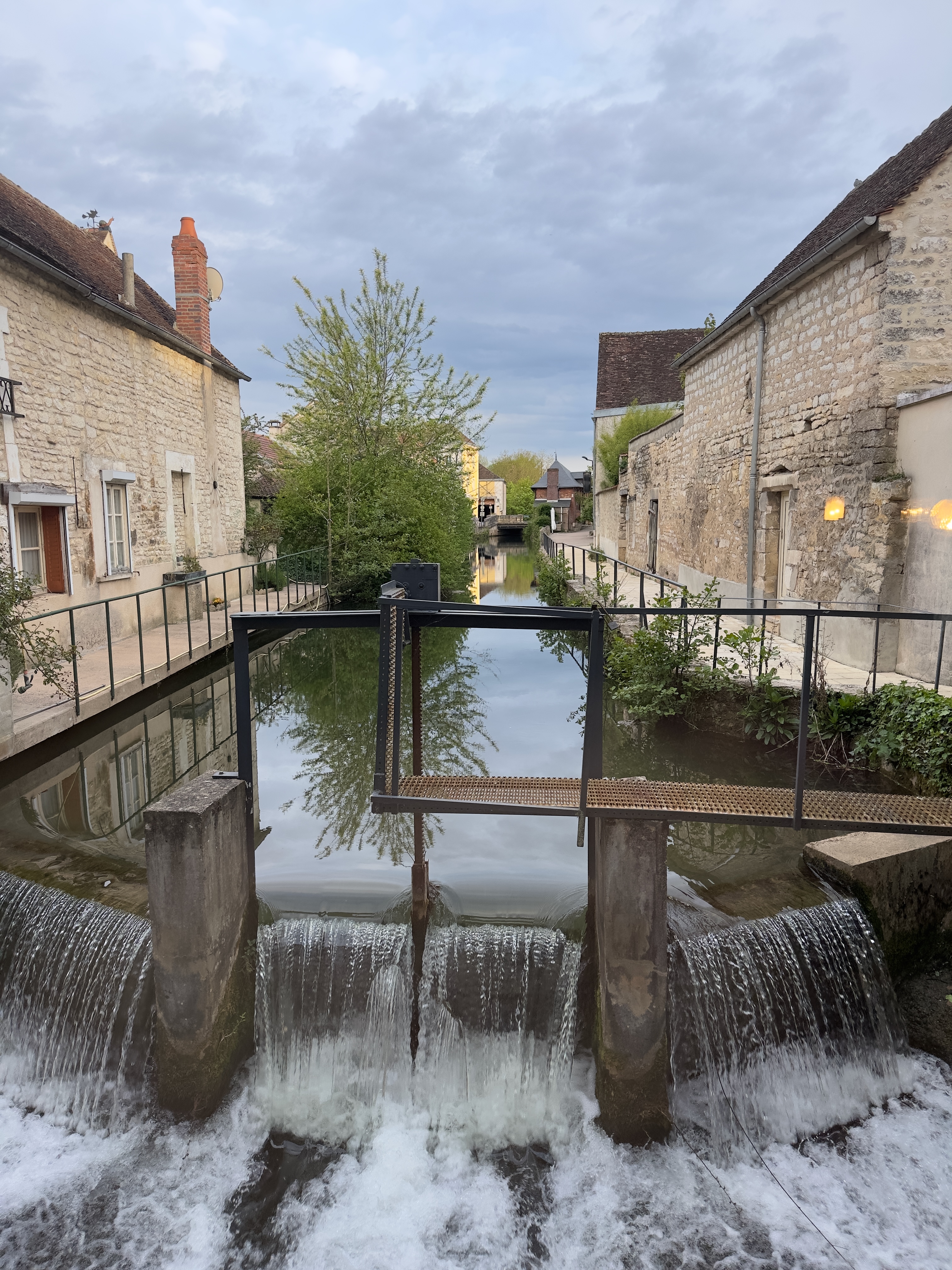
A short walk across a stone bridge leads us into town and to Au Fil du Zinc restaurant, a bright, elegant room situated in an ancient mill looking out over the river. It is the sort of place where diners can choose between either a 5 or 7 course meal, with or without wine pairings. We choose the 5-course option with pairings. Describing our dining experience in words hardly does justice to the precise and inventive combinations of flavor and texture of the Japanese-influenced cuisine. But we’re going to do it anyway. To start, we are served three bite-sized amuse-bouches: scallop sashimi, escargot puffs, and—our favorite—sorrel infused purée topped with a raw quail egg nestled in a curl of carrot ribbon.
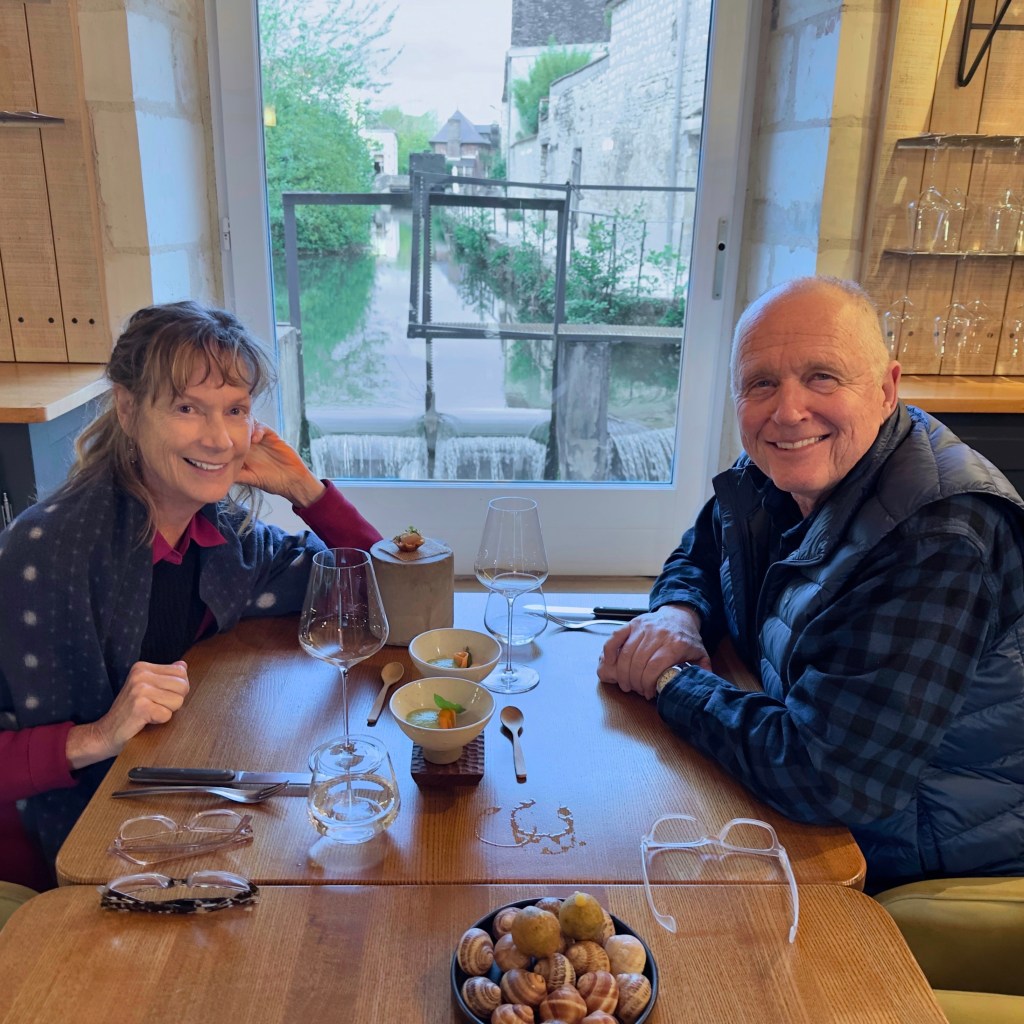
Next, white asparagus spears poke out from a bed of green pea, coconut and wild garlic mousse. This course is paired with a 2021 1ère cru Chablis, which, unexpectedly, tastes rather pallid compared to the more “everyday” Chablis poured with the appetizers. Our sommelier explains that 2021 was a tricky year, with early frosts destroying much of the harvest. No matter, we are ready to move on to our next course: seared Shiitake mushroom vélouté garnished with Shiso leaf and a chewy dollop of black pudding.
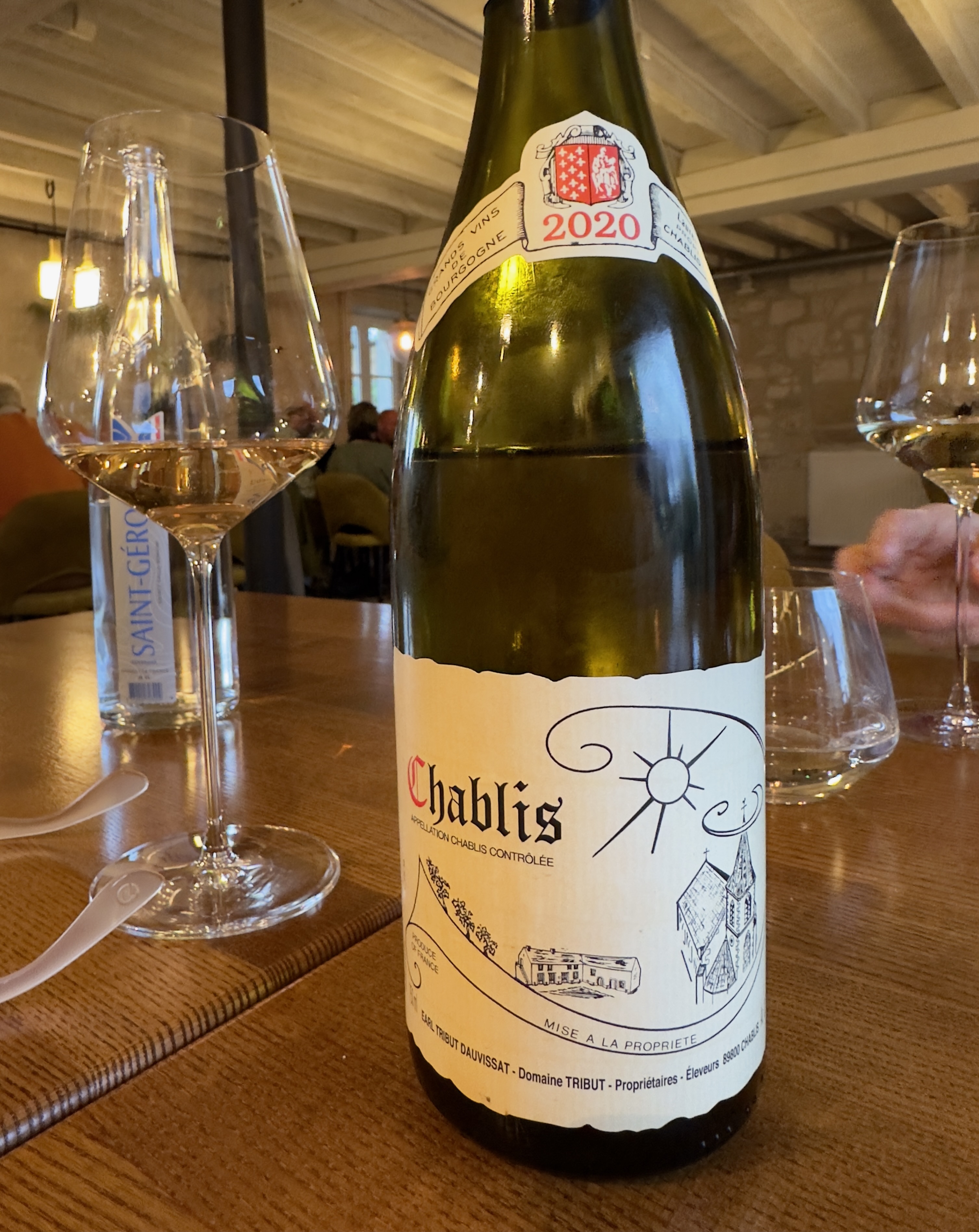
Course portions are petit and we still have room for the penultimate offering: a tender filet of local brook trout layered atop slivered rhubarb, green beans and almonds dressed with warm miso sauce. A forgettable red wine accompanies this course. Perhaps we would’ve been better off simply ordering a bottle of Chablis to go with our meal, but the joy is in the discovery, and besides, by now we have become friendly with our sommelier—a young Frenchman who has spent quite a bit of time in San Francisco, and surprisingly, Petaluma. When it’s time for the last course, Dave warns him, “My wife doesn’t eat dessert.” He replies without missing a beat, “That’s good, neither does our chef.” Indeed, a light concoction of fresh Provençal strawberries, crème sorbet, wafer-thin almond galette and citrus-herb marinade leaves us sated but not stuffed. We shake hands with our sommelier and walk home in the lilac-scented night.
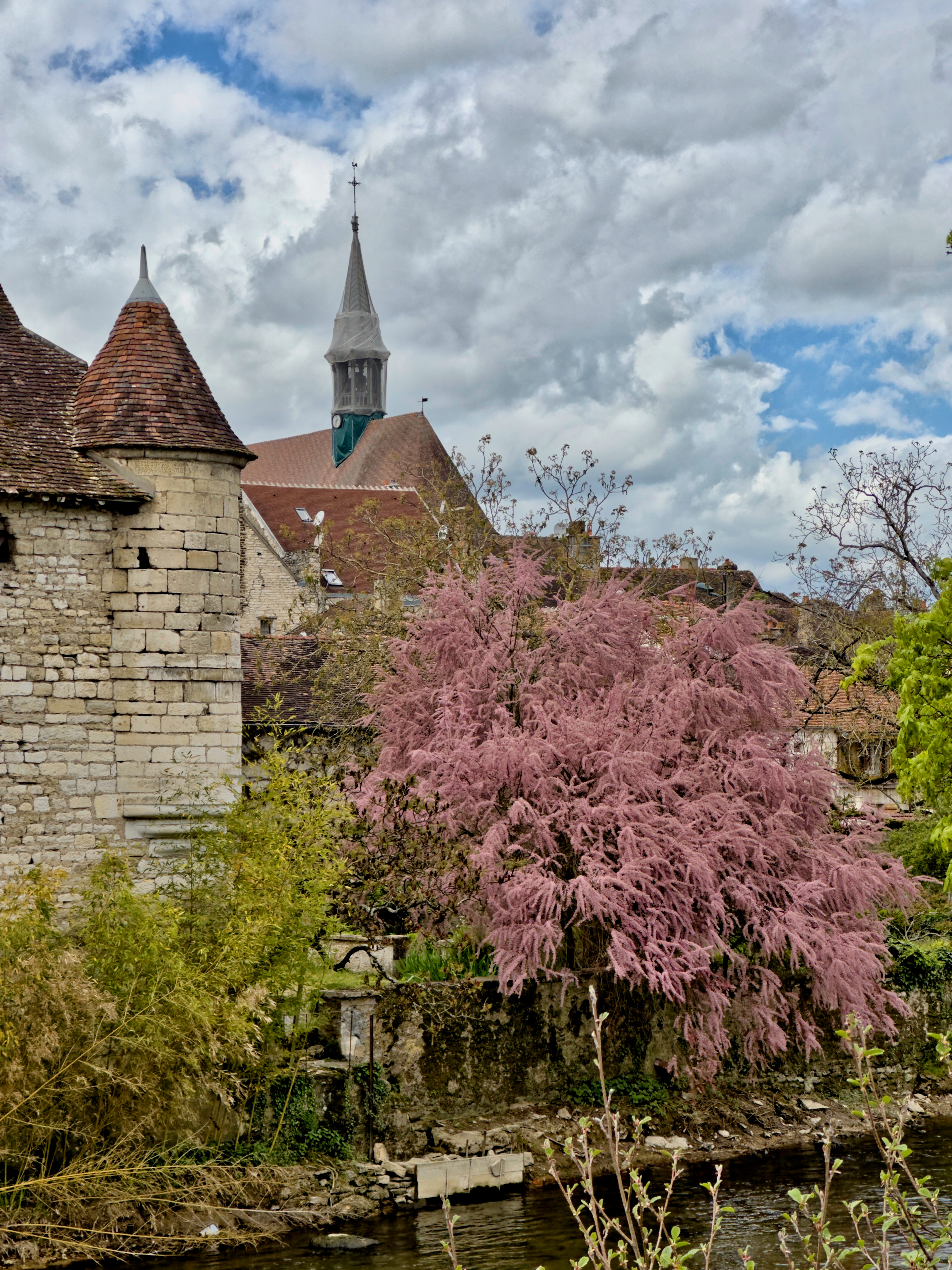
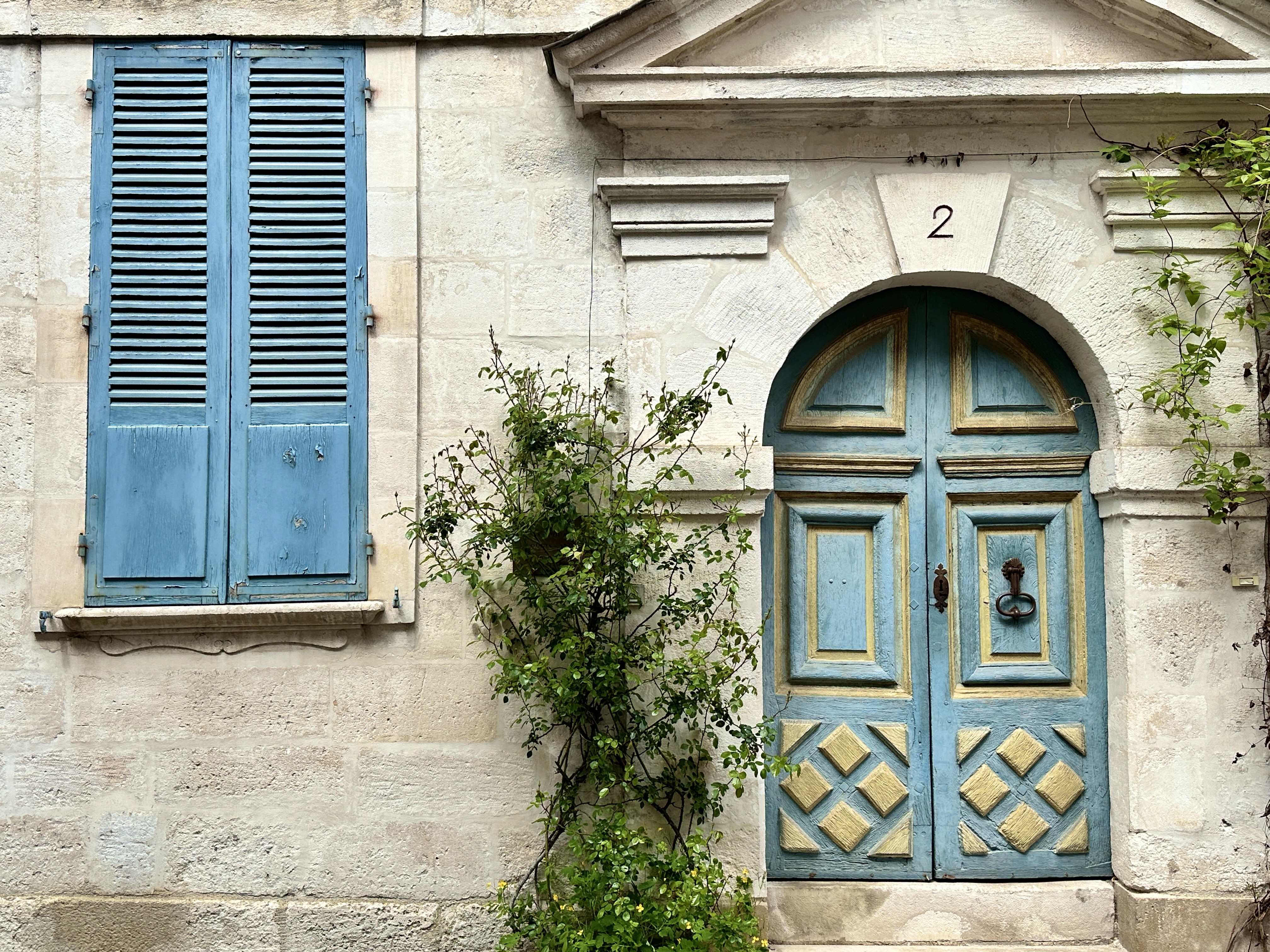
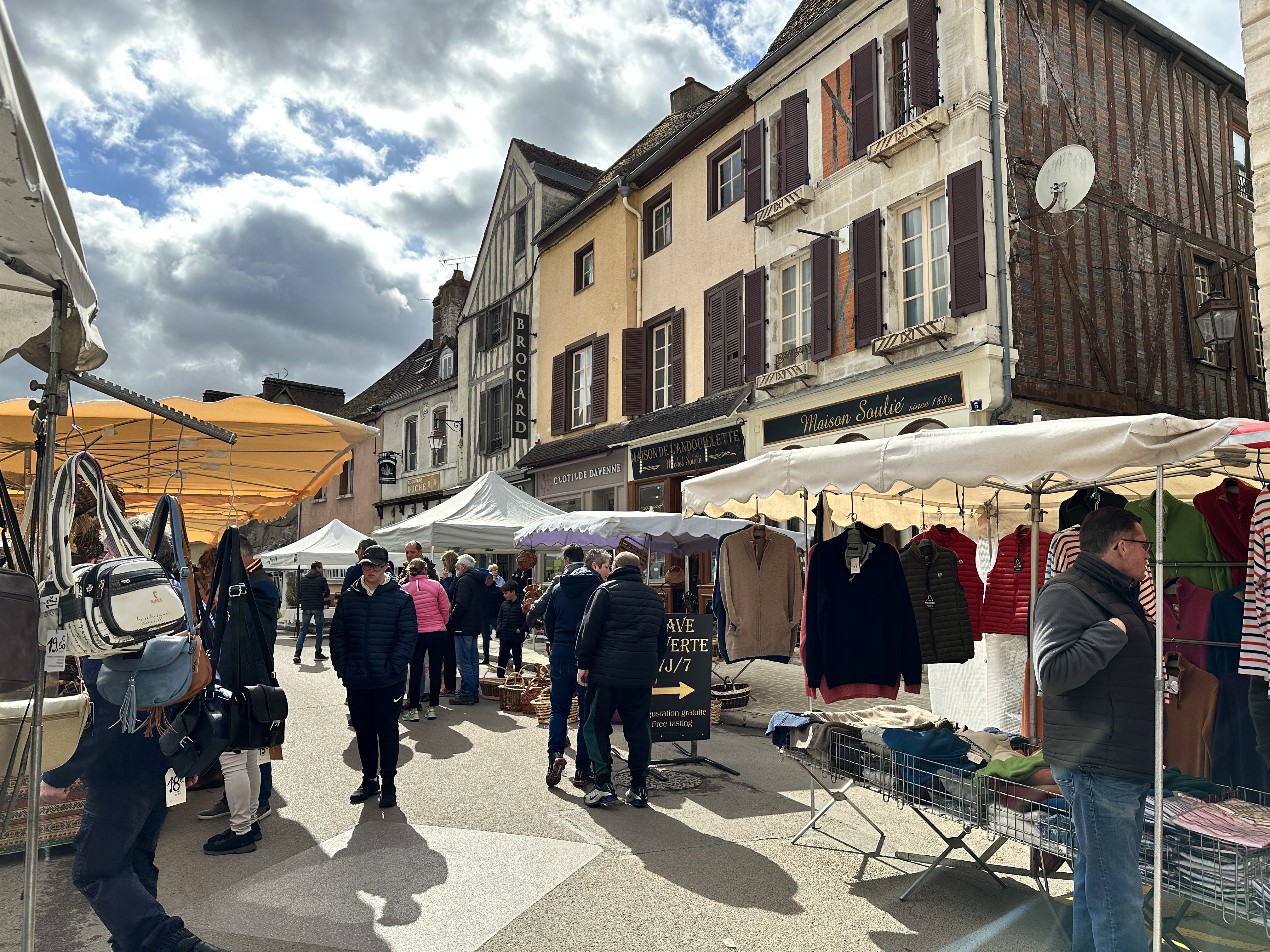
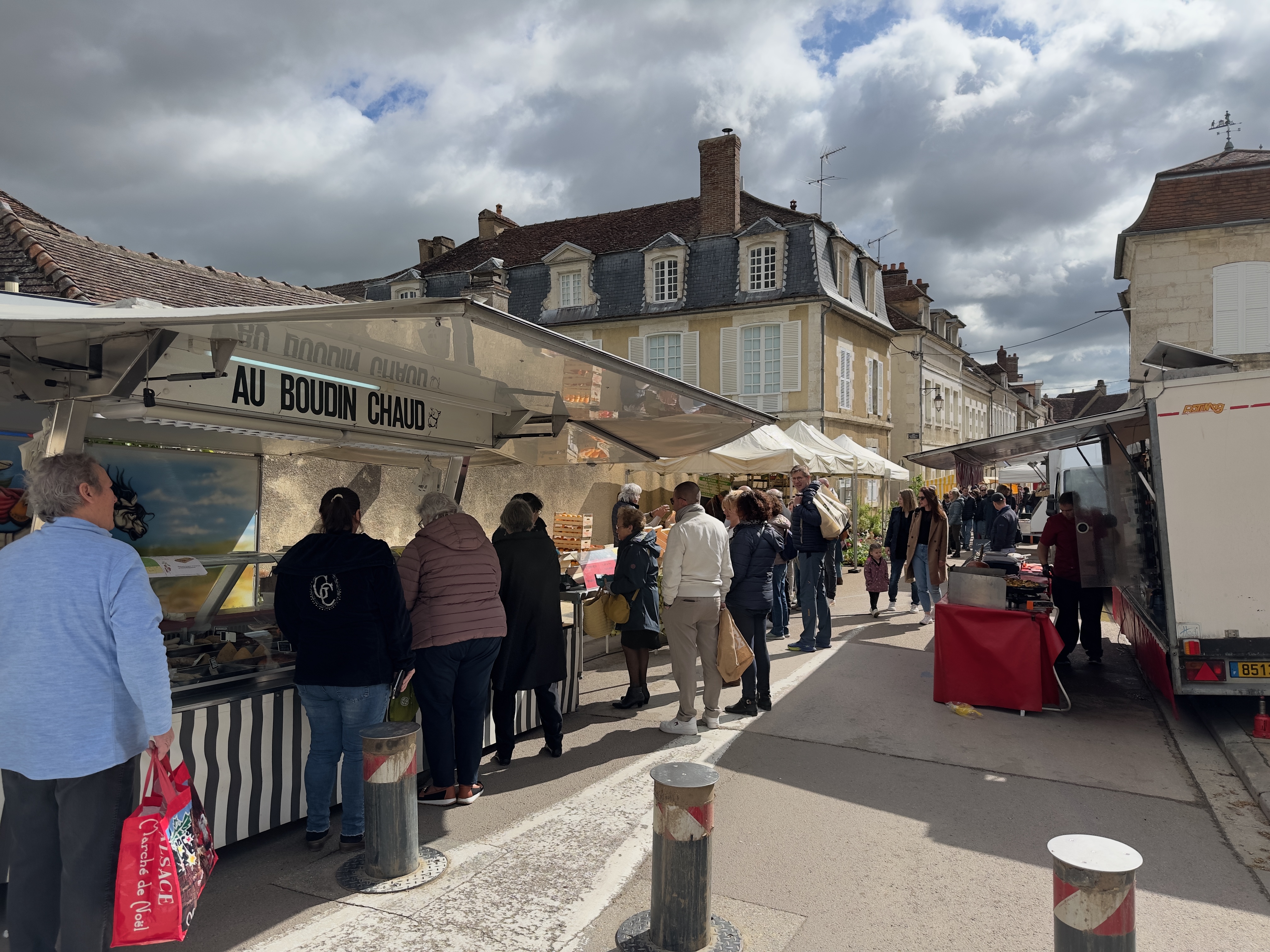
The next day is market day in Chablis. We stroll up the main street past stalls selling local honey, rounds of fragrant cheese and charcuterie, fresh strawberries, several varieties of apples, pullover sweaters and summer dresses (wishful thinking, because the weather is unseasonably cold and cloudy). Dave stops to try on a jaunty straw hat. It suits him, and he buys it on the spot. The bearded merchant smiles. “Perhaps a straw hat will bring us sunshine,” he remarks, handing Dave his change.
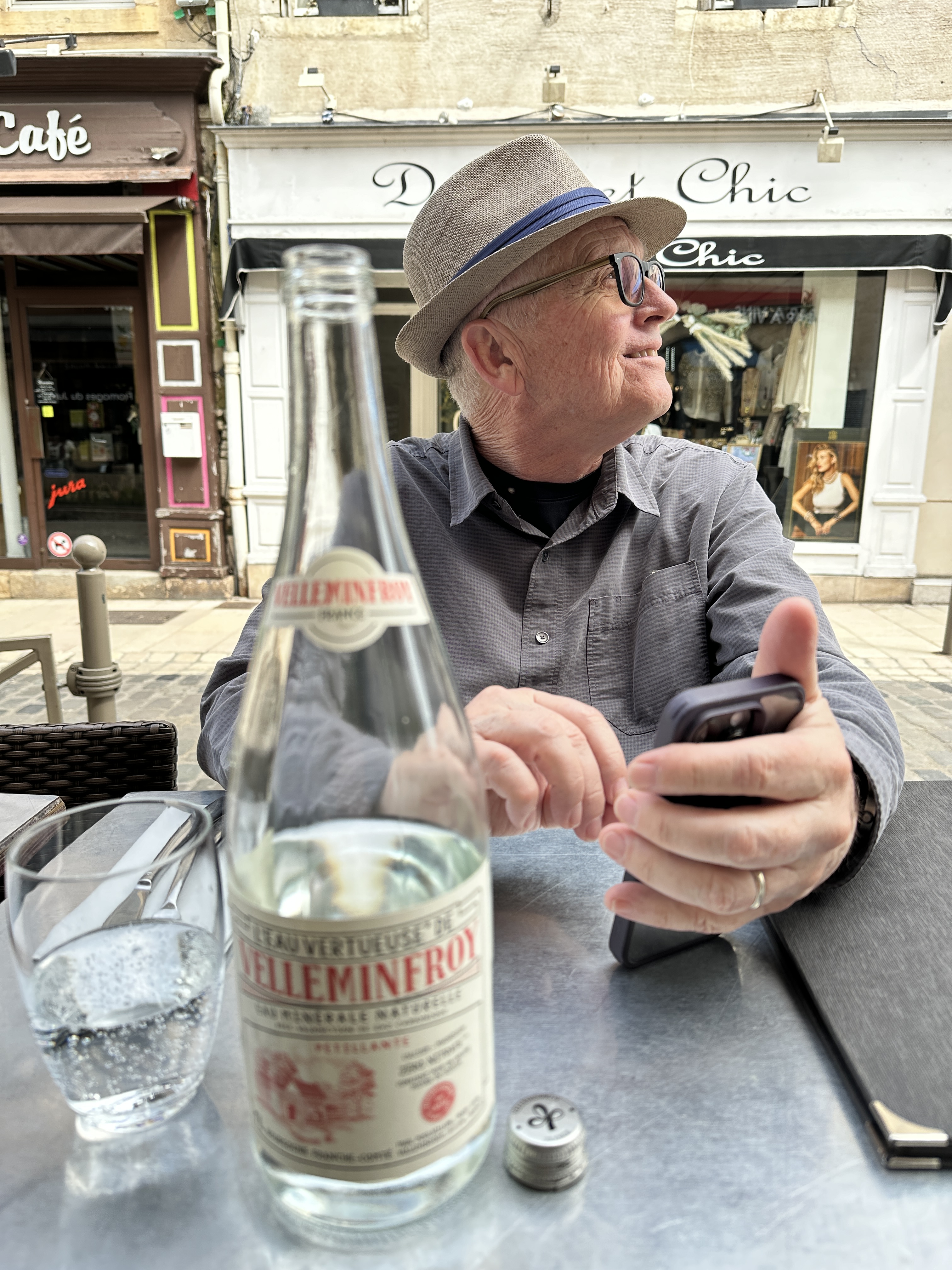
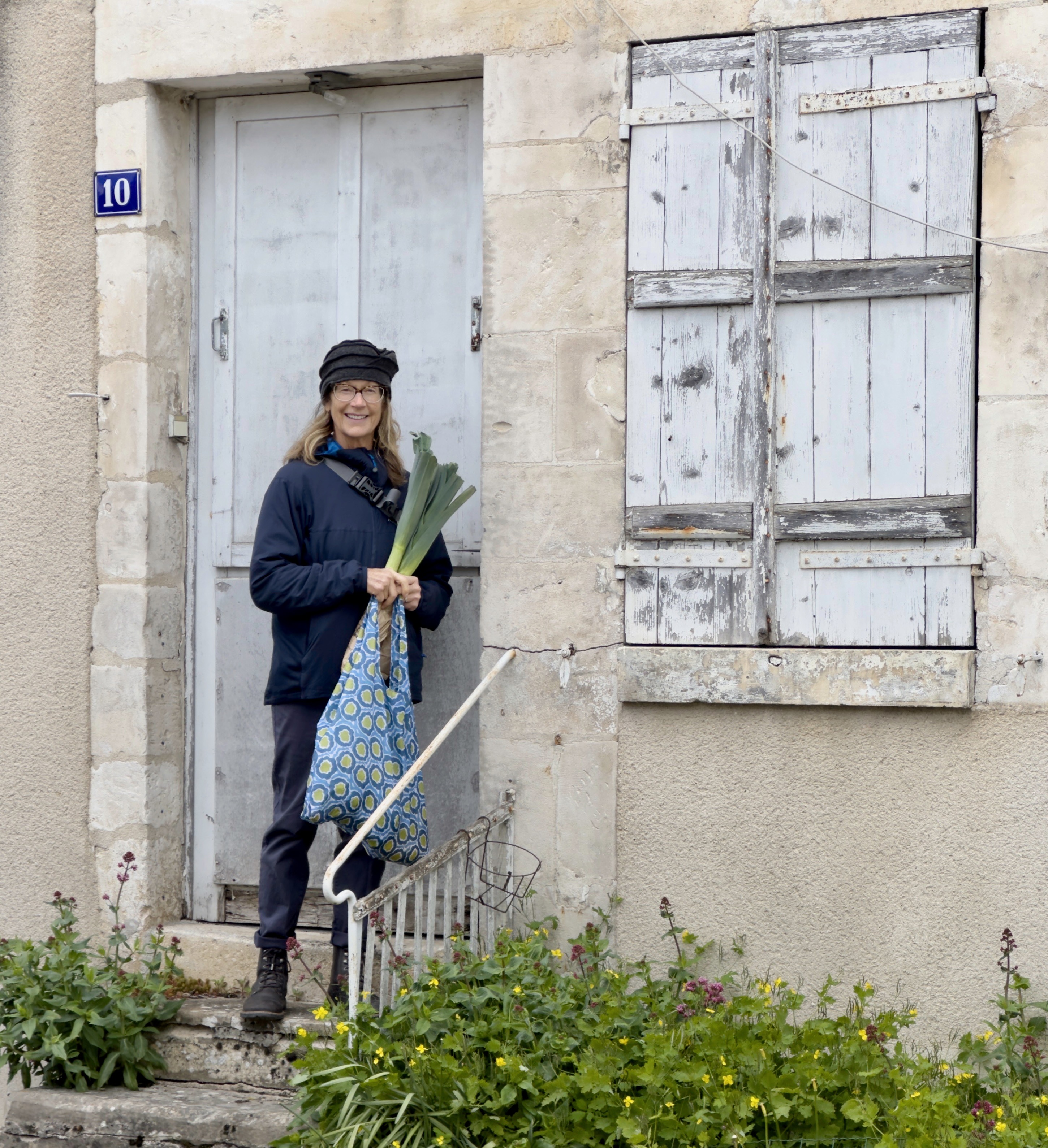
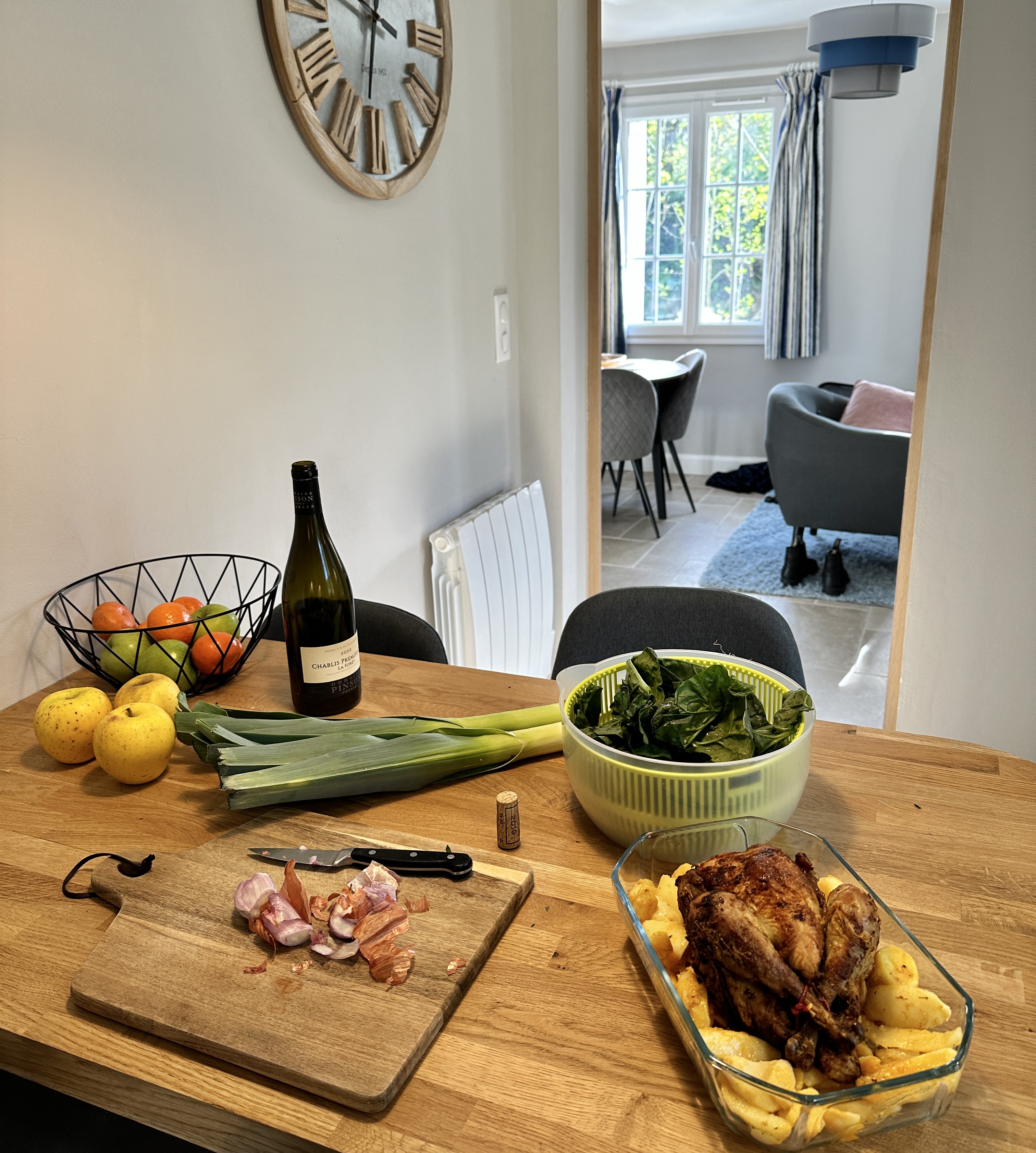
Purchases at several more stalls supply us with provisions for dinner: a roasted game hen, a pint of waxy, golden potatoes soaked in drippings, fresh leeks, ripe tomatoes, and a small bushel of spinach.
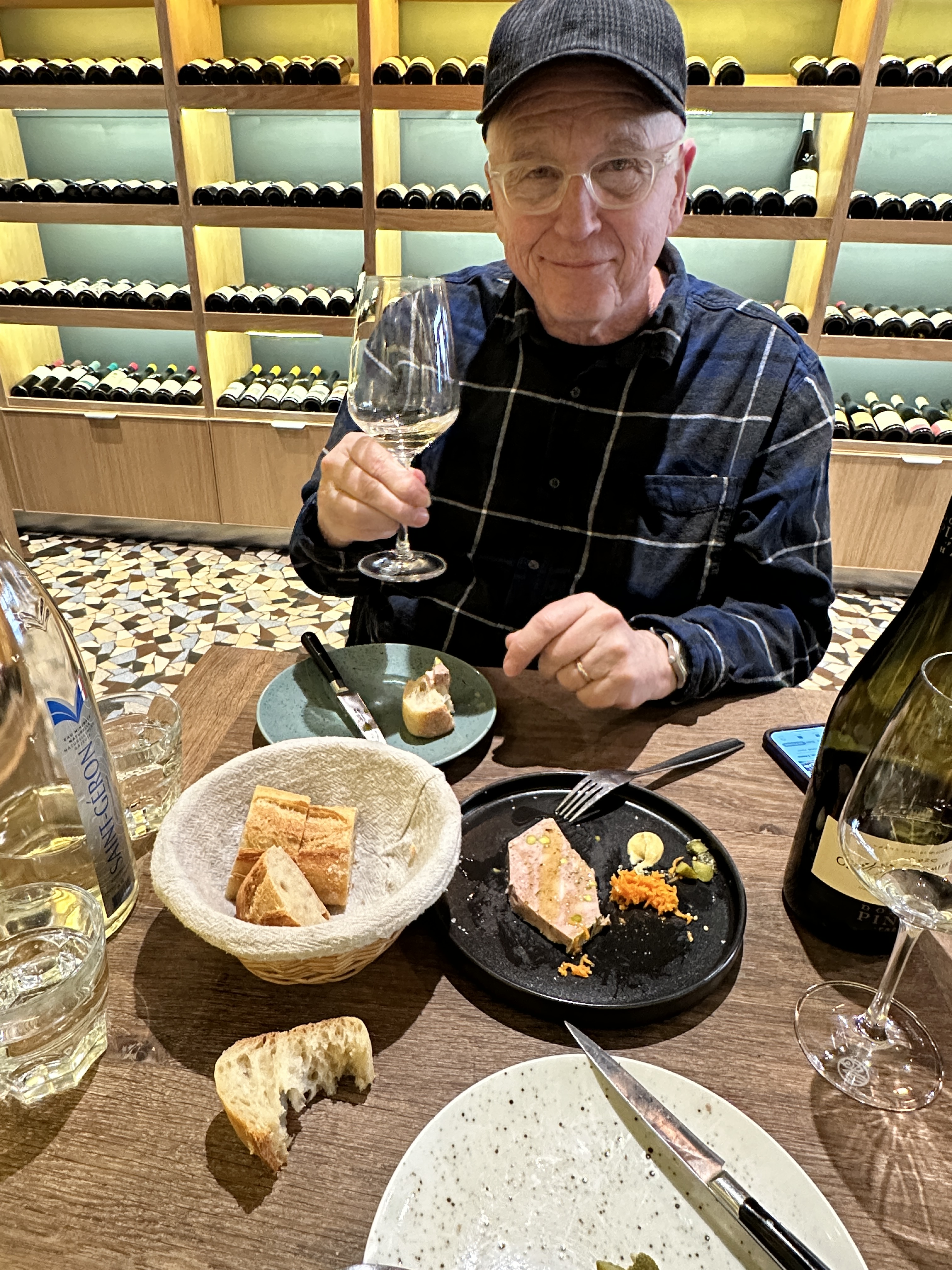
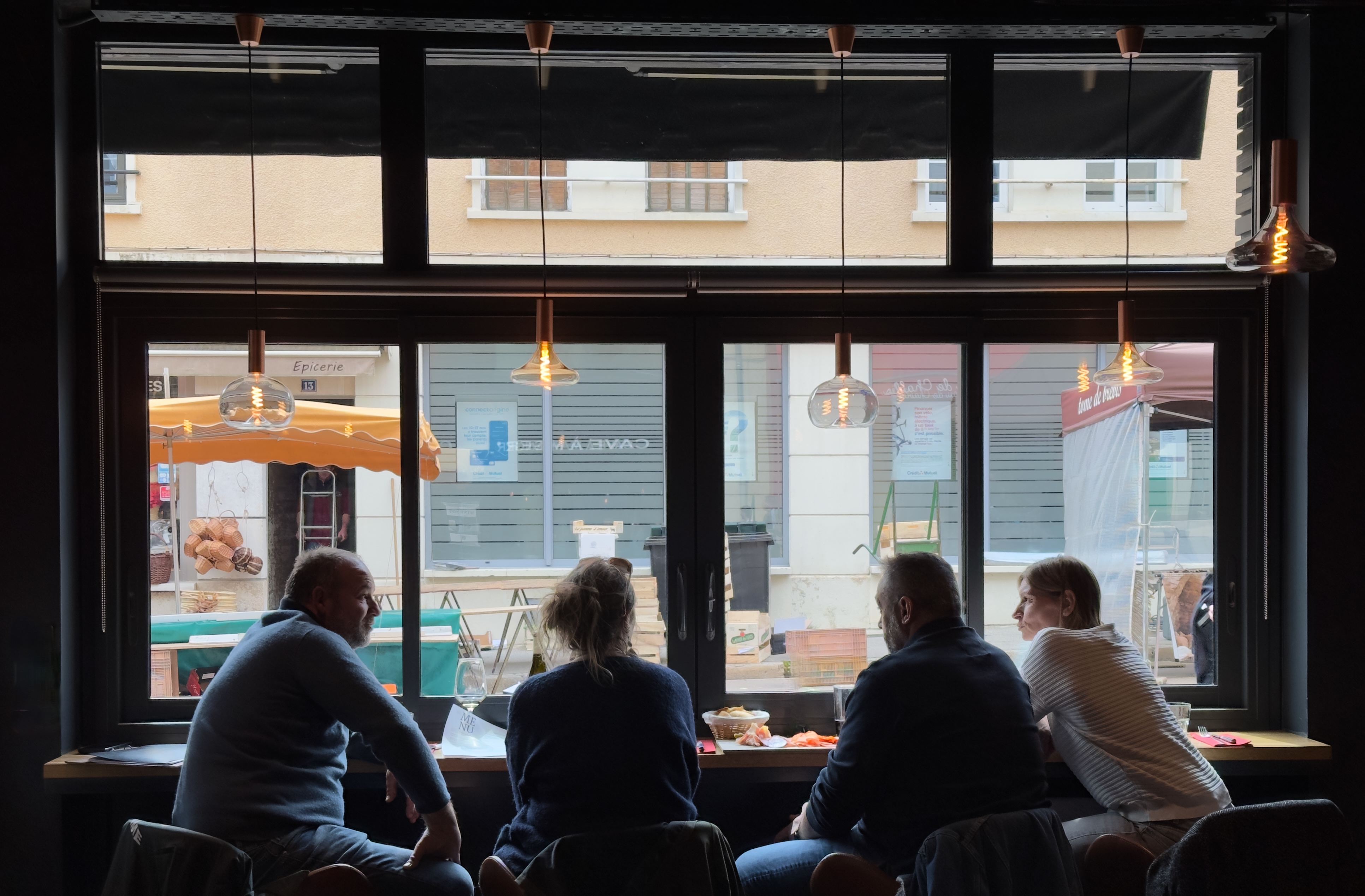
For lunch, we have a reservation at “Chablis Wine Not”, a bustling, trendy wine bar we never would’ve gotten into without booking ahead. The menu offers a selection of small plates and we share a raw squid and radish salad, turkey-pistachio terrine, cauliflower tempura, and trout sashimi with seaweed crisps.
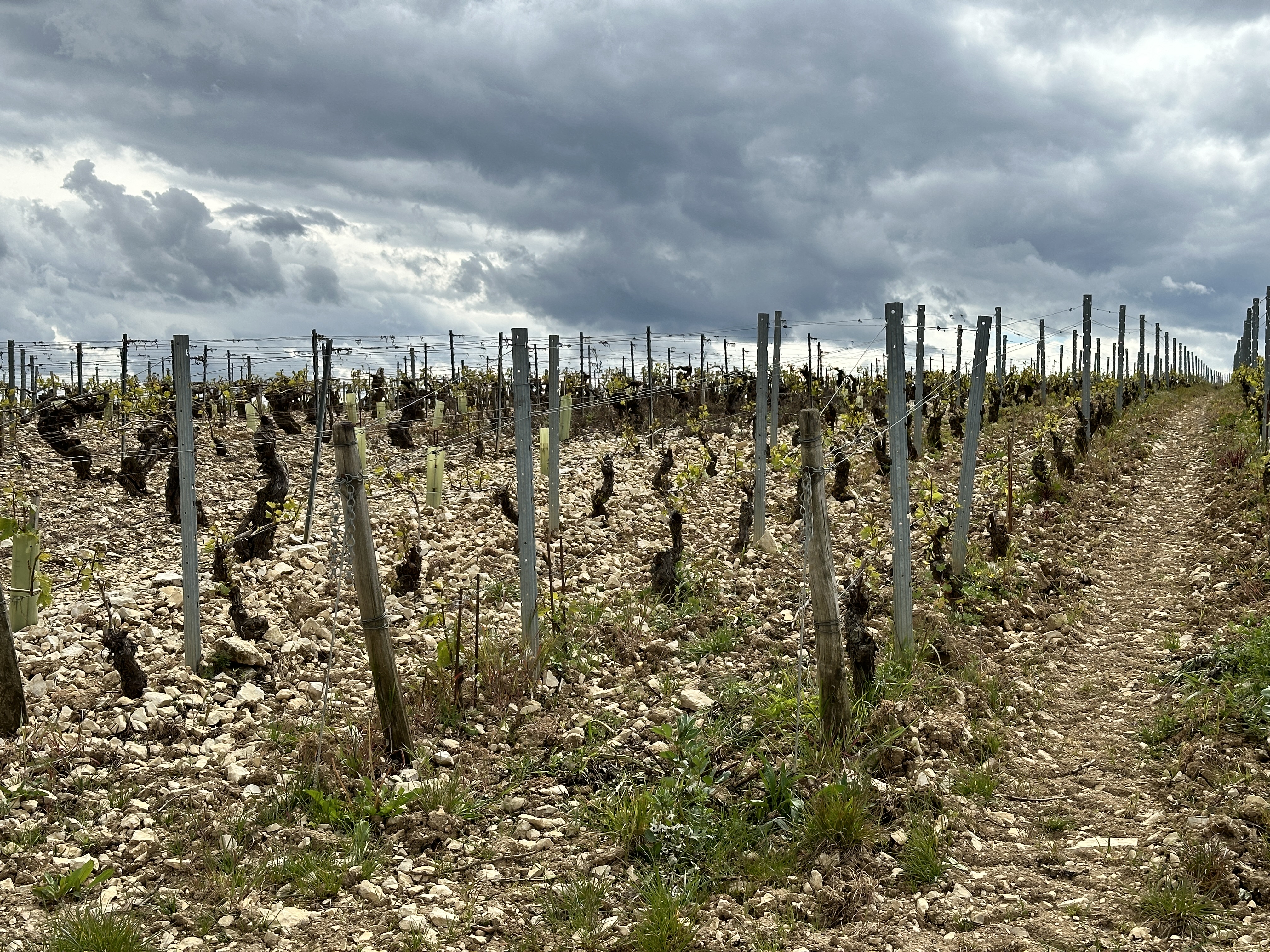
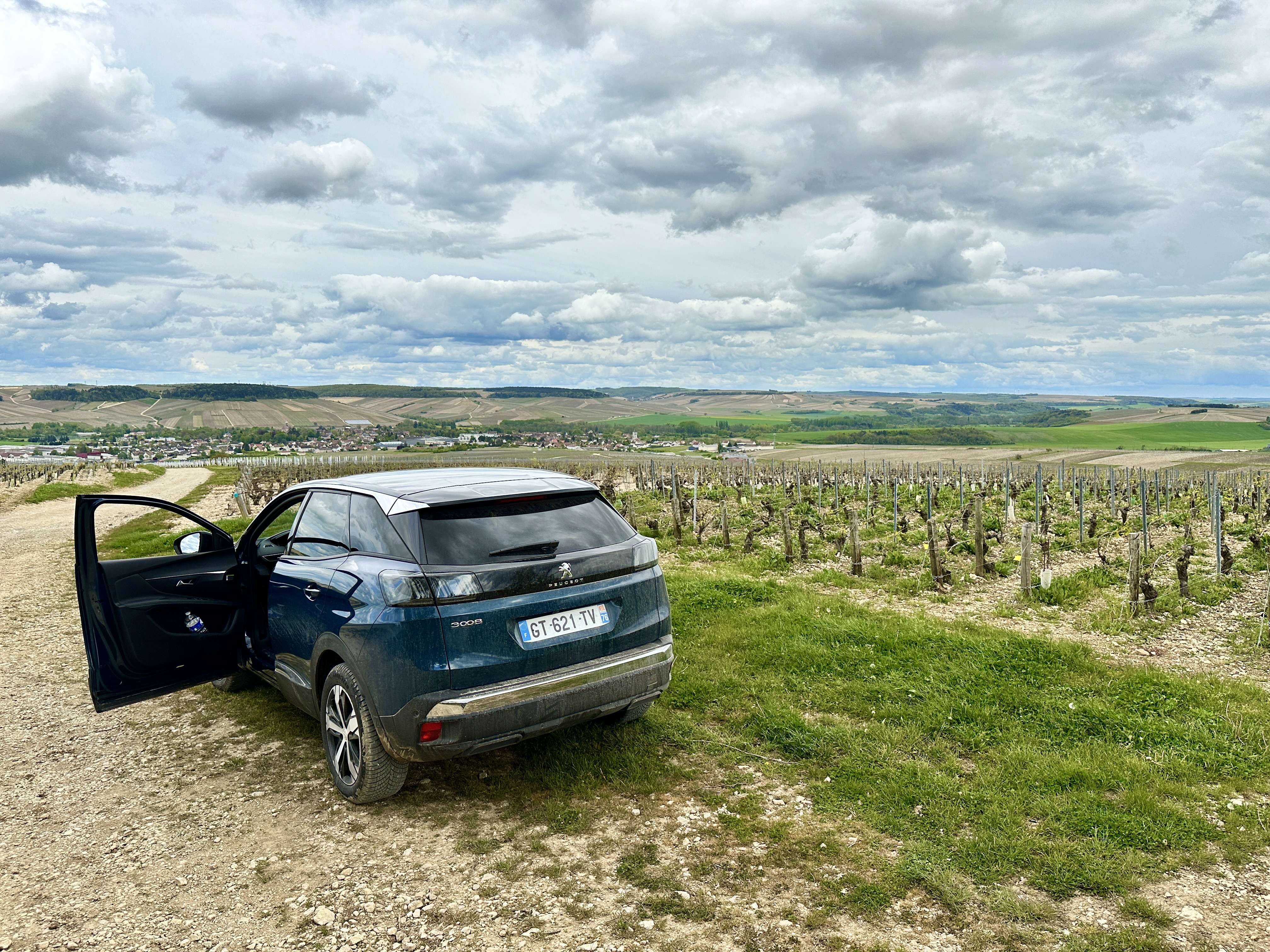
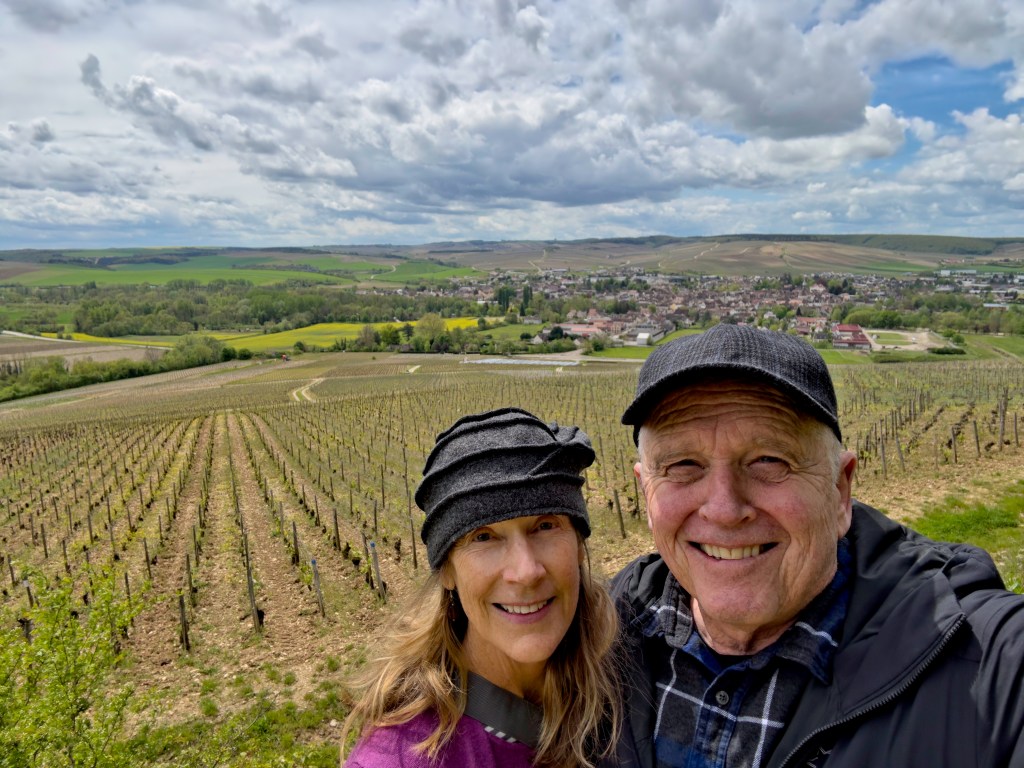
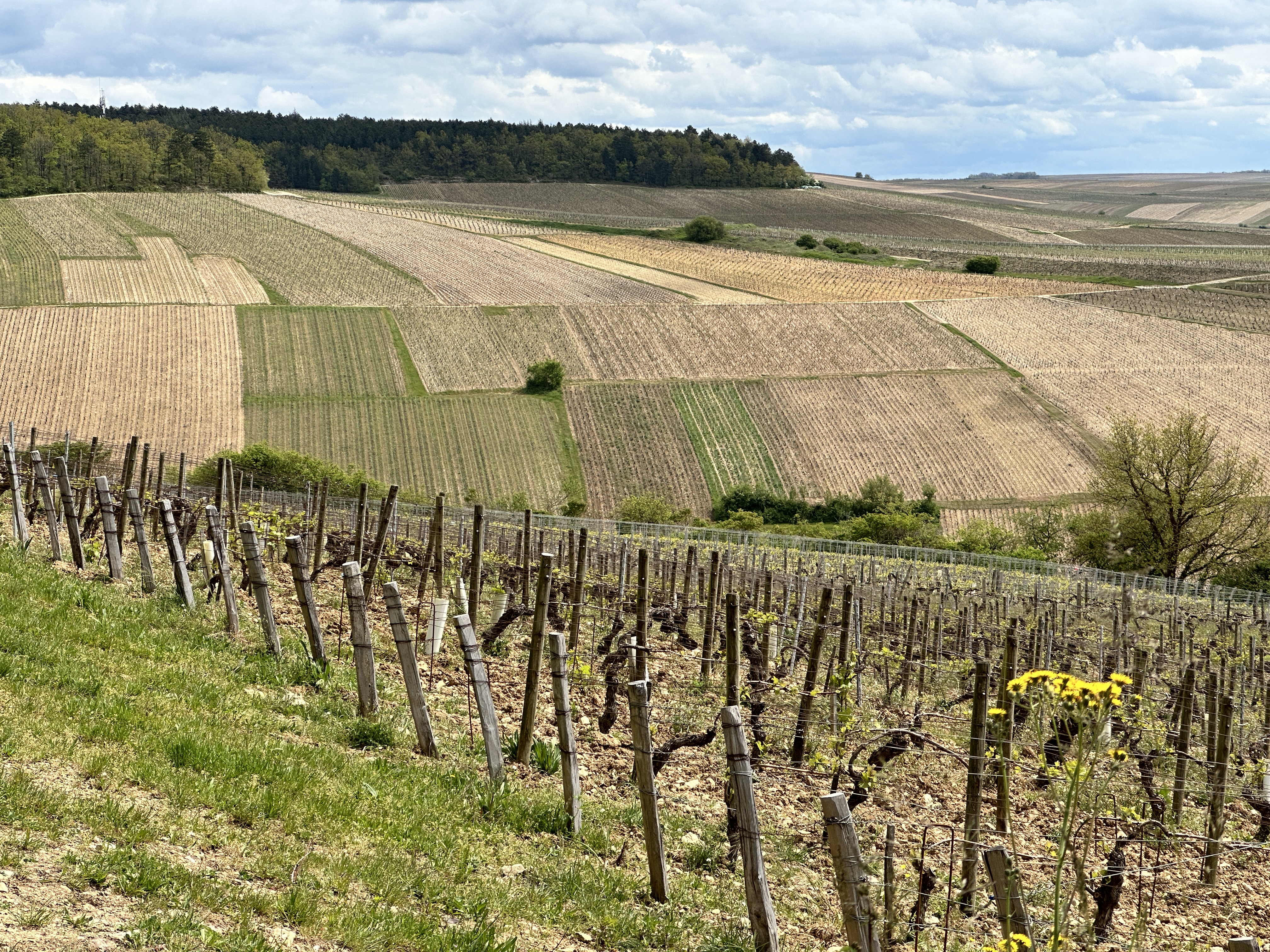
Wine enthusiasts will understand the thrill of what we do next: We drive to the top of an east-facing slope, park the car and walk through a grove of pine trees to the oldest—and most esteemed—vineyards in Chablis. No walls or fences contain us; we are standing amongst the vines. Dave gazes around in awe. “It all comes from right here!”
The mix of limestone, clay, cool climate and exposure to rain and sun on these hillsides is ideal for making great wine, even in difficult years. Cistercian monks made wine in this area as early as the 12th century, and since 1938 the wine produced from grapes grown on these 260 hilly acres—a scant 2% of Chablis vineyards—has officially been classified as Grand Cru. (It is important to note that in Chablis, Grand Cru outranks 1ère Cru, the opposite of the rating system used in Bordeaux. Not trying to be confusing, promise.) The specific vineyard names are unknown to Anna, but Dave recognizes them all: Blanchots, Preuses, Bougros, Grenouilles, Valmur, Vaudésir and—the oldest, and arguably the most venerated—Les Clos.
By now Dave has a mighty thirst, and it will only be quenched by sampling some legendary Chablis. We head back into town to La Chablisienne, a well-known local wine cooperative, and are treated to a free dégustation (tasting) of several Grands Crus. Needless to say, we come away with a few bottles. (Stocking up for the rest of our time in France—we still have several weeks ahead, and we depart Chablis tomorrow!)

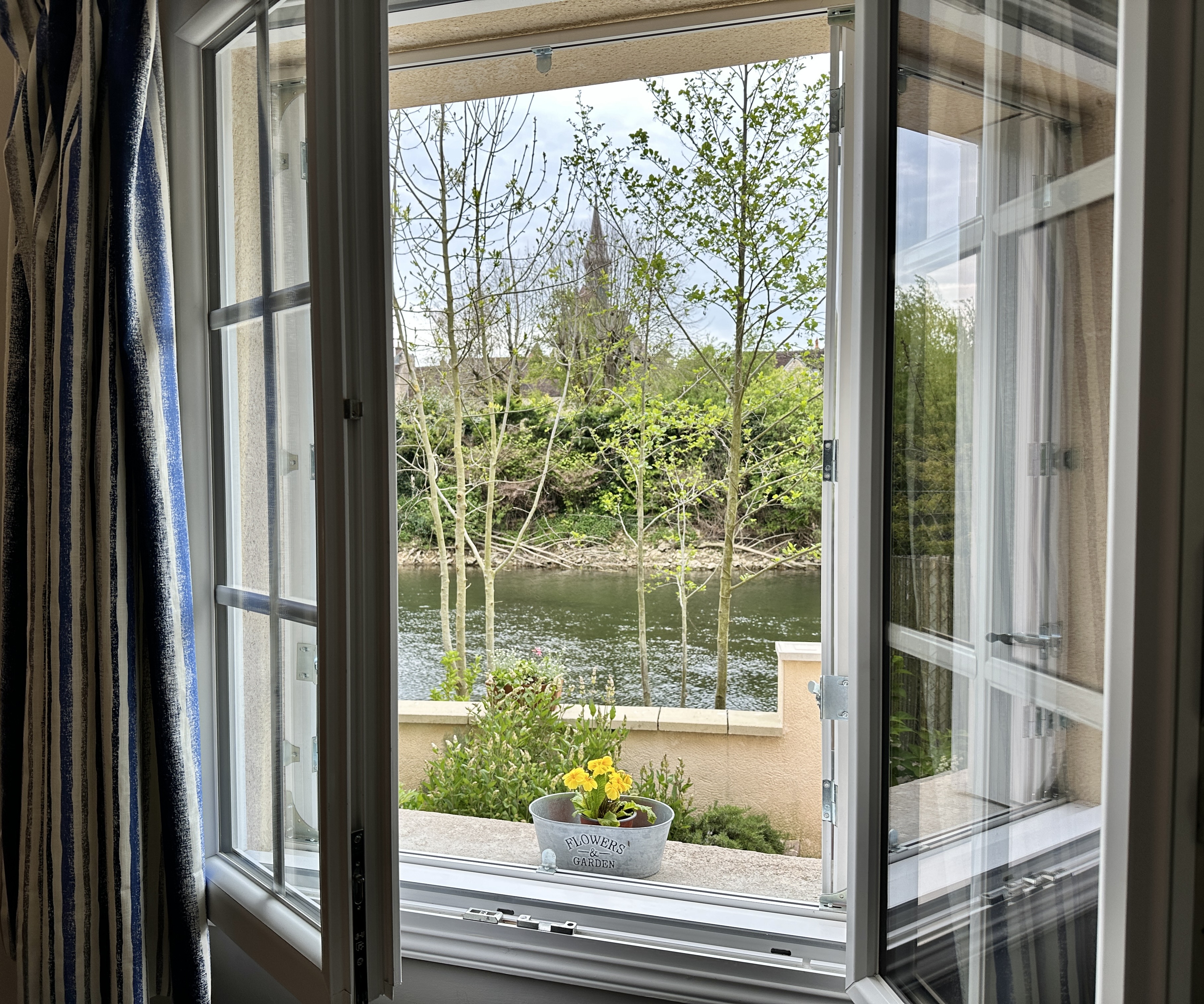
In the evening, we spend a peaceful hour sitting outside on our private terrace overlooking the river. Pale pink clematis flowers climb across picket fencing and white lilac scents the air. Church bells sound from across the water. If we had any expectations about Chablis, they have been exceeded. We booked two nights here, but could’ve stayed a week.

Next we will travel deeper into the Burgundy region, an area we have both visited before, and where, 35 years ago, Anna worked as a tour leader for a small bike tour company. How much will seem familiar, all these years later? Will the nostalgia of visiting familiar places be as compelling as the excitement of new discoveries?
 Thin Slicing the World
You should be publishing these wonderful thoughts and reminiscents, Anna .. with your command of the language and Dave’s photos , peop