
Monuments & Dinosaurs
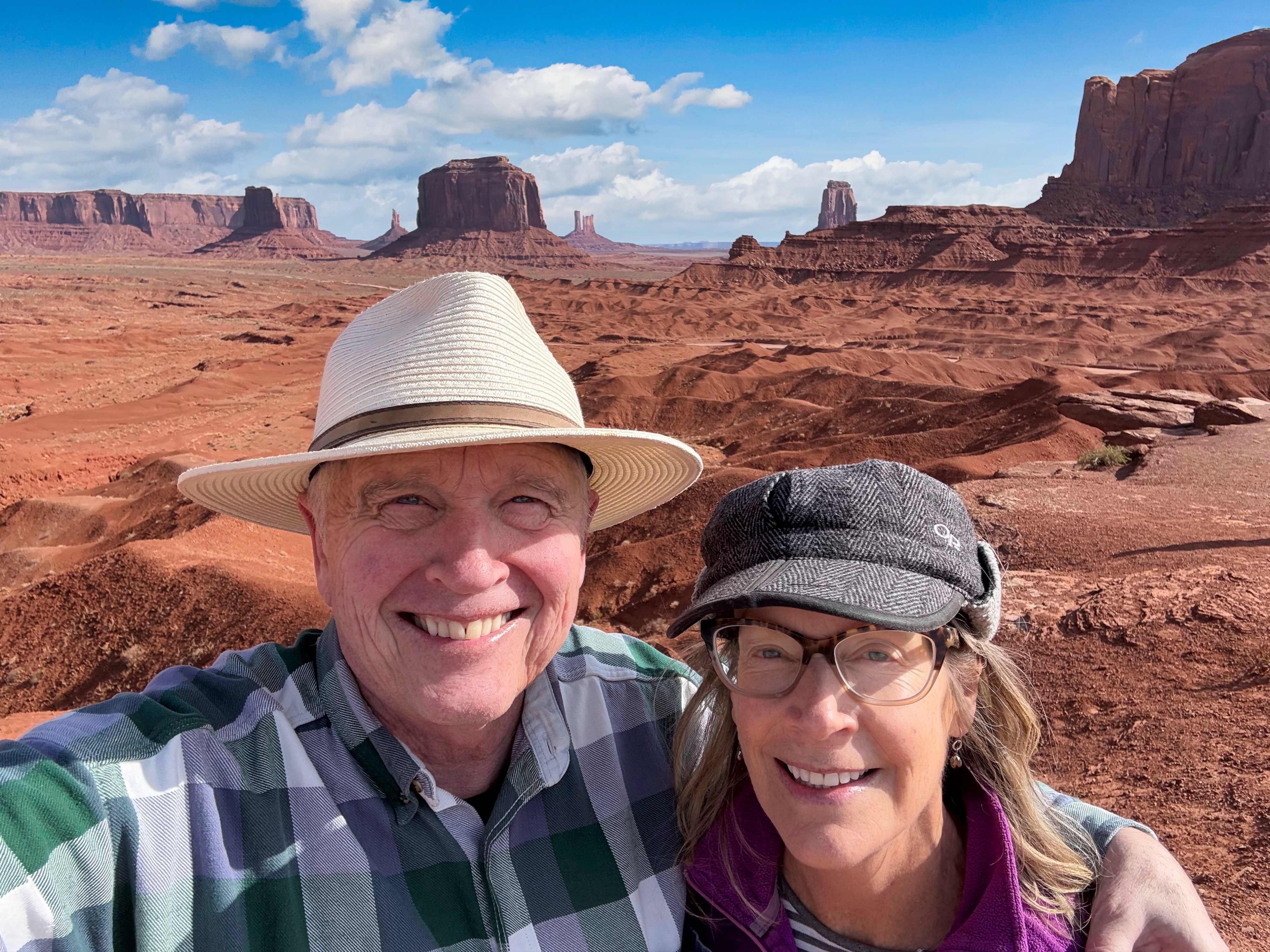
DAY FIVE: MONUMENT VALLEY
Our “deluxe” 3.5 hour tour of Monument Valley is scheduled to begin at 7:45am. But punctuality, it seems, is unnecessary, for our guide is nowhere to be seen. While we wait, we become acquainted with our fellow tourists: Joel and Megan, a twenty-something couple who are tent-camping their way across the USA from the Pacific Northwest to Florida, and Stacey, a woman about our age whose husband has stayed behind in their motor home with their two Australian shepherd dogs. At 8:15, an open-sided truck pulls up next to us and a wiry Navaho man climbs out of the driver’s seat. “I’m Ray” he says, offering us a toothy grin and ushering us into the back of the vehicle.
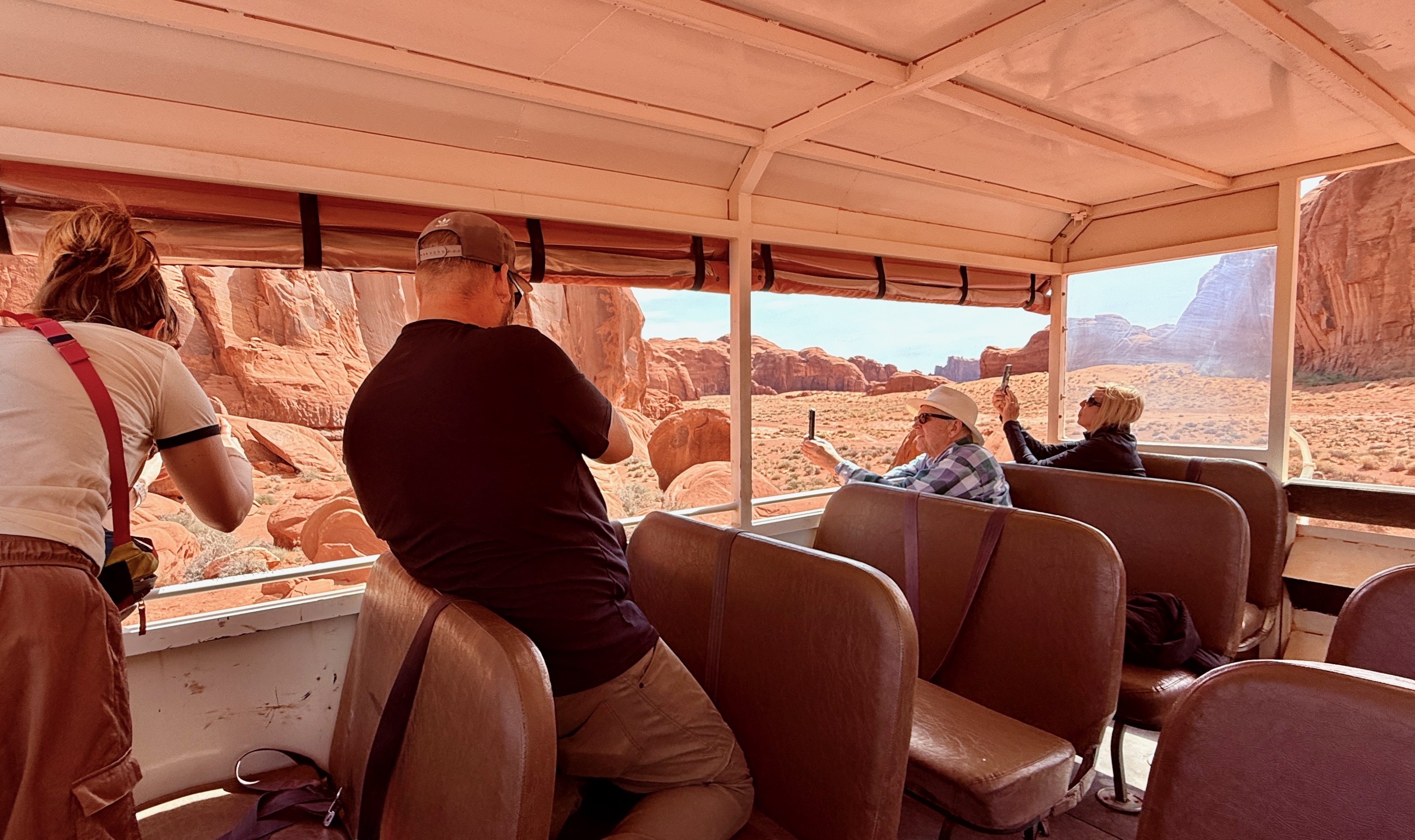
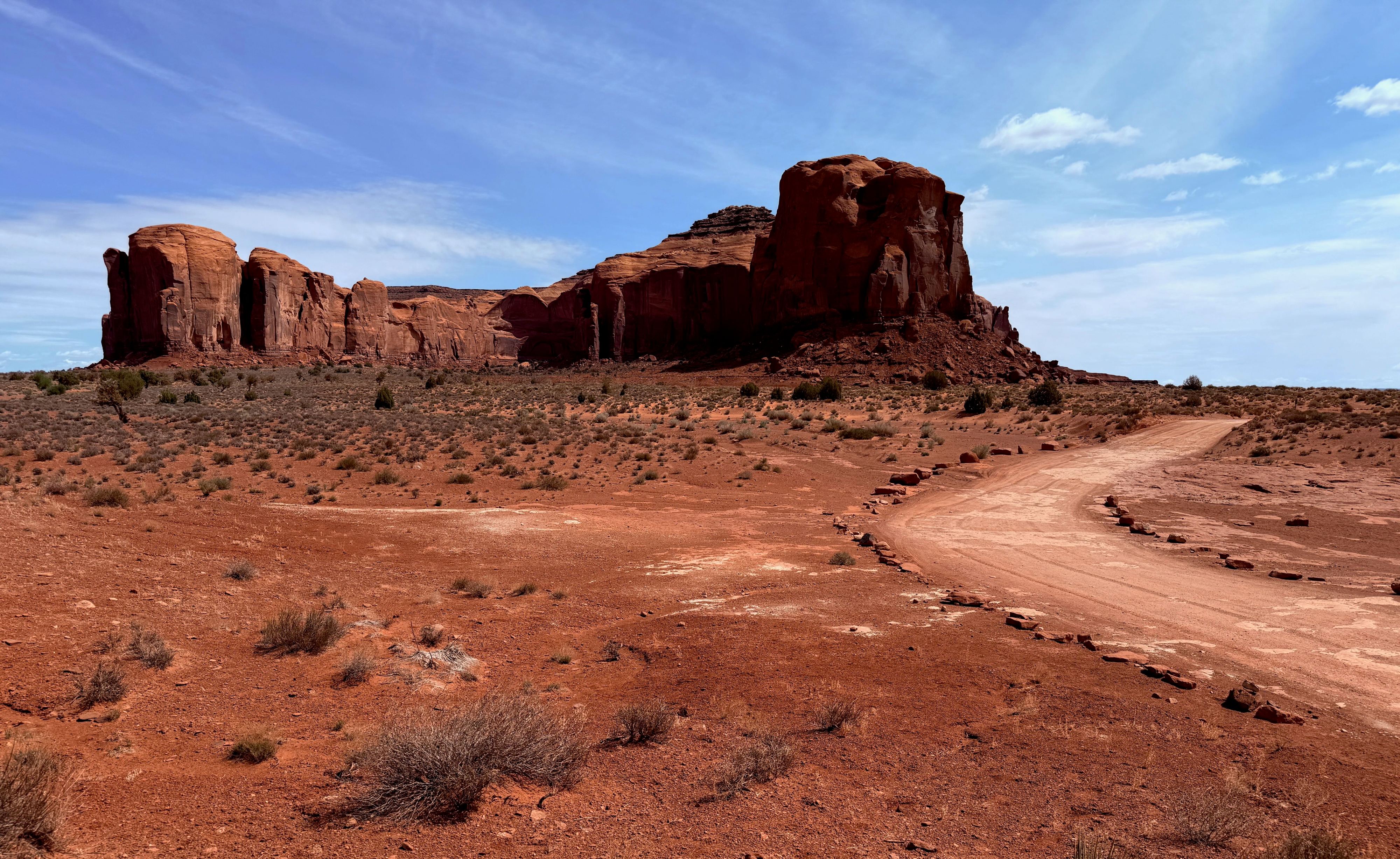
We bump along dusty desert backroads with periodic stops at prescribed photogenic viewpoints, and if we bang the side of the truck hard enough to get Ray’s attention, he will make an unscheduled stop.
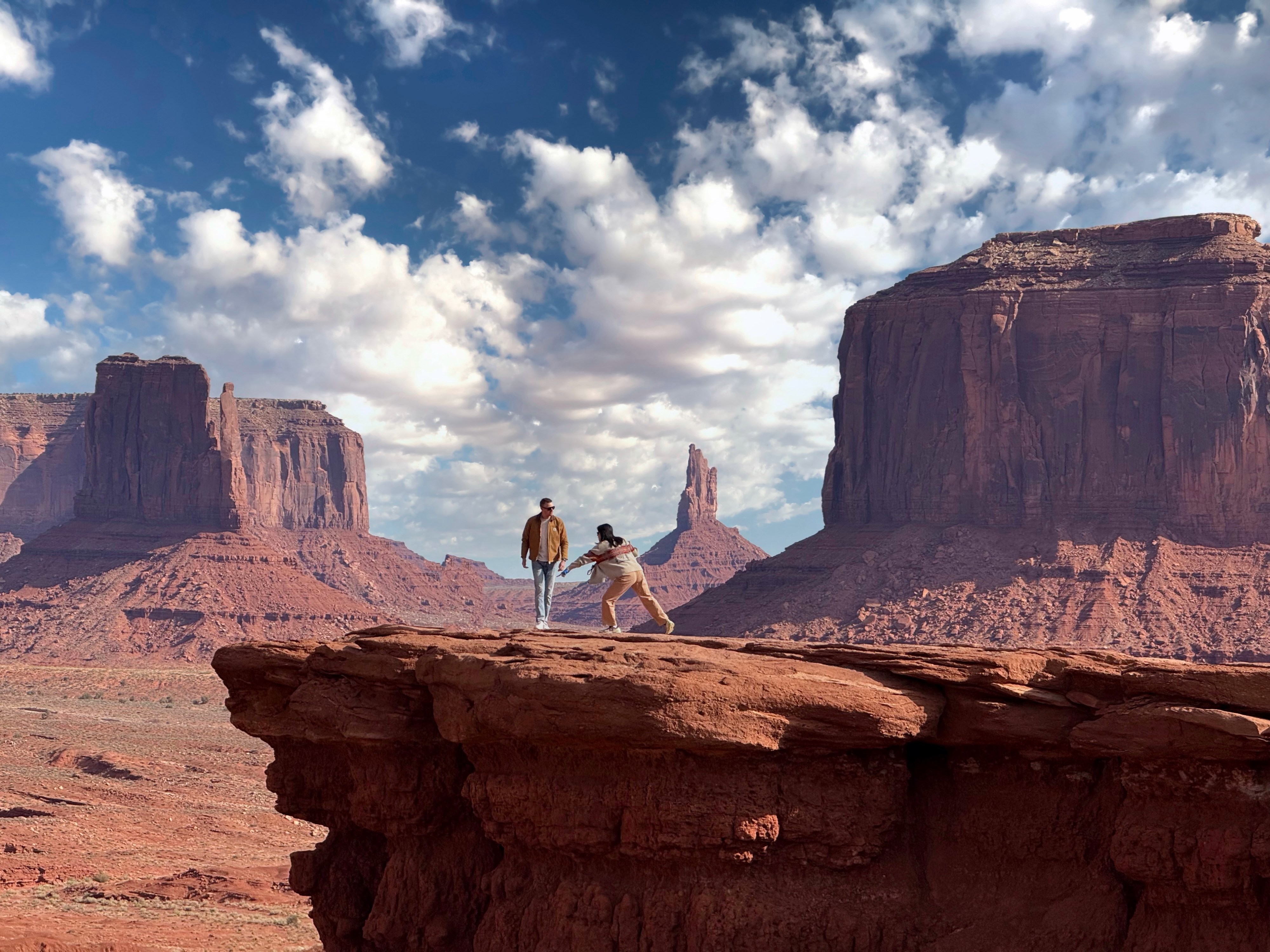
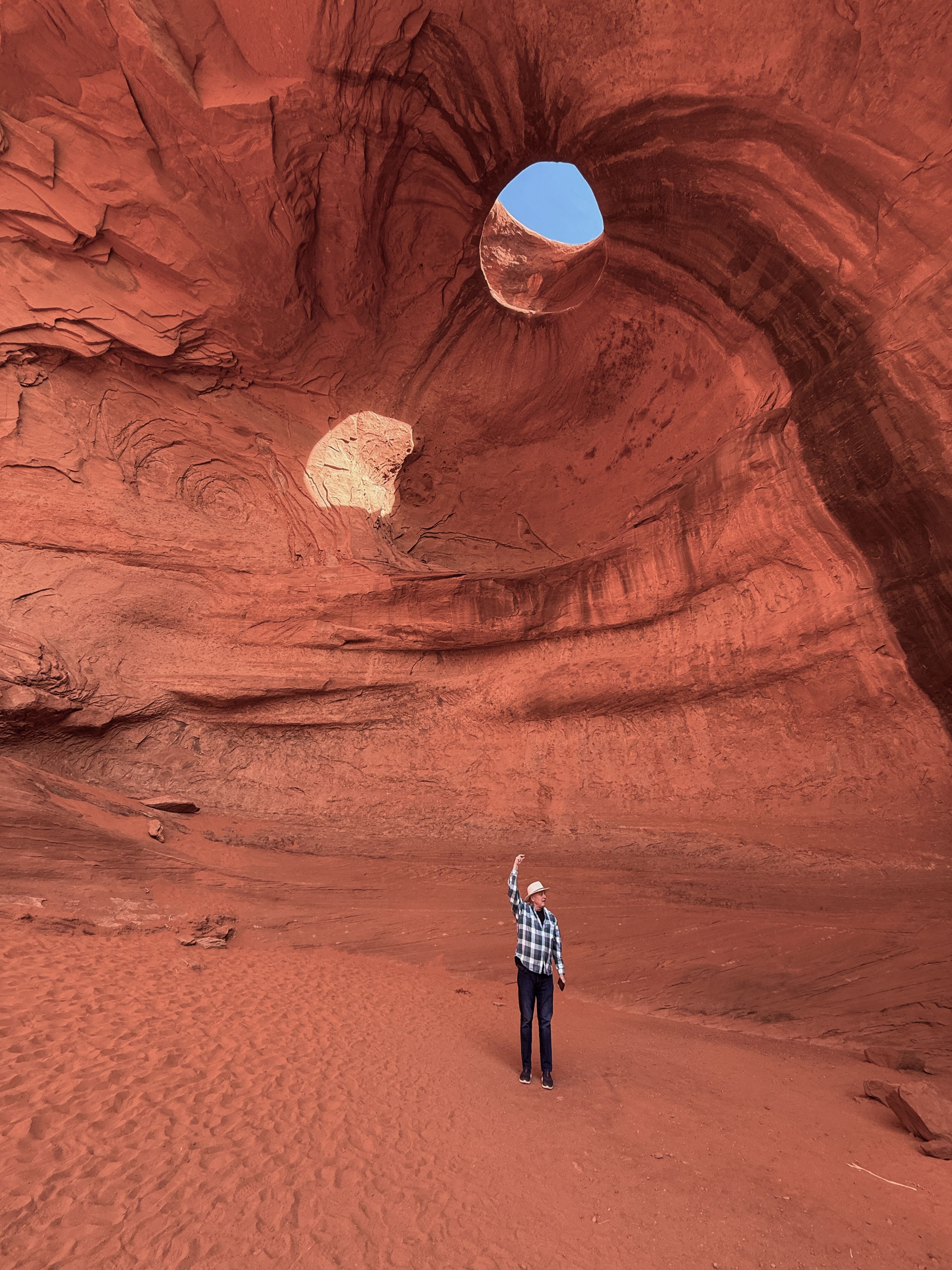
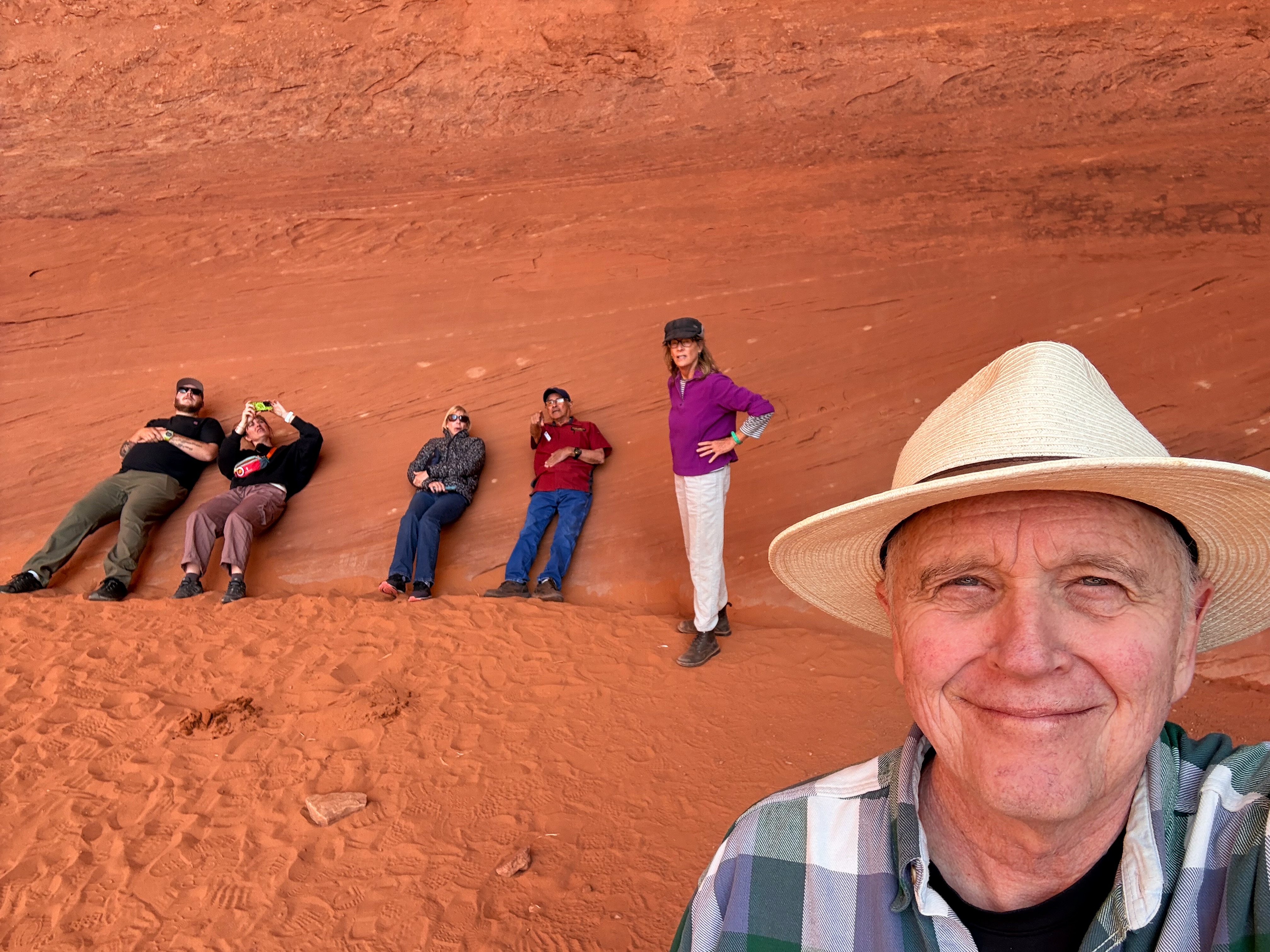
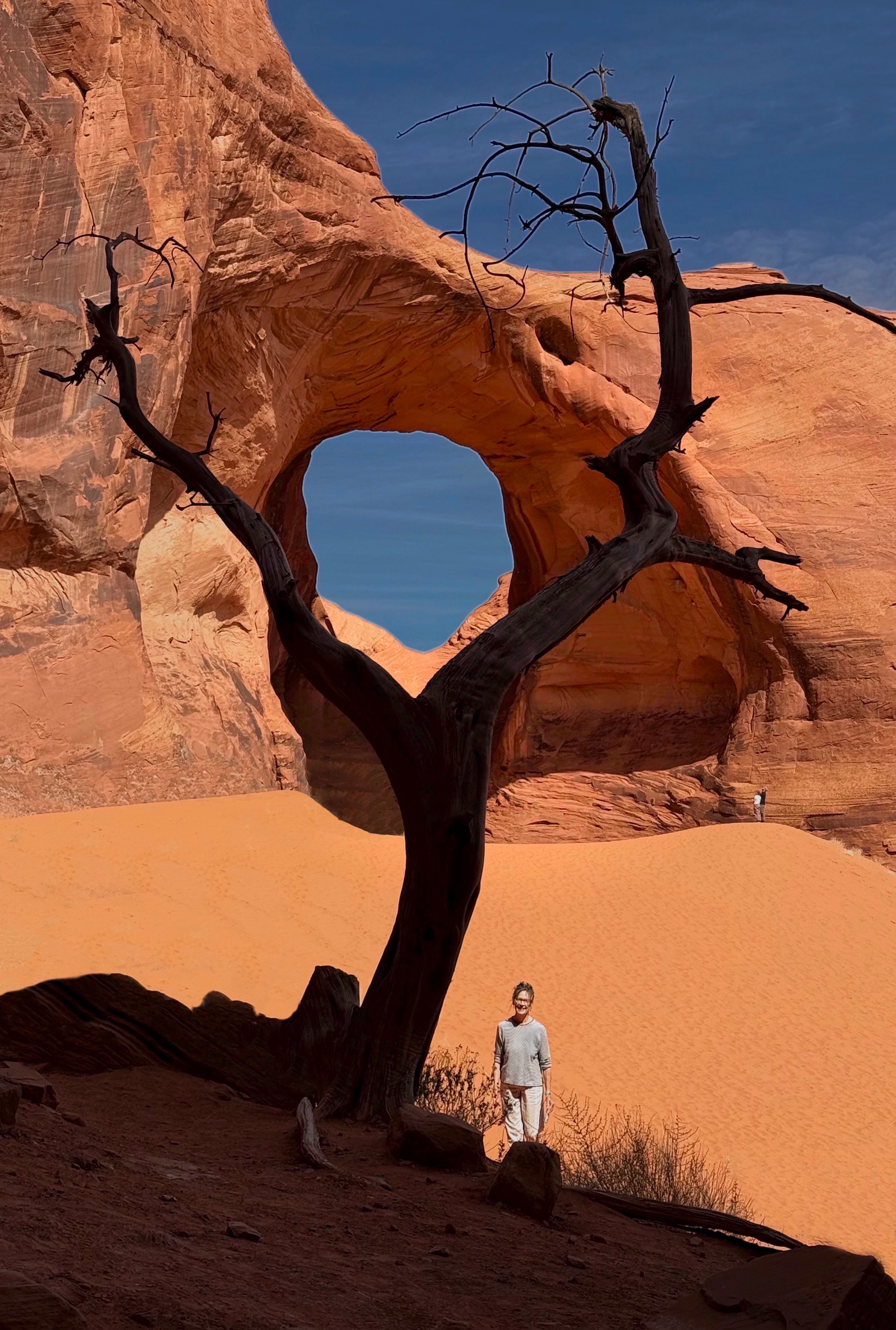
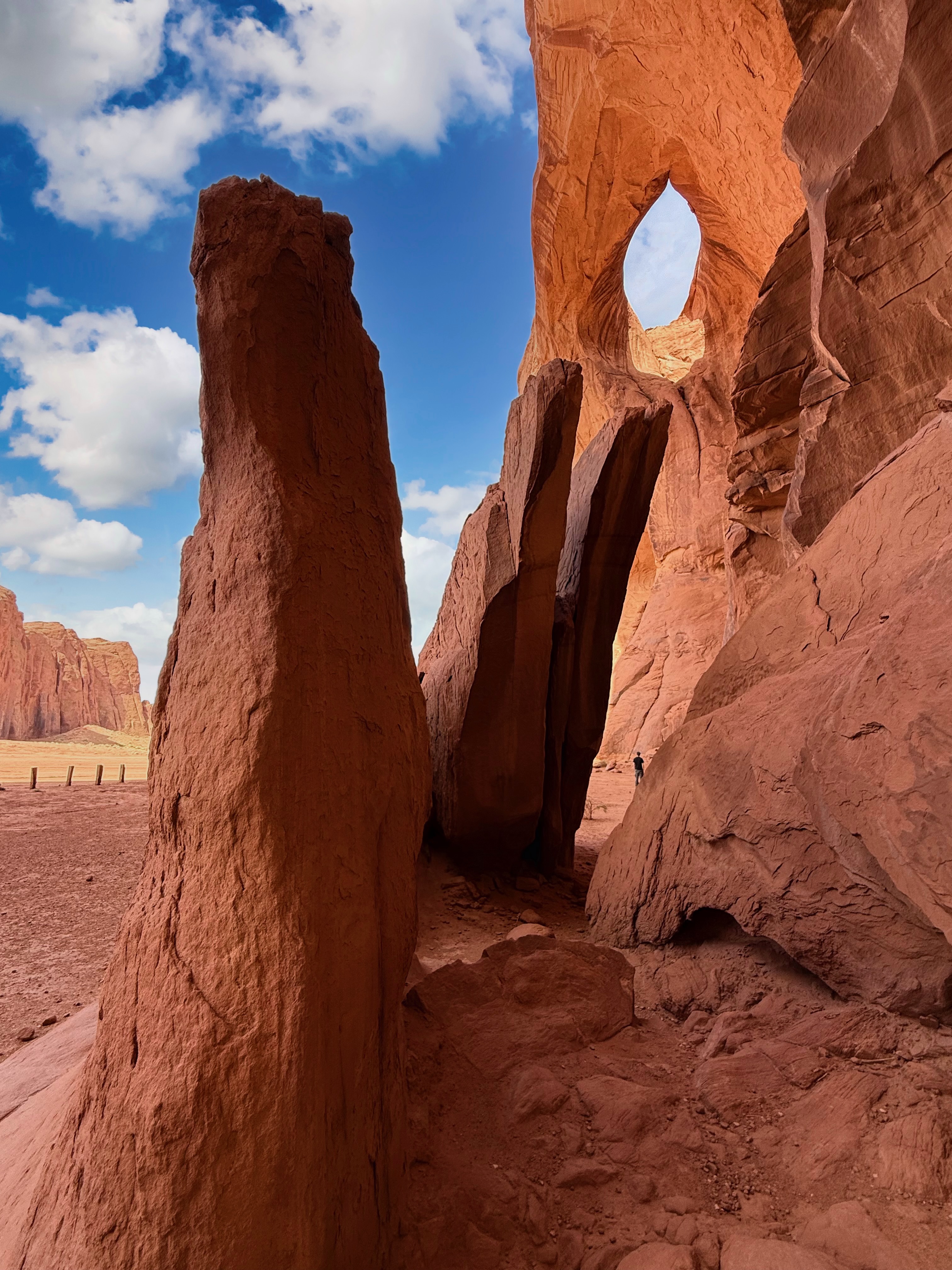
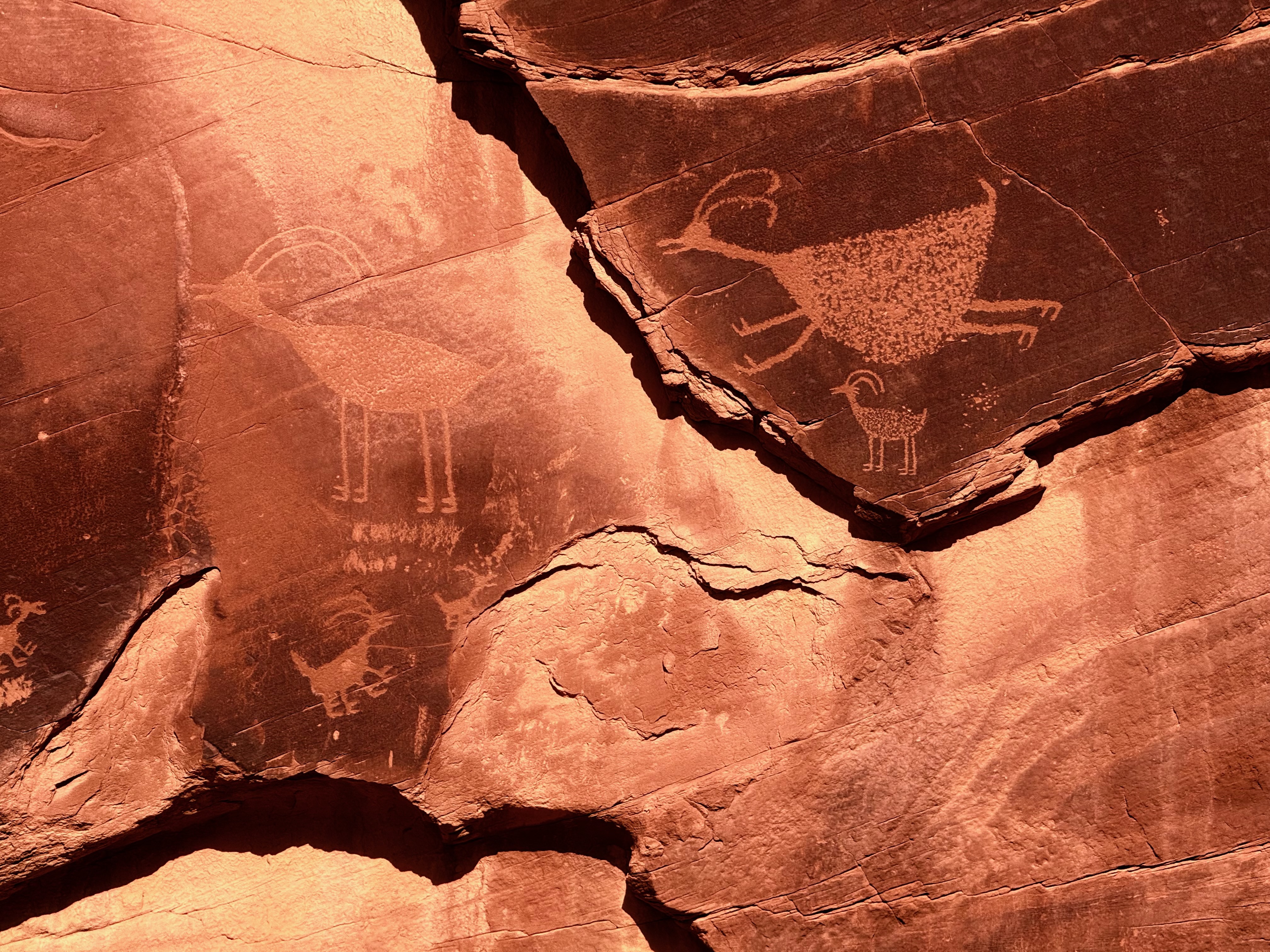
We admire the desert’s wind and time-sculpted features, and thrill to see ancient pictographs.
As a special feature of our “deluxe” tour, Ray brings us to a Navaho homestead of round, dirt-covered dwellings called “hogans”, traditional structures constructed by driving logs vertically into the sand, building an interior log framework and covering it over with mud and sod.
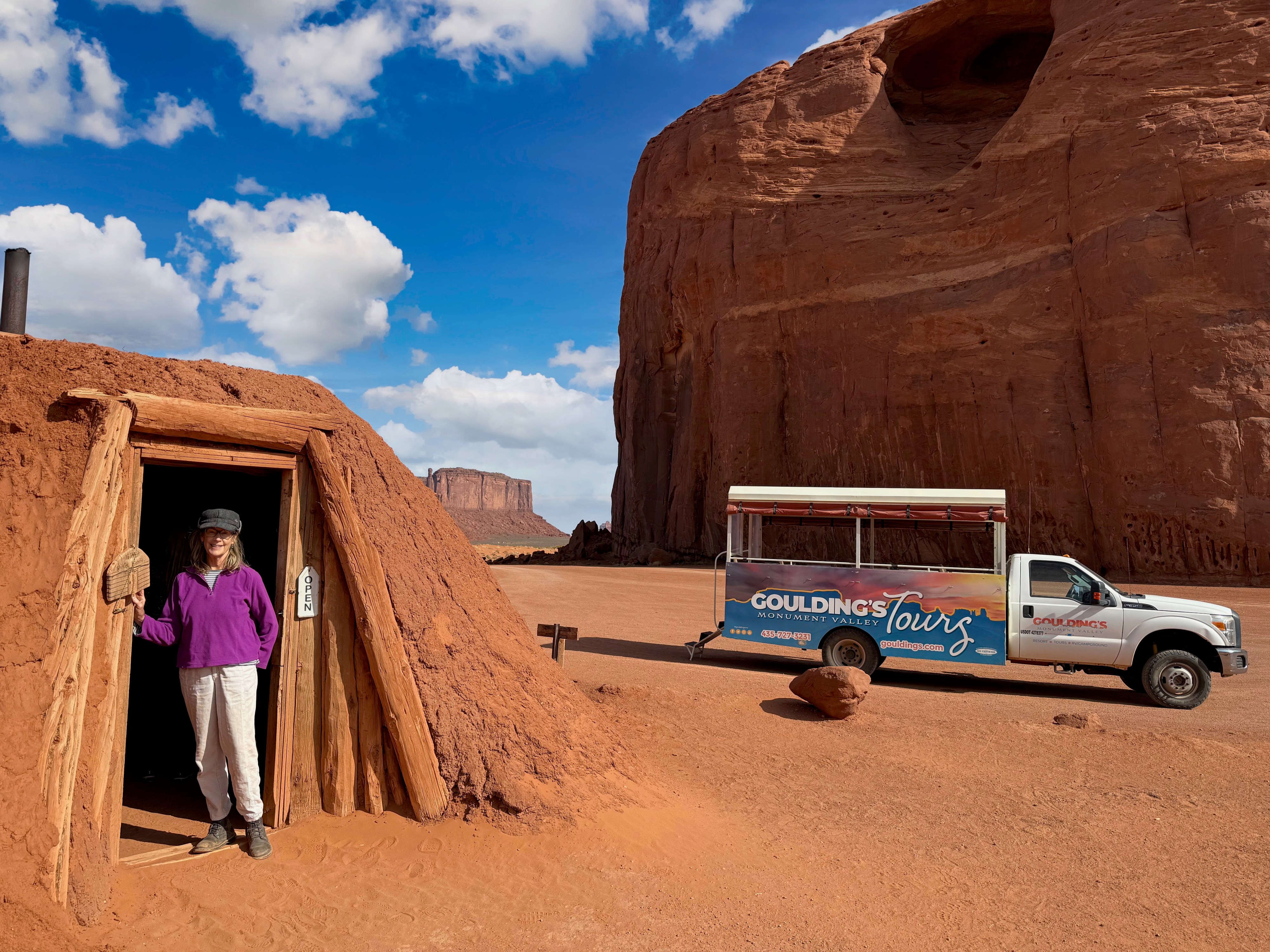
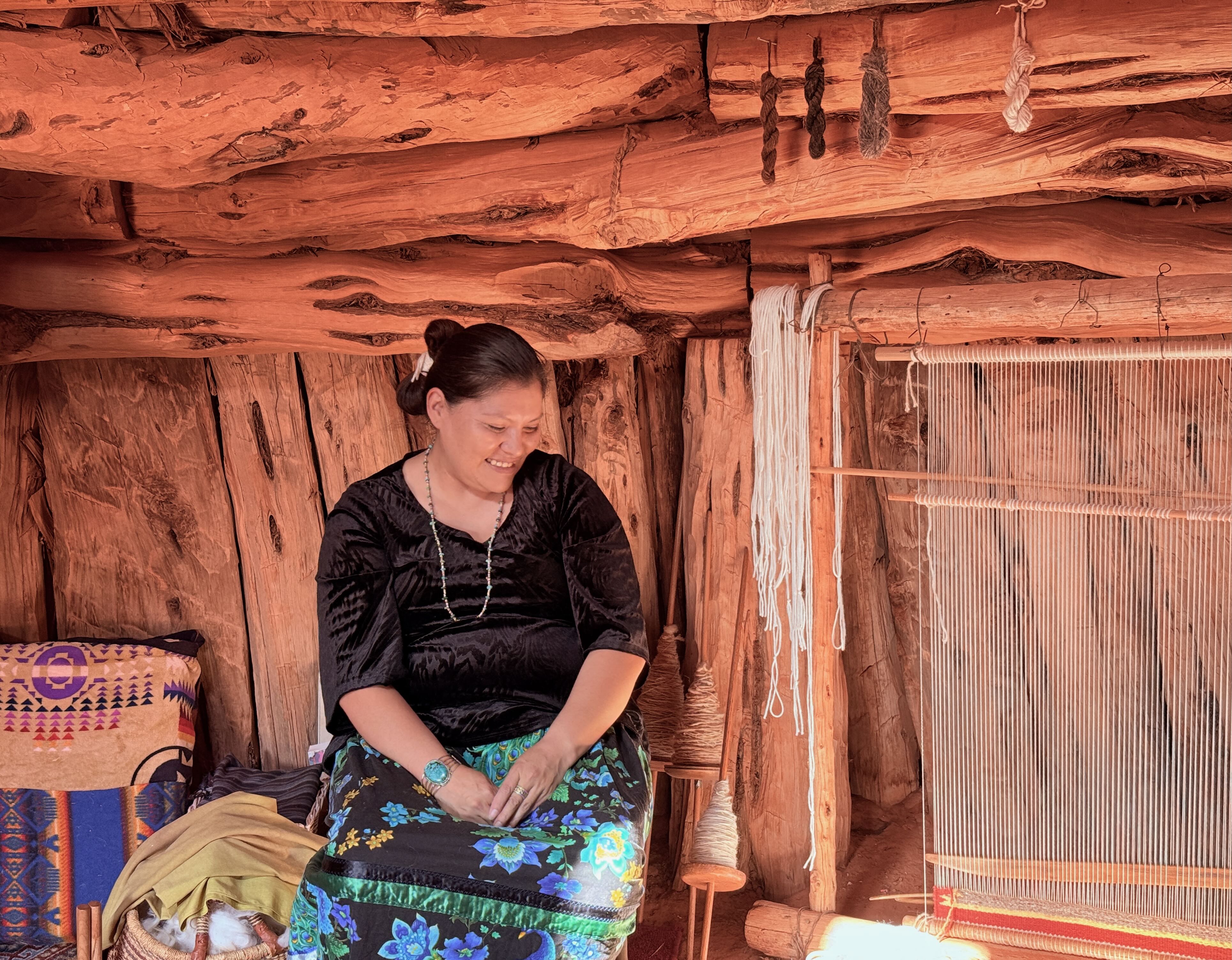
A local woman joins us and explains Navaho rug weaving, soap making (from Yucca roots) and basket weaving.

“The theme song from Gilligan’s Island keeps running through my head,” laughs Megan as the truck bounces along an especially rutted dirt track. I think about how the dusty, spine jarring ride reminds me of childhood jeep trips with my grandpa in the back country of the Sierra Nevada mountains. Those forays always seemed to involve at least one instance of getting stuck whilst fording a creek or driving through a snowbank. Little chance of that happening here, I tell myself.
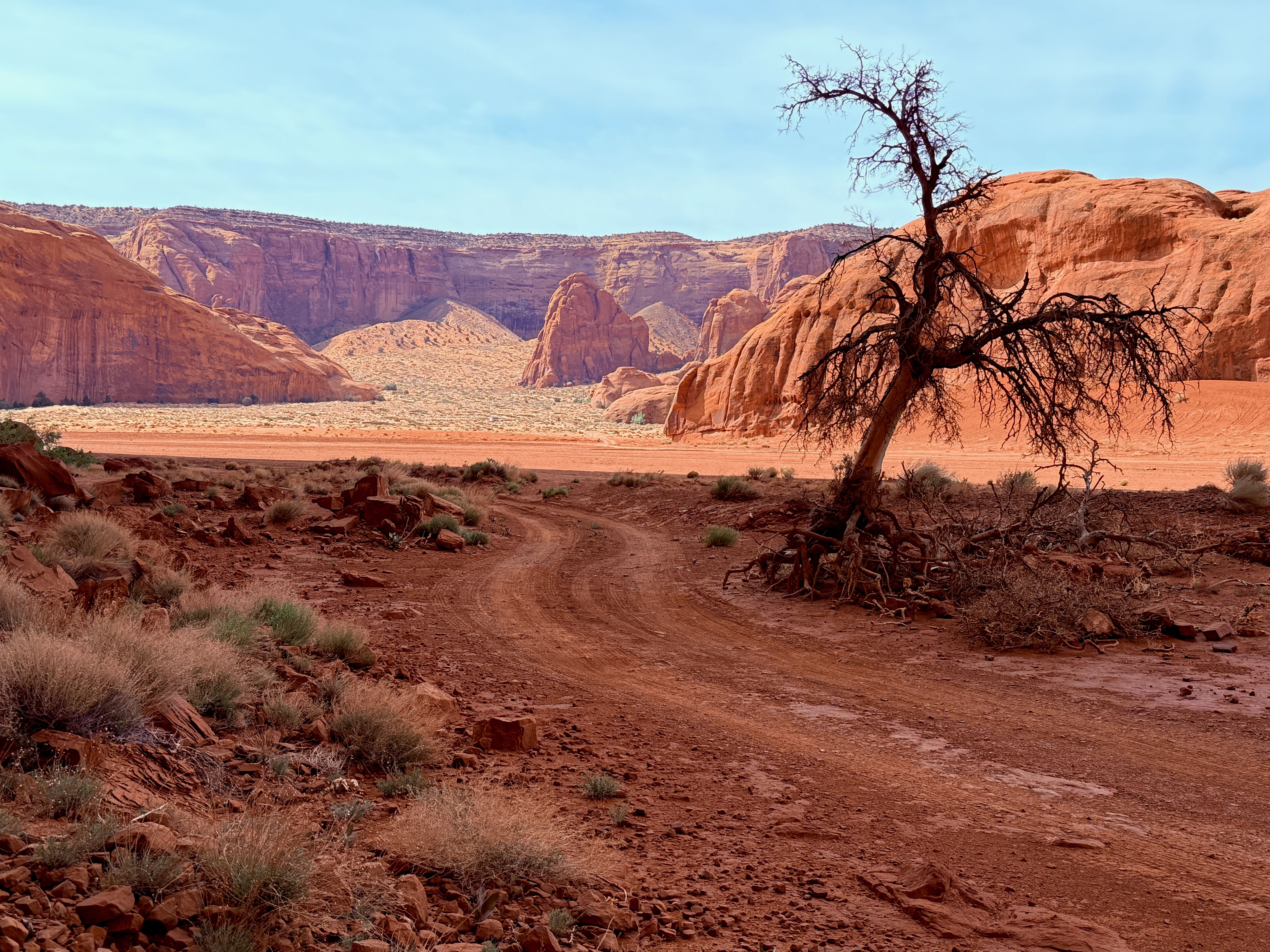
But I am about to be proven wrong. Traversing a sandy valley, our rear end skids sideways, Ray accelerates and our wheels spin, digging into the soft ground. We are stuck. Ray tries to shift into his lowest gear, but seems unfamiliar with the procedure. “It’s my second day on the job,” he confesses. Joel shouts helpful instructions to Ray—stop, shift into neutral, then low four-wheel drive—and then yells at us to rock back and forth in our seats, and finally the truck gains forward momentum.
As we near the end of our tour, Ray speeds up, and the truck jounces us around like a bucking bronco. We suspect that he has noticed he’s behind schedule. “Chiropractor appointment needed after this tour,” shouts Stacey as yet another jolt lifts us clear off our seats and slams us sideways.
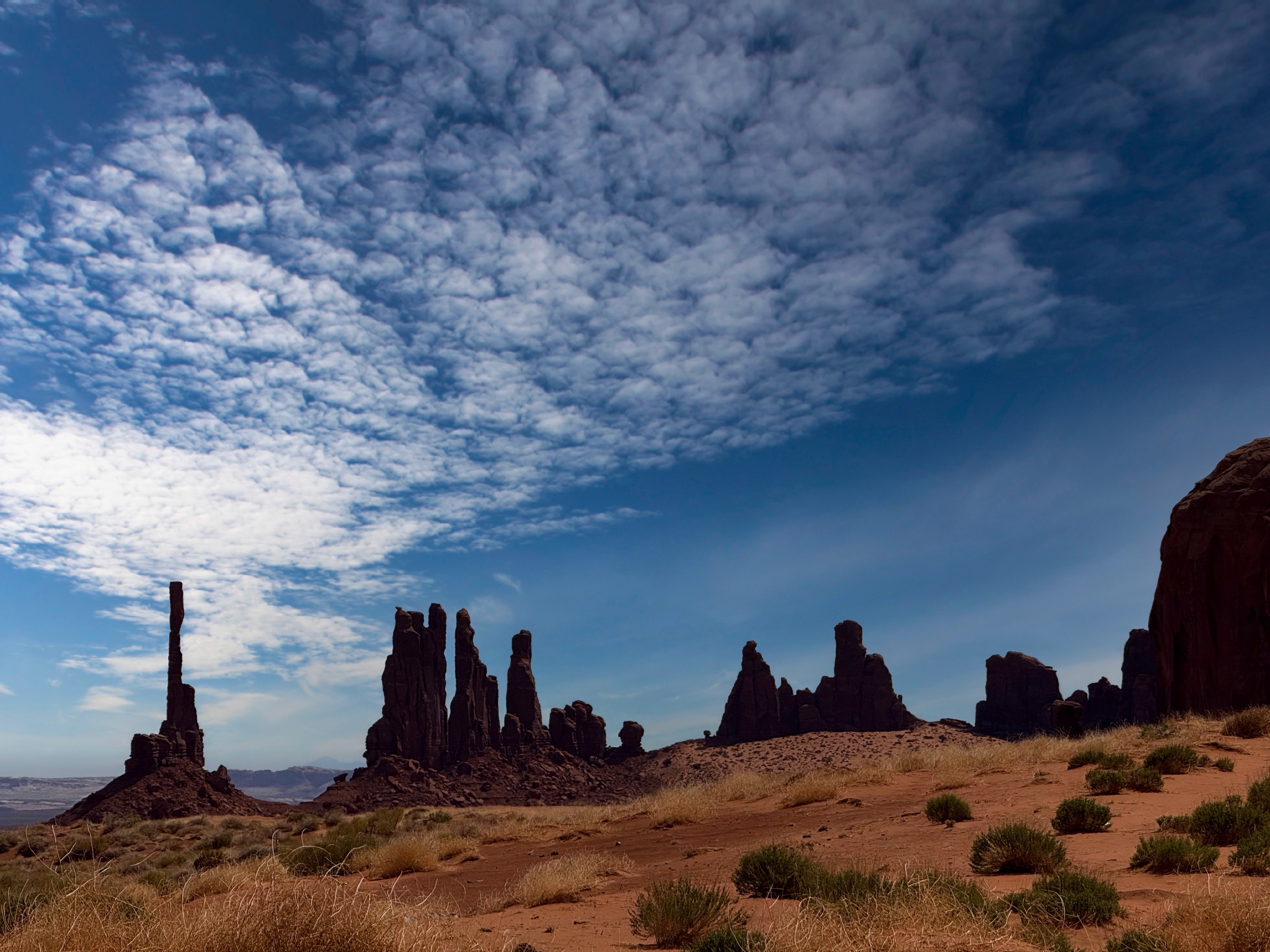
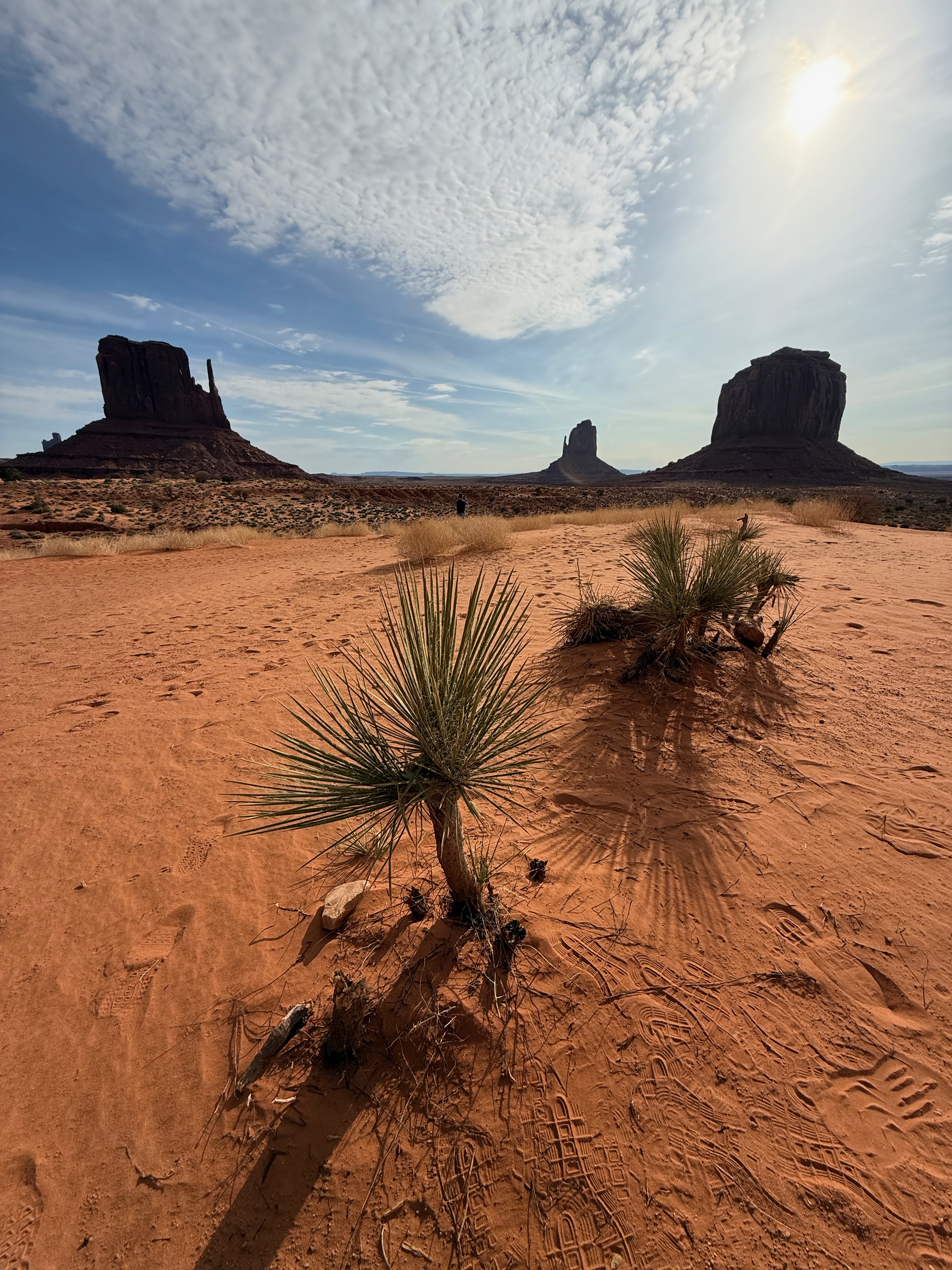
After four scenic hours, we clamber out of the truck coated in red desert dust, but with (hopefully) all our vertebrae intact.
DAY SIX: GOULDINGS to MOAB
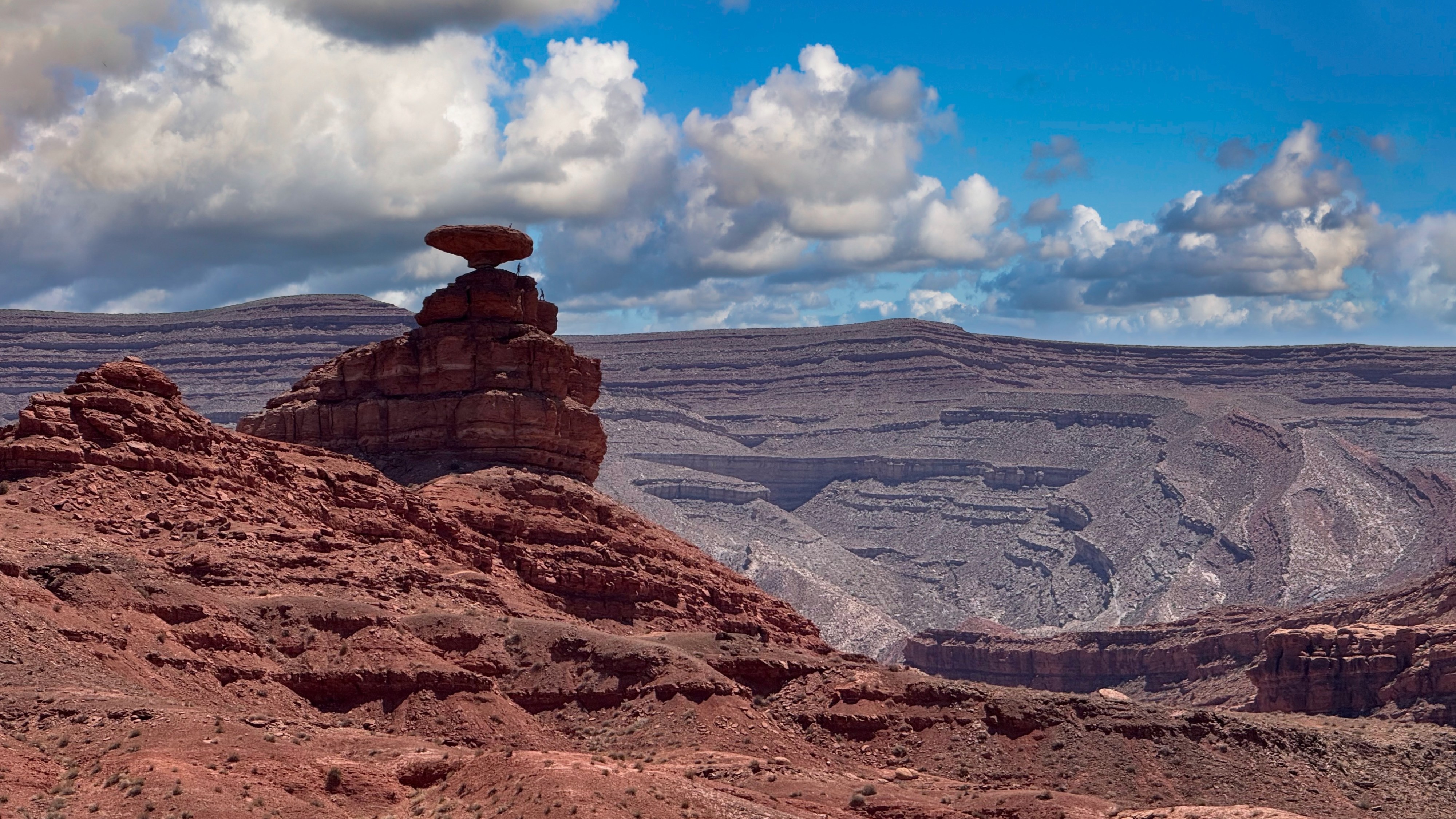
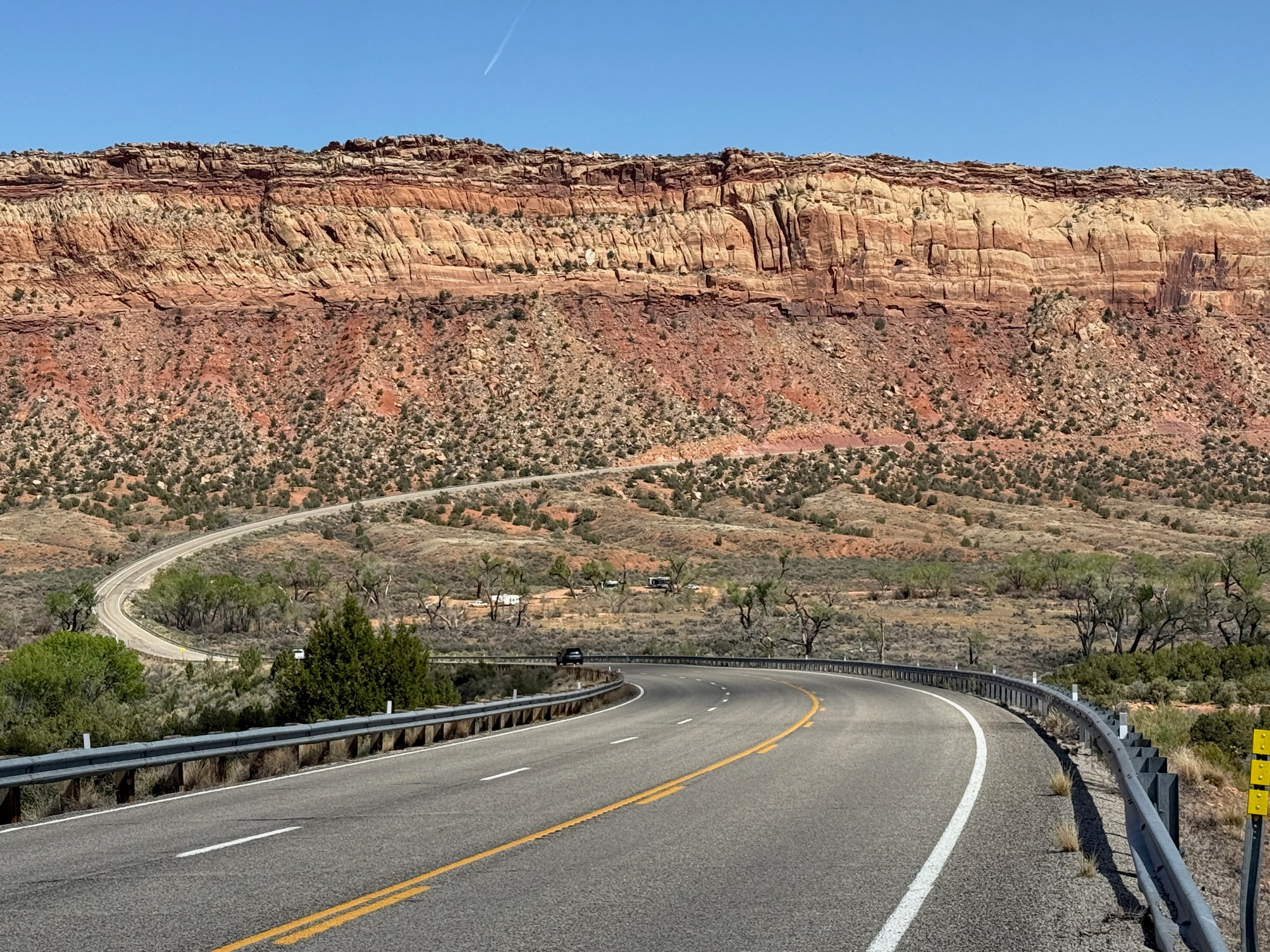
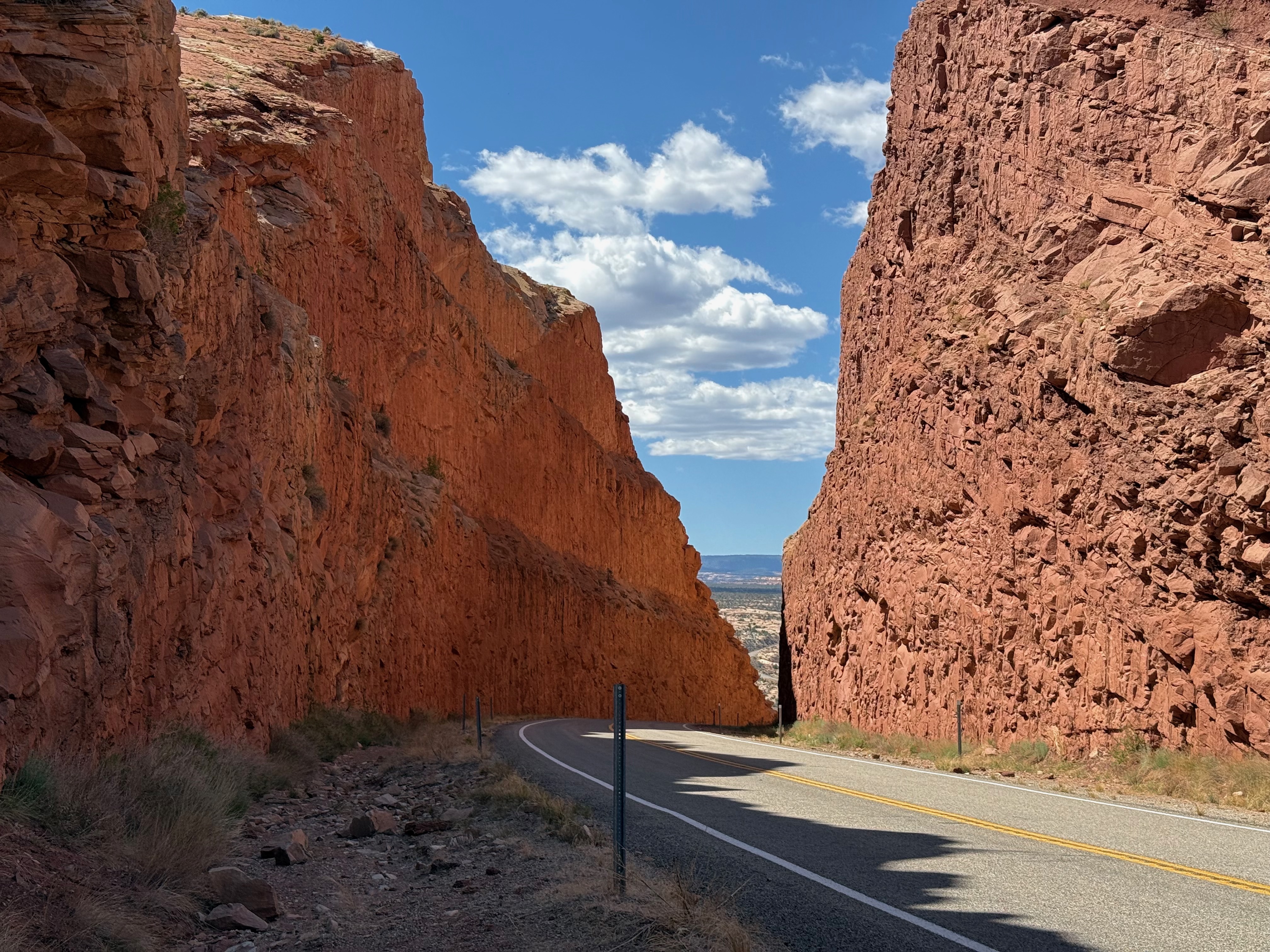
On the drive to Moab, our dance card is full of sights to see. First stop is a place on the map called Mexican Hat, and there’s absolutely no doubt about which rock it must be.
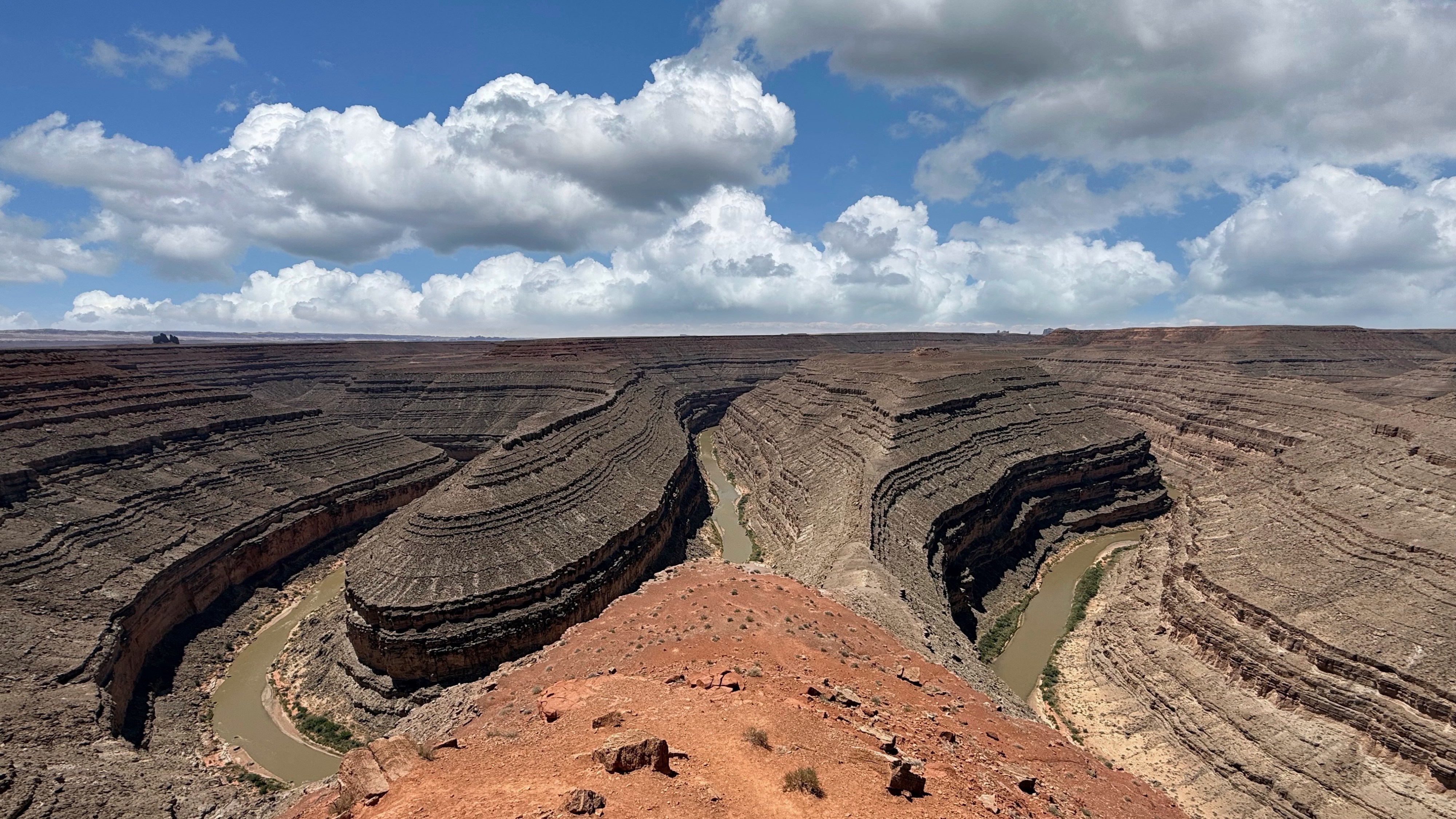
Our next waypoint is Goosenecks State Park, a vertigo-inducing overlook of entrenched meanders in the San Juan River. Formed by flowing water and geologic forces over millions of years, the canyon walls tower over 1,000 feet above the river and reveal ancient rock layers of sandstone, shale and limestone.
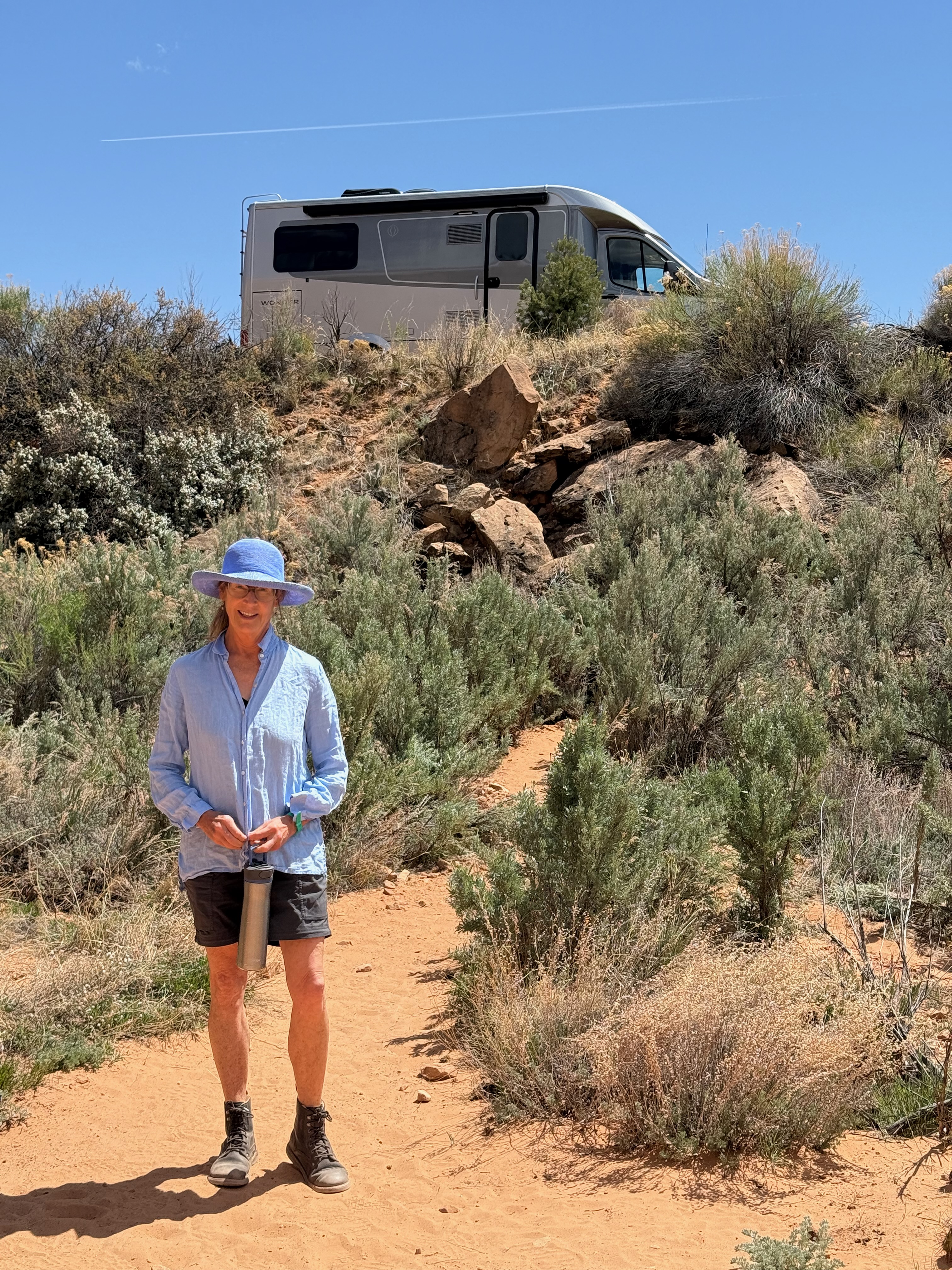
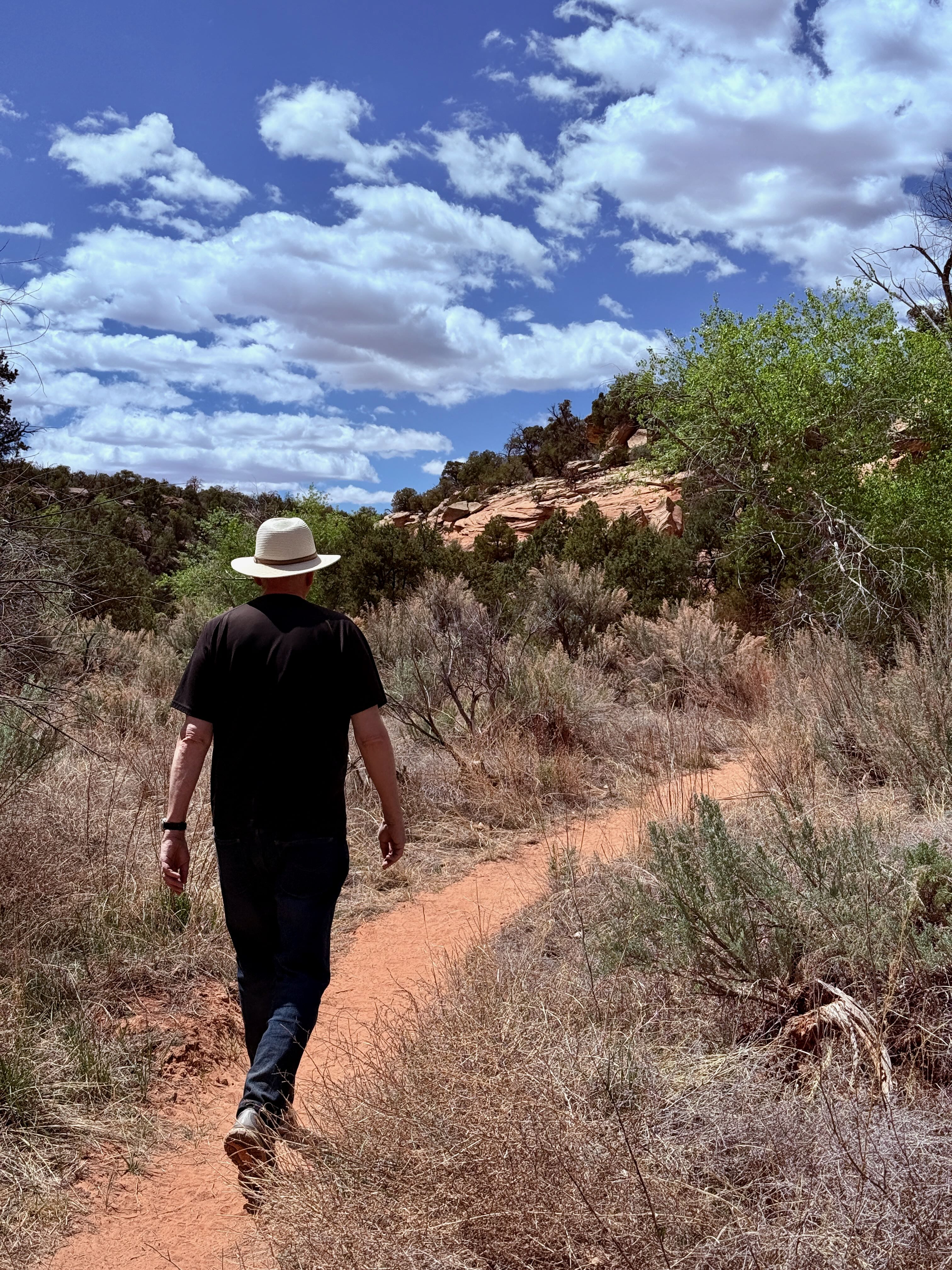
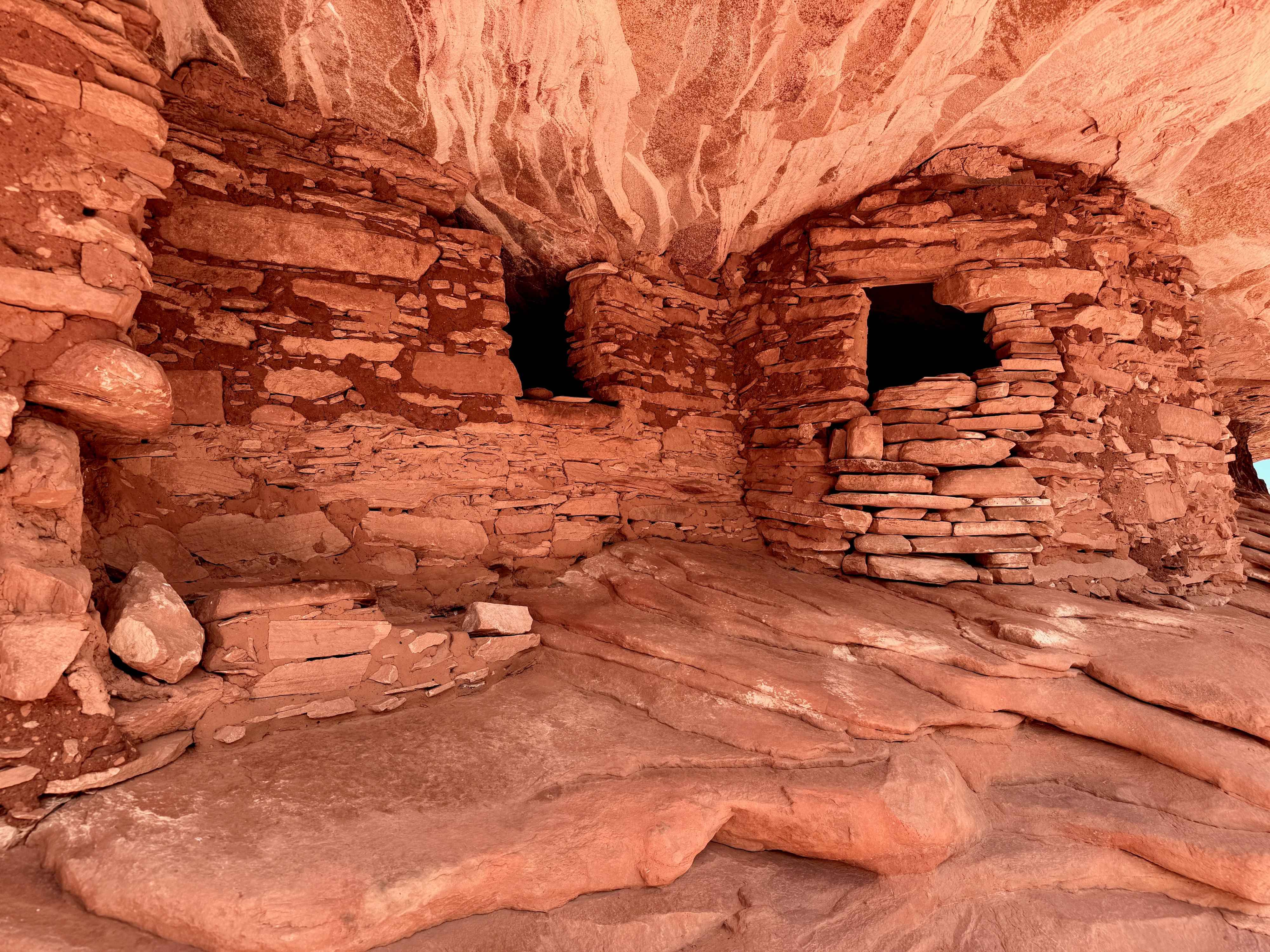
We consider our next move. Are we up for the adventure of driving an hour round trip out of our way and hiking two miles roundtrip to see Anasazi ruins called House on Fire? We are. The trailhead is unmarked, and we set off on a pleasant trail along a dry river bed only 70% sure we are on the right path.
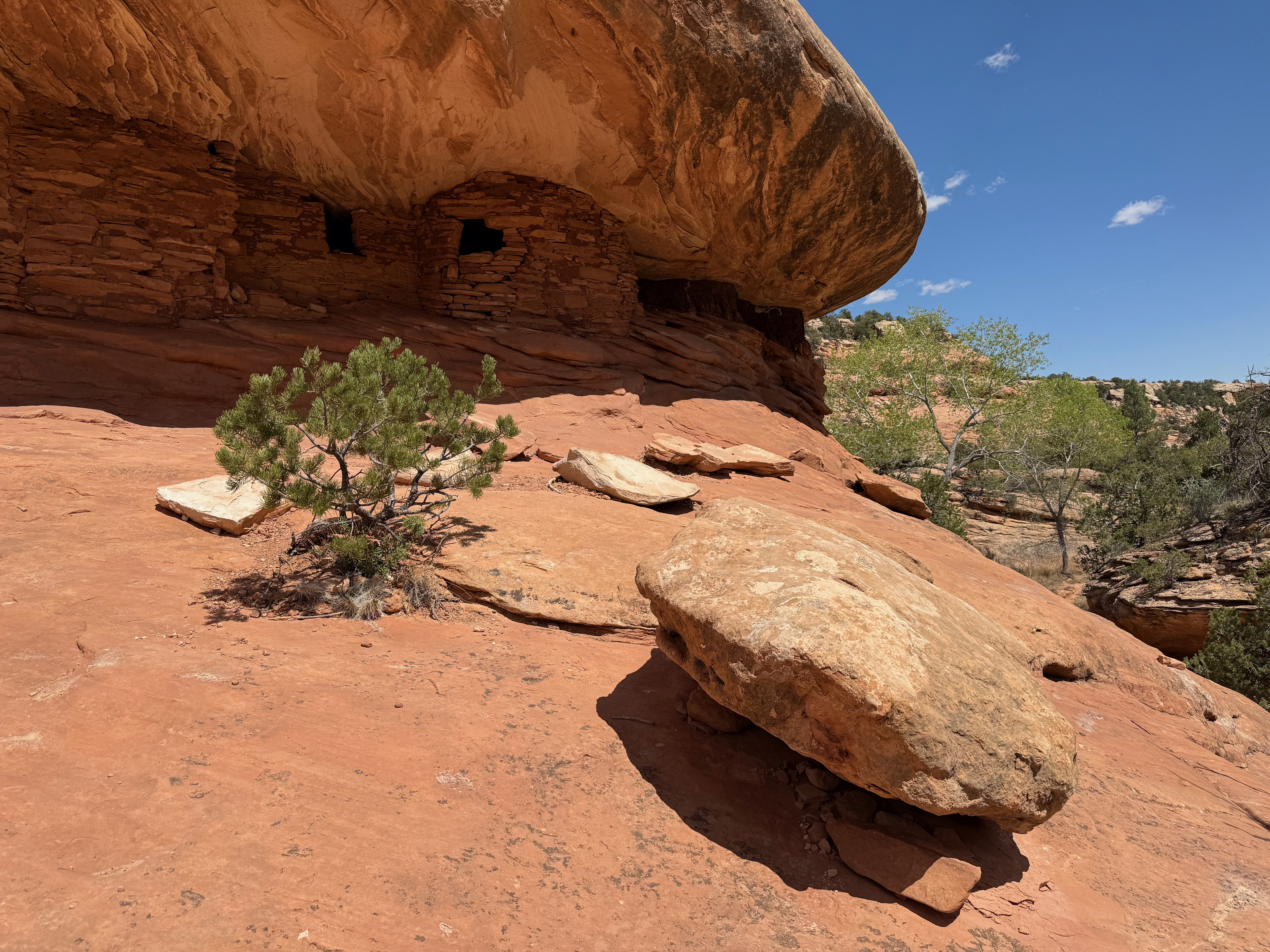
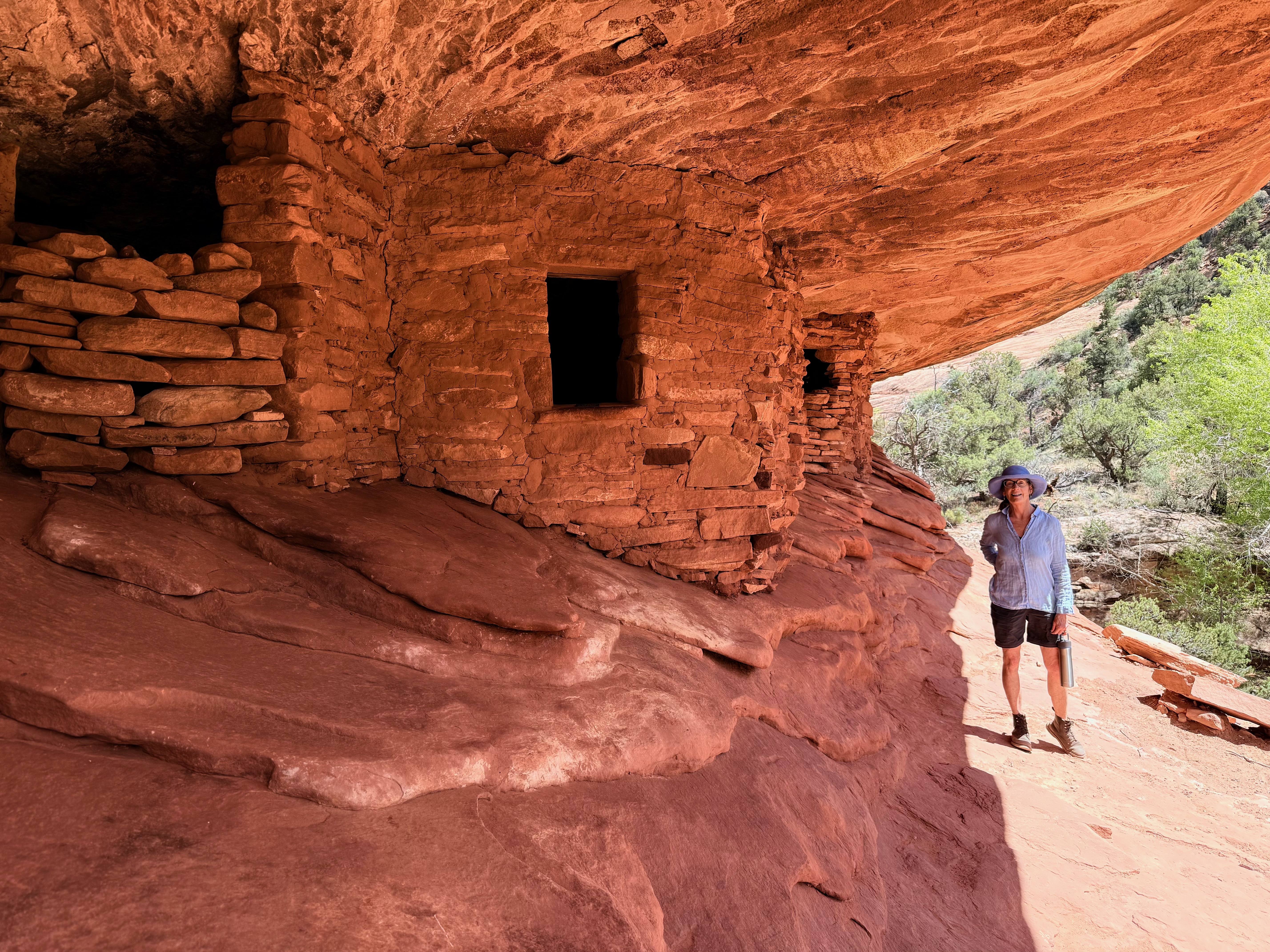
Our (semi-blind) faith is rewarded, and we eventually come upon ancient stone structures tucked under the overhang of a huge rock. Built of stacked stones 700—1,000 years ago, these shelters were probably granaries, used by local inhabitants to store corn and other foodstuffs. They are called “House on Fire” because the coloration of the rocks gives the illusion of flames streaking from the roofs.
Hot and tired, but feeling a sense of accomplishment, we return to Suzy and continue our drive to Moab.
Instead of staying in town, we’ve booked an Airbnb in a place called Pack Creek Ranch. The directions instruct us to turn off the main road onto an unpaved, gravel-strewn track that appears to lead up a canyon into wilderness. No sign of any inhabitants other than free-range cows—many with newborn calves—who graze near the road and stray into our path. We proceed with caution, dodging livestock, kicking up dust and beginning to wonder if this Airbnb is such a good idea.
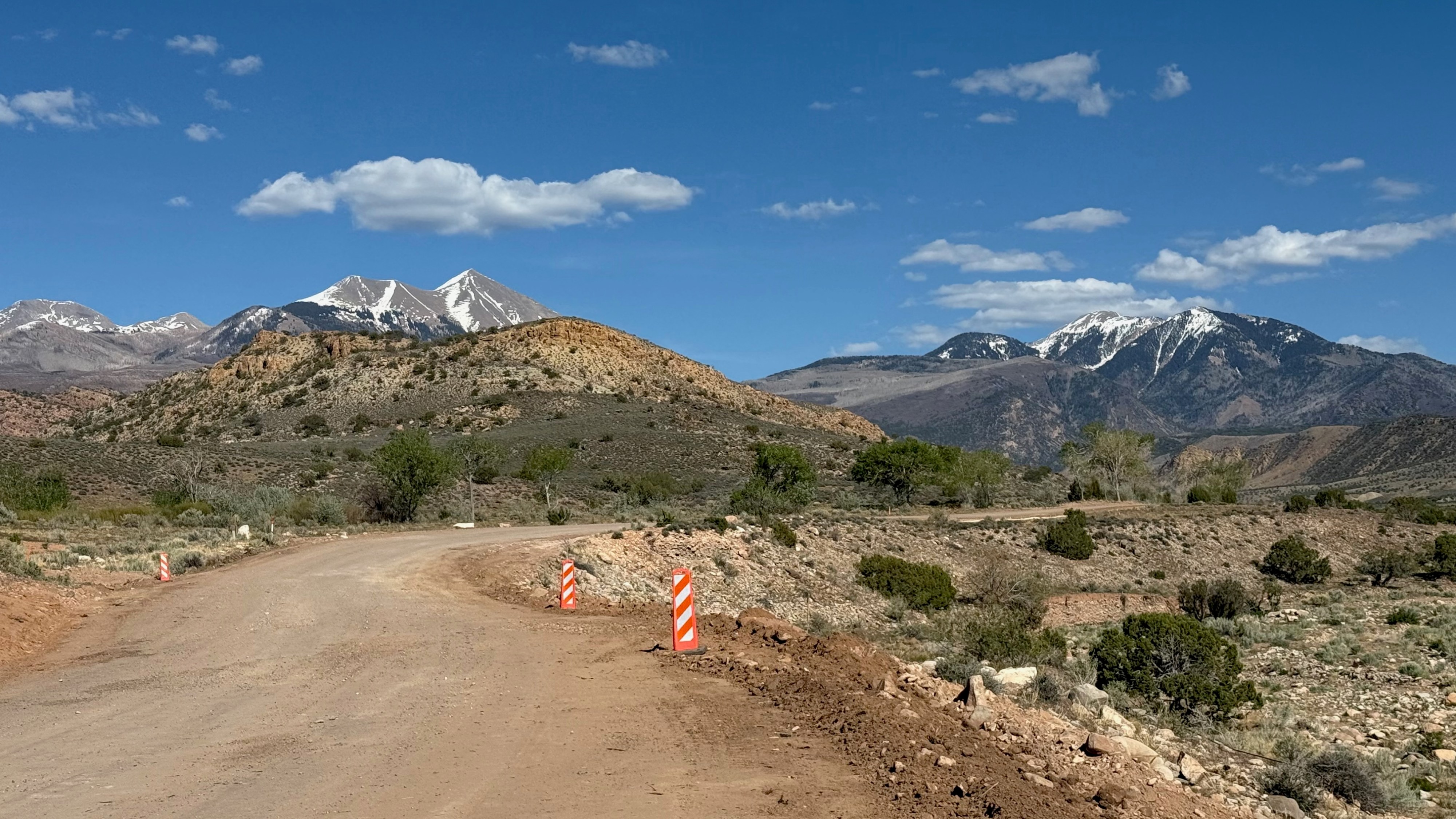
All misgivings vanish as we round a bend and glimpse our destination, a lush oasis of towering Cottonwood trees sheltering a handful of vintage log cabins grouped around a large lawn, reminiscent of an English village green.
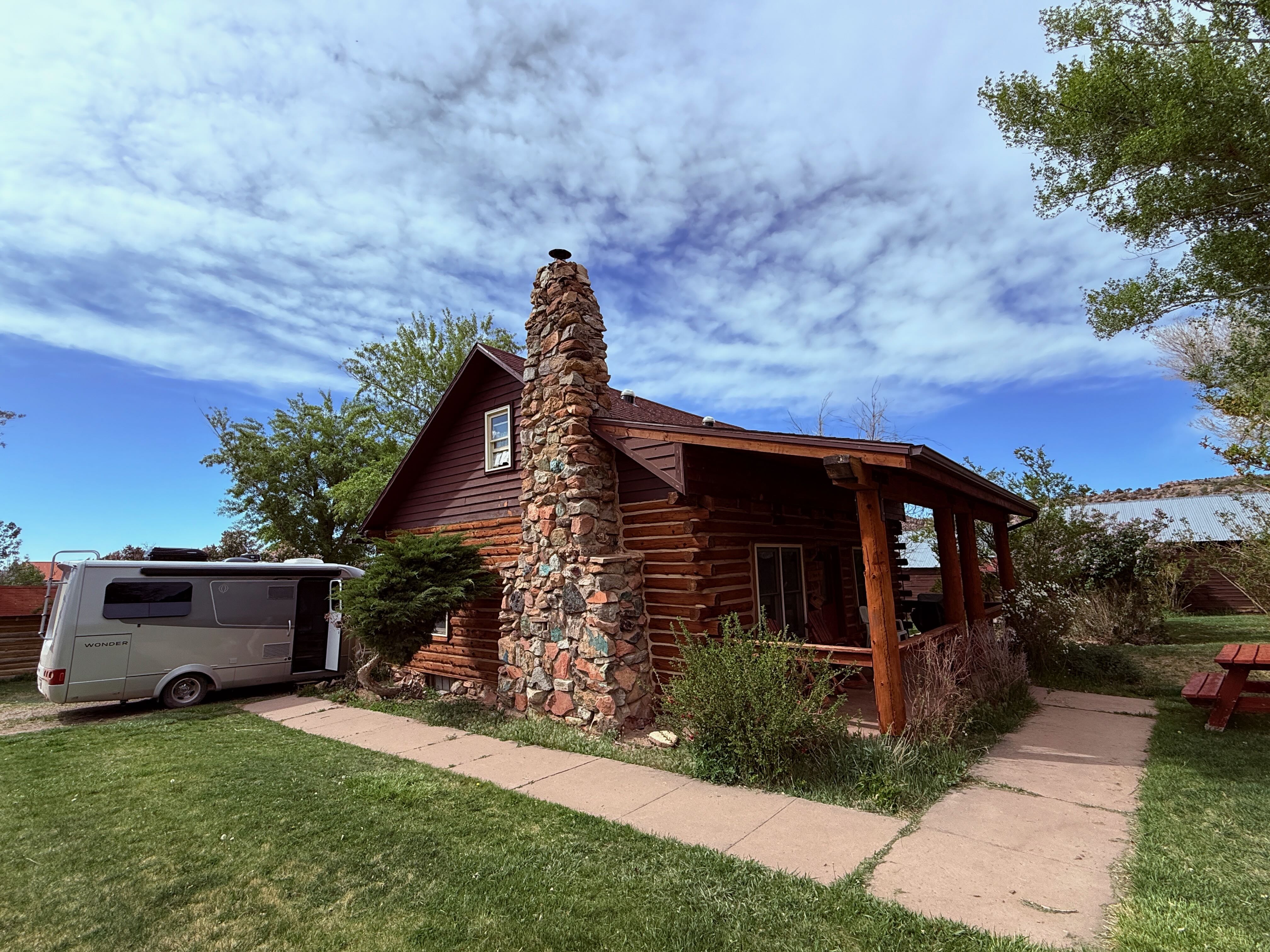
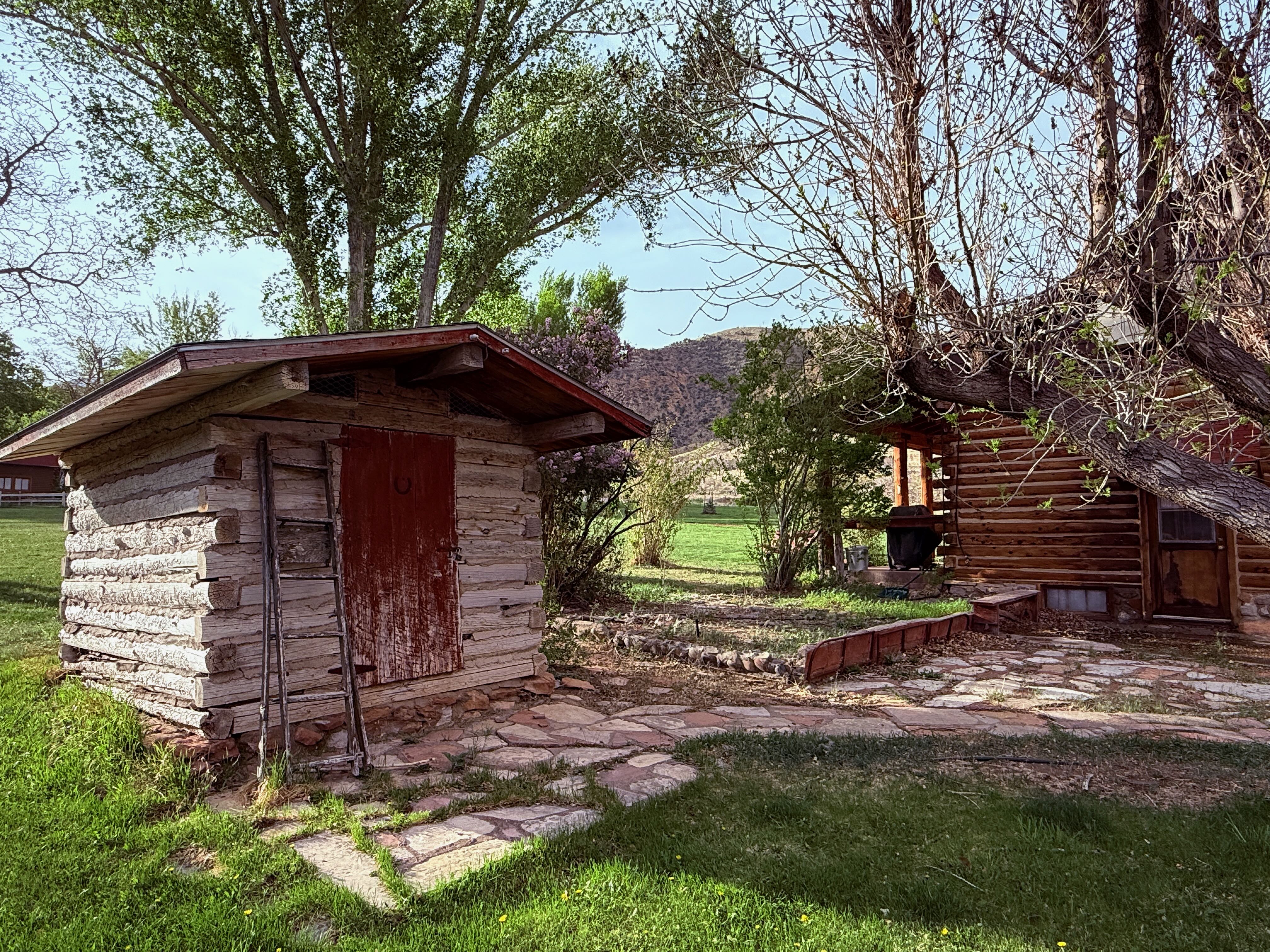
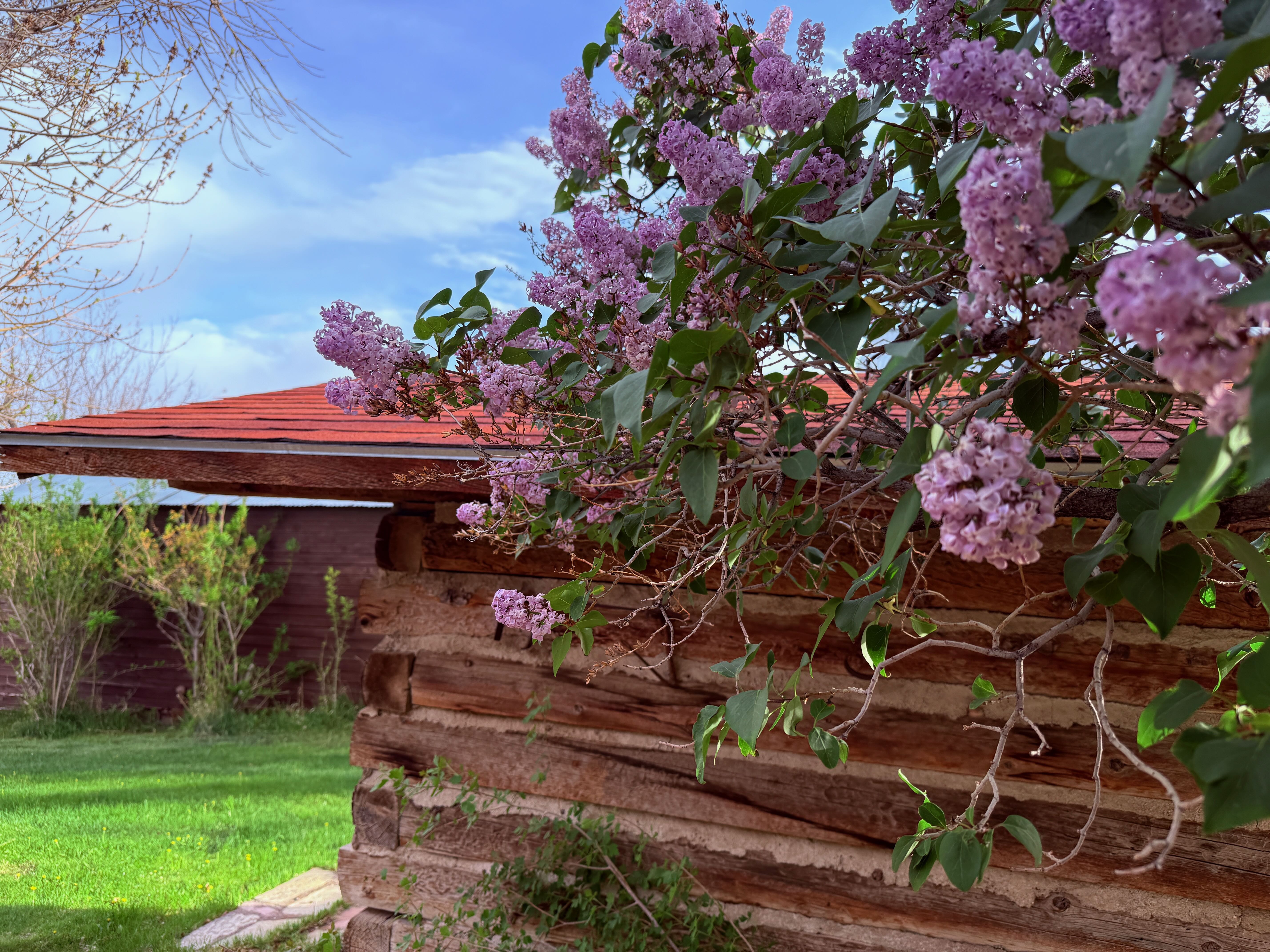
We transfer a few items from campervan to cabin and then retire to the two comfy rocking chairs on the generous front porch. Years ago, some romantic soul planted lilac bushes around the perimeter of our cabin, and their perfume scents the air.

DAY SIX: MOAB
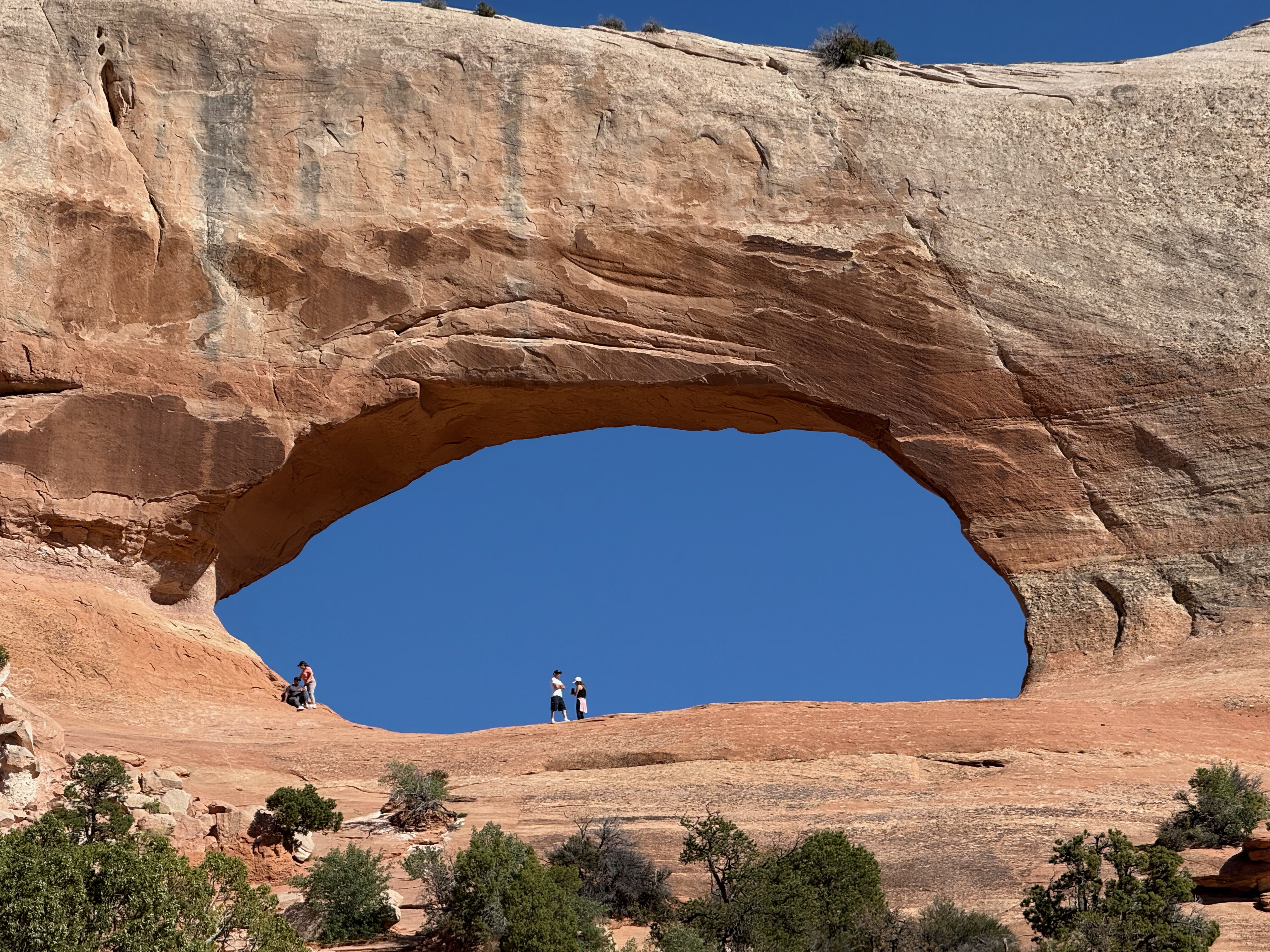
“I can’t believe that we’re in the middle of nowhere and the traffic is as bad as in the Bay Area!” Dave curses in downtown Moab as he waits to turn left at an intersection with no left turn signal and an endless line of trucks, cars, and jeeps heading toward us. Traffic jams in the desert? Who knew? We had planned to tour Arches National Park, but an unmoving queue of cars, RV’s and ATV’s clogs the approach, and a large sign informs us that timed reservations are required. We have no reservation, timed or otherwise, and a quick check of the National Park Service website shows none available today or tomorrow. We are defeated, but not particularly disappointed. We have already begun to anticipate a mellow afternoon back at our ranch.
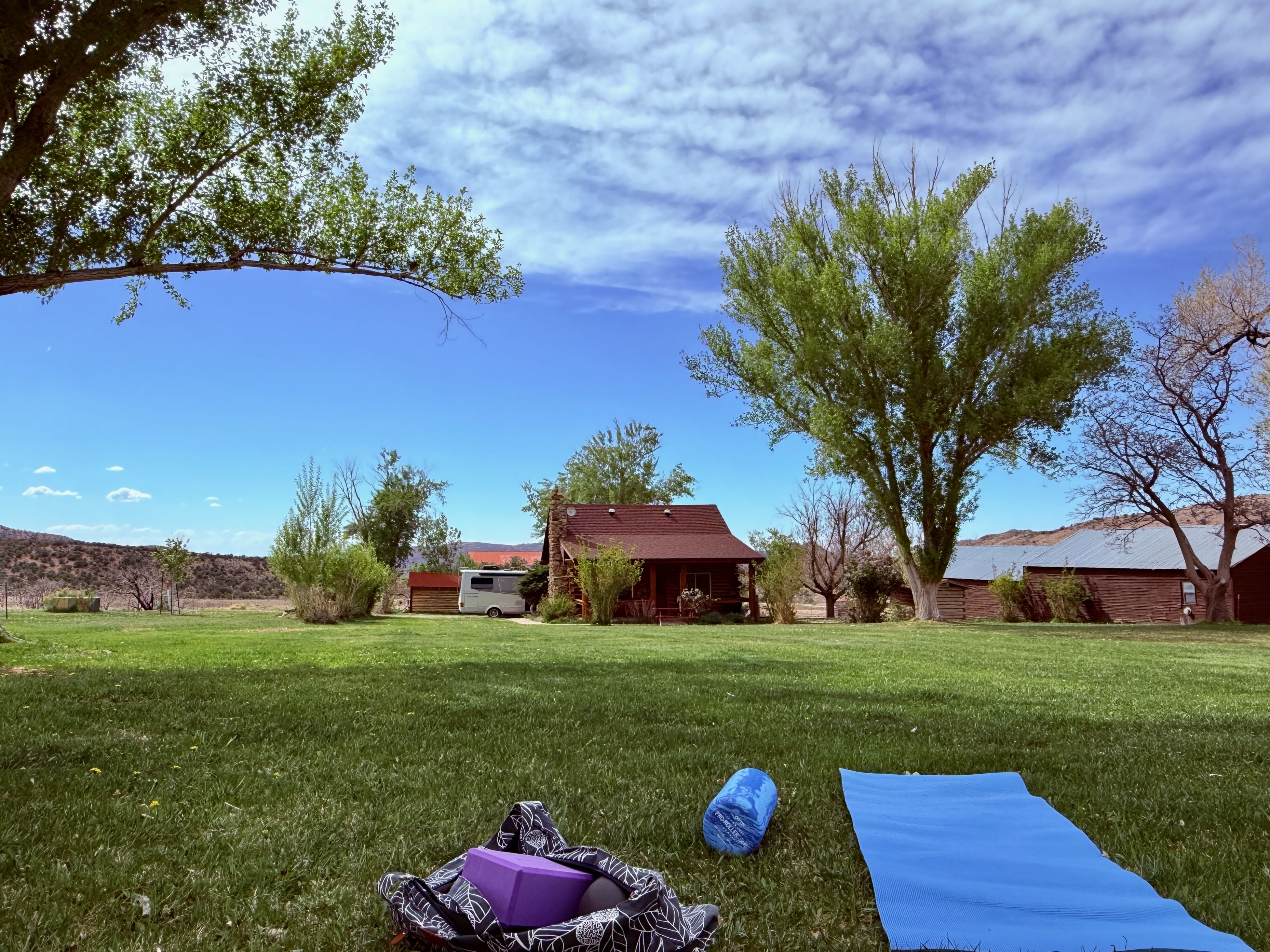
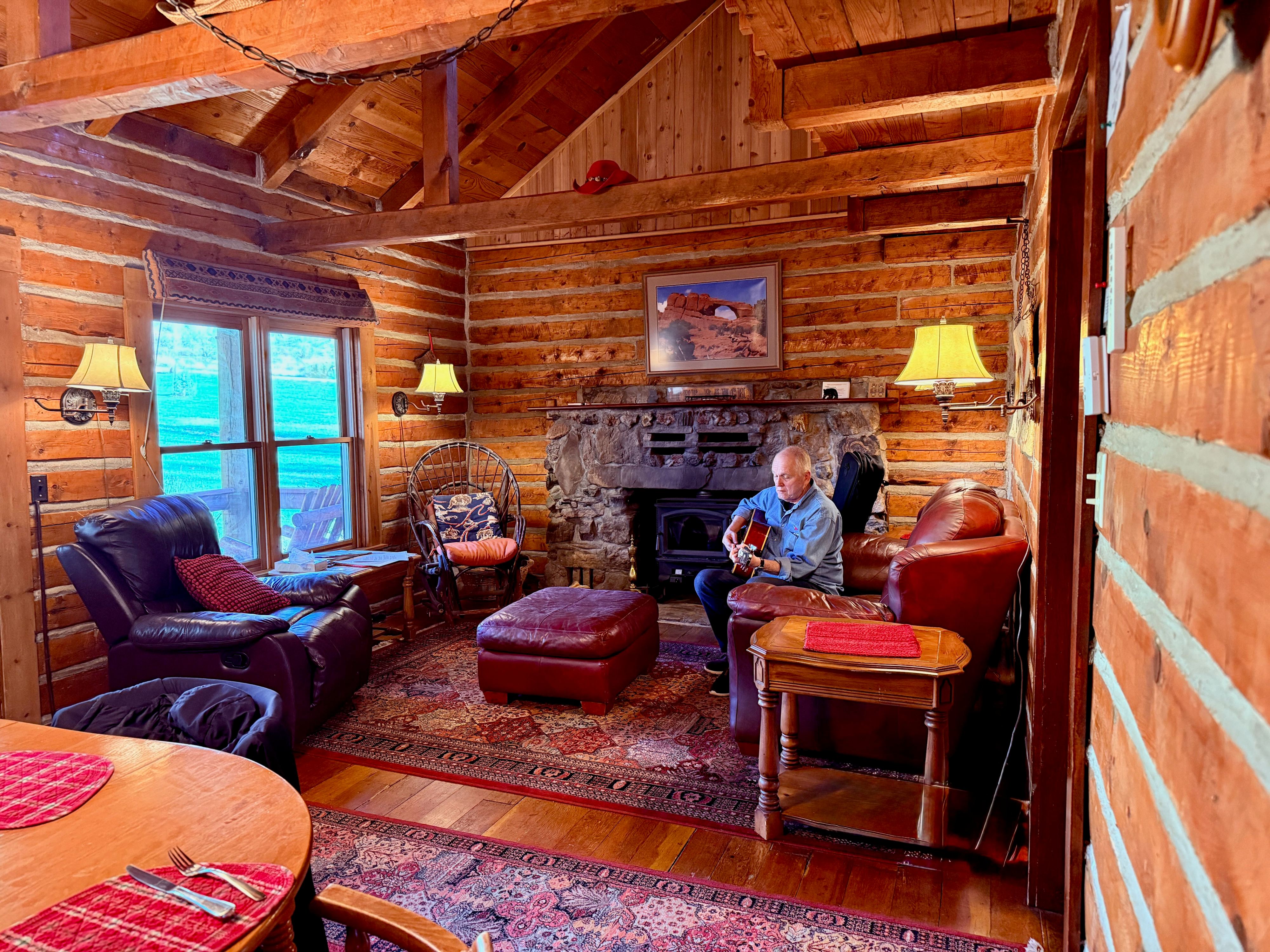
Anna practices yoga on the green and Dave plays guitar. Later, we enjoy a simple dinner of shallot-infused burgers and a spring green salad.
DAY SEVEN: MOAB to VERNAL
In the early morning, goldfinches chatter outside the window. Perhaps they are discussing the change in the weather from warm and sunny to breezy and overcast, with thunderstorms predicted. We depart after breakfast, relieved to leave the bustle of Moab behind, and settle in for a longish day’s drive. The terrain varies but ultimately exhibits more of the kind of scenery we’ve seen for the last six days: high plains occasionally broken by juniper bushes, knobby layered cliffs, dry mesas and distant hills. Most beautiful today are the gorgeous cloudscapes softening the bright cobalt sky.
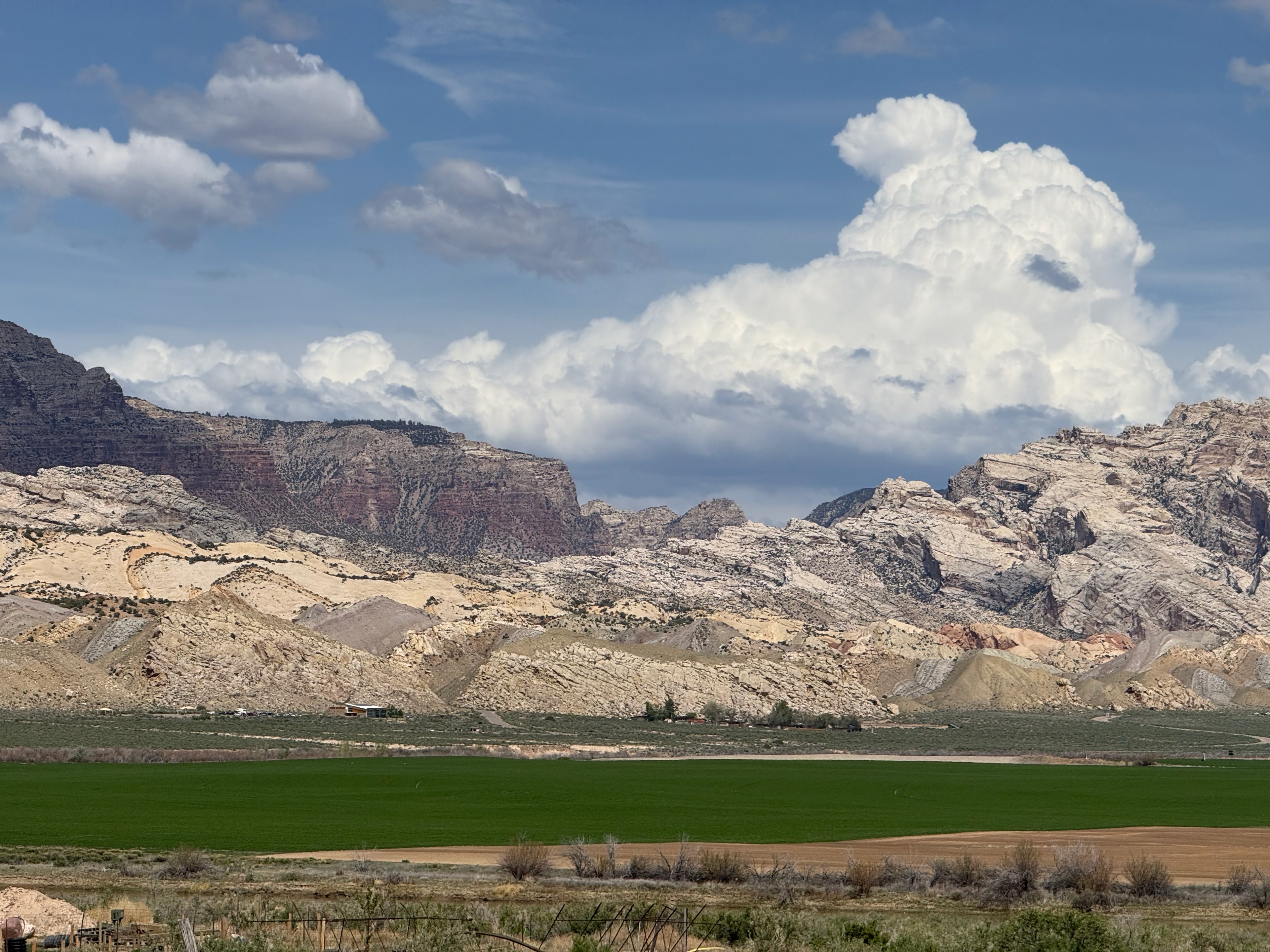
Our destination is Dinosaur National Monument, a place I have wanted to visit since my high school biology teacher (the brilliant and entertaining Ed Holm) described its wonders in one of his lectures. Dave is willing to humor my long-held ambition, and as we near this very out-of-the-way place, I wonder if it will live up to my expectations.
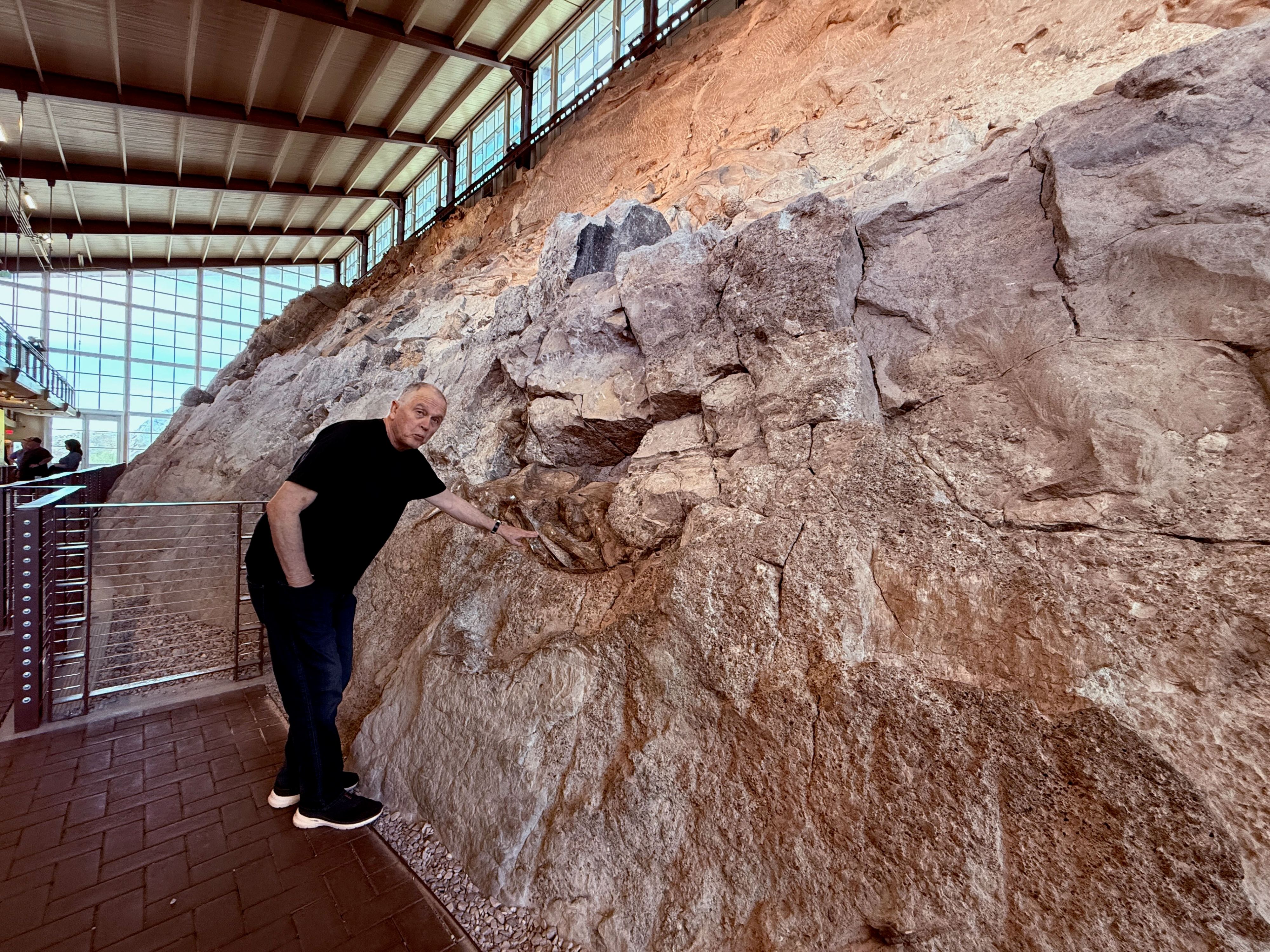
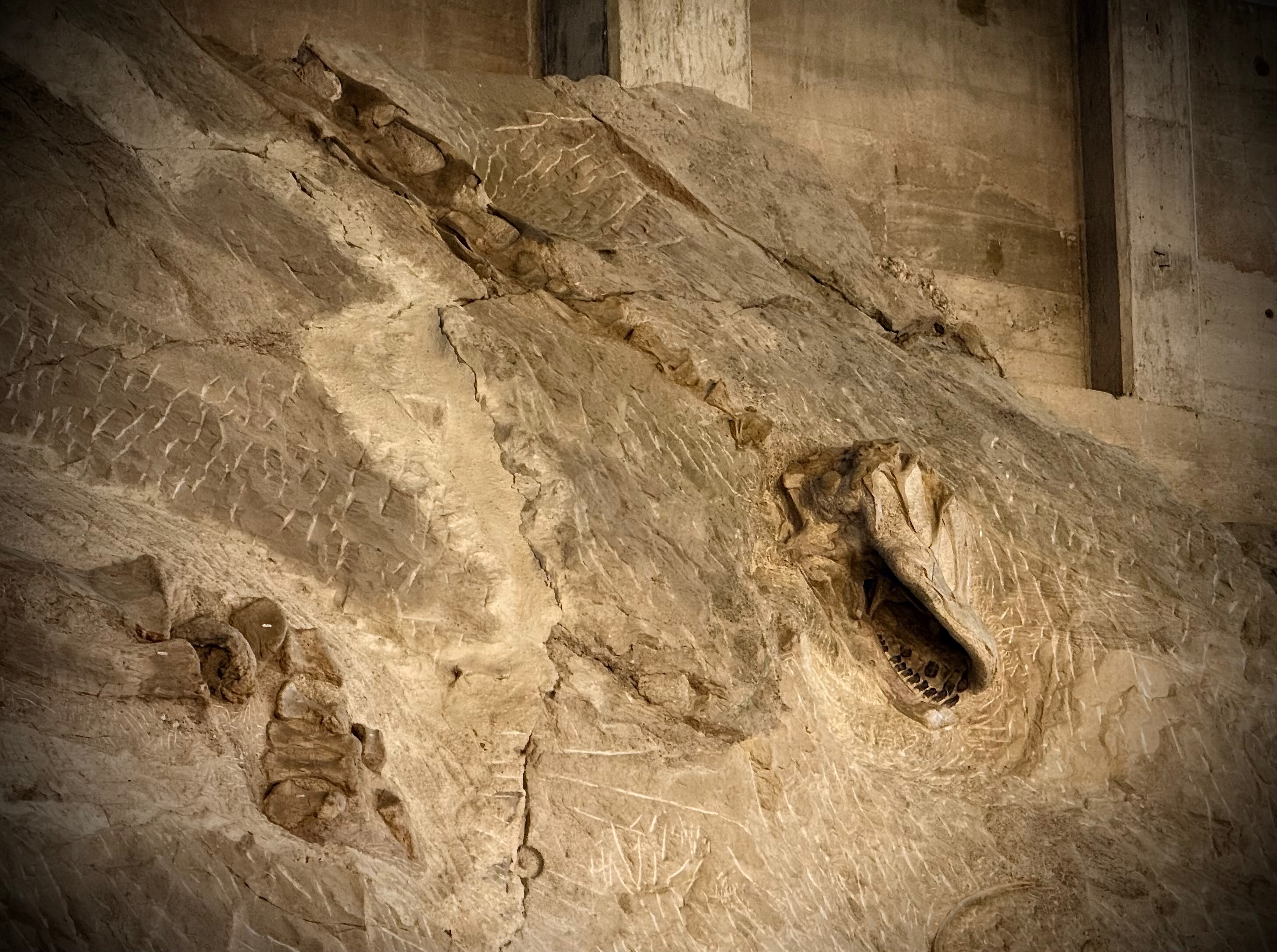
But I needn’t worry. A shuttle delivers us to the exhibition hall, a huge glass-sided structure enclosing an entire hillside littered with embedded dinosaur bones, and it is every bit as impressive as Mr. Holm promised. We are gazing at the fossilized bones of dinosaurs who died beside a dry riverbed during a period of drought 150 million years ago. The time scale itself boggles the mind. As does the knowledge that dinosaurs lived on the earth for far longer than humans have.
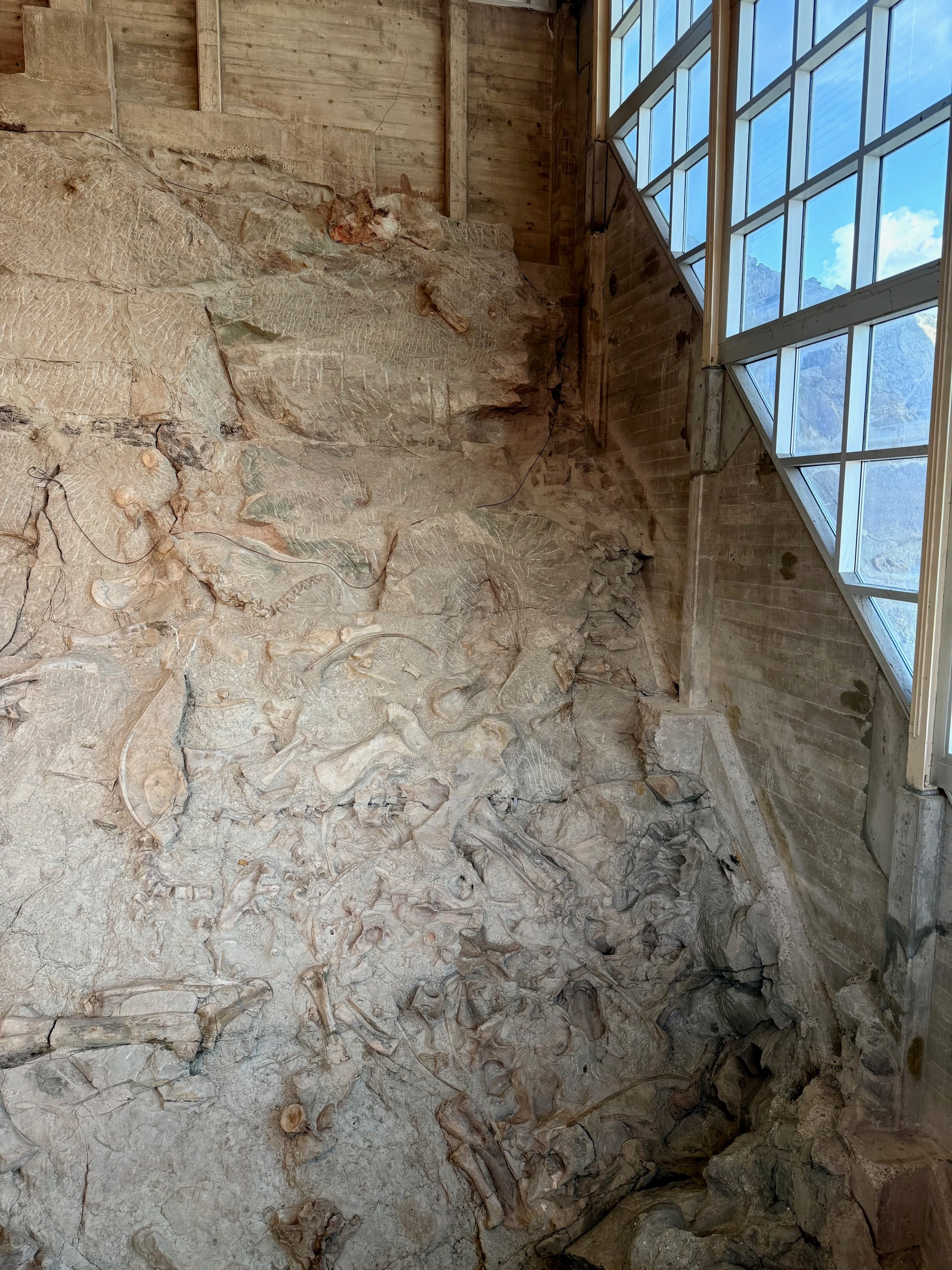
Between 1909 and 1924, over 350 tons of embedded dinosaur bones were excavated from this site. Photos in the visitor center show the magnitude of the original hillside and the scope of work required to unearth and transport the treasure trove of fossilized bones.
Browsing in the gift shop, we are both drawn to a tempting array of toy dinosaurs. We comb through the large selection of prehistoric beasts and finally manage to winnow our choices to two—Stegosaurus, an herbivore, and Allosaurus, a carnivore—for our two grandsons, aged 17 months and almost 3 years old.
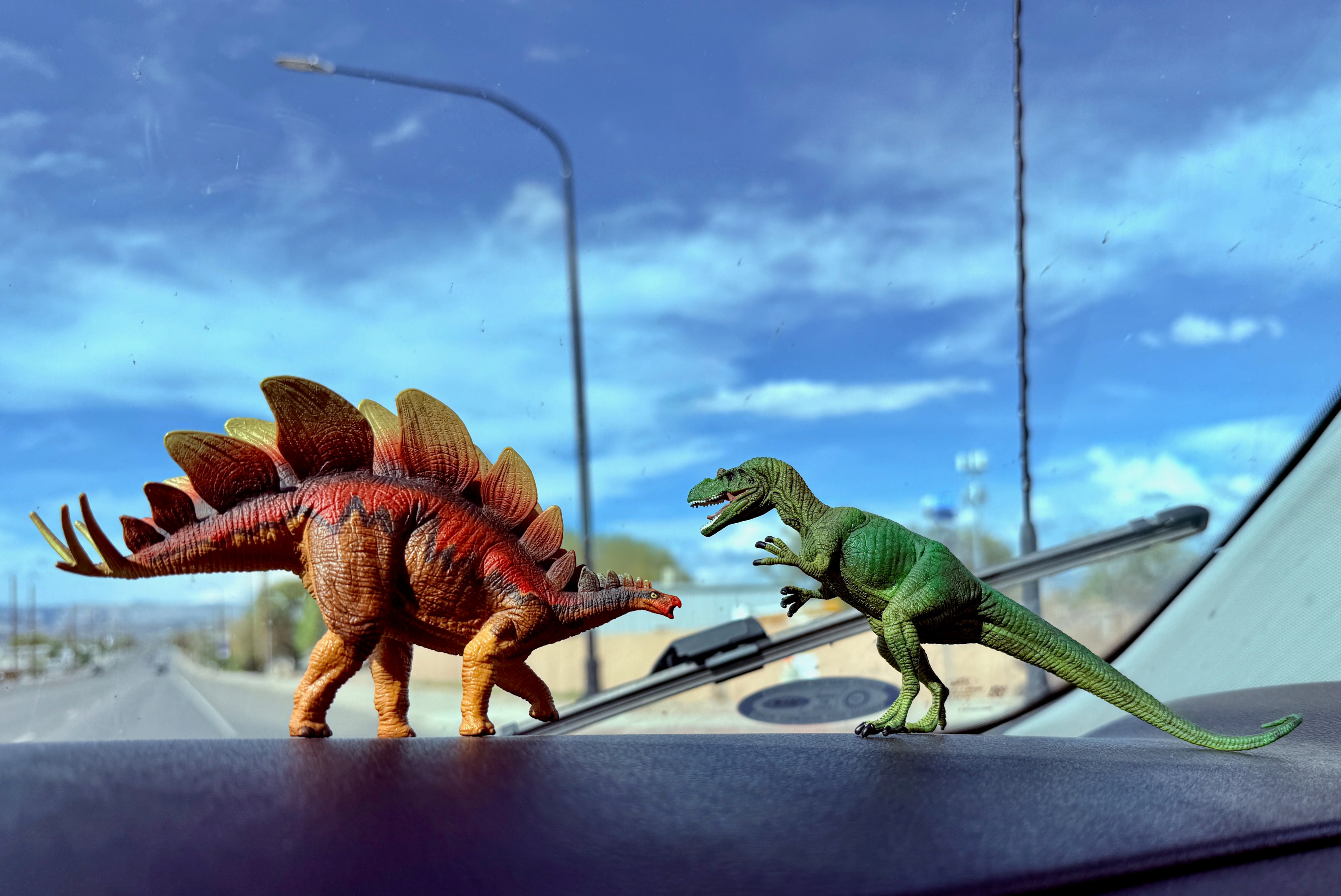
“These little dinosaur models must be big sellers,” I comment to the young clerk as he rings up our purchase. “Oh yes,” he nods, then, with an impish grin he asks, “Would you get the reference if I said ‘Curse your sudden but inevitable betrayal!?’” Our blank faces must telegraph our ignorance, for he explains that it is a famous line from a TV show called Firefly, delivered in response to a sudden attack by an Allosaurus dinosaur. Enlightened by this knowledge that we might (or might never) use again, we thank him, head to the parking lot, and make our way to the town of Vernal.
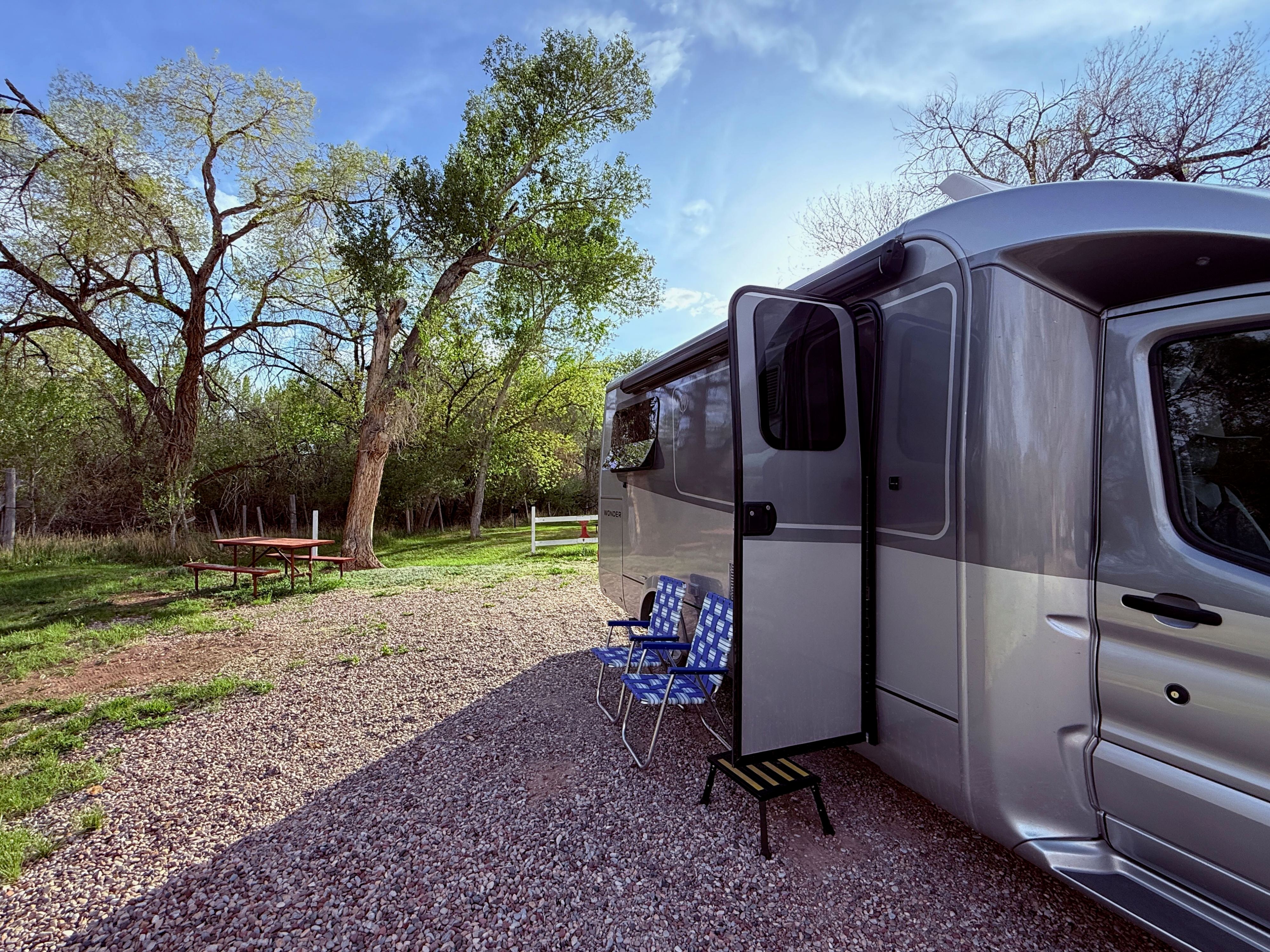
The call of an American Robin welcomes us to our peaceful KOA campsite. A green thicket of scraggly bushes and Cottonwood trees borders our site.
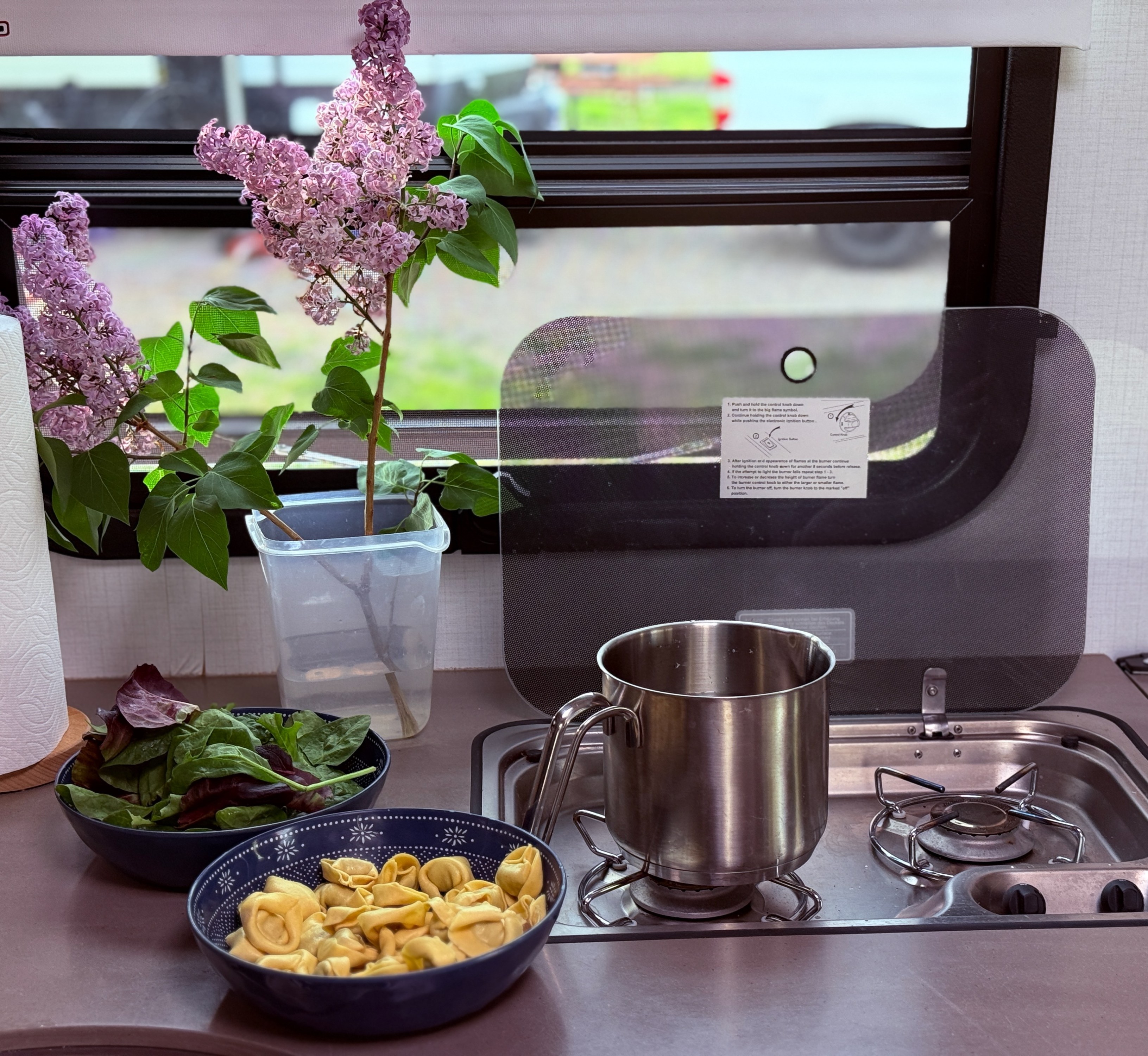
As I prepare dinner—prosciutto tortellini with marinara sauce and a salad of spring greens and chopped olives—I realize that the previous two nights in a rental cabin—no matter how charming—have served to remind me how much I appreciate the simplicity of the small, comfortable world of our campervan. It’s a tiny oasis of harmony. Finite in its dimensions, but wide open in its possibility for adventure.
DAY EIGHT: VERNAL to SALT LAKE CITY
We wake to blended birdsong (my Merlin App recognizes Black-capped Chickadee, California Quail, American Robin, Red-breasted Nuthatch and Yellow Warbler!) and the gentle of tap of rain on the rooftop. The rain continues all the way to our destination of Salt Lake City, but we don’t mind, the moisture feels welcome.
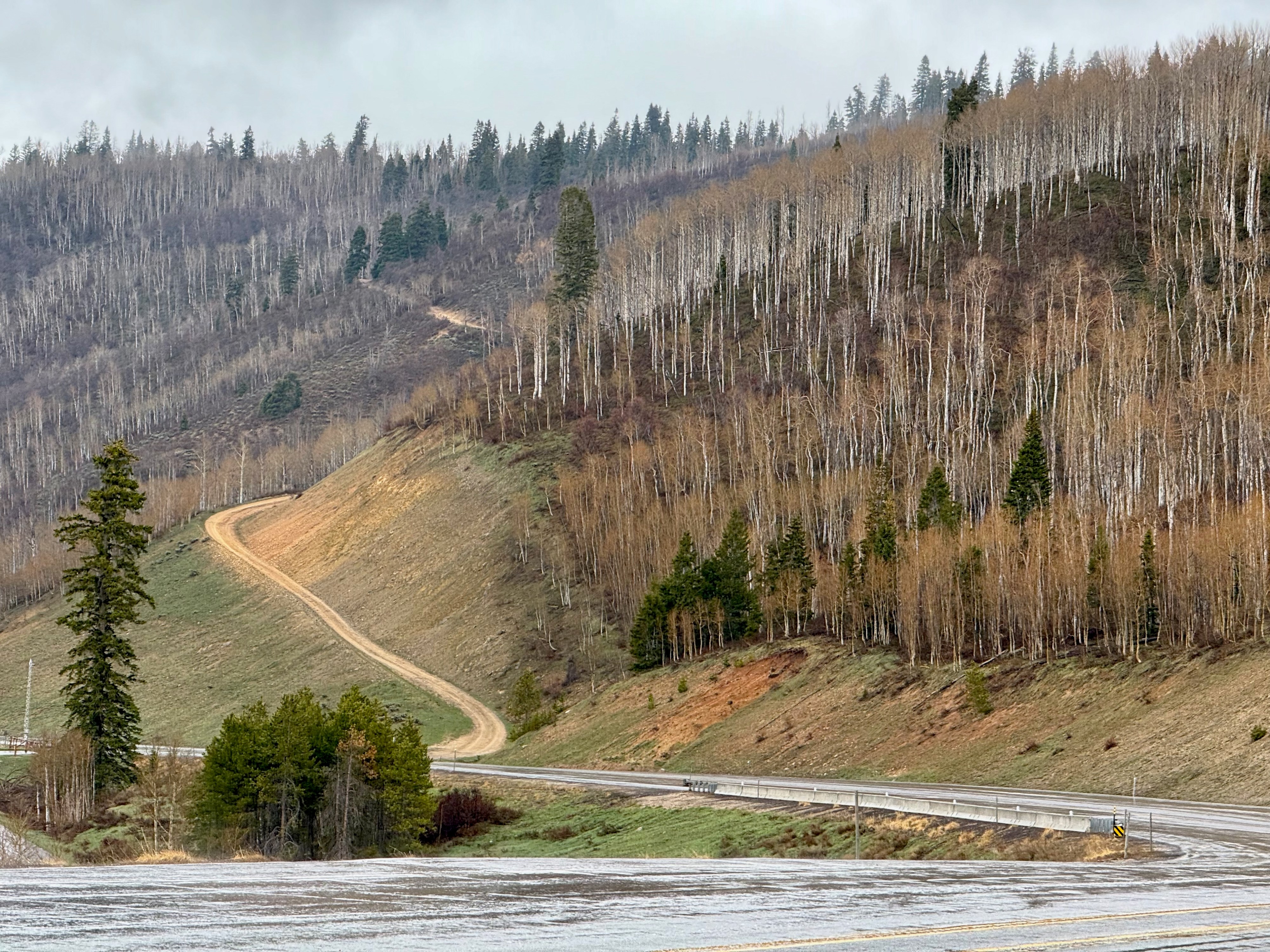
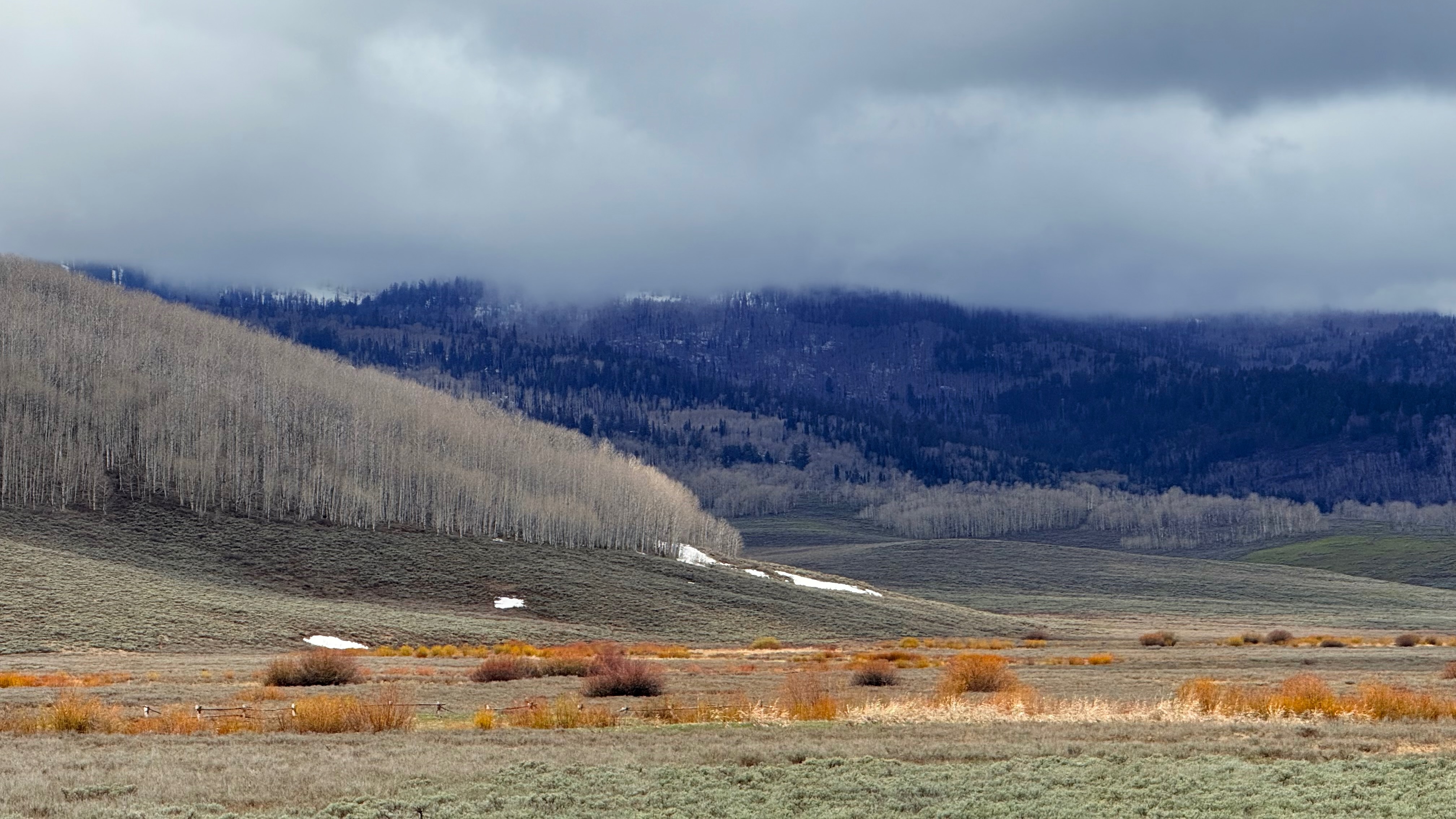
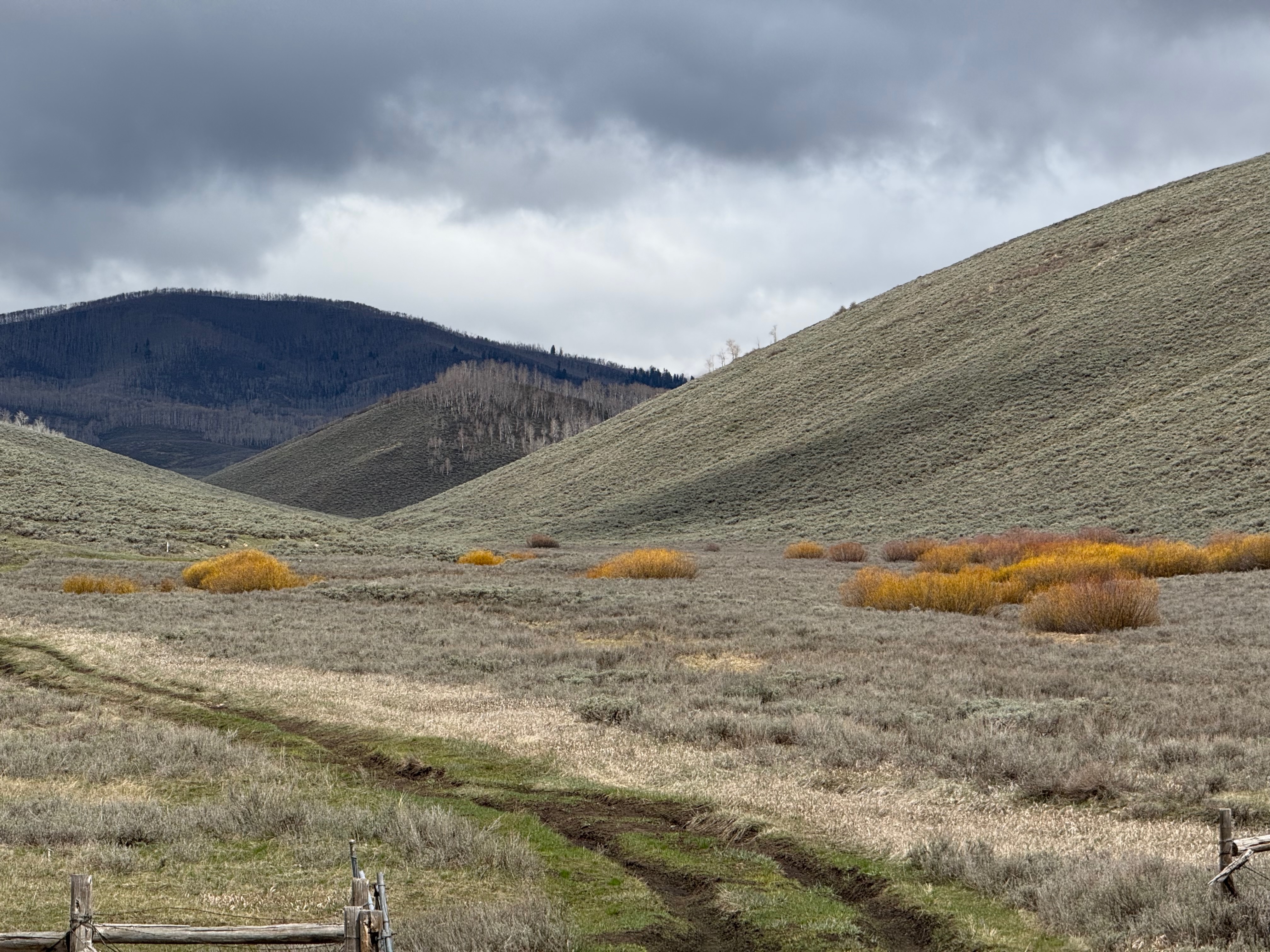
A flat landscape of juniper and sage gives way to bare hills, colonies of spindly white Aspen, patches of snow on bare ground, and in the meadows, the vivid flash of willows.
Our journey comes to a close, but leaves an indelible impression. In the vastness of the desert, surrounded by visible traces of geologic time and landscapes more beautiful—and fantastical—than we could imagine, we felt small and insignificant, and at the same time, connected to everything. Perhaps that’s the best part of time spent in any sort of wilderness; the ego takes a back seat to wonder, and we are reminded that in grand scheme of things, though we are tiny, we are part of a greater whole.
 Thin Slicing the World
Leave a comment