
Barren or Bountiful?
“…the strangeness and wonder of existence are emphasized here, in the desert, by the comparative sparsity of the flora and fauna…” —Edward Abbey, “Desert Solitaire”
I have never been a huge fan of the desert, but I am open to the possibility. The question is whether or not a camping trip in the arid wilds of Arizona and Utah will convert me.
DAY ONE: CALIFORNIA to ARIZONA
A two-hour plane flight from San Francisco delivers me to Phoenix, but the journey is not over yet. I open my Uber app, and soon am speeding away from the airport in a white Chevy Malibu piloted by Dean, a cheerful, middle-aged fellow sporting a goatee and a blue and white baseball cap on his close-shaven scalp. “I love Phoenix,” he declares as we depart the sprawling desert town, nary a tree in sight. “What do you love about it?” I ask, and he recites a litany of dubious claims. I remain unconvinced. He points out the giant Saguro cacti dotting the landscape and informs me that the cacti with the most “arms” can be up to 150-200 years old. They bloom mostly at night, according to Dean, and their main pollinators are bats, who feed on the nectar and transfer pollen in starlight. Just as I am appreciating this bit of interesting knowledge the huge cacti abruptly disappear as our altitude changes and we ascend to high desert plateau. The rest of the two-hour drive passes through a seemingly endless expanse of sand, dirt, rock and sporadic clumps of sage.
Finally, the mystical red rocks of Sedona appear in the windscreen and I have reached my destination.
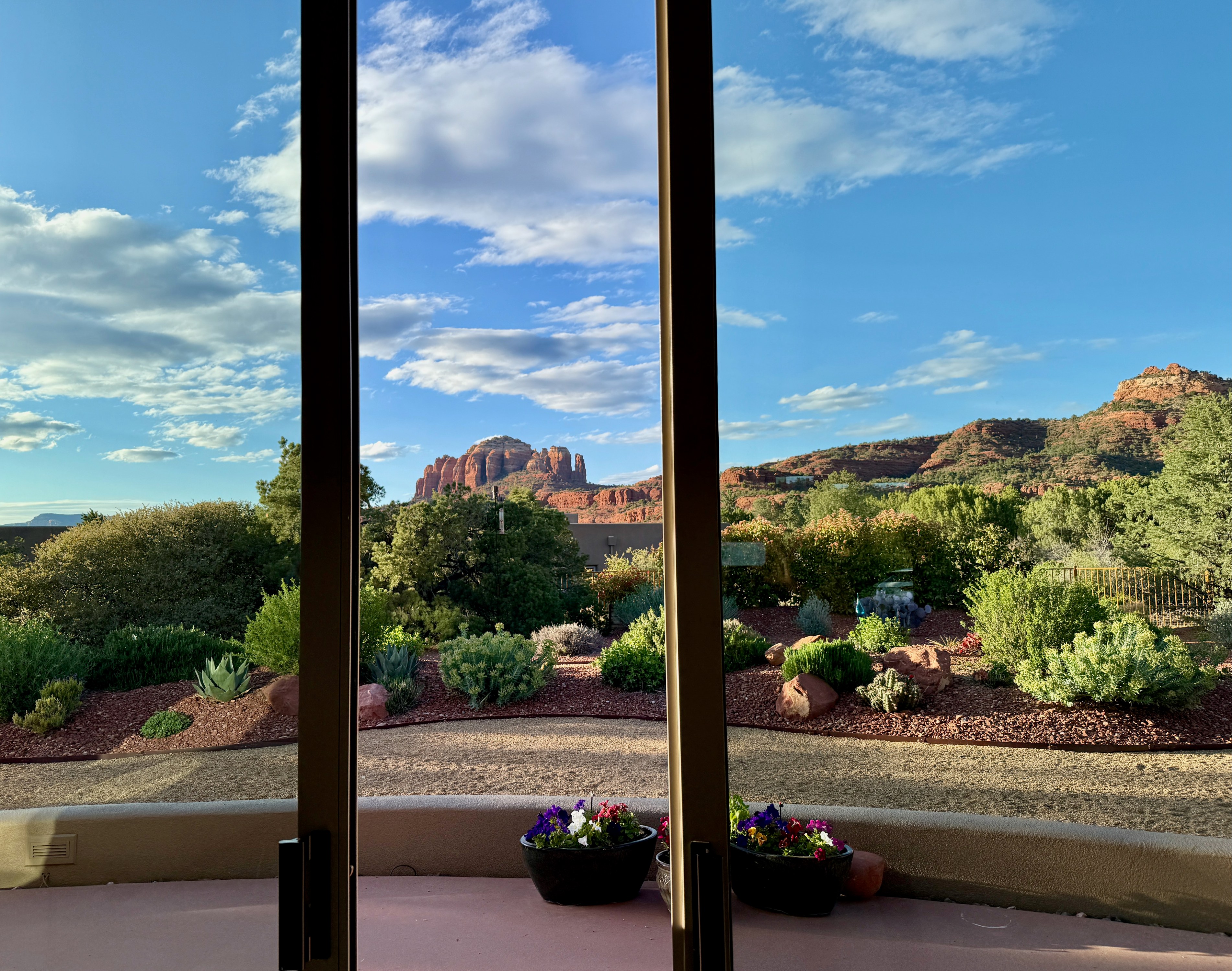
I am greeted by Dave, along with our dear friends, Jot, Linda and Craig, and also a tiny bodied and hugely charismatic dachshund named Olive. Her antics and affectionate cuddles go a long way to mitigating the pangs Dave and I both feel at leaving Woofus behind.

DAY TWO: SEDONA to FLAGSTAFF
“Men come and go, cities rise and fall, whole civilizations appear and disappear-the earth remains, slightly modified.” —Edward Abbey, “Desert Solitaire”
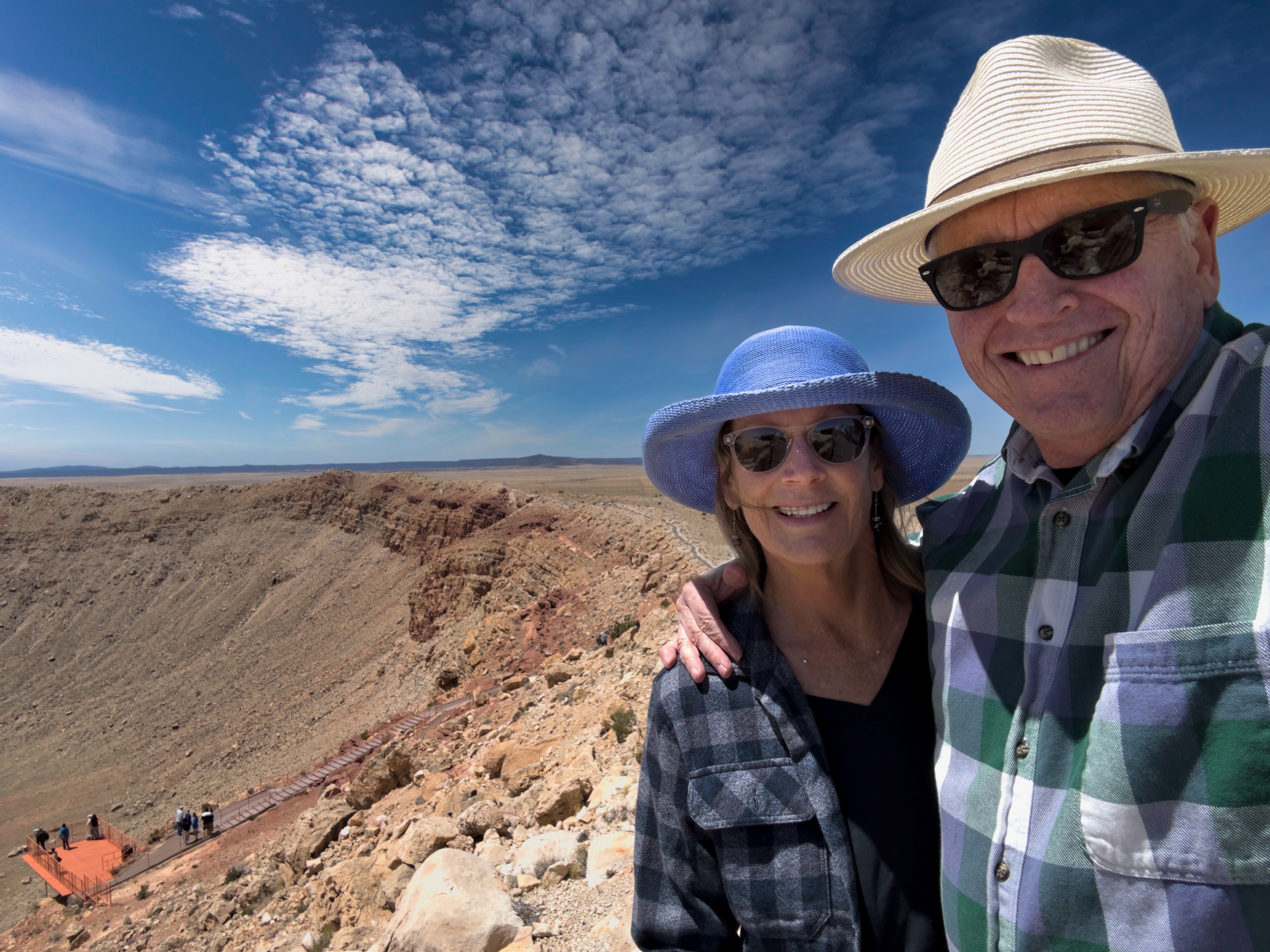
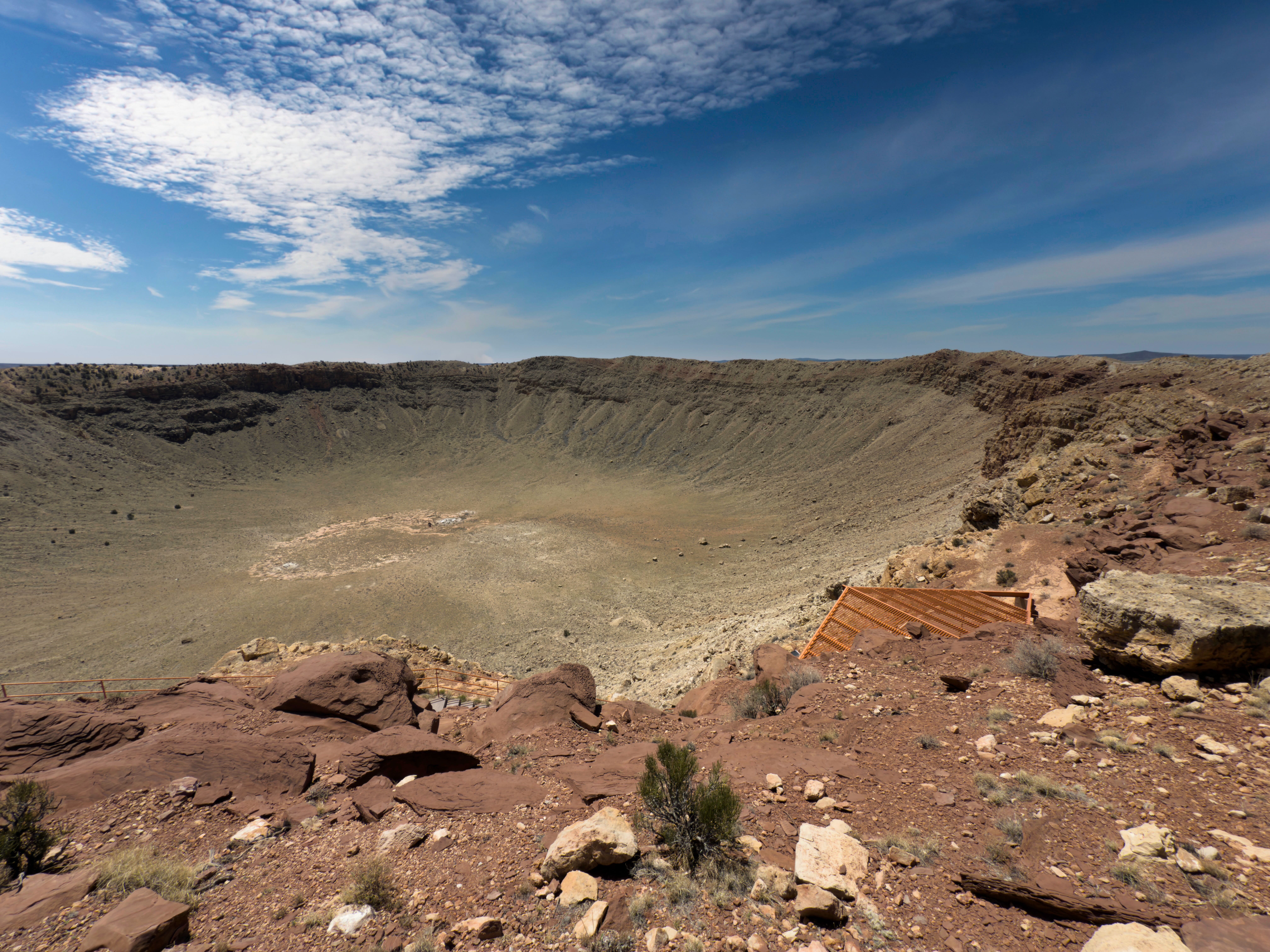
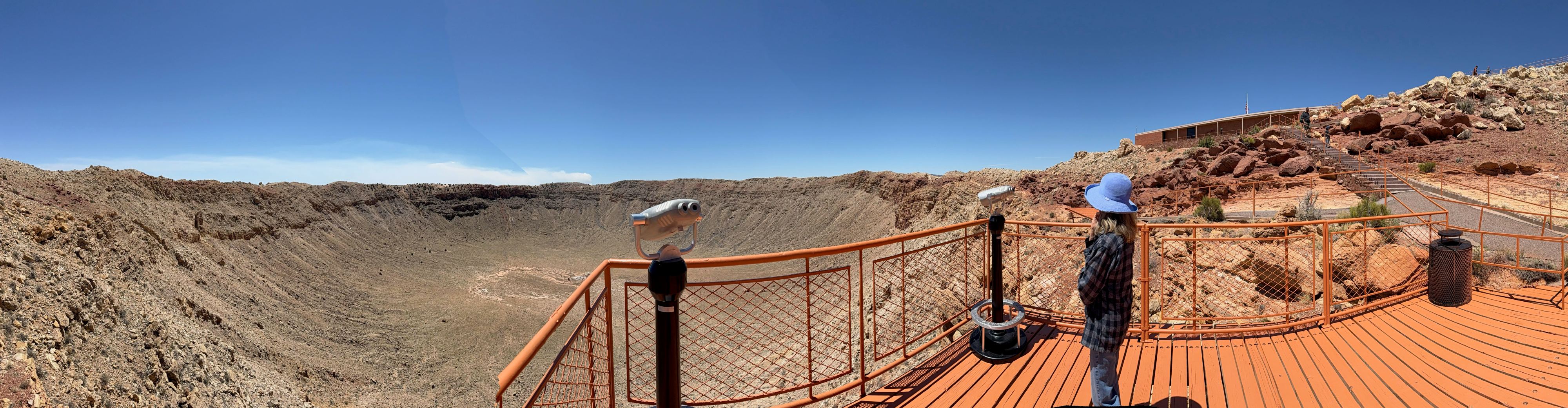
Our first stop is Meteor Crater, a mile wide and 550 feet deep. Discovered in 1891 and estimated to have been created by the impact of a single meteorite approximately 50,000 years ago, the crater is quite young in geologic time, and one of the best preserved on earth.
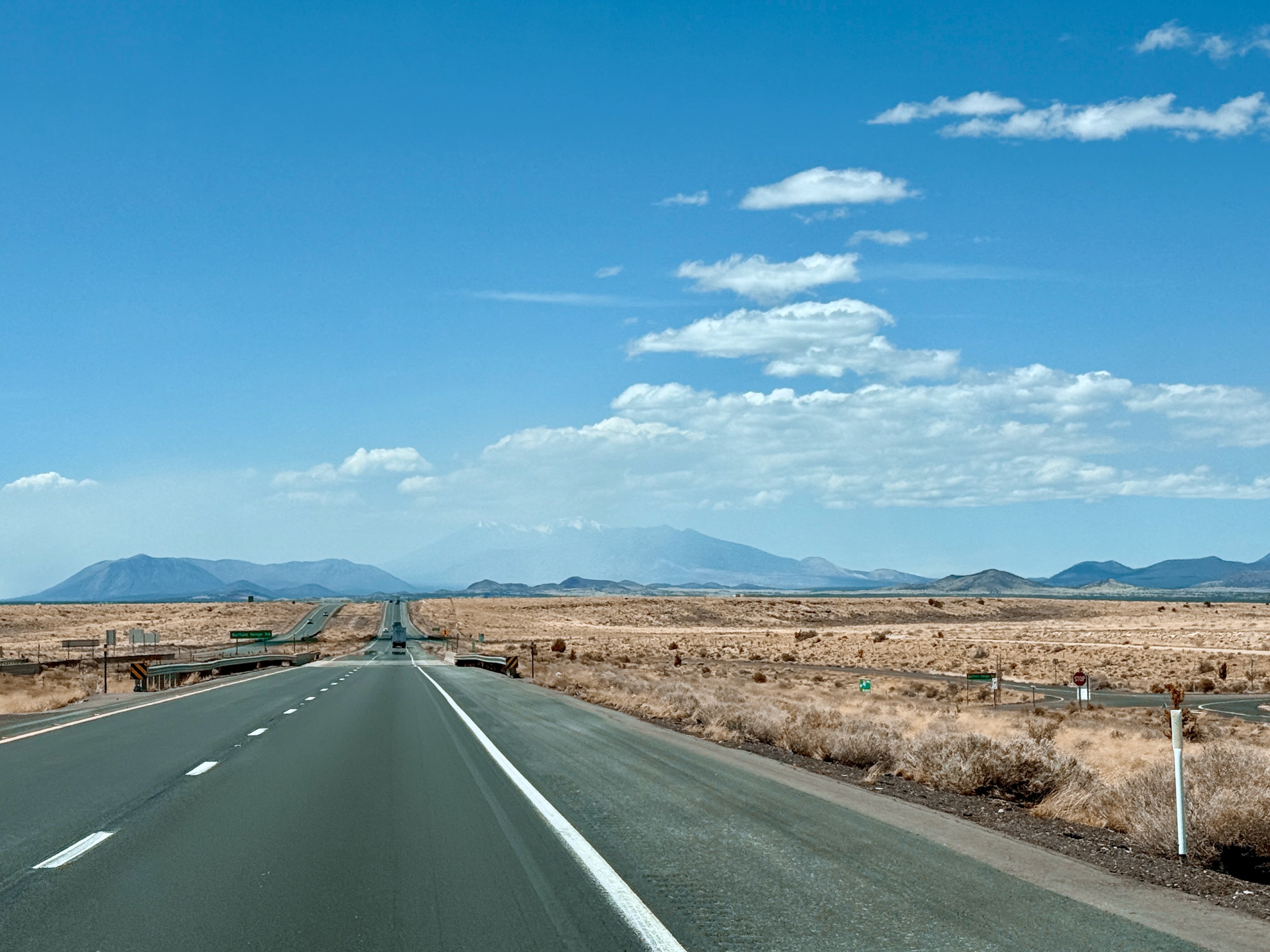
We approach Flagstaff through a landscape of tufted blond grass punctuated by clusters of flat red ochre rocks. In the distance, smoke from a fire that we will later find out is a prescribed burn obscures Mount Humphrey, and we can barely discern patches of white snow on its highest peak and ridgeline.
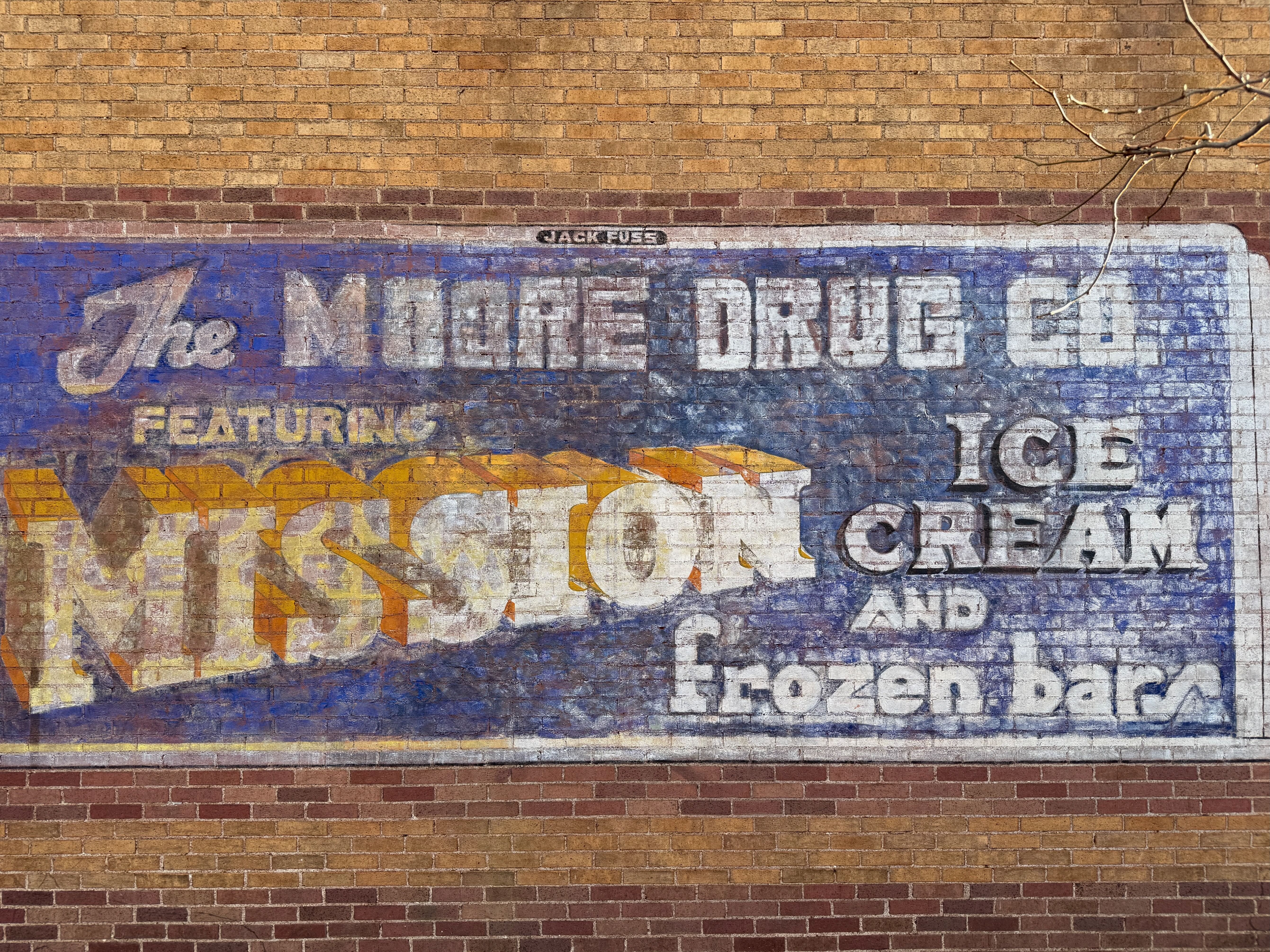
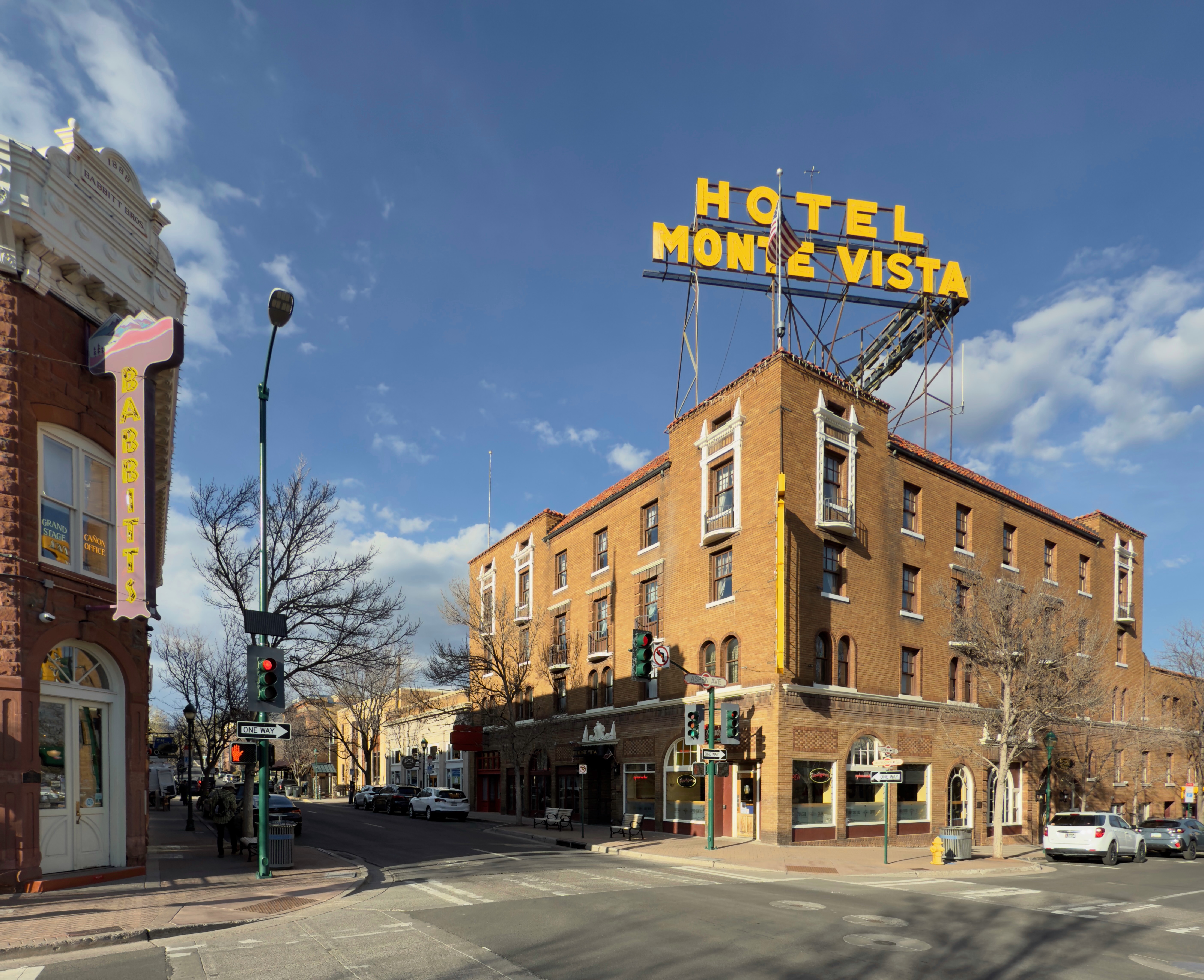
At 7,000 feet, the weather is cool in Flagstaff, and the feeling is of a Colorado mountain town. We don warm jackets and stroll around the historic downtown, including a stop at the local guitar and music shop. Surprisingly, Dave does not come away with a souvenir guitar.
We have a dinner reservation at Josephine’s Modern American Bistro, housed in a converted craftsman style residence, and it’s a good thing we do, because although it is a Monday evening, the place is jammed. A welcoming fire blazes in the stone hearth, and we enjoy a rather fancy meal (wok charred organic Scottish salmon with cranberry citrus sauce and sweet potato gnocchi for Anna; smoked pork ossobuco in Achiote demi-glace with Tillamook green chili polenta for Dave) accompanied by a crisp white Soave wine, all for about half the price the same might cost in the Bay Area. Dave wonders if housing prices too are lower here, but a quick Zillow search reveals there’s not much difference. That’s okay, we have no plans to move here. “But if you were in your twenties, might you?” Dave asks. “No,” I smile, “I’d move to Colorado.” (Which is what really happened, by the way.)
DAY THREE: FLAGSTAFF to LAKE POWELL
“There is no lack of water here unless you try to establish a city where no city should be.” —Edward Abbey, “Desert Solitaire”
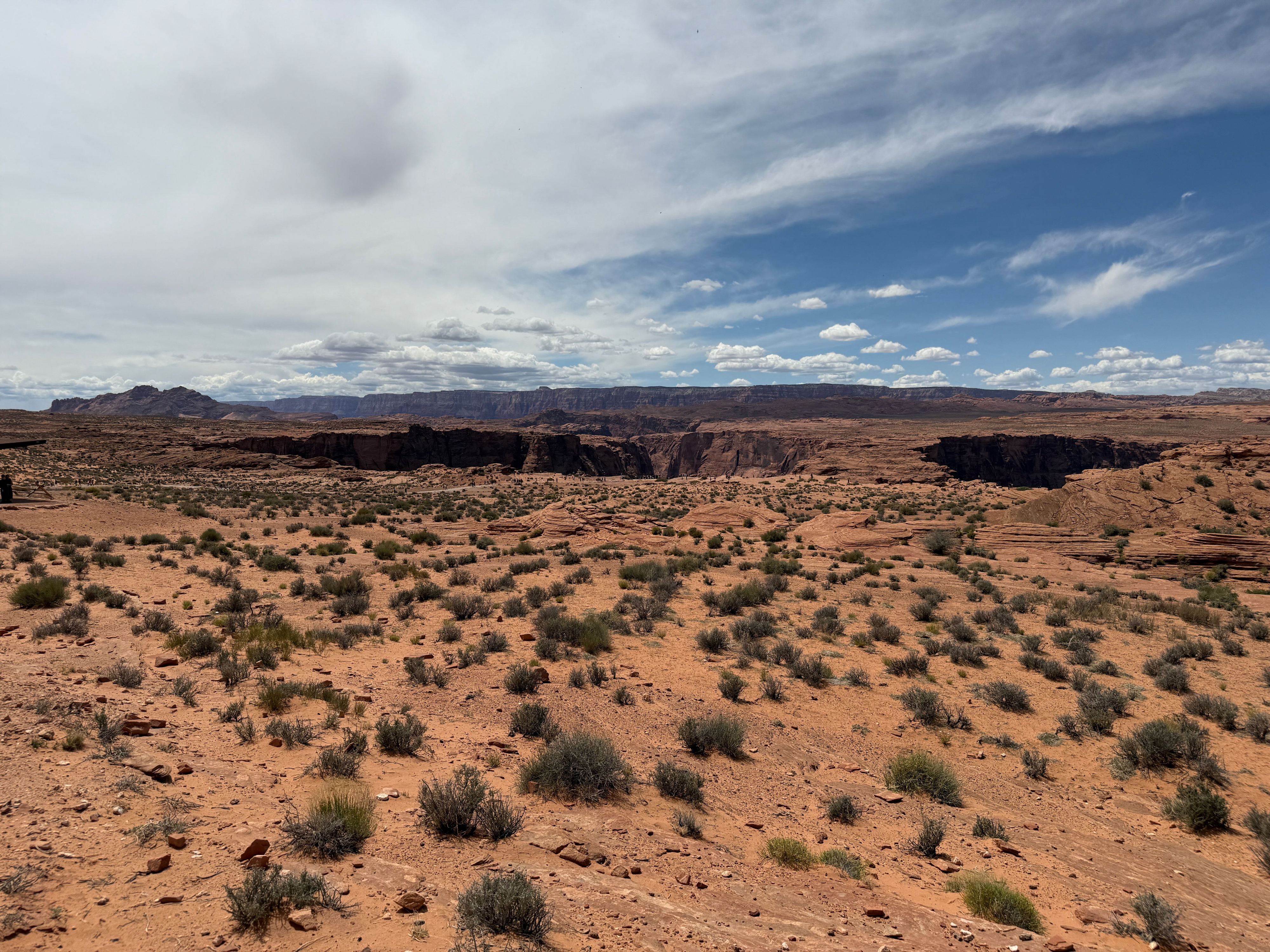
Heading north, a thundercloud slaps our windshield with sleet, and Dave muses that we don’t have chains on board. No matter, for soon we are out from under the cloud. Sparse pine trees give way to stunted and even sparser bushes which give way to grasslands and eventually become a landscape of sand, rock and the occasional courageous tuft of dry grass.
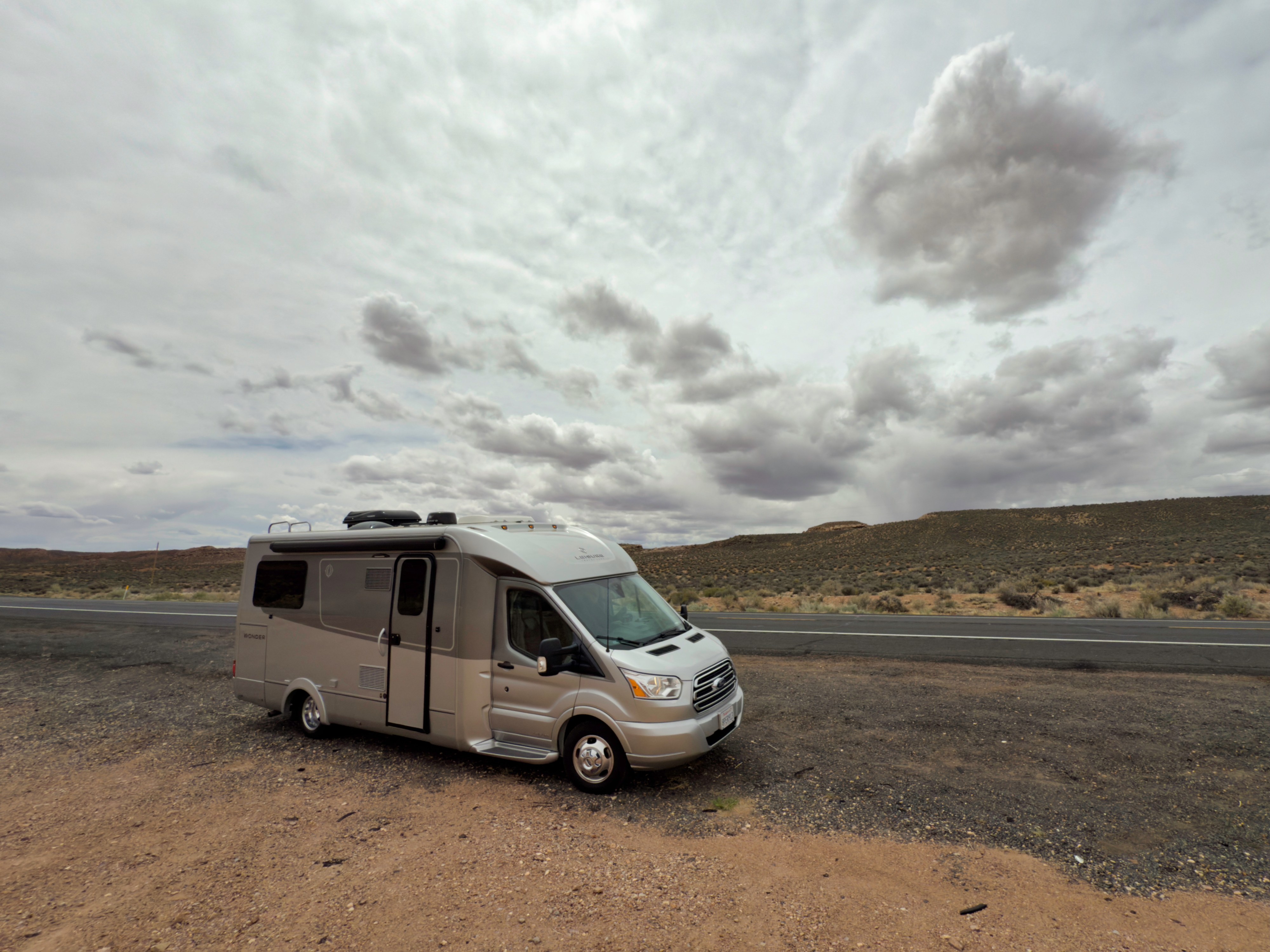
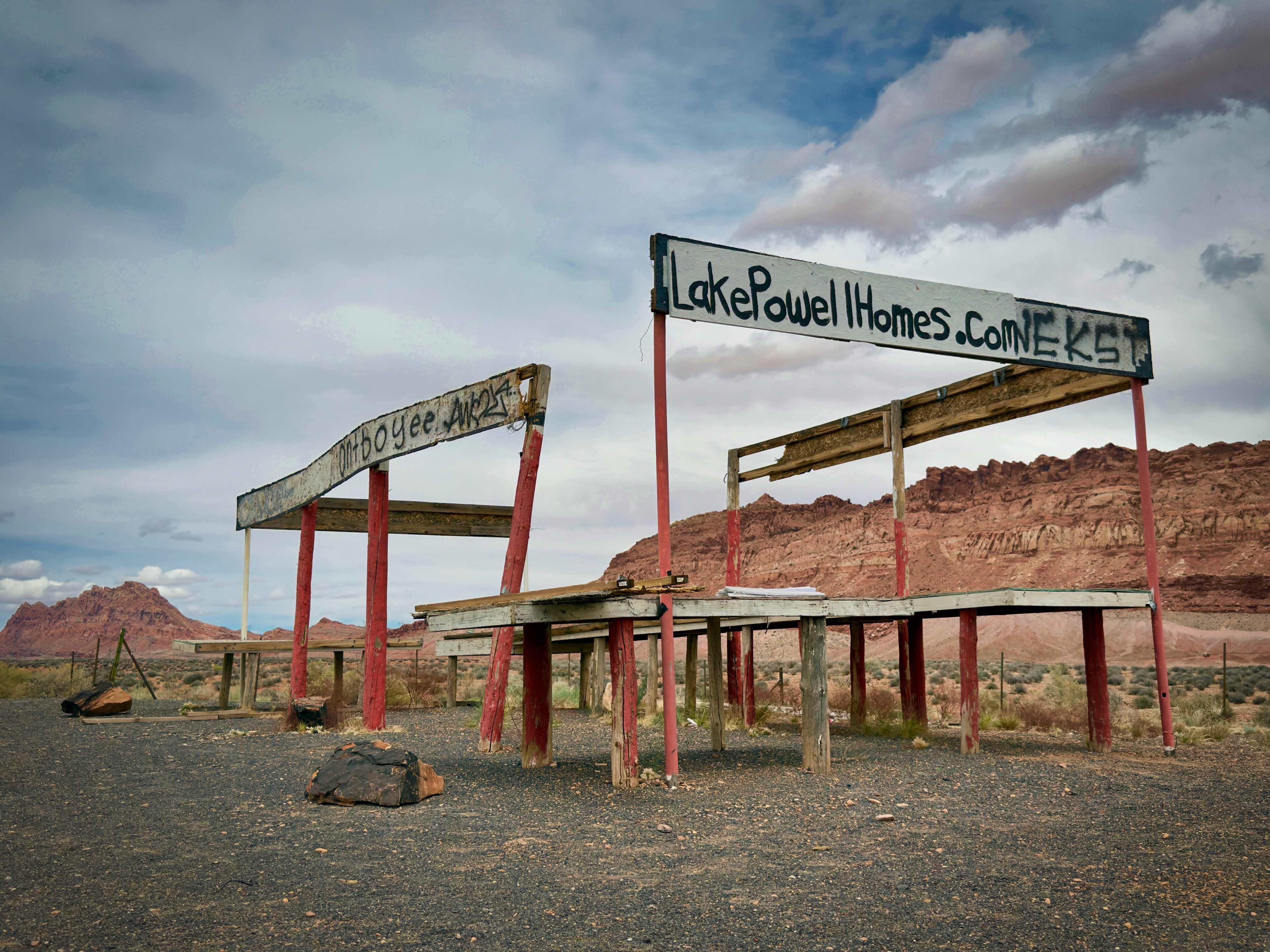
Not many settlements out here, and the few small holdings we pass are broken down structures with faded signs proclaiming “FOR SALE”.
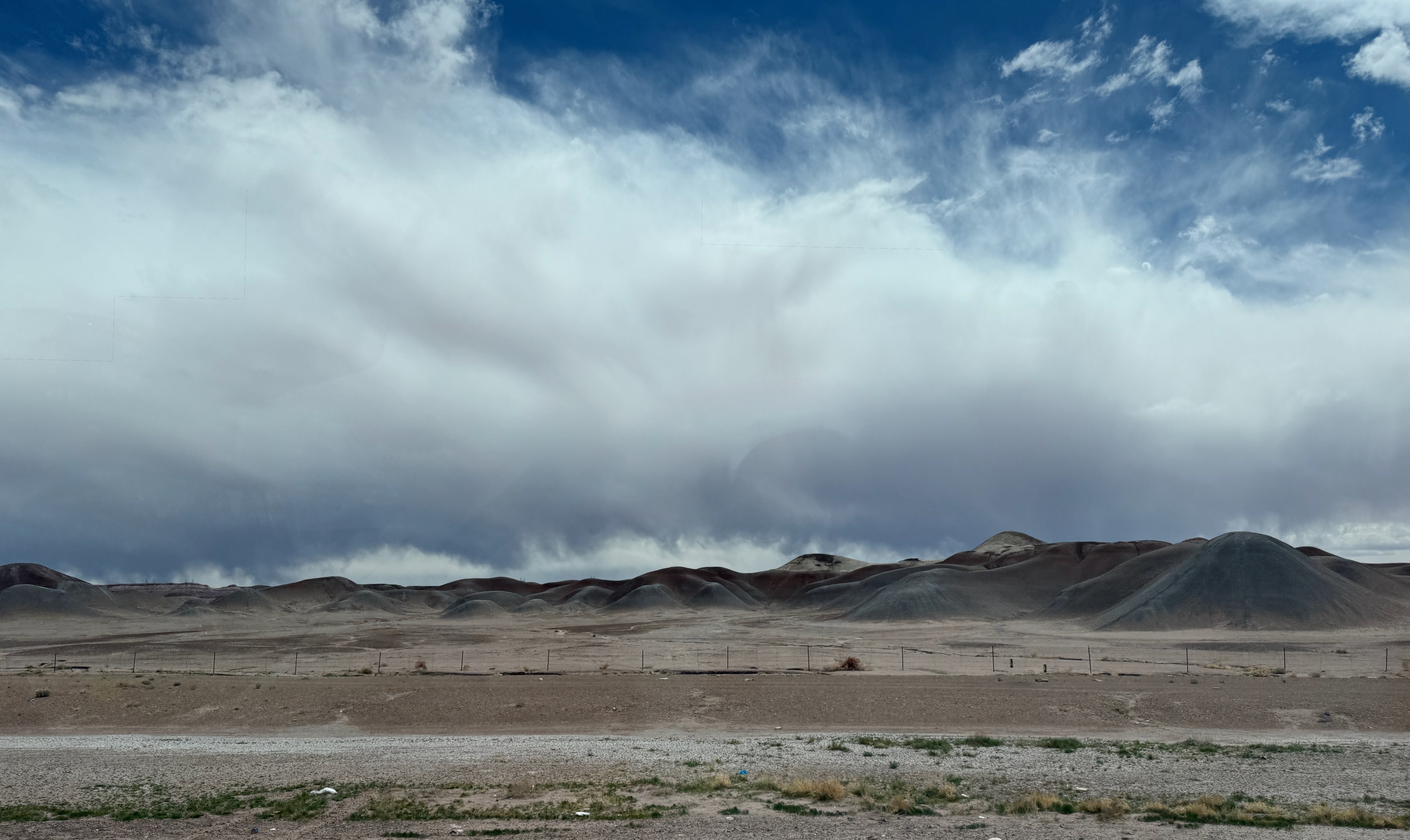
Odd mounds of surprisingly multicolored sand—pink, pearl, green, and gray—add bas relief to the flat desert floor.
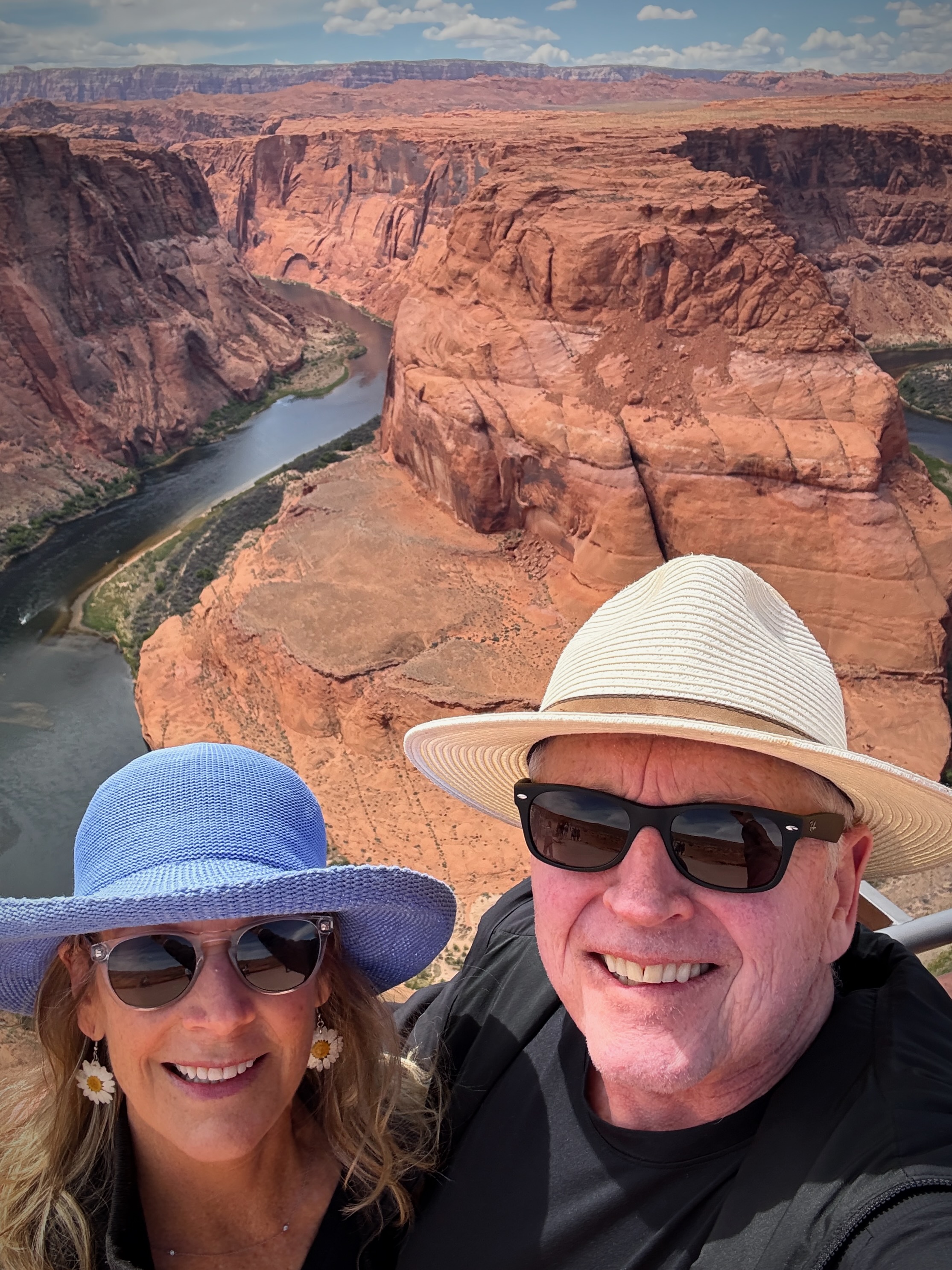
The geologic drama of the landscape increases as we approach the northern rim of the Grand Canyon and our next stop, Horseshoe Bend.
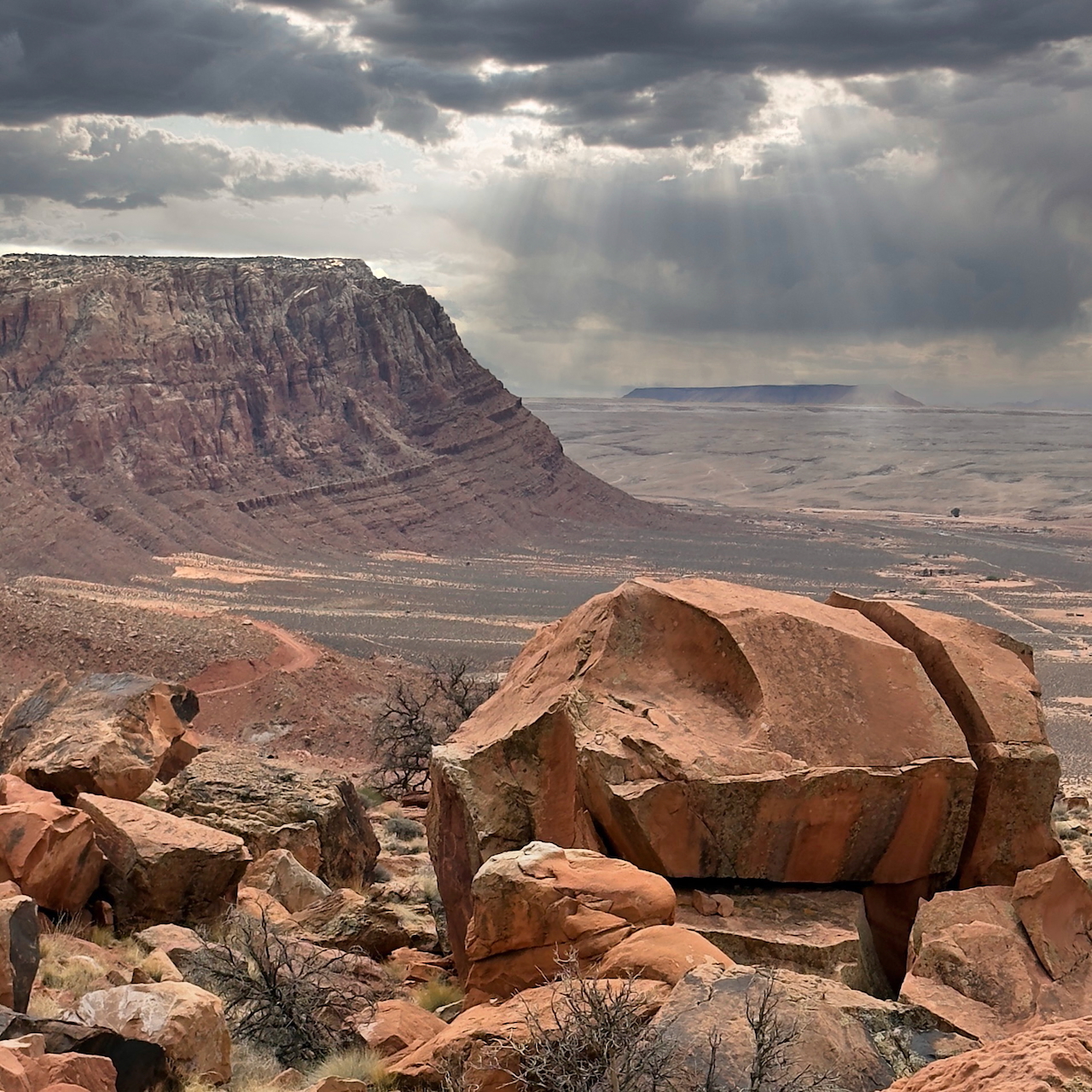
A moderate walk from the parking lot leads to the viewing area, and although the temperature is only 70 degrees, there is no breeze and soon we both wish we’d worn shorts.
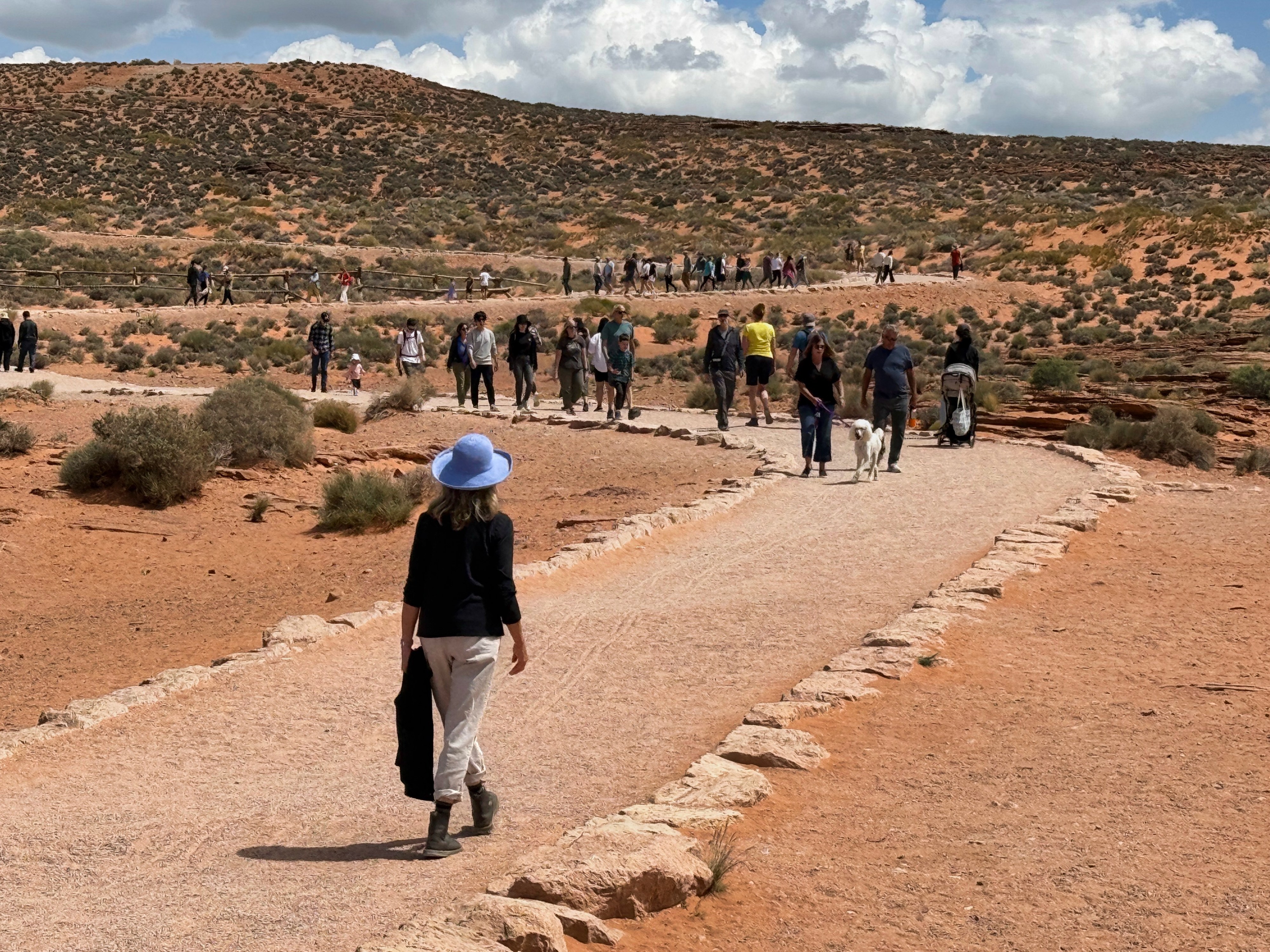
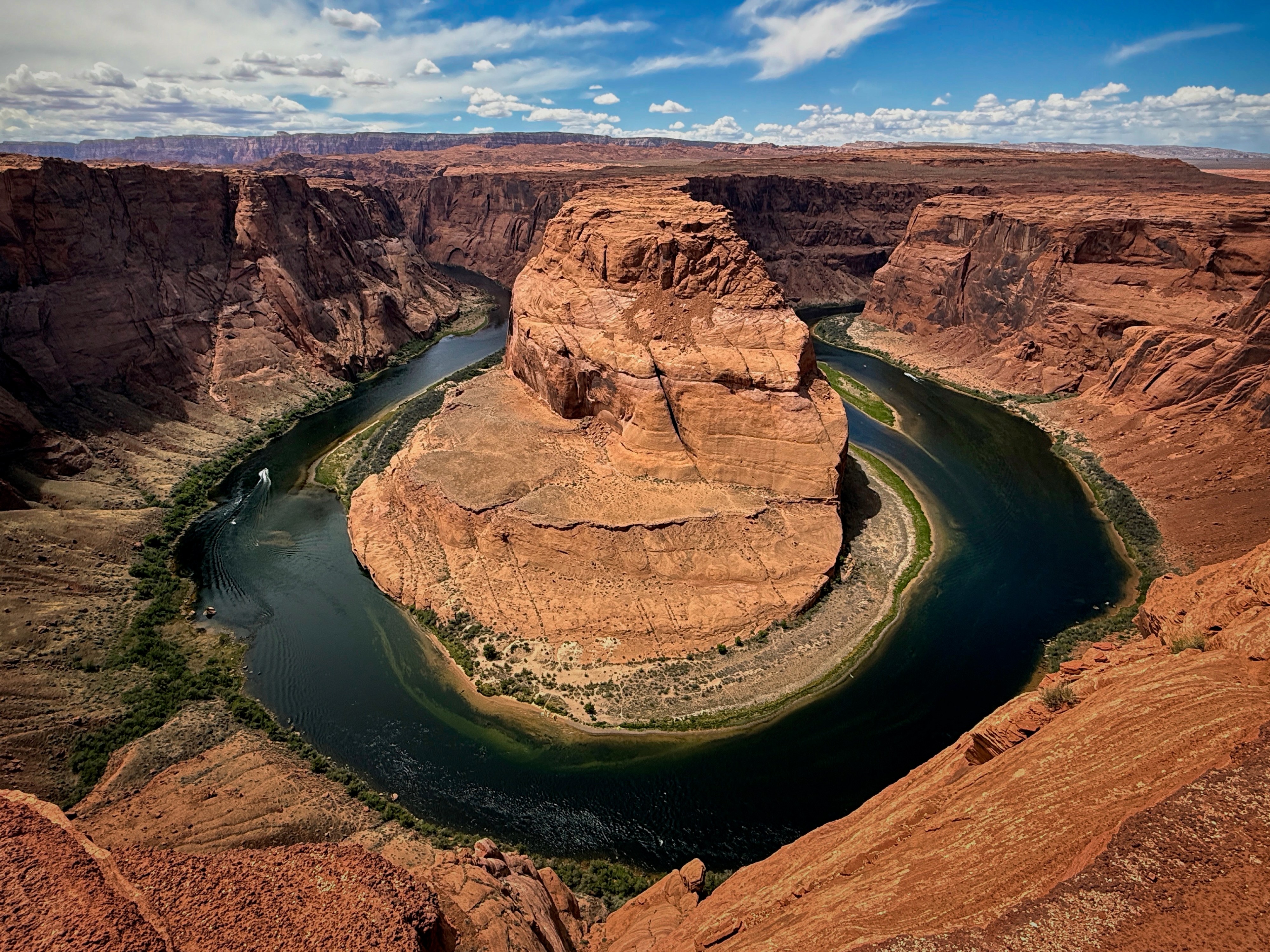
We are not alone on the trail, but high season tourist crowds have not yet arrived, so we have no trouble finding unobstructed views of the iconic—and aptly named—Horseshoe Bend in the Colorado river.
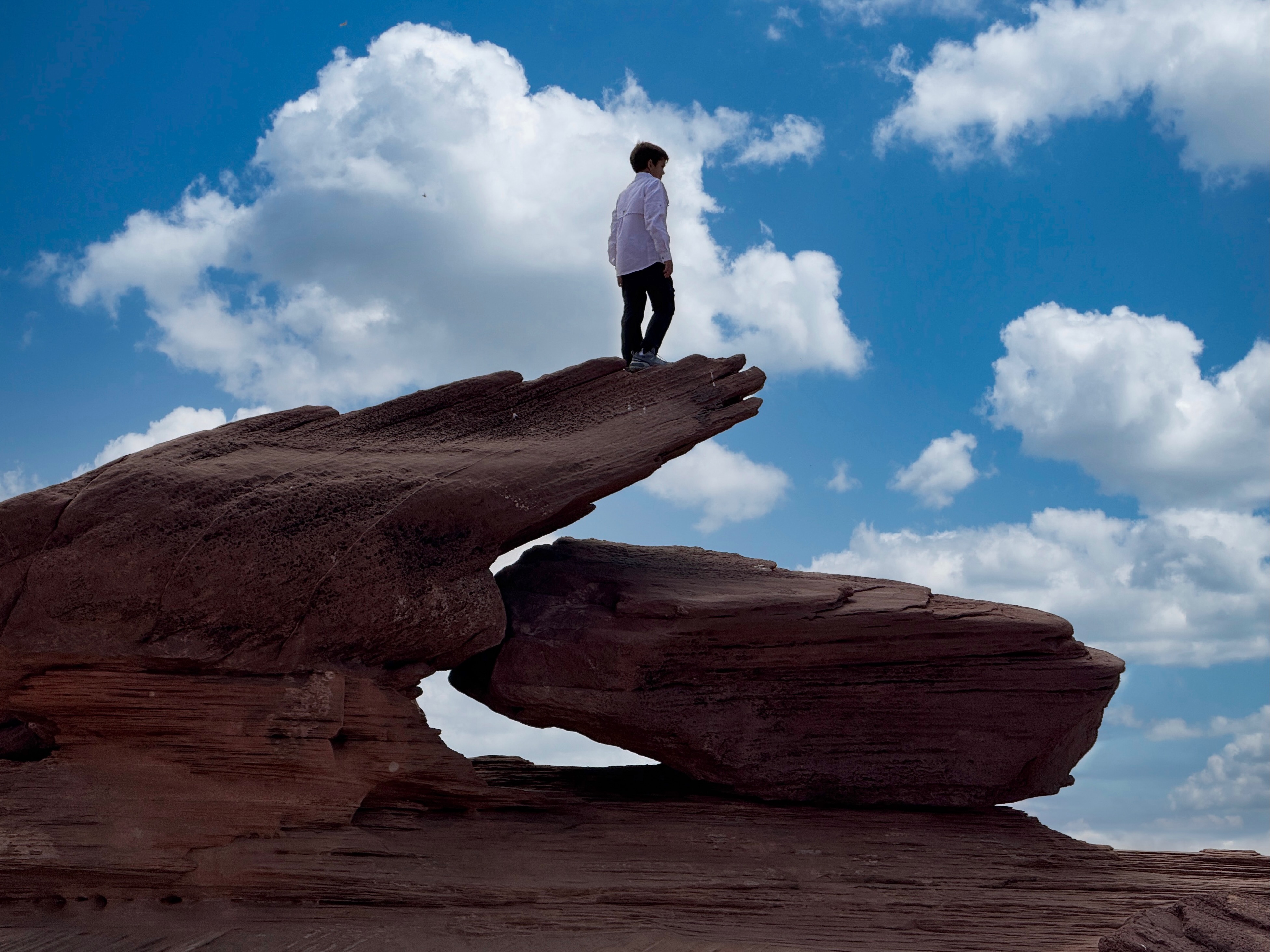
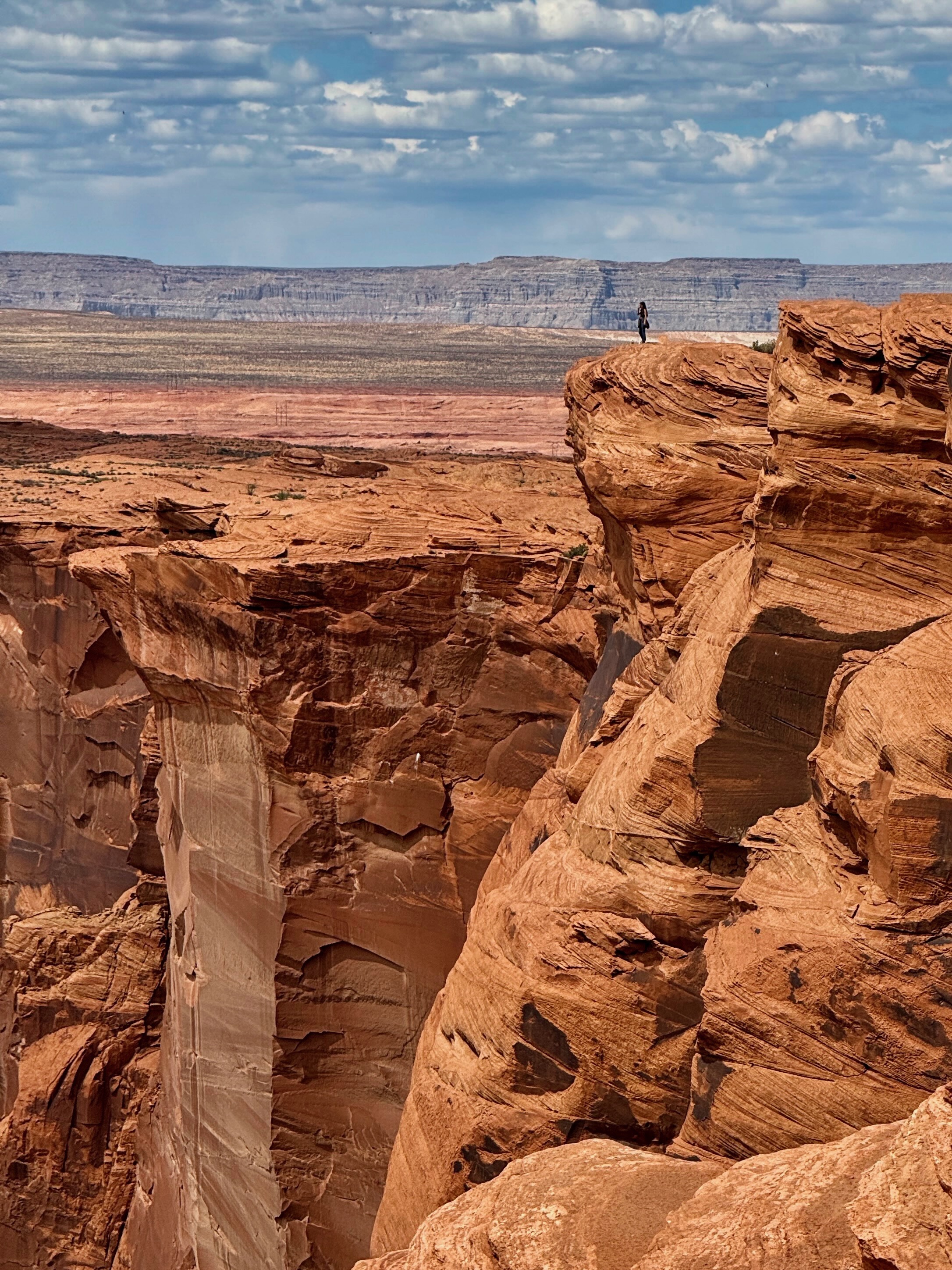
We stay well away from the edge, unlike some intrepid—or foolhardy—souls.
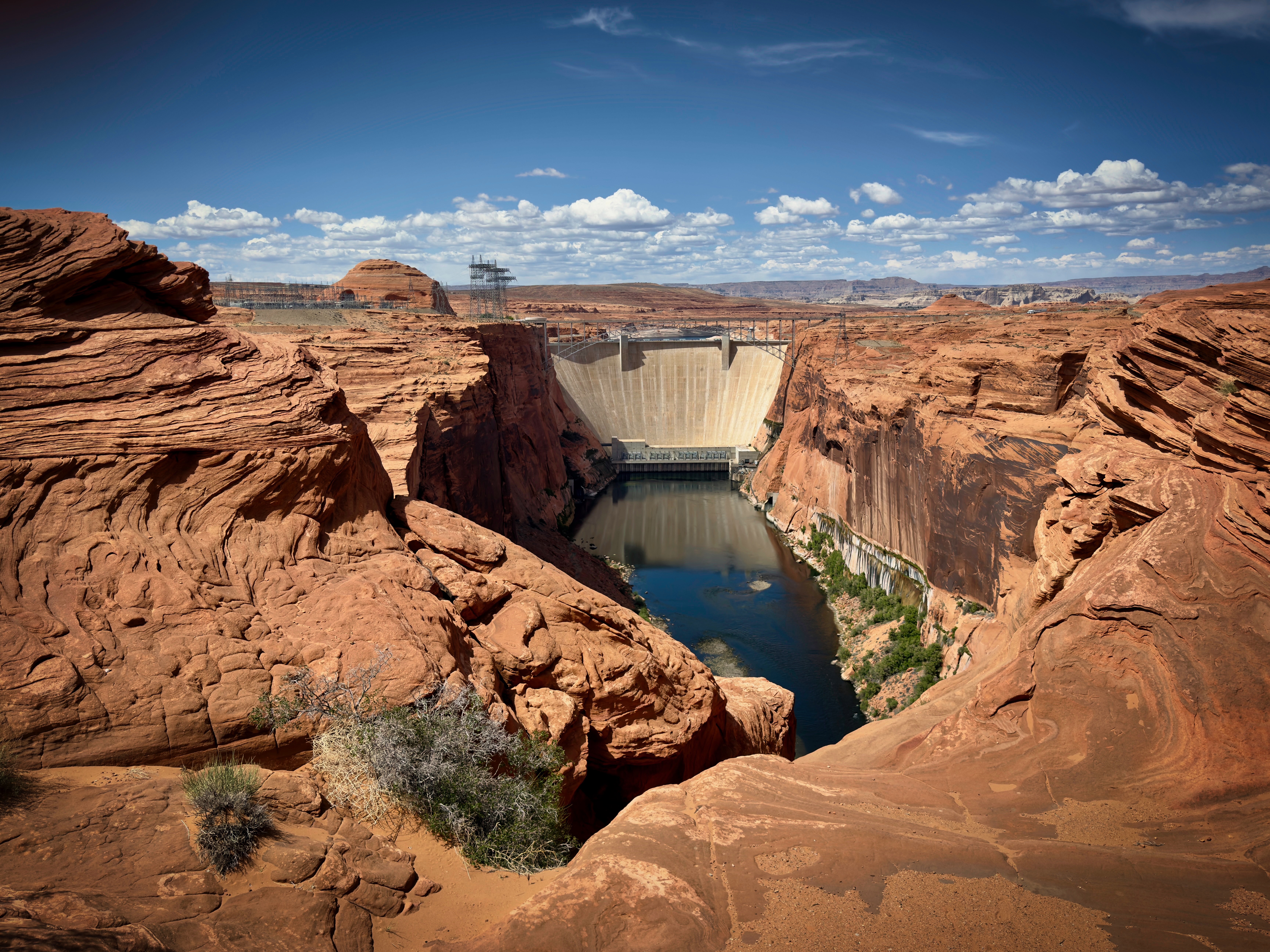
At Glen Canyon Dam we make our way to a scenic overlook by descending a stone path carved into rock that looks like undulating pink waves. Huge boulders the color of overripe persimmons line the trail, laid one atop the other at wacky angles and scored with deep parallel grooves.

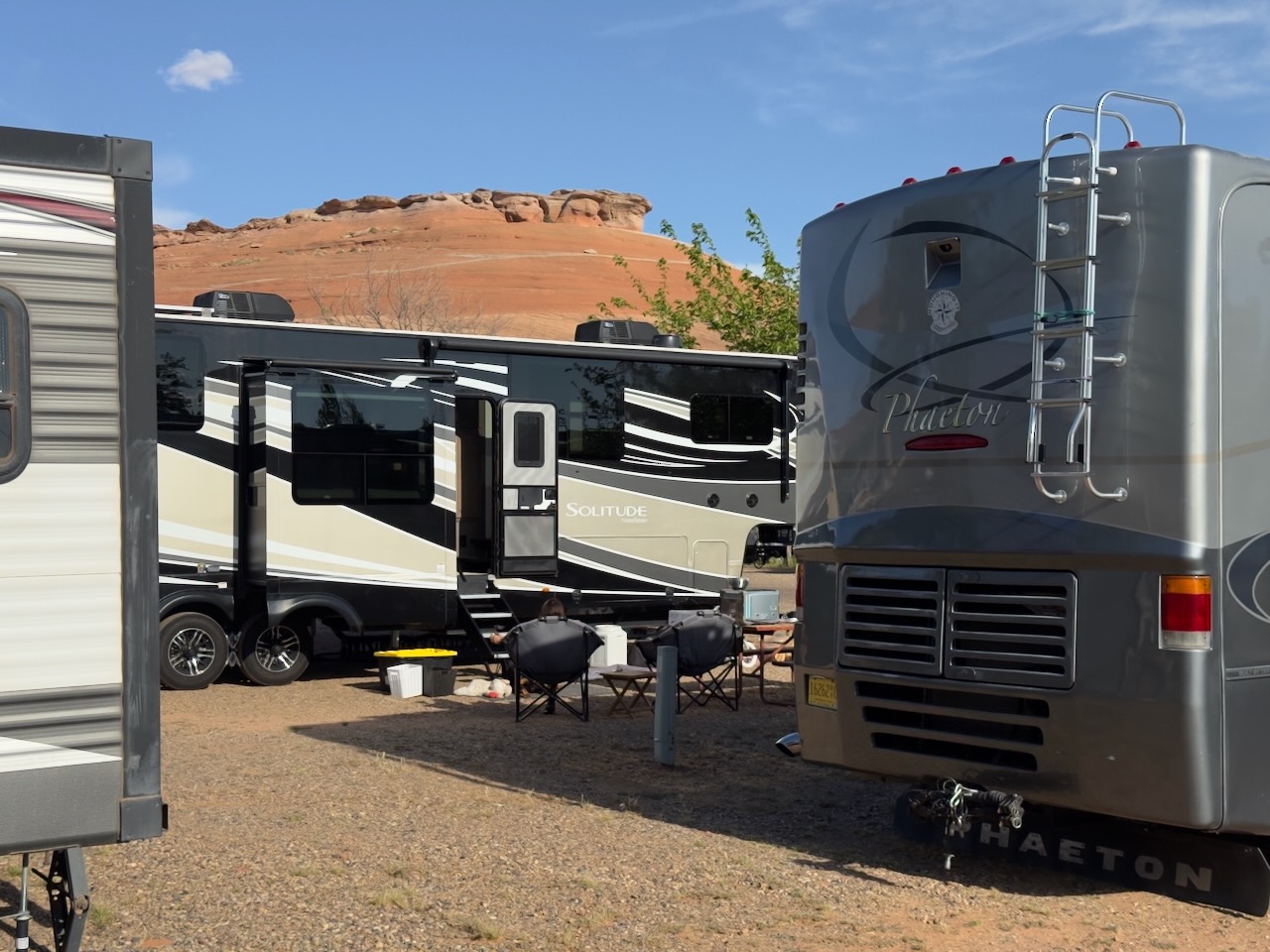
Our berth for the night is the Page Lake Powell RV Campground. We cook ourselves an easy dinner of artichoke and spinach ravioli with Bolognese sauce and a green salad, and spend a reasonably comfortable night. Luckily, the temperature is cool enough that if we open the windows and turn on our fan there’s no need to run the AC. We scheduled this trip for late April-early May in hopes of avoiding extreme heat—or cold—in the desert. So far, so good.
DAY FOUR: LAKE POWELL to GOULDINGS
“Each thing in its way, when true to its own character, is equally beautiful.” —Edward Abbey, “Desert Solitaire”
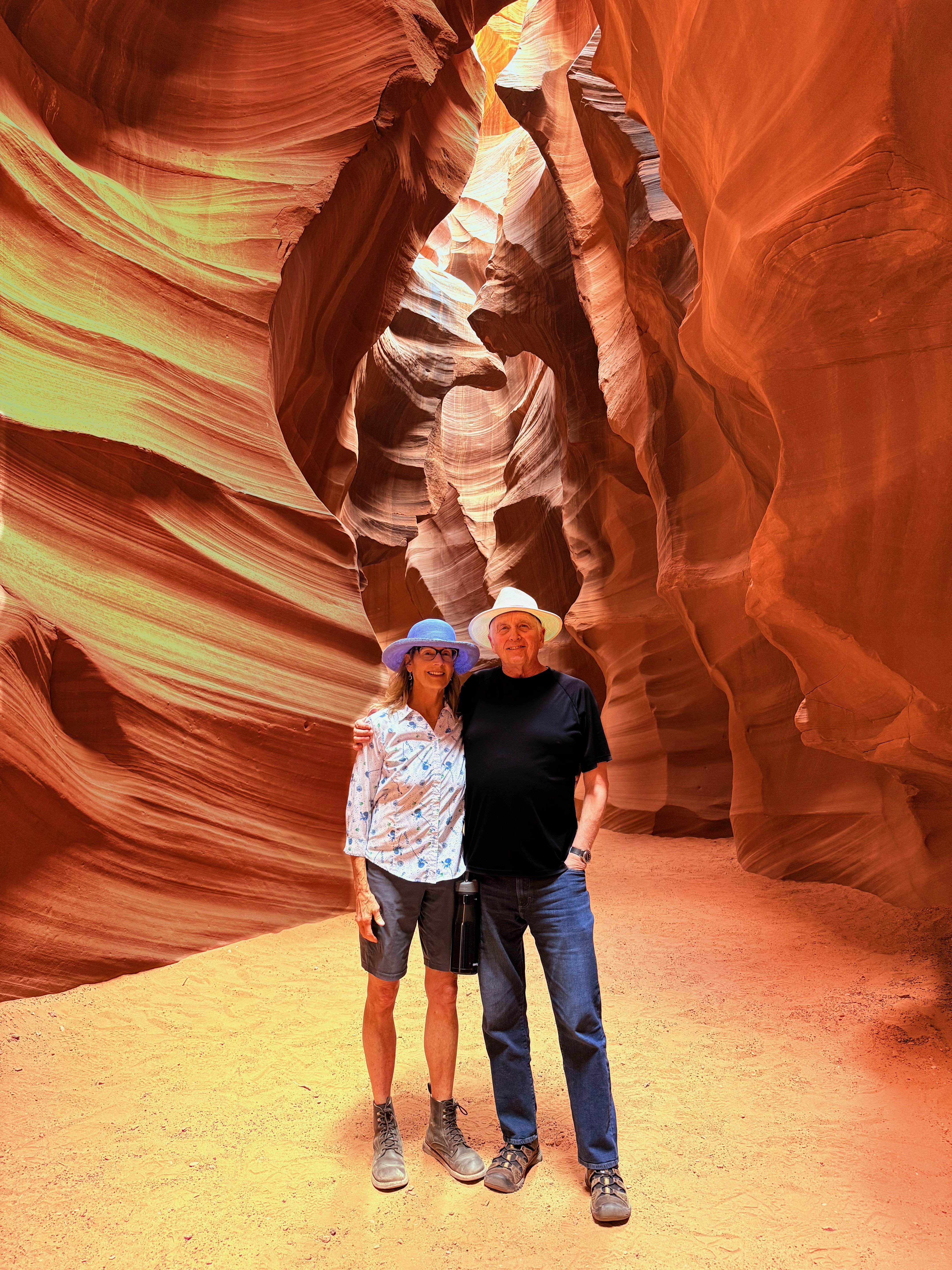
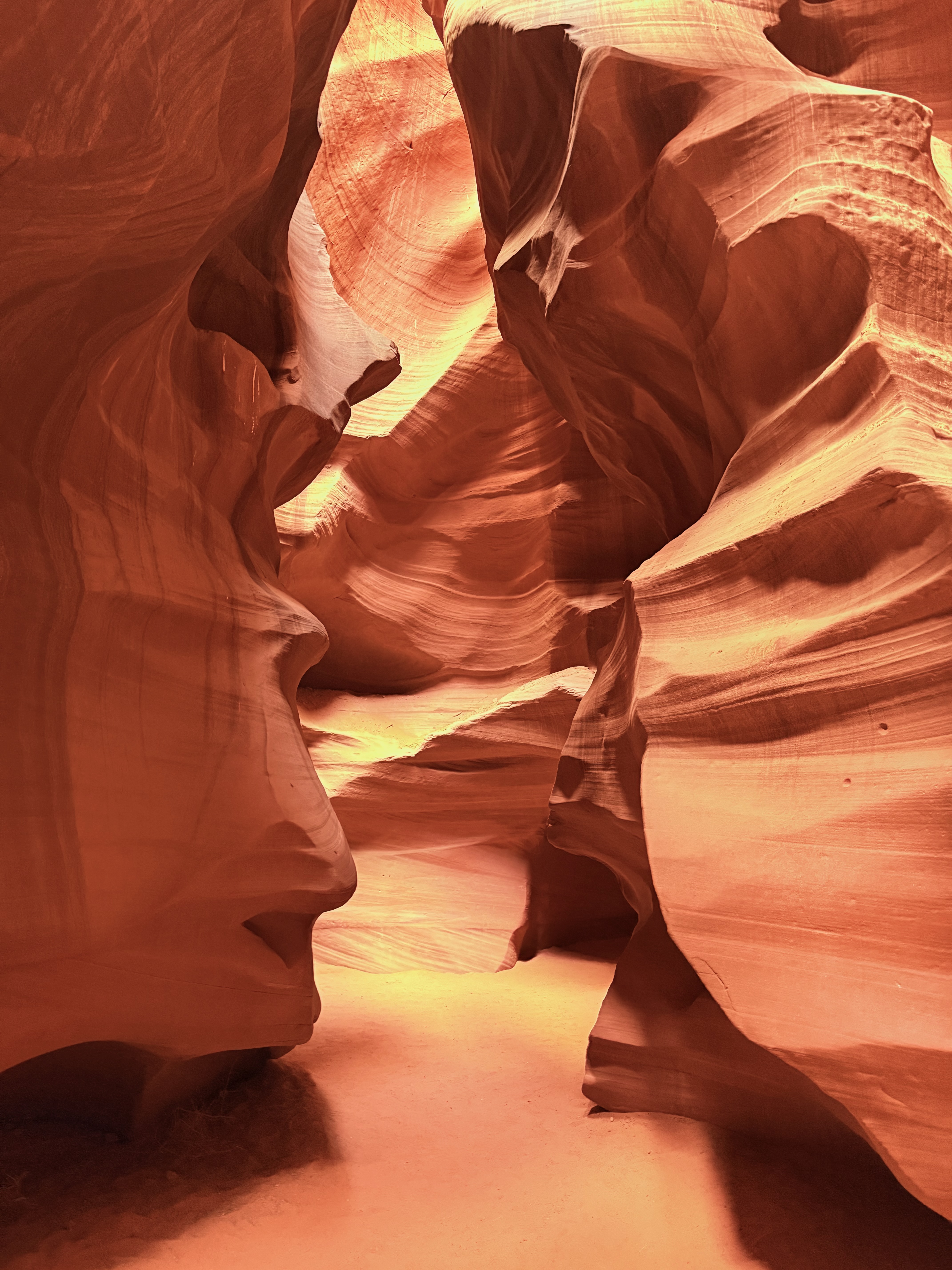
At the appointed hour we join a throng of tourists waiting to board shuttle vehicles for a pre-booked tour of the Antelope Canyon. Our guide, Mariah, informs us with pride that she is 100% Navaho, born nearby. She directs our group to squeeze onto two bench seats of a four-wheel drive vehicle and we set off to on a sandy track to the entrance of the slot canyon. The short ride allows just enough time to find out our group consists of a couple from Texas, a foursome from Salt Lake City, a couple of Virginia, and a pair of newlyweds who have traveled all the way from Korea.
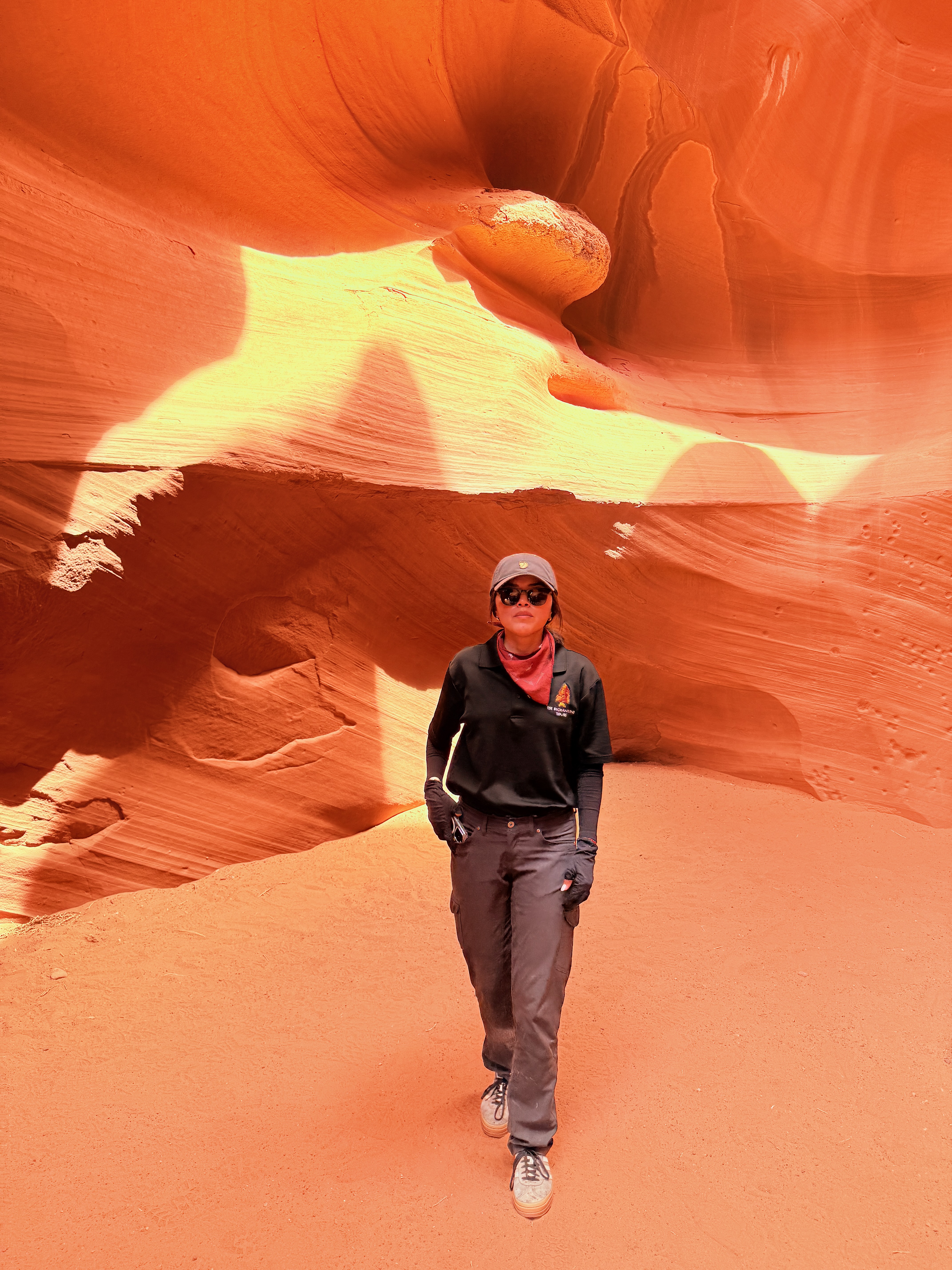
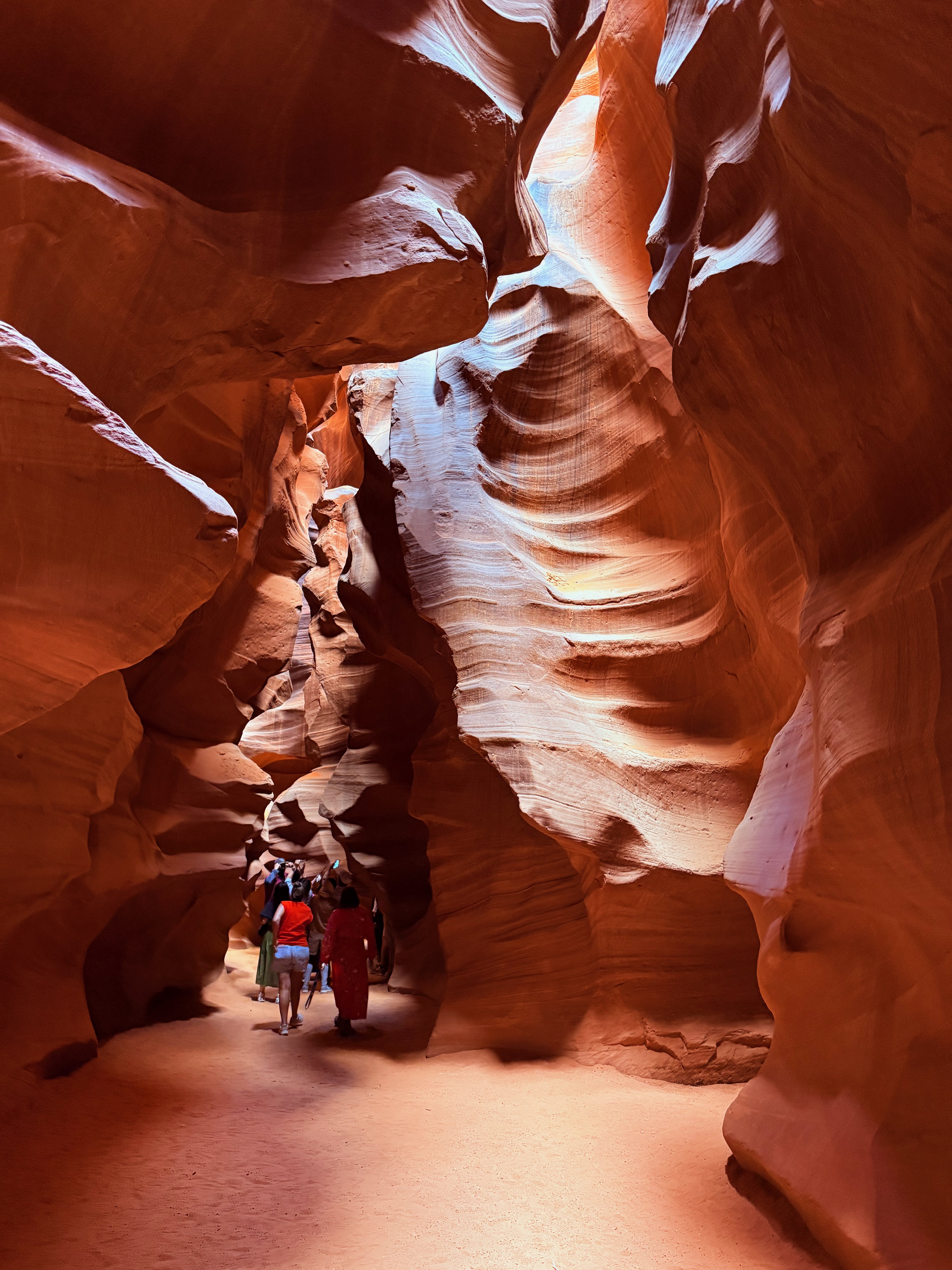
Mariah leads us through a narrow fissure in the rock into a luminous passage of swirling apricot and salmon-colored shapes.
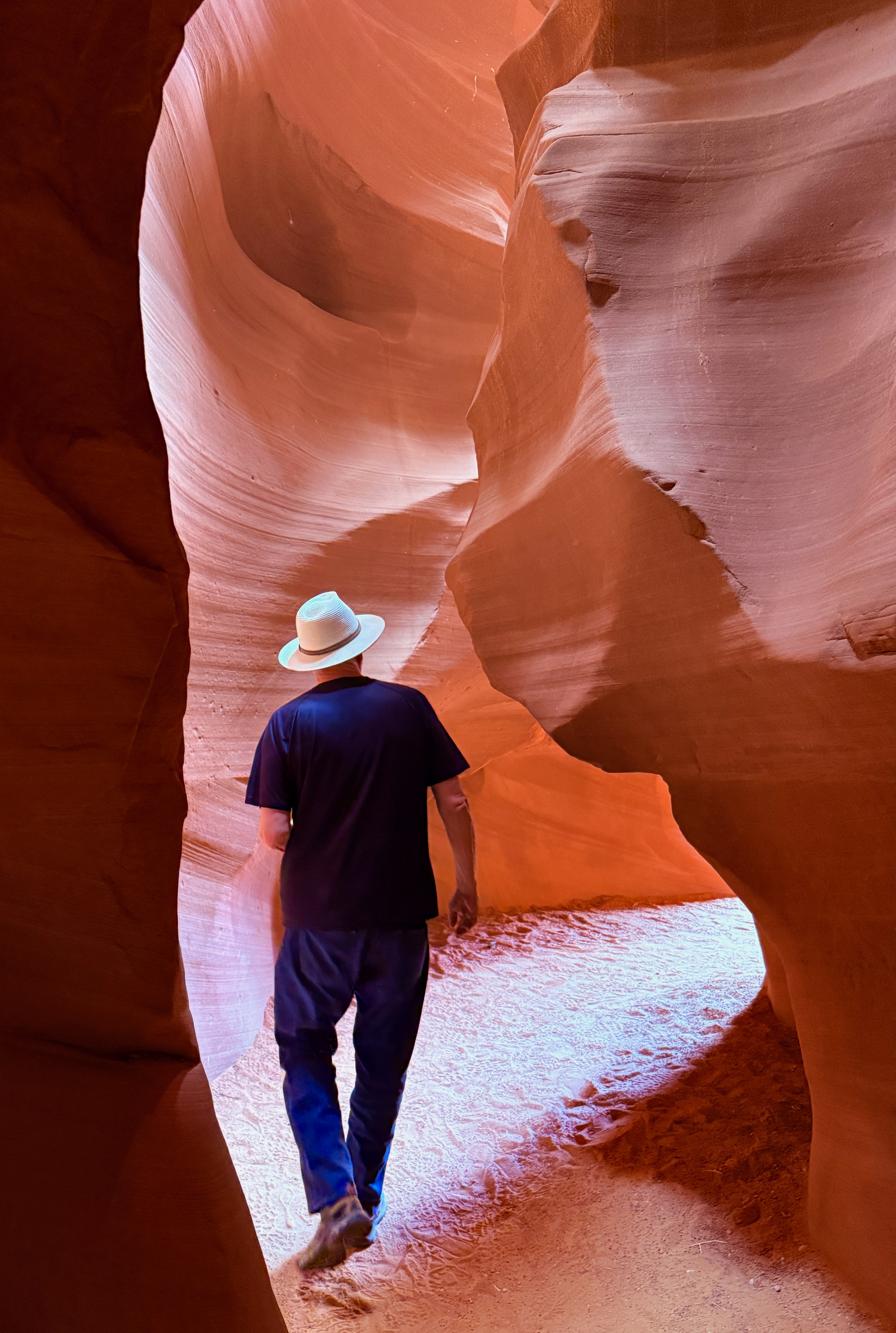
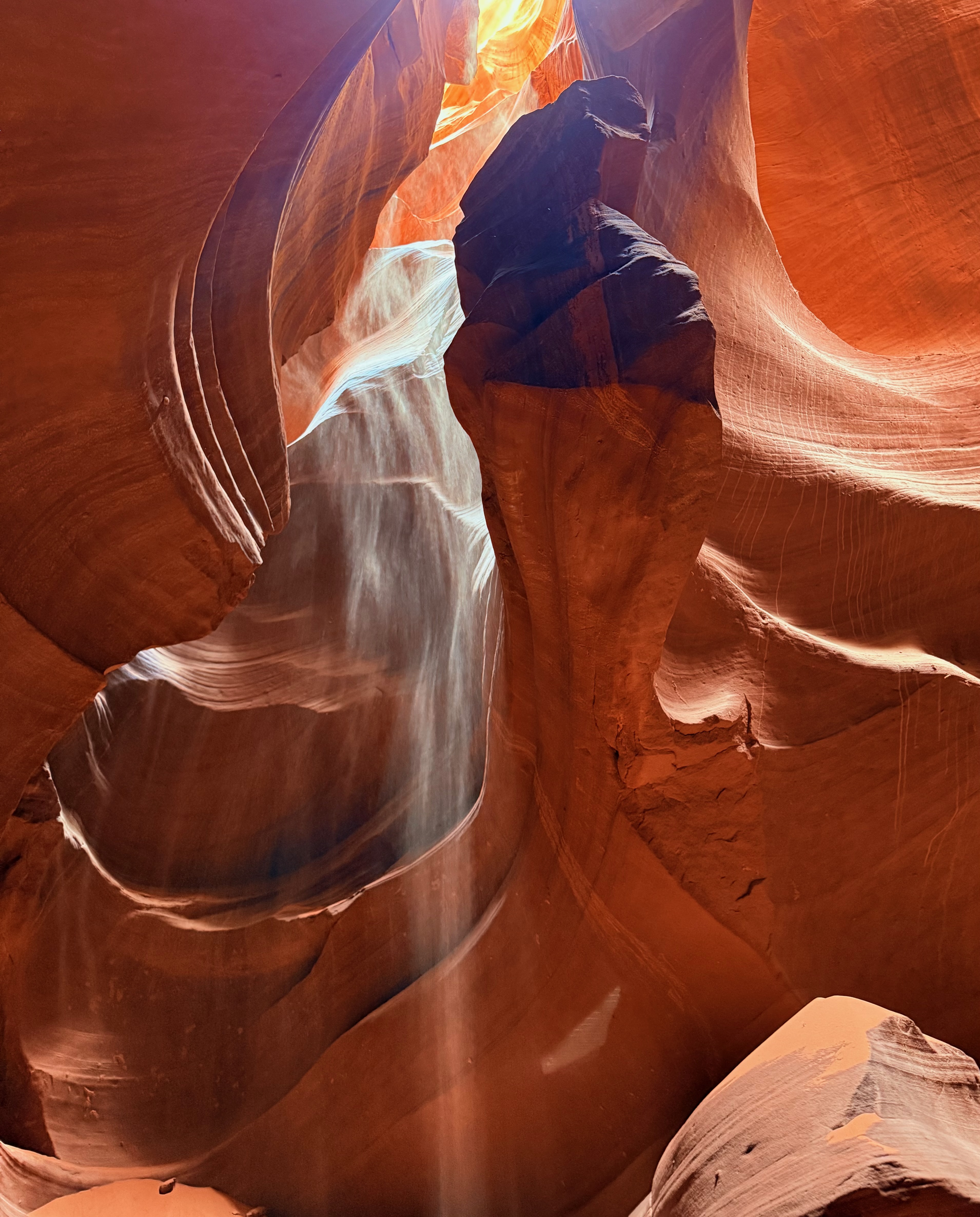
We twirl in slow circles, attempting to capture in photos the wonder of delicately striated and sculpted sandstone illuminated with soft light from above.
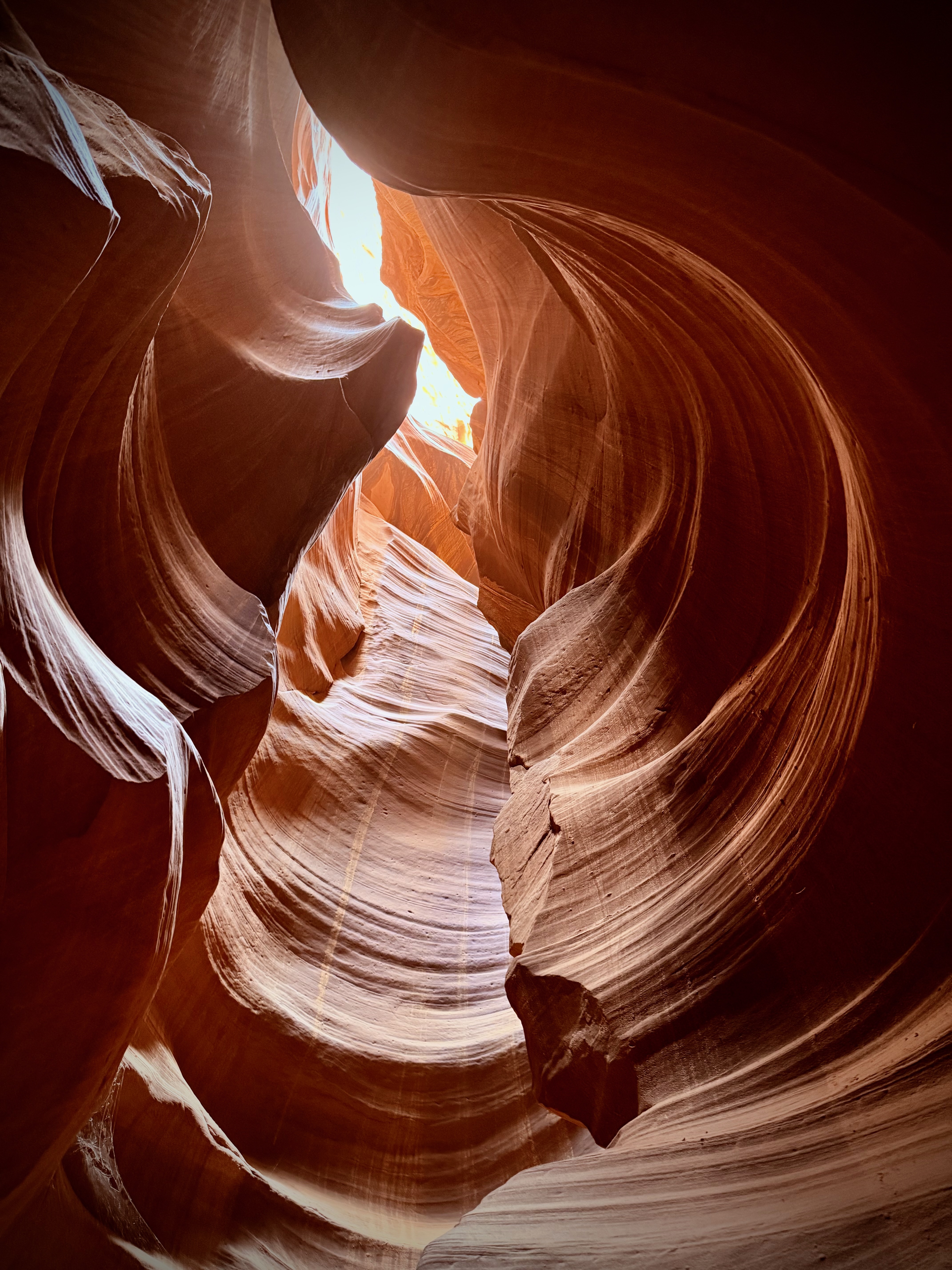
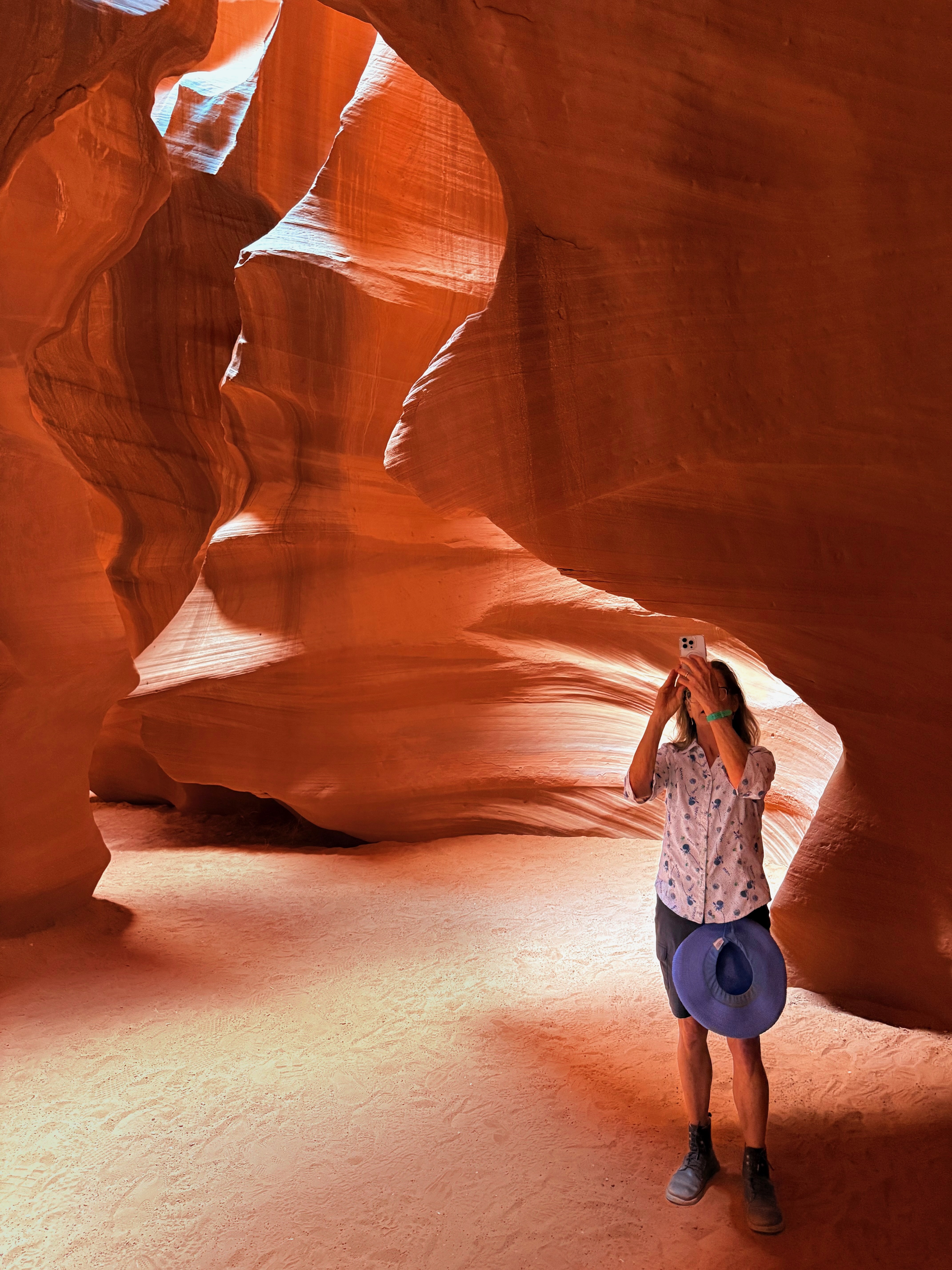
Eventually I slide my camera into my pocket and simply gaze in awe.
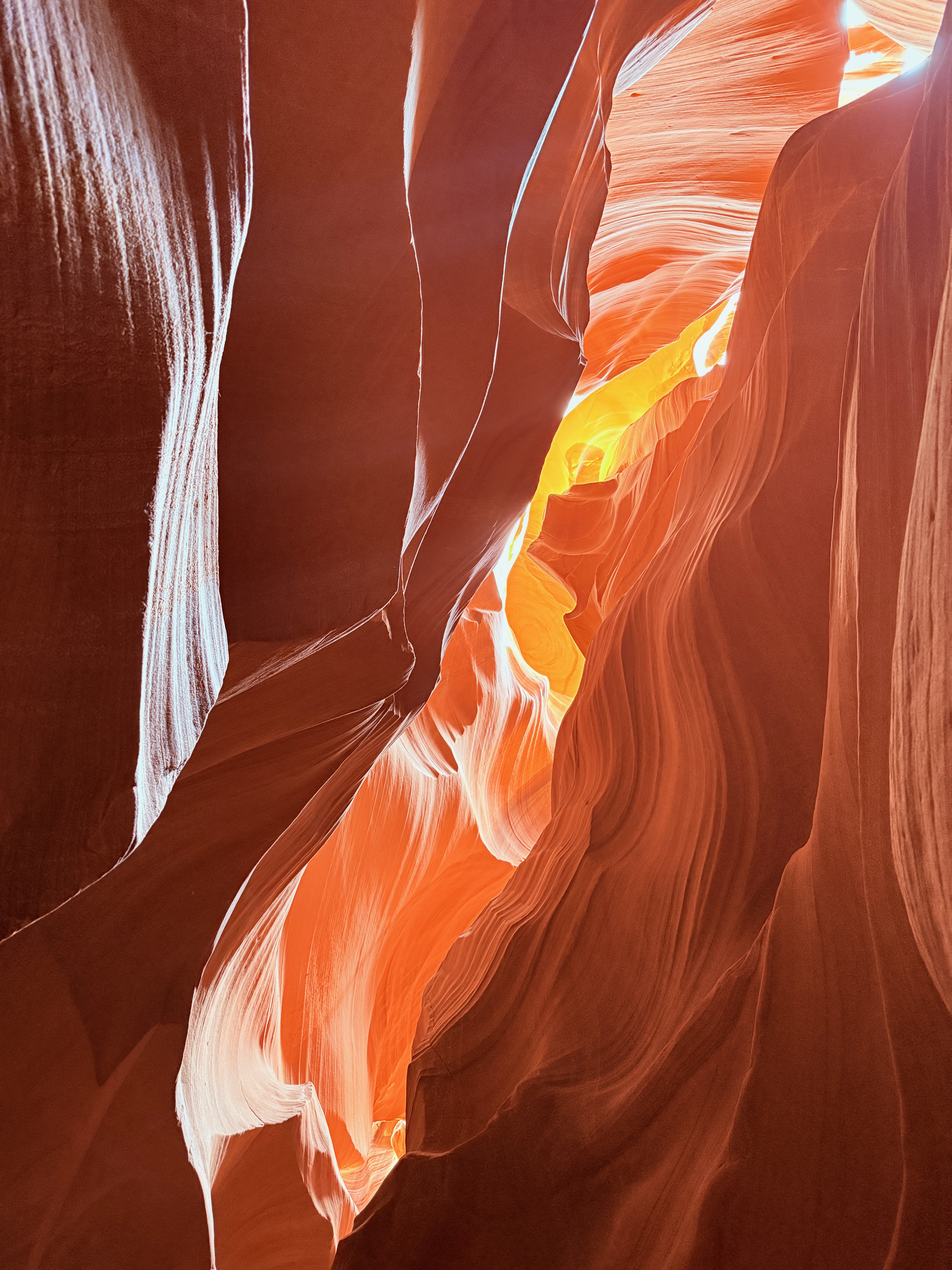
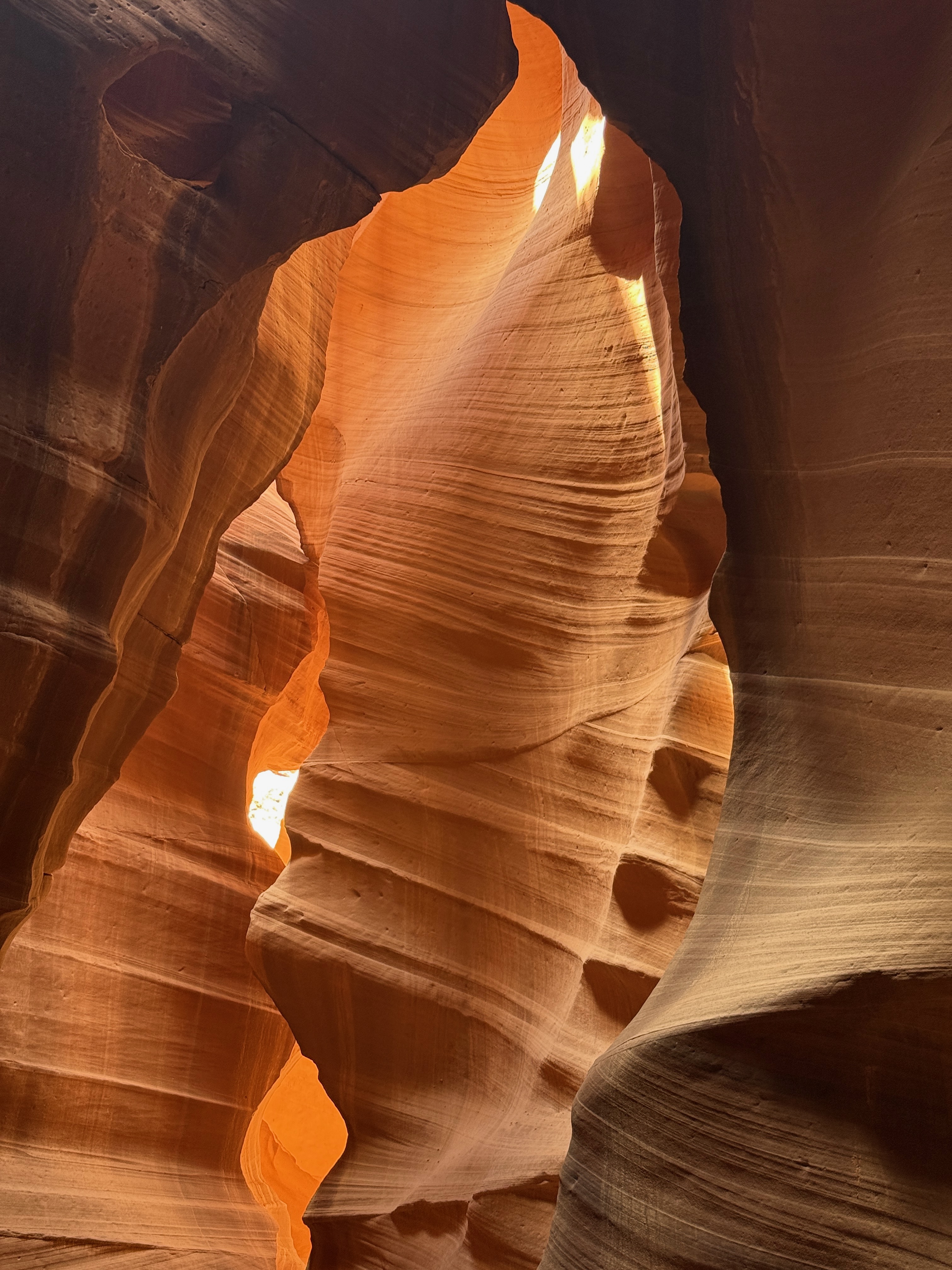
No doubt about it, over the last few days, the desert has worked its magic and I have begun to fall under its spell. Where before I saw inhospitable landscape, now I glimpse beauty in the ever-shifting palette, the time-sculpted landscape, the over-arching sky. I sense why people revere this place. There is glory here, from the subtle to the dramatic, and it is not man-made.
 Thin Slicing the World
Anna, I so appreciate the chance to experience the desert through your eyes. I have had the same doubts as to its aesthetic or natural appeal, but your description washes away my bias. And your photos of Antelope canyon rock formations are stunning! I hope the rest of your trip is just as beautiful and I’d love to connect when you get back. I’ve been thinking of you a lot. Ciao!
wonderful photographs and narration. I have always been drawn to the Southwest, its scenery and its connection to its native peoples. I do find it difficult to share it with the tourist hoards on occasion. Have a great trip. Jot