
La Vie Provençale
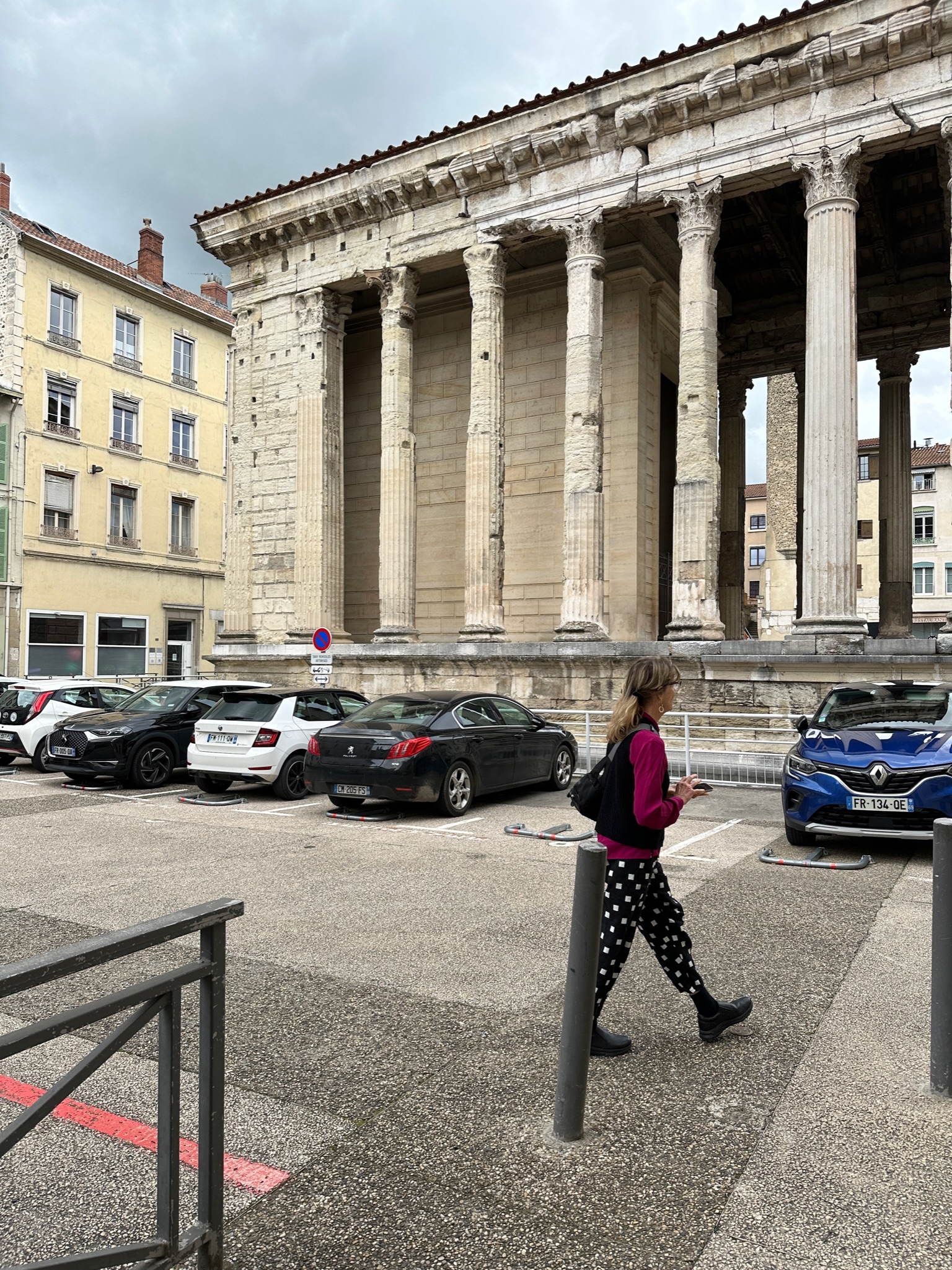
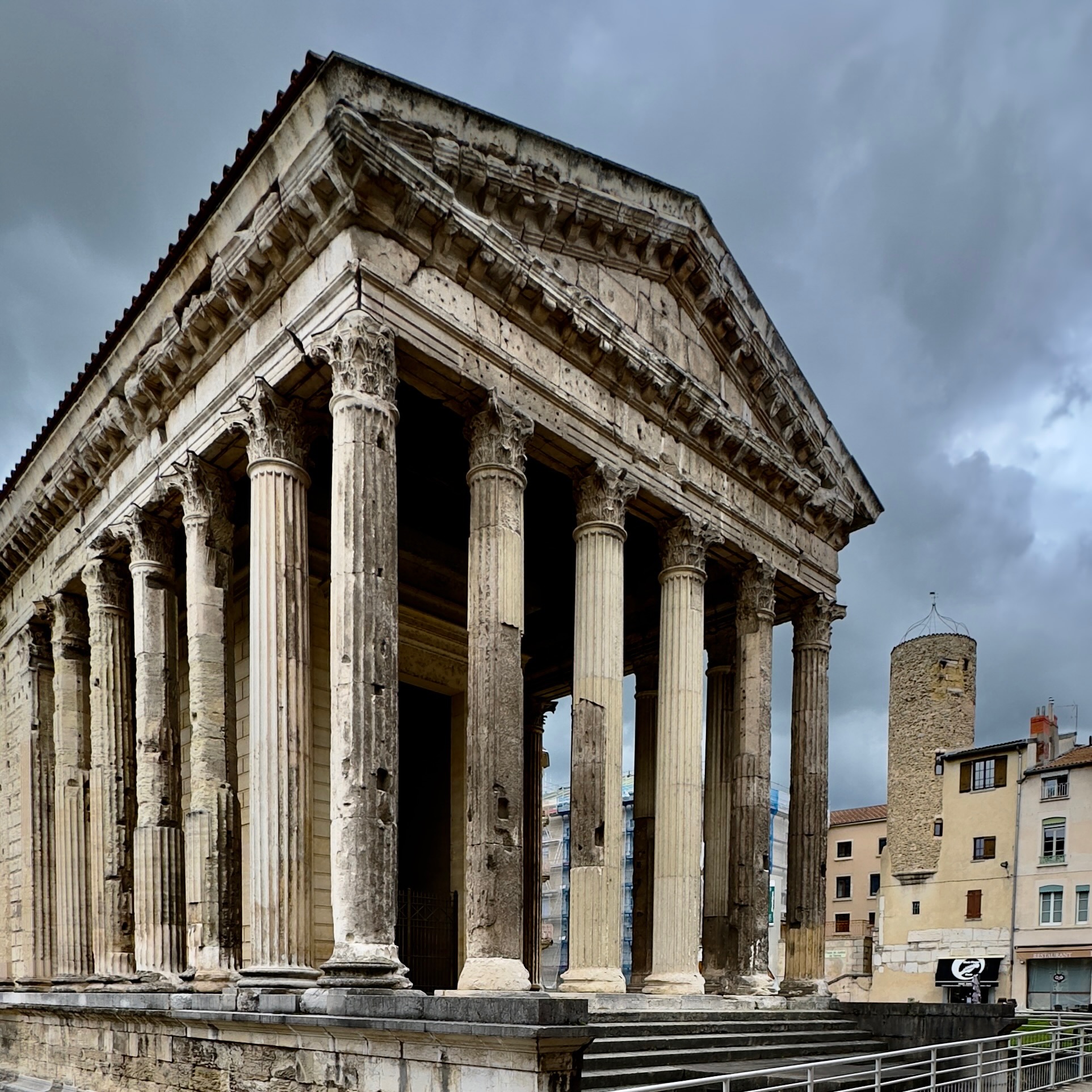
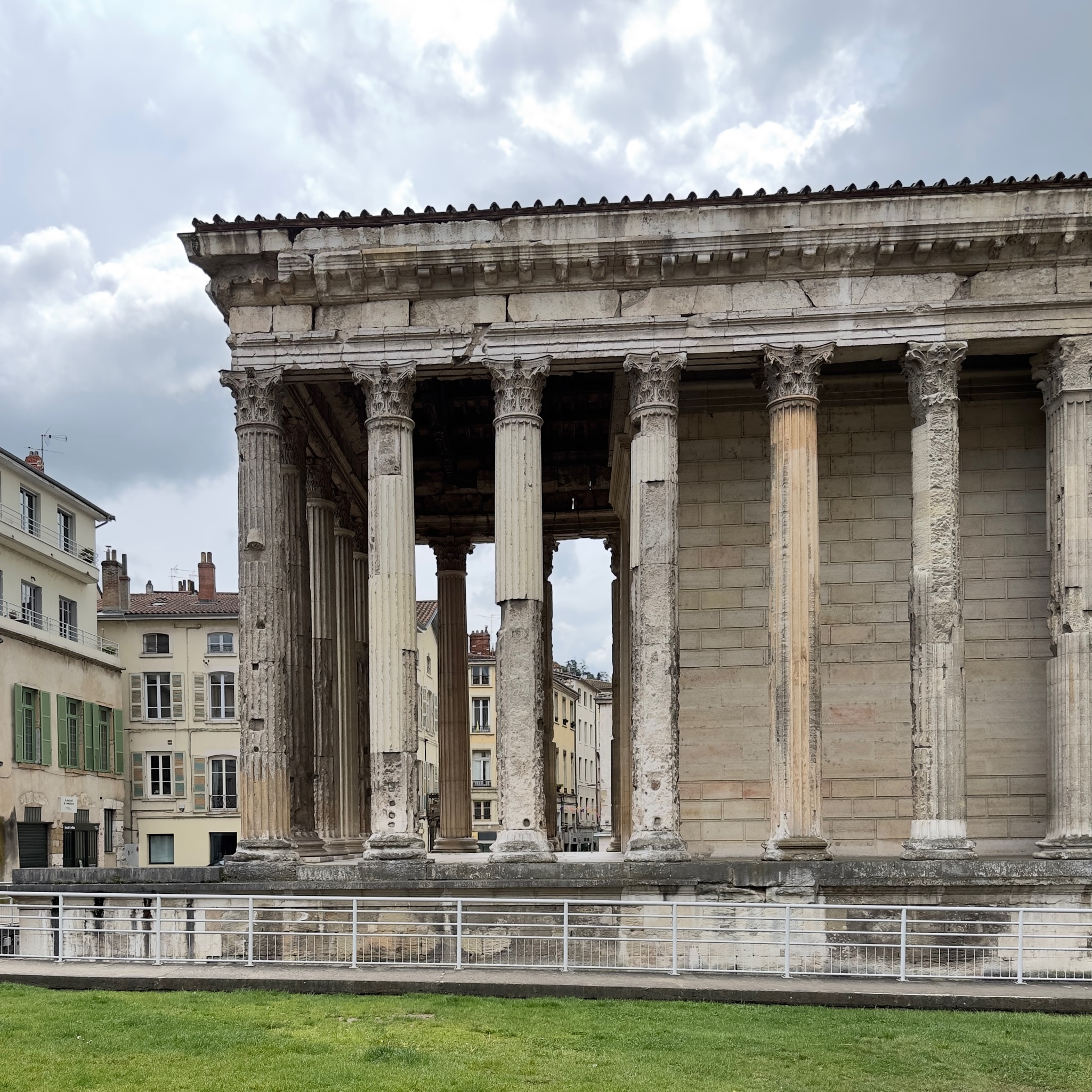
On our way south from Lyon to Avignon, we stop at Vienne, once a Roman settlement (like most towns in this part of southern France) and supposedly full of interesting ruins. We park in a tree-shaded lot and set off on foot past closed shopfronts and graffiti-tagged walls to the rebuilt remains—not ruins—of a large Roman temple. A sidewalk café faces the temple, and we order two coffees. The café is quiet; only a few tables are occupied. Our waitress delivers our espressos, and just as we take our first sip, a young man bursts out of the café door and crashes through a cluster of tables, chased by a burly man with a shaved head who catches up with him and shoves him into a railing. They aim blows at each other, and for a moment it seems we could be caught up in a brawl, but then two more men race over, tackle the aggressor and pin him to the ground. He struggles, and one of the men holding him down shouts, “Tu te calmes ou je t’écrase la tête!” (Calm down or I will smash your head!) An aproned waitress puts down her tray and helps immobilize the man by sitting on his legs. A small crowd of onlookers has gathered, and someone must’ve called the police, for we soon hear the two-tone wail of approaching gendarmes. Our waitress gives a disapproving shake of her head. “Bienvenu en France,” she says. We pay our bill and leave, unwilling to witness any further drama. Such is our introduction to Vienne.
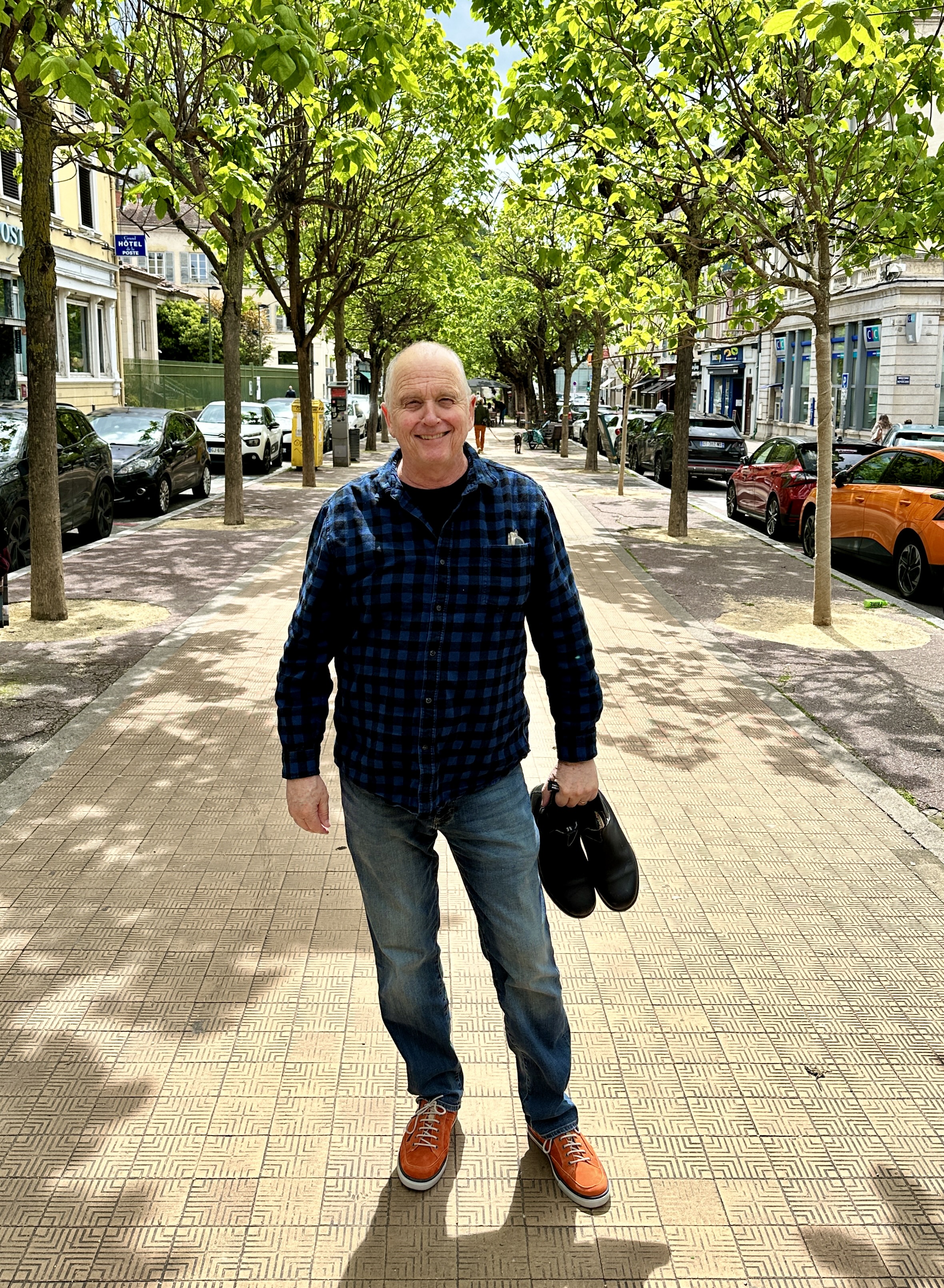
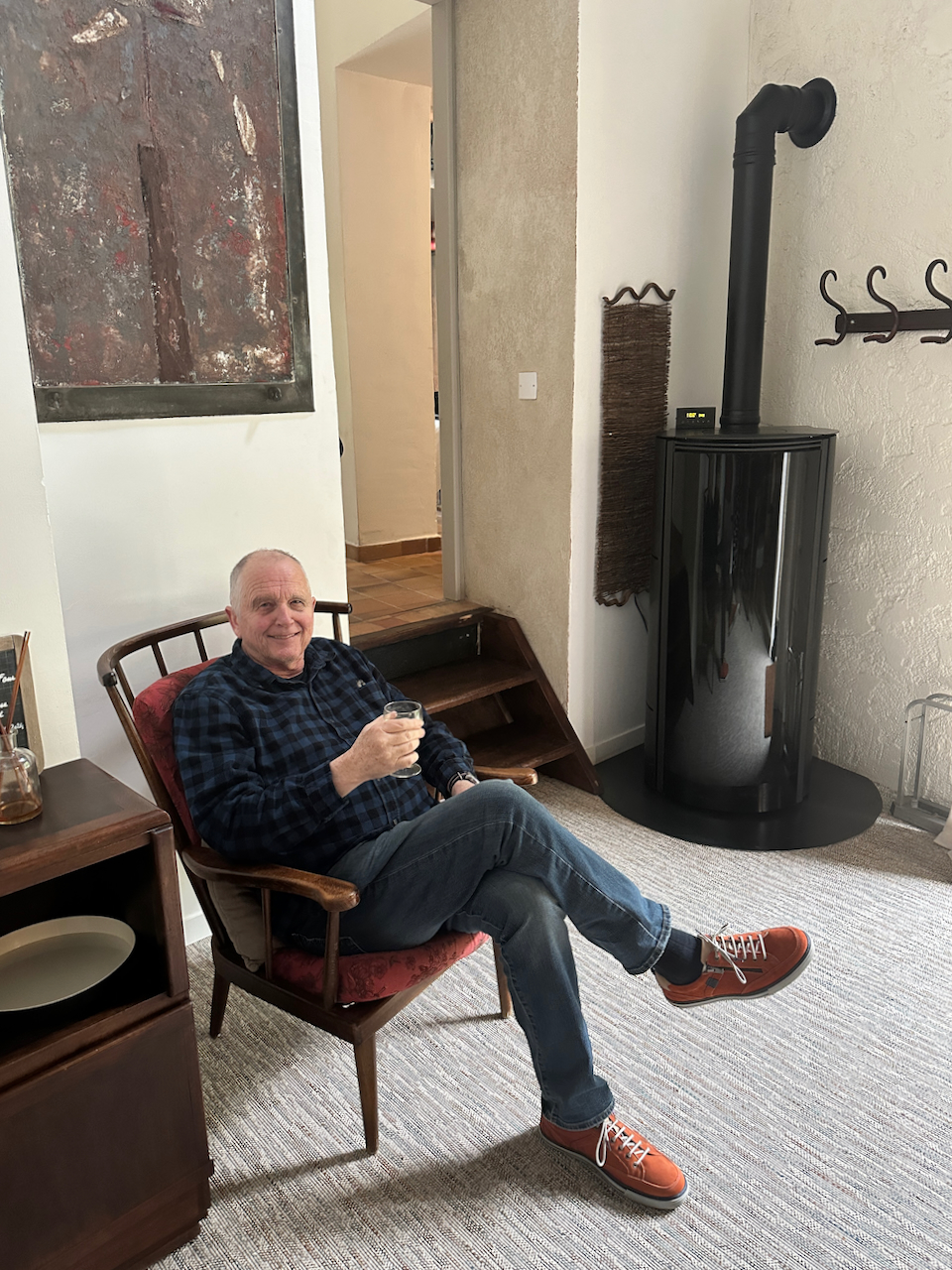
Things improve on our way back to the car. We pass a shoe store and Dave veers inside with a treasure hunter’s gleam in his eye. “I’ve been wanting some of those colorful tennis shoes I saw men wearing in Paris,” he explains. After trying on several pairs of shoes and fending off an opinionated saleswoman’s insistence that he buy a different (more boring) pair, he settles upon a pair of carrot suede shoes that fit like a dream and transform his image from tourist to trendsetter.
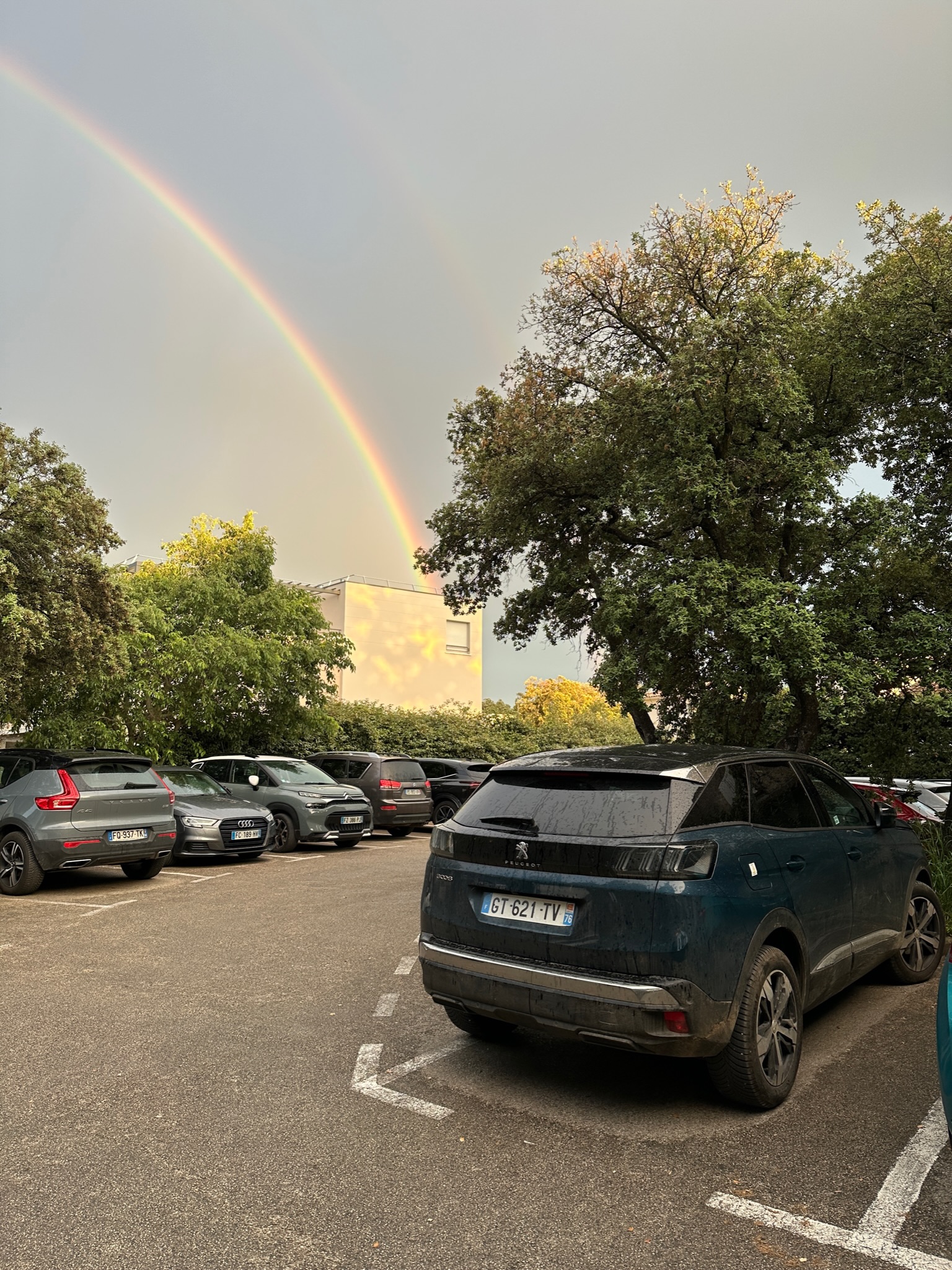
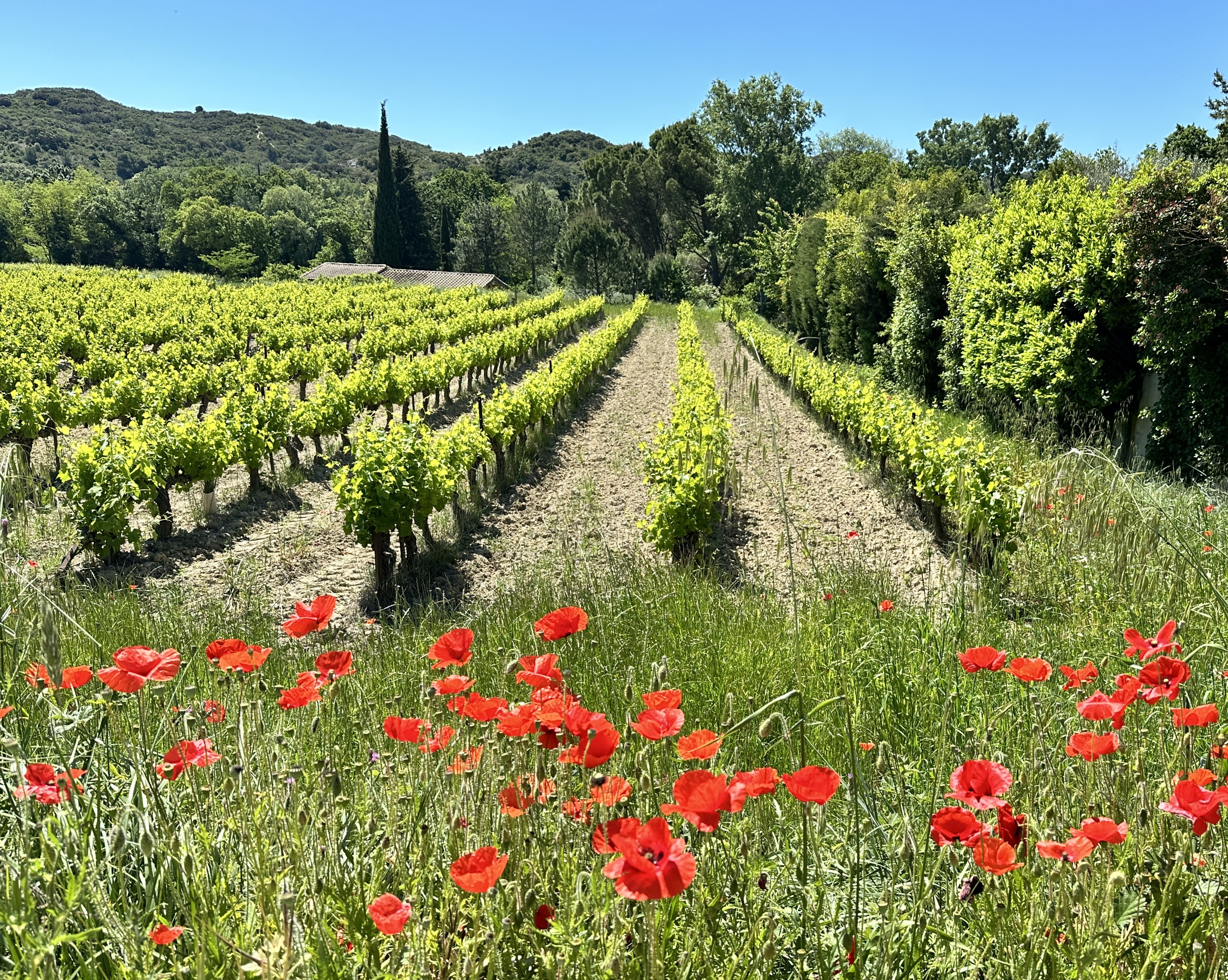
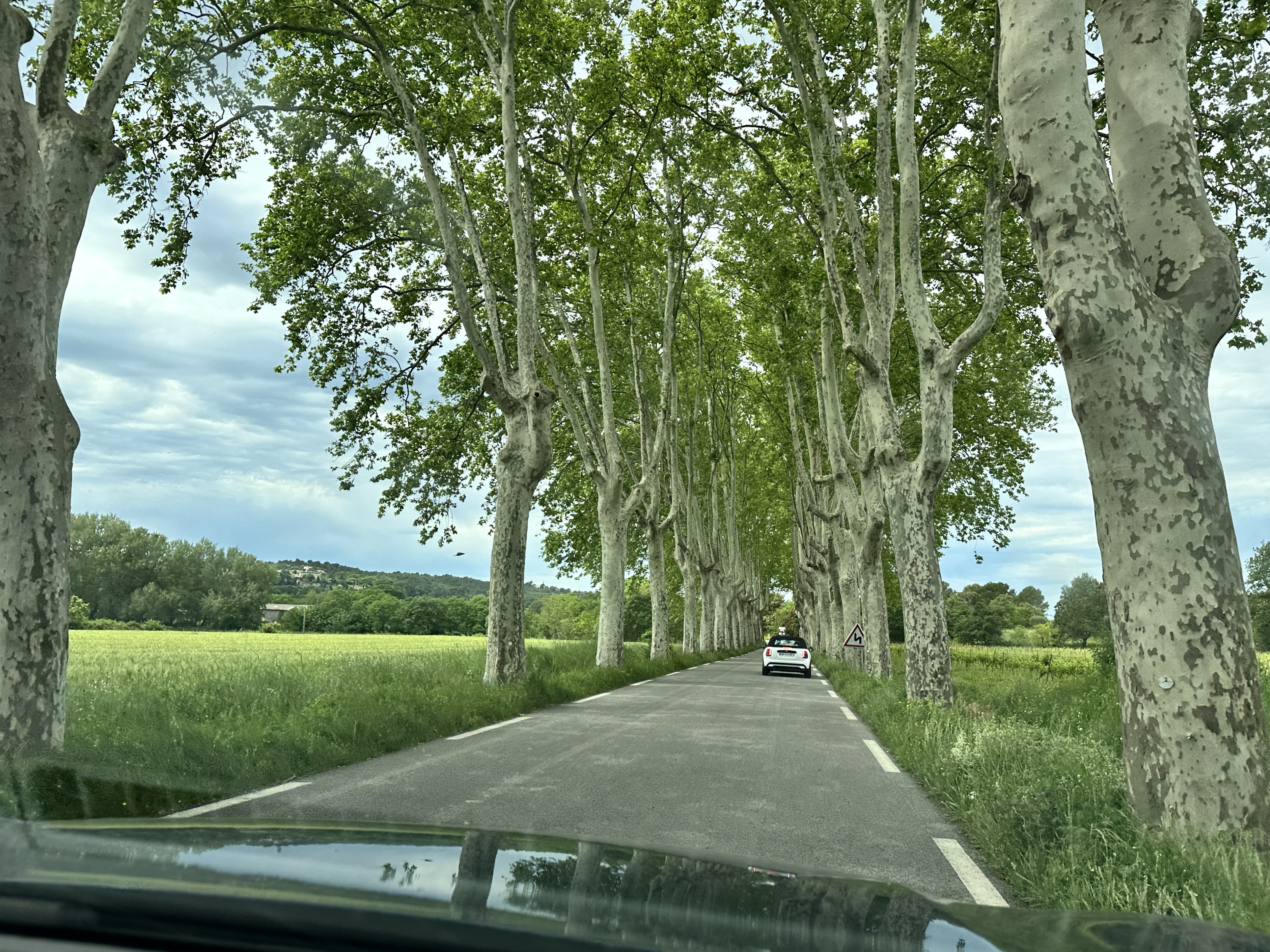
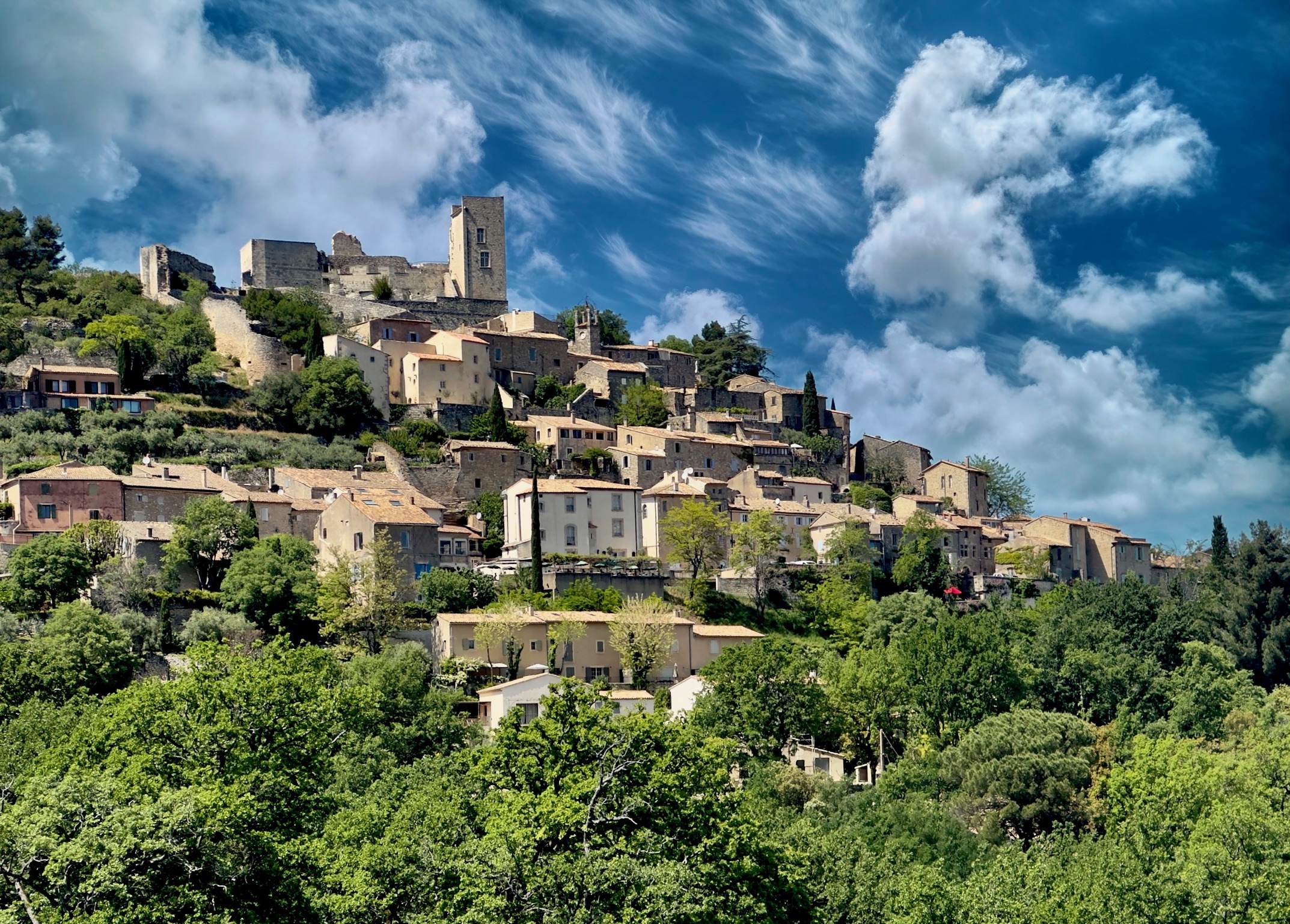
We follow the Rhône River valley into the heart of Provence, and it’s easy to see why so many people love this region. Red poppies and vineyards seem to line every roadside, ancient stone villages perch on hilltops and leafy sycamore trees shade the avenues. And of course, sunlight bathes the landscape. “I feel like Monet,” says Dave, as we pass yet another grassy field dotted with bright crimson flowers.
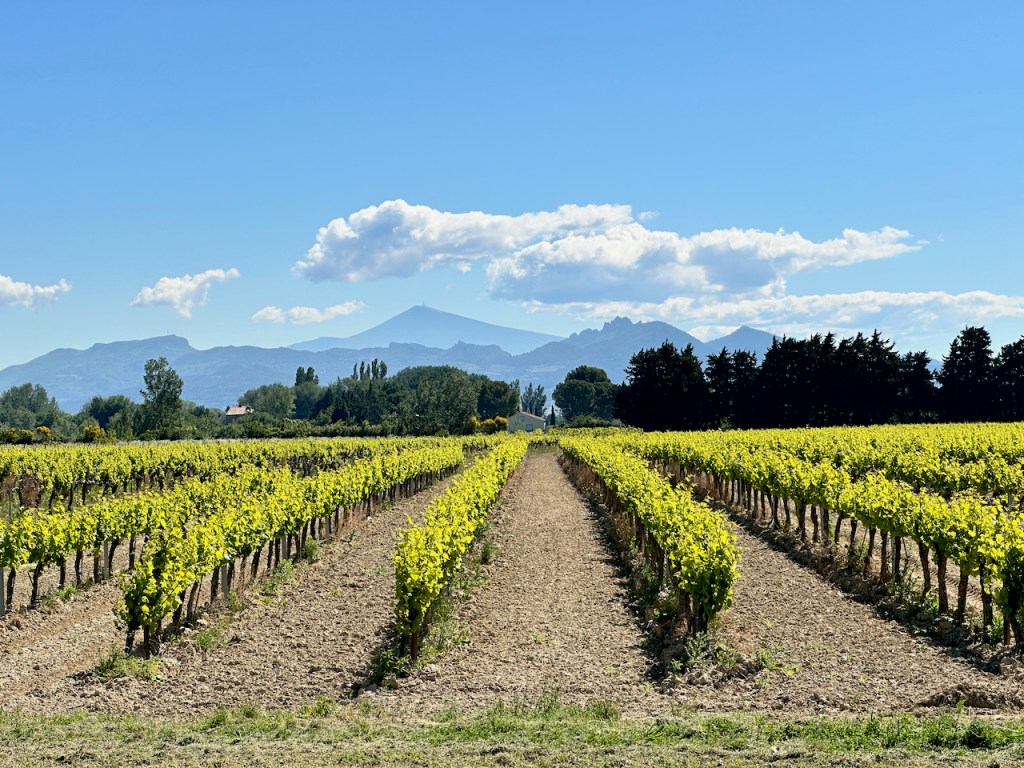
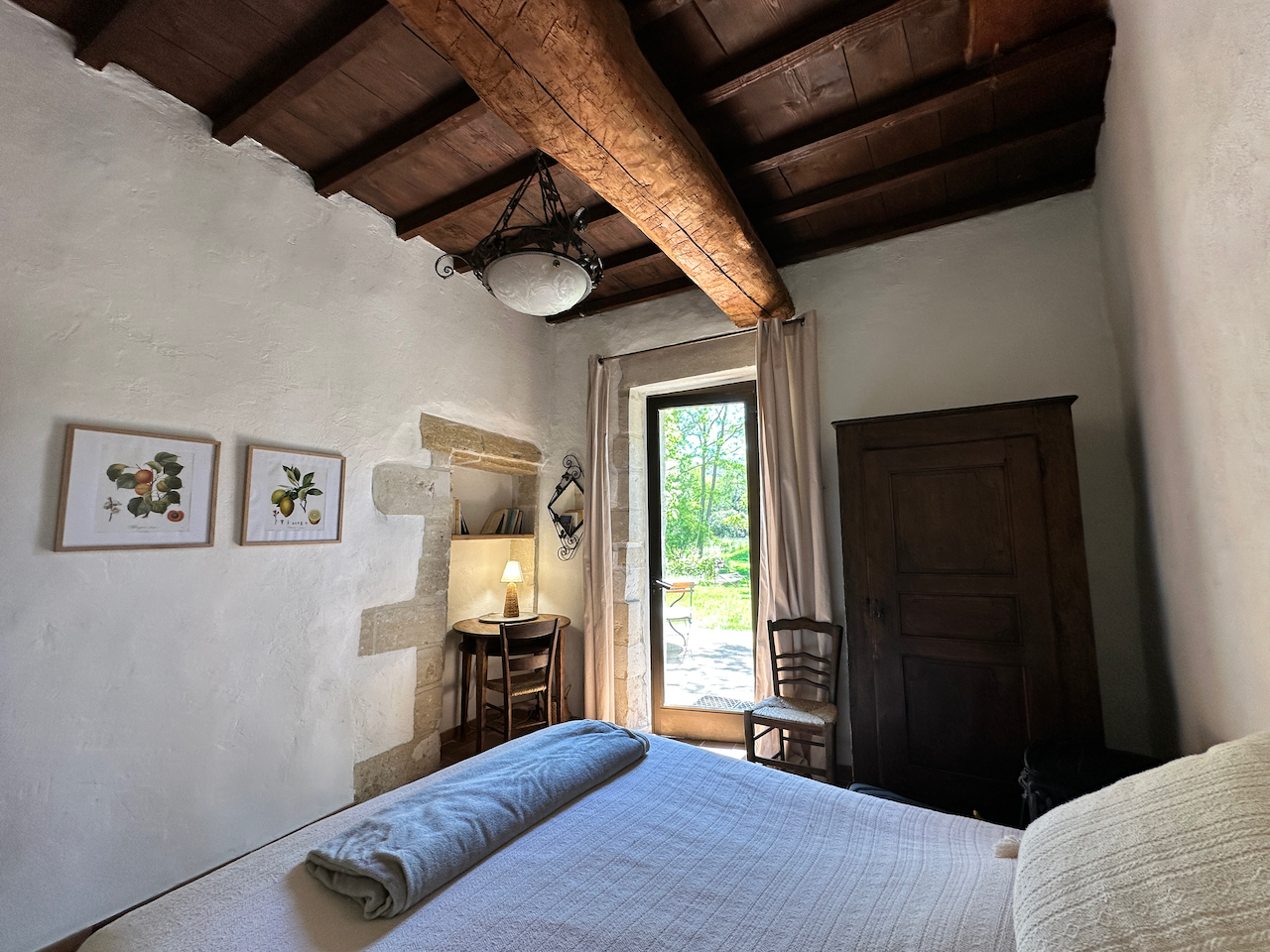
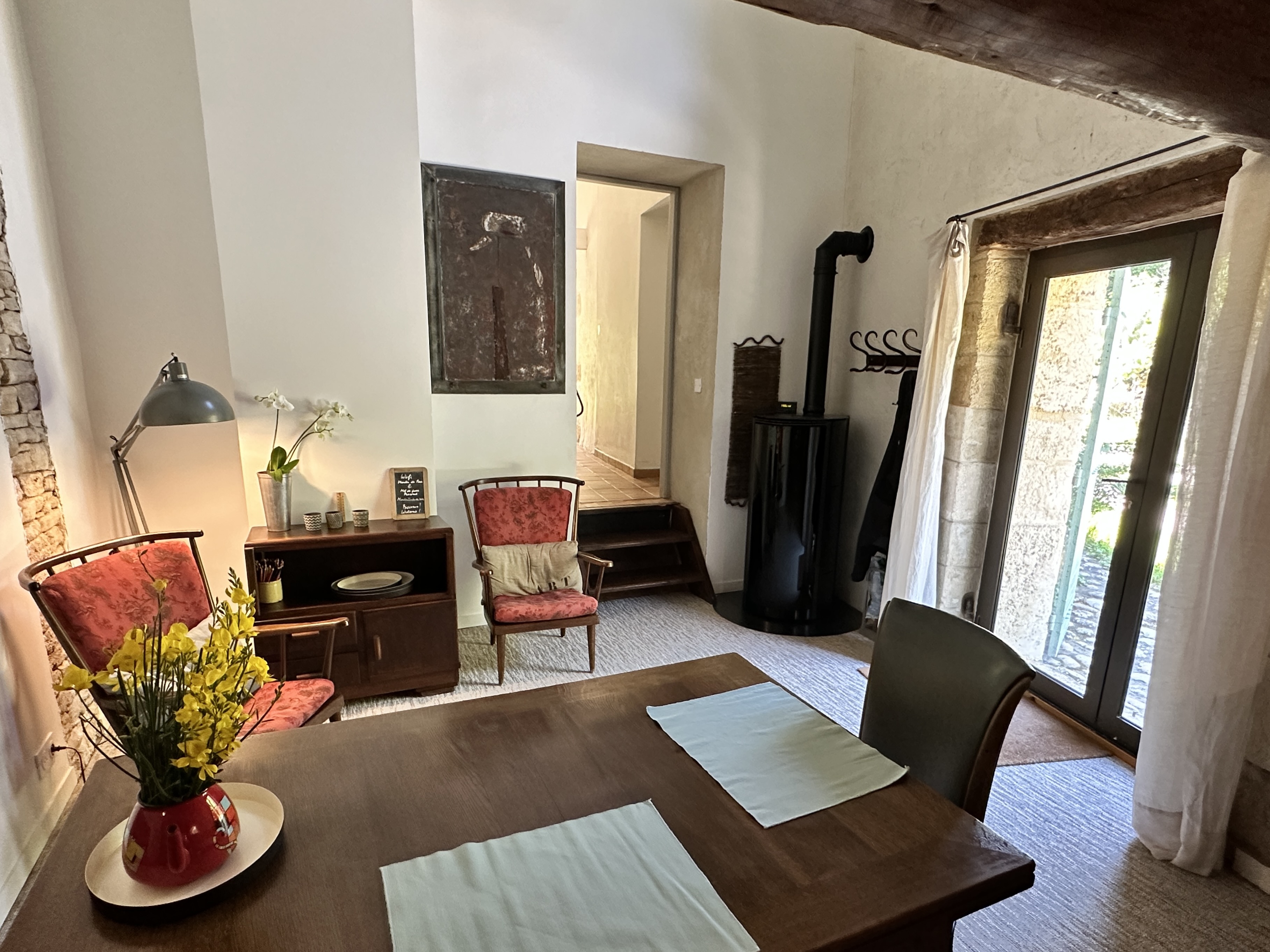
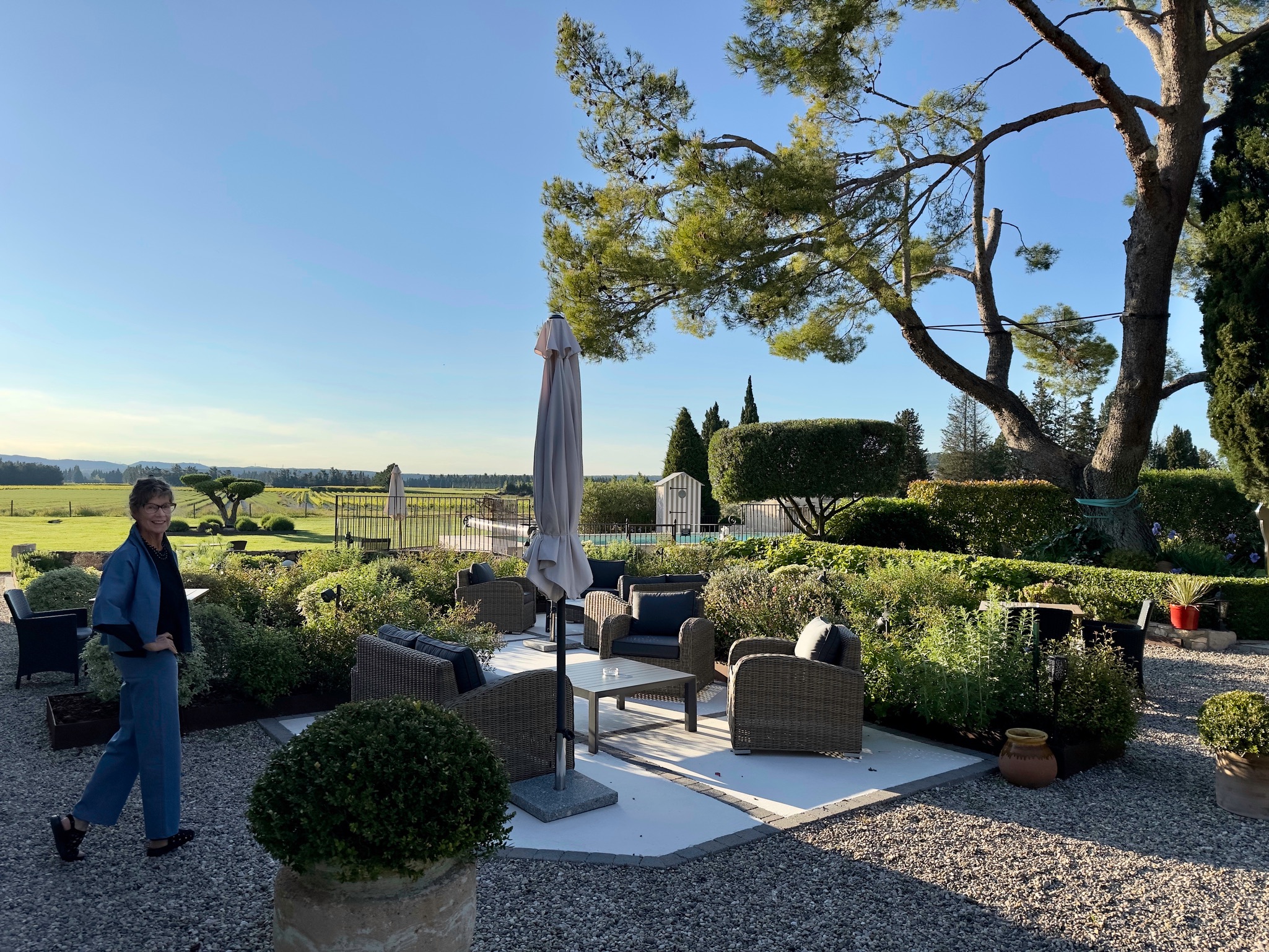
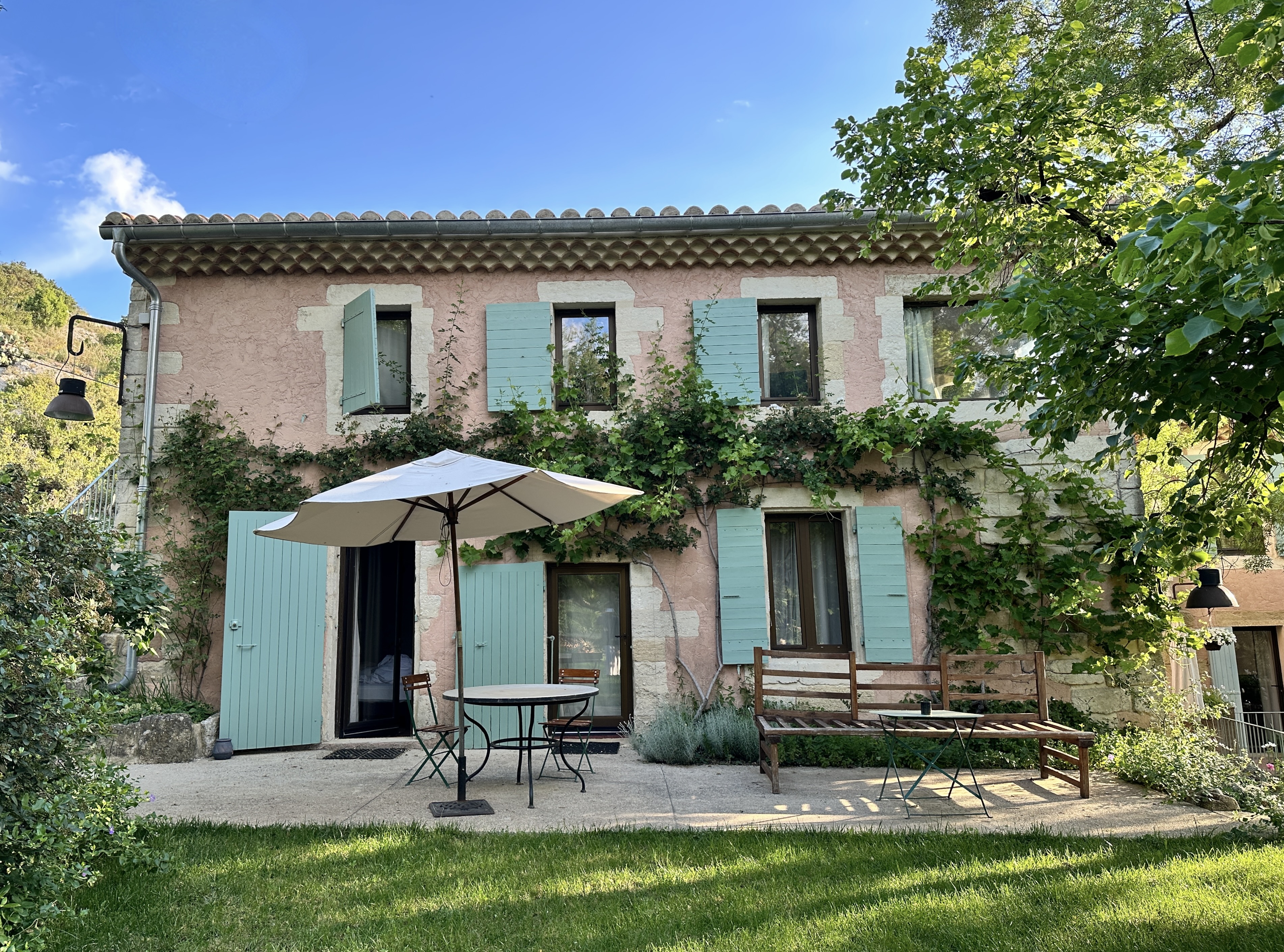
Dave has booked us a seven-night stay at Le Moulin du Four, a renovated old mill in the countryside outside Avignon. We arrive after a long day of driving and it feels like paradise: a classic old Provençal house set in a tree-shaded garden next to a flowing stream. Our apartment opens onto a terrace with table and chairs and a garden with a hammock and comfy chaises longues, and Anna is tempted to quit sightseeing and spend the next seven days right here.
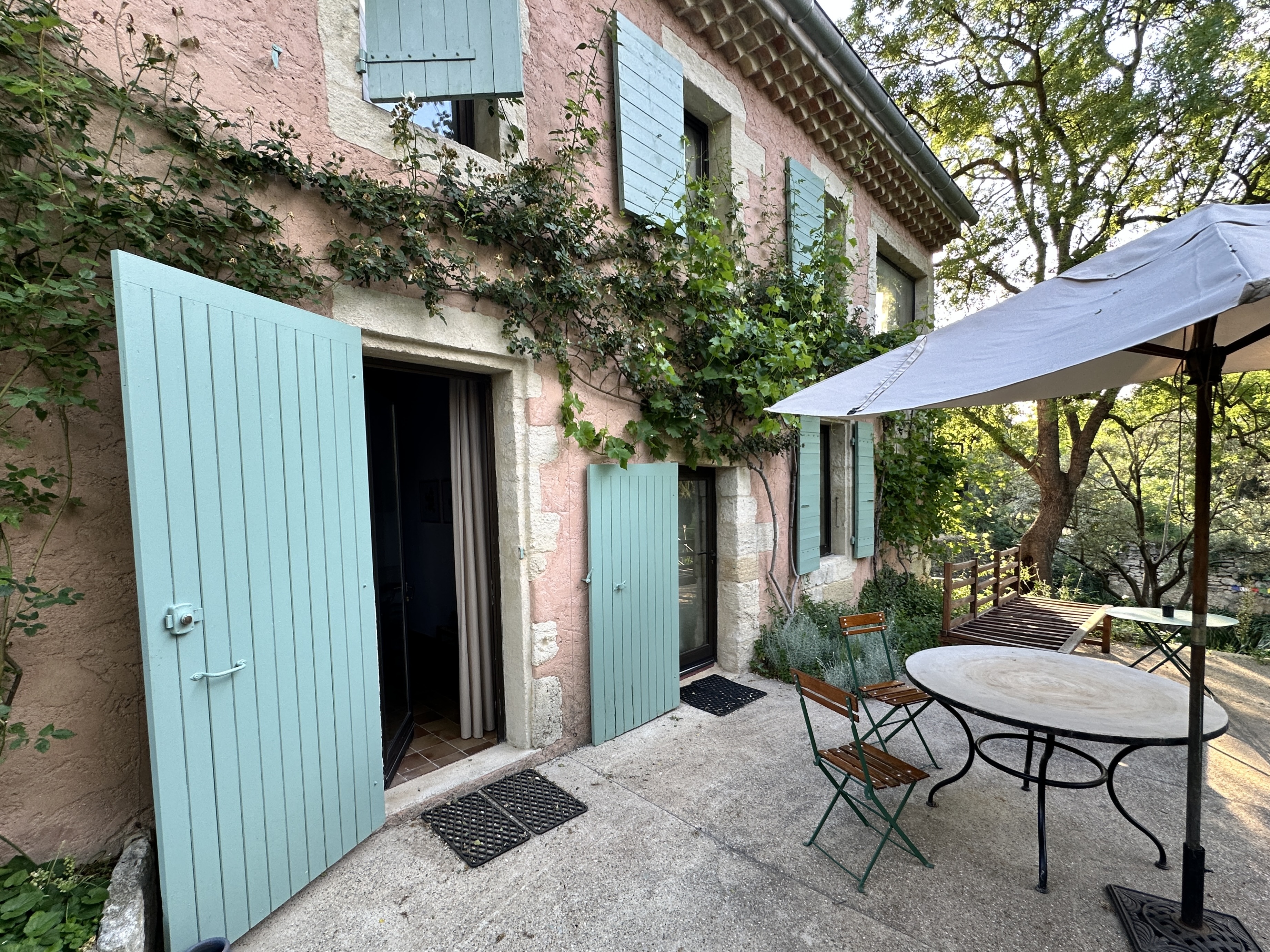
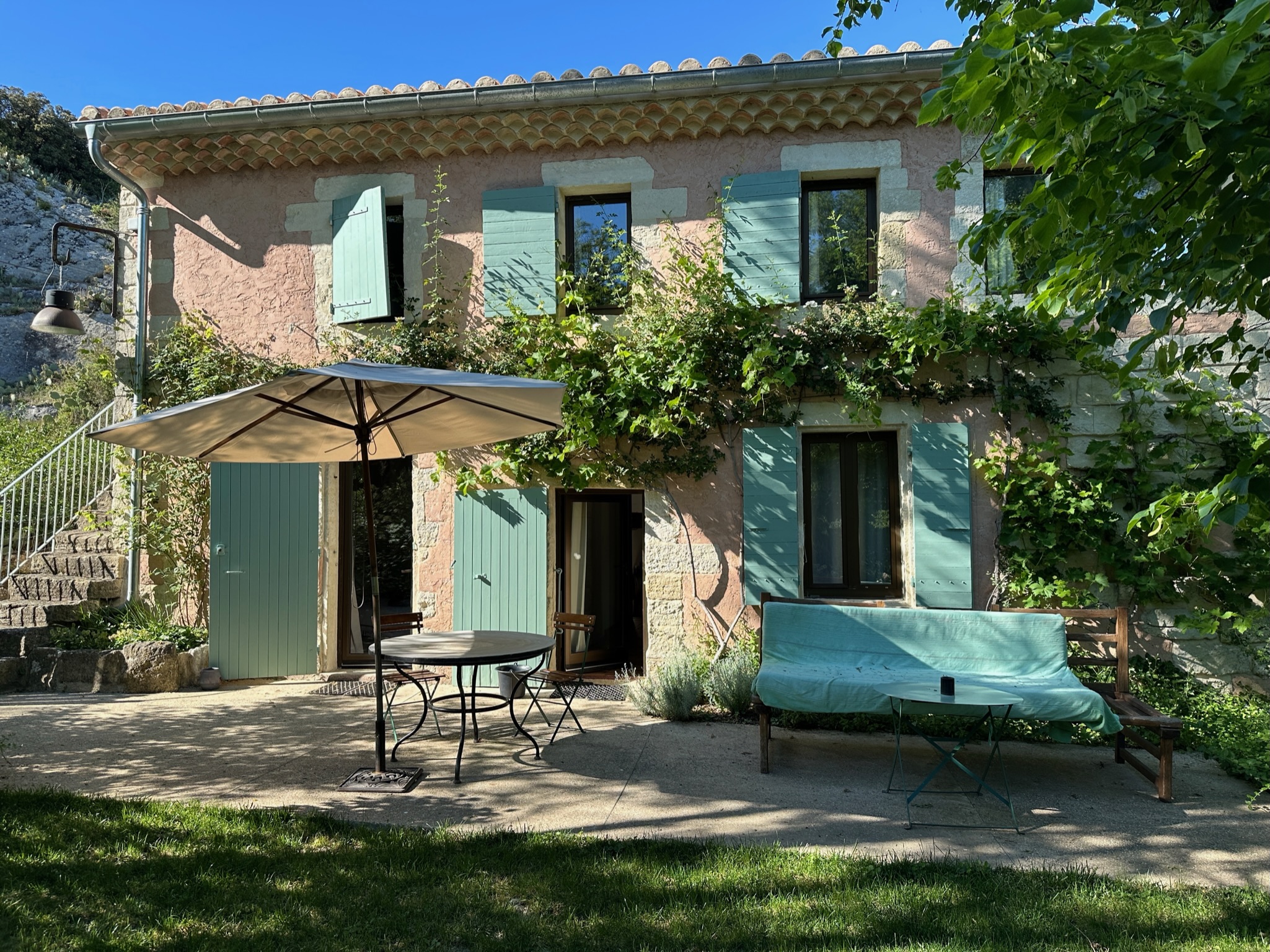
Inside our apartment the temperature is perfect for a dry martini, but not for our comfort. The weather has been unseasonably cool, and the only heat source is a pellet stove in the main room (which we promptly light) but it cannot effectively take the chill off the high-ceilinged rooms and thick stone walls designed to keep heat OUT. Never mind. We wear our jackets around the house and sweaters and socks to bed. Note: Later in the week when warmer weather arrives, we will be glad of the coolness of our rooms.
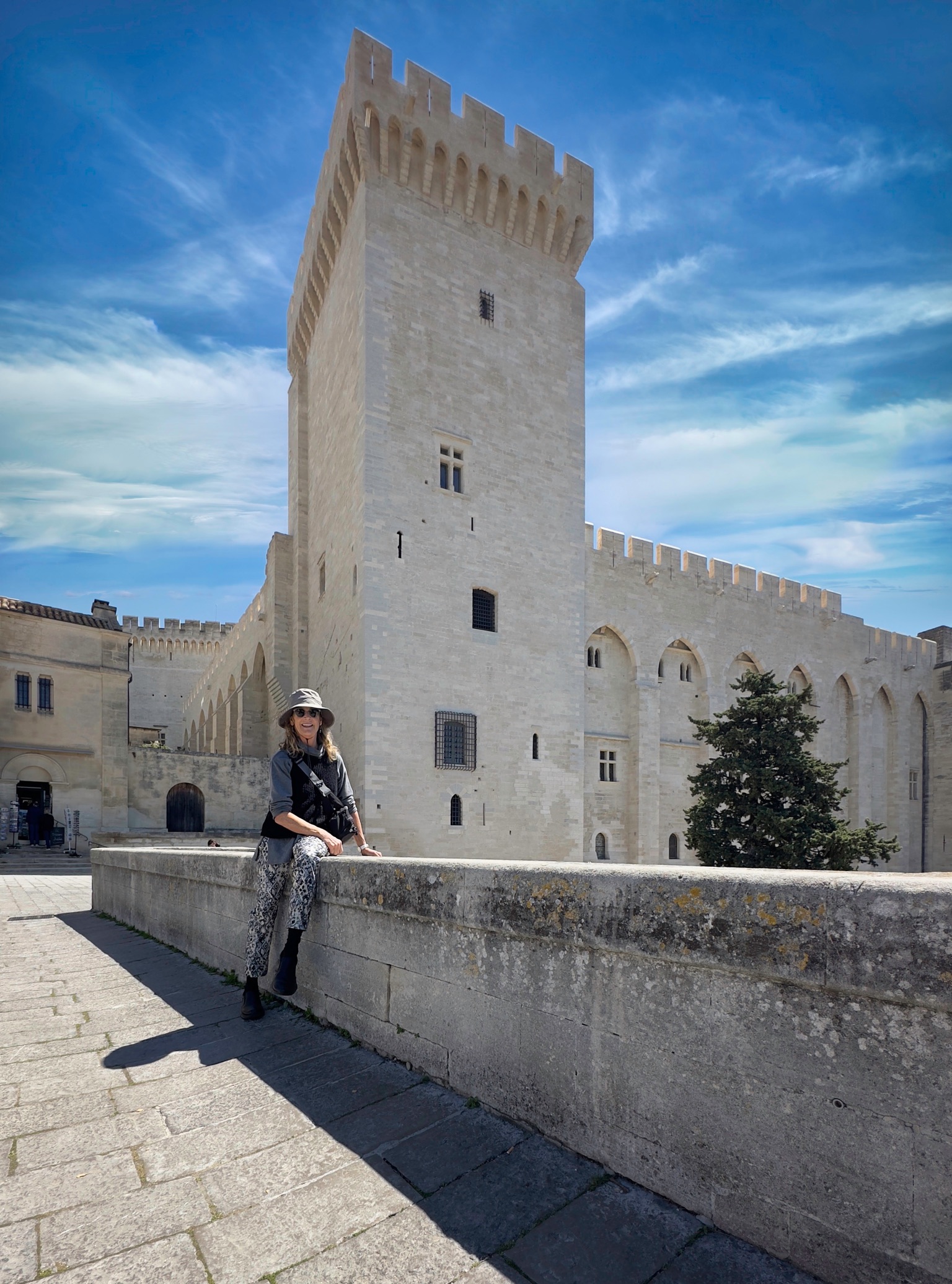
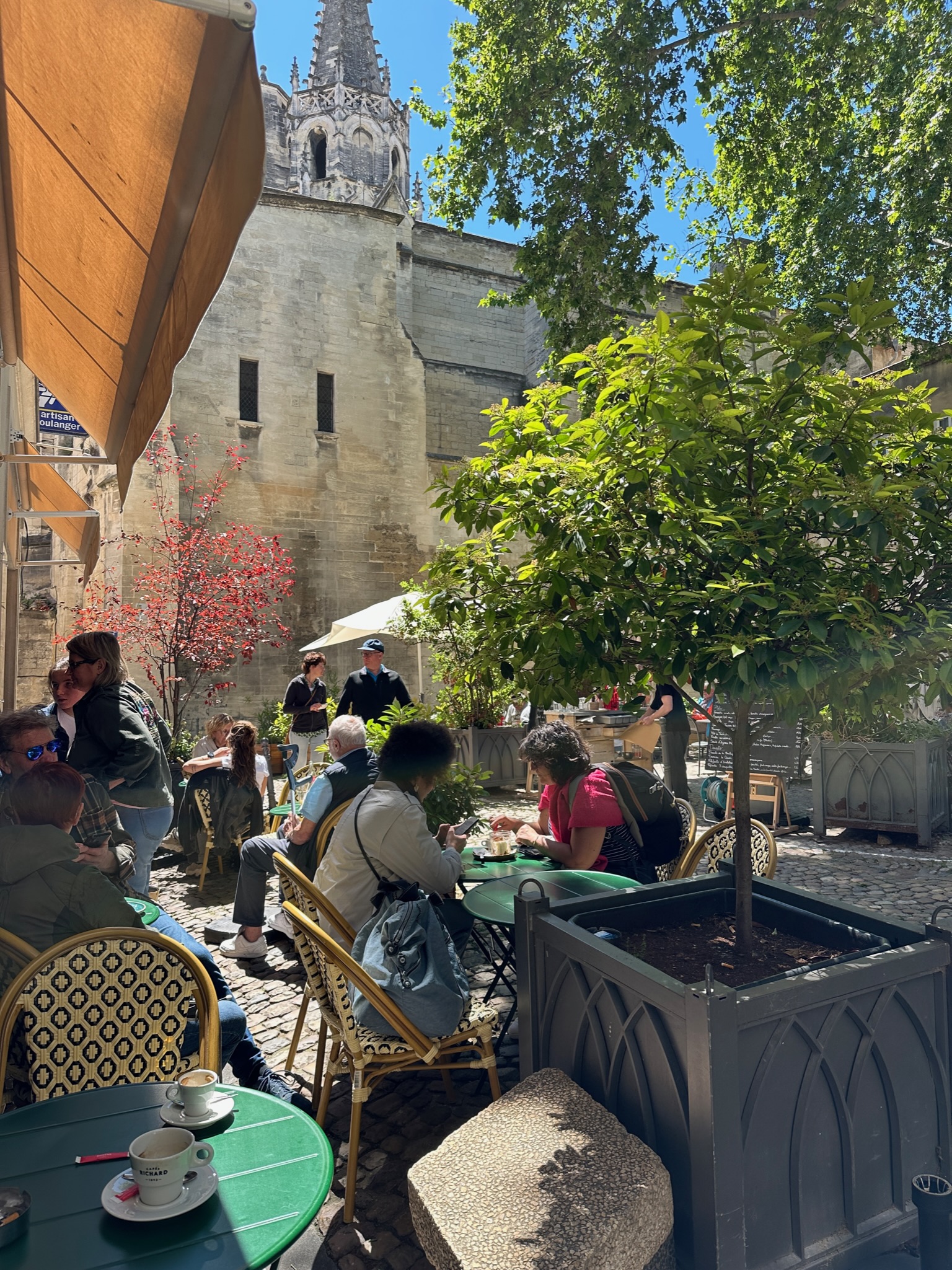
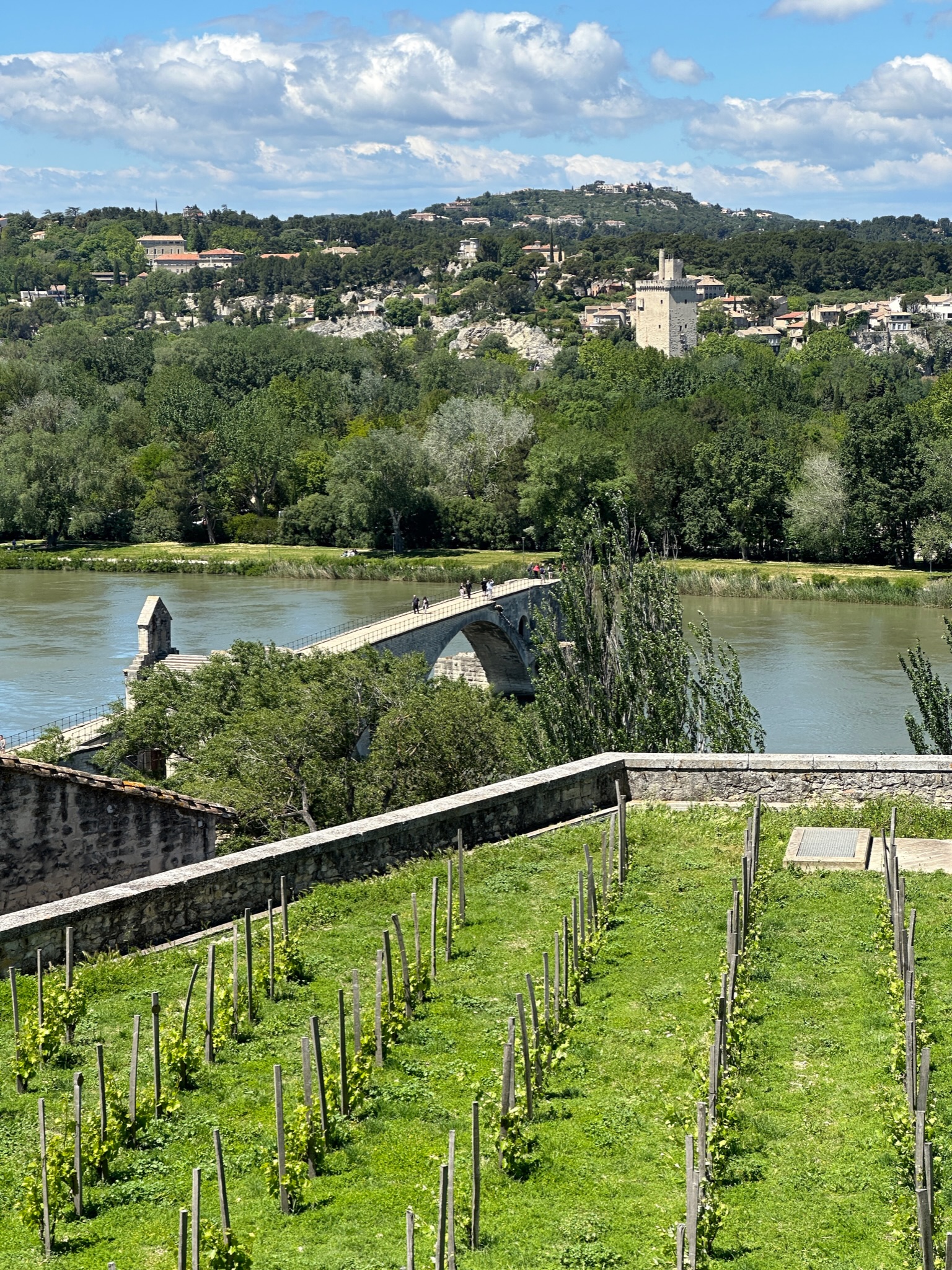
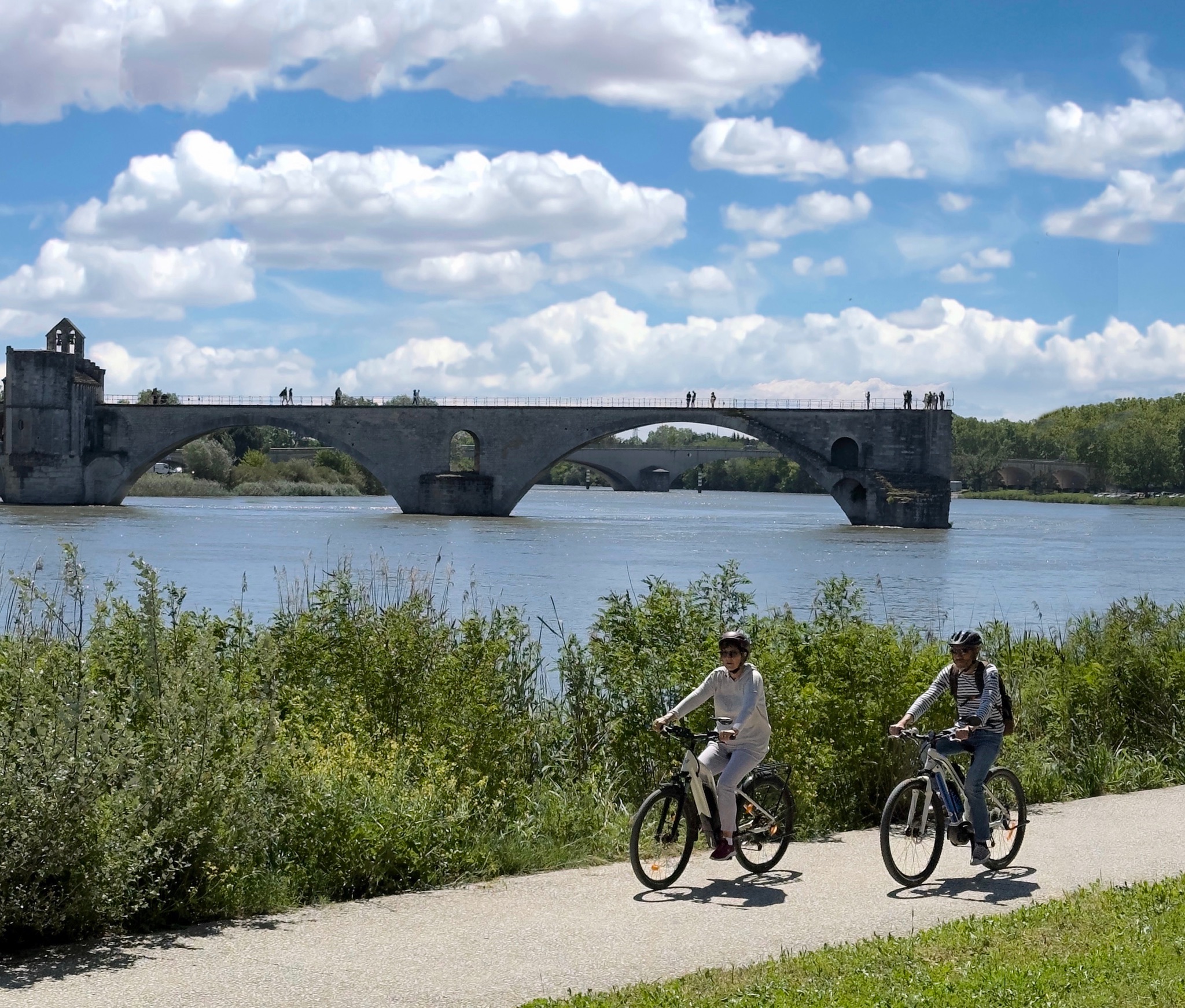
We’ve chosen this Airbnb for its central location as much as for its charm, and each day we target a few places on the map and set off to explore. In the walled city of Avignon, we stroll along shaded streets and gaze in wonder at the Pope’s Palace and cathedral.
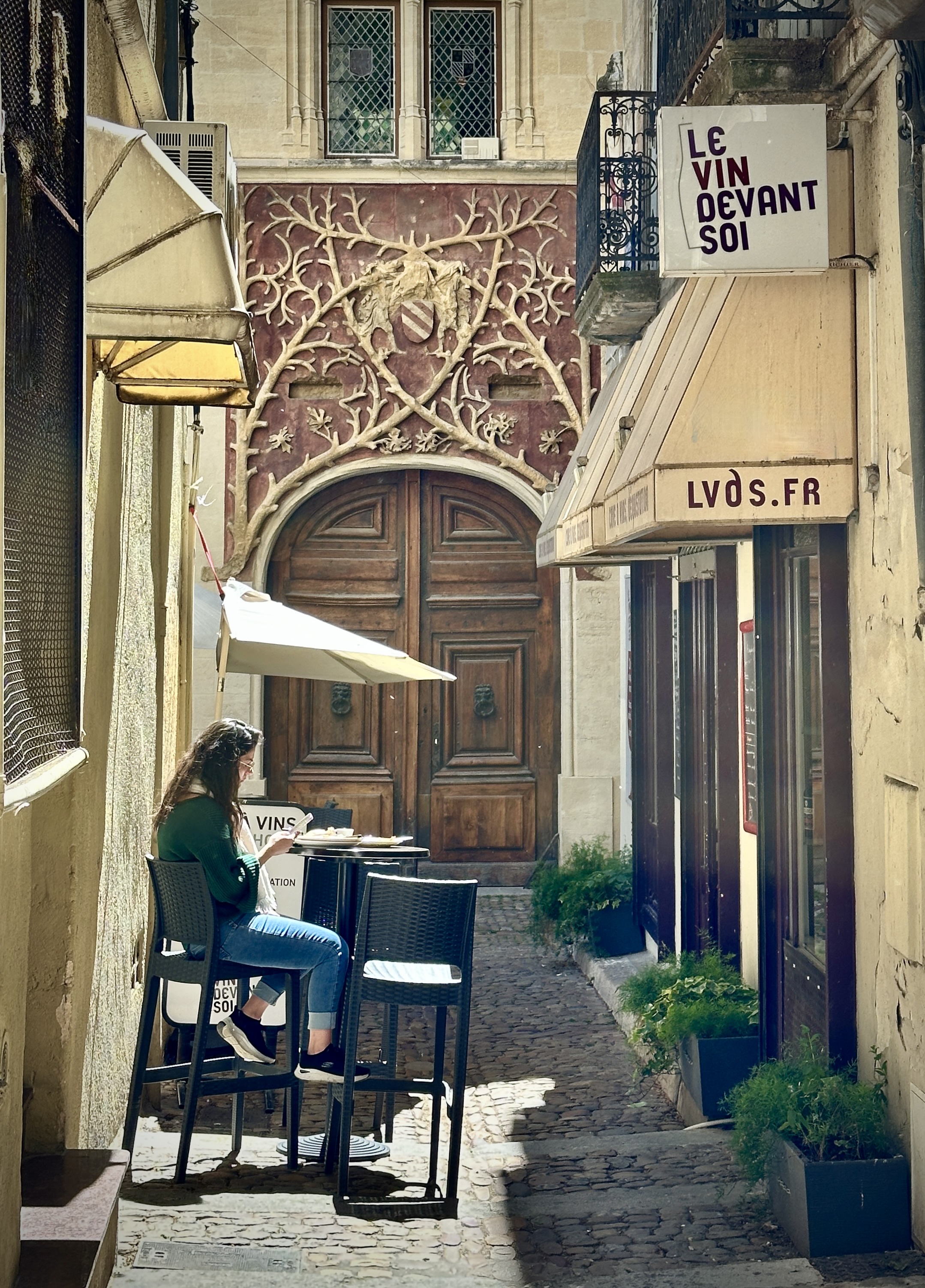
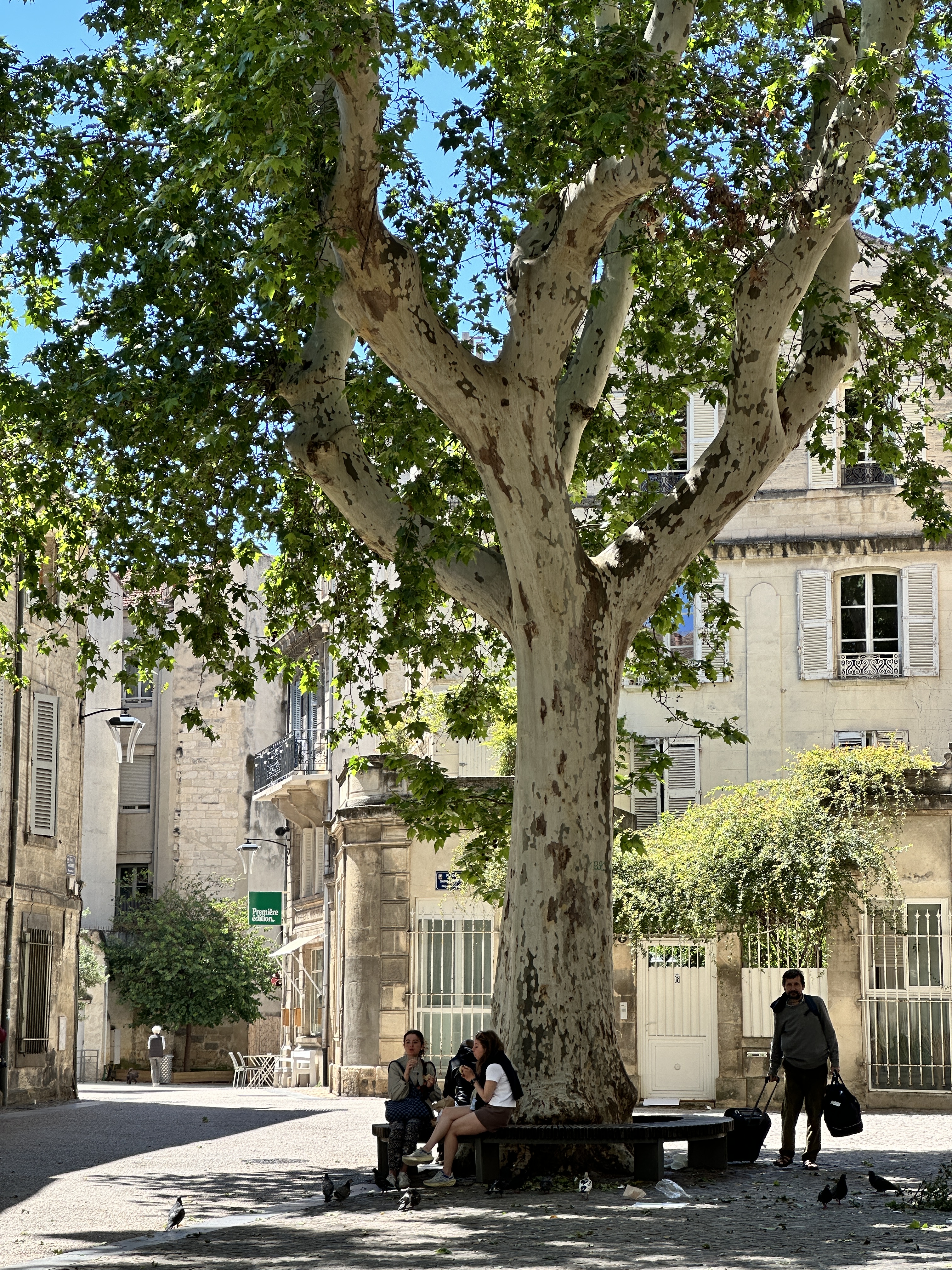
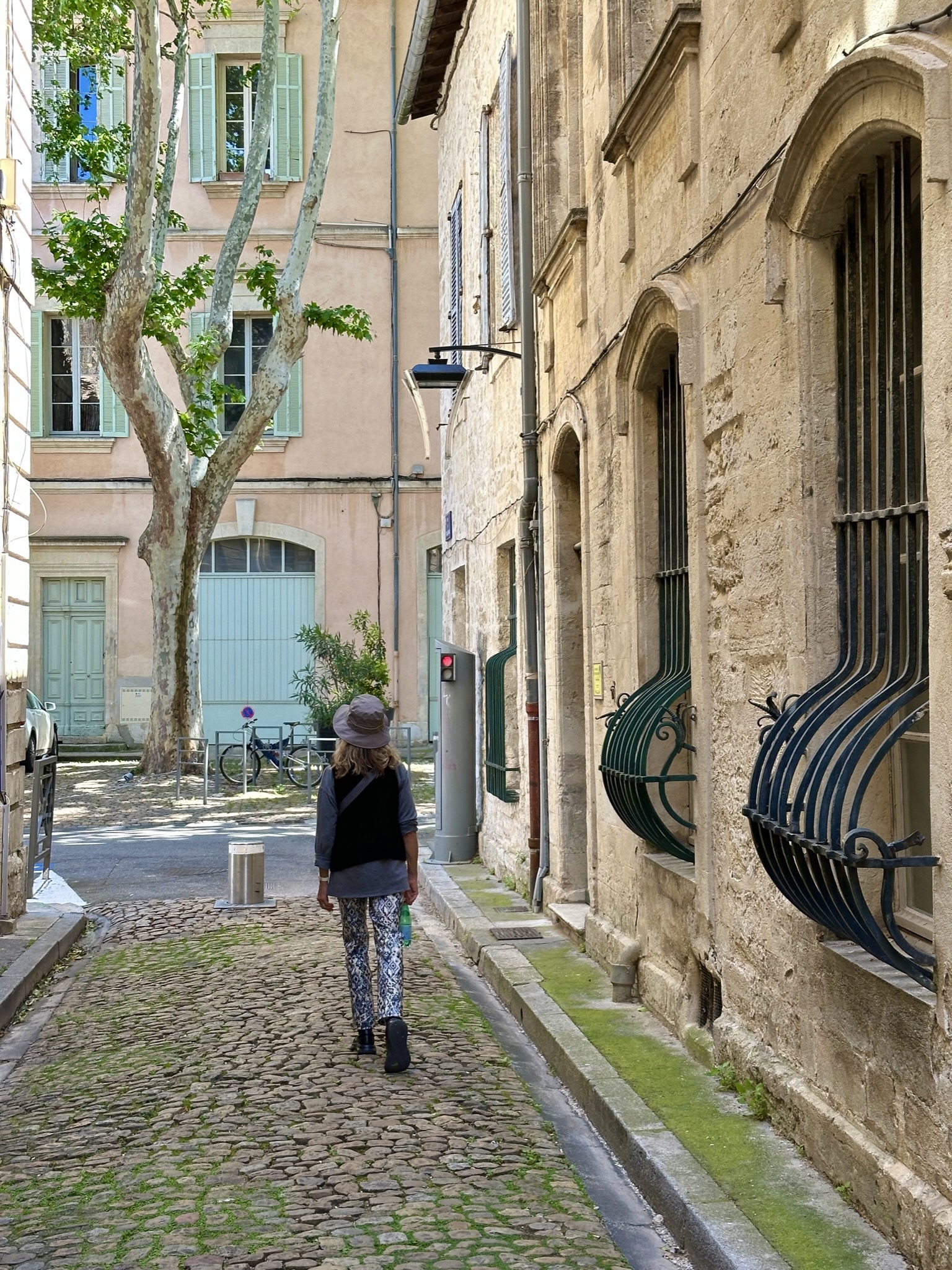
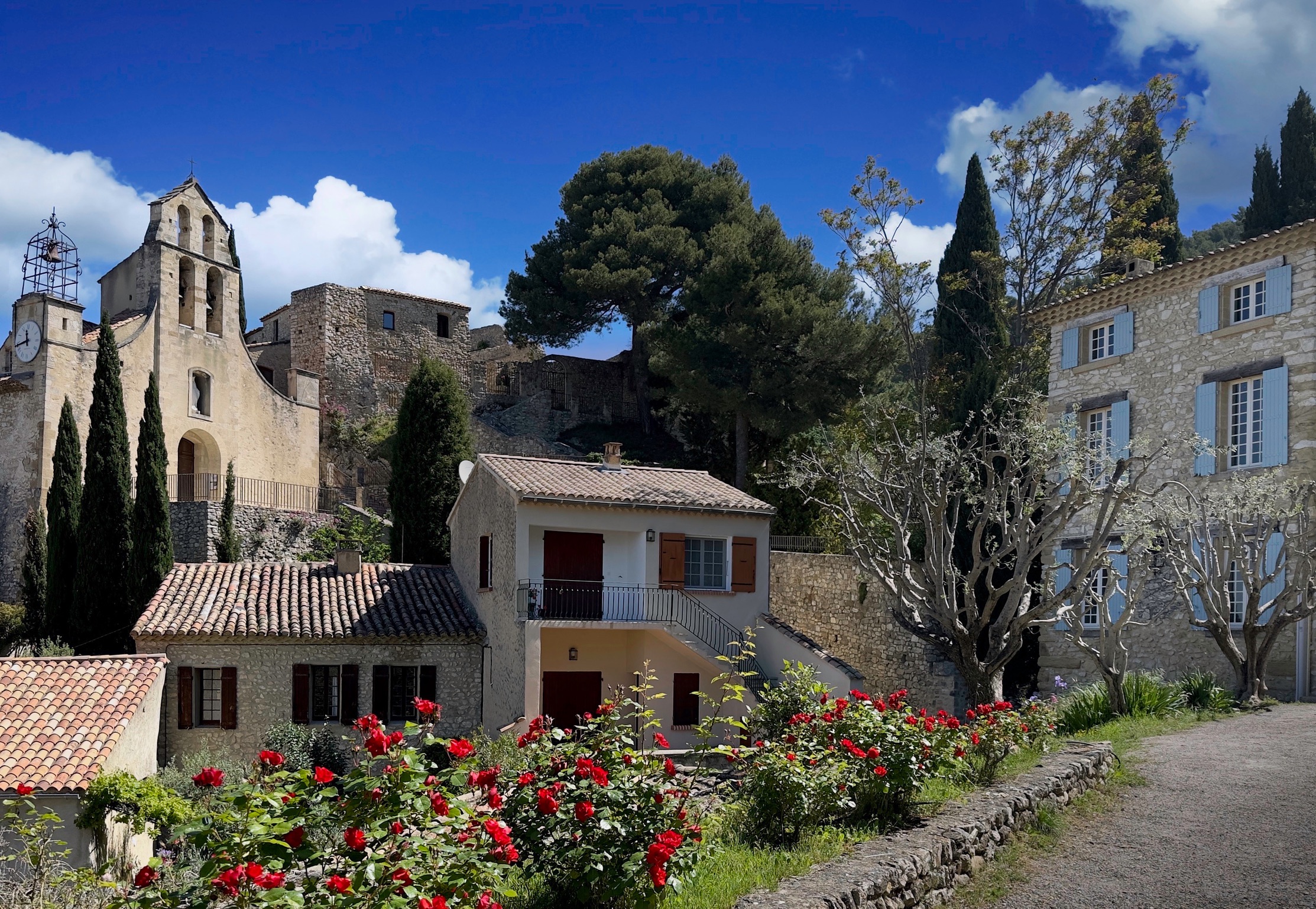
Early one morning we arrive in Gigondas and wander the narrow, cobblestoned streets before any other tourists arrive. Nestled at the foot of the Dentelles de Montmirail mountains, the tiny village is picture-perfect Provençal, and namesake of the celebrated Rhône Valley red and rosé wines produced here.
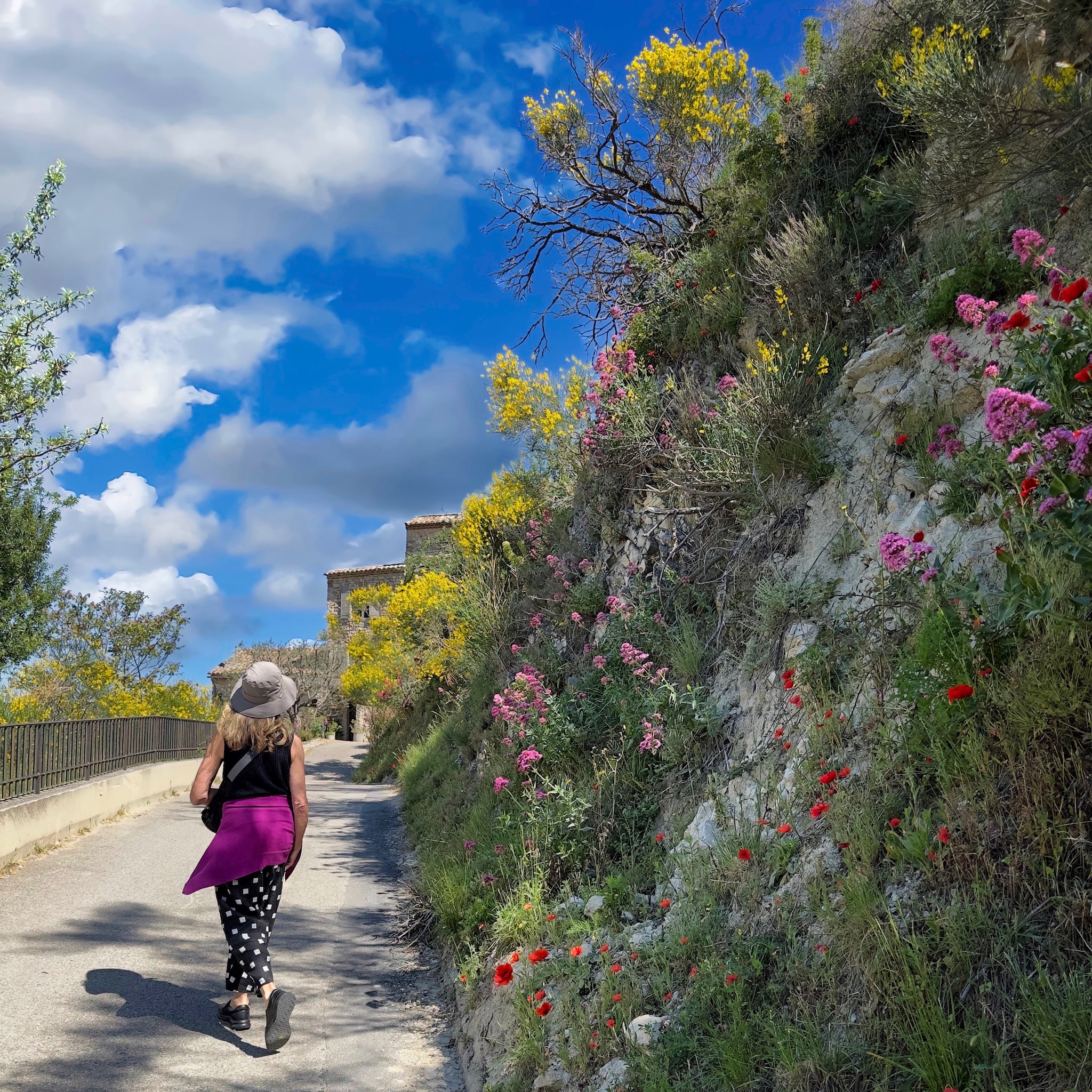
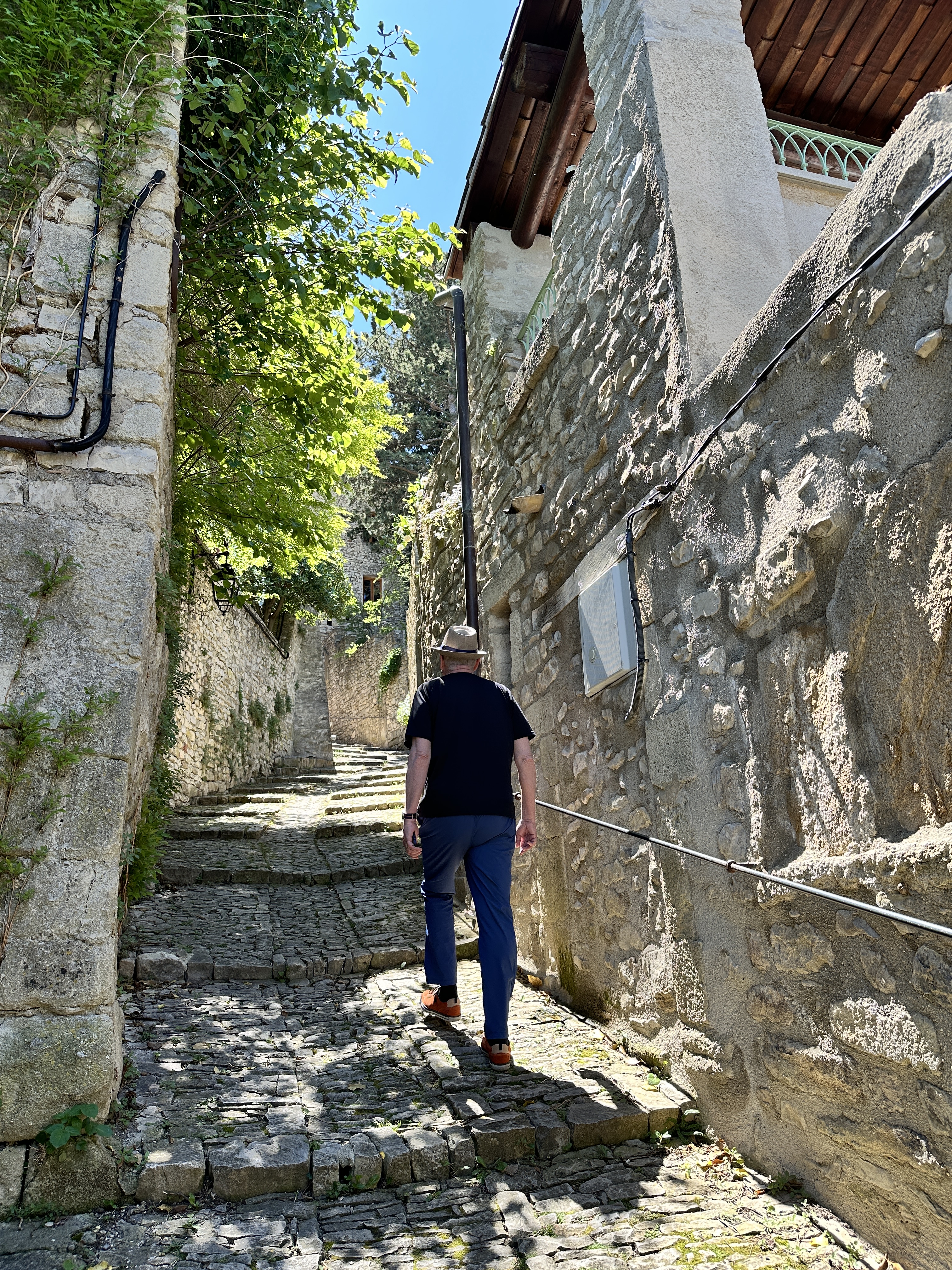
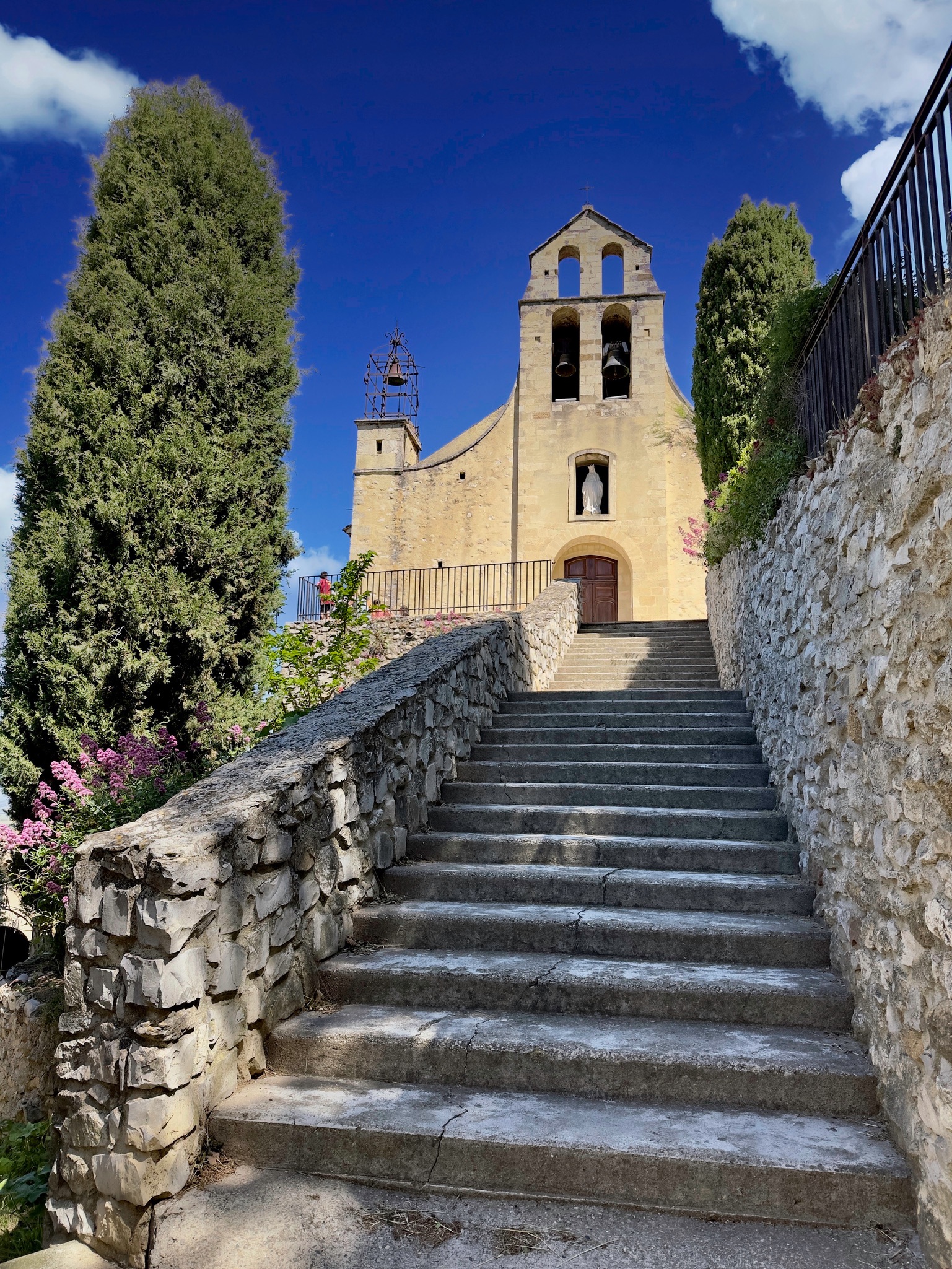
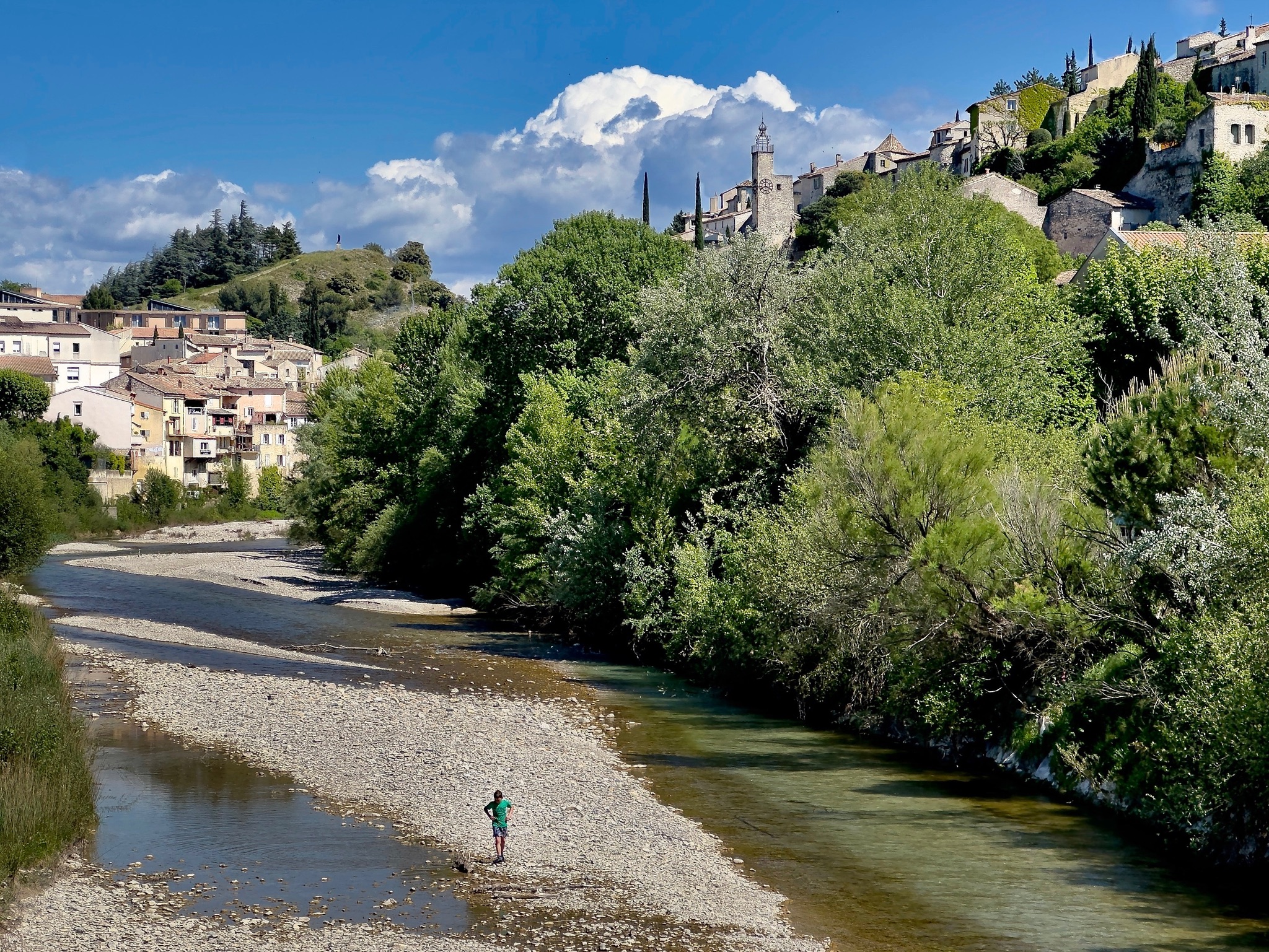
In Vaison-la-Romaine, we thread our way through the busy, “new” town and across the old Roman bridge into the medieval “old” town. Dave squeezes our car into a fortuitous parking spot and we continue on foot, passing under a stone archway where a street musician strums a guitar and sings a French ballad.
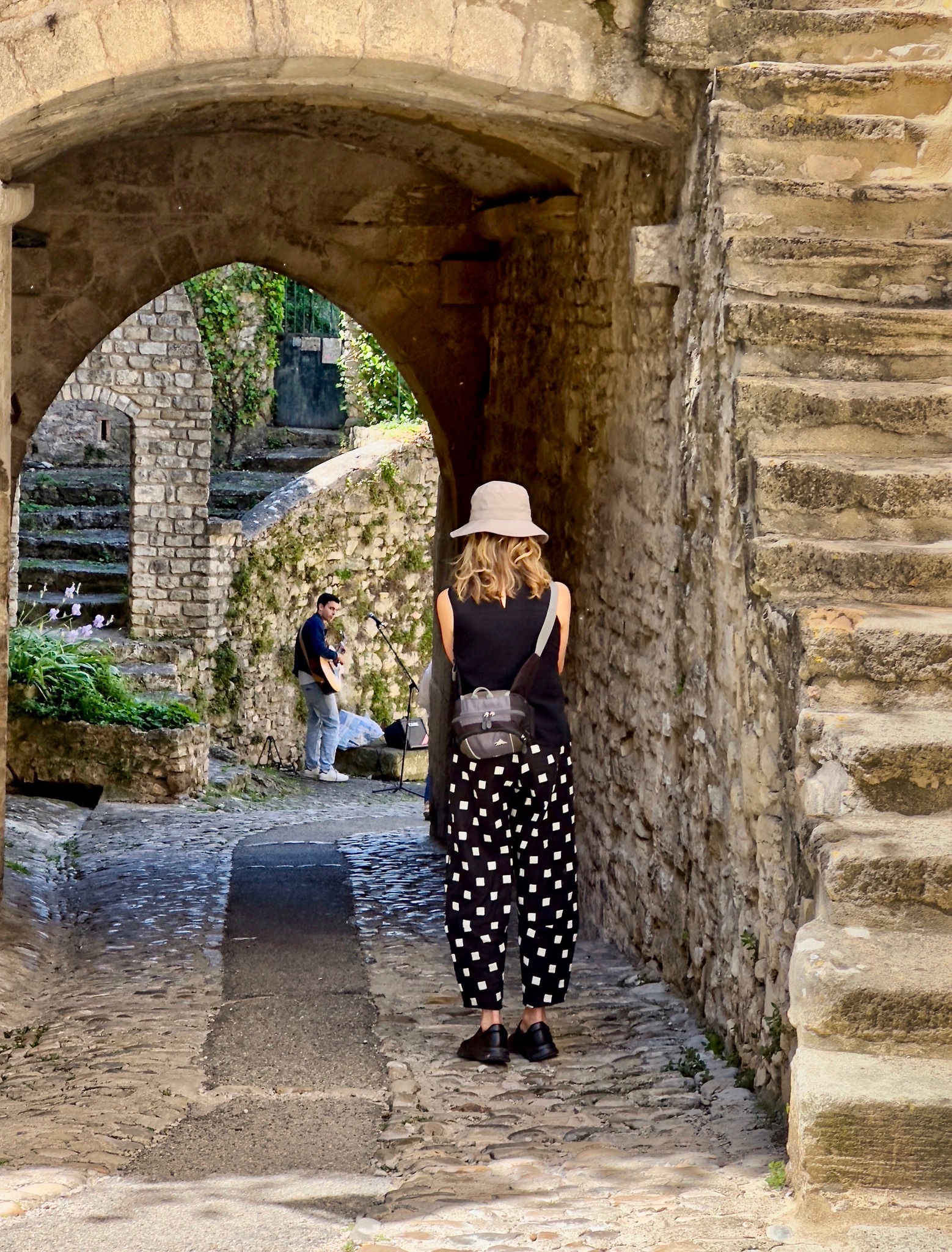
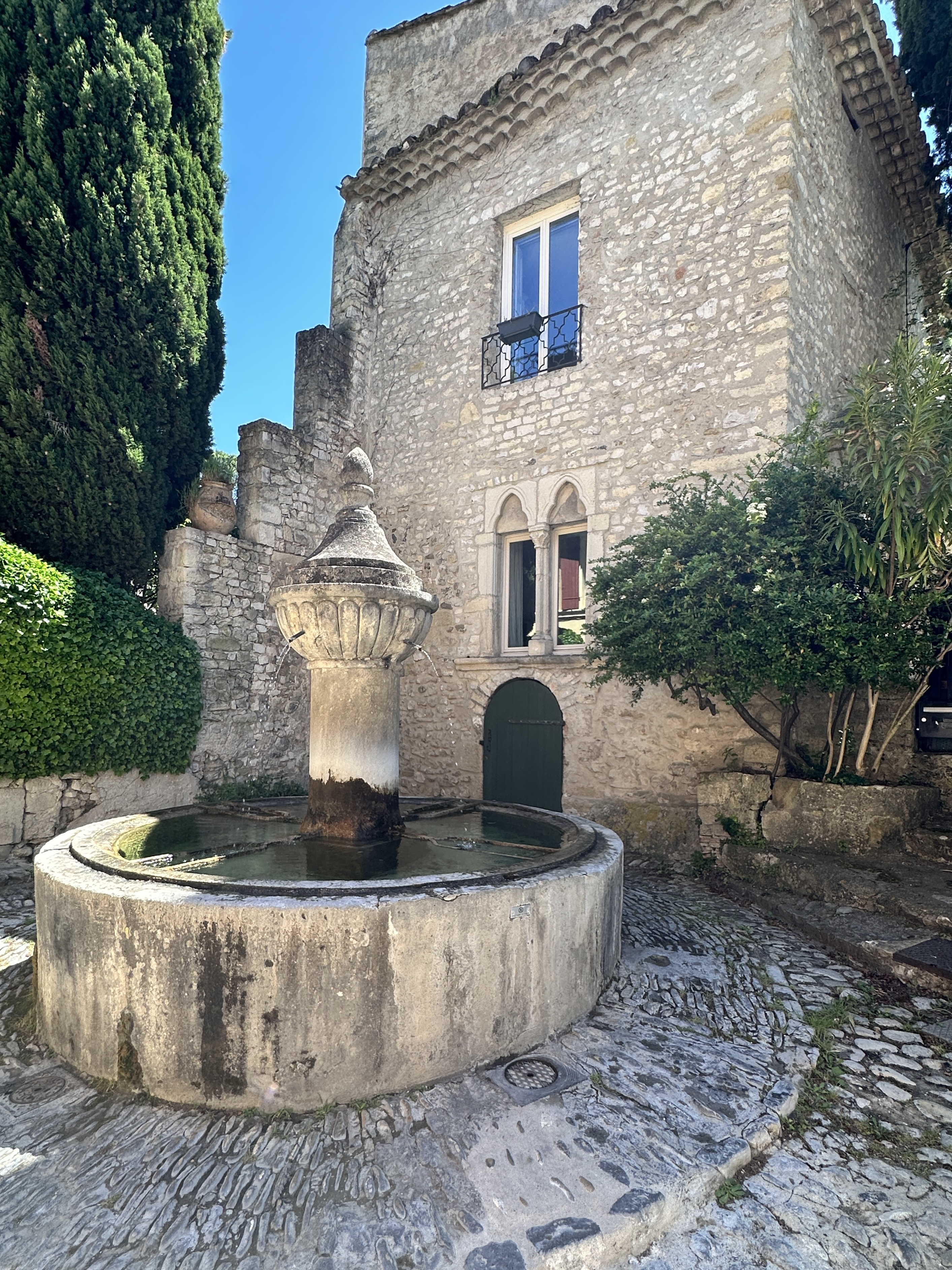
Winding our way up a continuous incline of cobbled streets and stairs, we traverse several tiny squares with a stone water fountain at their center.
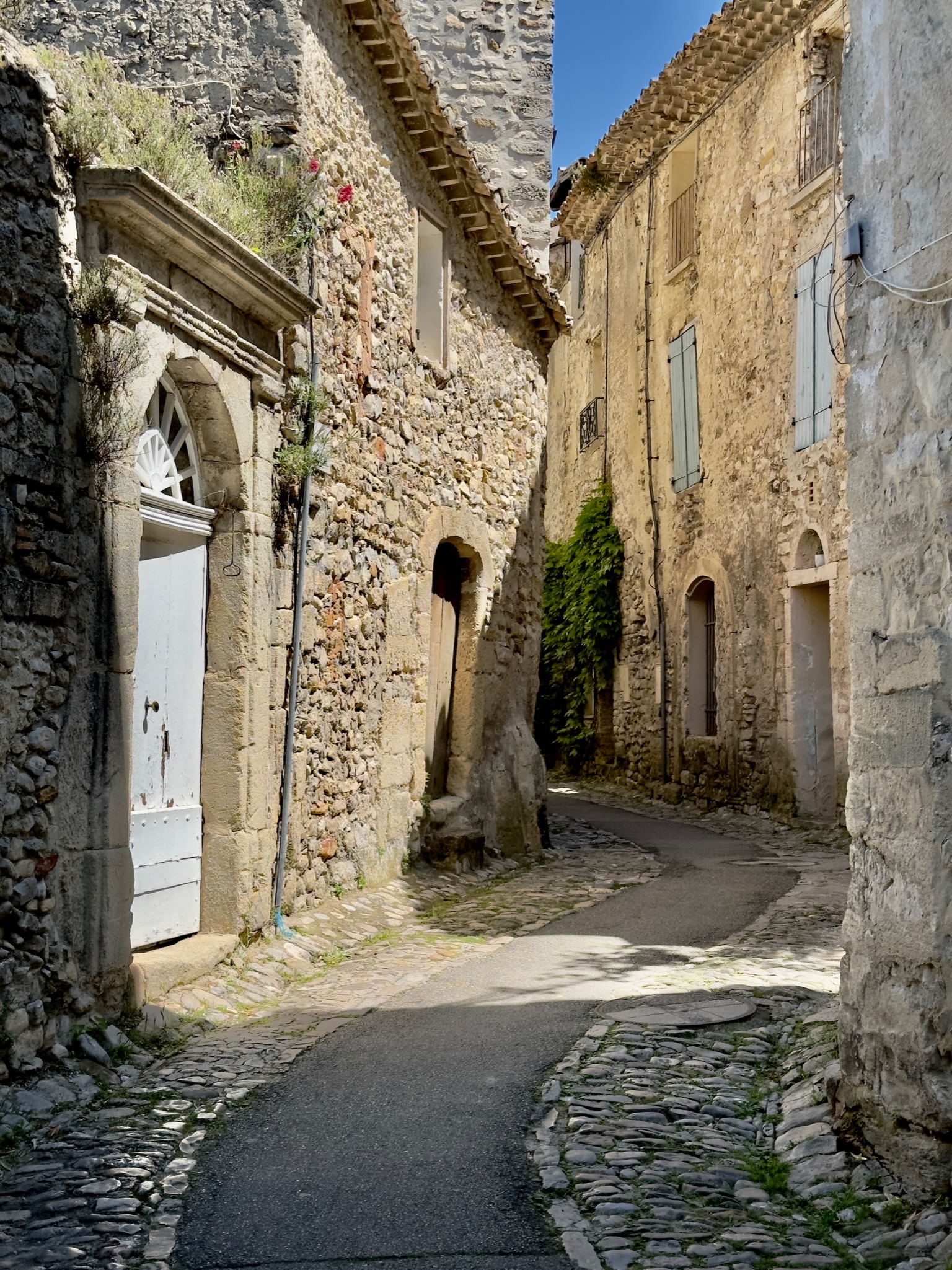
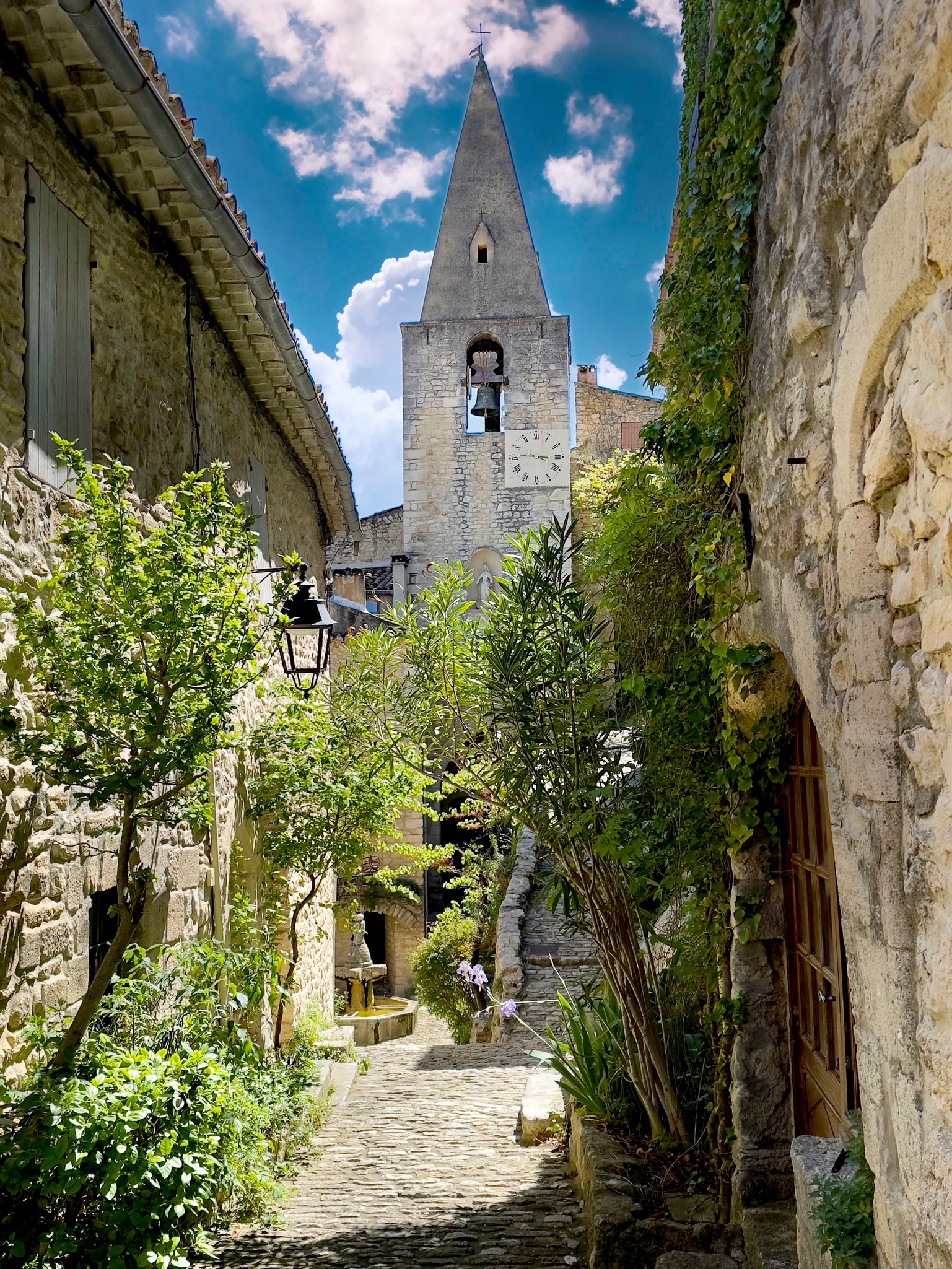
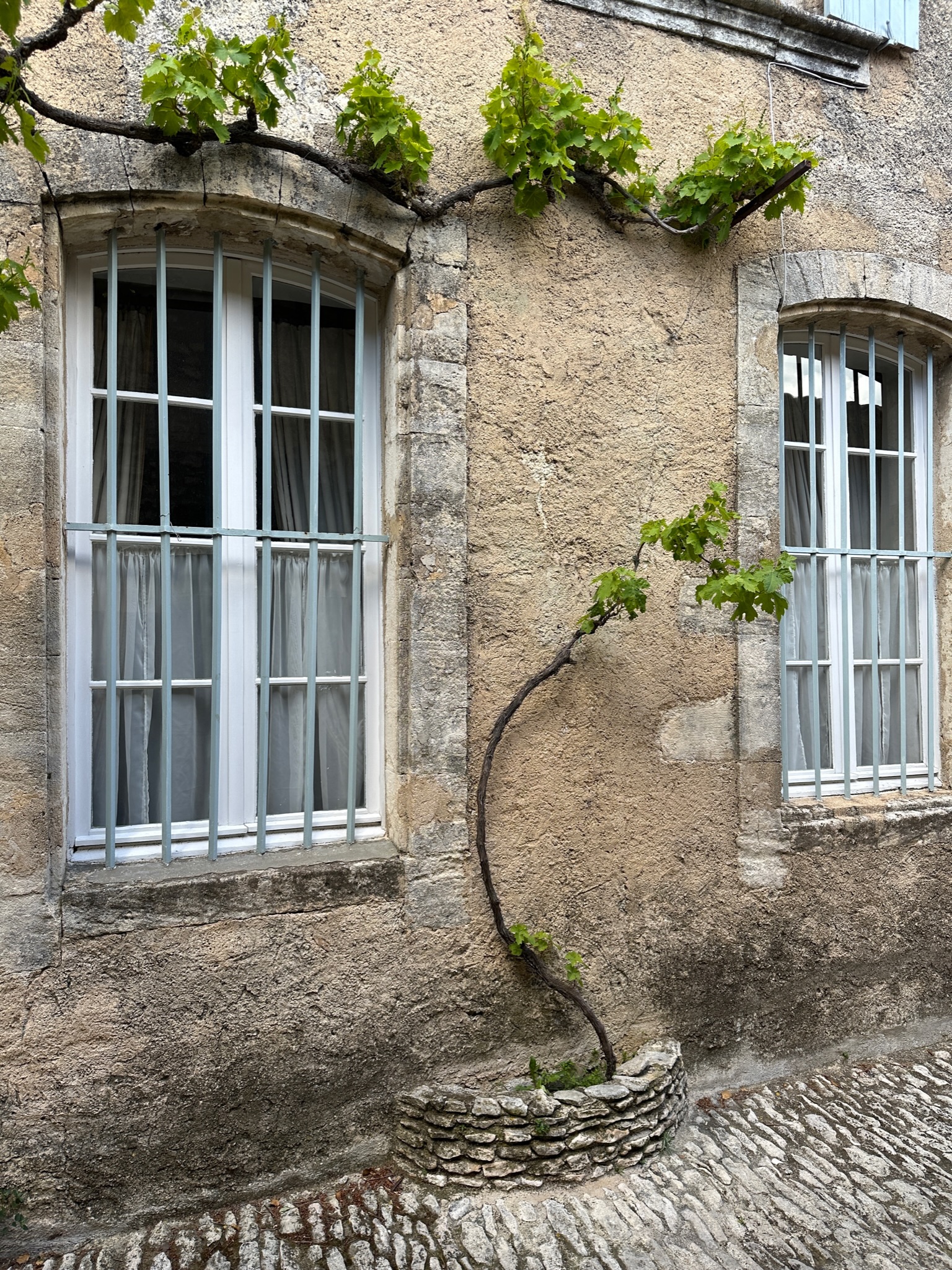
Many of the old stone houses display fine architectural details.
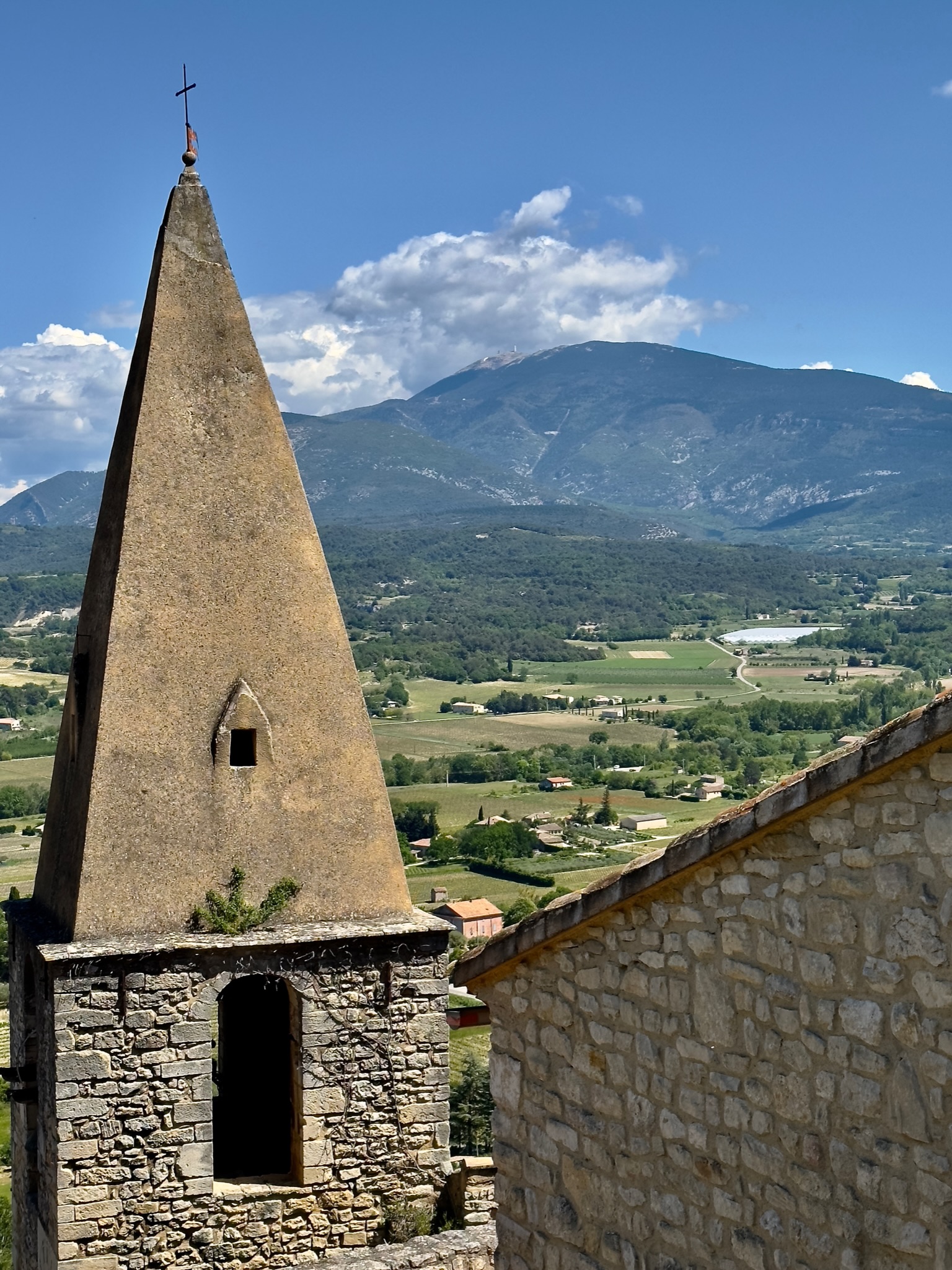
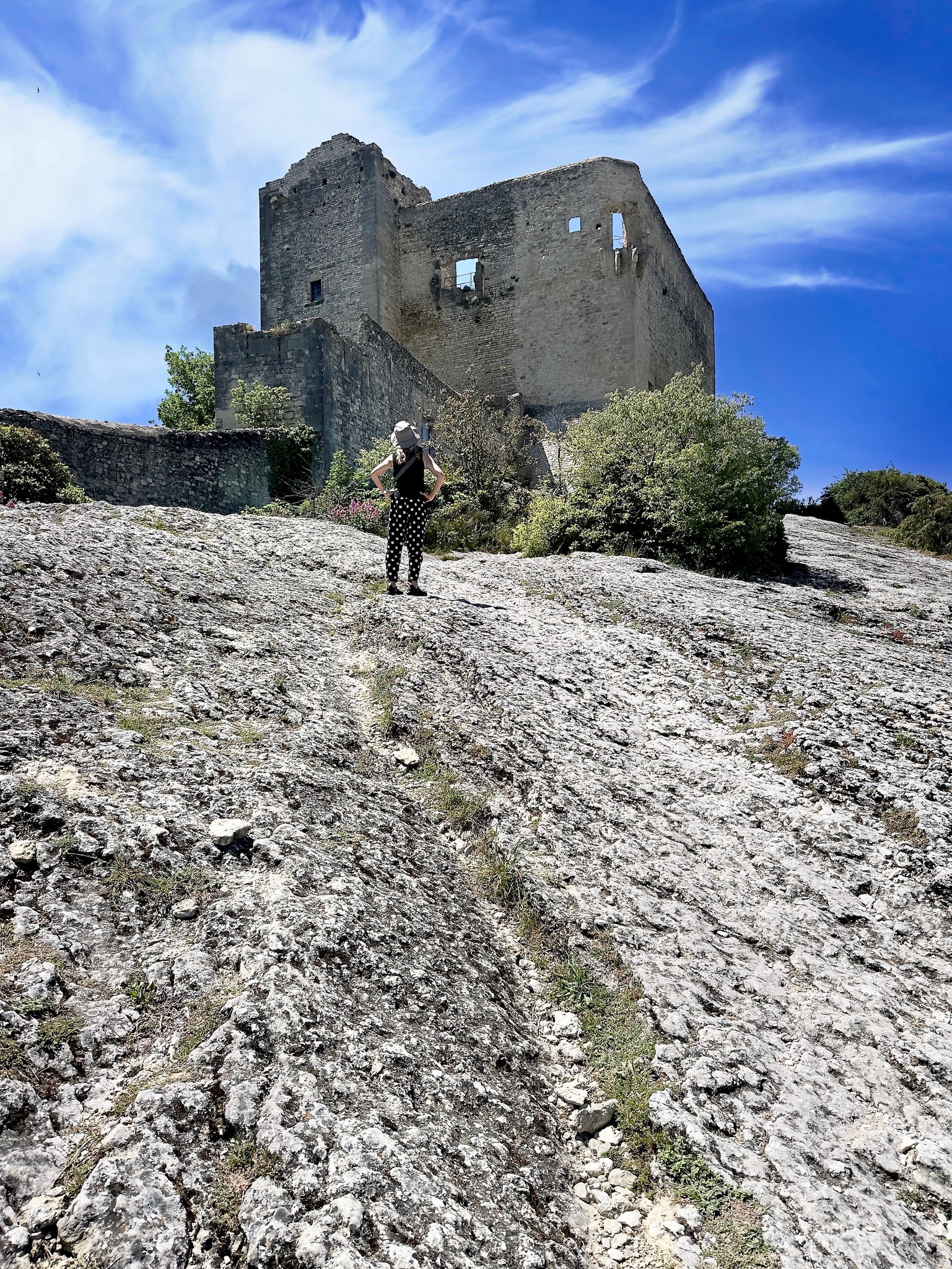
Eventually we reach the top of the hill and the ruins of a fortified castle. During the Middle Ages, inhabitants of Vaison-la-Romaine migrated here to the relative safety of the steep rocky hilltop offering panoramic—and defensively strategic—views over the surrounding countryside.
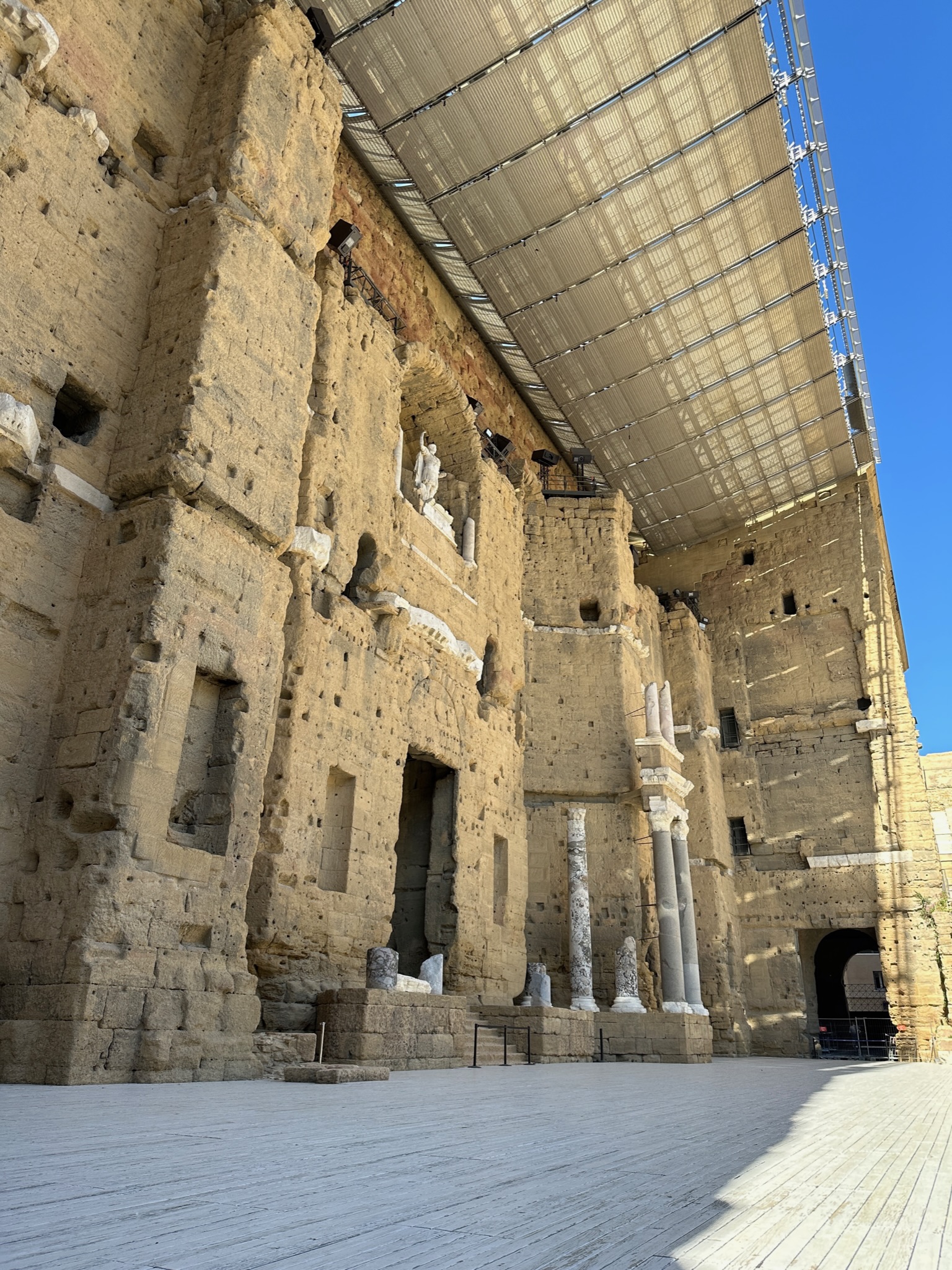
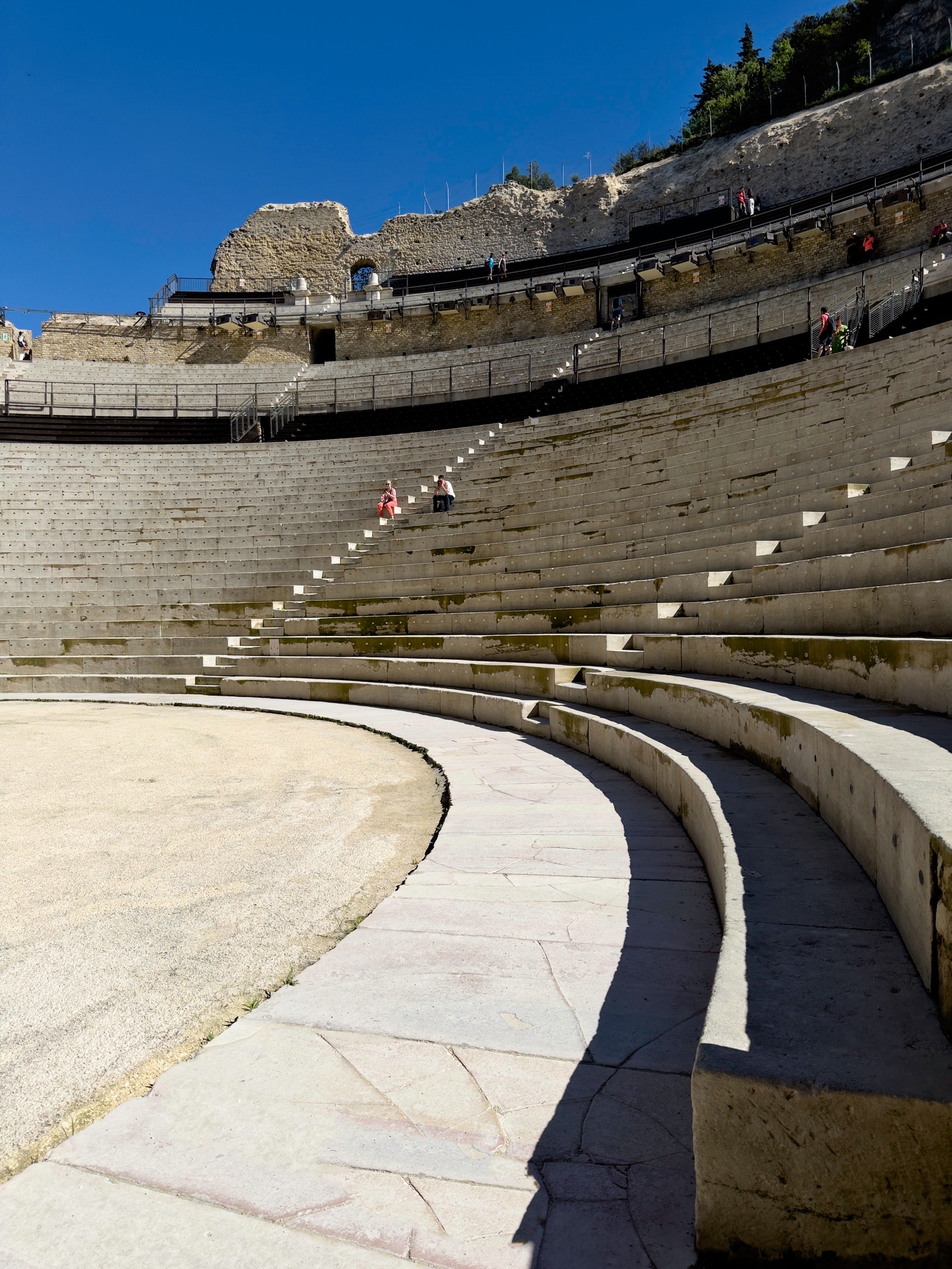
On a day when our route leads past the town of Orange, we stop for a coffee and visit the Roman theater, the best preserved specimen of its kind in the world. The massive venue is still in use, hosting a summer opera festival and accommodating up to 9,000 spectators.
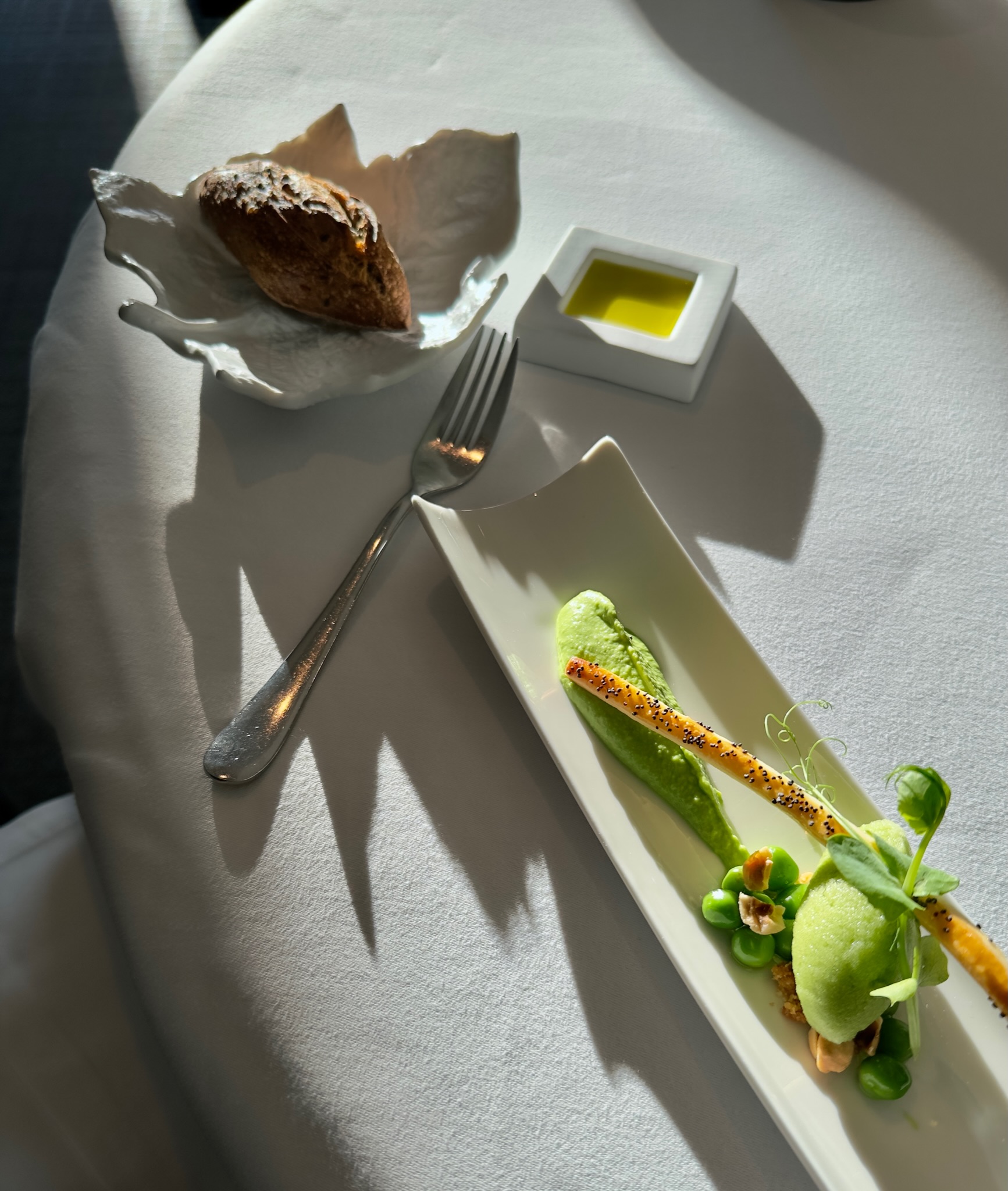
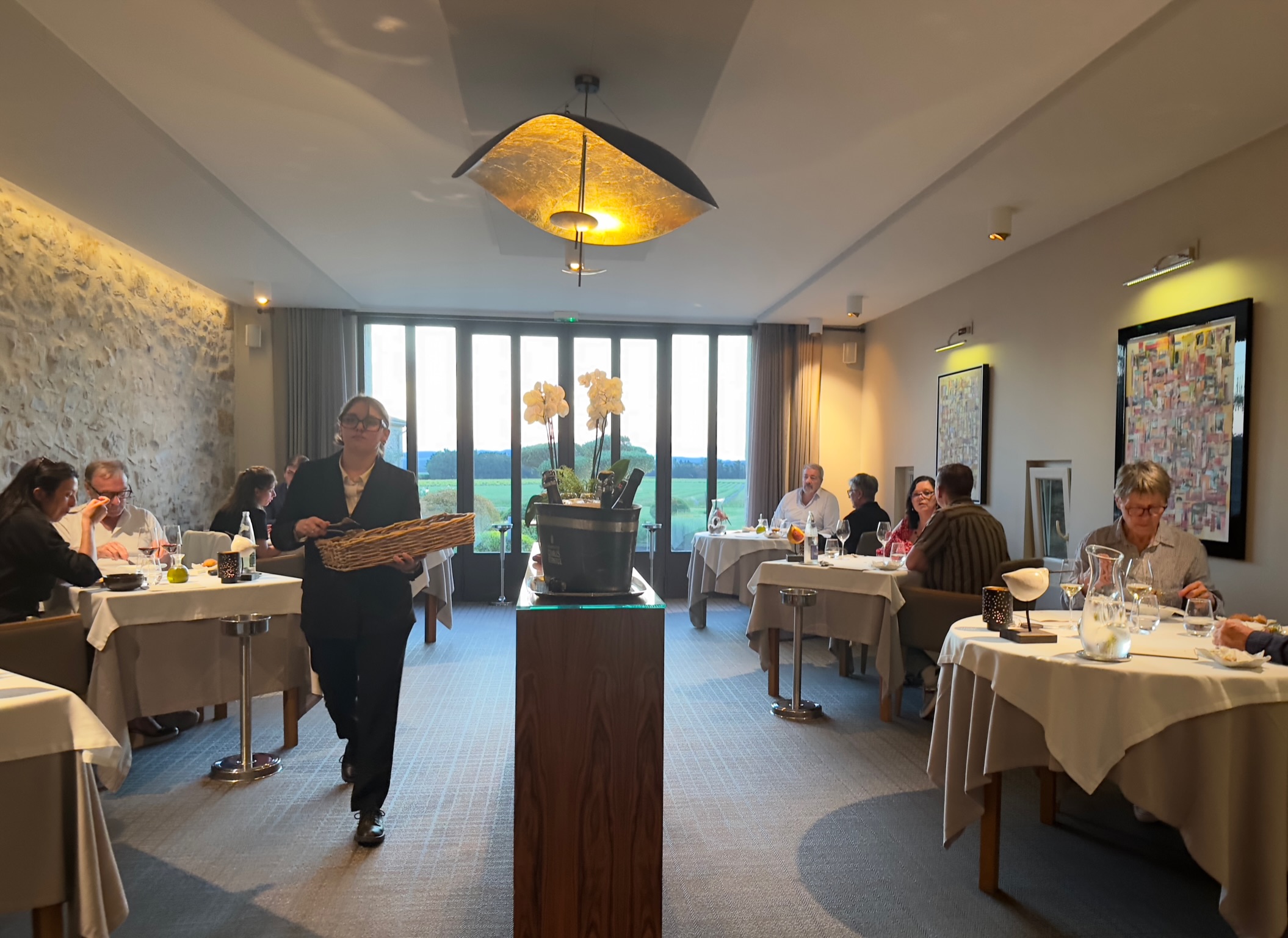
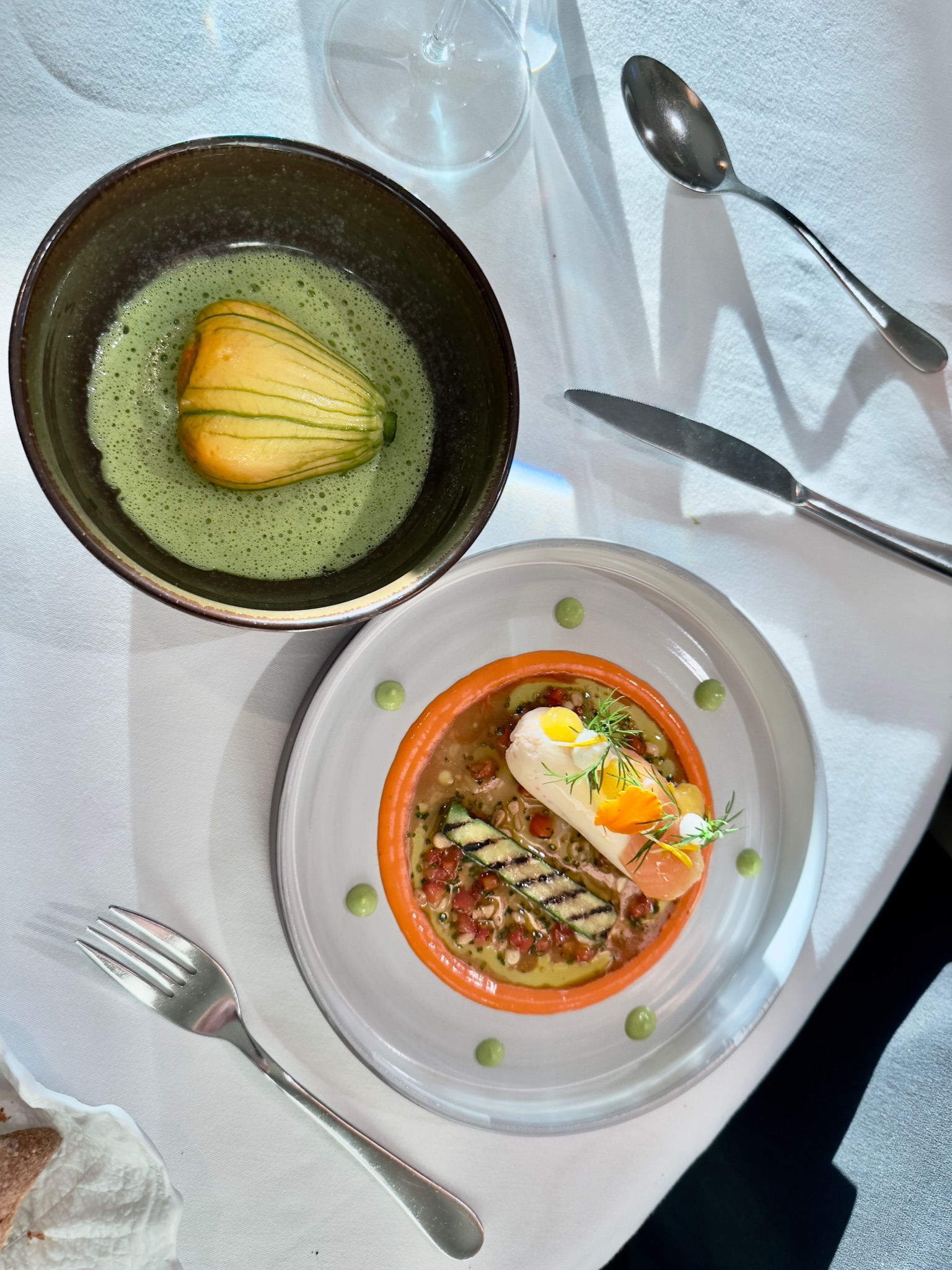
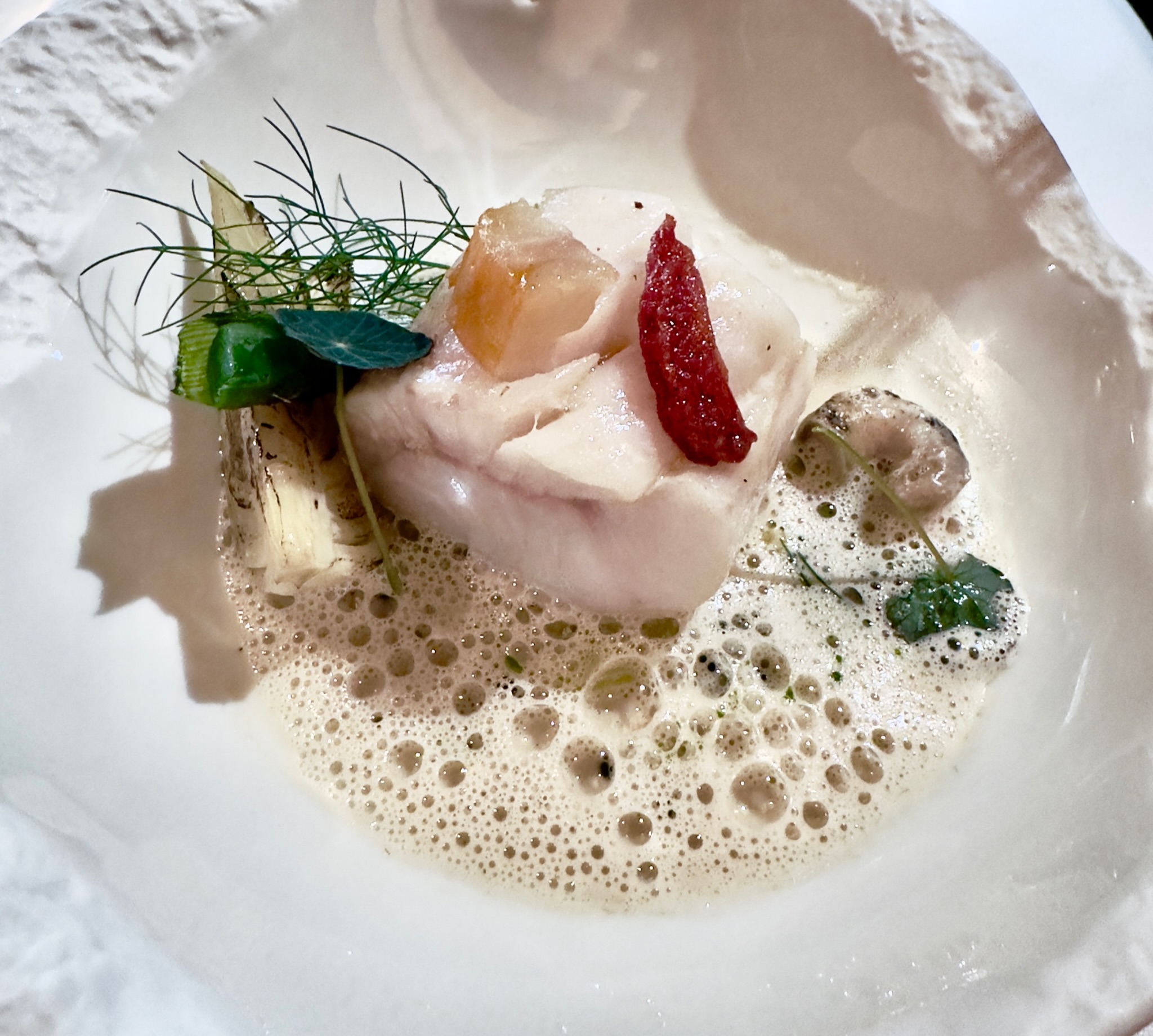
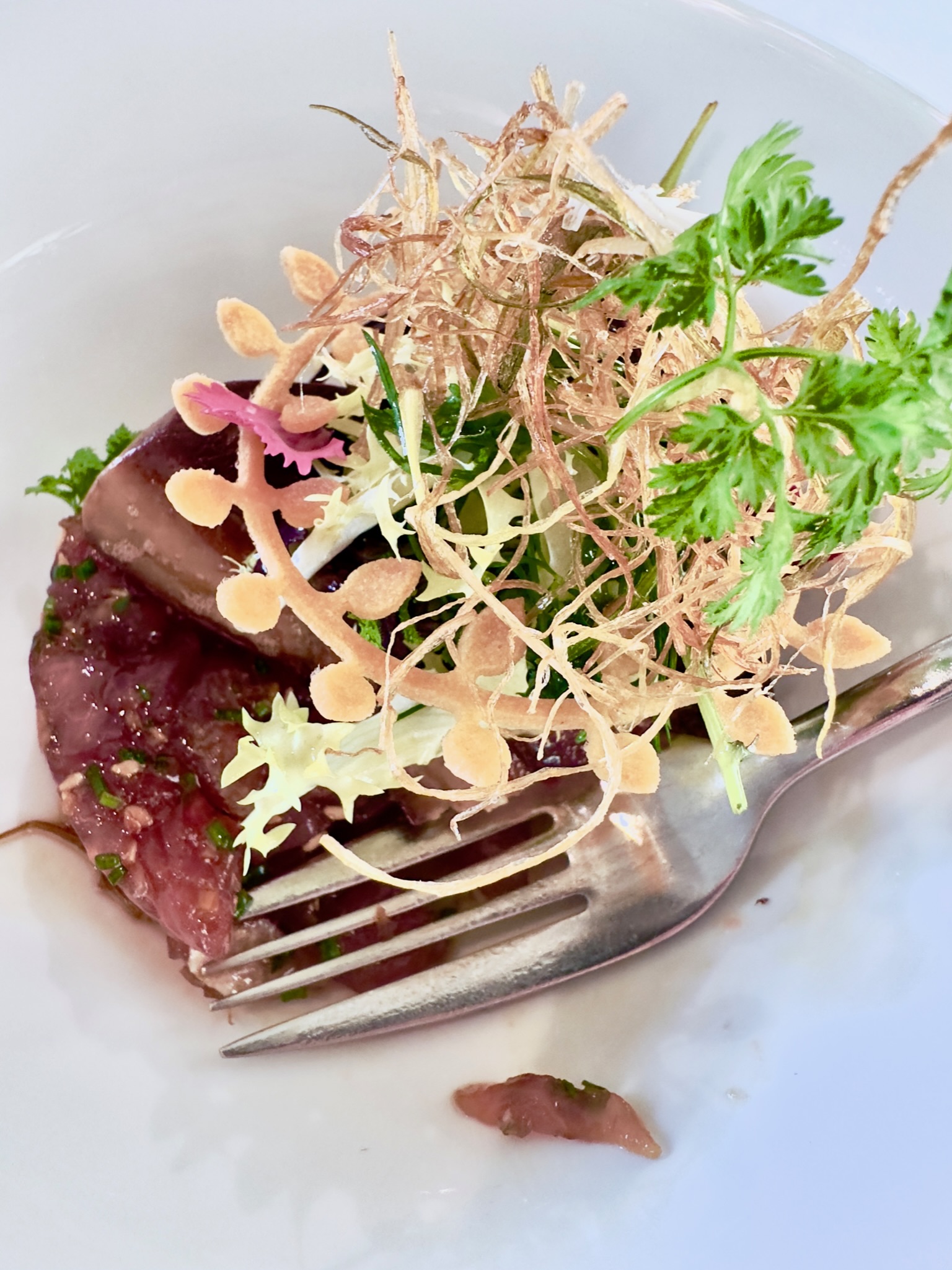
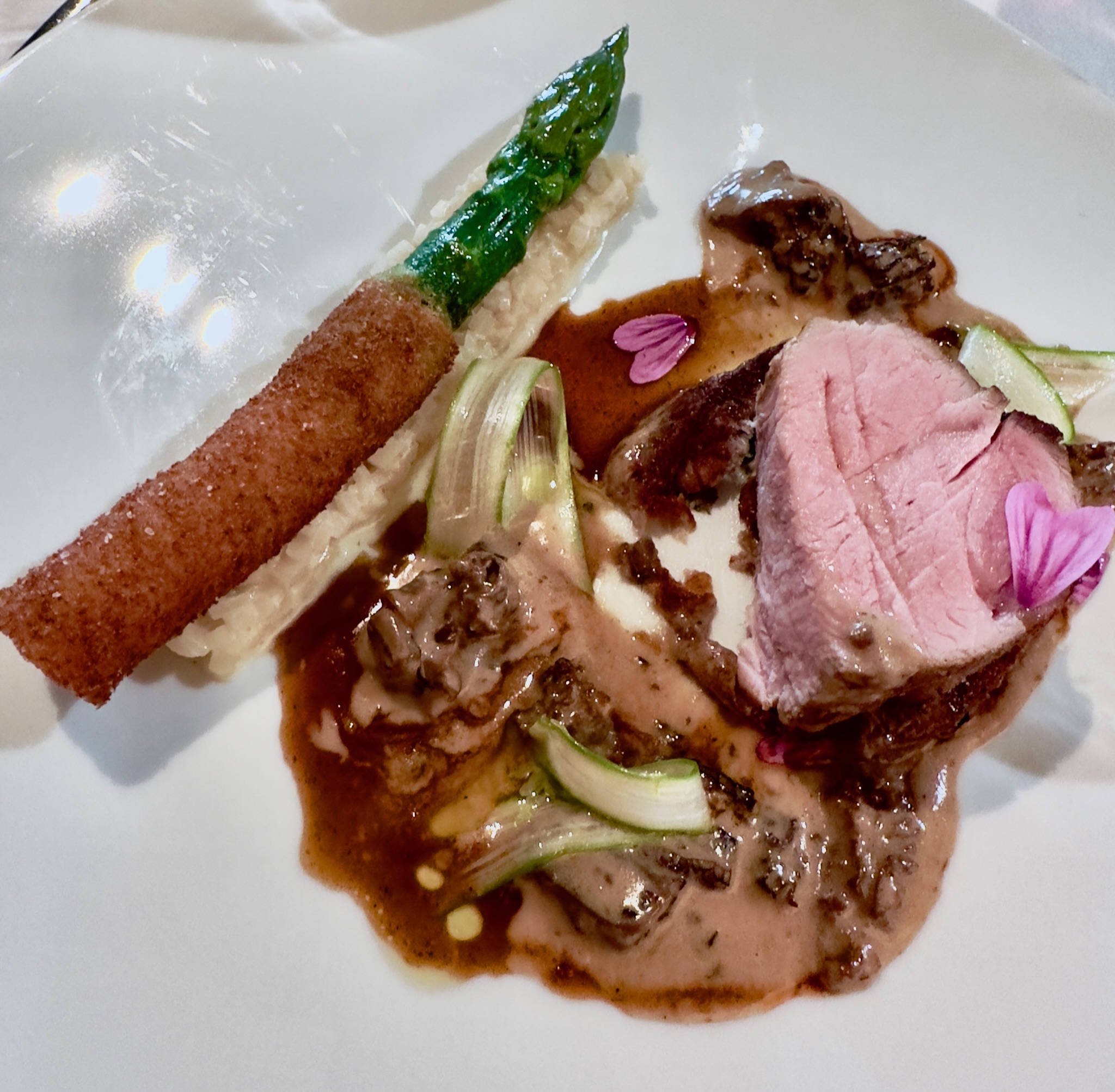
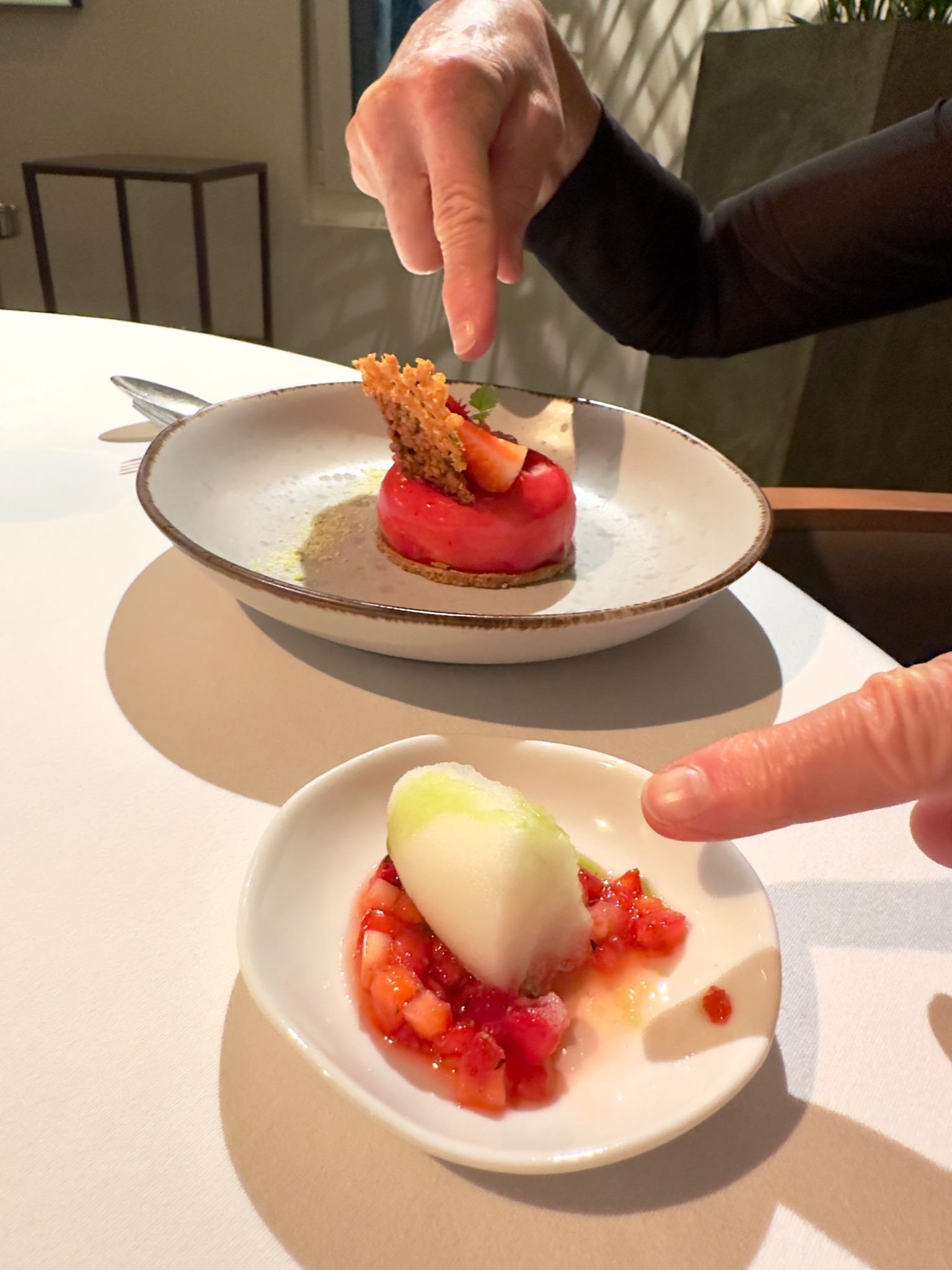
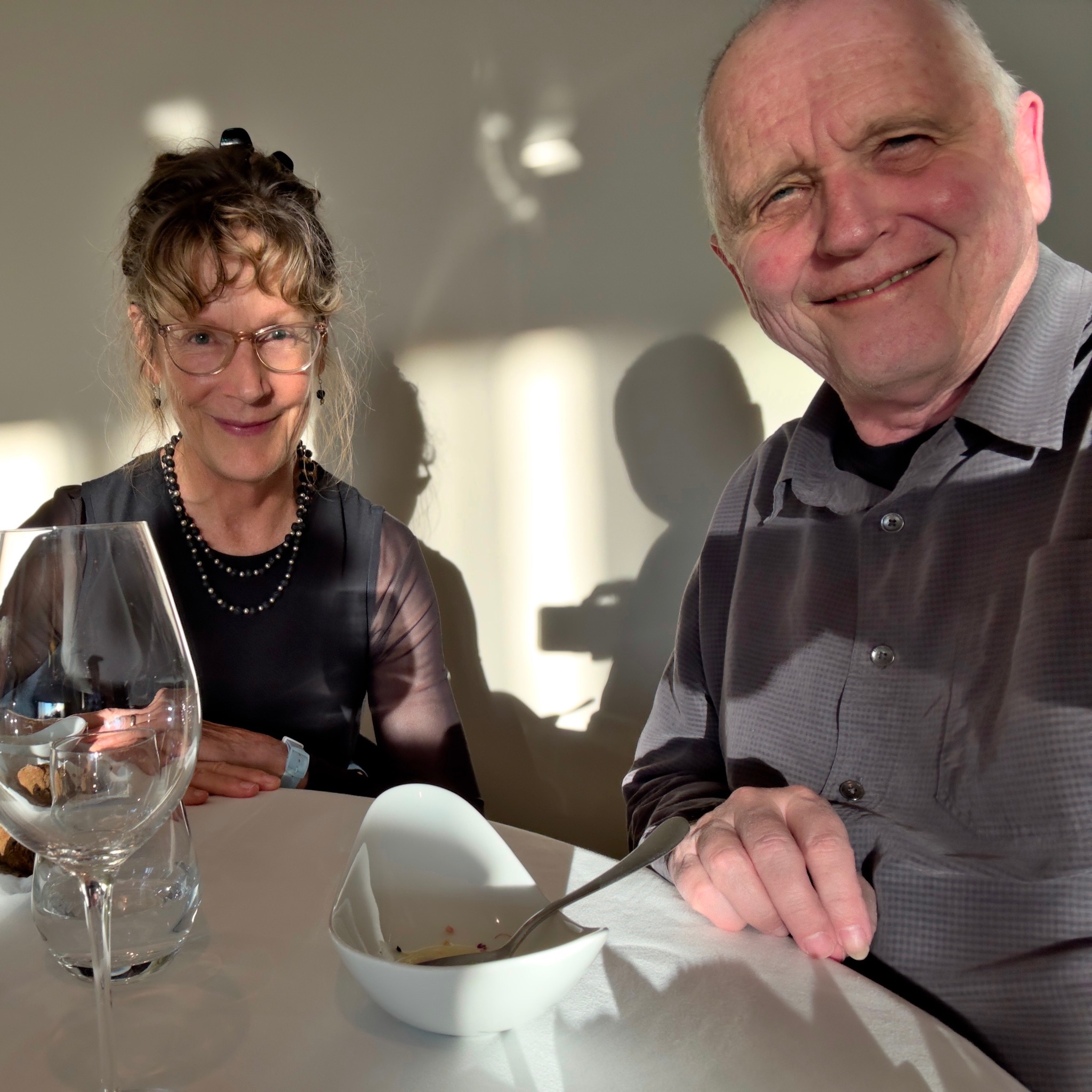
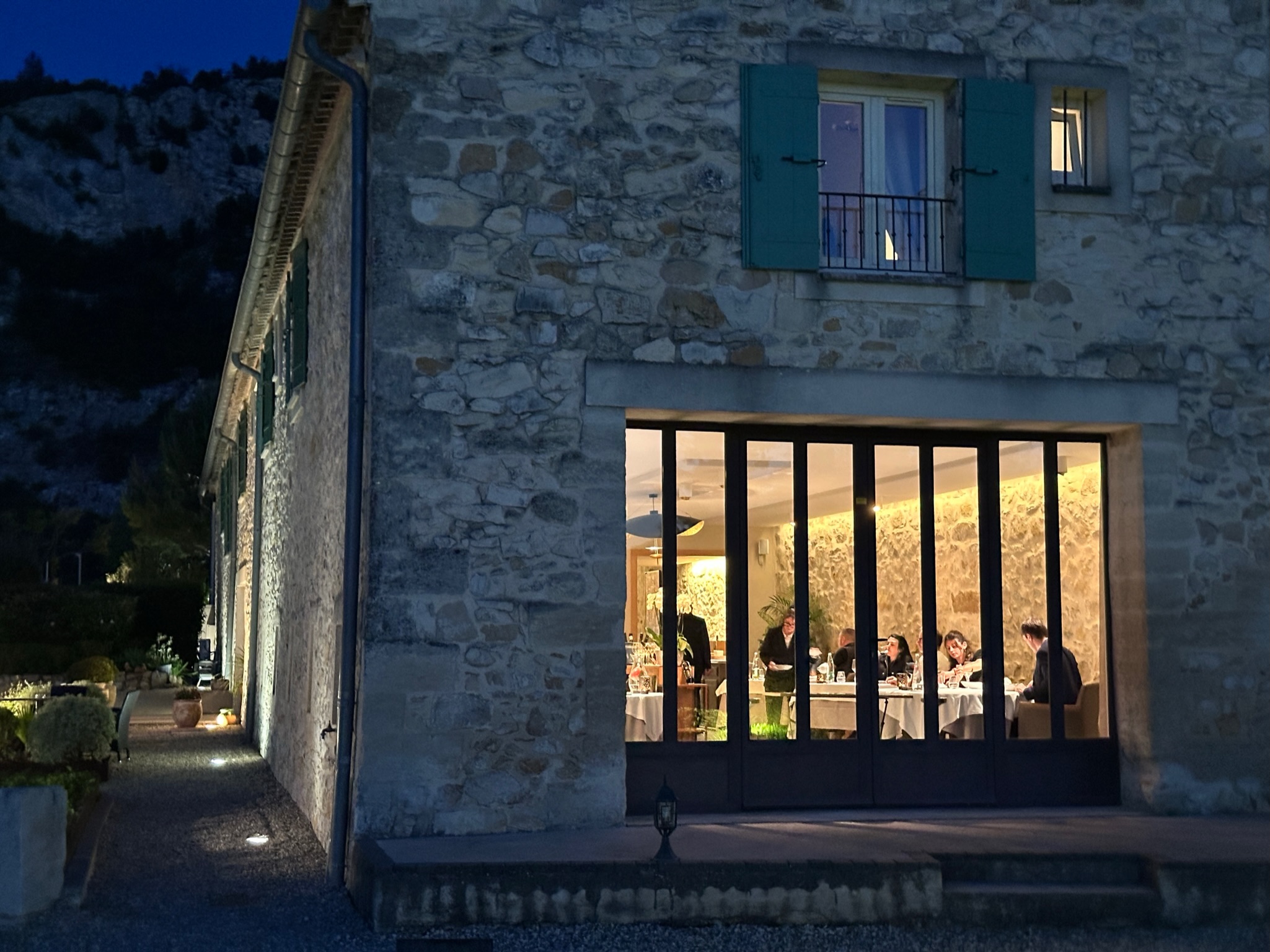
Without a doubt, the culinary highlight of our week in Provence is a multi-course meal at Le Chenet, a Michelin-starred restaurant located near the Moulin du Four. Read on for a description, or simply scroll down for the visuals. The adventure begins with an amuse-bouche of fresh garden peas and herb sorbet. Then we have choices: For Dave, tuna tartare, foie gras and ginger, followed by morel mushrooms, sautéed asparagus and roasted veal served with sa tête (a cleverly disguised way of saying veal brains, which Anna doesn’t divulge until he’s eaten most of it, commenting on its “chewy texture and nutty flavor” and wondering aloud if it is some sort of mushroom). Anna’s meal choices are squash flower soufflé and trout mousse in a balsamic reduction, followed by line-caught monkfish in an emulsion of haddock, grilled fennel and leeks. Then it is time for dessert: a pink orb glazed with strawberry gelée over a layer of feather-light strawberry cream and a core of frozen strawberry sorbet served on a praline wafer. To accompany this already sufficient morsel, a tiny dish of strawberry “caviar” topped with a wildly aromatic basil-lime sorbet. But we’re not done yet. In such an establishment, Les Mignardises (sweet treats), always follow the dessert. We have just enough room left for a thumbnail-sized cube of pistachio cake and a chocolate truffle no larger than a pea.
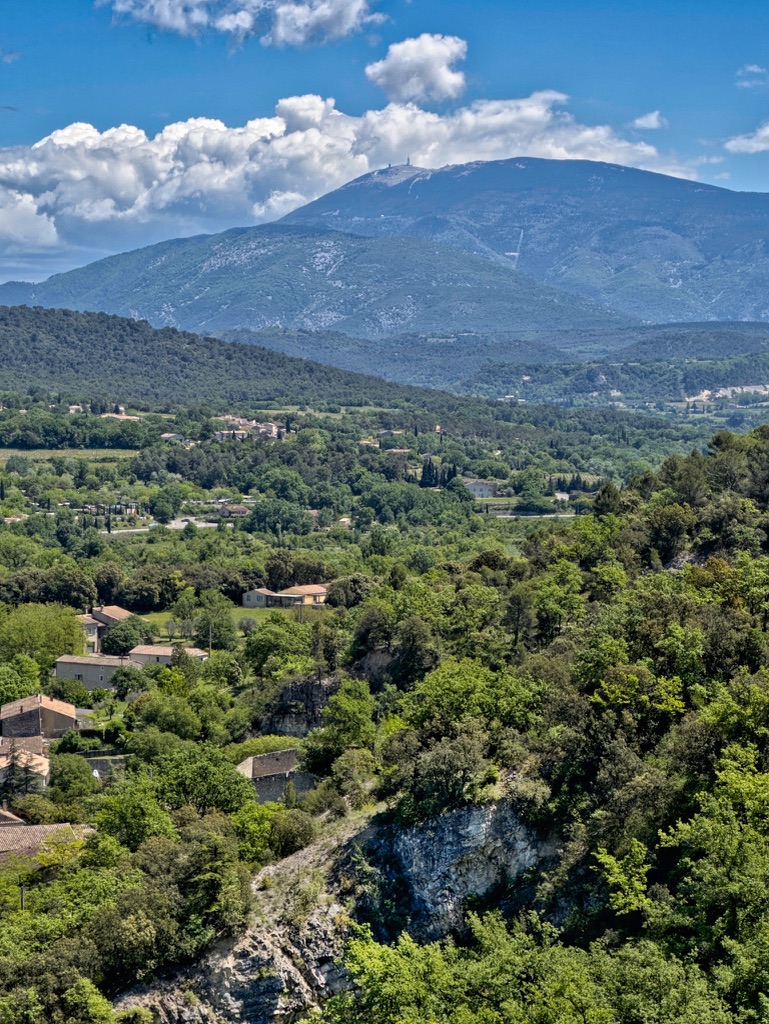
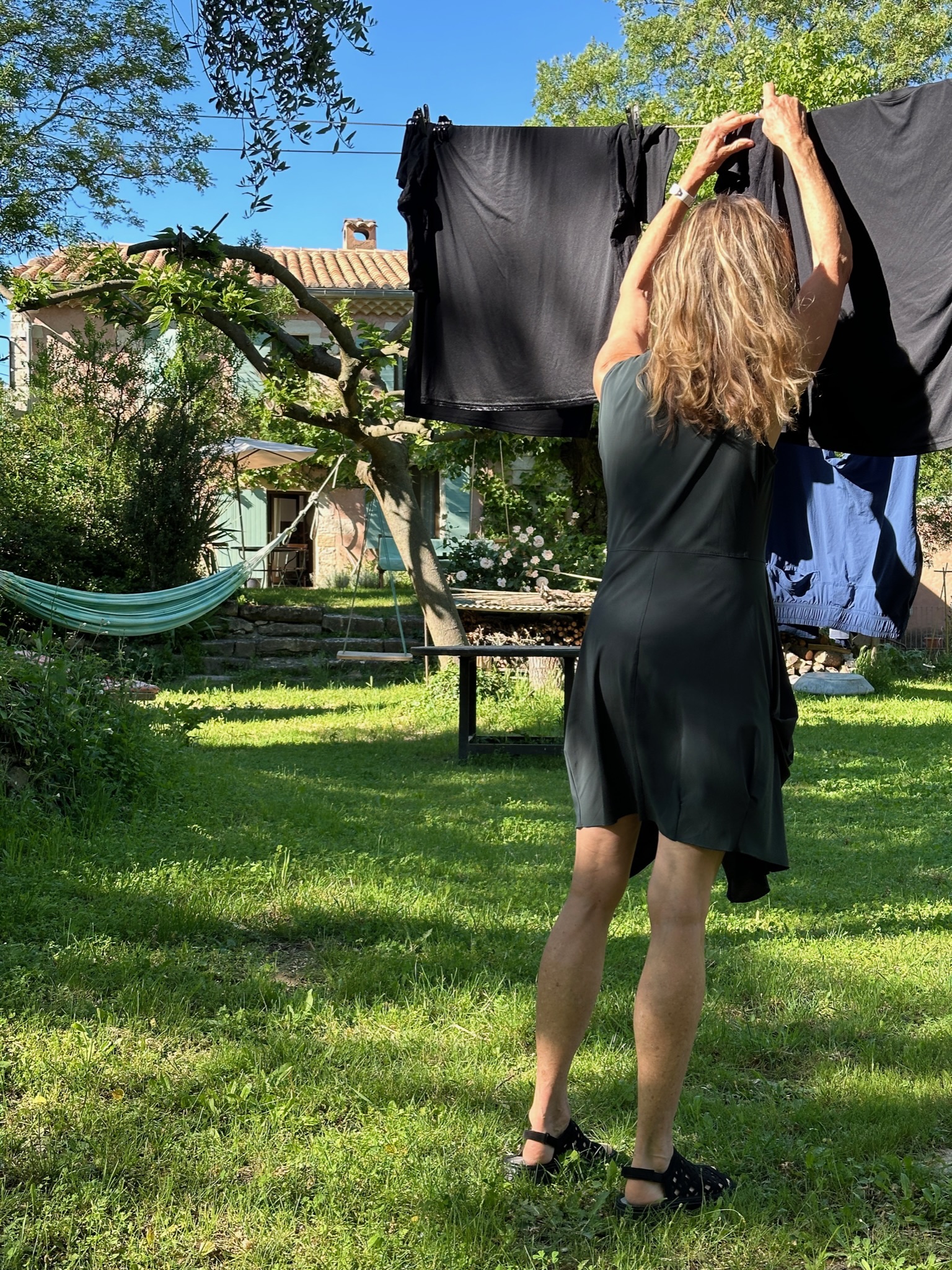
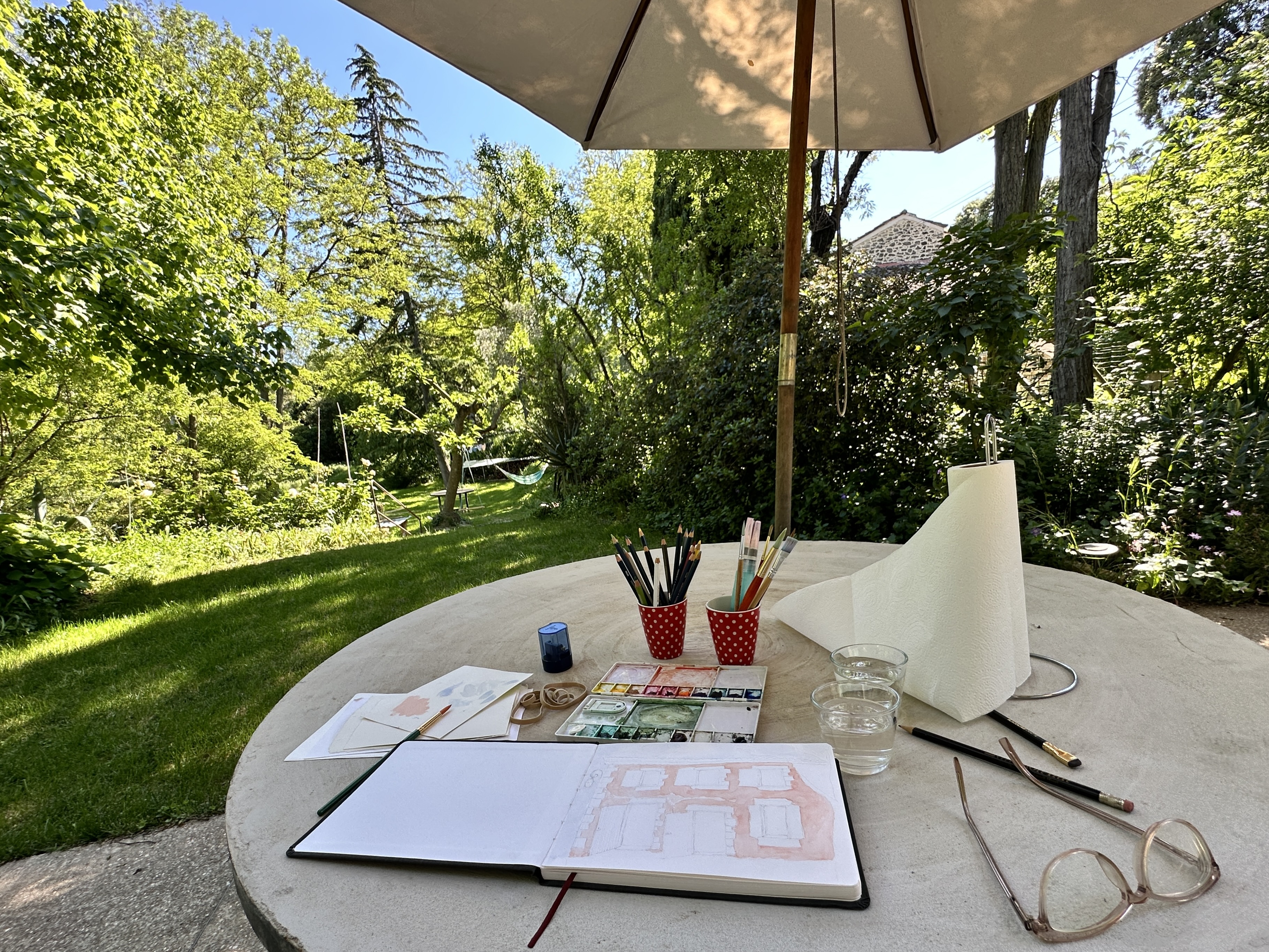
At this point in our travels, Anna achieves her dream of a day—or two—without sightseeing. In the morning, she hikes up a narrow canyon to the top of a ridge with a view across the river to Avignon and the distant Mount Ventoux. At midday, she handwashes clothes and hangs them on the line to dry. Isabelle, our Airbnb hostess, is also in the garden, and they enjoy a friendly chat. Later, Anna sits at the table on the terrace and makes use of the art supplies she brought all the way from California. She hears the sounds of birdsong, of pencil on paper, of flowing water.
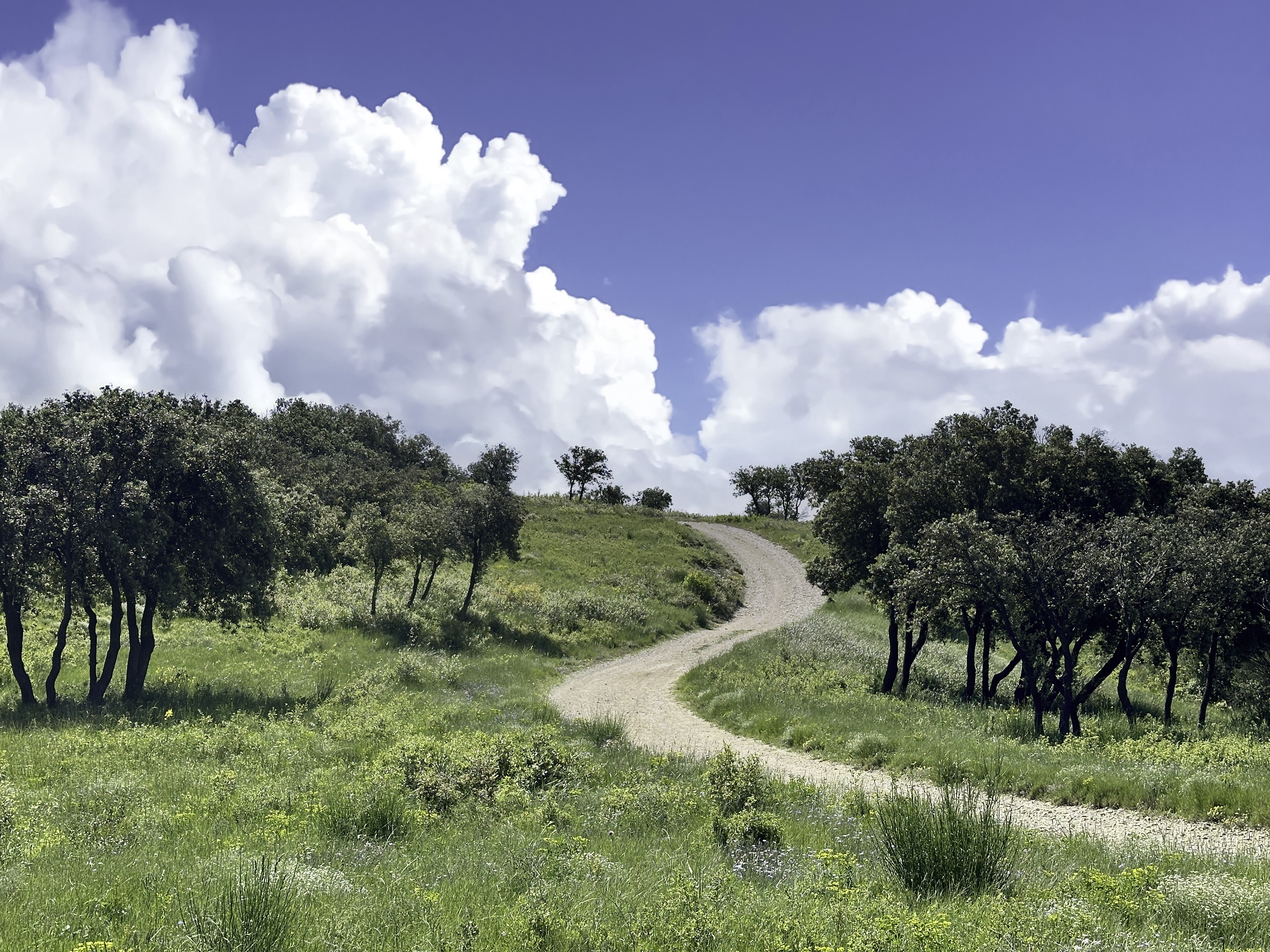
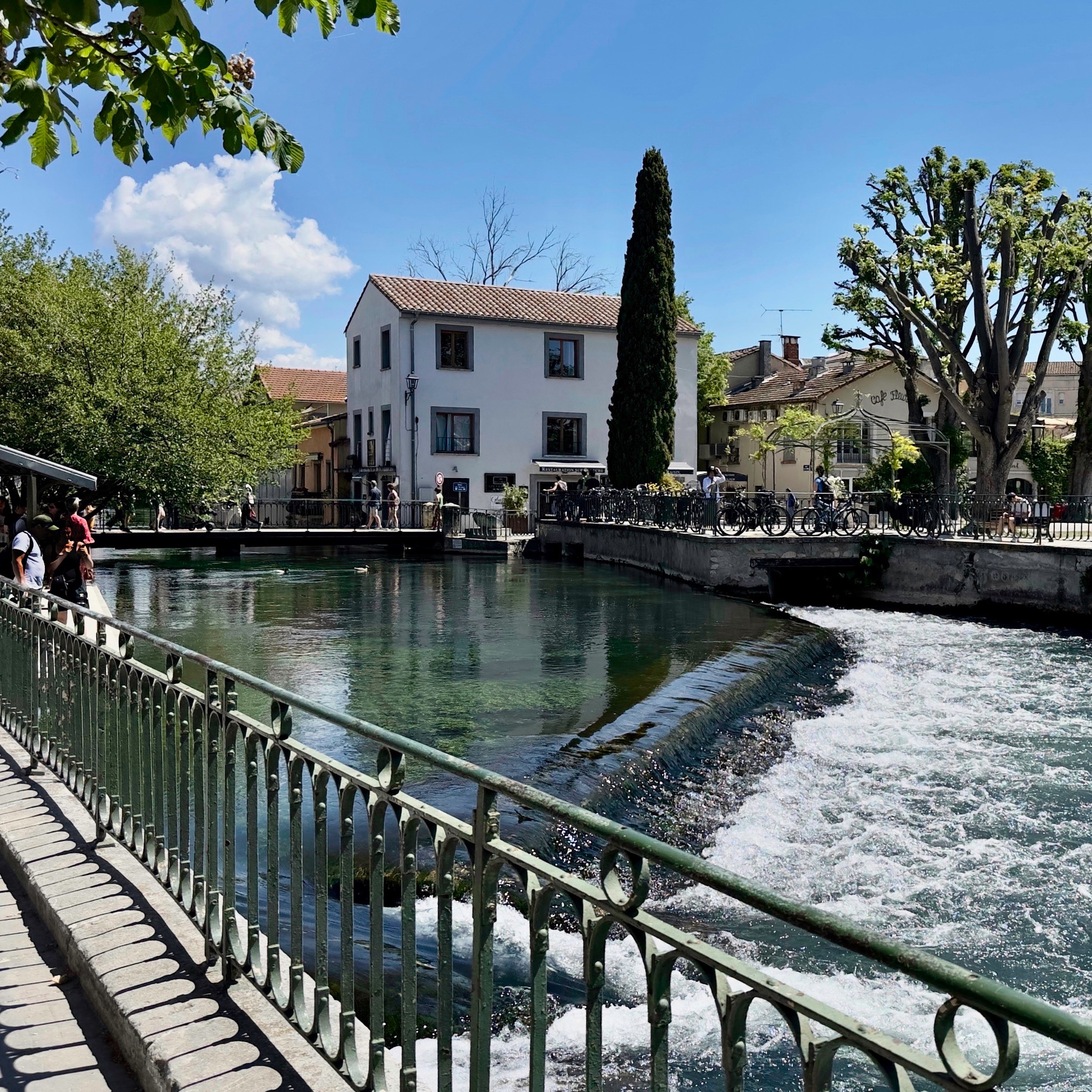
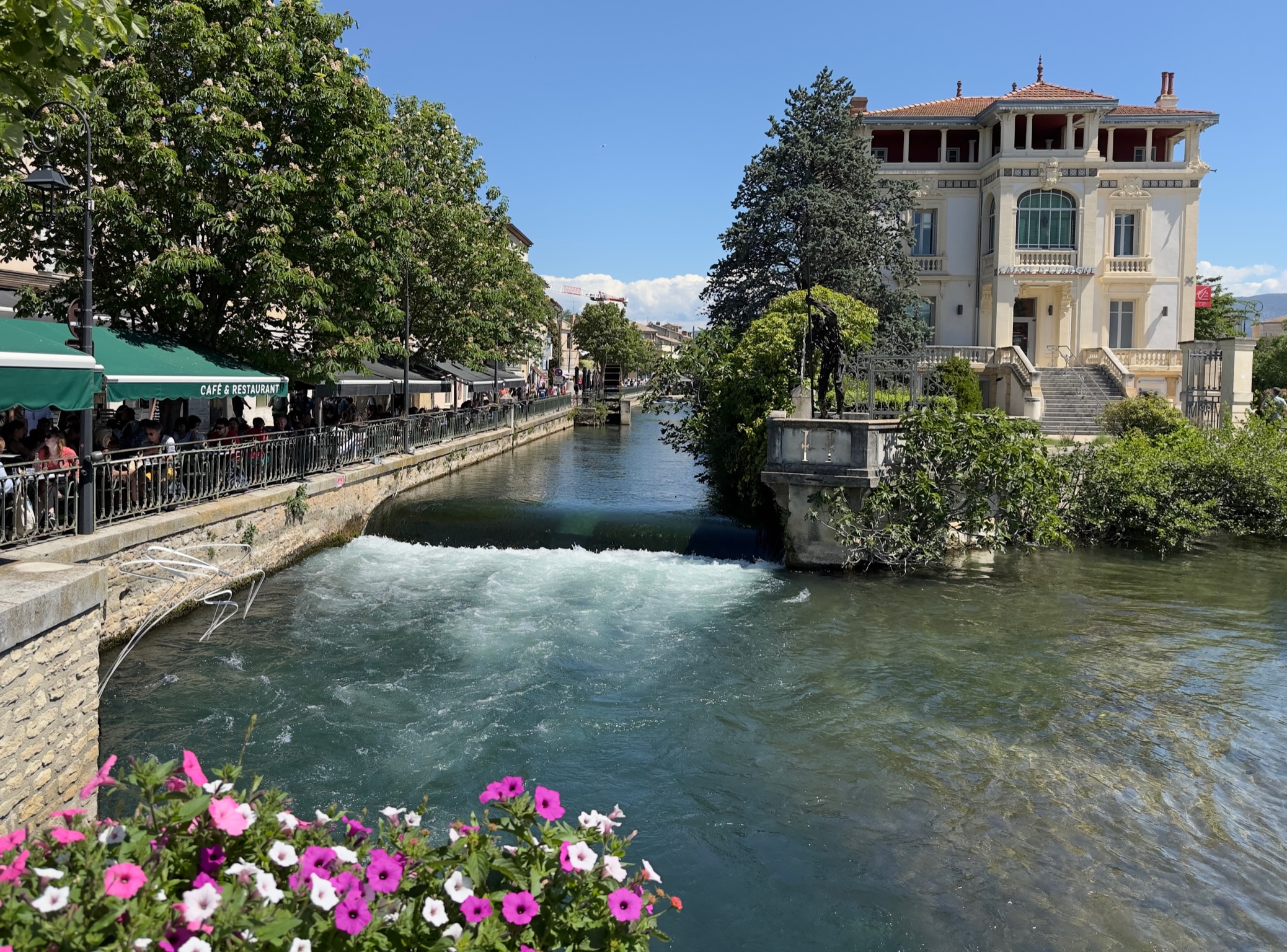
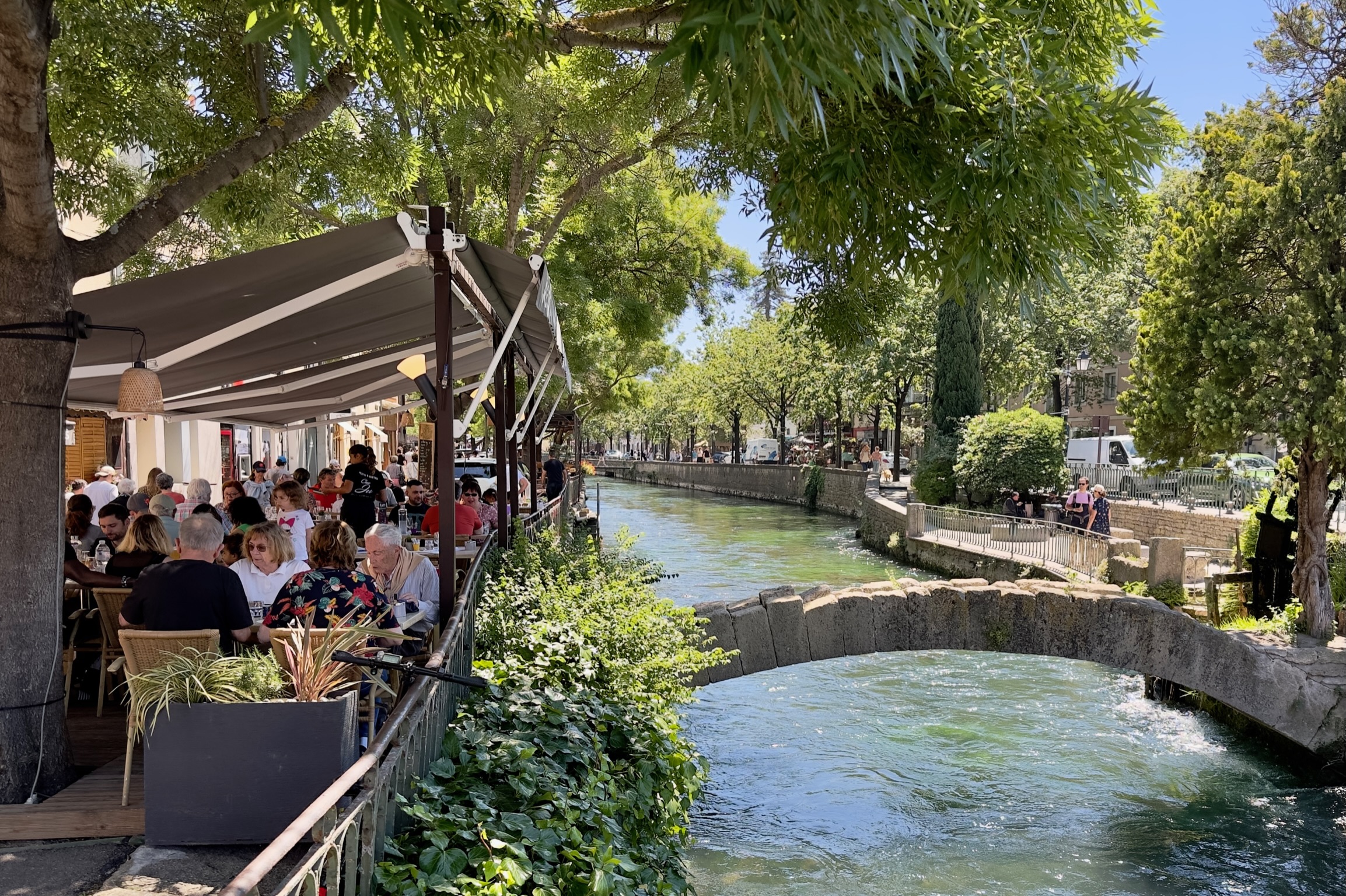
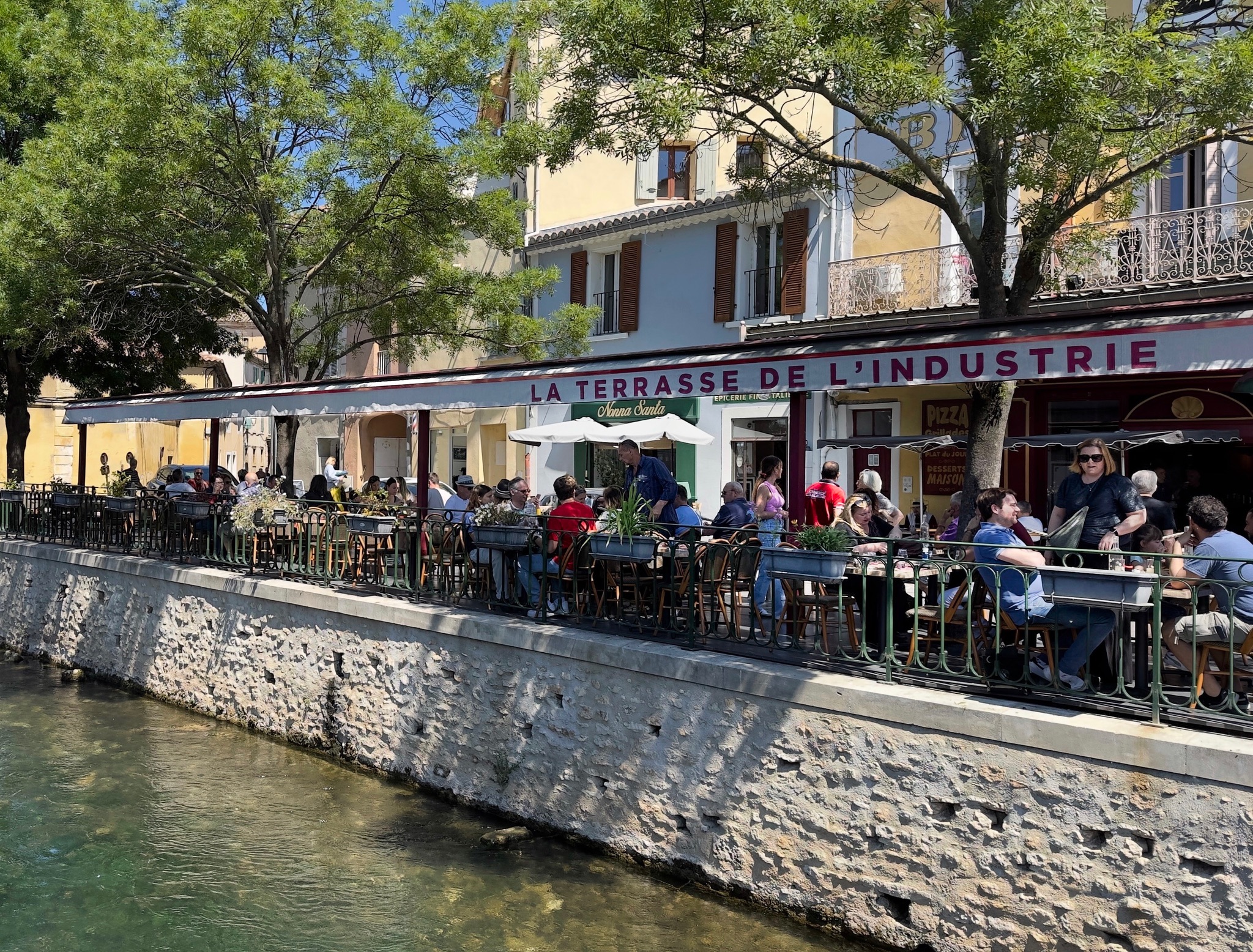
Meanwhile, Dave sets out on a solo mission to Isle-sur-la-Sorge and Bonnieux, with drive-by nods to Lacoste and Menerbes.
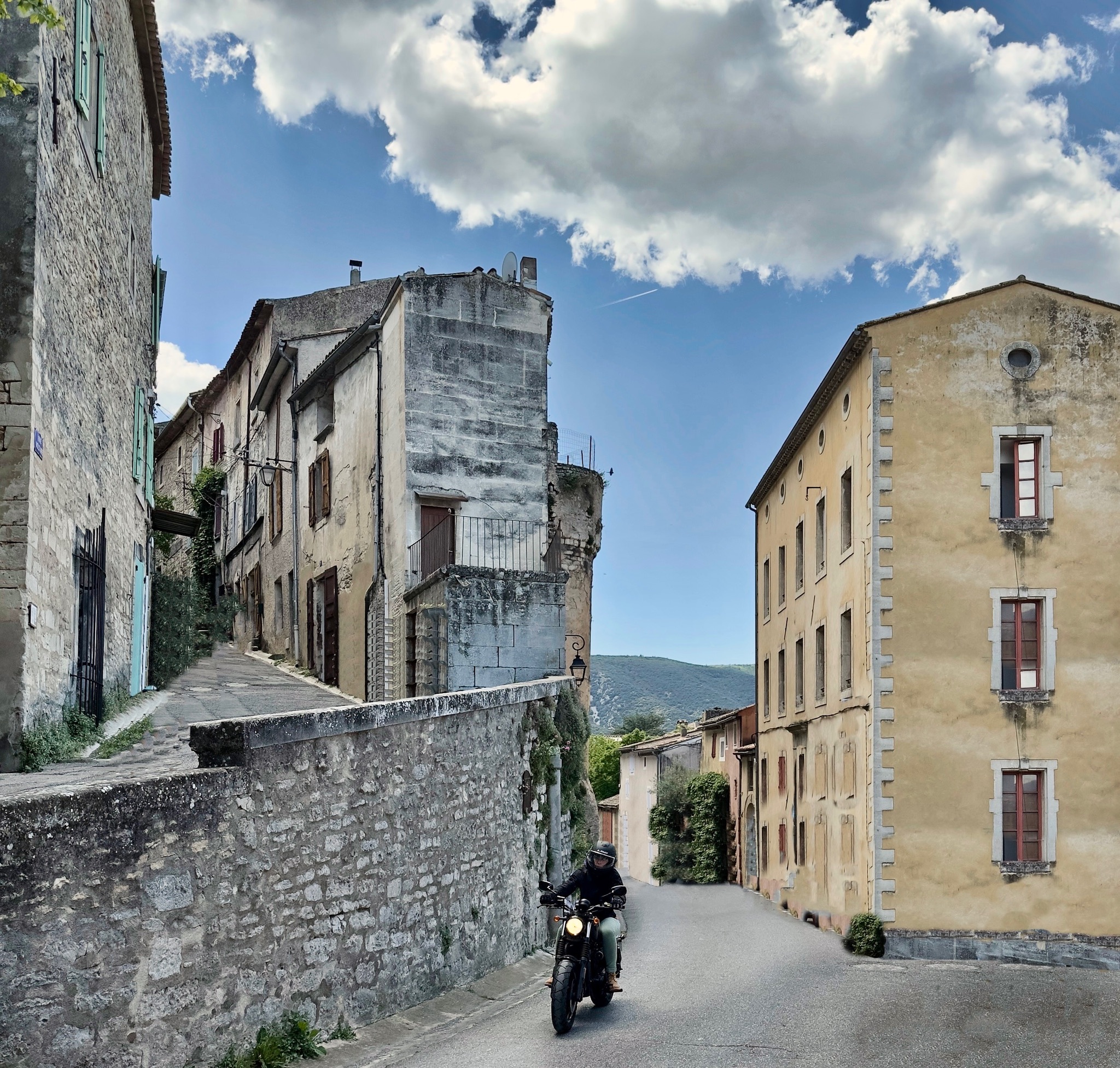
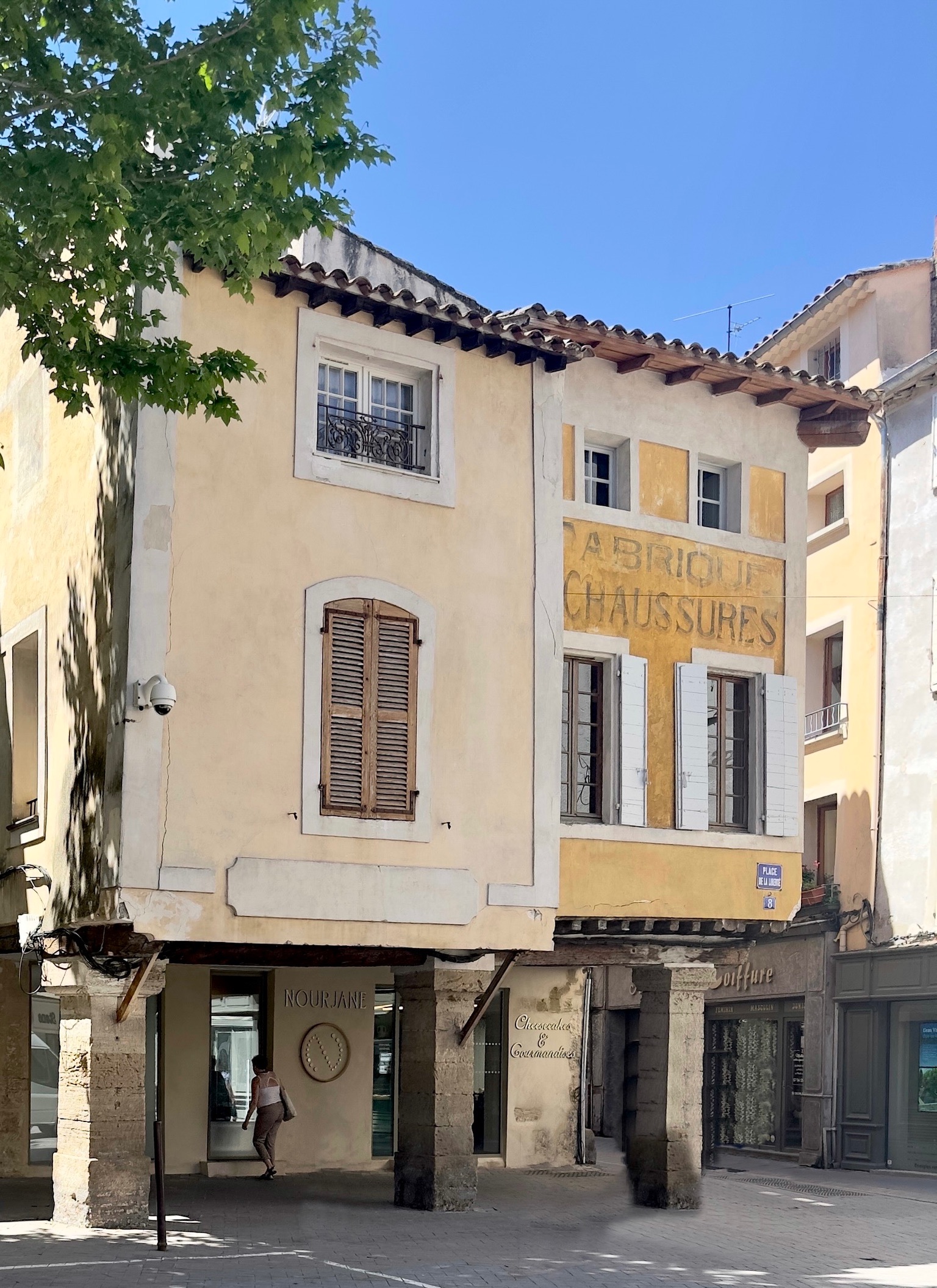
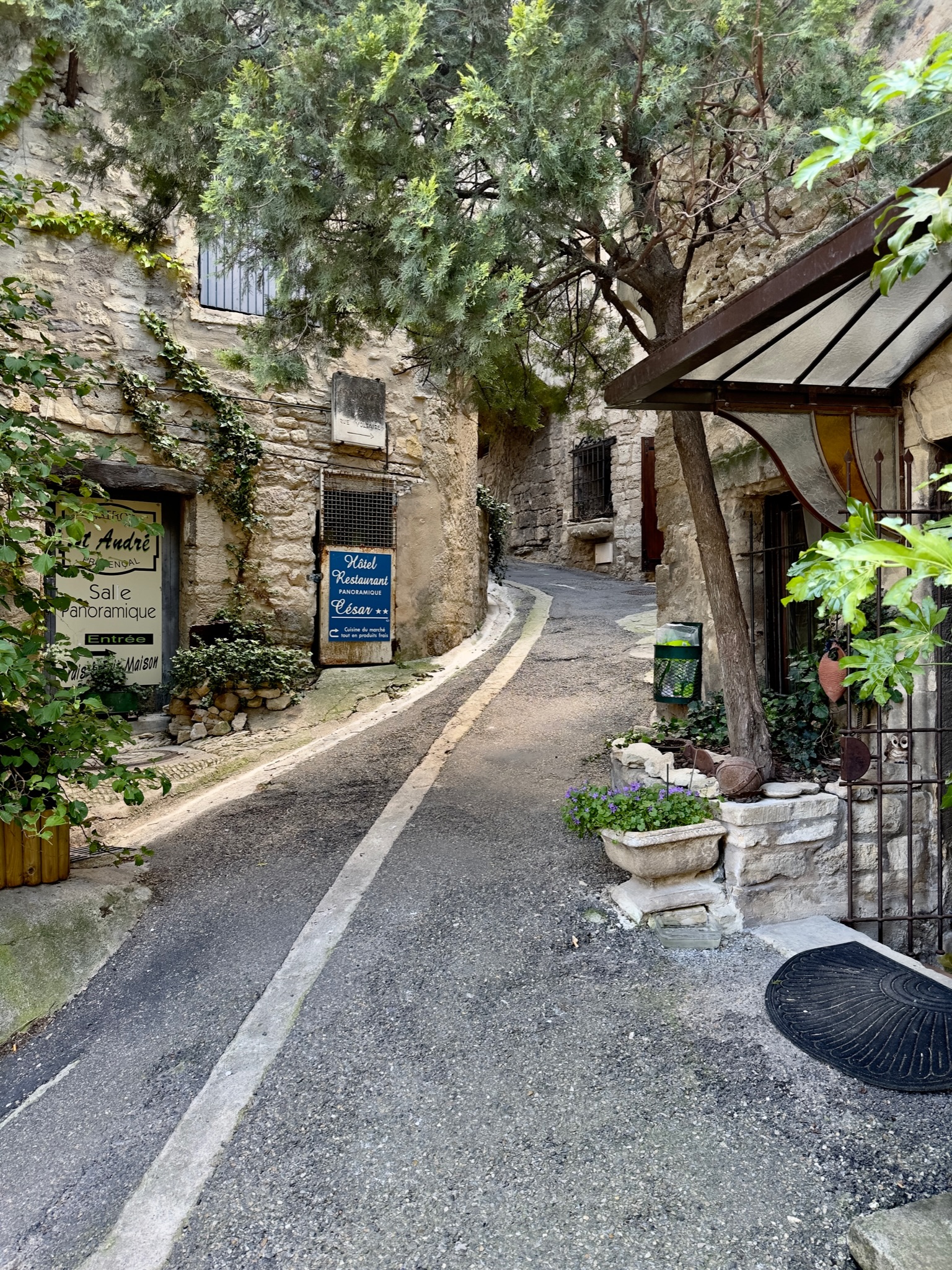
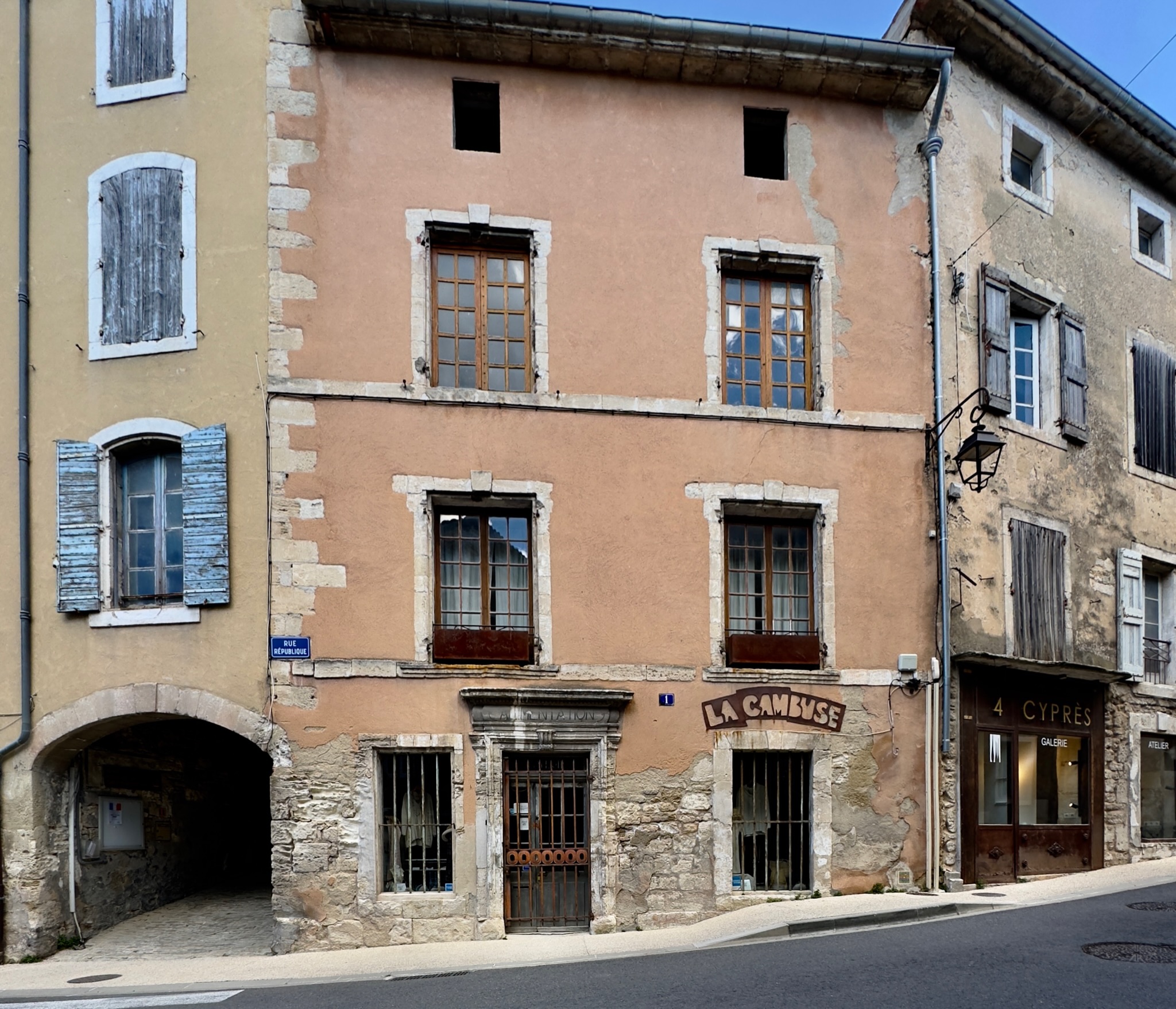
It is not the first time he has been to these towns; he visited often in the autumn of 1993, when he and his family spent a month in a sprawling old farmhouse in the hills above Apt. He has fond memories of shopping at local markets and plucking a freshly slaughtered turkey to roast for Thanksgiving dinner.
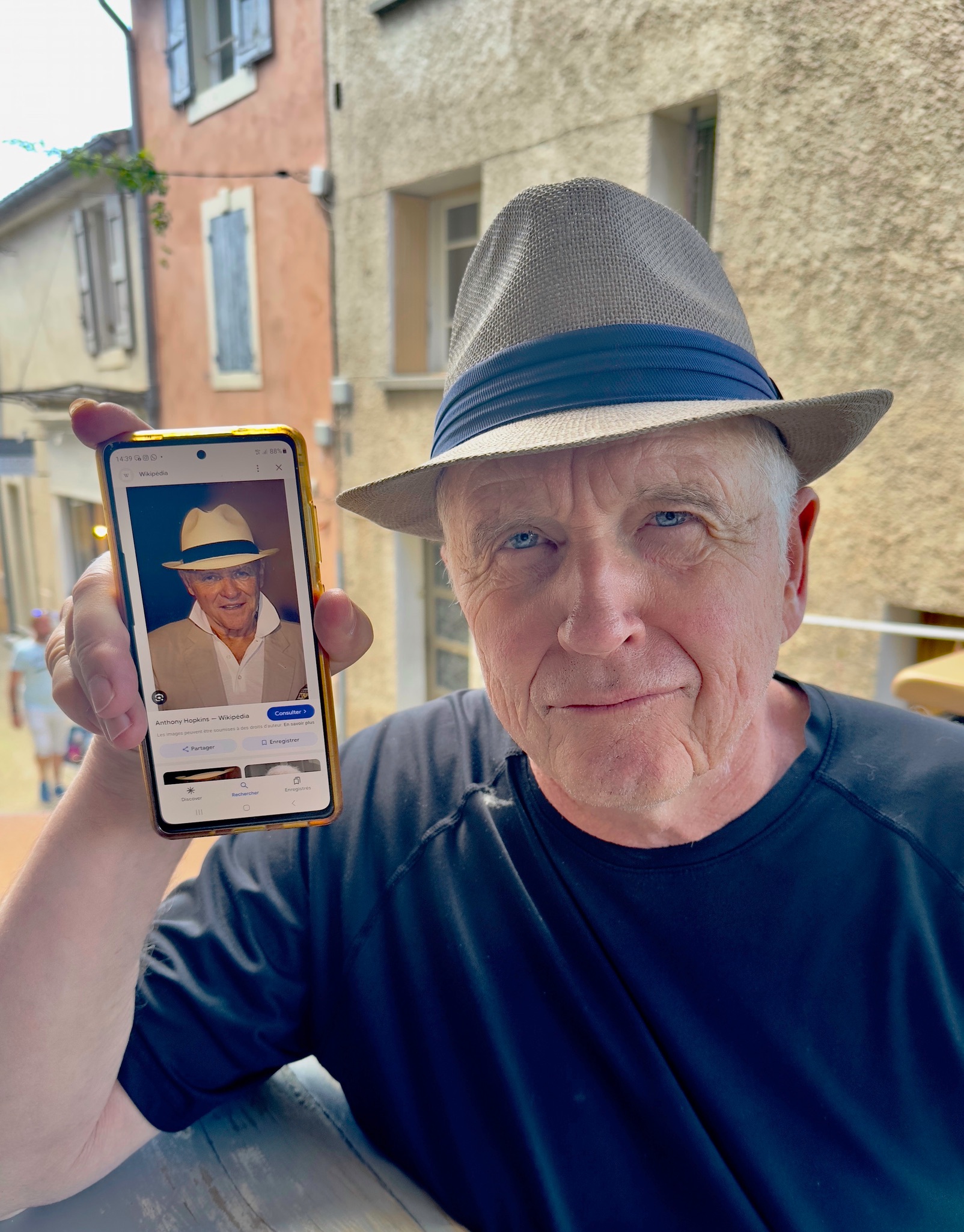
At a café stop in Bonnieux, he greatly impresses the barman and his cronies who mistake him for Anthony Hopkins.
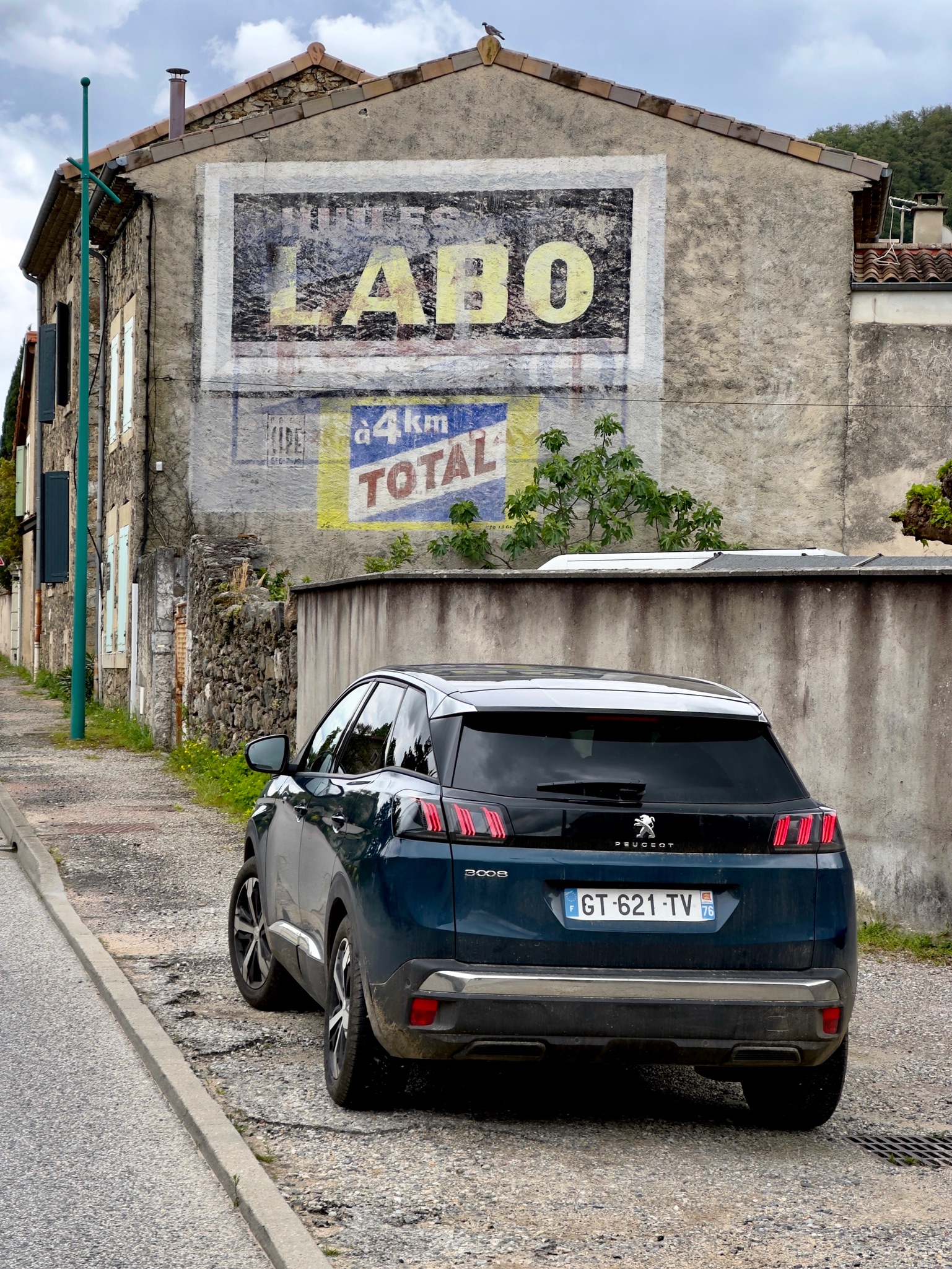
Before returning to our mill house from his solo travel day, Dave stops to pick up provisions at the local grocery. The shop is excellent (Isabelle tells us that people drive all the way from Avignon to shop here), and since many restaurants are closed due to the Ascension holiday, the next two nights we cook for ourselves and dine informally—and more simply—in the garden.
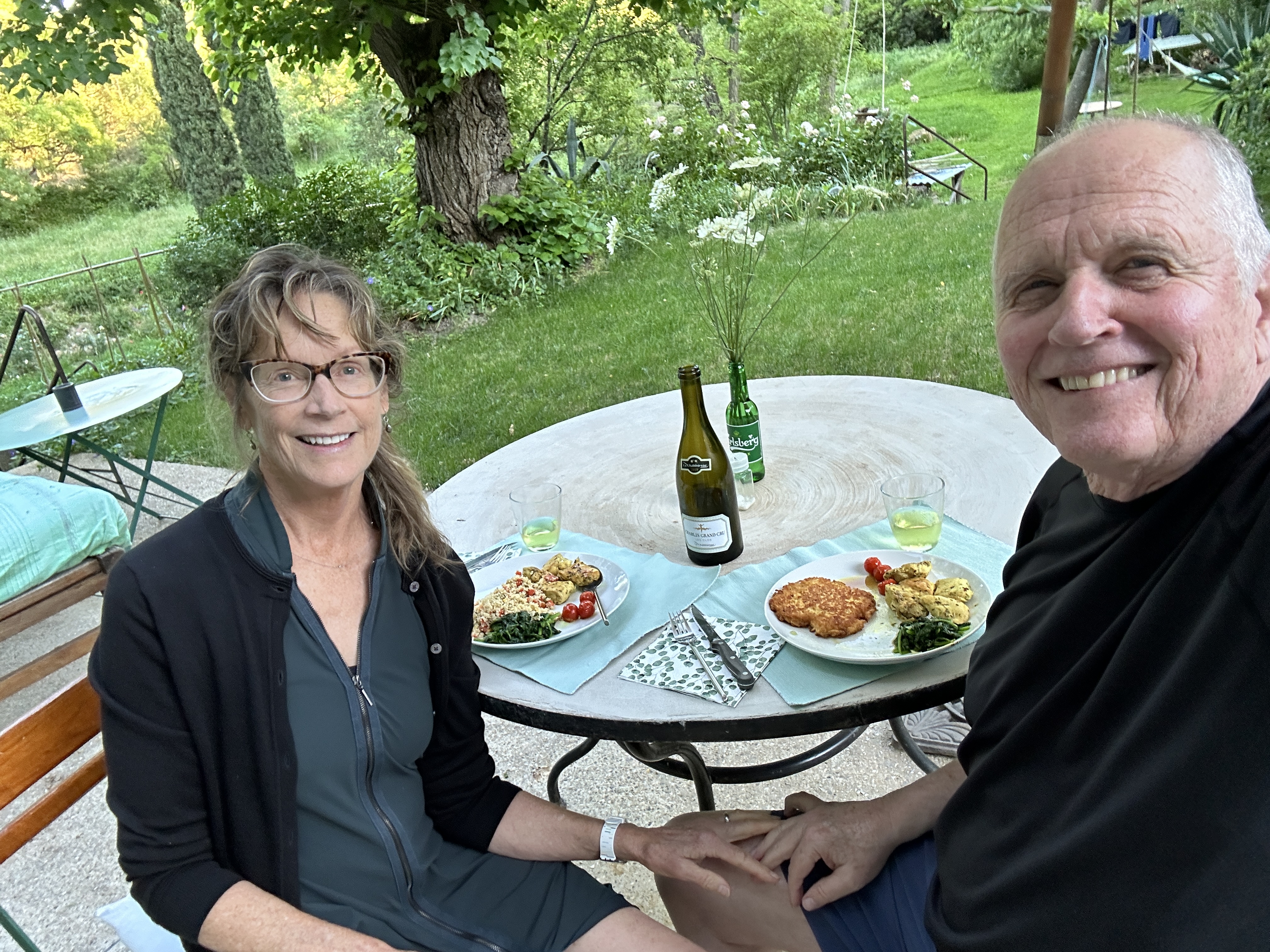
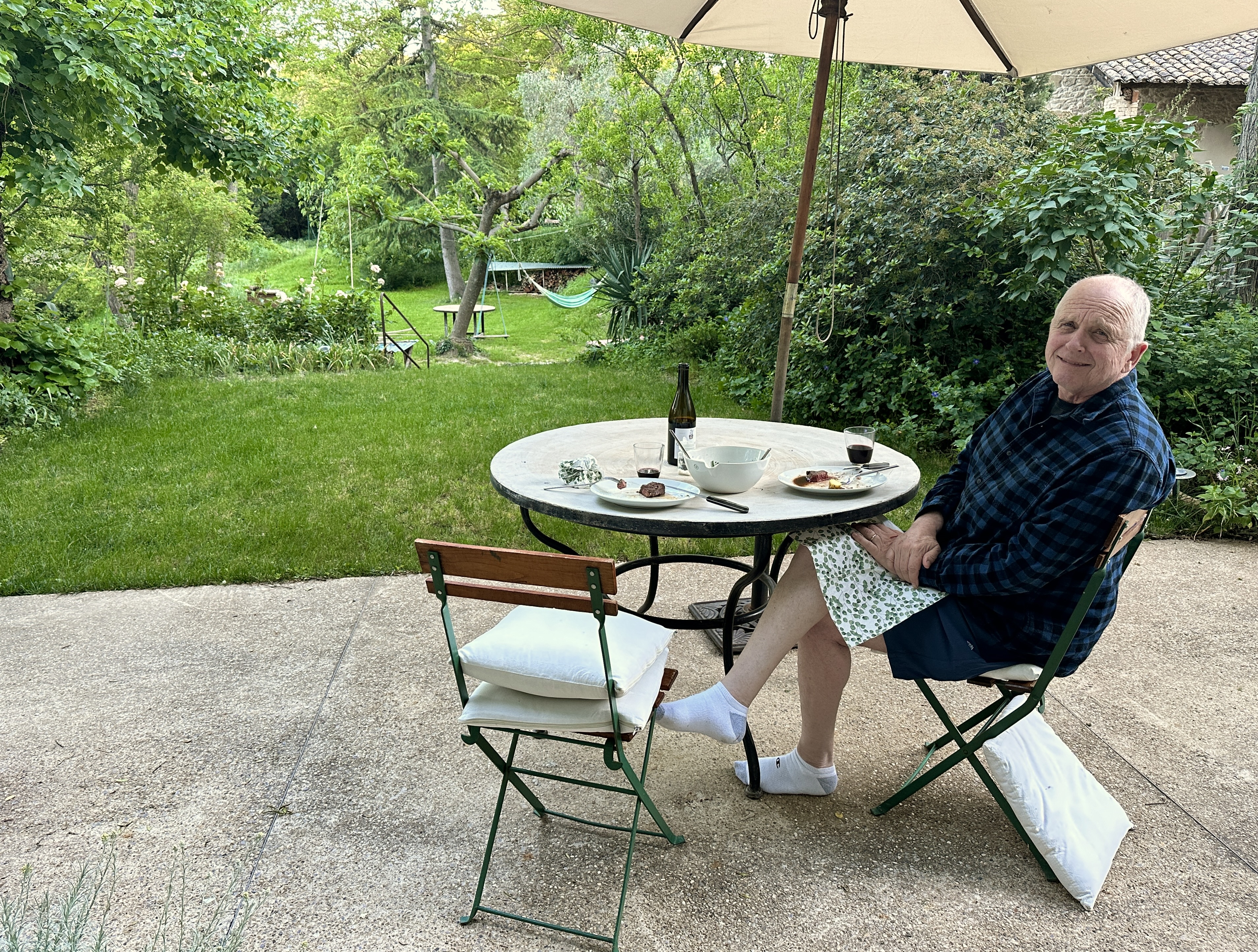
During one such dinner, as we enjoy a bottle of Chablis from our dwindling supply, Dave is struck by a possibility: Why not return to Chablis for two nights, buy a case of our favorite (La Chablisienne 2019 Grand Cru “Les Clos”) and have it shipped to ourselves in the USA? Why not, indeed? We’d have to depart Provence two days earlier than planned, drop our rental car in Paris instead of Avignon, and trade a three-and-a-half-hour ride on the TGV (Train de Grande Vitesse, ie. High Speed Train) for a five-and-a-half-hour drive to Chablis. For us, it’s a no-brainer. As much as we love the peaceful setting of the Moulin du Four, we have had enough of Provence, and it is an easy matter to alert Isabelle of our early departure, cancel our train tickets and book an Airbnb in Chablis. And so once again, we swerve from our original itinerary and follow a spontaneous déviation.

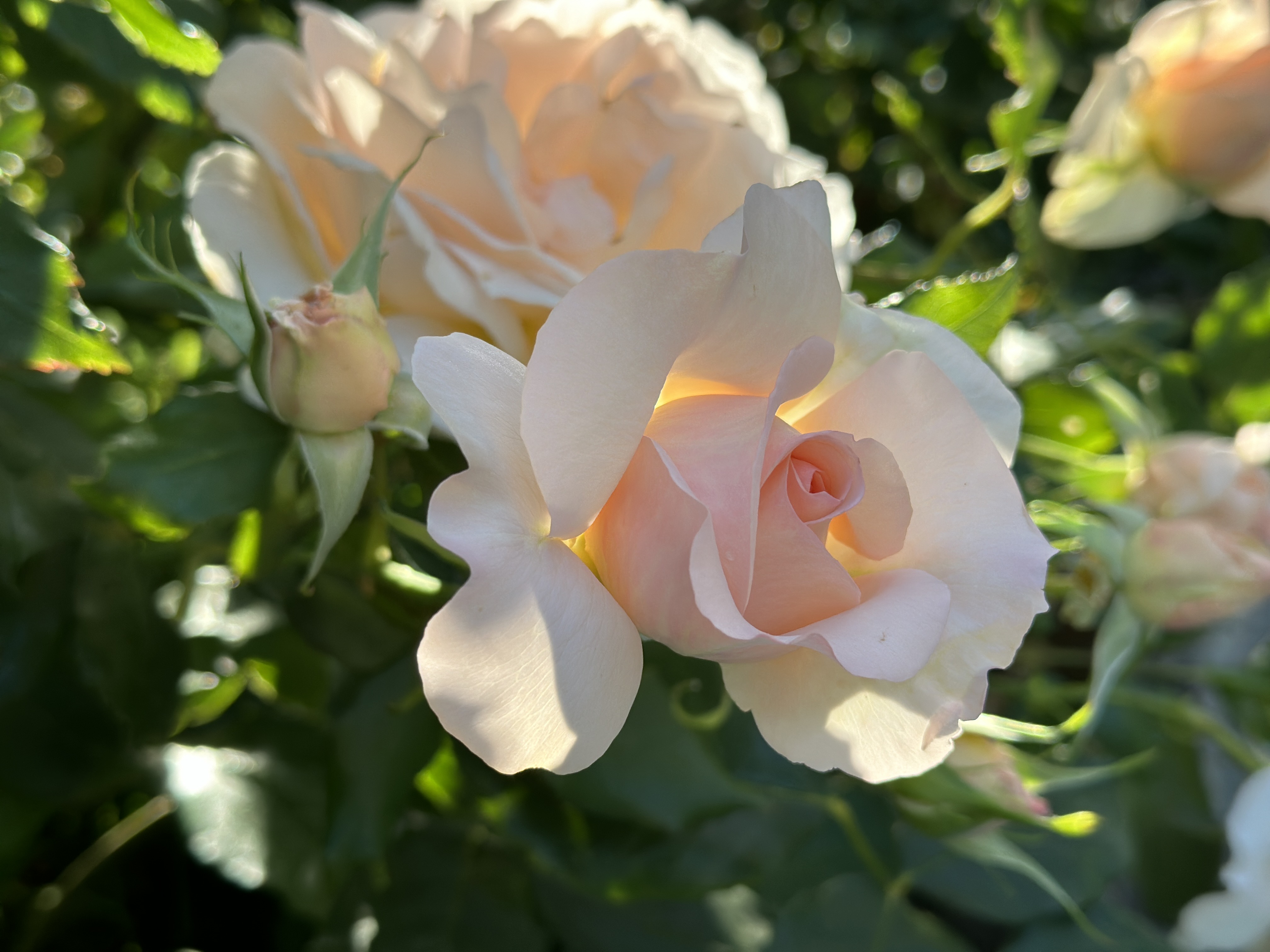
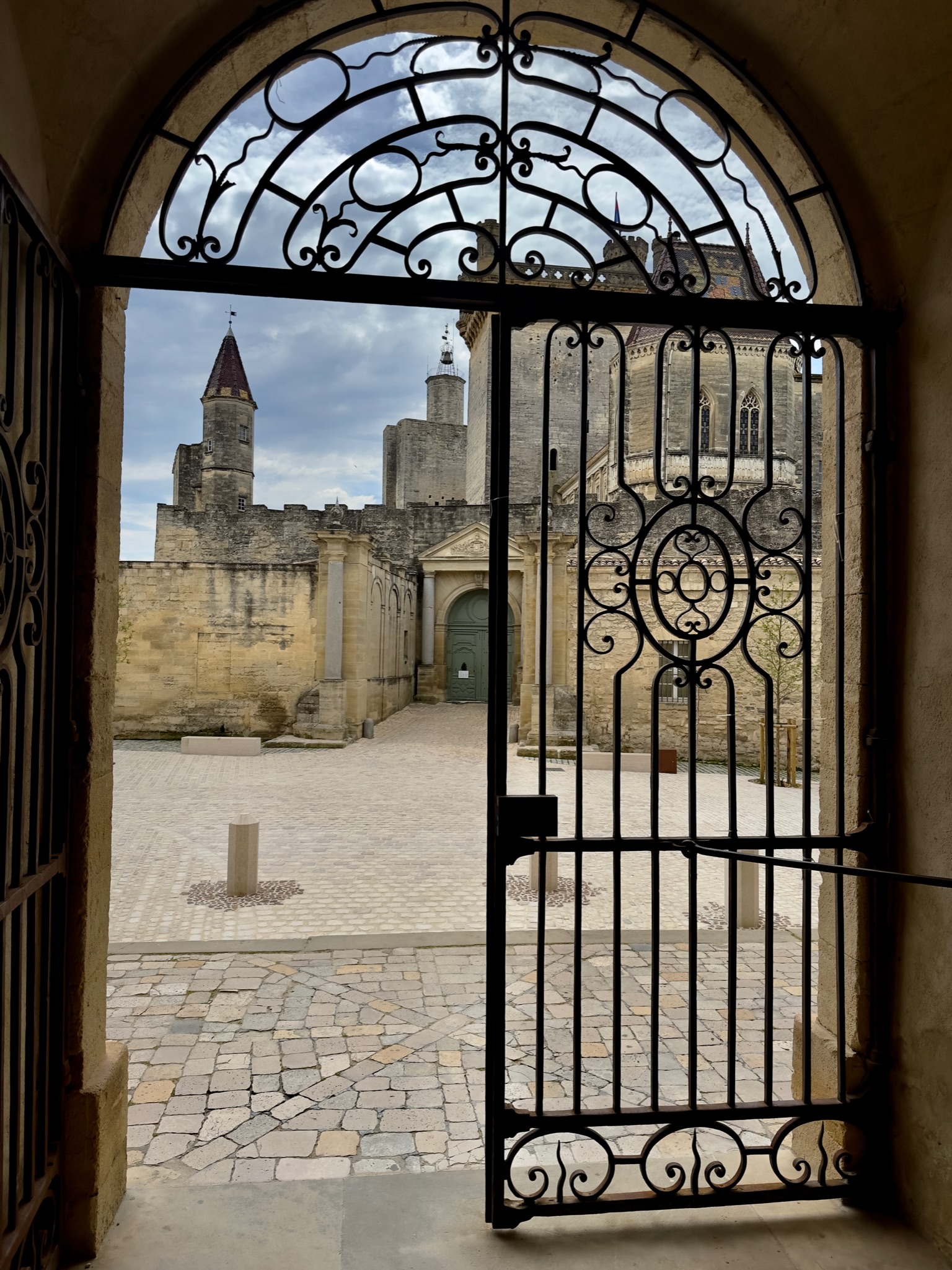
On what has turned out to be our last day in Provence, we visit a place neither of us has been before: the startlingly beautiful and impressively preserved town of Uzès. Every elegant façade and even the paving stones are fashioned from creamy white limestone, lending a remarkable harmony and grace to this “city of art and history”.
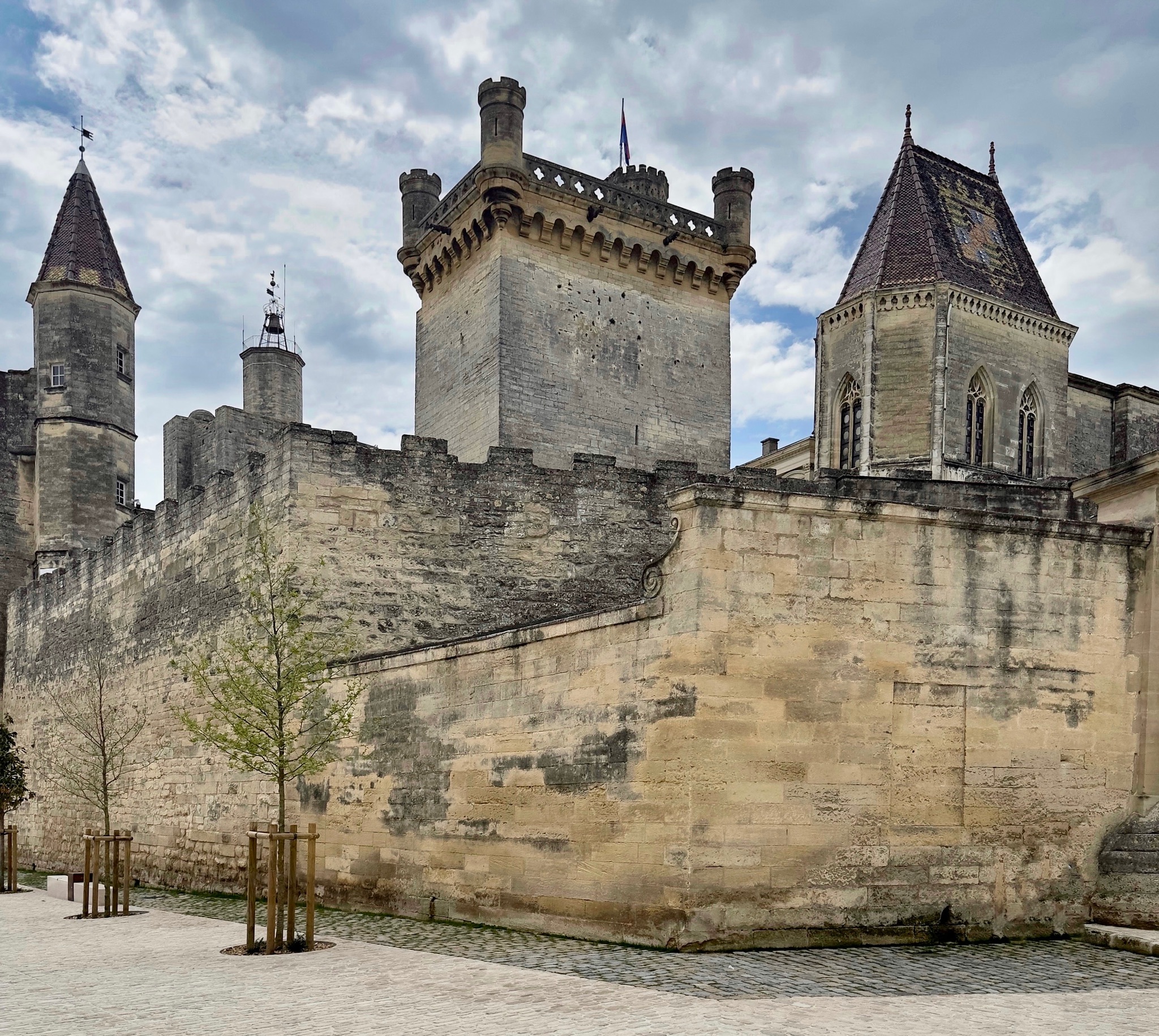
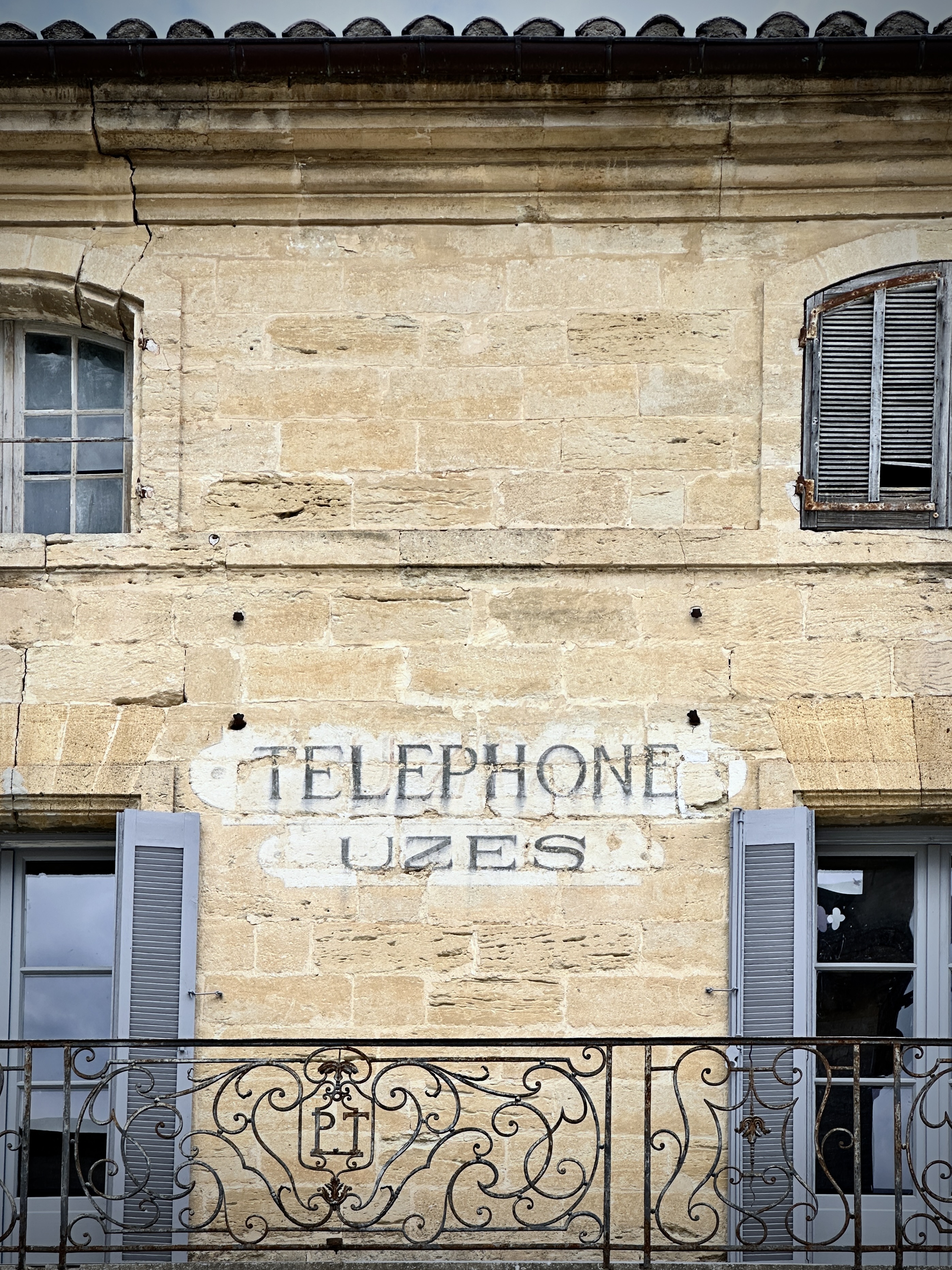
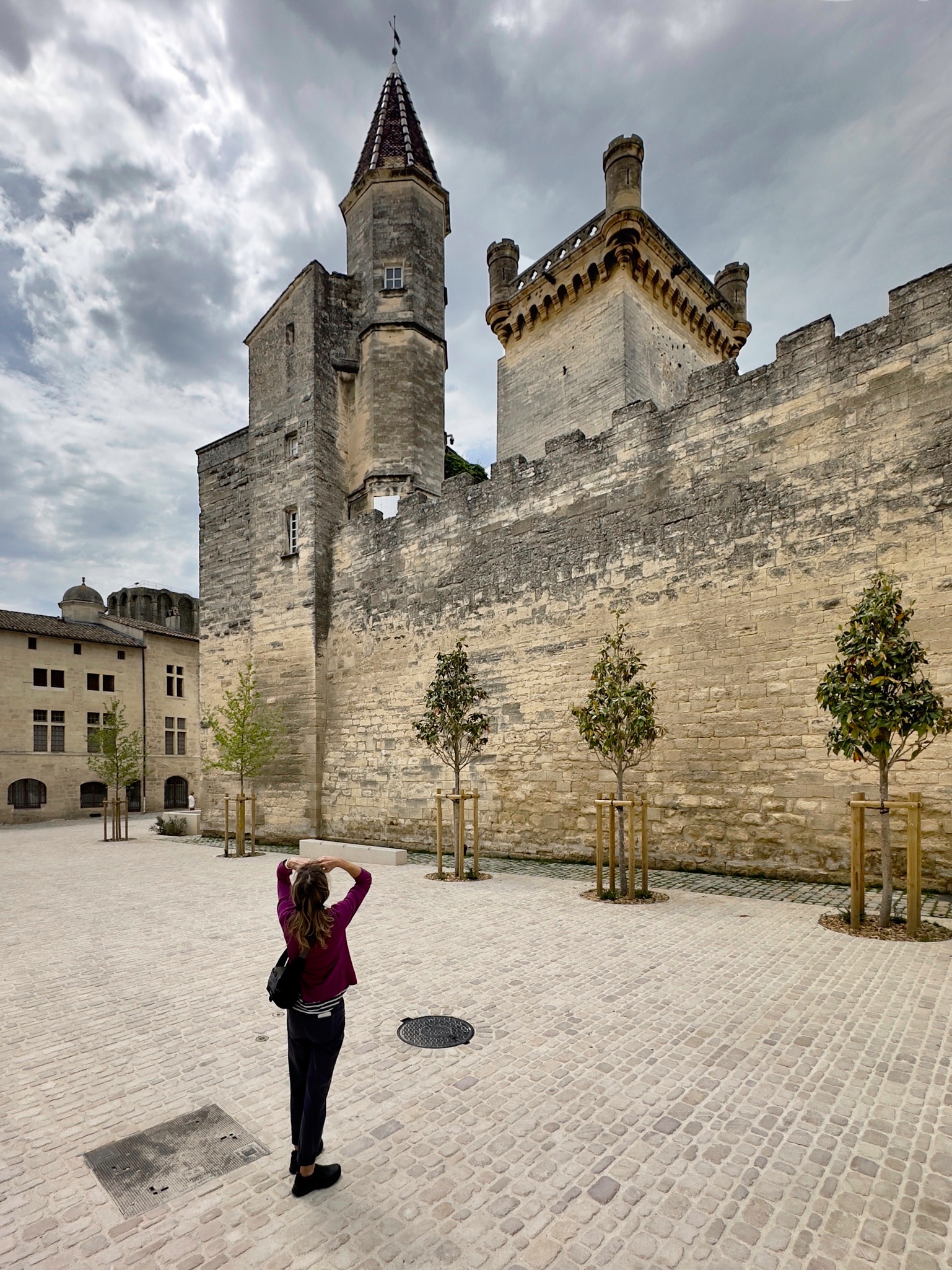
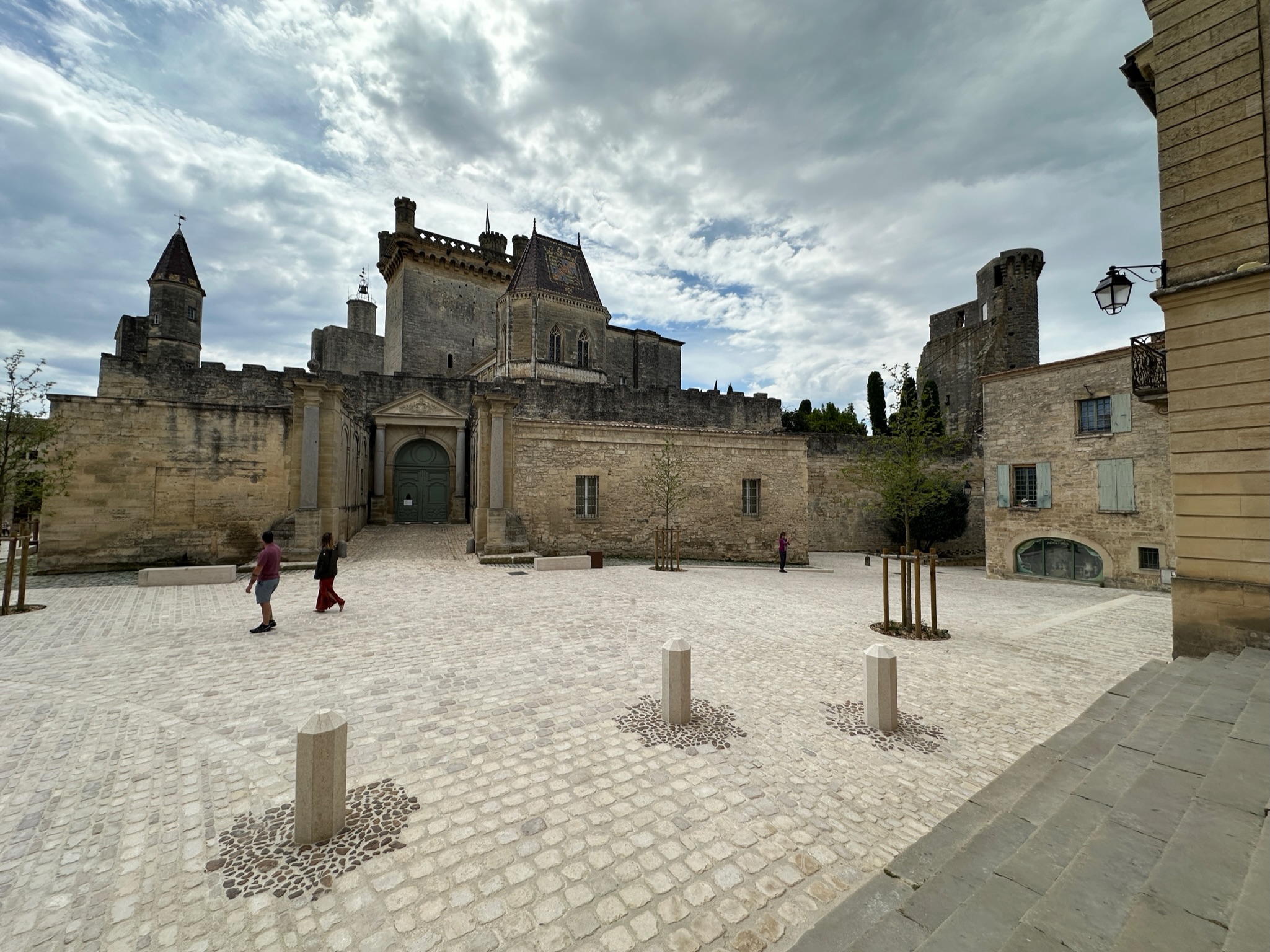
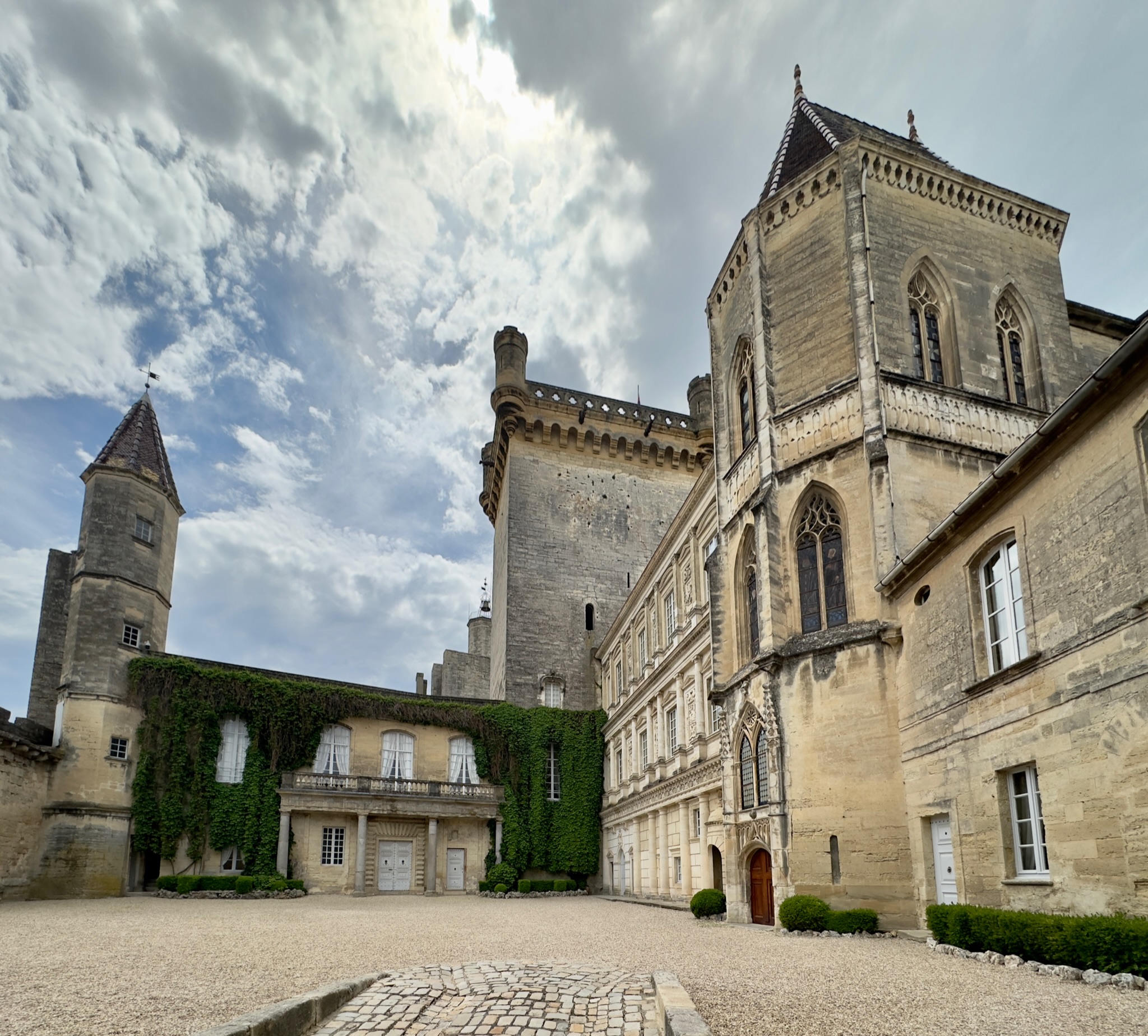
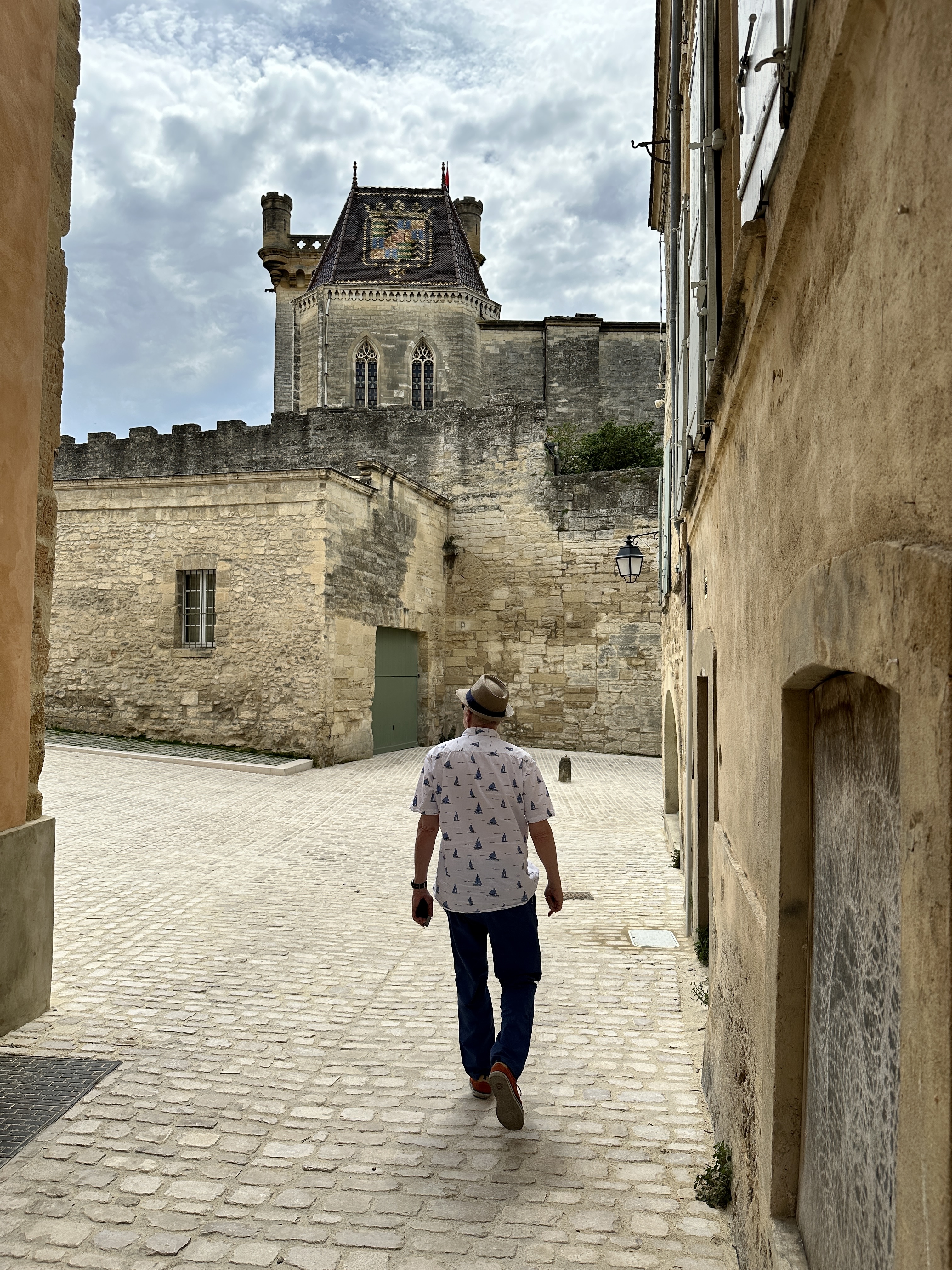
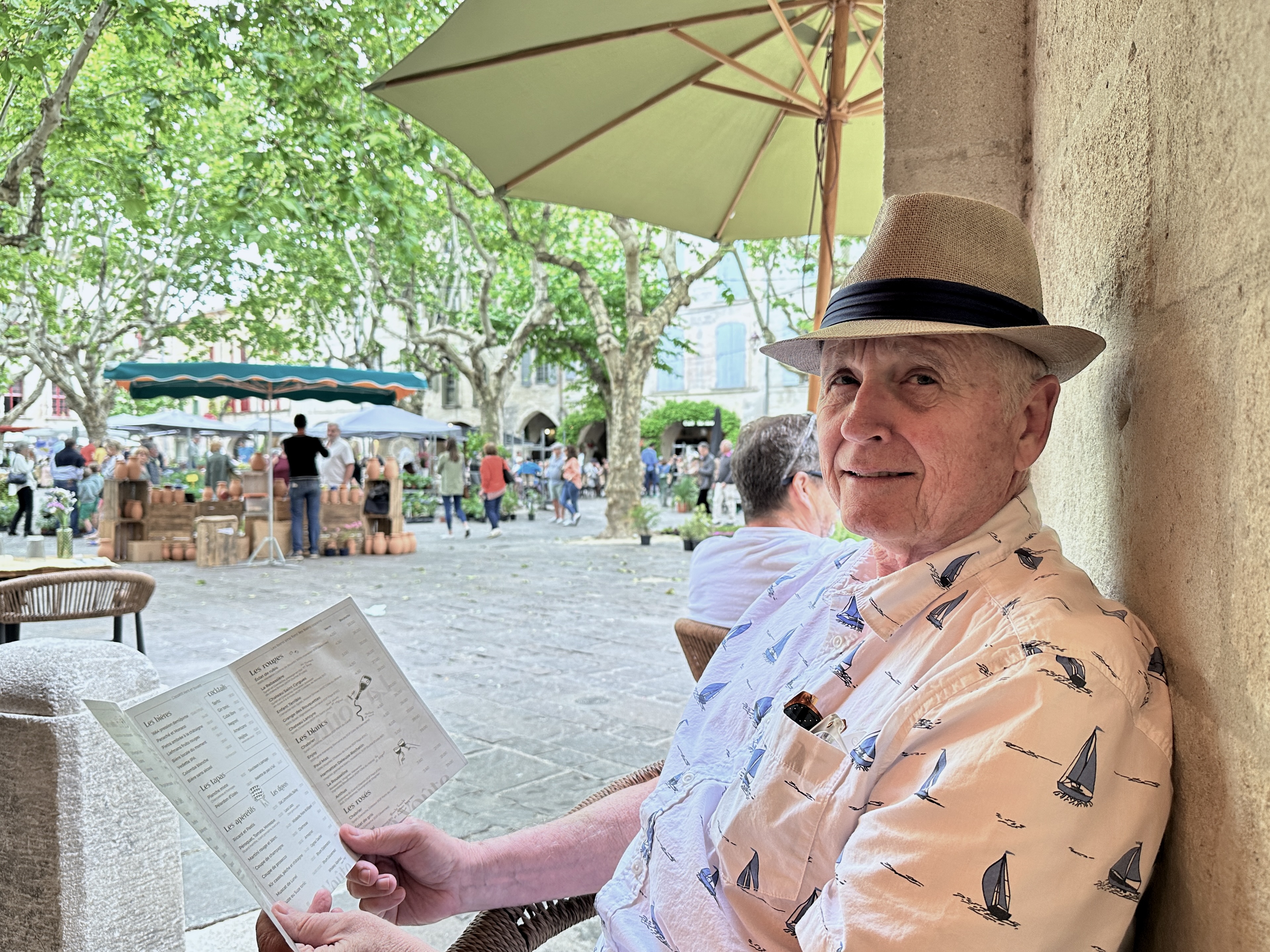
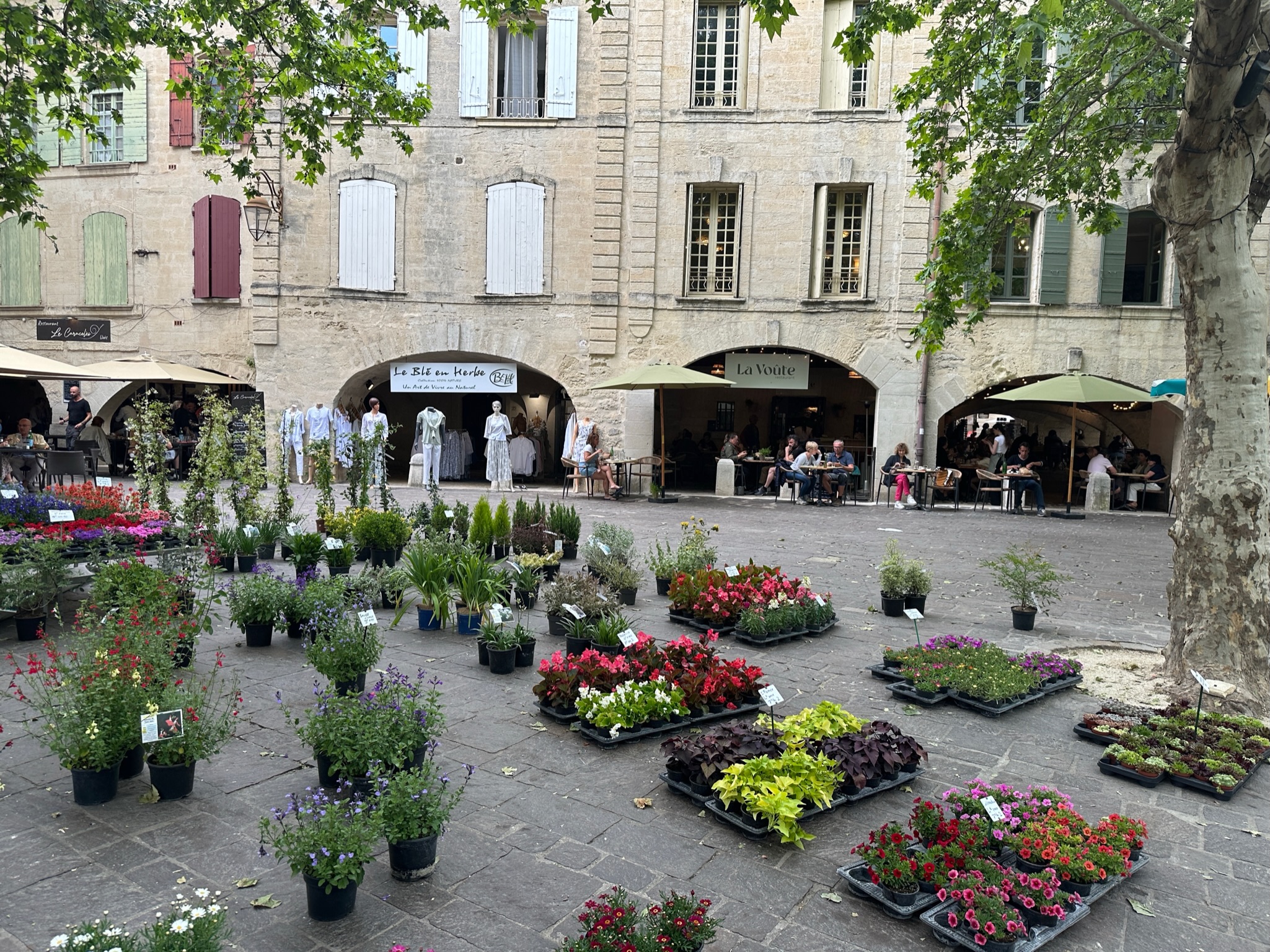
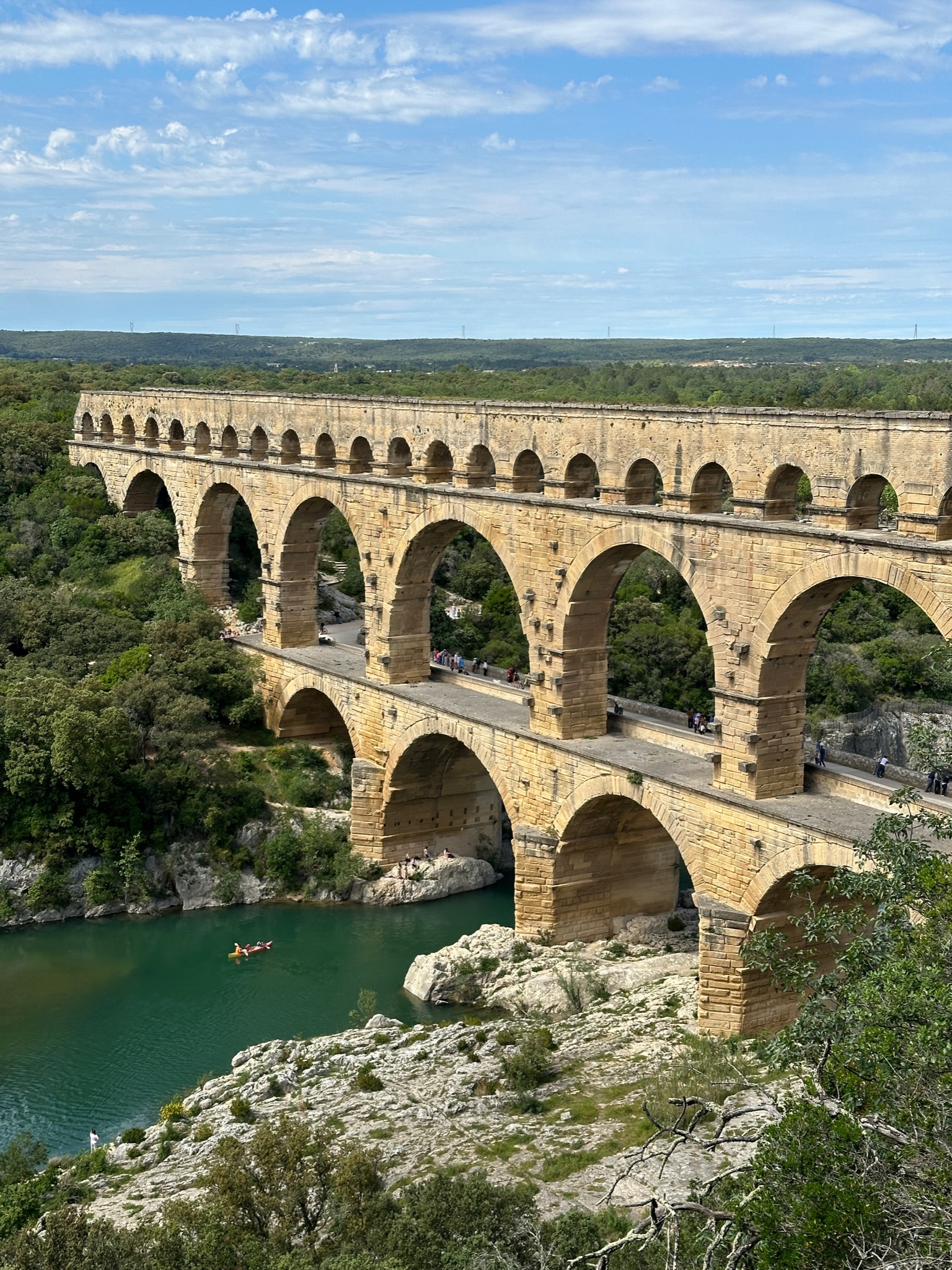
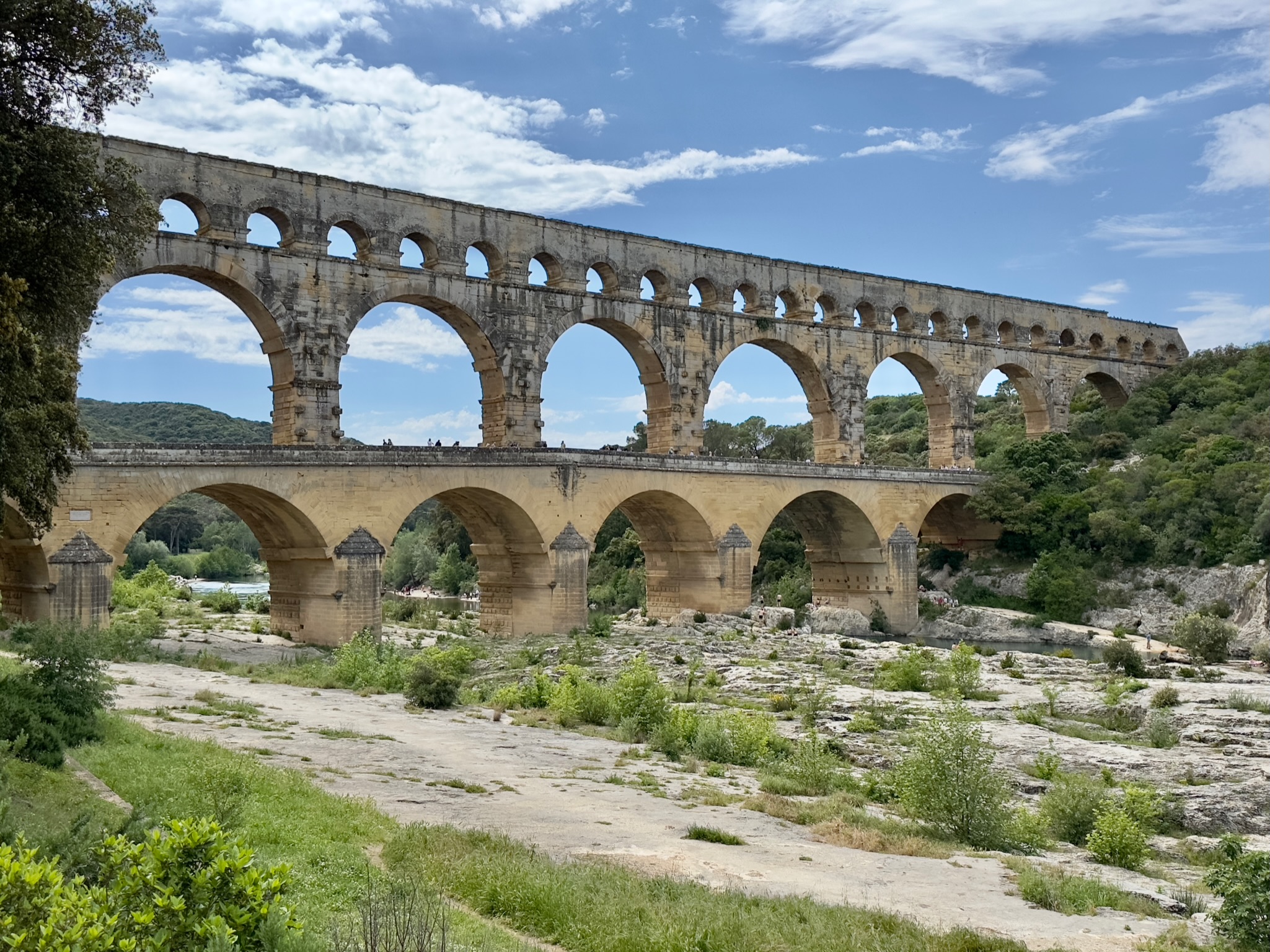
We lunch at a café on the main market square in Uzès, La Place-aux-Herbes, and then head for the grand finale of our time in Provence, the ever-astounding Pont du Gard.
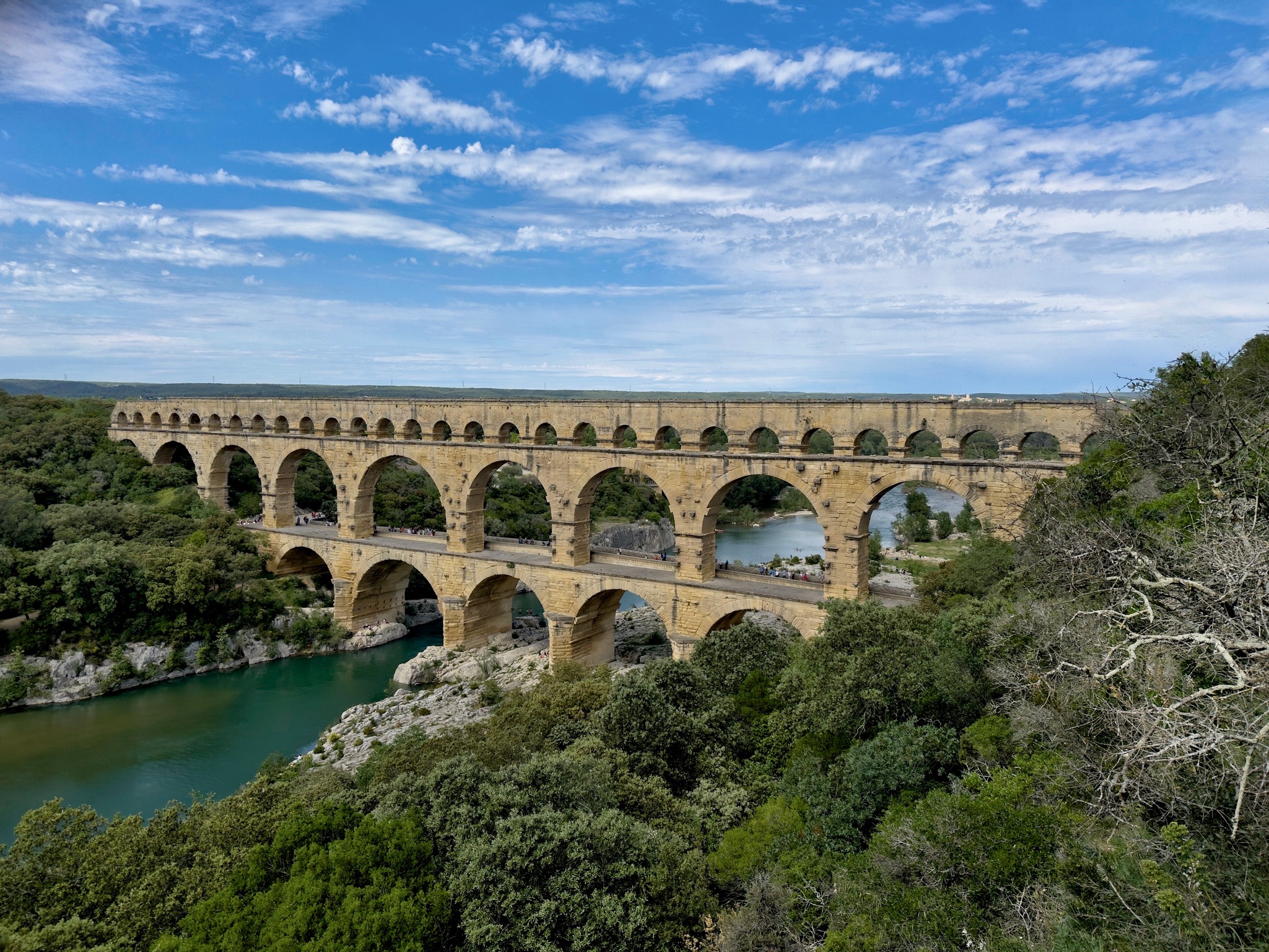
This remnant of Roman engineering—constructed without mortar, BTW—never fails to amaze. Anna can’t help but wonder if the people who designed and built it (most of whom were enslaved laborers) ever gave a thought as to whether or not it would still be standing more than 2,000 years later.
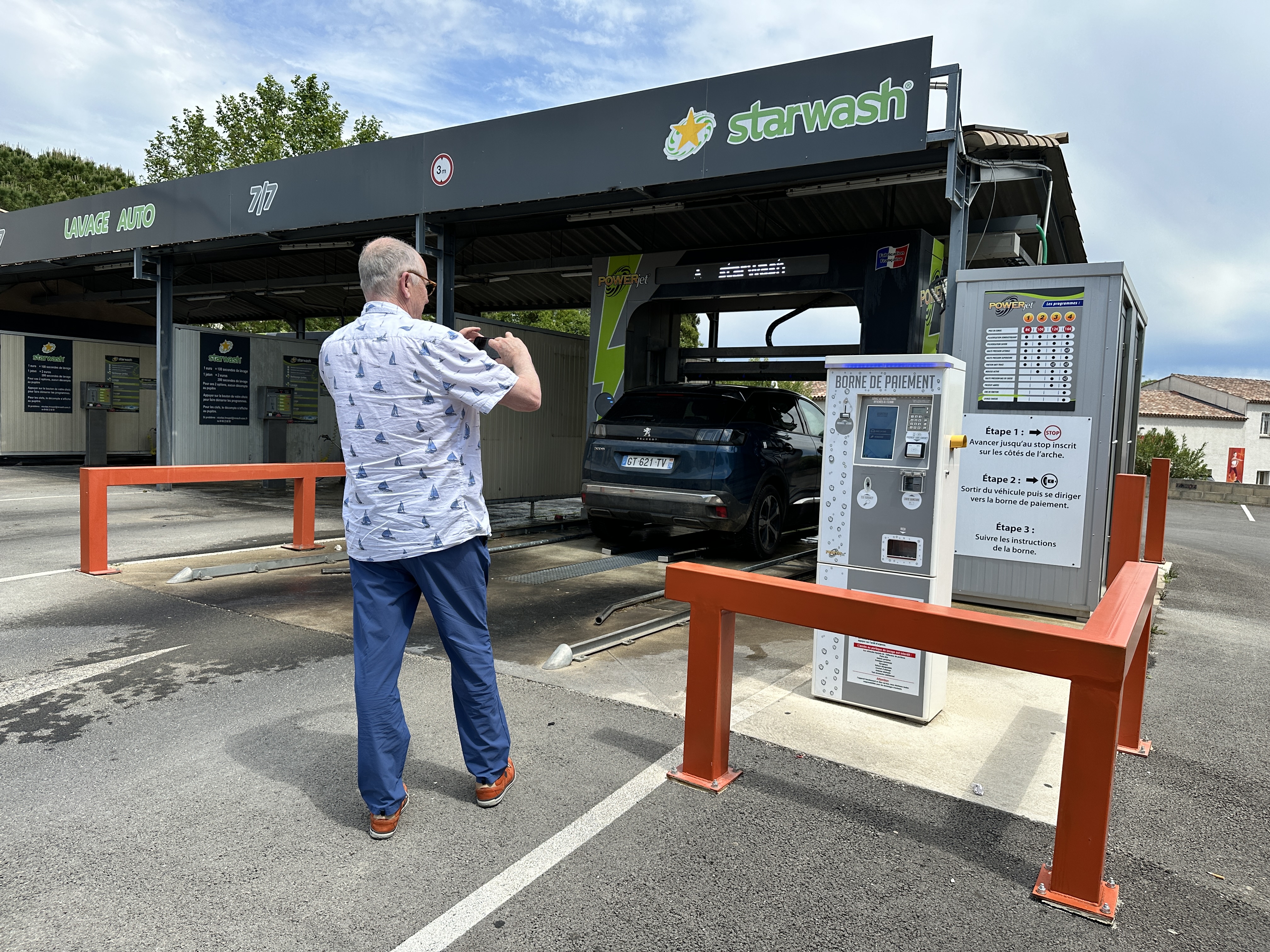
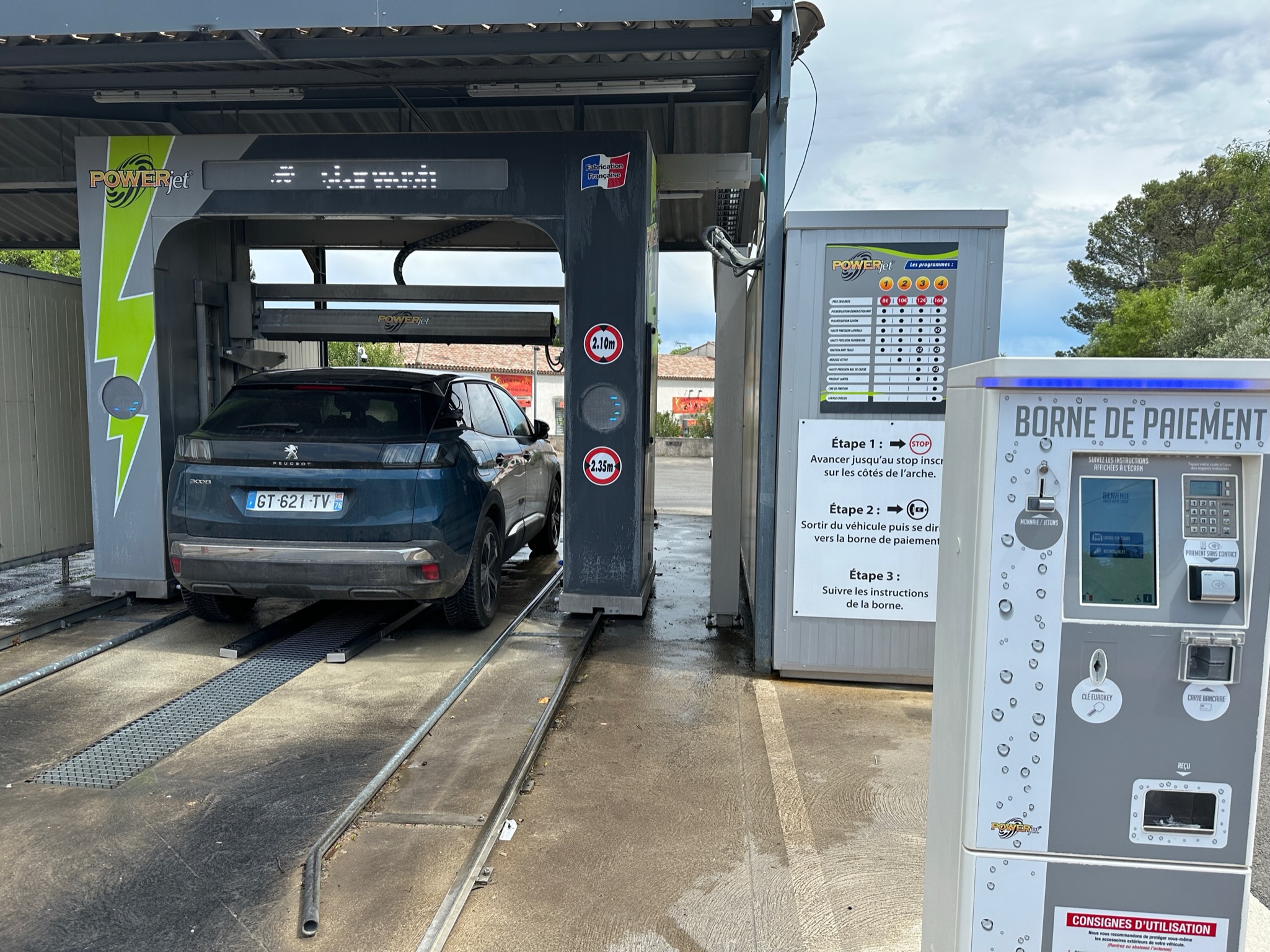
In anticipation of the drive to Chablis, our car—especially the bug-spattered windshield—needs a serious scrubbing. We find a lavomatique automobile, make our choice from a long, semi-comprehensible menu of cleanliness options, and then stand back to watch the show. (In automatic car washes in France, driver and passengers must exit their vehicle before the mechanized process can begin.) Fifteen minutes later, we come away with a gleaming car and an expanded vocabulary that we might, or might not, ever utilize again. (Who knew that pulverisation is the French word for “spray”?)
Our next unforseen adventure awaits on the road to Chablis, but we will save it for the next post!
 Thin Slicing the World
Leave a comment