
Yorkshire
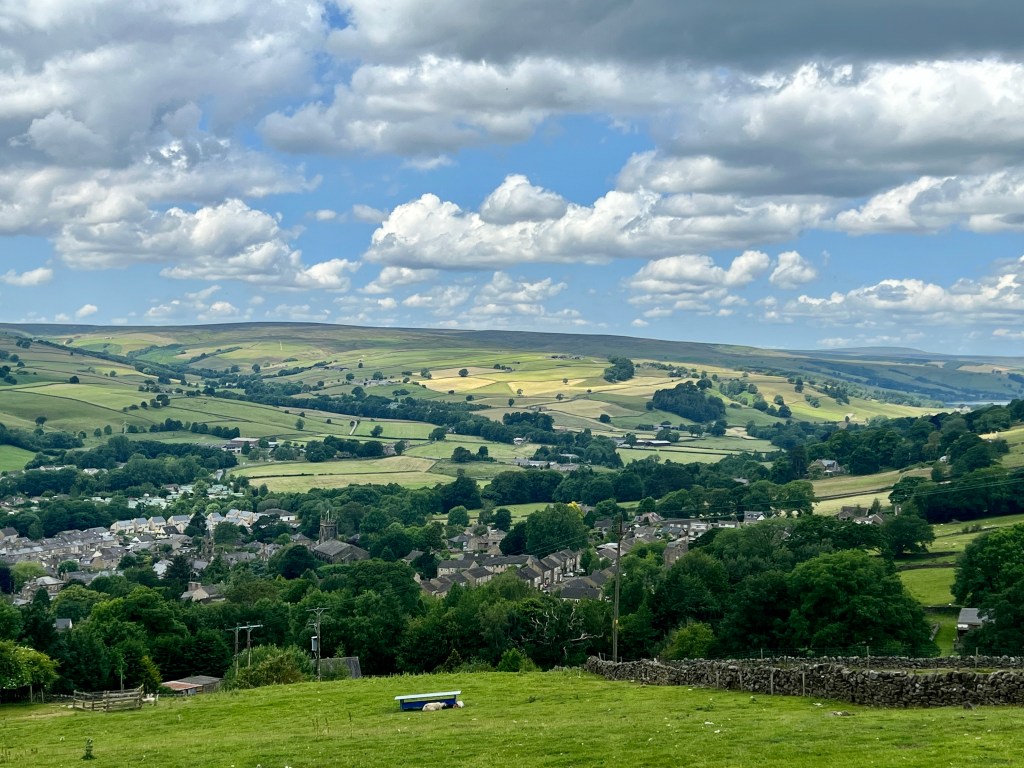
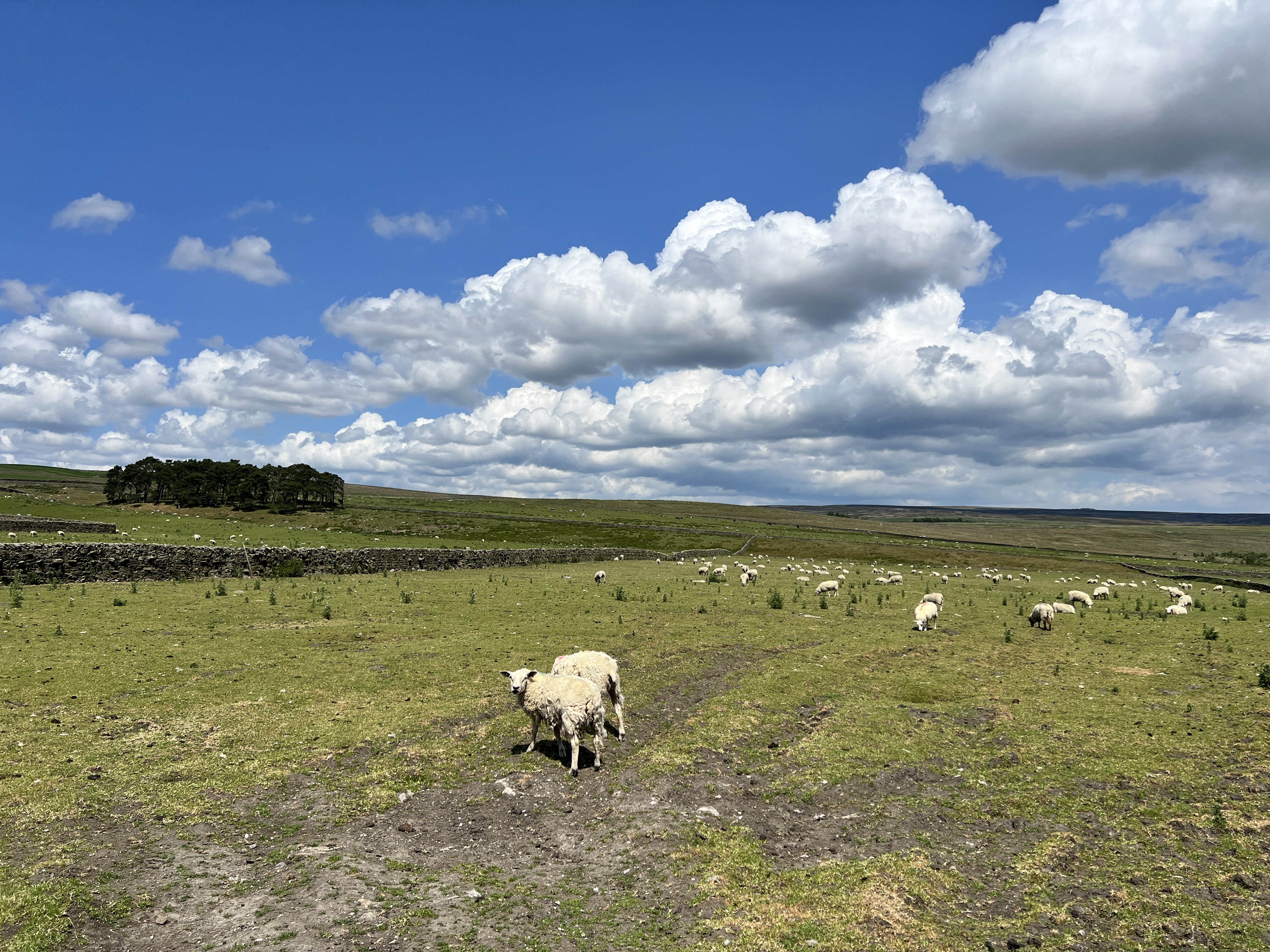
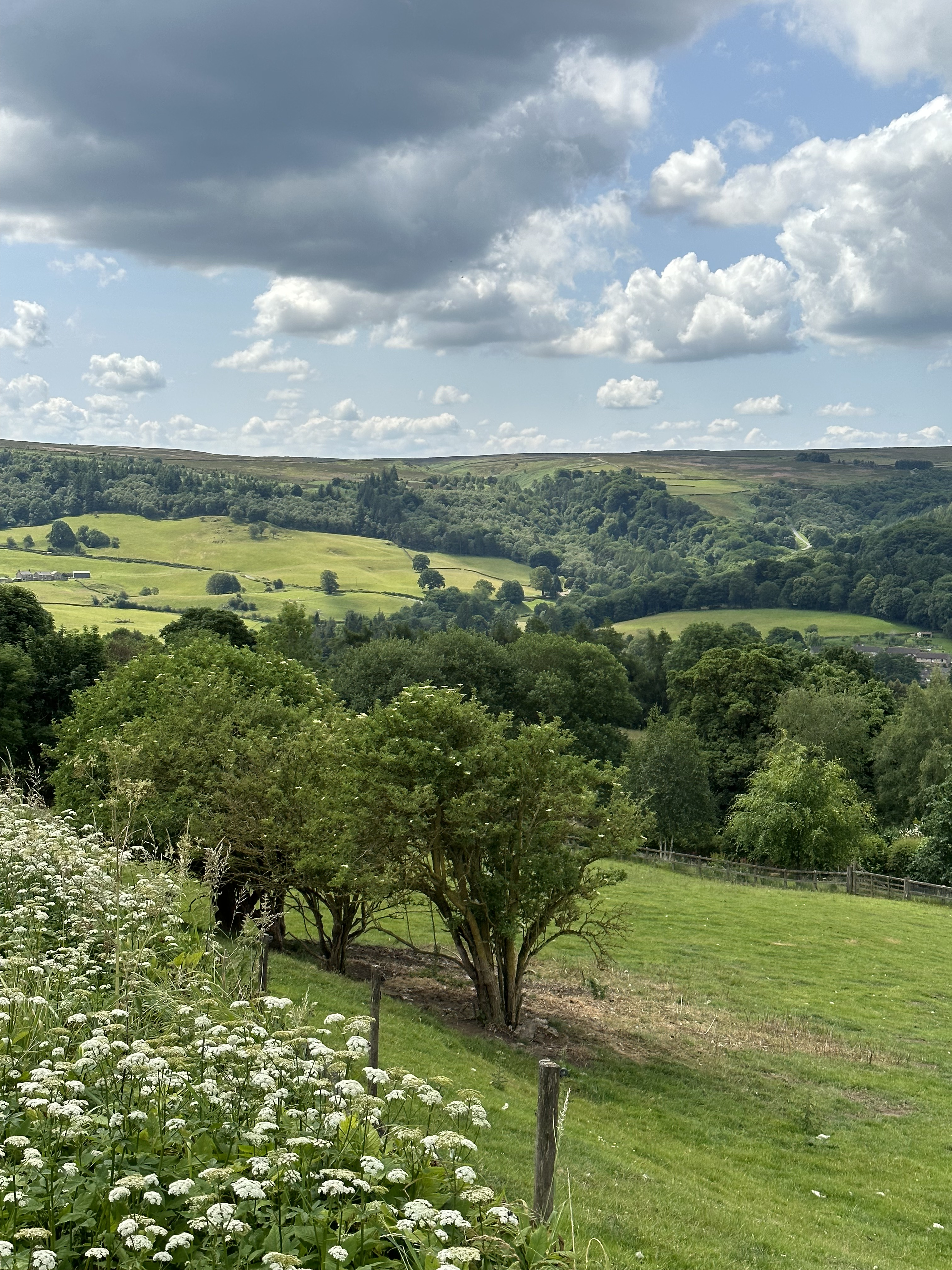
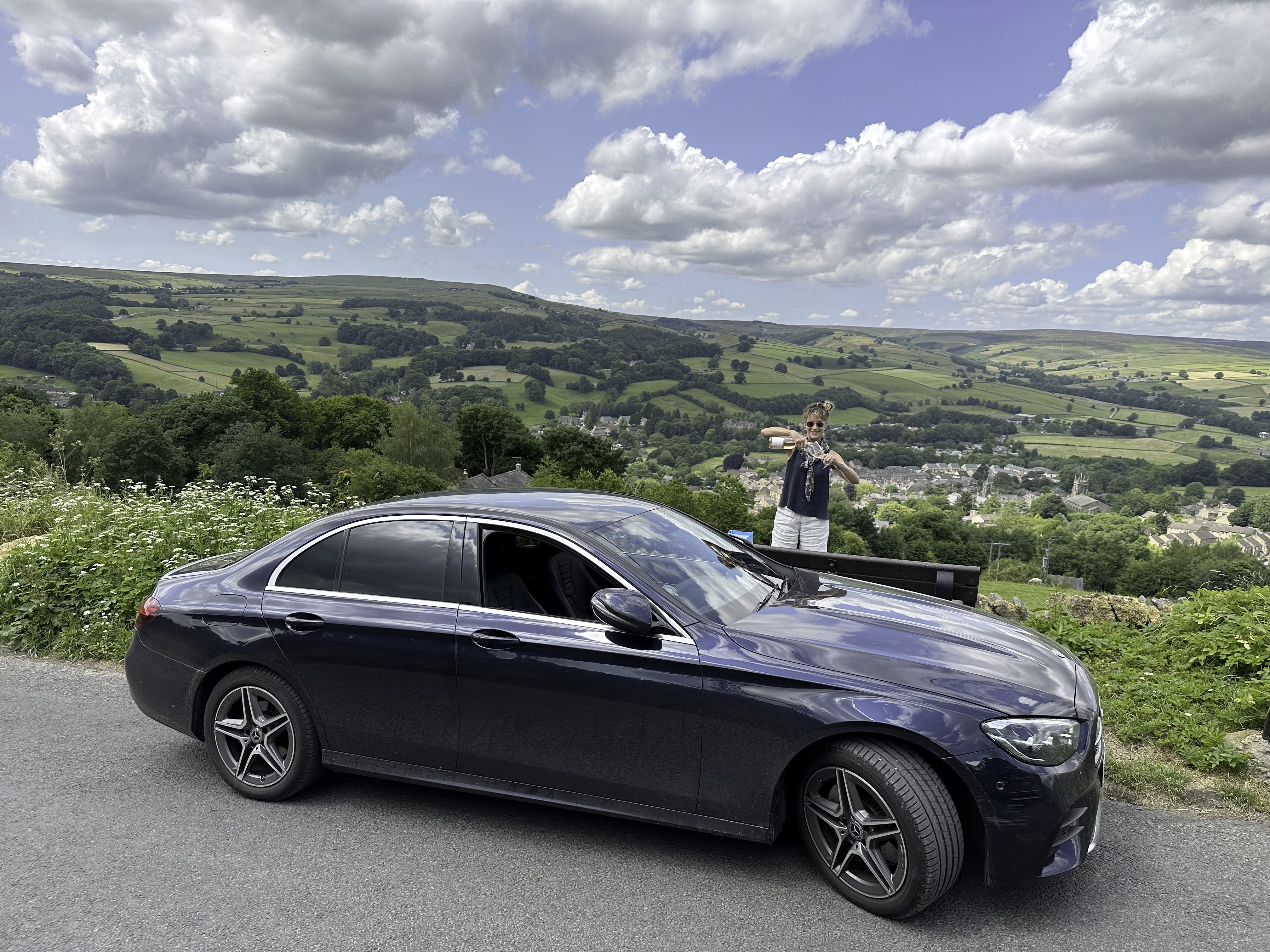
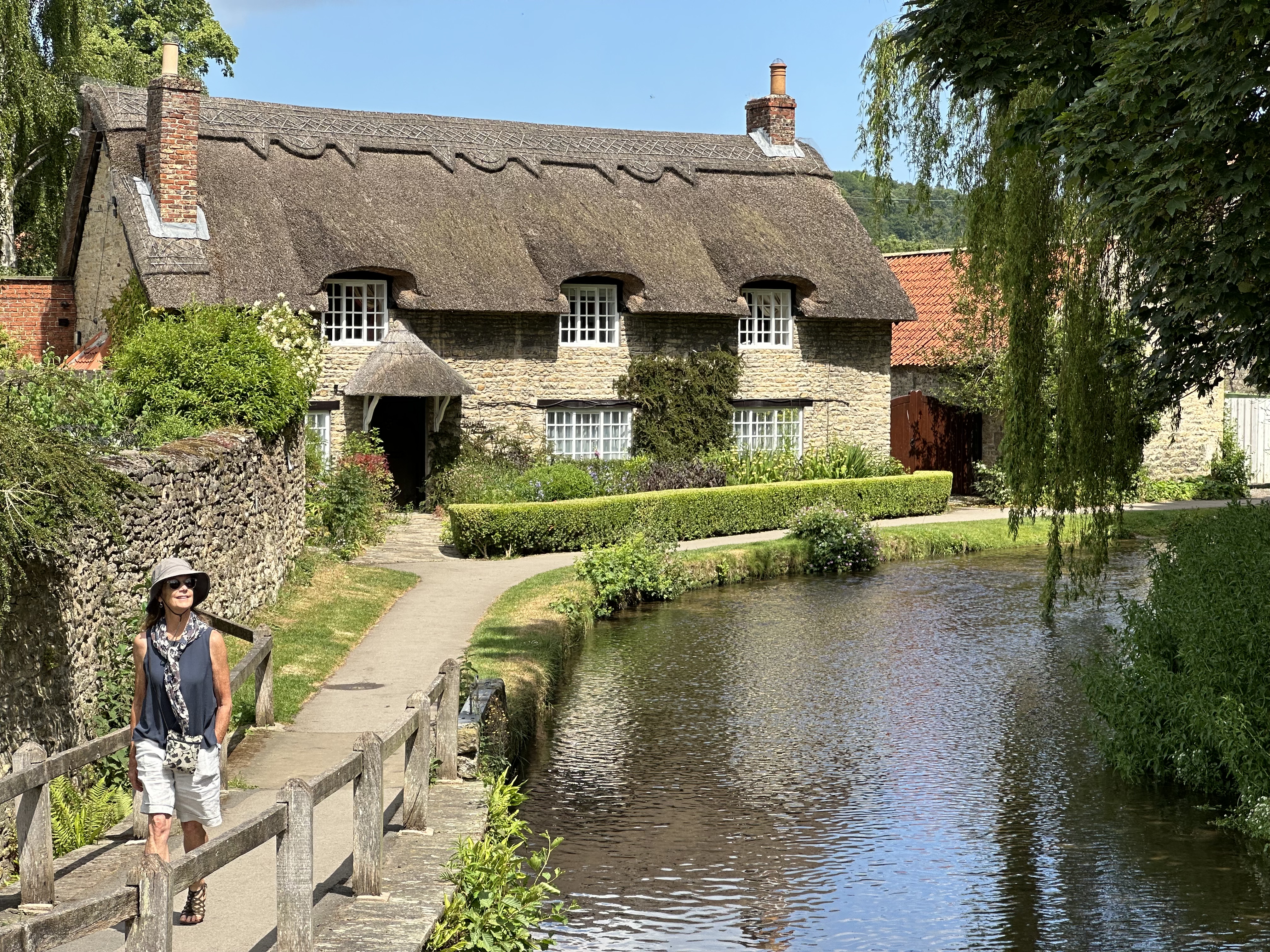
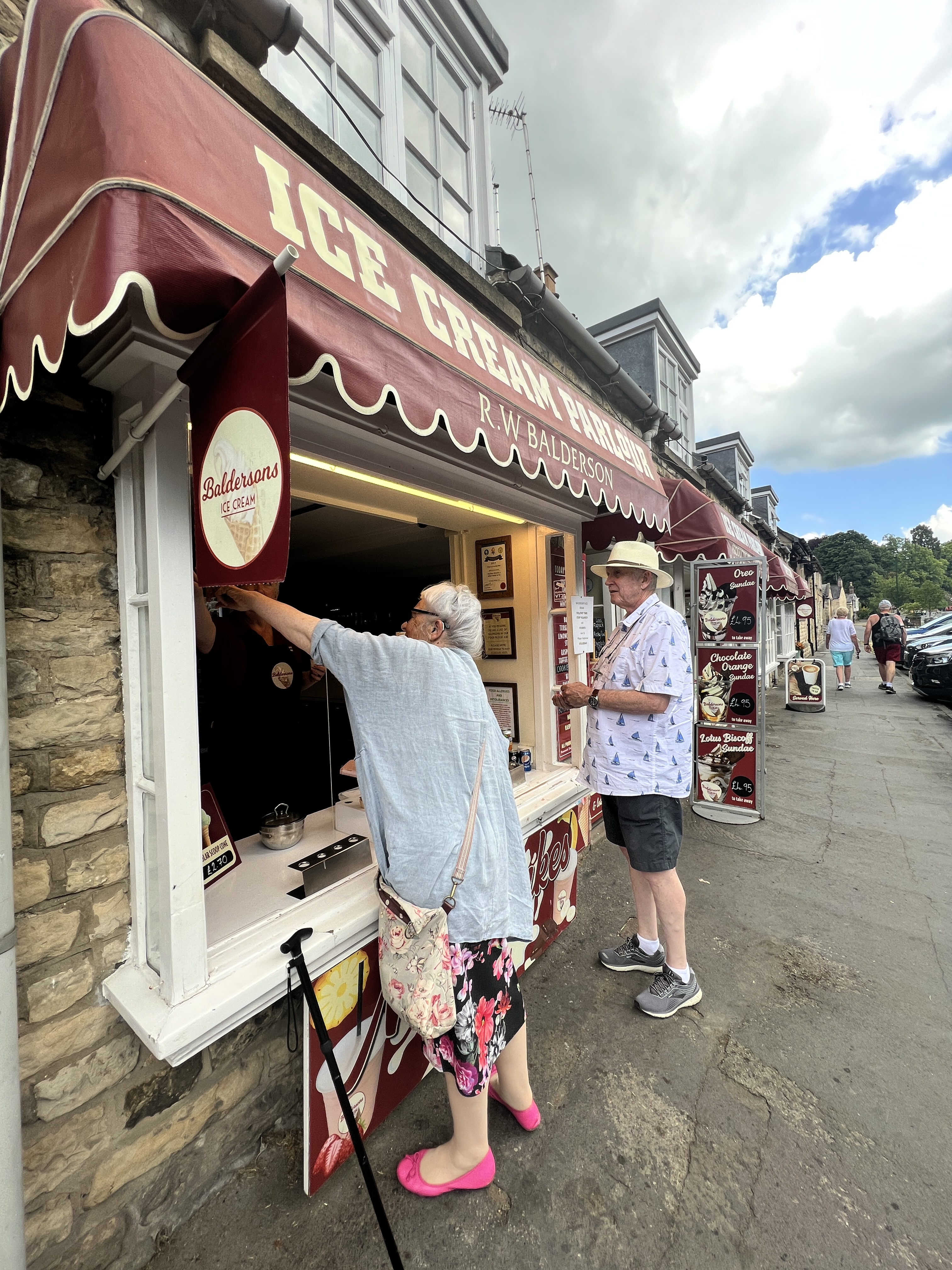
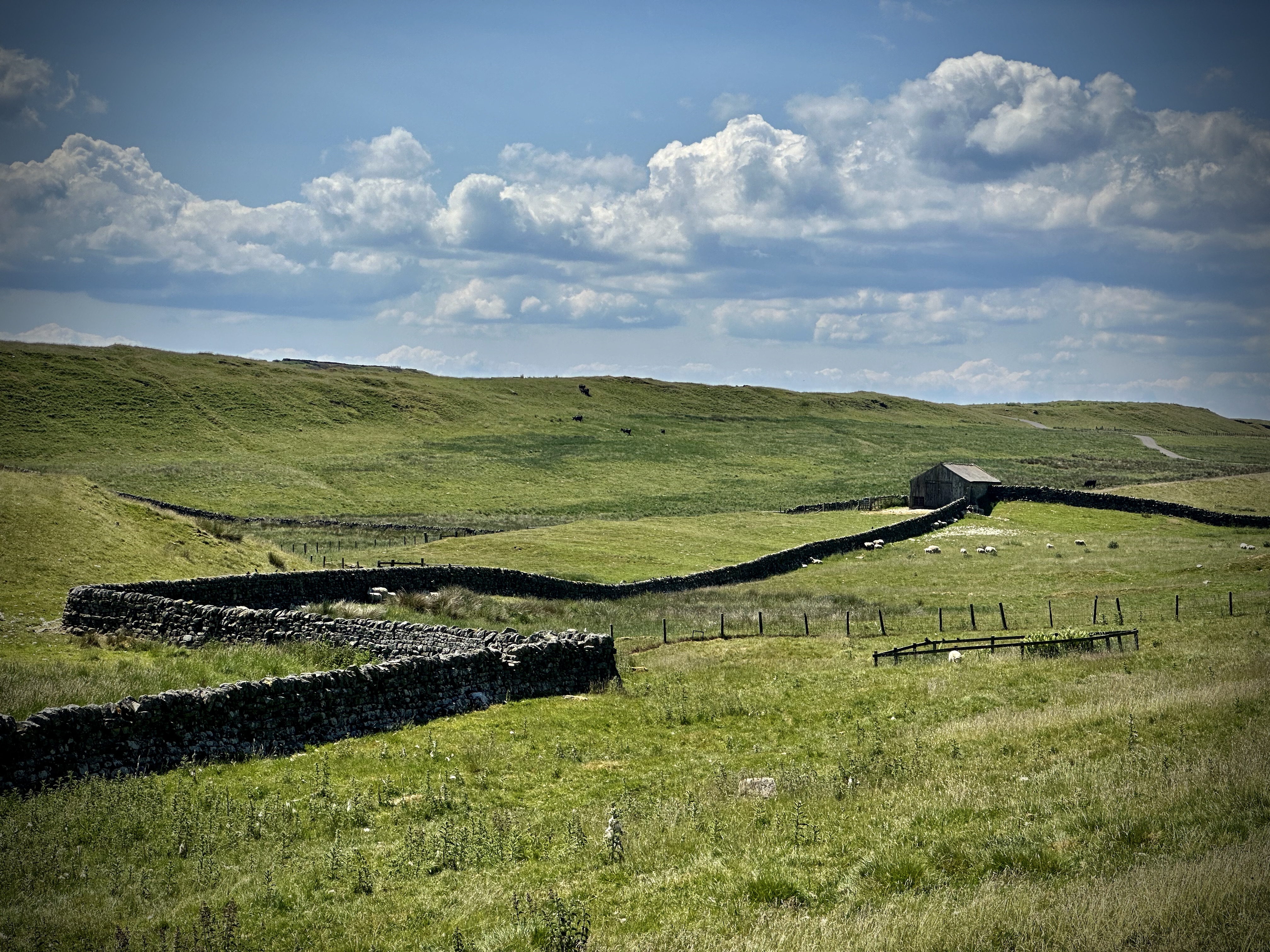
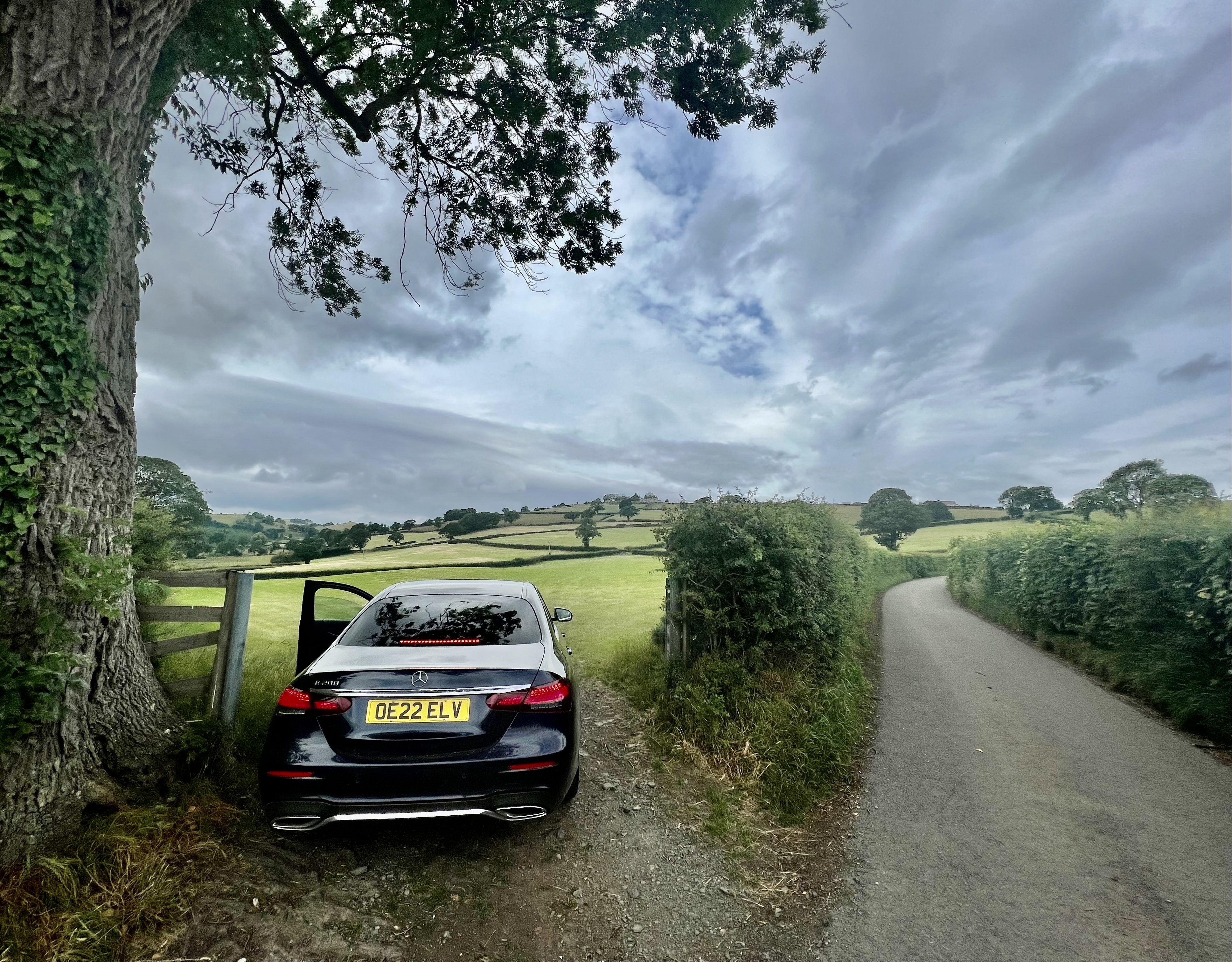
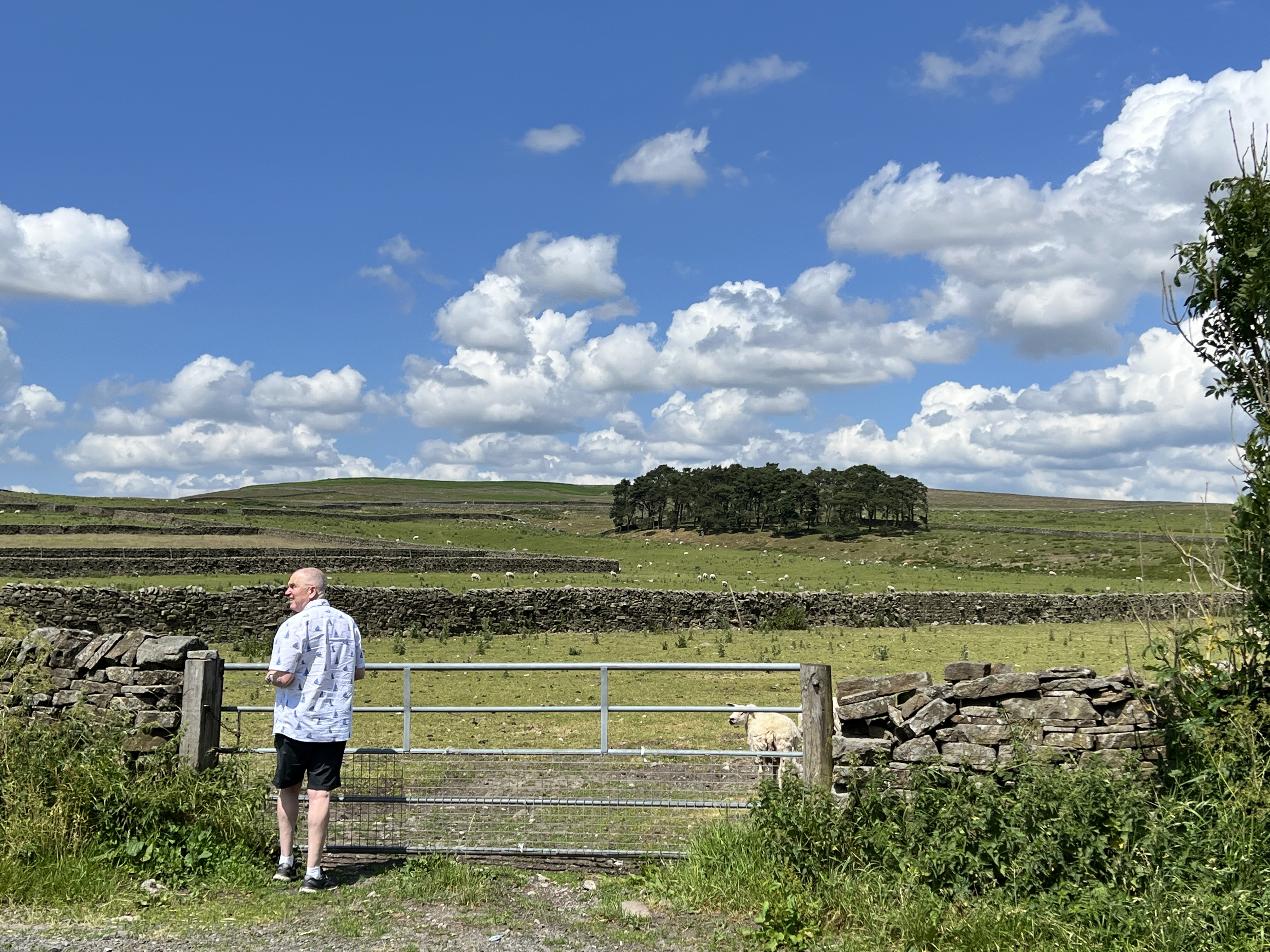
Our route takes us southwest, through scenic hills and valleys (a.k.a. “dales”), picturesque villages and market towns (Thornton-le-Dale, Pickering, Helmsley and Grassington, to name a few). Our pace is leisurely. We stop for walks, for picnics, and to light candles in parish churches. Sometimes we stop for ice cream. We pass solitary farmhouses built of gray stone, sheep grazing in green fields bordered by hedgerows or stone walls, and once, we encounter a tractor parade. As always, we find many roses and only a few tiny thorns along the way.

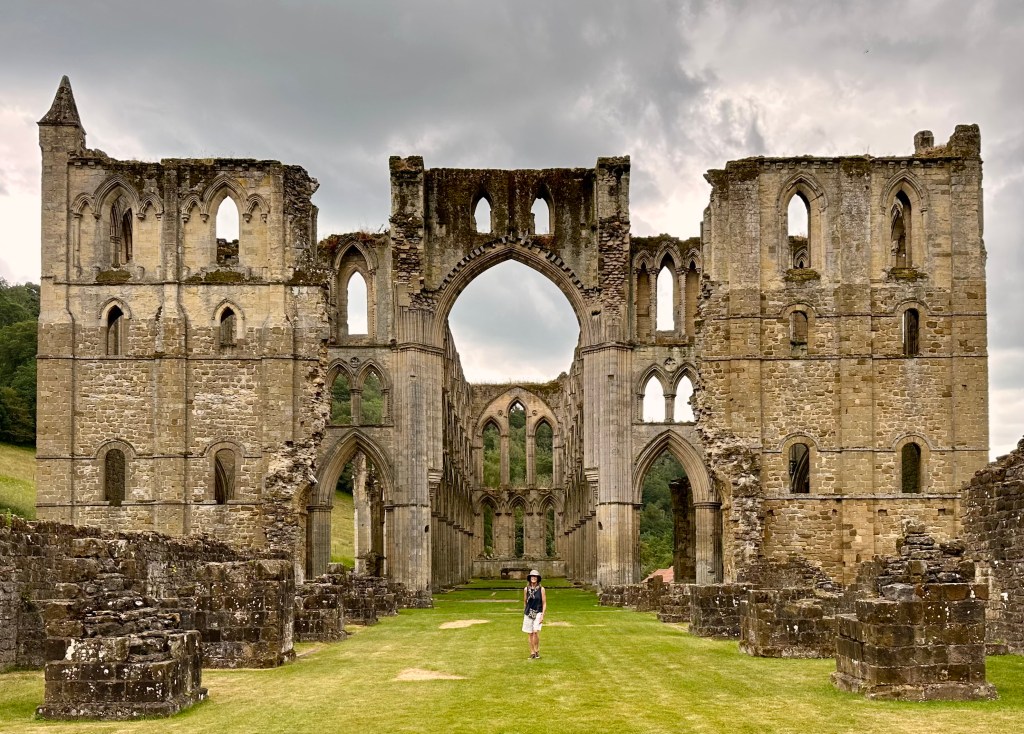
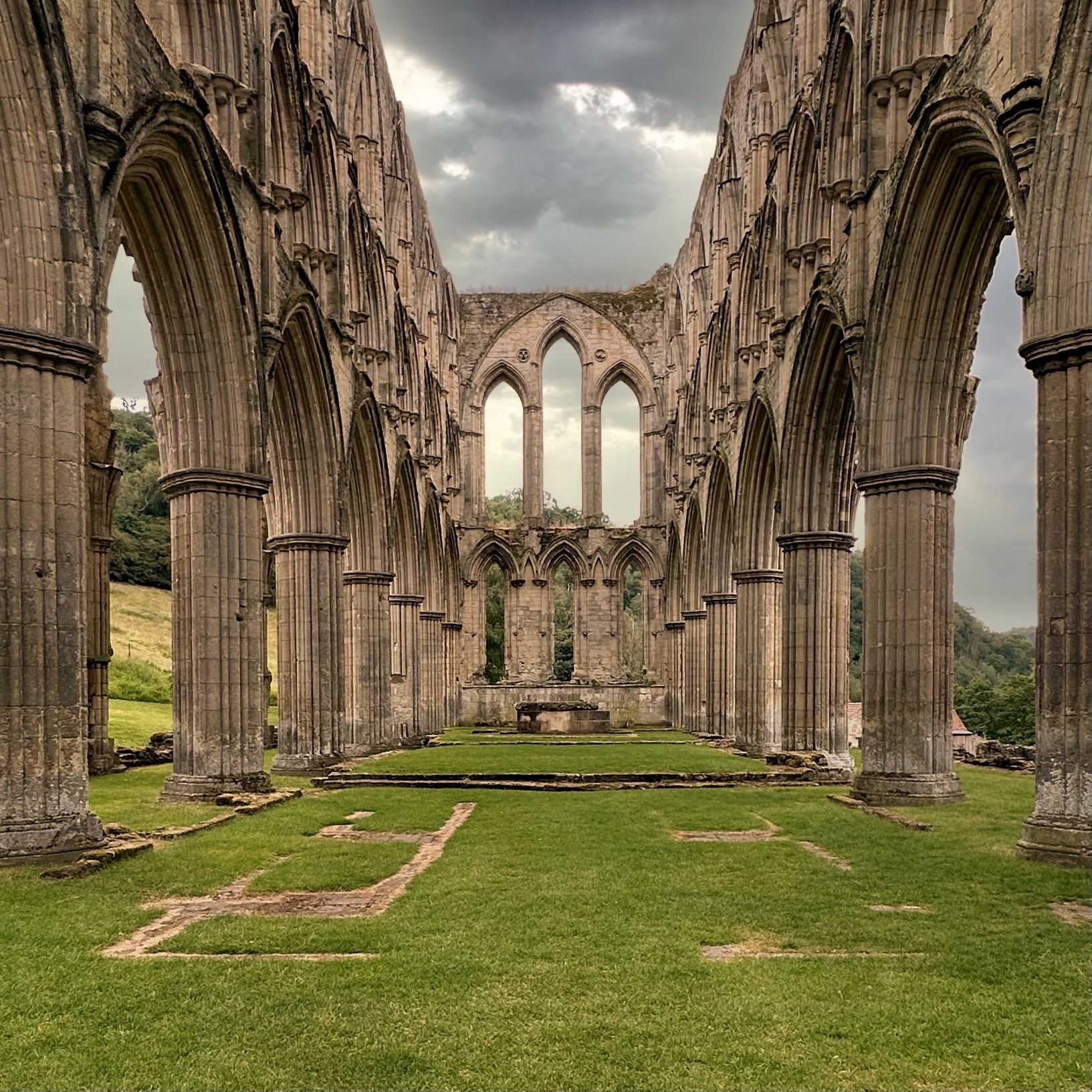
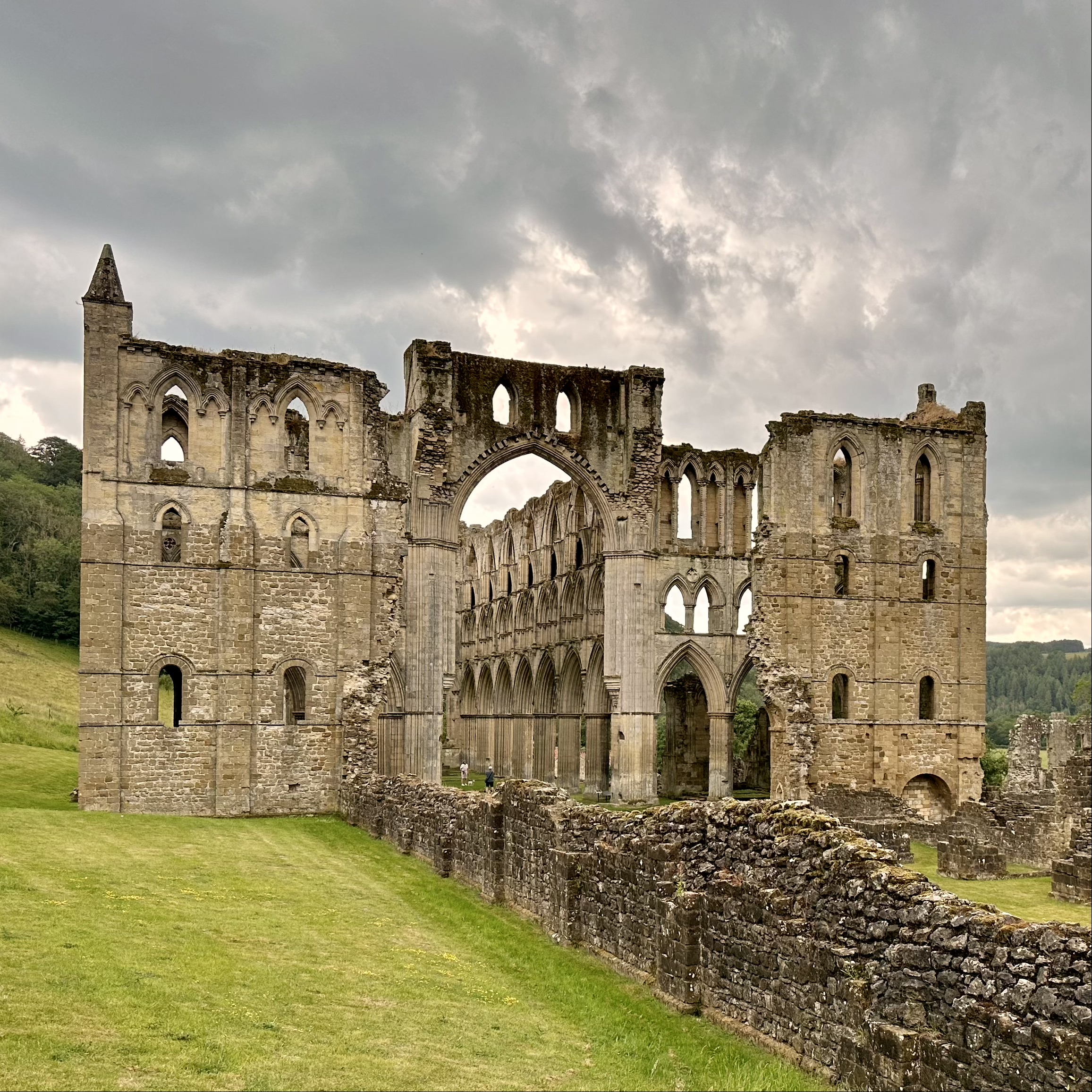
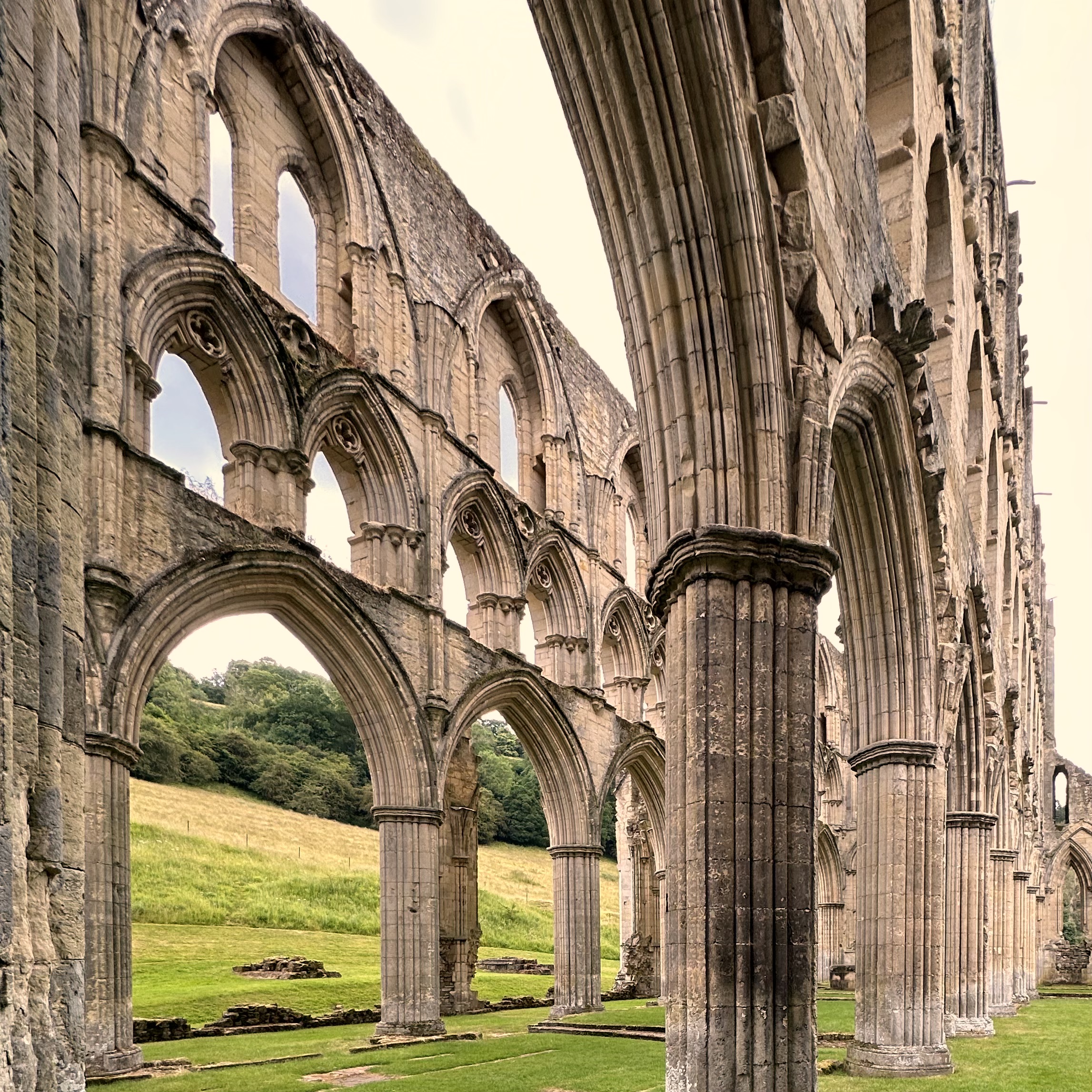
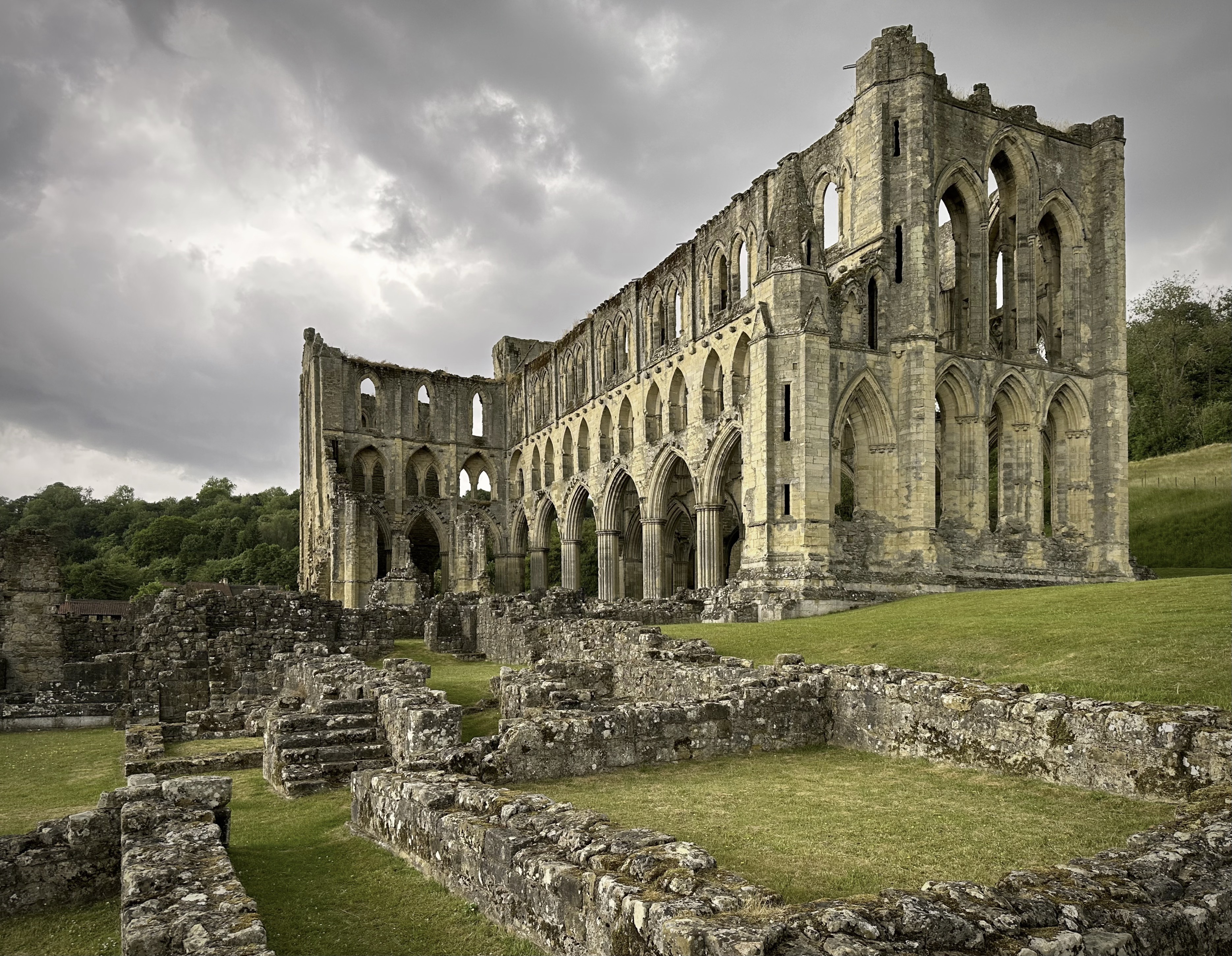
Rose: The eerie beauty of Rievaulx, a ruined Cistercian abbey hidden in an isolated river valley.
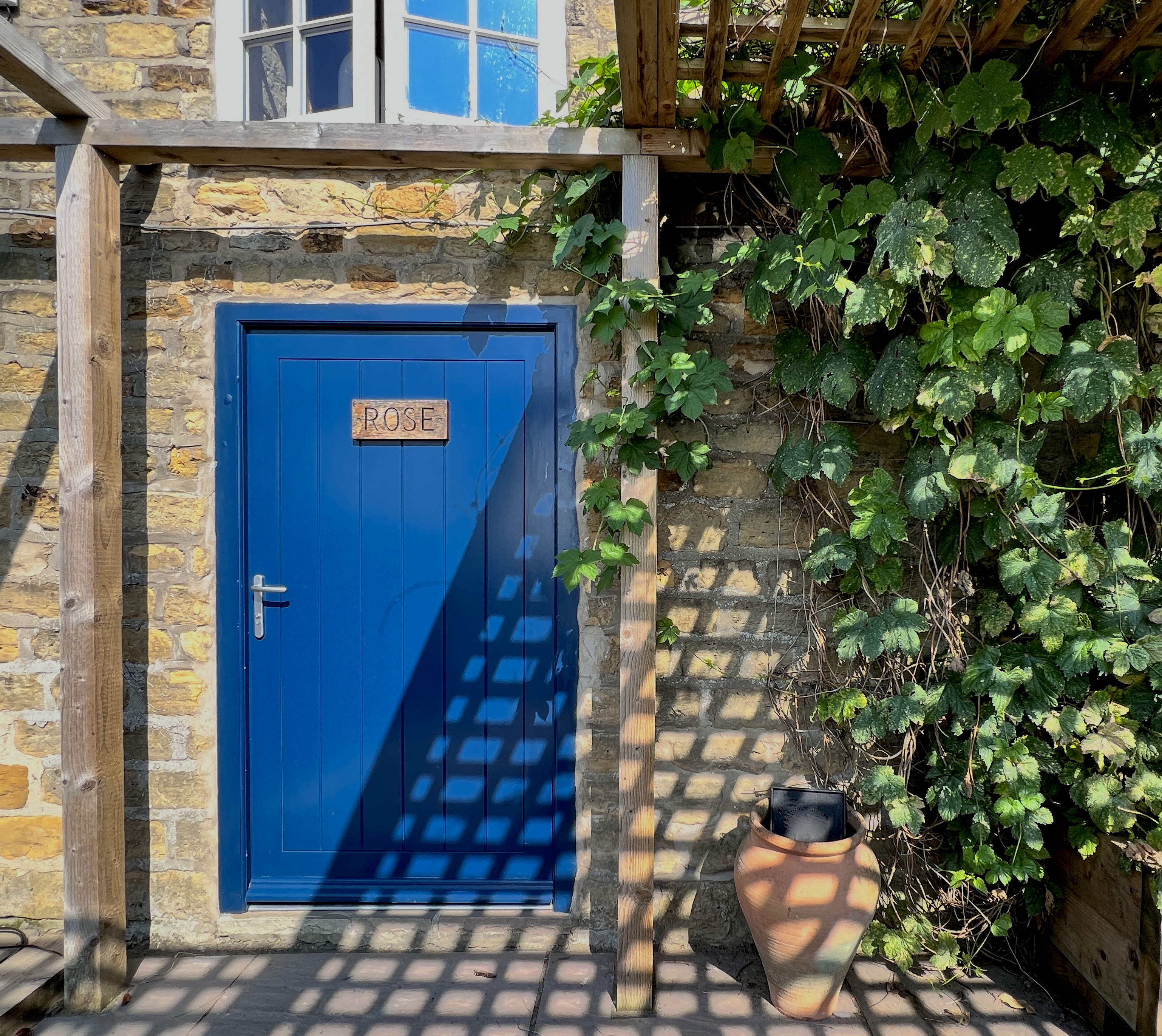
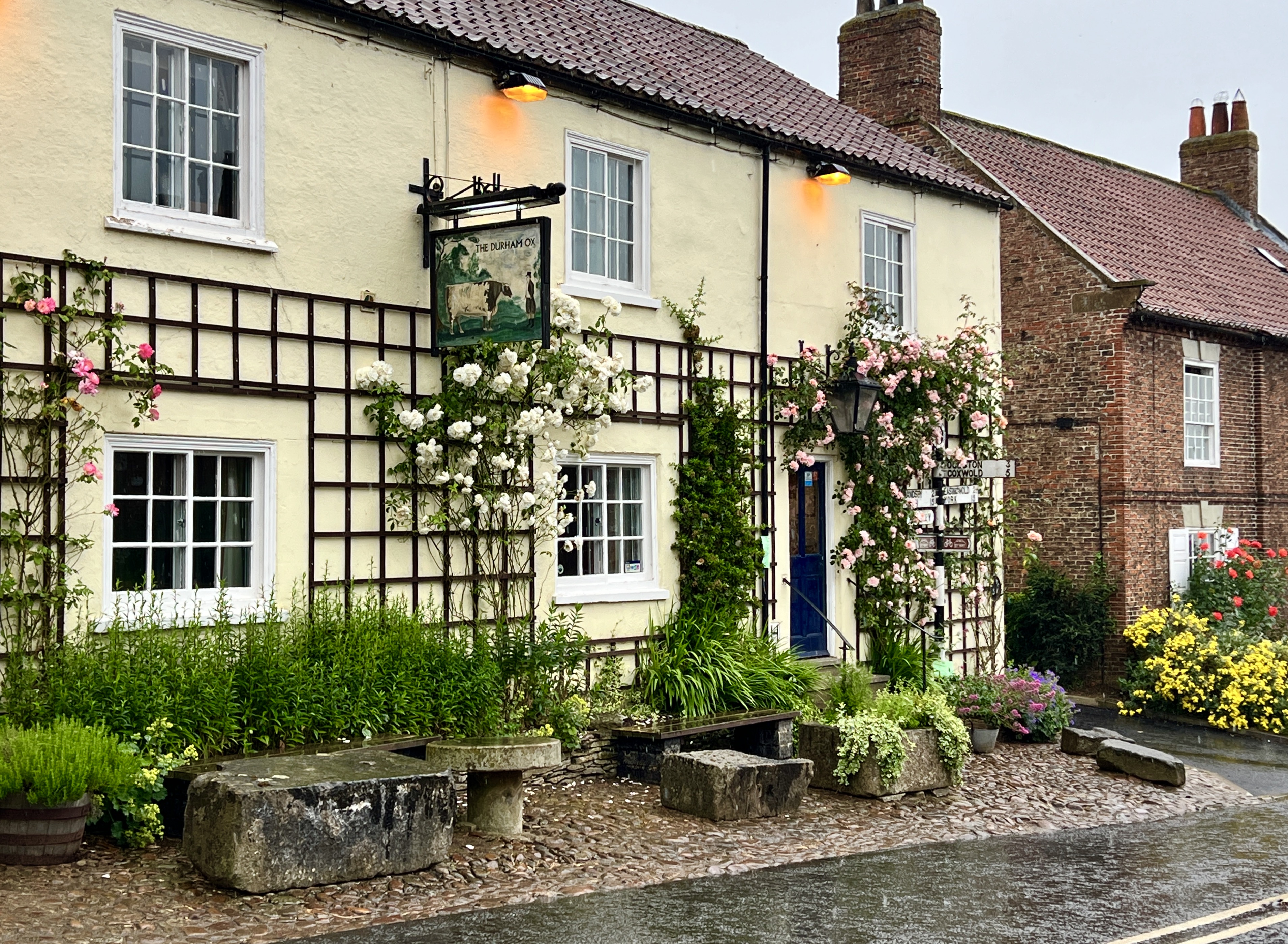
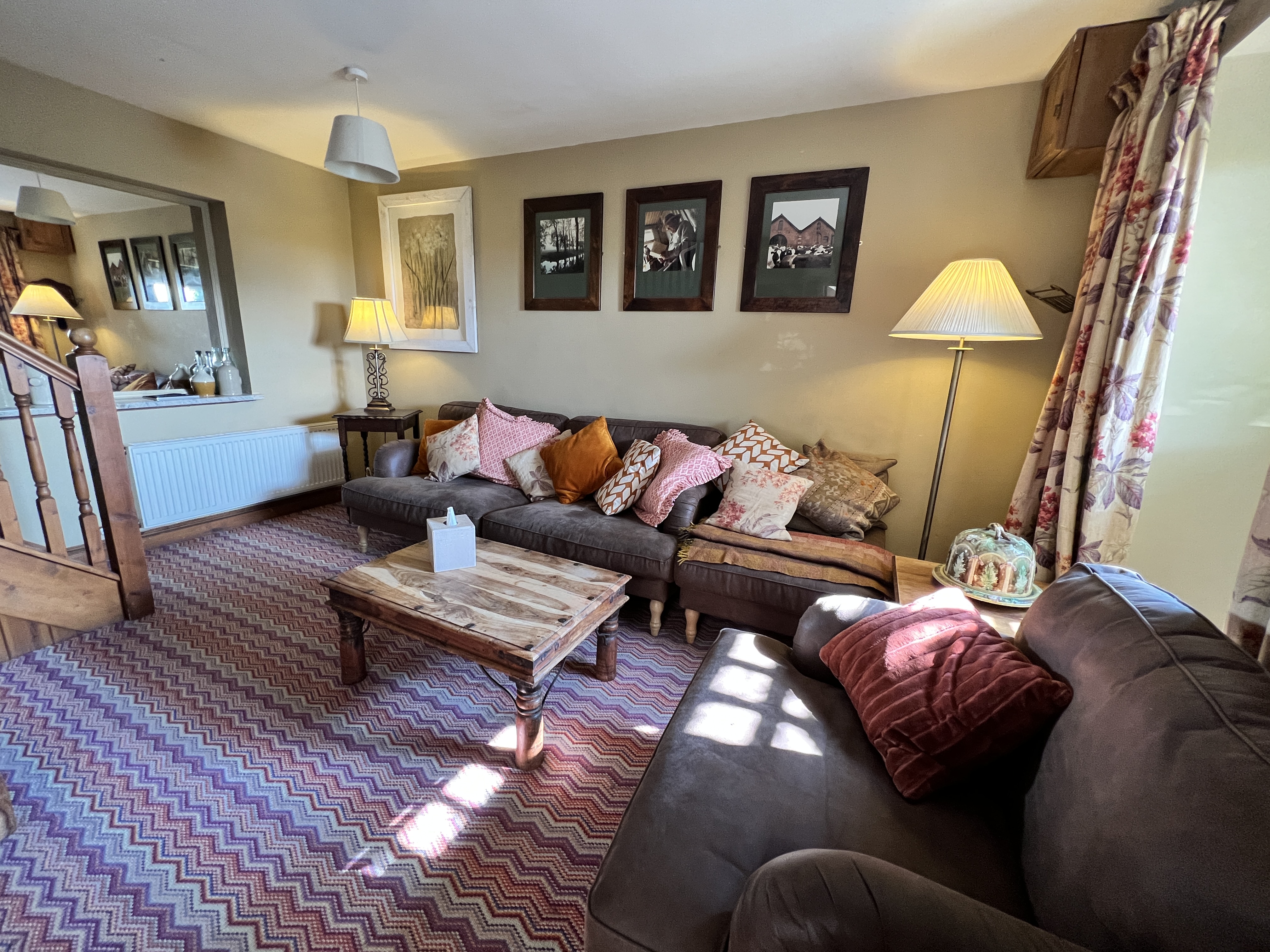
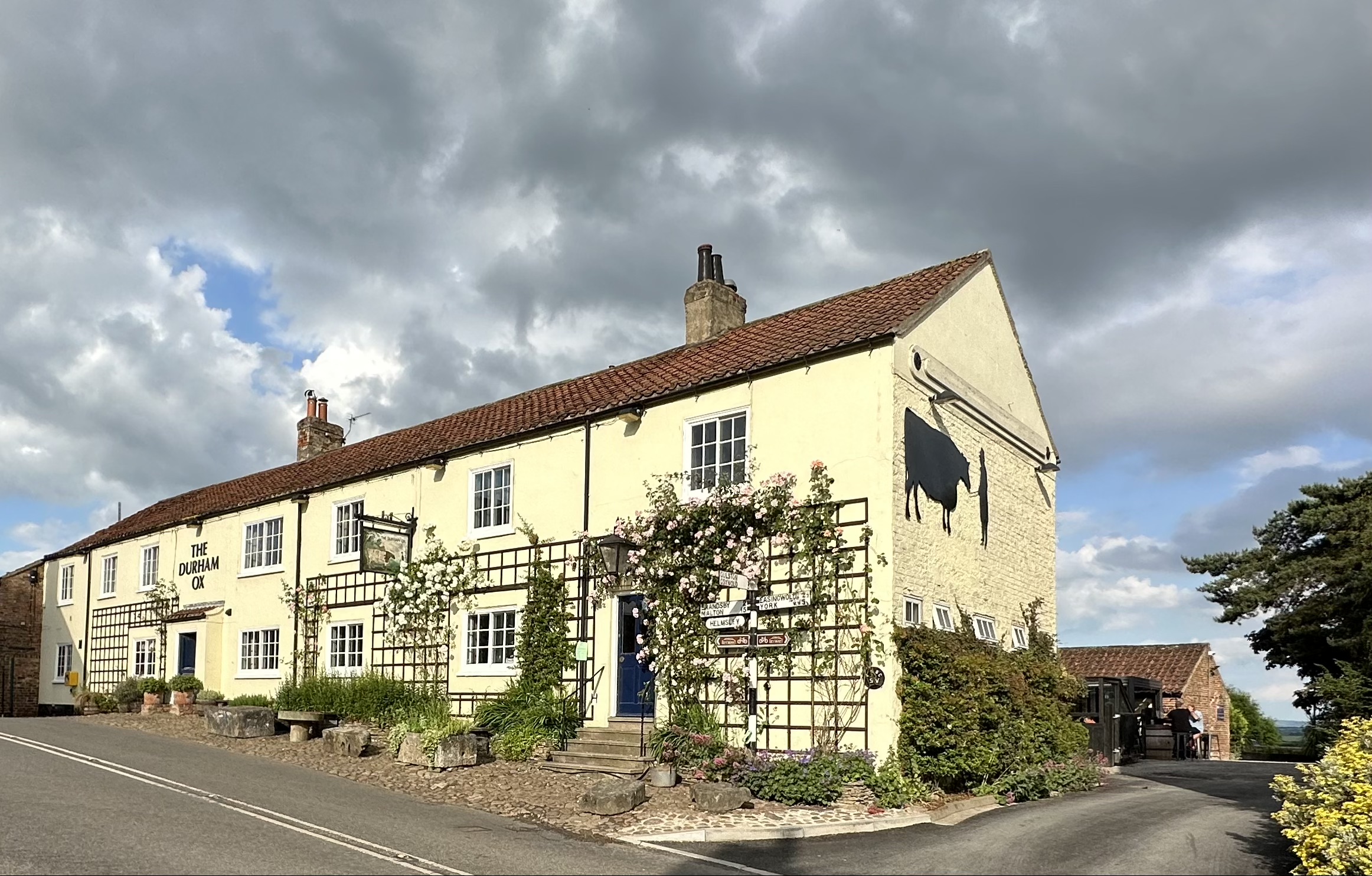
Rose: Three nights at the Durham Ox, a gastropub/hotel in the quaint hamlet of Crayke. The “cottage” Dave has booked consists of a ground floor sitting room, spacious modern bathroom, small fridge and sink, and two bedrooms upstairs. Our room price includes dinner and breakfast in the historic pub/restaurant with low, beamed ceilings, a huge walk-in fireplace, carved wood-paneled walls and flagstone floors. The pub is open all day every day, and is located just steps from our cottage door. Very convenient for takeaway pints.
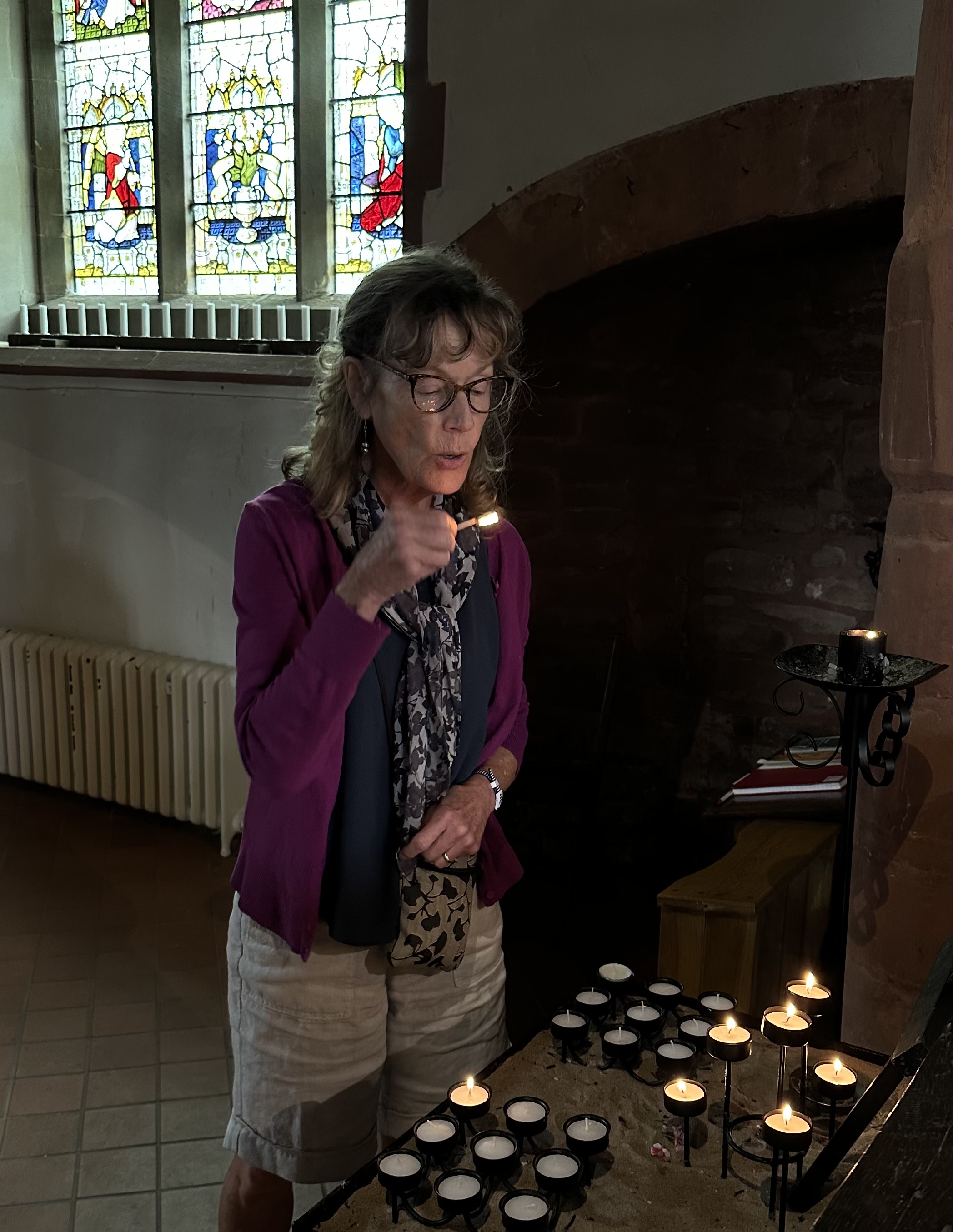
Rose: A visit to the parish church in Crayke. After settling in at the Durham Ox, Anna sets off with candles and matches to see if the church door is unlocked. (Sometimes village churches are open, sometimes they aren’t.) As she starts up the hill, a white-haired gentleman exits his garden and begins walking in the same direction, at the same pace, on the opposite side of the single lane road. They walk abreast for a few minutes, and finally exchange a glance. “Going my way?” the man asks, a smile in his blue eyes. Anna laughs and explains where she’s headed. The man, whose name is Eric, produces a sizable skeleton key from his pocket. It looks heavy, and very old. “I’m just on my way to lock up the church for the night. I’ll show you around.”
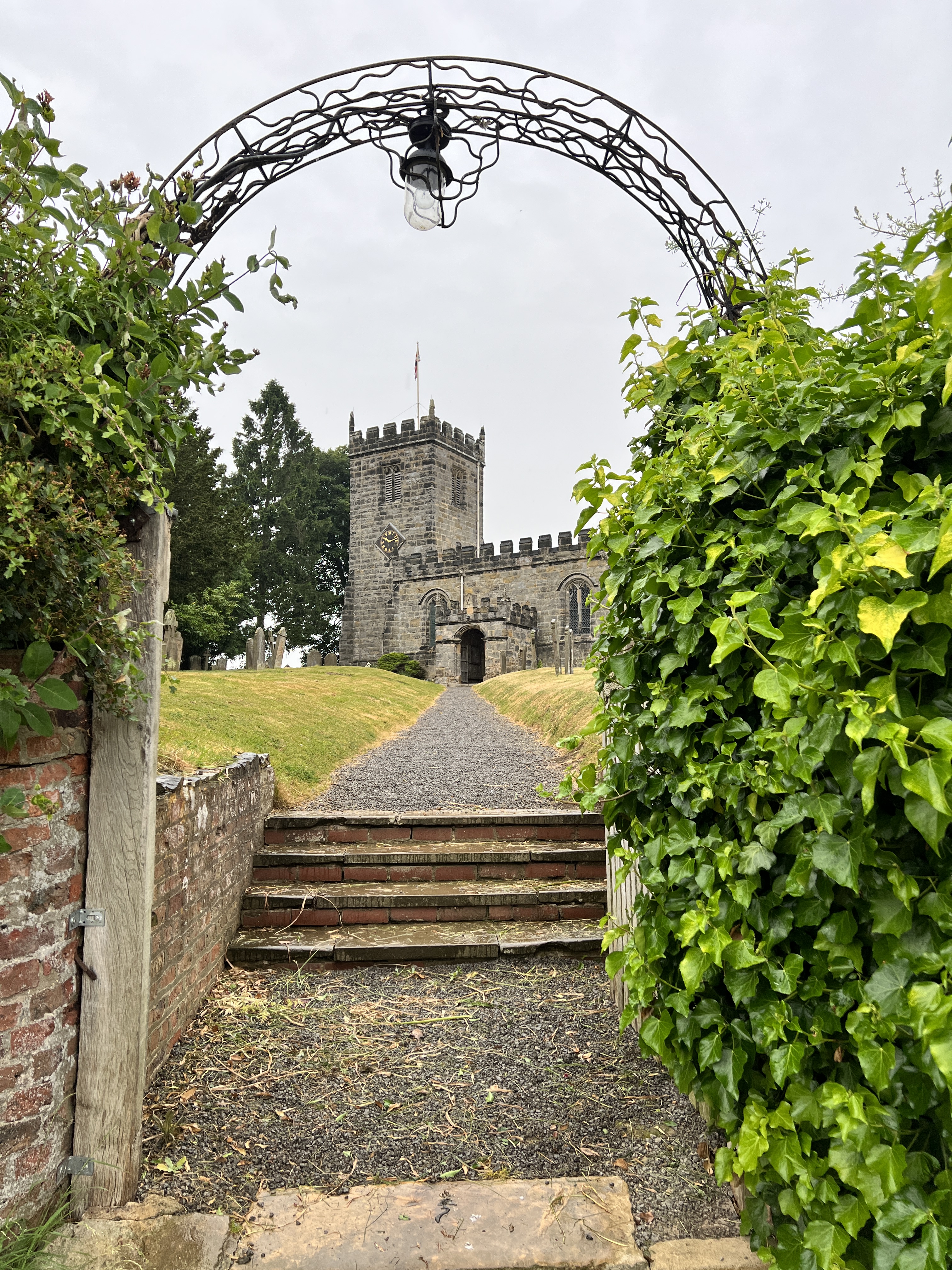
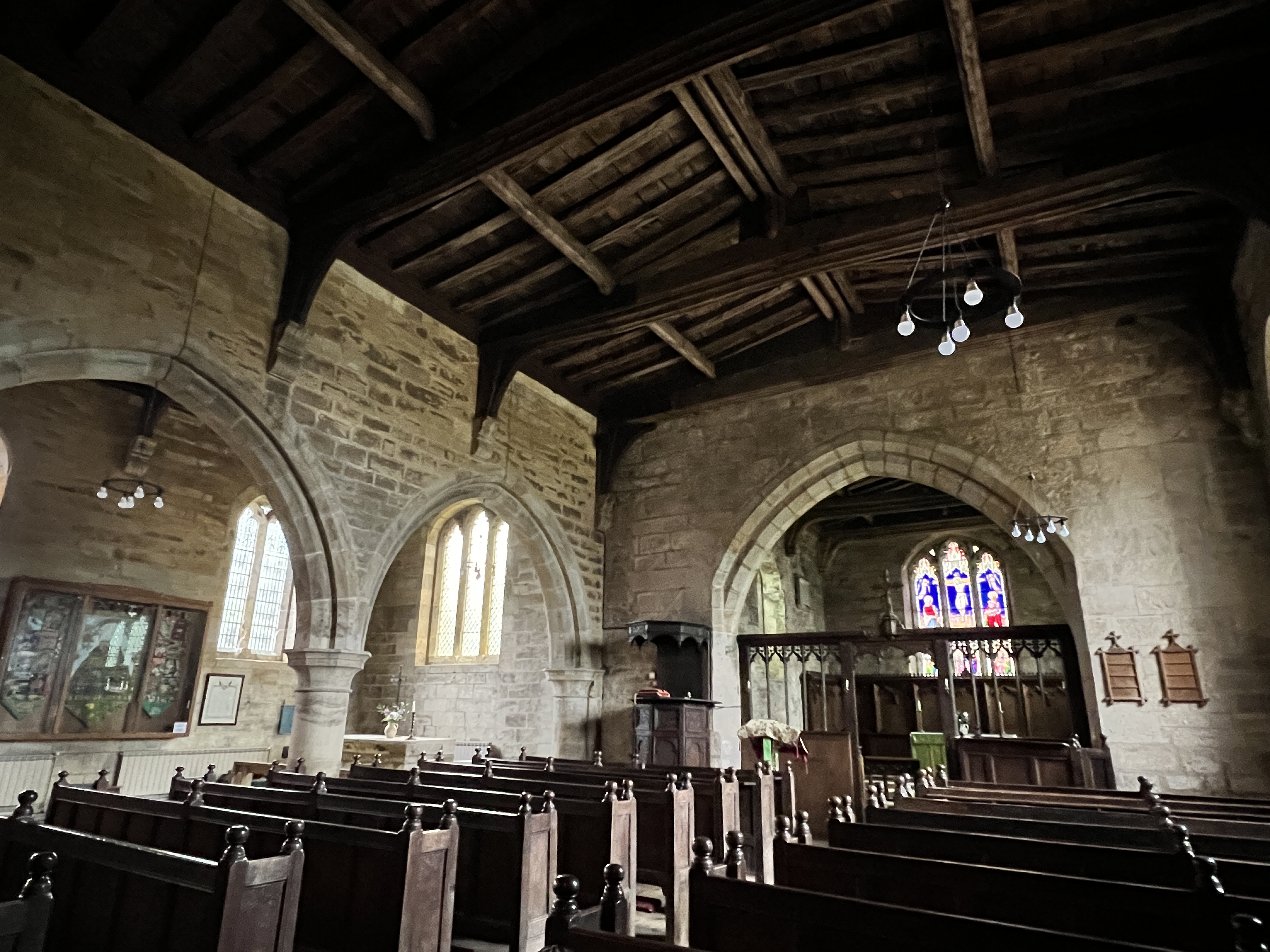
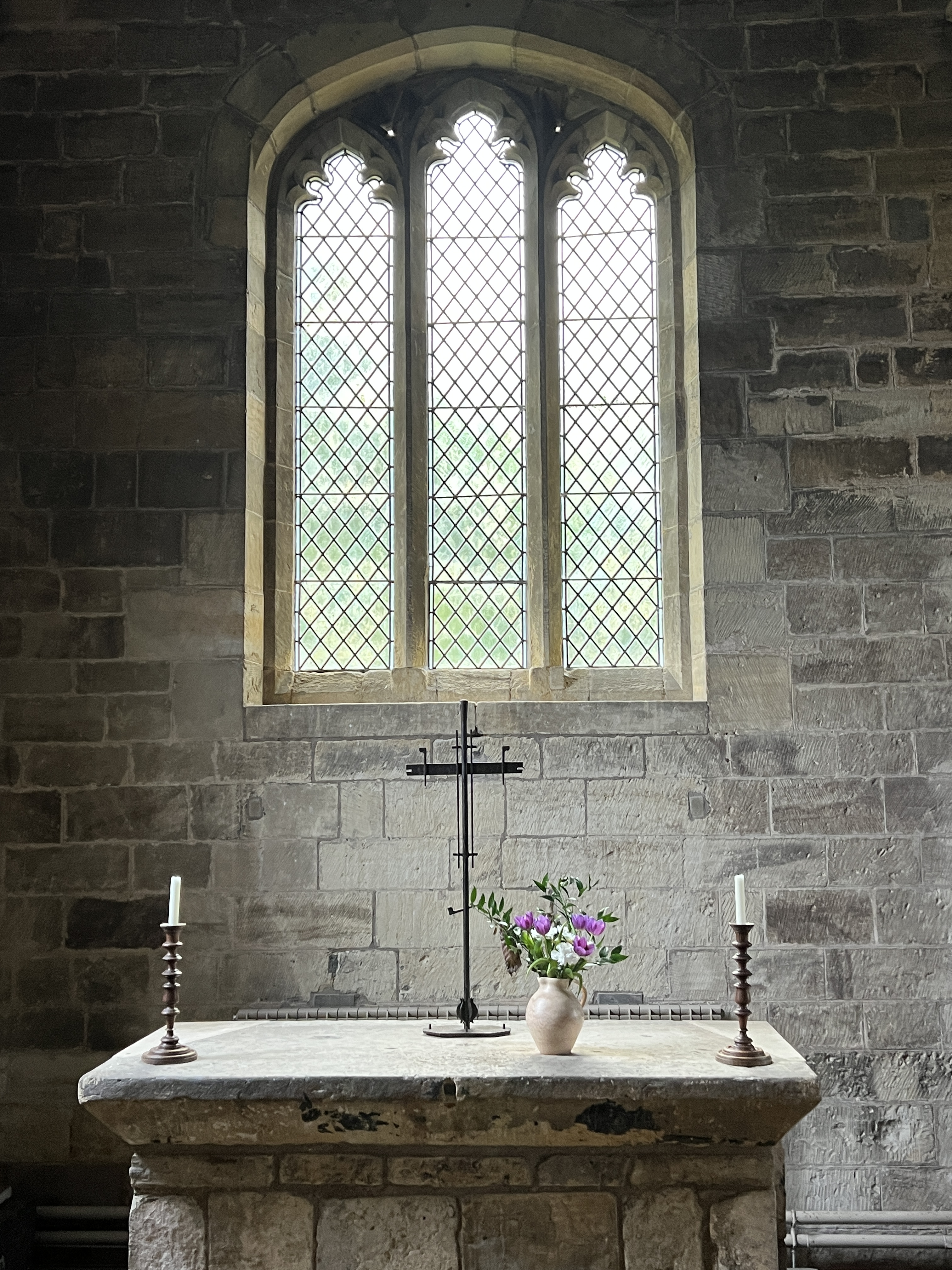
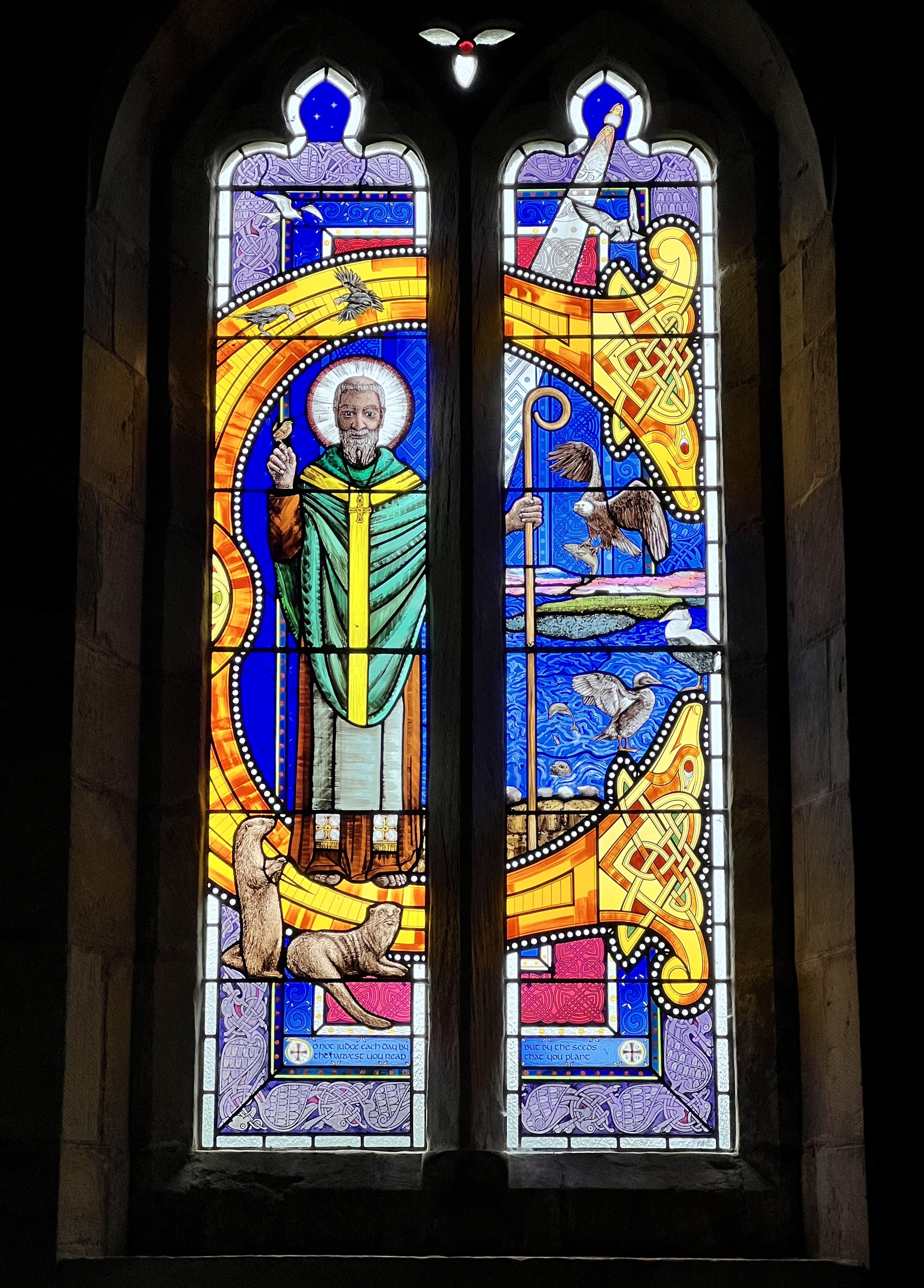
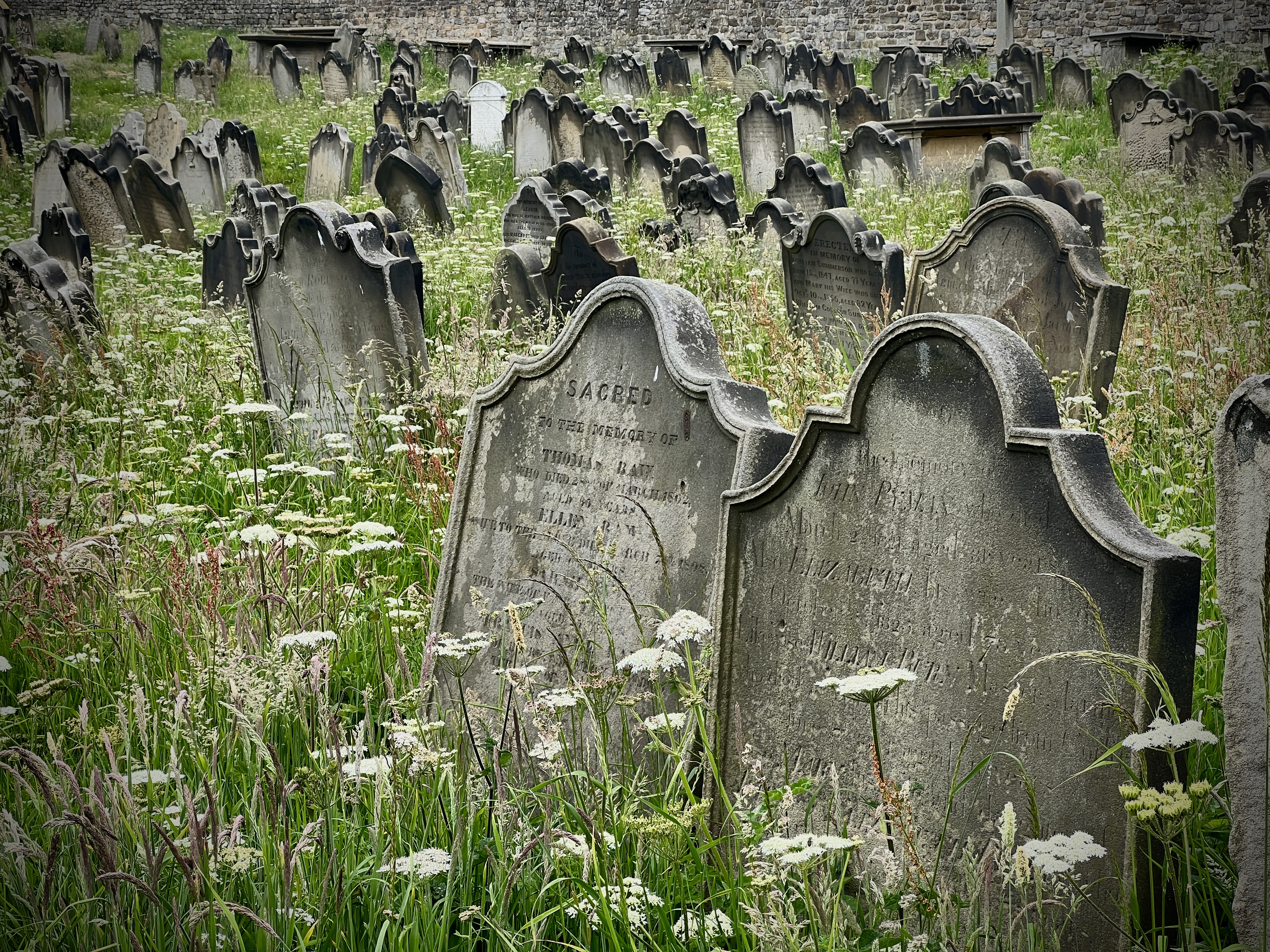
A half hour later, Anna has not only learned about St. Cuthbert’s church (established as a sacred resting place in 685 for St. Cuthbert on his journeys between Lindisfarne and York), she has also learned about Eric’s two aunts who live in Arizona, the history of the uninhabited medieval castle at the top of the lane, how Eric and his wife moved to Crayke after they retired, and even the salacious fact that when scientists analyzed the exhumed remains of monks, a large percentage were found to have had syphilis. Perhaps Henry VIII’s rationale for the dissolution of the monasteries as corrupt had some basis in truth beyond his desire to sanction his divorce(s) and remarriage(s) and confiscate monastic wealth.
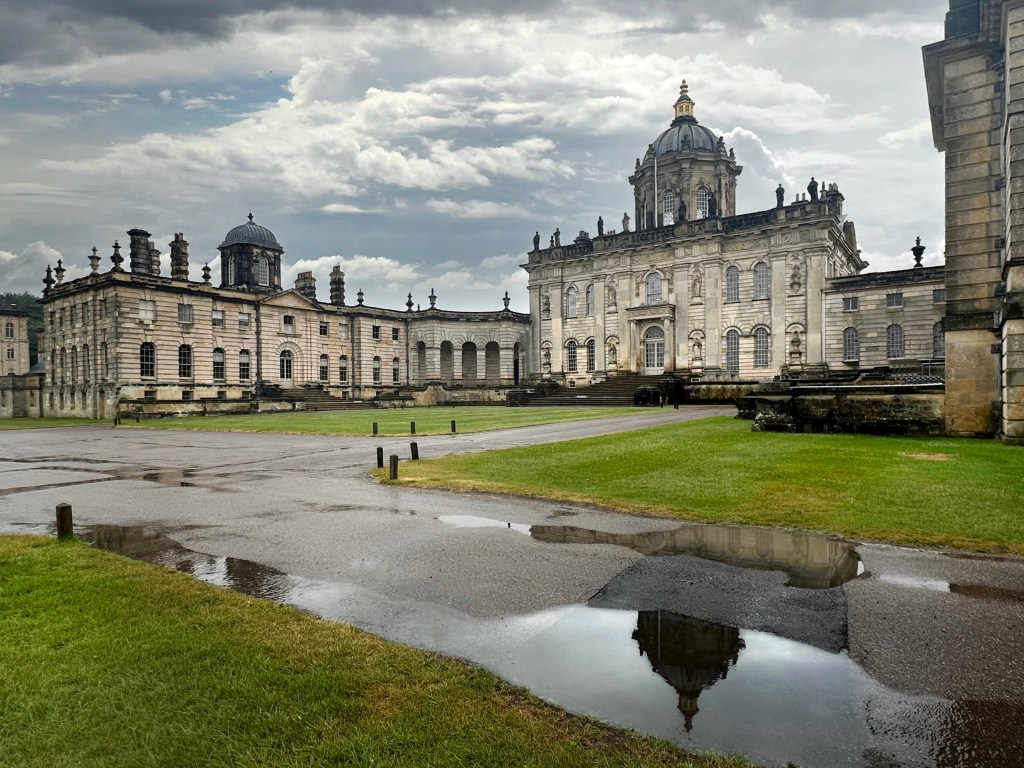
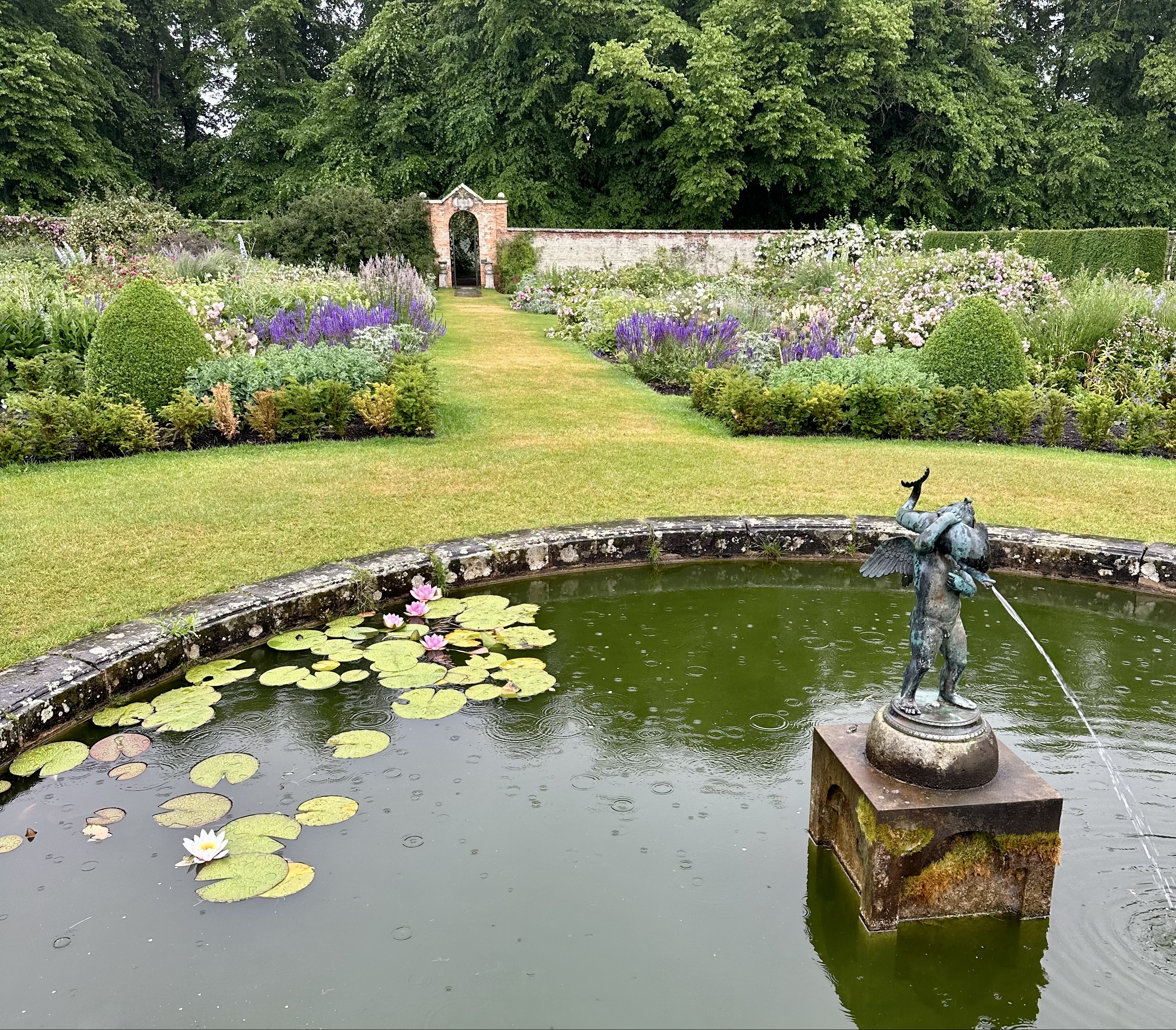
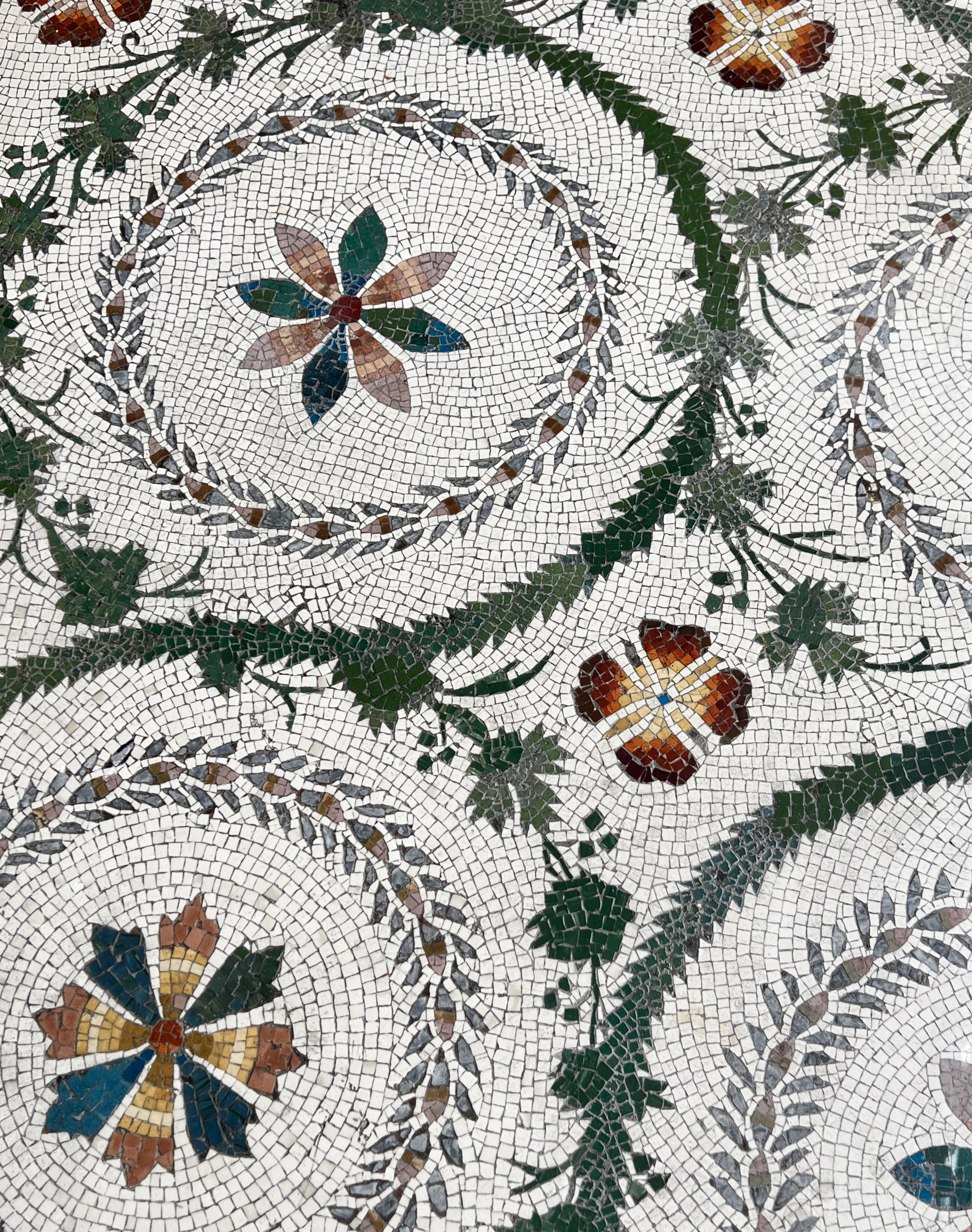
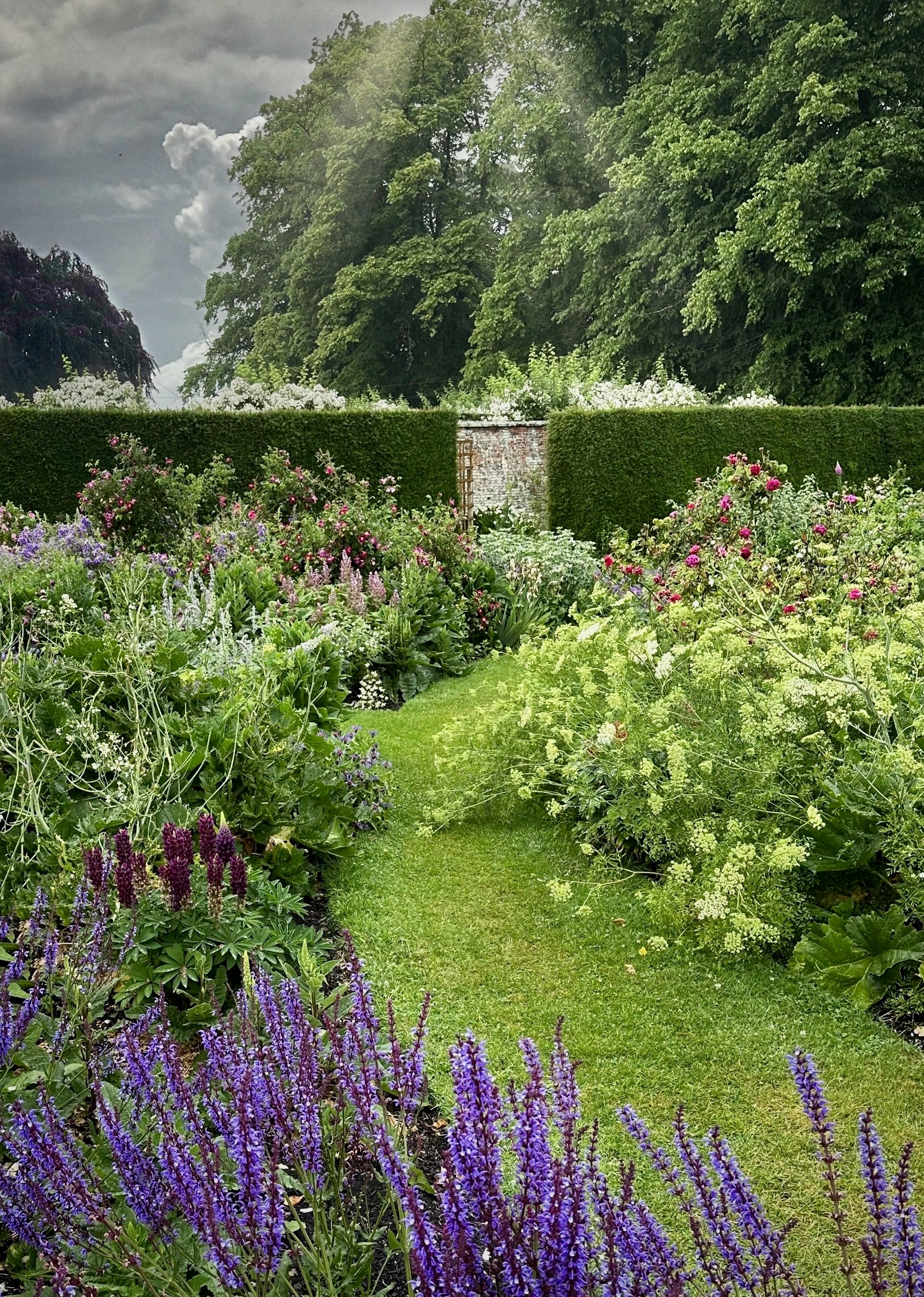
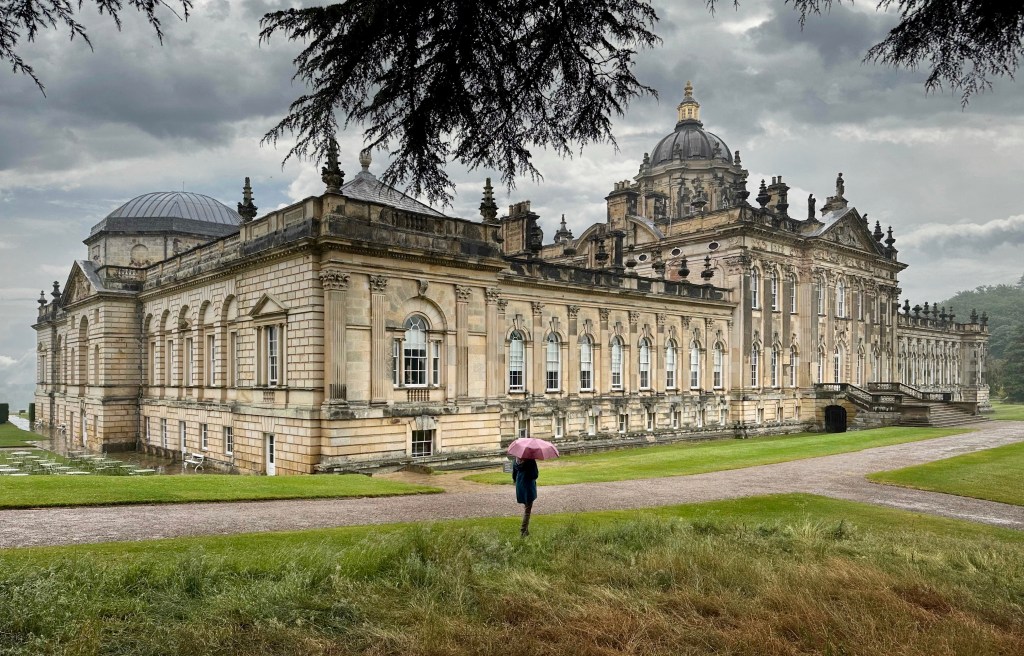
A Rose That Some Might Call A Thorn: A rainy day. Absolutely bucketing down. A perfect day for an indoor tour of Castle Howard, the immense 18th century stately home where the hugely successful 1981 TV production (and a later, movie version) of Evelyn Waugh’s novel “Brideshead Revisited” was filmed. Home to the Carlisle branch of the Howard family for more than 300 years, the rooms are full of priceless furniture, sculpture, paintings, and other relics, including sections of Roman mosaic tile.
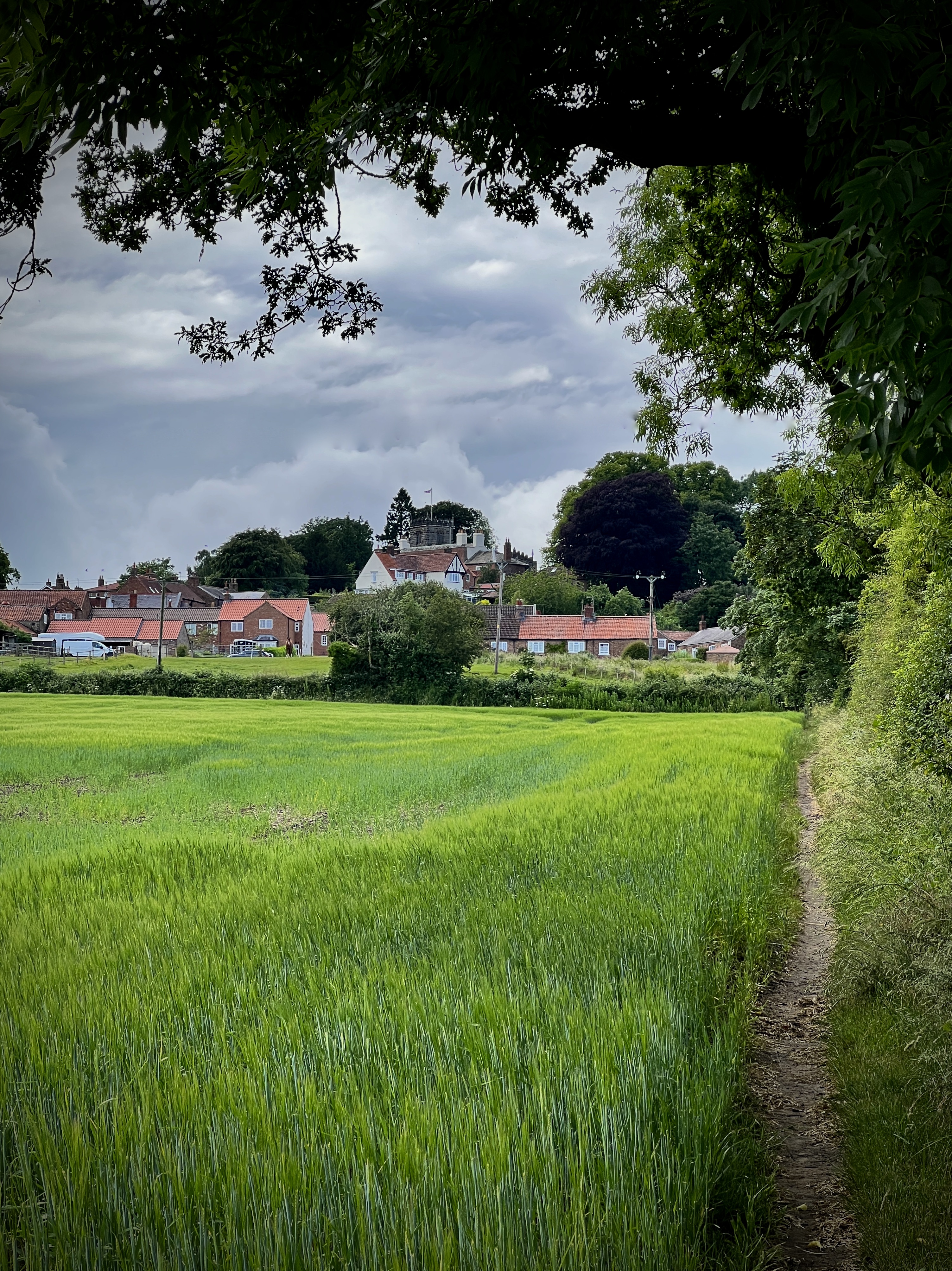
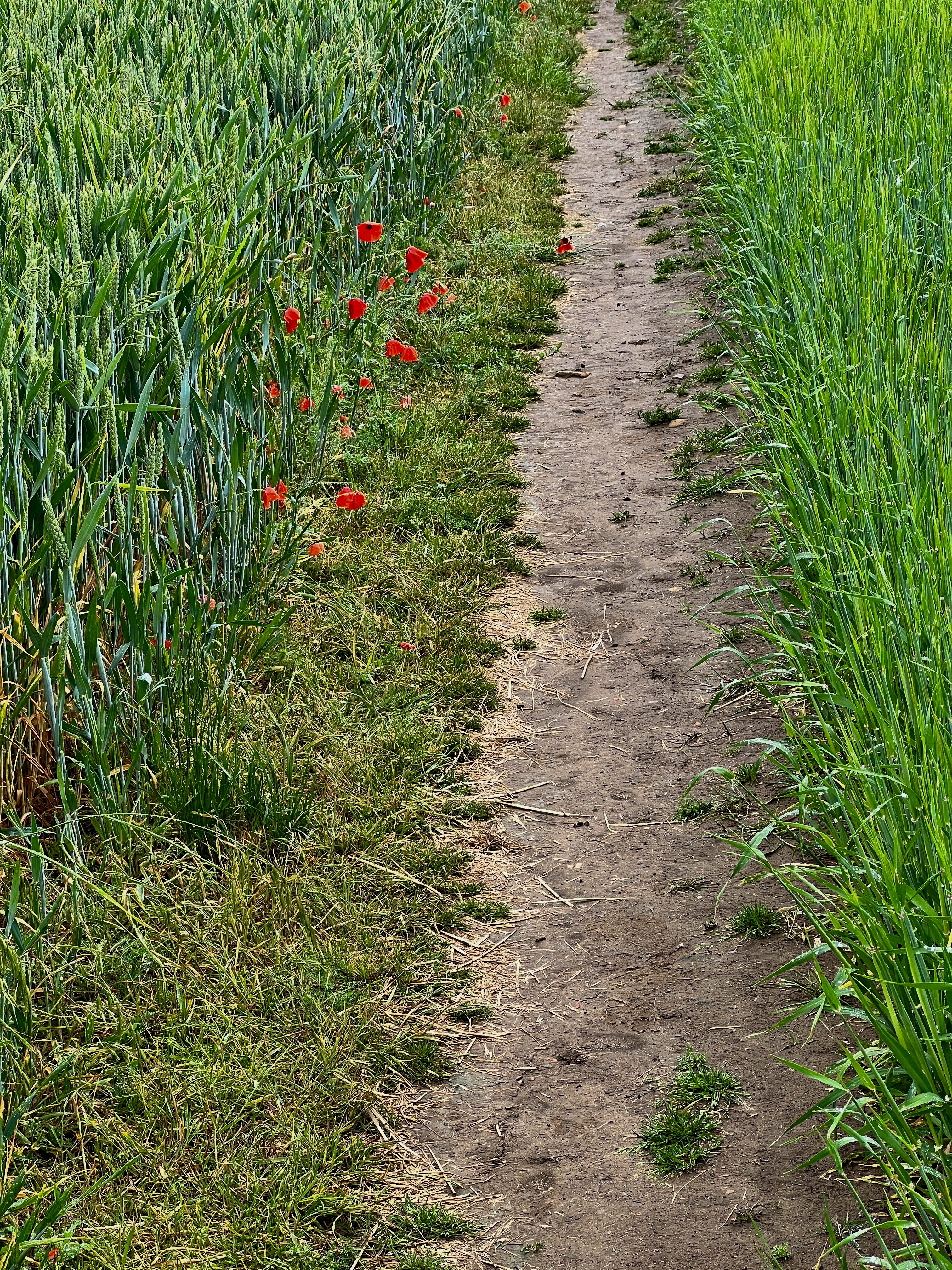
Roses and Thorns: The rain stops in time for a walk before dinner. Anna consults her OS map and embarks on a circular walk. After fifteen minutes of joyful, easy walking along a flower-lined footpath, she hears the whirr of a strimmer, and comes upon a man in the process of clearing the path, which has disappeared into a mass of weeds. “Should I turn ’round?” she asks, “Or can I get through?” He shrugs. “You should be all right. It gets better a little further on.” But it doesn’t. Anna thrashes through stinging nettles and thigh-high grass for what seems like the length of a football pitch. The foliage finally gives way to a wheat field bordered by chamomile flowers, and so she carries on, her trousers drenched and legs stinging as if they’ve been attacked by a swarm of wasps. Past one field, then another, until an unmistakable odor signals that she has arrived at a field oozing with freshly spread manure. The stench is off-putting (to say the least) and the footpath seems to have petered out. So much for the idea of a circular walk. Best option is to turn around and head back to the pub for a well-earned pint of Guinness!


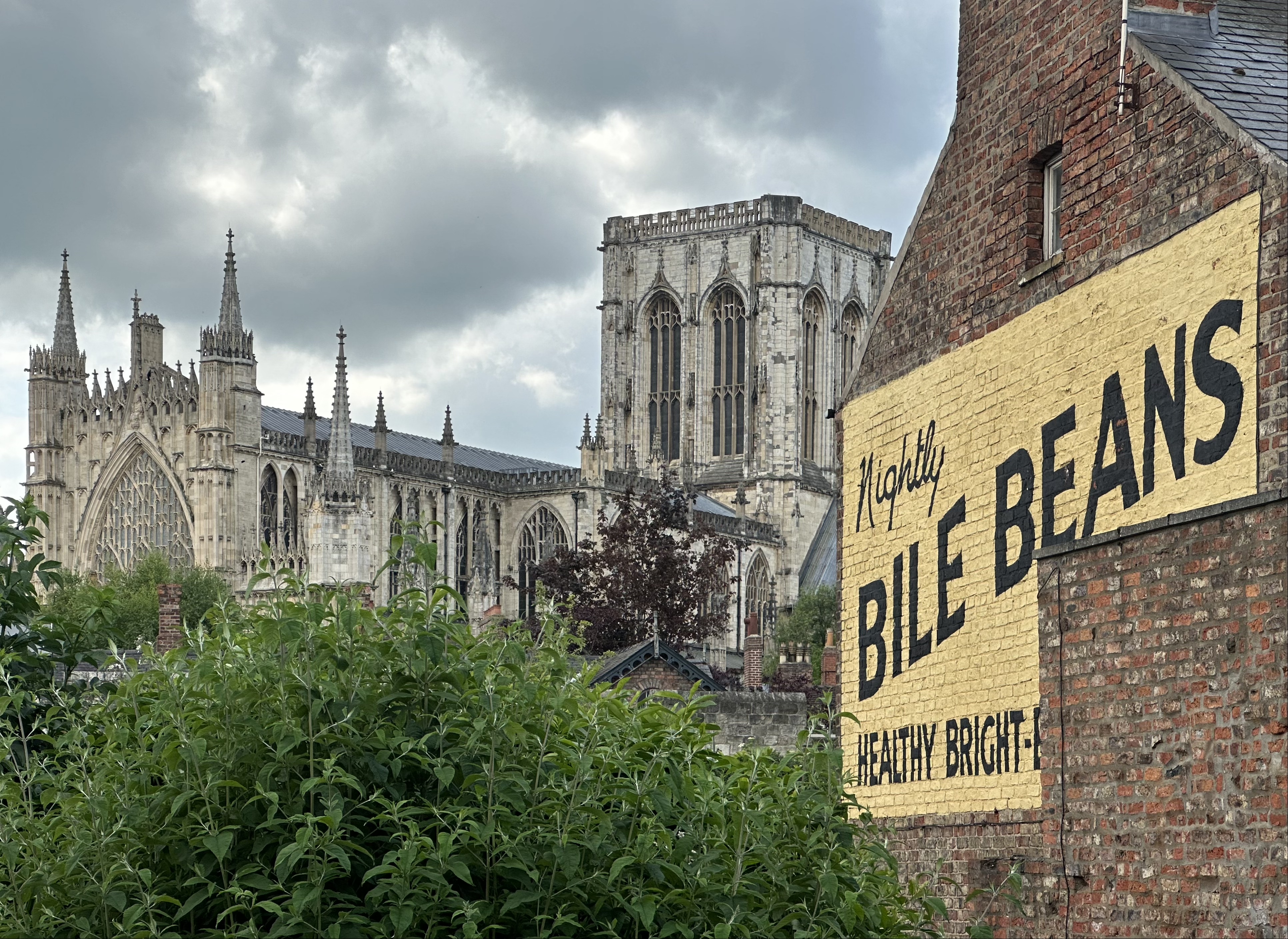
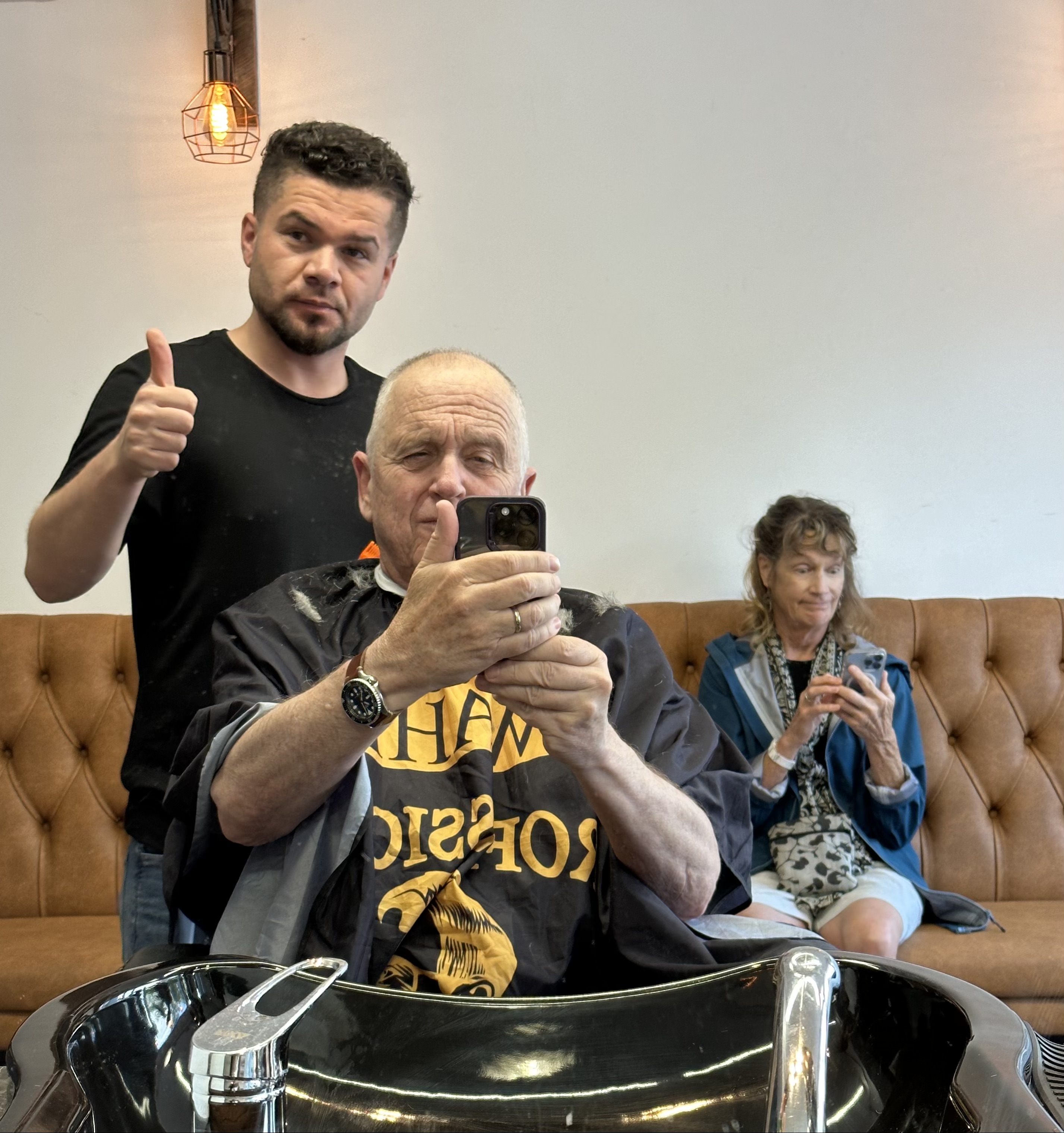
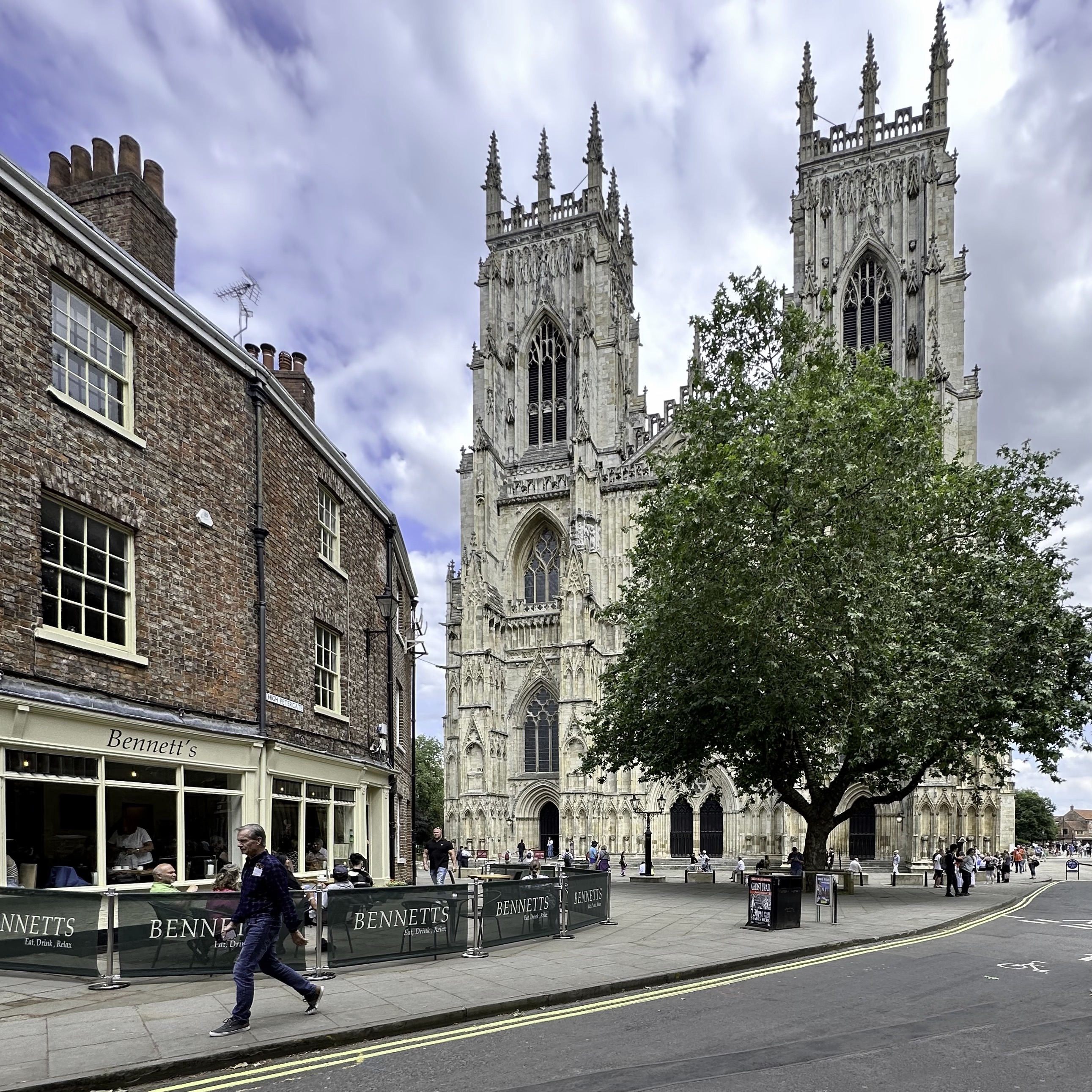
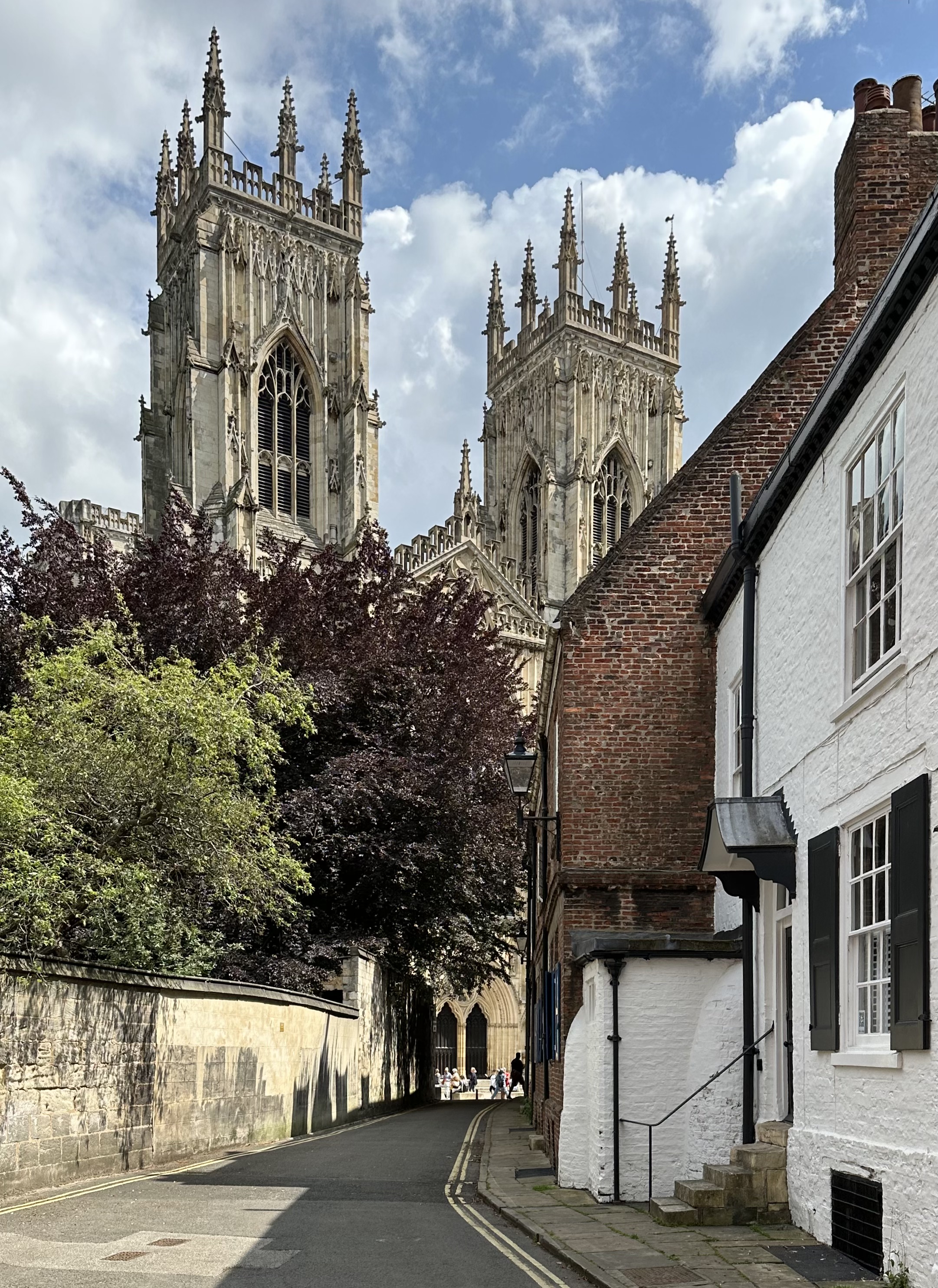
Roses from York: Before we even enter the historic section of town, Dave sees a barbershop, and can’t resist getting a trim. Did he need one? Debatable; he looks good either way! After a beer in the garden of the Fat Badger, we stroll atop the wall surrounding the medieval part of the city. From this vantage point, we gaze down at gardens and across rooftops to the towers of York Minster. It is one of the most important cathedrals in England, but it pre-dates the word “cathedral”, which came into use after the Norman Conquest, thus it is called a “minster”, as important churches were known in Anglo-Saxon times.
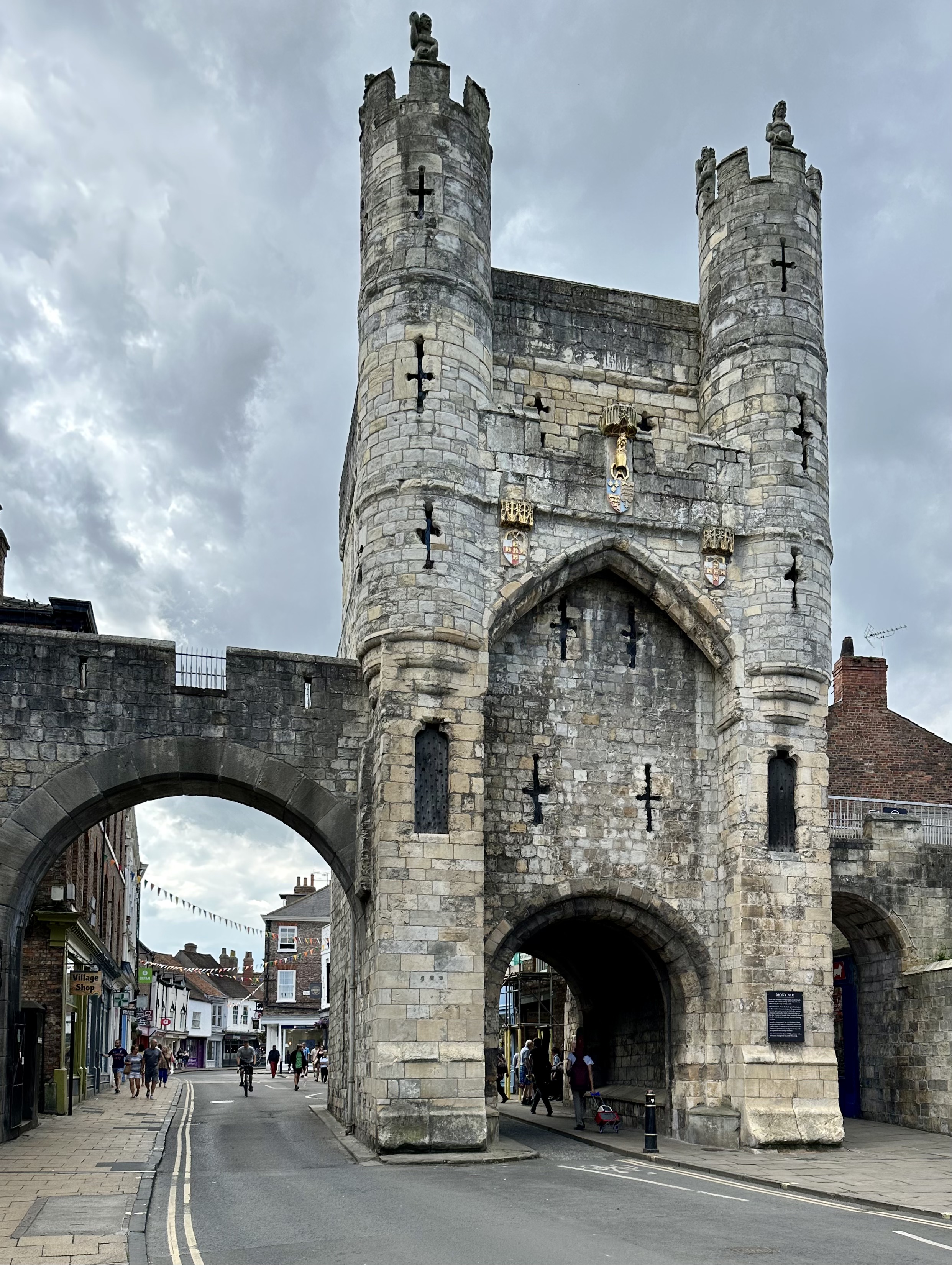
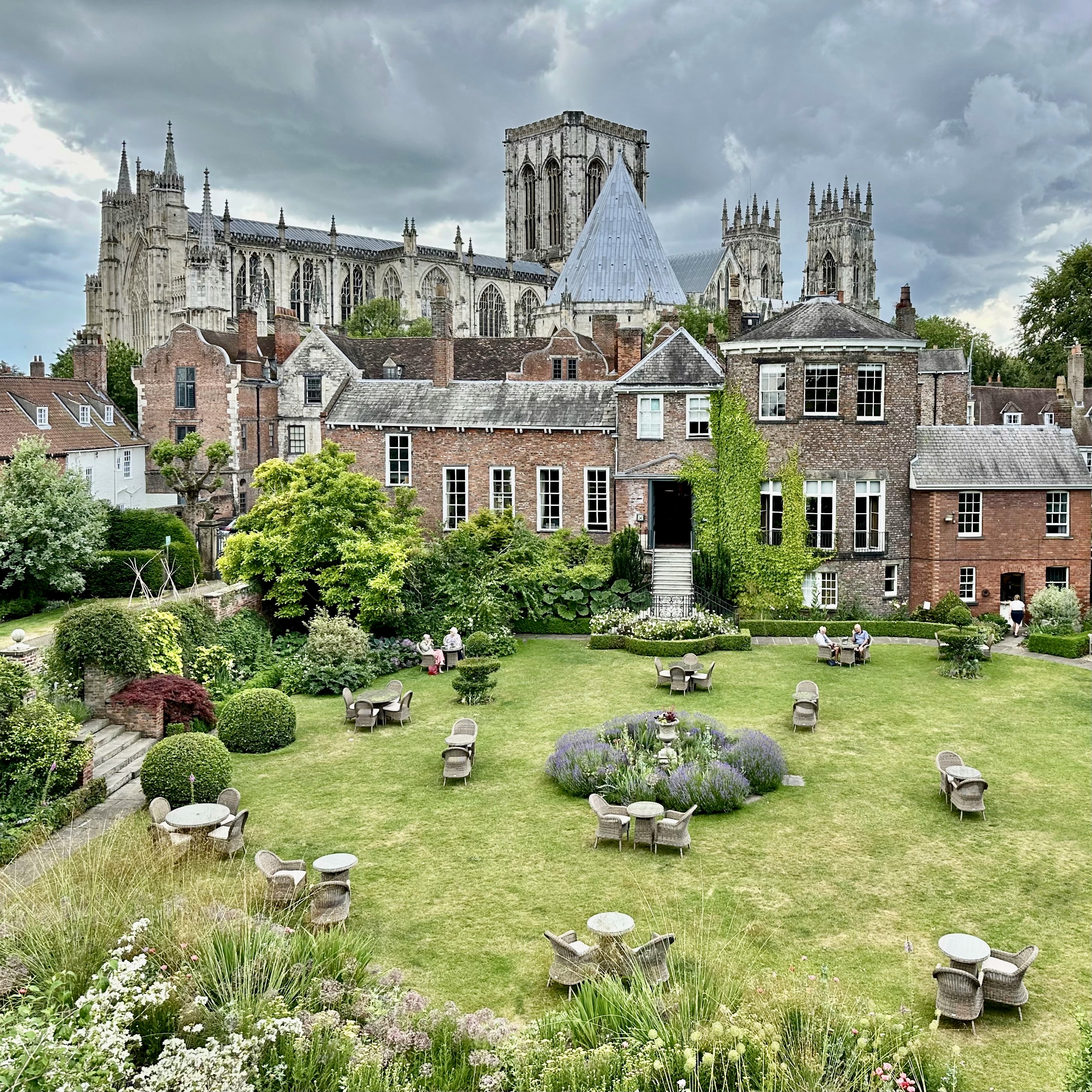
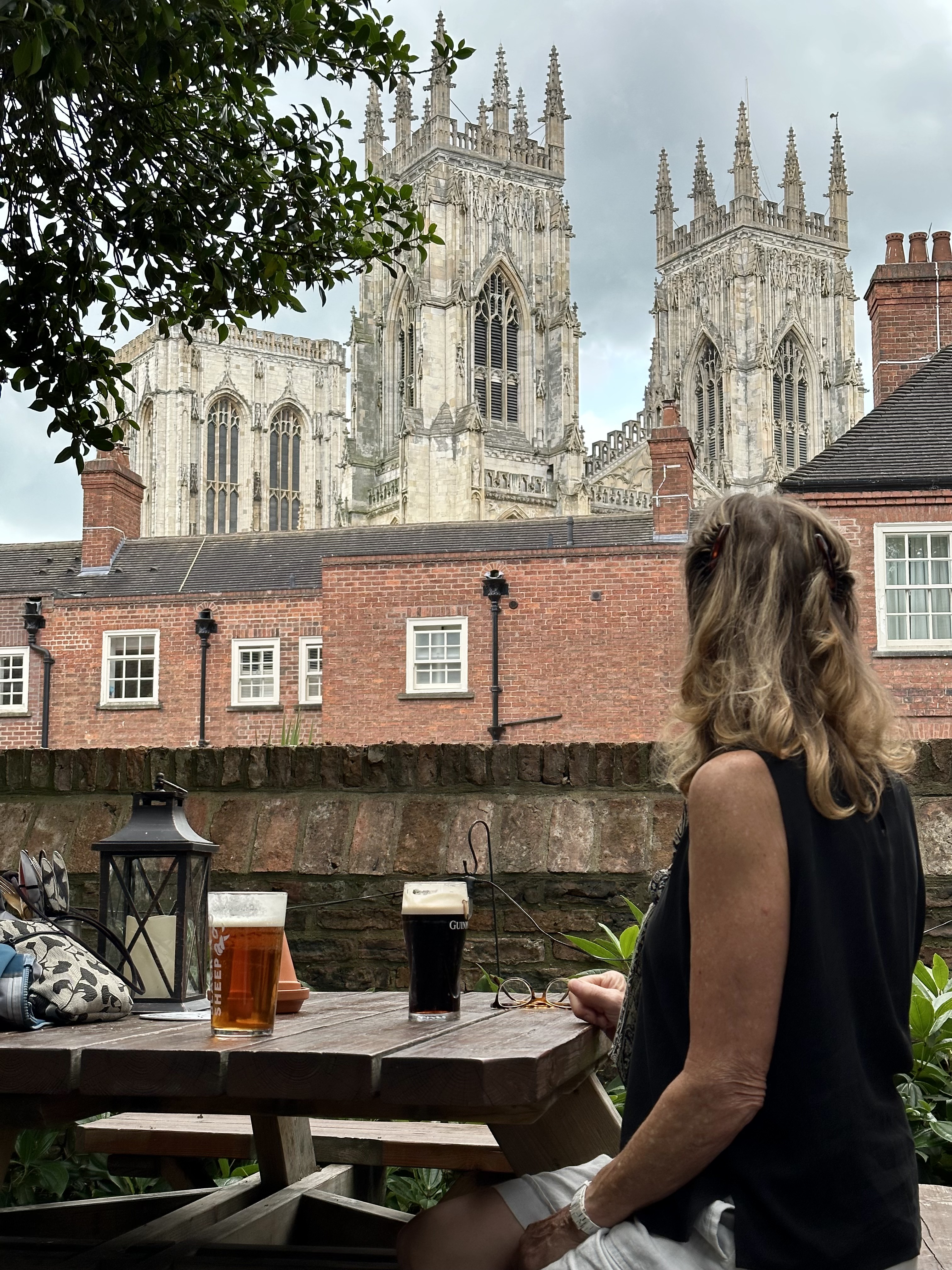
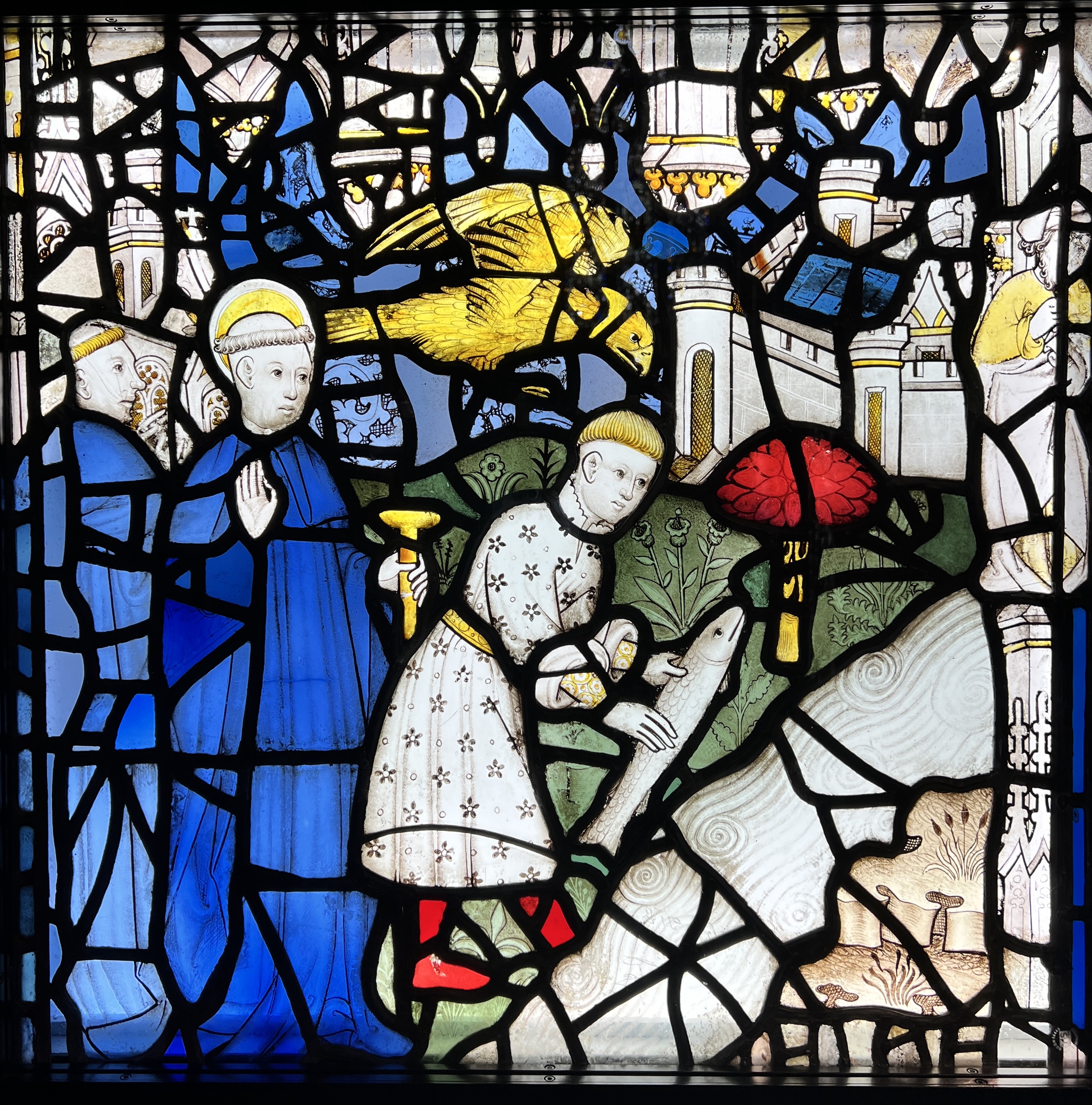
Inside the ancient monument, we admire its airy gothic interior, its rebuilt crypt, and especially, the recently restored Great East Window, the largest expanse of medieval stained glass in the country.
Culinary Thorns and Roses: Our expectations are too high for our meals at the Durham Ox. (Obviously, we have been spoiled by our meals in France and Edinburgh!) The breakfasts are delicious (choices include scrambled eggs with smoked salmon, avocado toast, eggs-over-easy, bacon, sausage, toast, marmalade), but the dinner menu and wine list are uninspiring. Anna solves the problem by ordering the same dinner—mussels marinière—three nights in a row, but Dave tries something different each night, and each time is disappointed. Fingers crossed we’ll have better luck in Wales, where we are headed next.
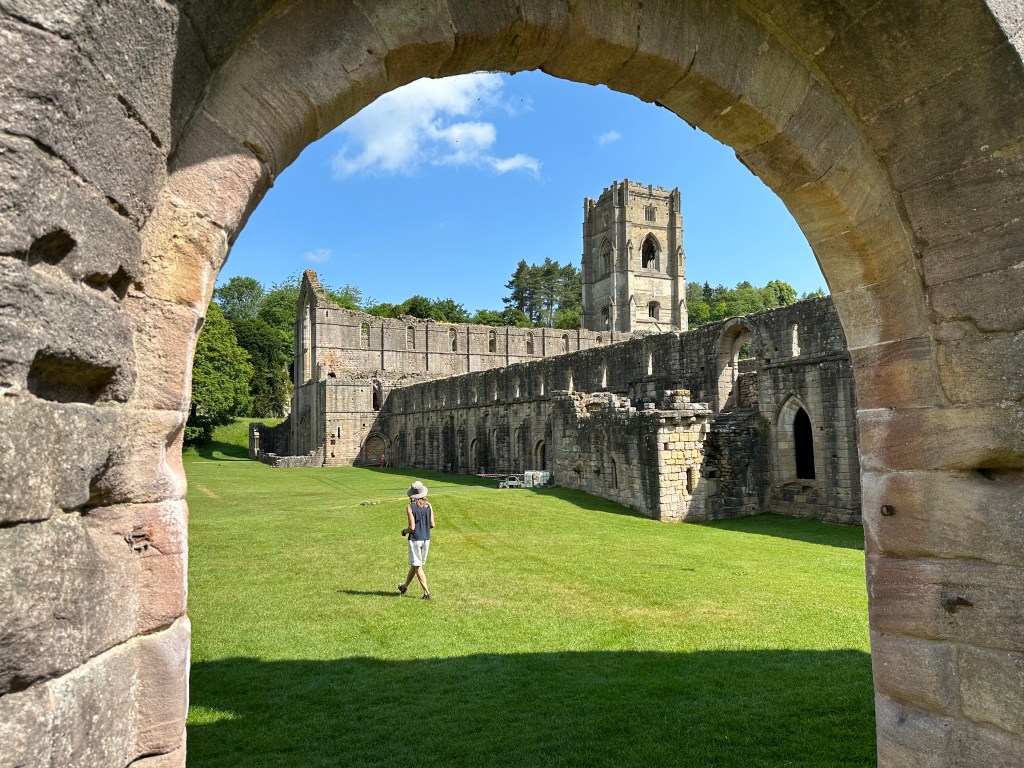
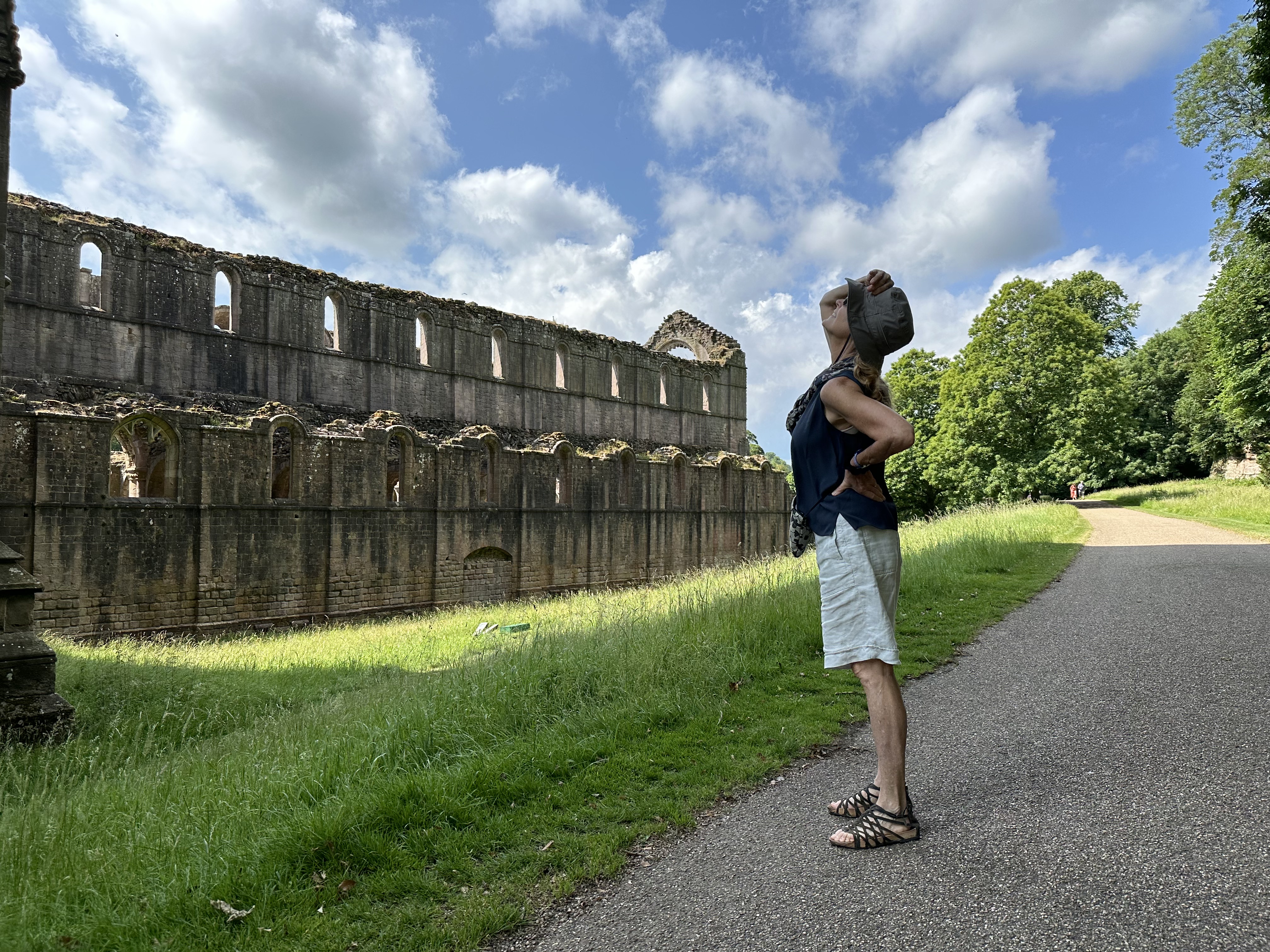
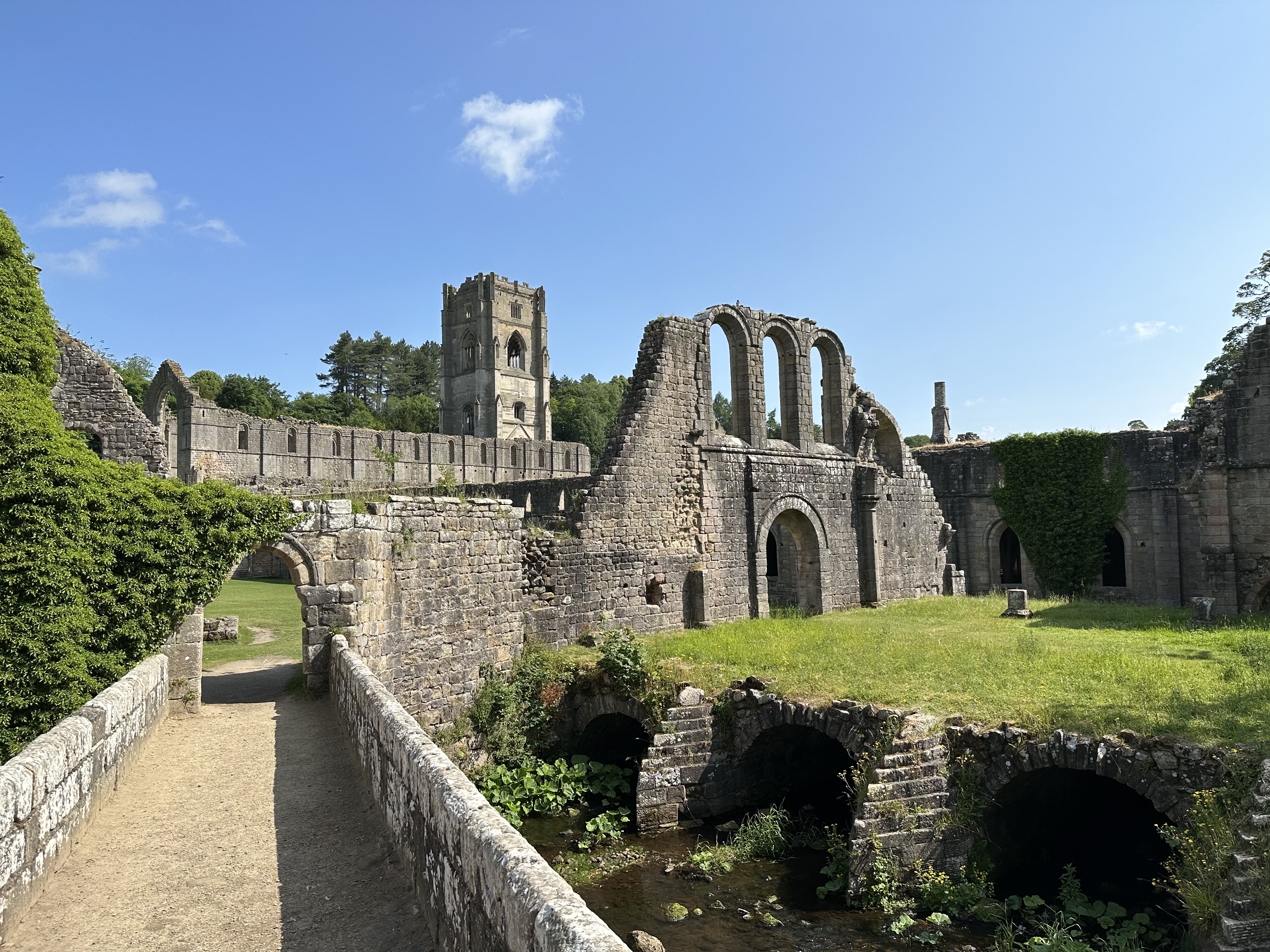
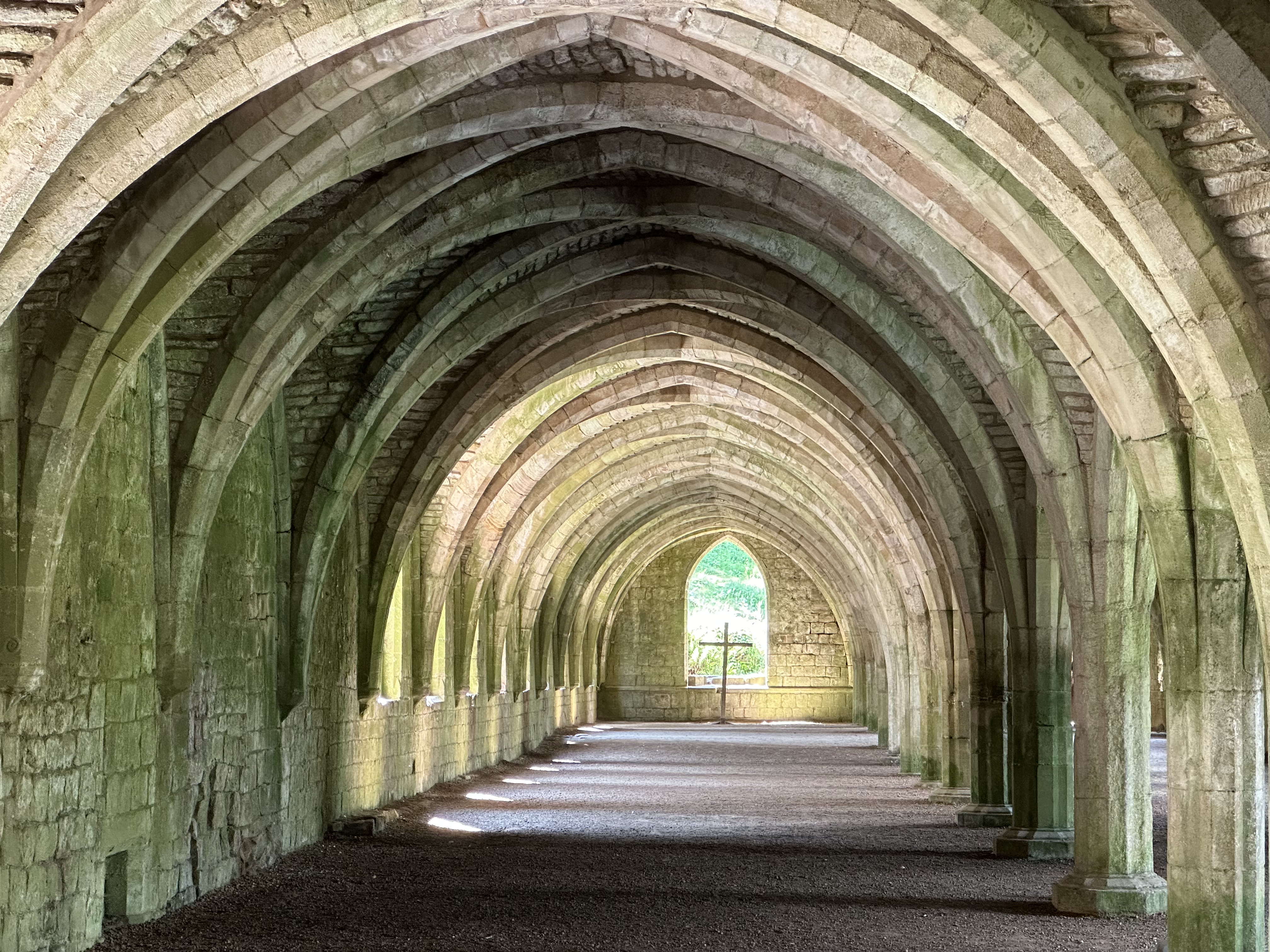
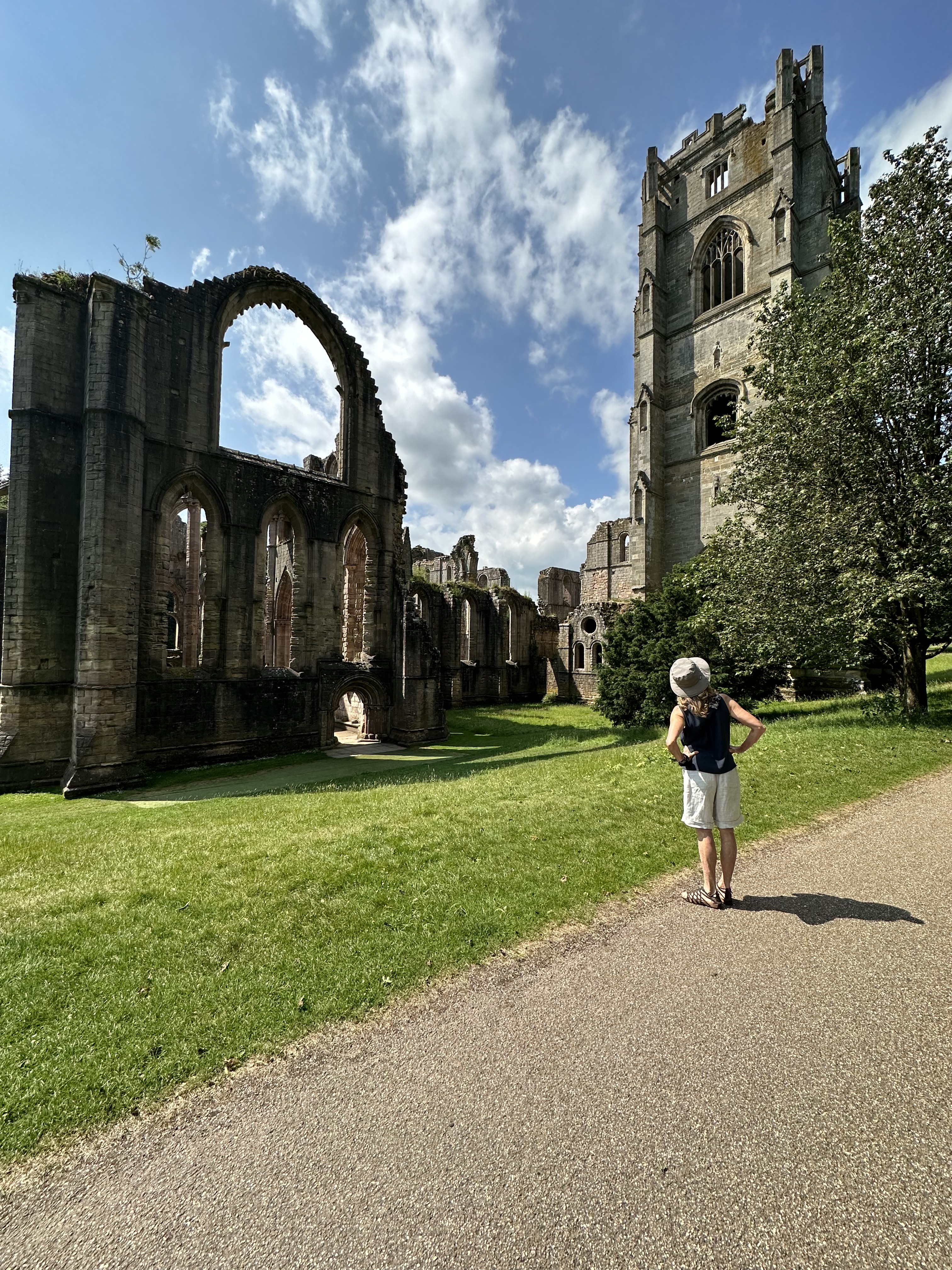
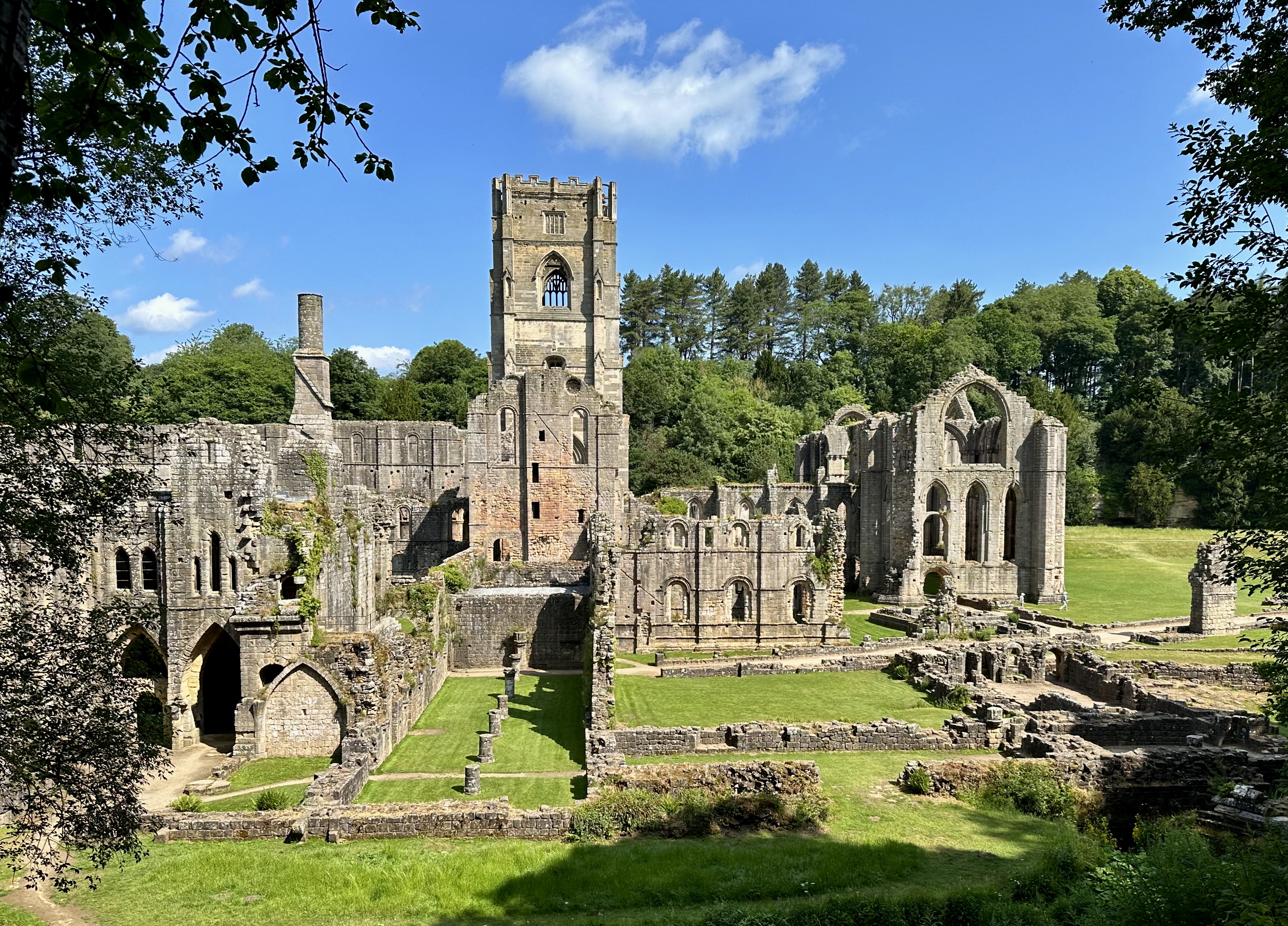
But first, our last stop in Yorkshire, the largest, best preserved and probably the most well-known monastic ruins in England: Fountains Abbey. Anna has vivid memories of coming here 50 years ago, on a family holiday. Since then, a visitors center has been built and the parking lot expanded, but the abbey ruins seem little changed, and remain as impressive as ever.
 Thin Slicing the World
Leave a comment